-
-
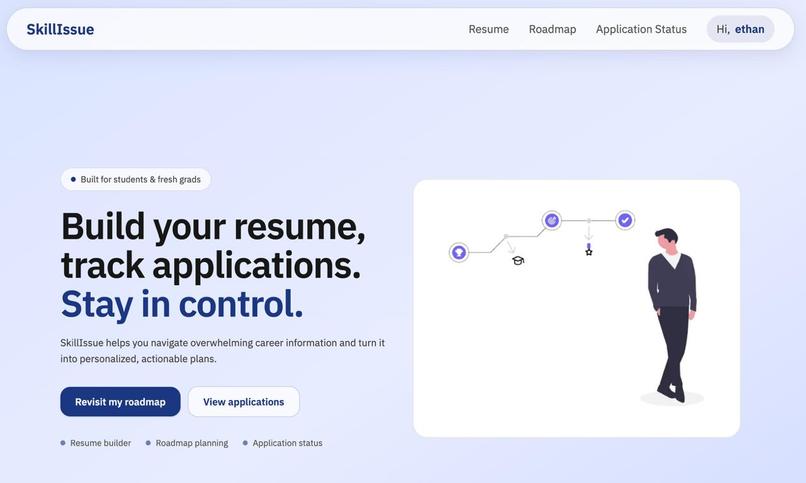
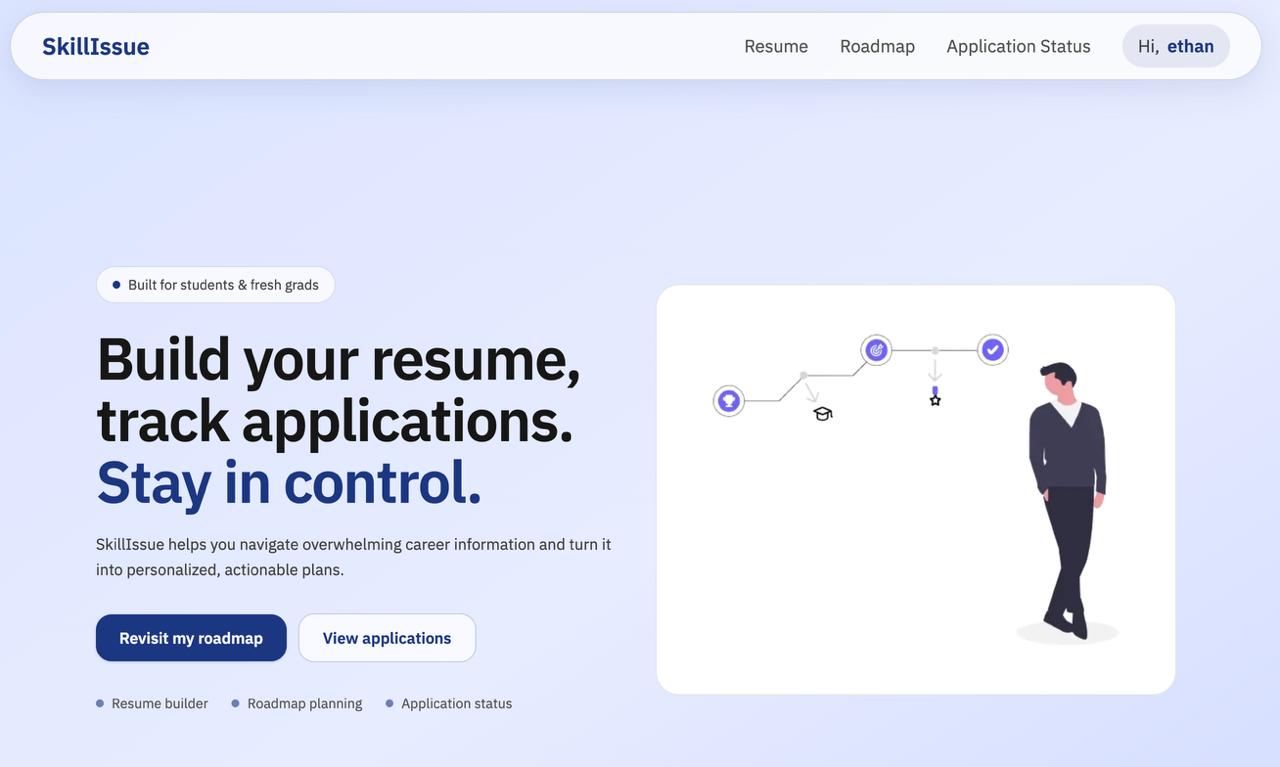
Landing Page
-
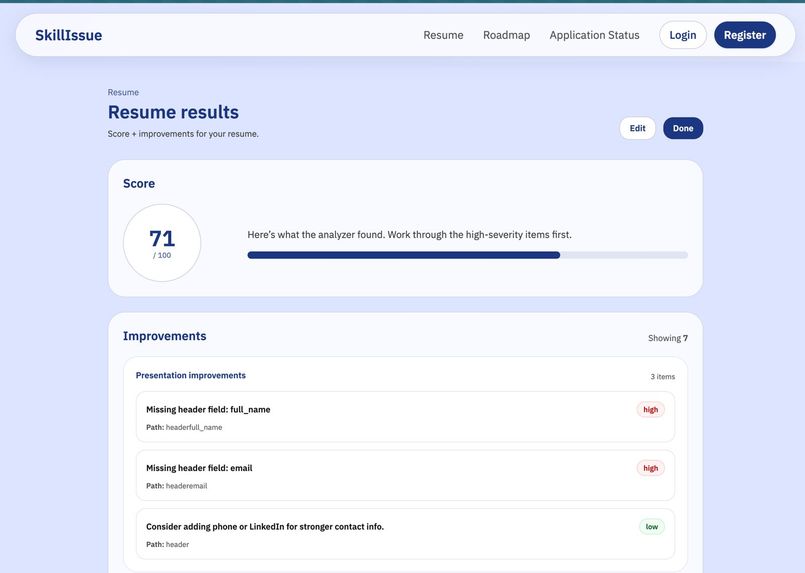
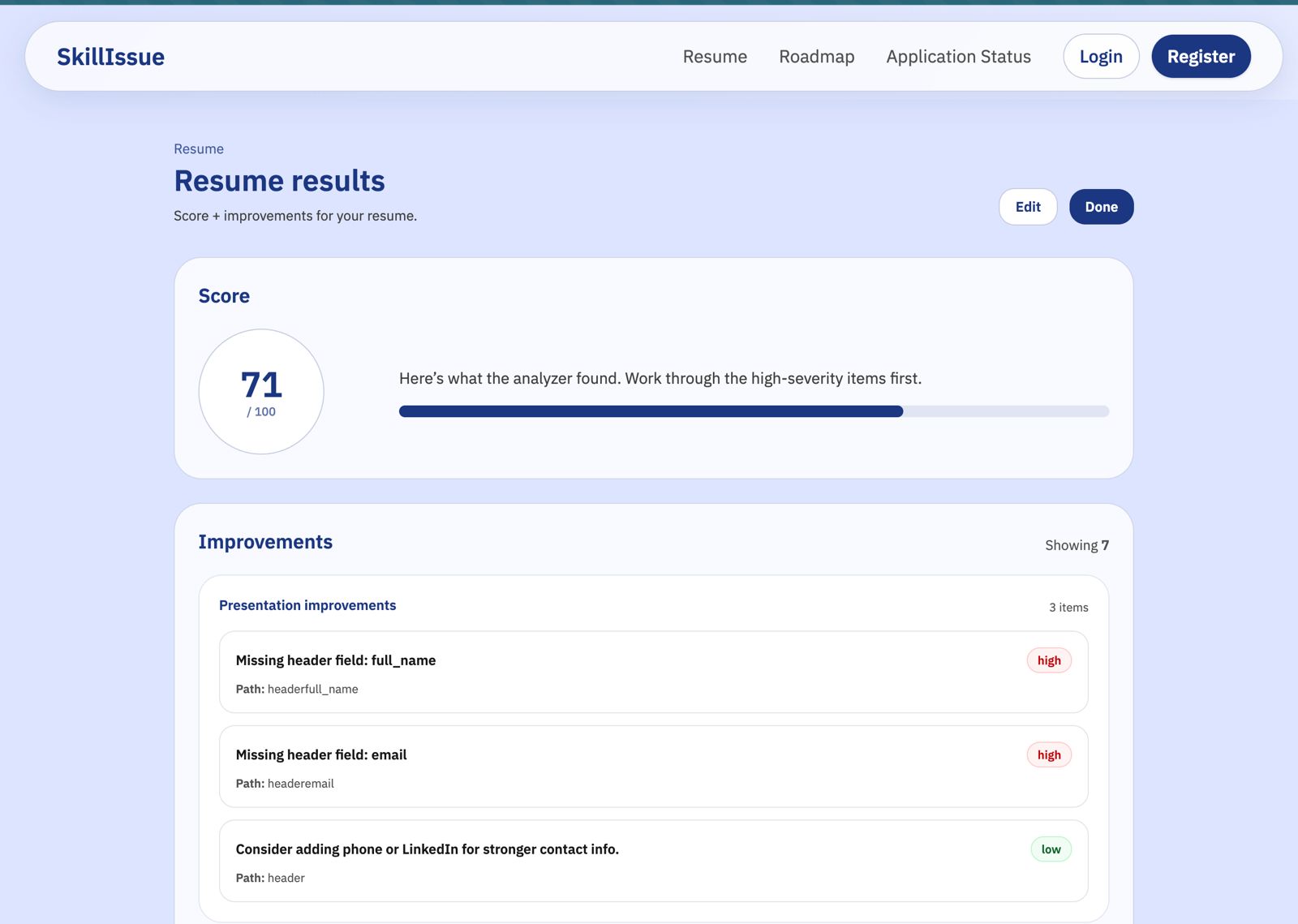
Resume Feedback
-
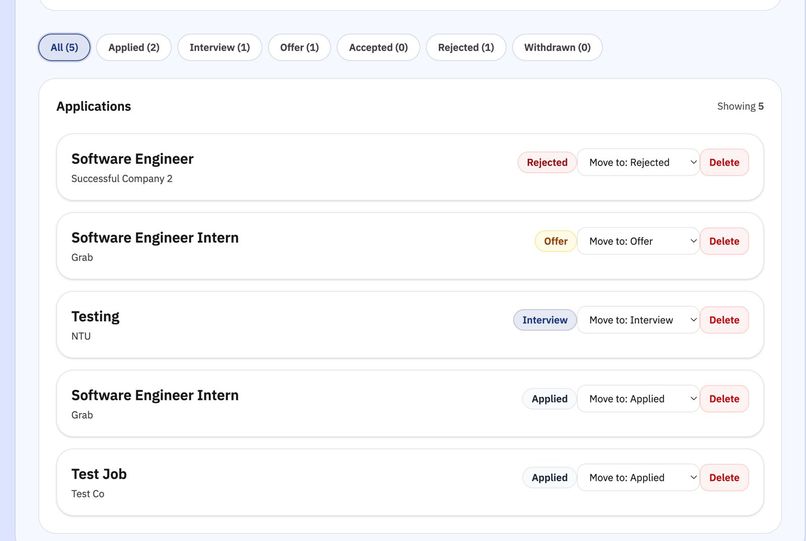
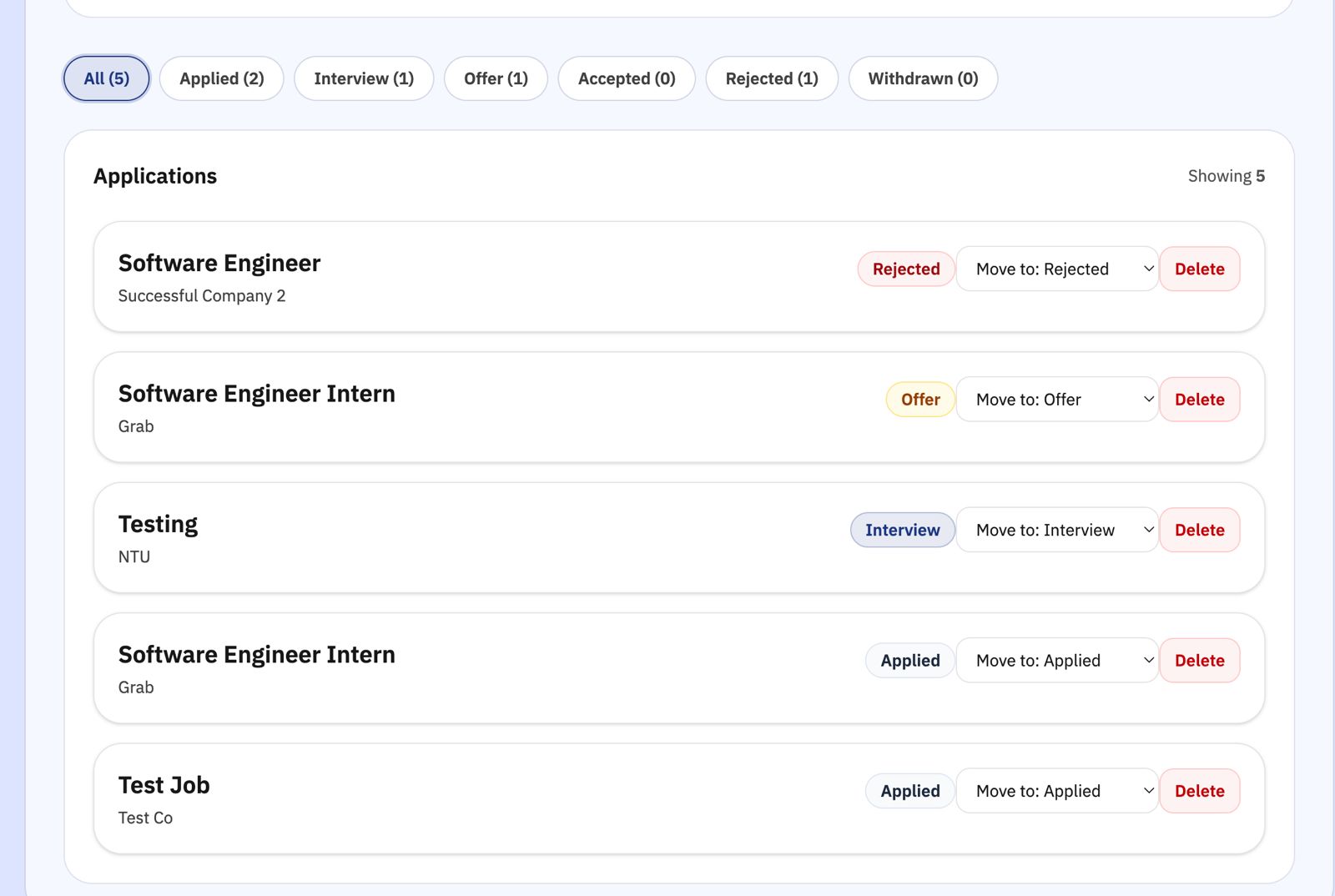
Application Status
-
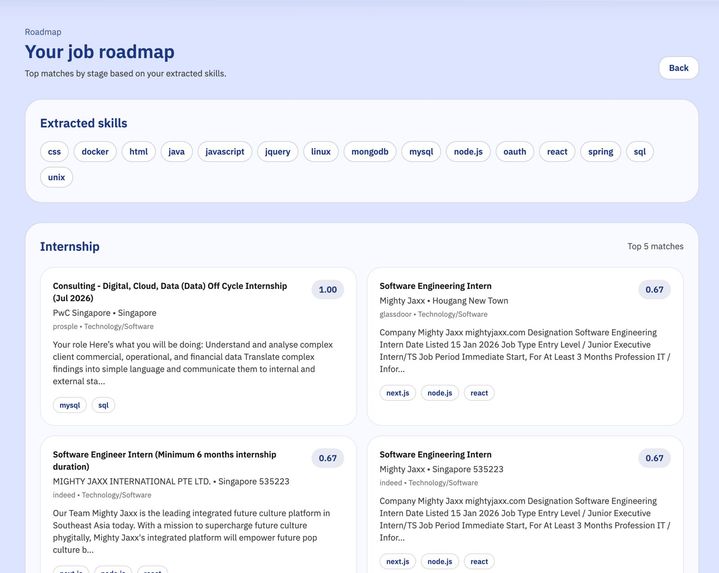
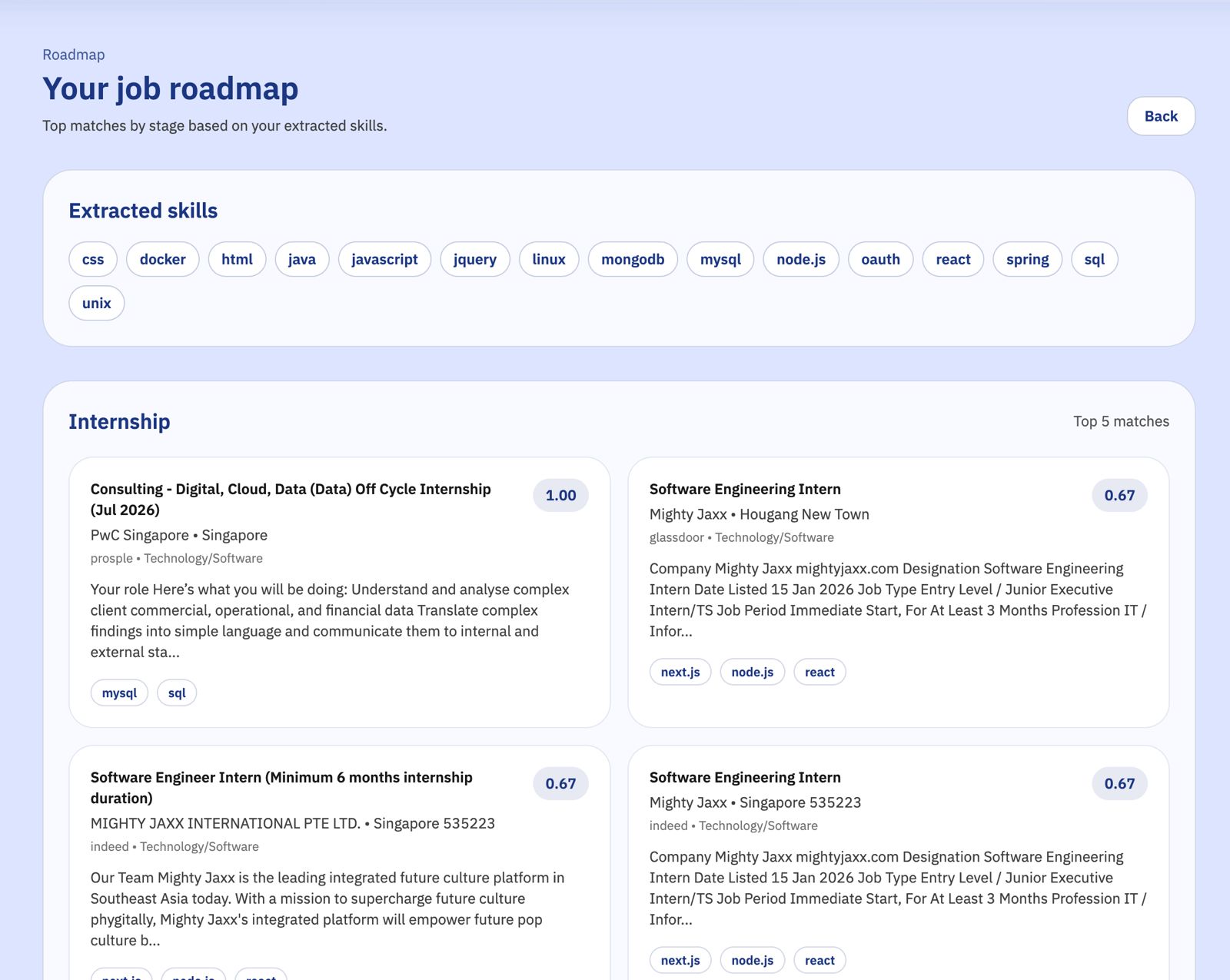
Job Roadmap based on Resume
SkillIssue
Our platform is designed to help students and early-career professionals navigate the job search journey in a structured, data-driven, yet flexible way.
In addition to the required features — centralized job data, advanced job filtering, transparent requirements, and application tracking — our team has developed several new features to further enhance the user experience and long-term career planning process.
First, we introduced a Resume Builder that allows users to upload their existing resume or manually input their experiences, projects, certifications, and skills. The system then structures this information into a clean, job-ready profile that can be easily reused across applications.
Building on this, we developed a Personalized Career Roadmap feature. Based on the user’s current profile and their target roles or companies, the system generates a clear progression path, highlighting the skills, tools, and experiences the user should focus on next to move closer to their career goals.
A key innovation of our platform is the Skill Gap Analysis. Using real job descriptions, the system compares the skills and qualifications required for a specific role against the skills the user currently possesses. The results are presented through: • Radar charts that visually compare the user’s skill categories against job requirements, and • Detailed breakdowns that clearly show matched skills, missing skills, and additional skills the user already has.
This allows users to quickly understand where they stand and identify concrete areas for improvement.
Finally, we implemented a Flexible Job Application Tracking System. Instead of enforcing a rigid, predefined hiring pipeline, users can manually update their application status at each stage. This accounts for real-world hiring processes that vary across companies or change unexpectedly. By combining structured status options with manual updates, the system remains both organized and adaptable, enabling users to accurately track progress across multiple job applications.
Together, these features create an end-to-end career navigation solution that transforms fragmented job search information into actionable insights and clear next steps.
How we built it
Frontend
- Built with Next.js (App Router) and React
- Clean, form-based resume builder with dynamic sections
- Results page that displays resume analysis and roadmap
- Client-side routing and state persistence using sessionStorage ### Backend
- Built with FastAPI
- Resume parsing pipeline (PDF/DOCX → structured JSON)
- Skill extraction and normalization
- Resume analysis and scoring logic
- Roadmap generation based on skill gaps and target roles
- JSON persistence for reuse across profile, roadmap, and analytics ### Pipeline Flow defaults to numbered list:
- Resume uploaded or manually created
- Resume parsed into structured JSON
- Skills extracted and analyzed
- Resume scored and feedback generated
5. Roadmap produced and returned to frontend
Challenges we ran into
- Unifying different resume inputs (manual form vs uploaded PDFs)
- Designing a JSON schema flexible enough for resumes, profiles, and roadmaps
- Handling client-side routing and state persistence without losing data on refresh
- Ensuring the backend pipeline stayed modular as features expanded
- Debugging frontend-backend integration during rapid iteration
What we learned
- Good UX is as important as good algorithms
- Clear data contracts (JSON schemas) save massive debugging time
- Career problems are less about lack of data and more about lack of direction
- Building modular systems makes experimentation much faster
- Full-stack integration requires constant feedback between frontend and backend ---
Built With
- fastapi
- prisma
- python
- react
- sqlite
- tailwind
- typescript

Log in or sign up for Devpost to join the conversation.