Inspiration
Hiring today is still broken. Most Applicant Tracking Systems rely on keyword matching, which fails to capture real capability. A candidate may understand container orchestration deeply but never explicitly write “Kubernetes” on their resume — and gets filtered out.
As a student engineer preparing for industry roles, I experienced this gap firsthand. I wanted to build a system that evaluates candidates the way a senior hiring manager would: by understanding context, depth, and risk — not keywords.
That led to SkillGap Radar.
What it does
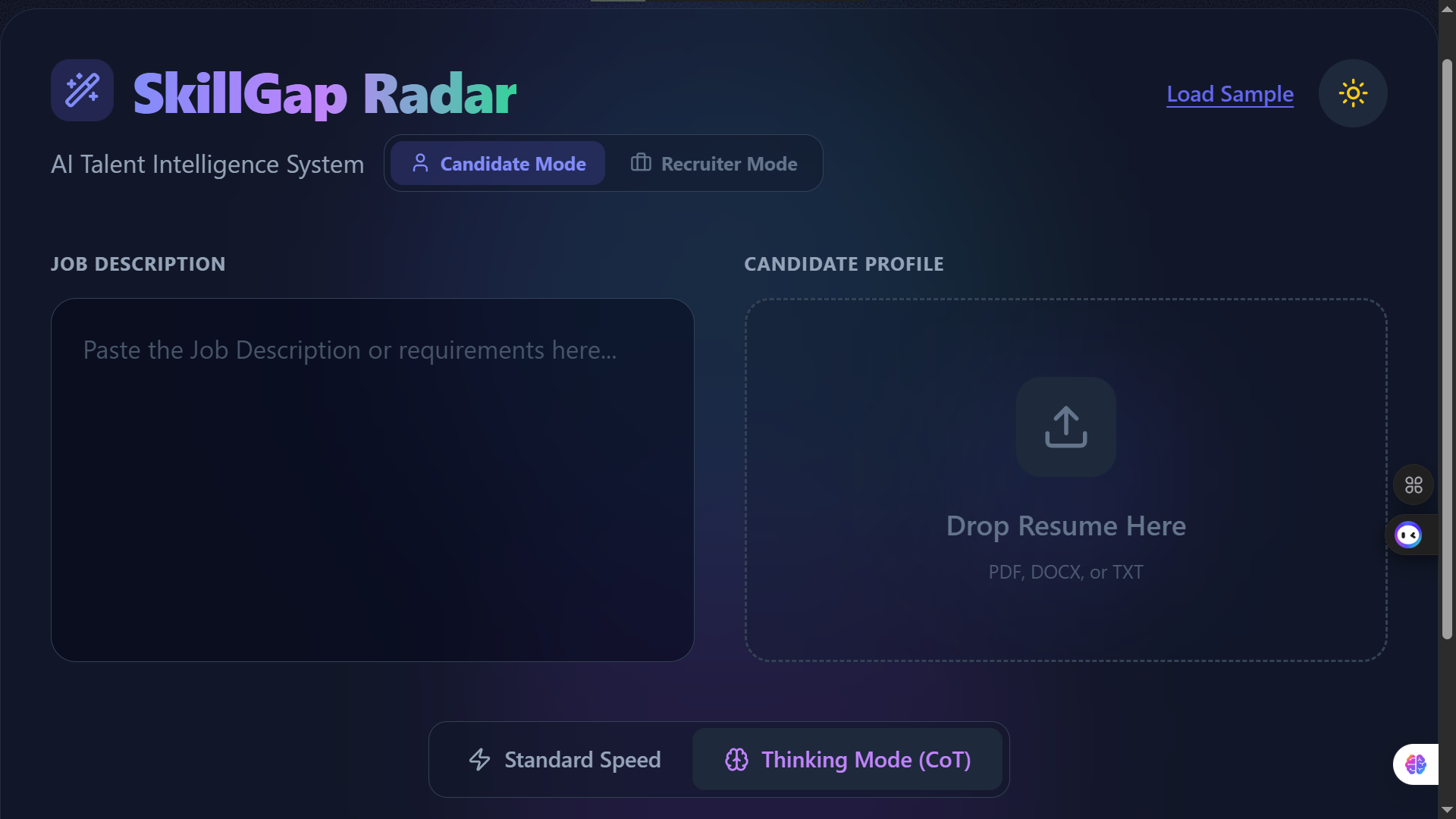
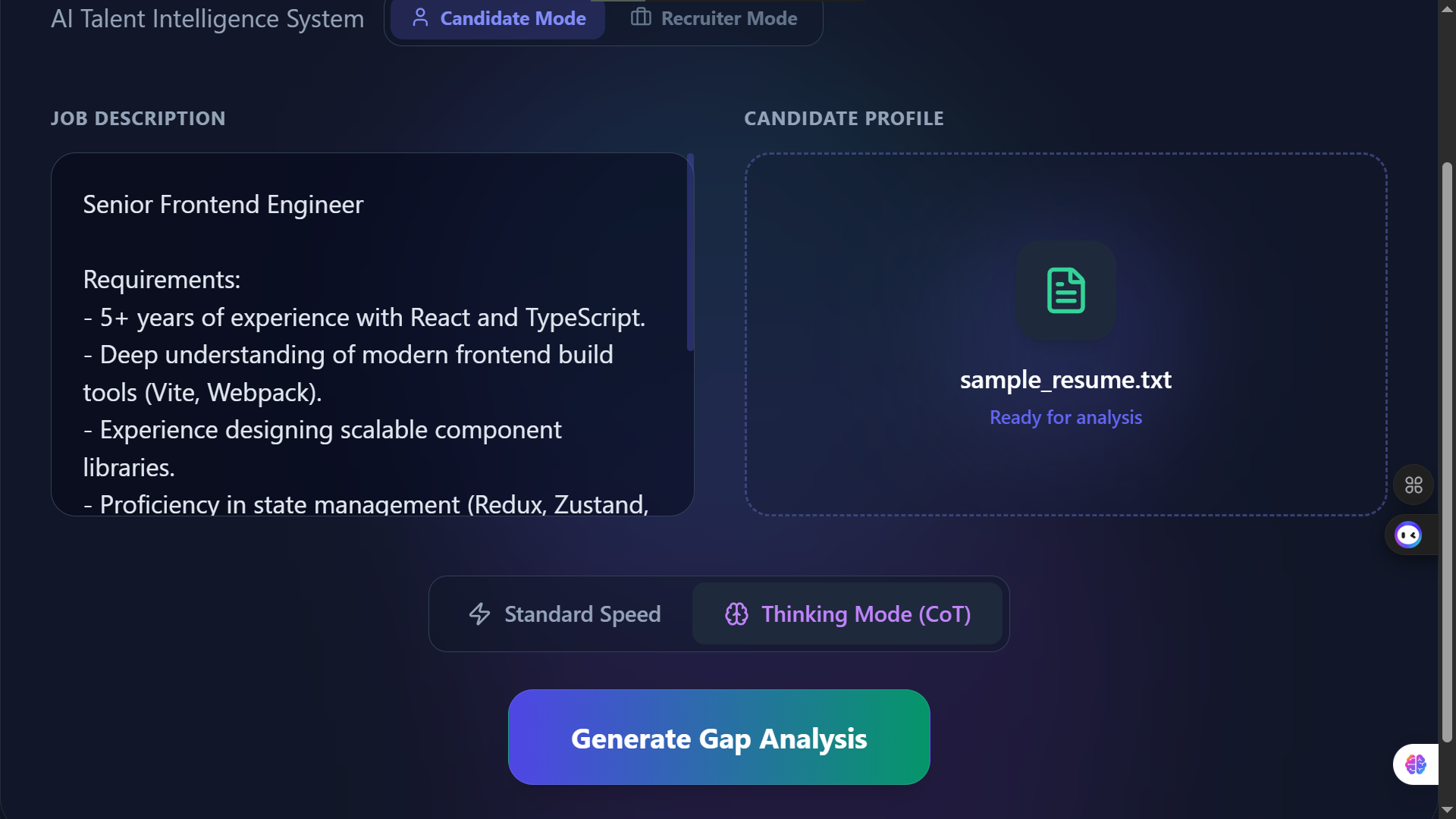
SkillGap Radar is an AI-powered decision-support system that performs semantic skill gap analysis between a Job Description and a Candidate Profile.
Instead of asking “Do these words match?”, it asks:
- What skills are implicitly required?
- What level of competency is expected vs. demonstrated?
- What business risk does a missing skill introduce?
- Can the gap be closed with targeted upskilling?
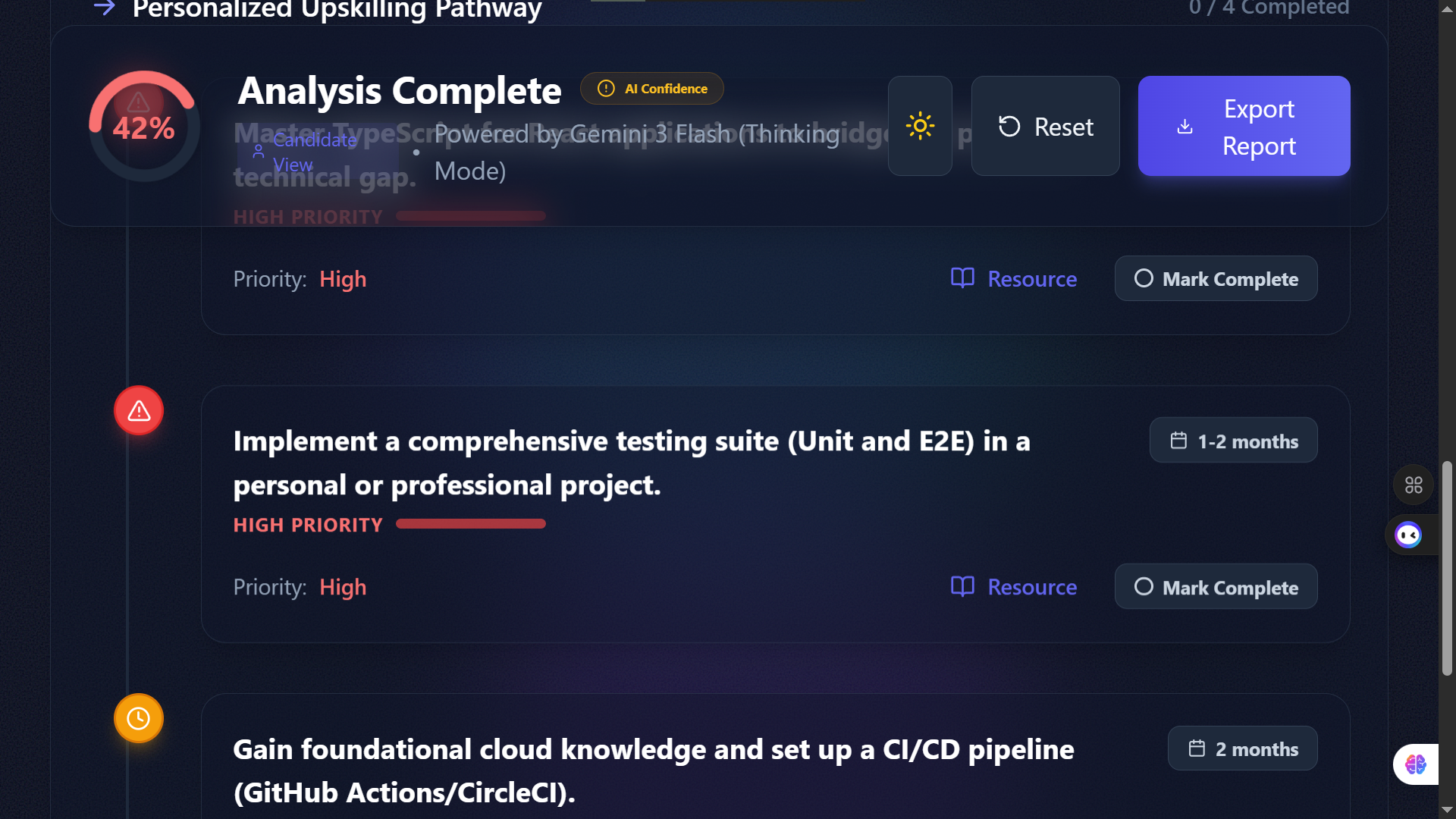
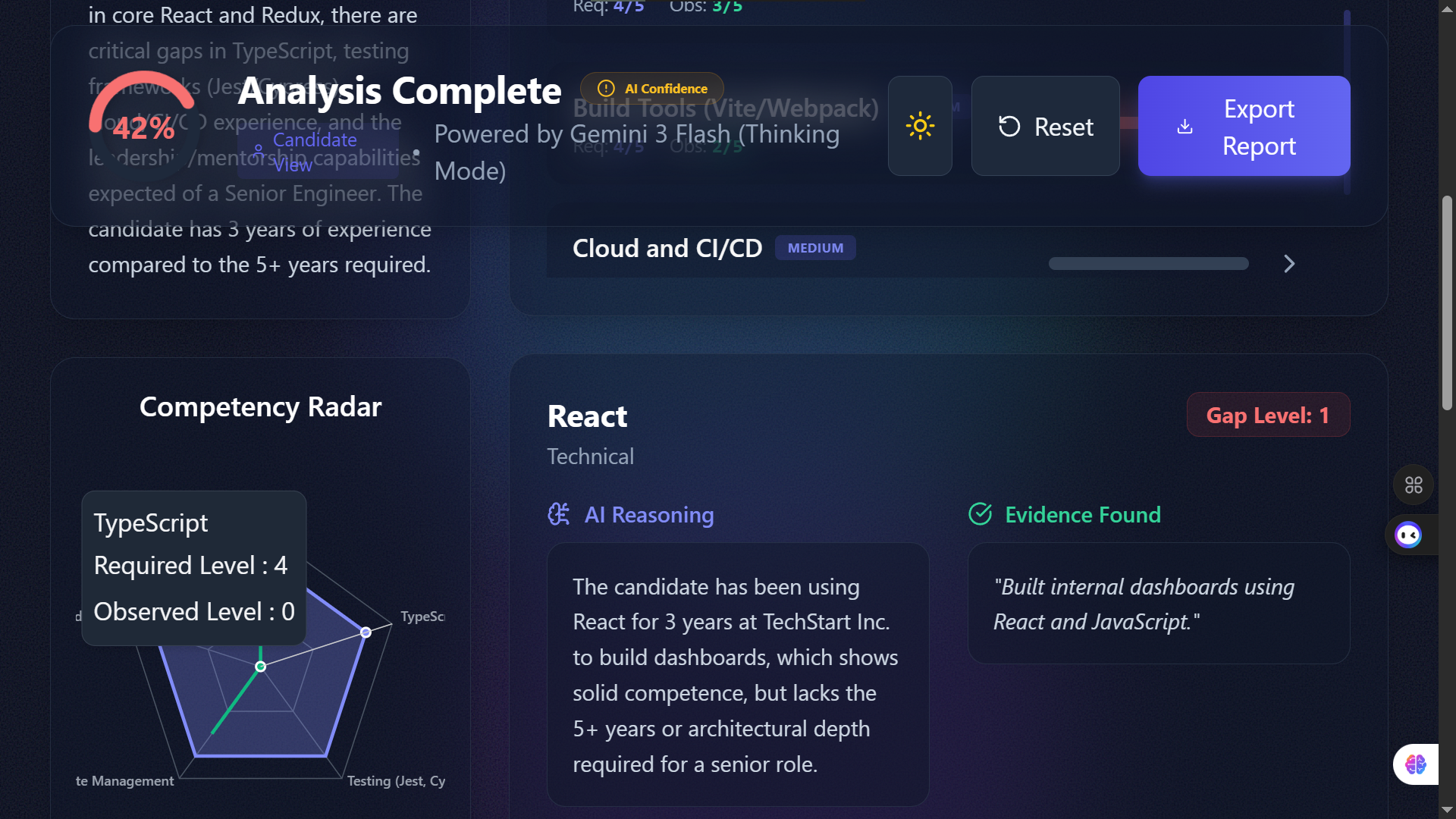
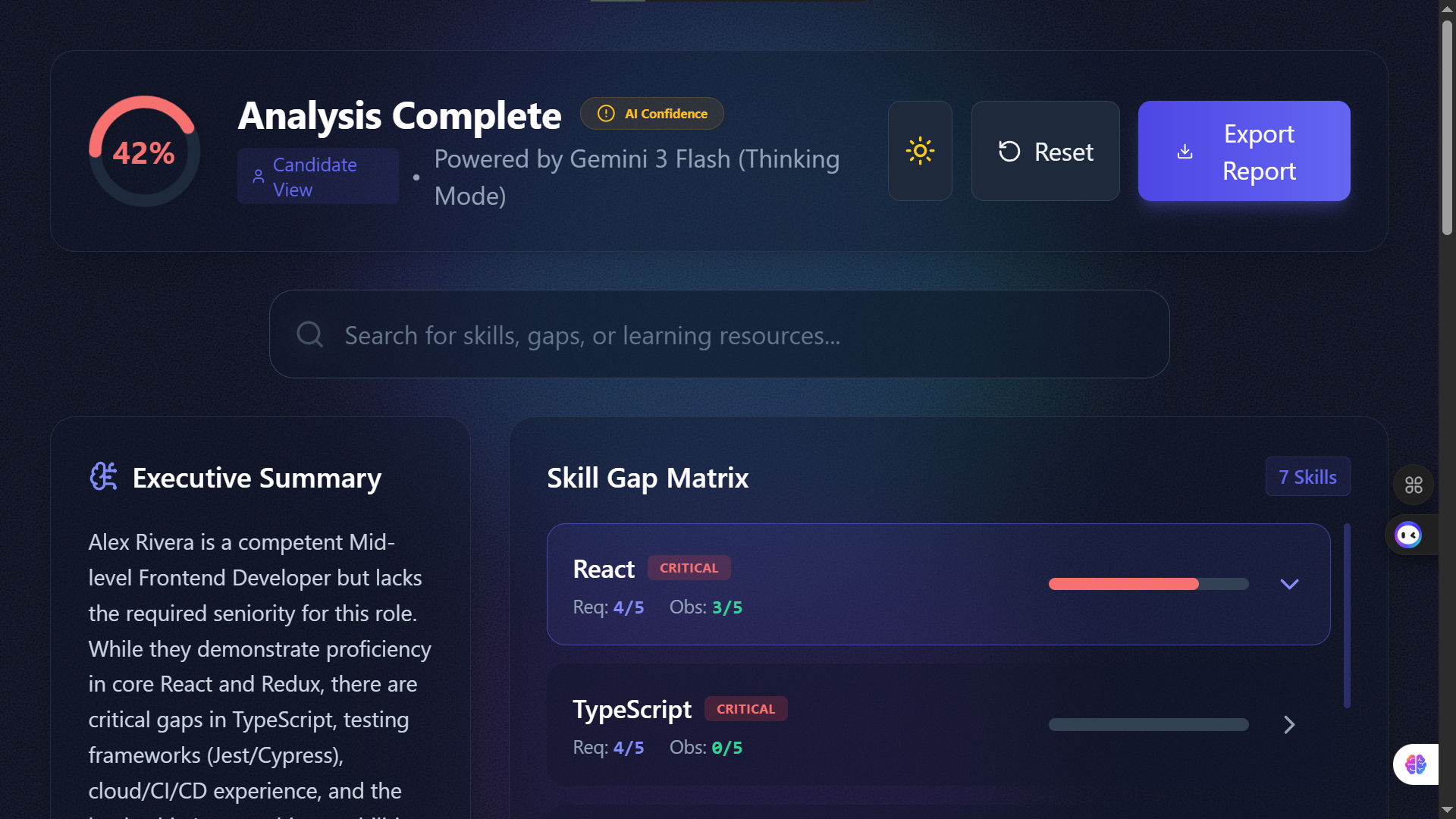
The output is a clear executive dashboard showing match score, critical gaps, risk areas, and a personalized learning pathway.
How we built it
The application is built as a modern single-page web app using React + TypeScript and powered by Google Gemini 3.
At the core is a carefully engineered Gemini prompt that:
- Infers implicit skills from the JD
- Scores required vs. observed competency on a 1–5 scale
- Calculates gaps mathematically
- Explains reasoning with evidence
- Generates an actionable learning plan
The Gemini API is used in structured JSON mode, ensuring reliable, schema-safe outputs for visualization. Optional “Thinking Mode” allocates a reasoning budget so the model deeply analyzes profiles before responding.
Results are visualized using radar charts, gap matrices, and risk indicators to make decisions immediately actionable.
Challenges we faced
- Prompt reliability: Ensuring Gemini always returns valid structured JSON required strict schemas and defensive prompt design.
- Resume parsing: Supporting PDF, DOCX, and TXT formats while preserving semantic meaning.
- UX clarity: Presenting complex AI reasoning in a way that non-technical hiring managers can understand in seconds.
What we learned
- Semantic reasoning dramatically outperforms keyword matching for hiring decisions.
- Structured AI outputs are essential for production-grade applications.
- Gemini 3’s long-context reasoning enables entirely new classes of decision-support tools.
What’s next
- Team-level workforce gap analysis
- Role-to-training marketplace integration
- Enterprise deployment with access controls and audit logs
SkillGap Radar represents a shift from filtering candidates to understanding potential.


Log in or sign up for Devpost to join the conversation.