-
-
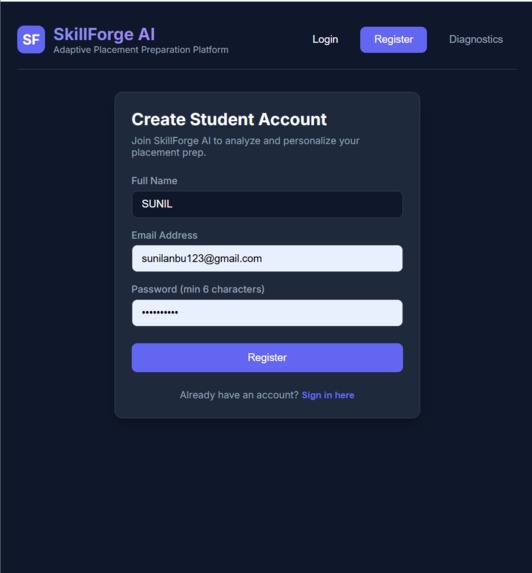
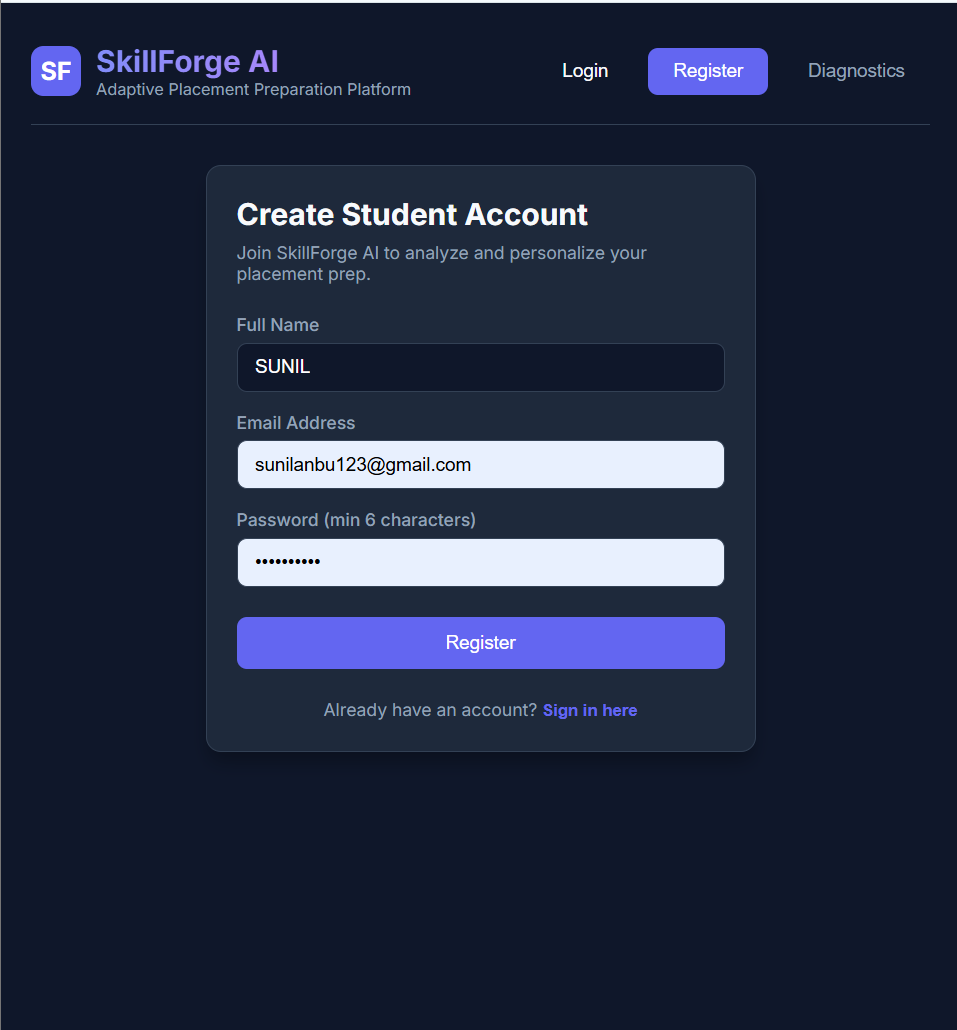
REGISTER PAGE
-
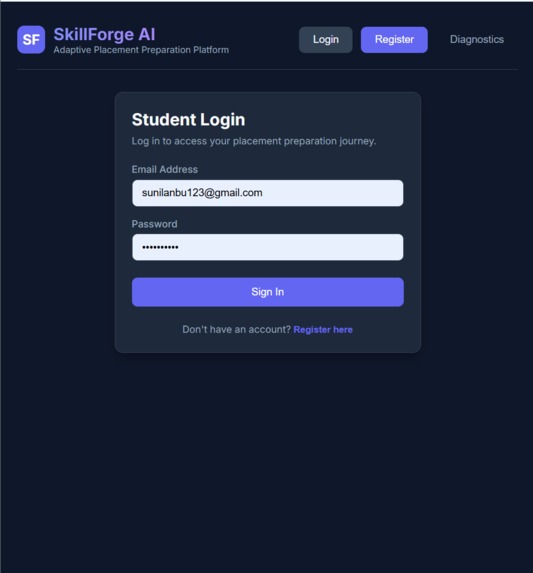
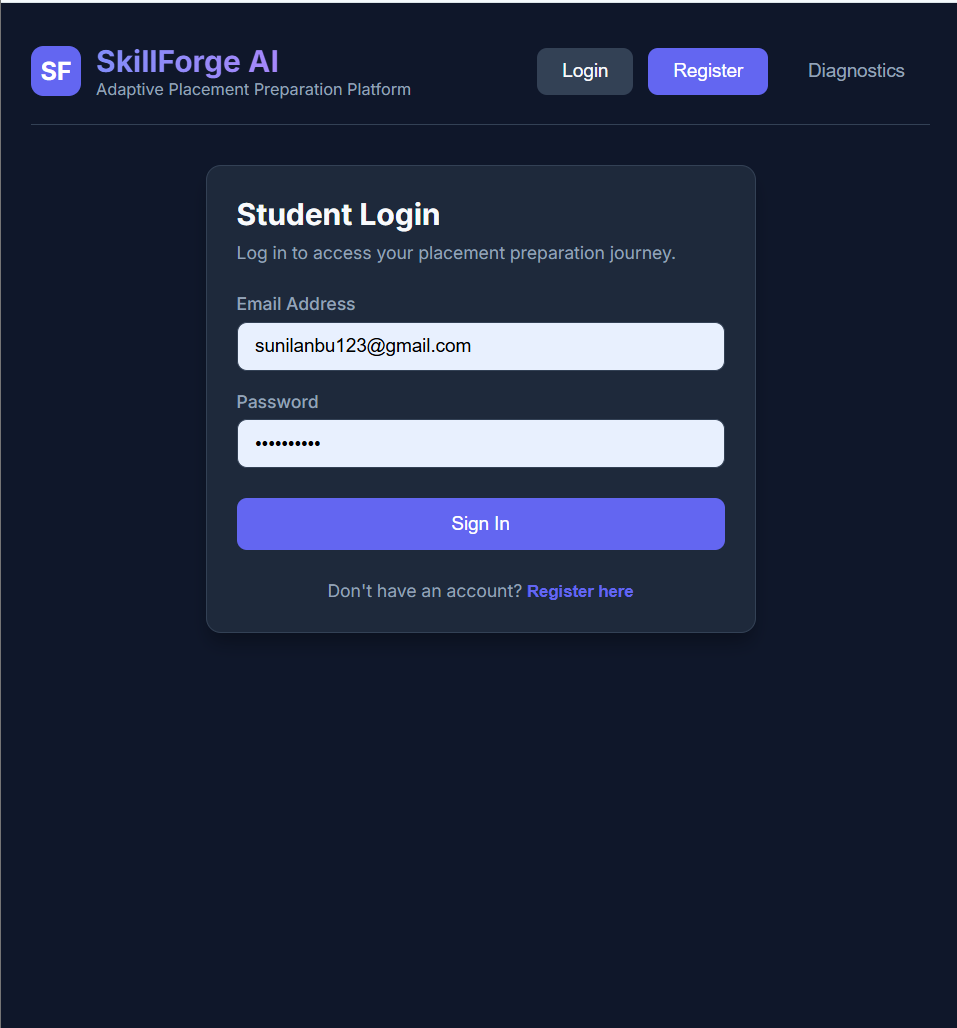
LOGIN PAGE
-
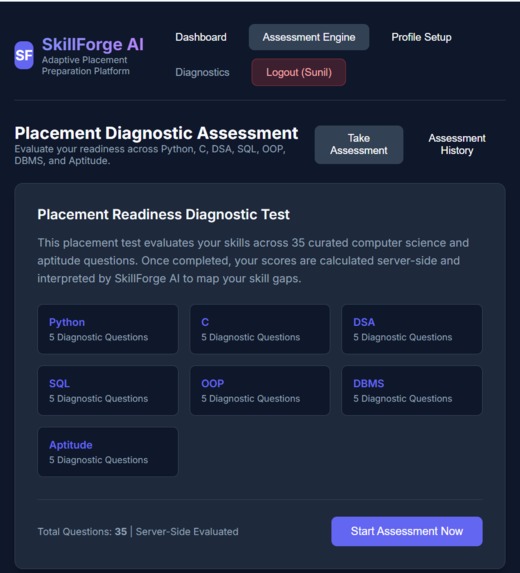
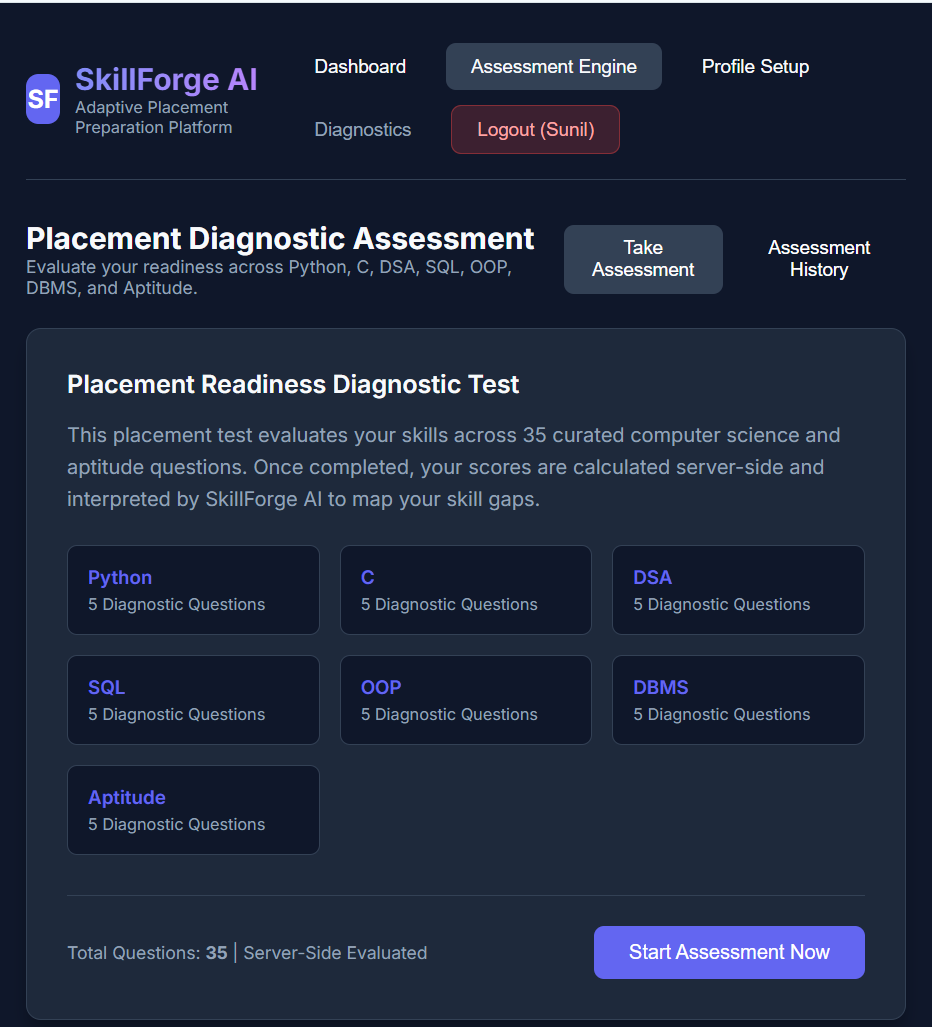
ASSESMENT TAKING PAGE
-
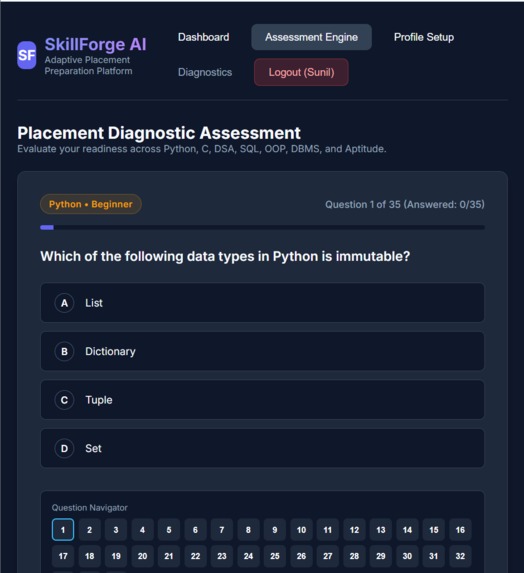
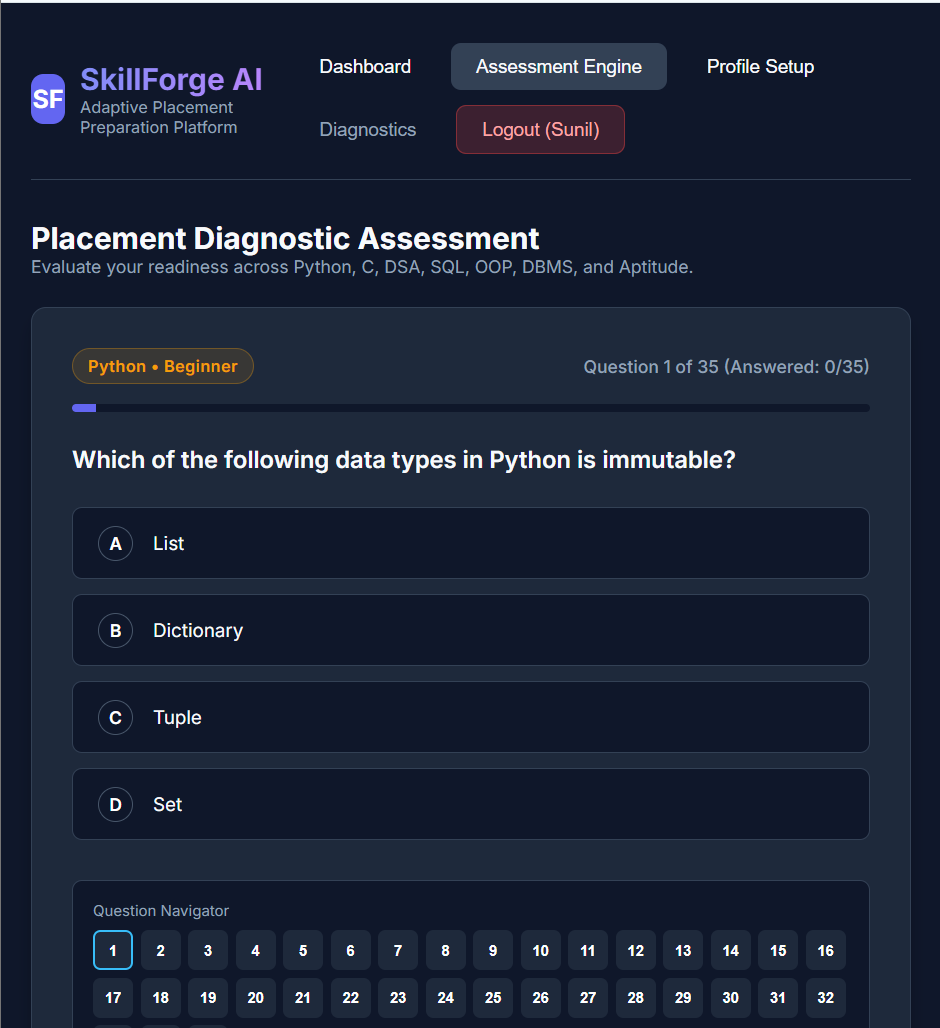
QUESTION PAGE
-
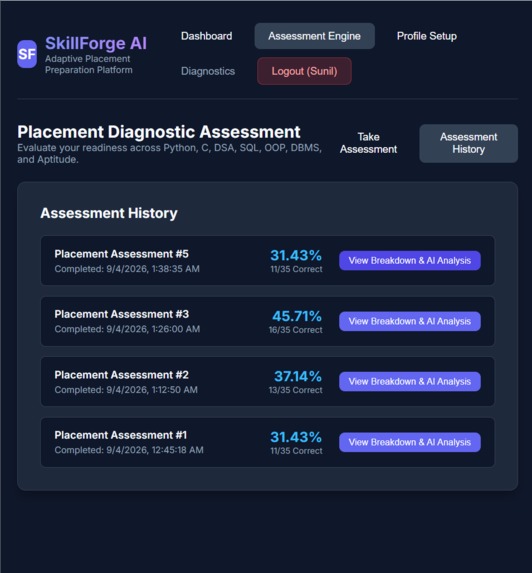
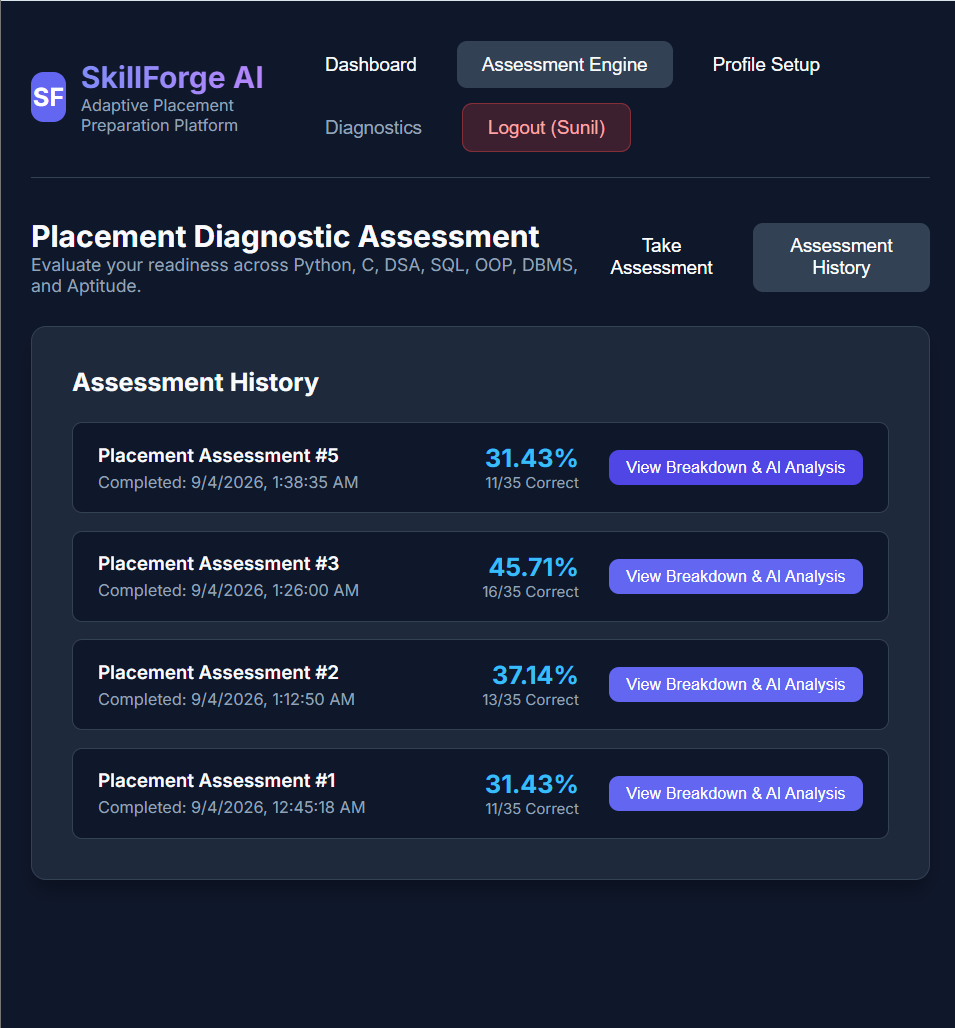
ASSESMENT HISTORT PAGE
-
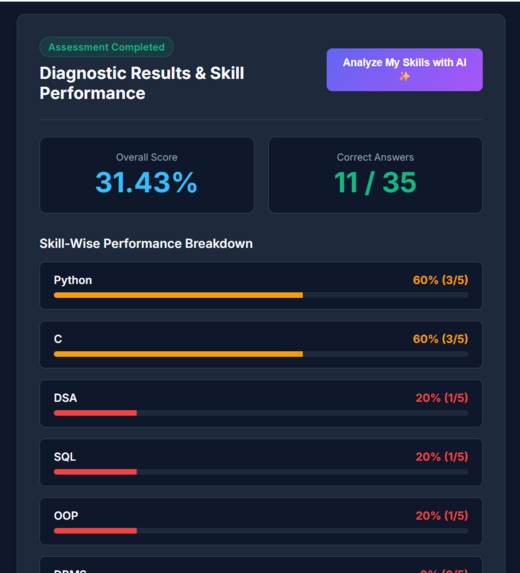
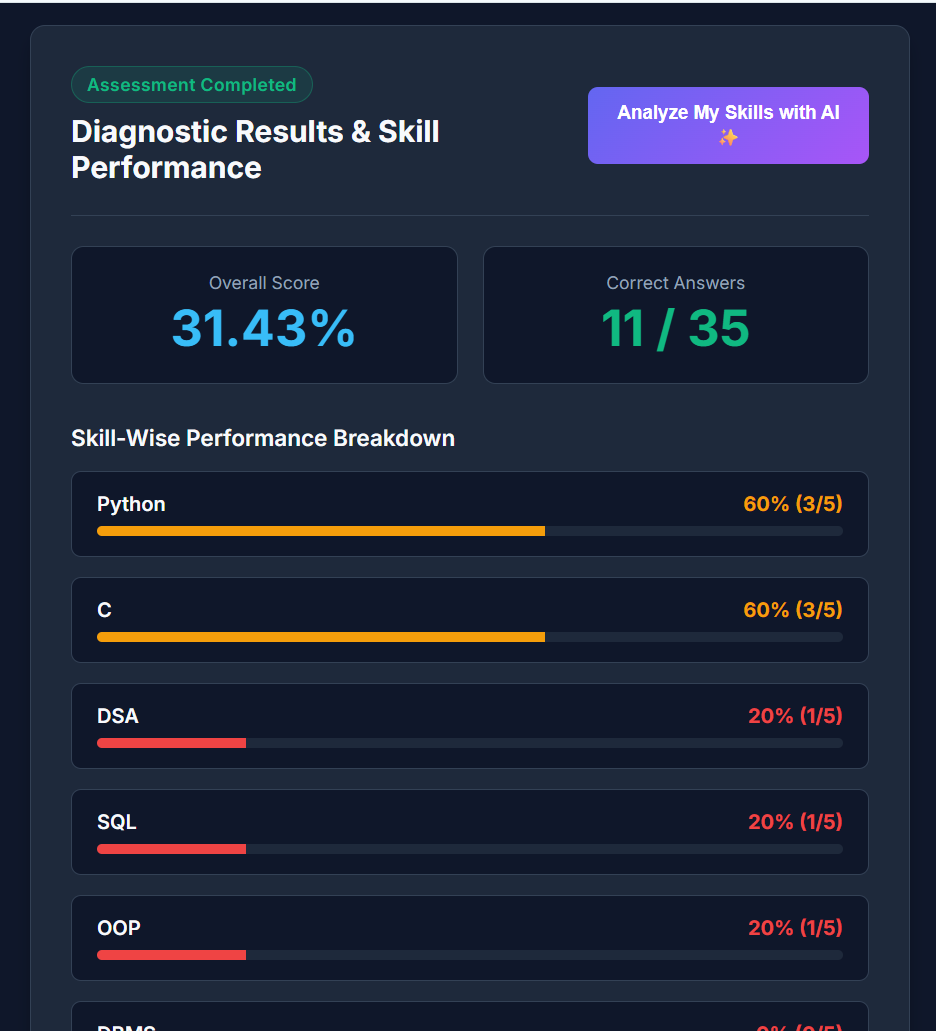
SCORE AND DETAILS PAGE
-
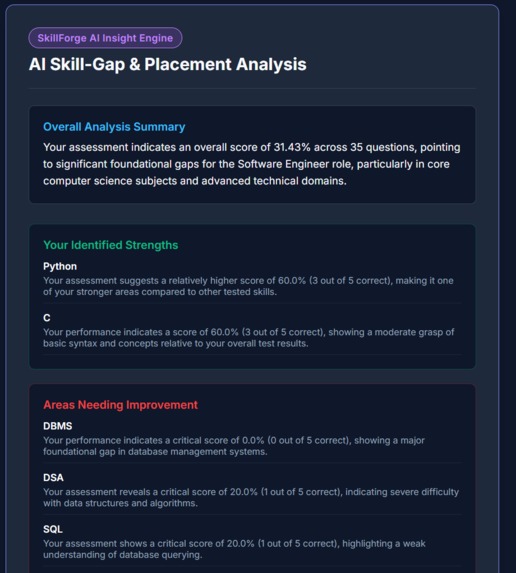
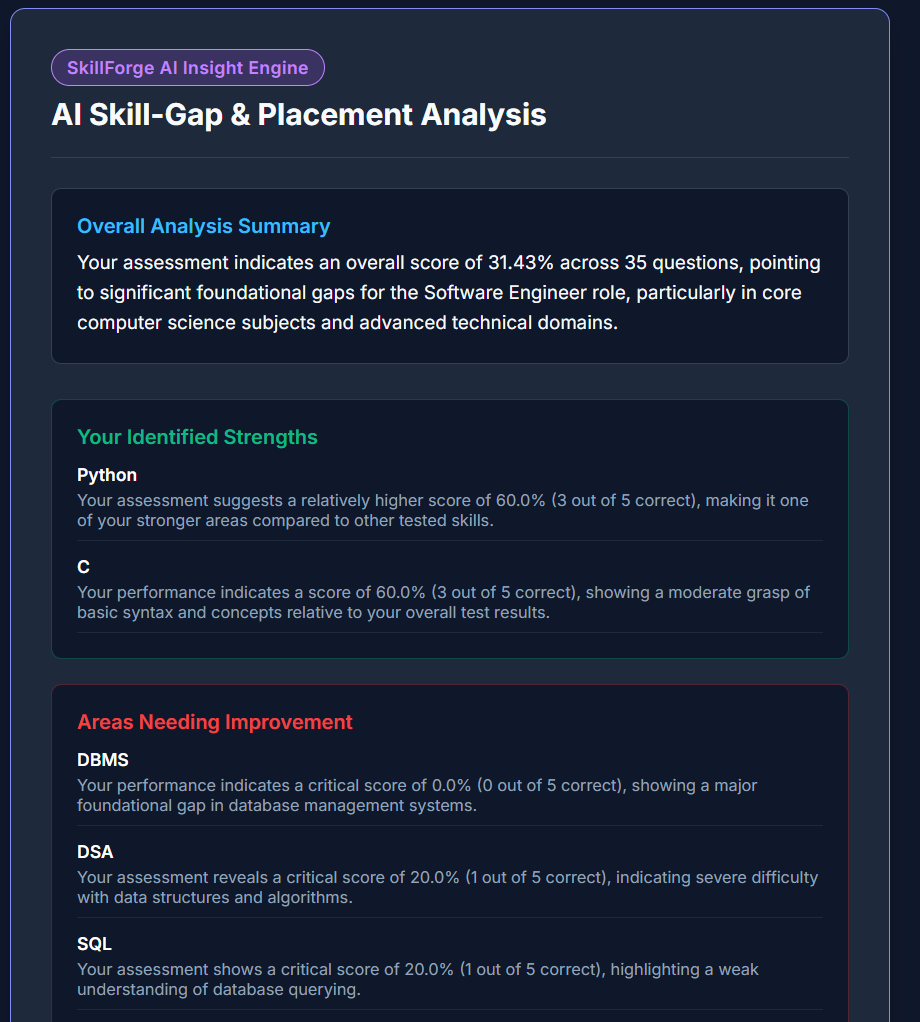
AI ANALYSIS PAGE
-
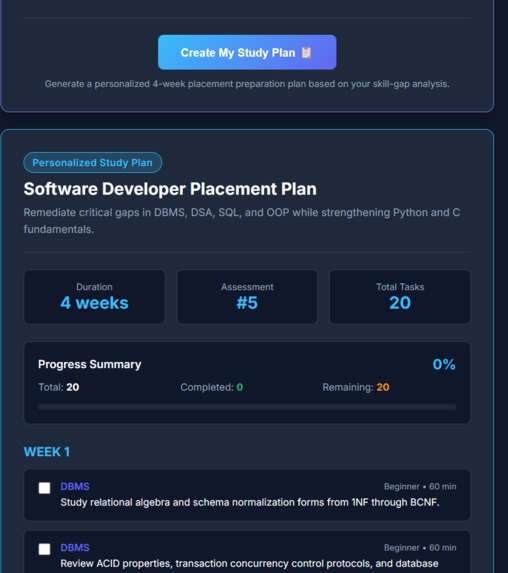
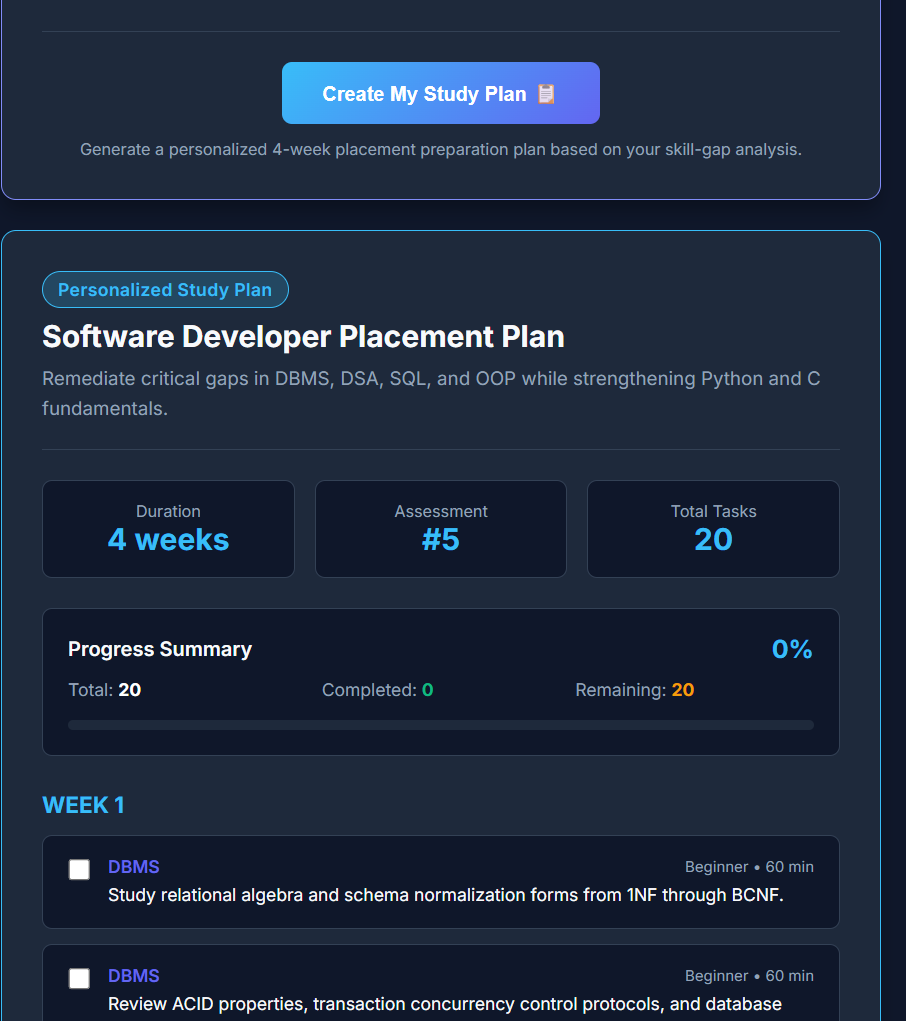
SCHEDULING PAGE
-
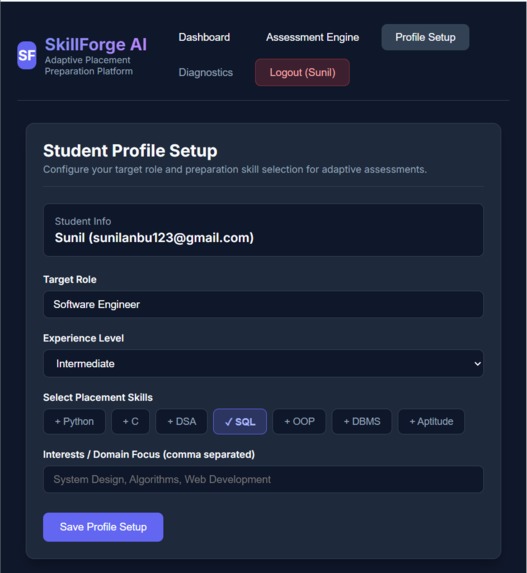
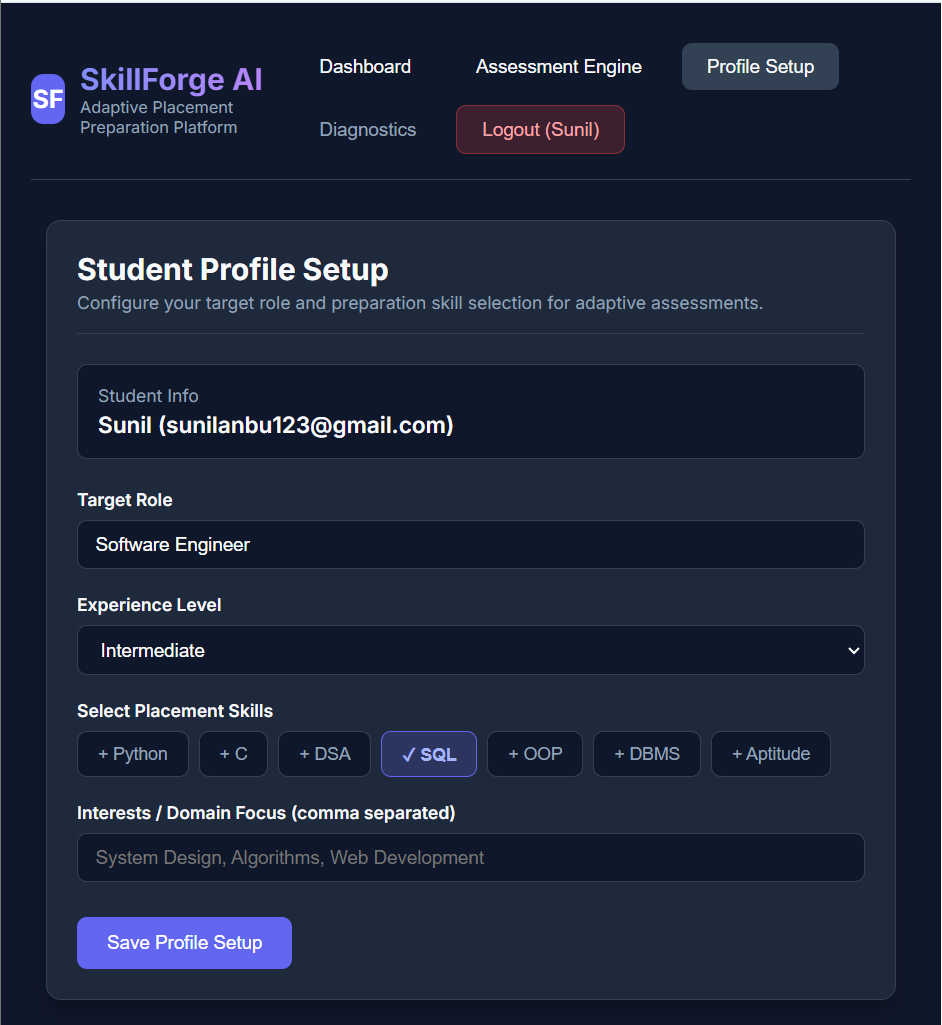
PROFILE PAGE
-
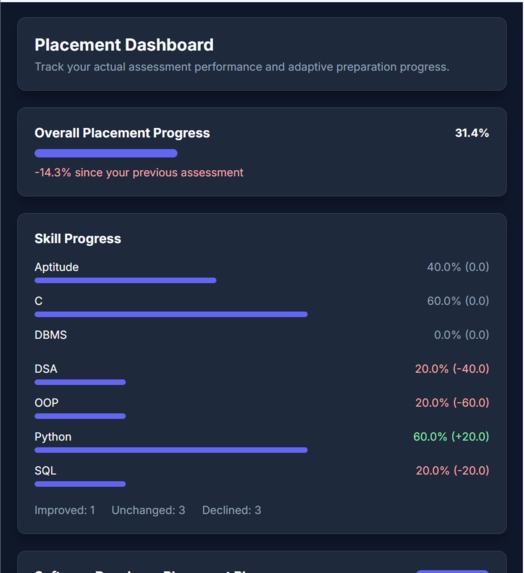
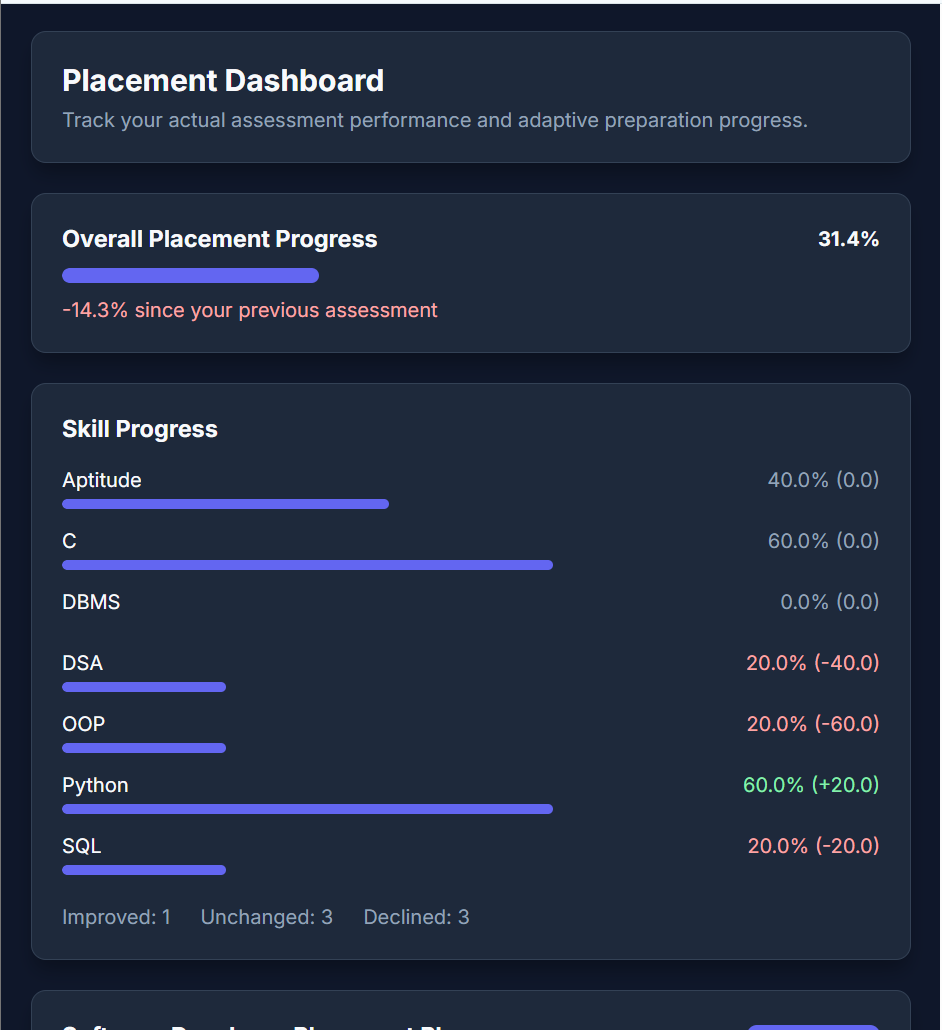
DASHBOARD PAGE
Inspiration
Preparing for software placements is often confusing for college students. Most students follow generic roadmaps, practice random coding questions, and take quizzes, but they rarely know what skills are actually holding them back.
A student might score well in Python and SQL but struggle to solve an unfamiliar DSA problem. Another student might understand DSA concepts but have difficulty applying them during problem solving. A normal score does not always reveal these hidden gaps.
We wanted to build a system that looks beyond simple quiz scores and helps students understand their actual placement preparation needs.
This led us to build SkillForge AI, an adaptive AI-powered placement preparation platform.
What it does
SkillForge AI creates a personalized skill profile for each student through assessments covering areas such as programming, DSA, SQL, OOP, DBMS, and aptitude.
Instead of giving every student the same preparation plan, the system analyzes their performance and identifies:
- Strong skills
- Weak skills
- Skill gaps
- Areas that need more practice
- Areas where the student can reduce unnecessary practice
The AI then generates a personalized learning roadmap and weekly preparation tasks.
The important part is that the plan is adaptive.
When the student takes another assessment, their new performance is compared with their previous results. If a weak skill improves, the system can increase the difficulty or move to the next topic. If a skill continues to remain weak, the system can recommend additional practice or a different learning approach.
This creates a continuous cycle:
Assess → Analyze → Personalize → Practice → Reassess → Adapt
How we built it
The application is designed as a full-stack system.
The frontend provides the student interface for registration, profile setup, assessments, results, personalized recommendations, and progress tracking.
The backend is built with Python and FastAPI, providing REST APIs for authentication, assessments, scoring, skill analysis, study plans, and progress data.
A relational database stores student profiles, skills, questions, assessment results, skill-wise scores, recommendations, study plans, and progress history.
The AI layer receives structured performance data rather than simply acting as a chatbot. It analyzes the student's skill profile and generates recommendations and personalized preparation plans based on their current needs.
AI/ML
AI is a core part of SkillForge AI rather than an additional chatbot feature.
The system converts assessment results into a structured representation of the student's skills. This information is used to identify patterns such as:
- Strong knowledge but weak application
- Consistently weak topics
- Skills that are improving
- Skills that may require revision
- Topics that should receive higher priority
The AI uses this information to generate an individualized preparation strategy.
For example, if a student performs strongly in SQL but poorly in DSA, the system can prioritize DSA practice instead of continuing to spend equal preparation time on SQL.
After a later assessment shows improvement in DSA, the recommendations can change accordingly.
Challenges
One of our main challenges was designing the system so that AI recommendations are based on measurable student performance rather than generic advice.
Another challenge was keeping the project practical for a solo development team while still making the AI component meaningful.
We therefore focused on building a working core system first: assessment, scoring, skill analysis, AI recommendations, personalized planning, and progress tracking. More advanced features can be added after the core adaptive loop is stable.
What we learned
Through this project, we are exploring how AI can be integrated into a real-world full-stack application instead of being used only as a conversational interface.
We are also learning how to structure user performance data, design REST APIs, work with relational databases, integrate AI services, and build an application where recommendations change according to new data.
Most importantly, we learned that personalization becomes much more useful when it is based on continuous measurement and feedback rather than a one-time assessment.
What's next
Future versions of SkillForge AI could include:
- Adaptive coding questions
- Resume skill analysis
- Job-role matching
- AI interview simulation
- Coding performance analysis
- GitHub-based skill analysis
- Skill retention tracking
- More detailed placement-readiness analysis
Our long-term goal is to make SkillForge AI a personal placement coach that continuously understands a student's progress and helps them focus their limited preparation time on the skills that matter most.
Built With
- adaptive
- ai
- api
- app
- artificial
- education
- fastapi
- gemini
- generative
- github
- intelligence
- javascript
- jwt
- learning
- machine
- personalized
- postgresql
- python
- react
- rest
- sqlalchemy
- technology
- vite
- web

Log in or sign up for Devpost to join the conversation.