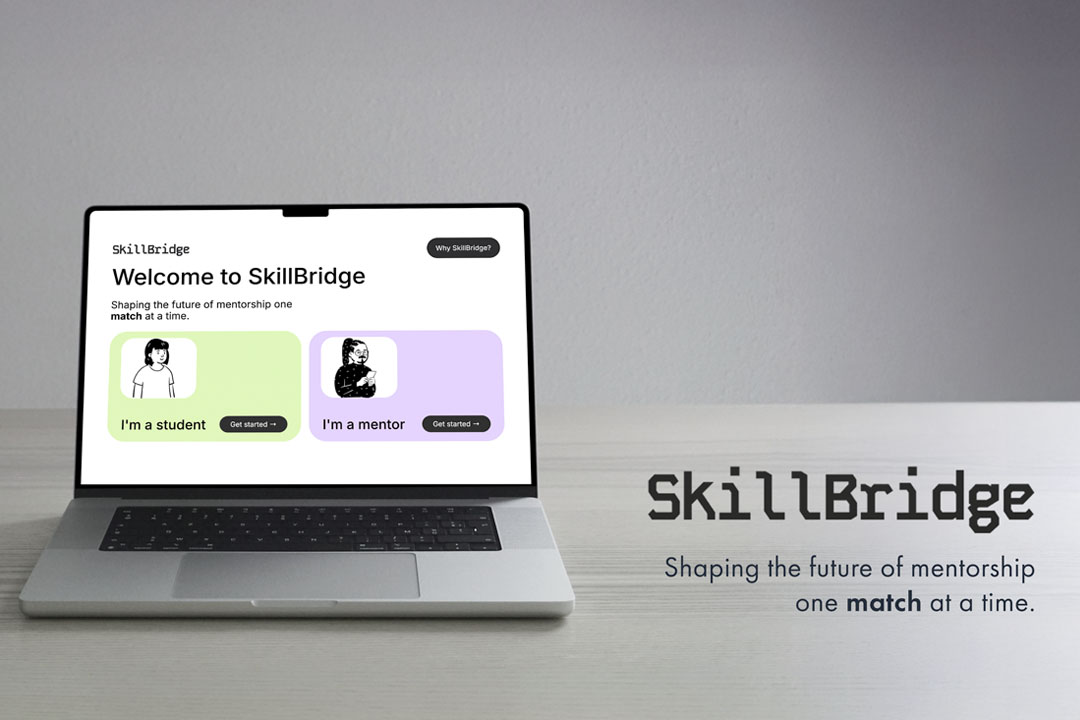
SkillBridge: Shaping the future of mentorship one match at a time
Inspiration
Participating in our first hackathon, our team entered with a mix of excitement and uncertainty. Three of our team members are from Ukraine, and our unique experiences have profoundly shaped our perspective on the value of education. Facing challenges with an unstable educational system and the disruptions of war, we deeply understand how difficult it can be to pursue high-quality knowledge. The countless hours spent in bomb shelters, searching for fragments of new information, taught us the extraordinary value of learning and its role in shaping opportunities.
Having equal access to educational opportunities is something we can thank technology for. The role of a mentor is especially important in a student’s life, particularly in today’s competitive markets with an abundance of career paths—paths that can feel overwhelming to navigate alone. A mentor’s guidance can make all the difference!
When we researched existing mentorship programs, we found that many are quite expensive and inaccessible. Even when professionals on platforms like LinkedIn want to help, they often just don’t know which service to use. This limitation inspired us to create SkillBridge: a platform that matches students with mentors based on their interests and the skills they wish to develop.
SkillBridge not only connects mentors and students but also builds bridges across cultures, skills, and languages. Three of our team members are from Ukraine, and we understand the challenges of accessing mentorship without the right connections or resources. Our goal is to democratize mentorship opportunities, empowering students to gain expertise from professionals while enabling mentors to share their knowledge effectively. By doing so, we can make a meaningful impact in the tech community both in the U.S. and globally.
What it does
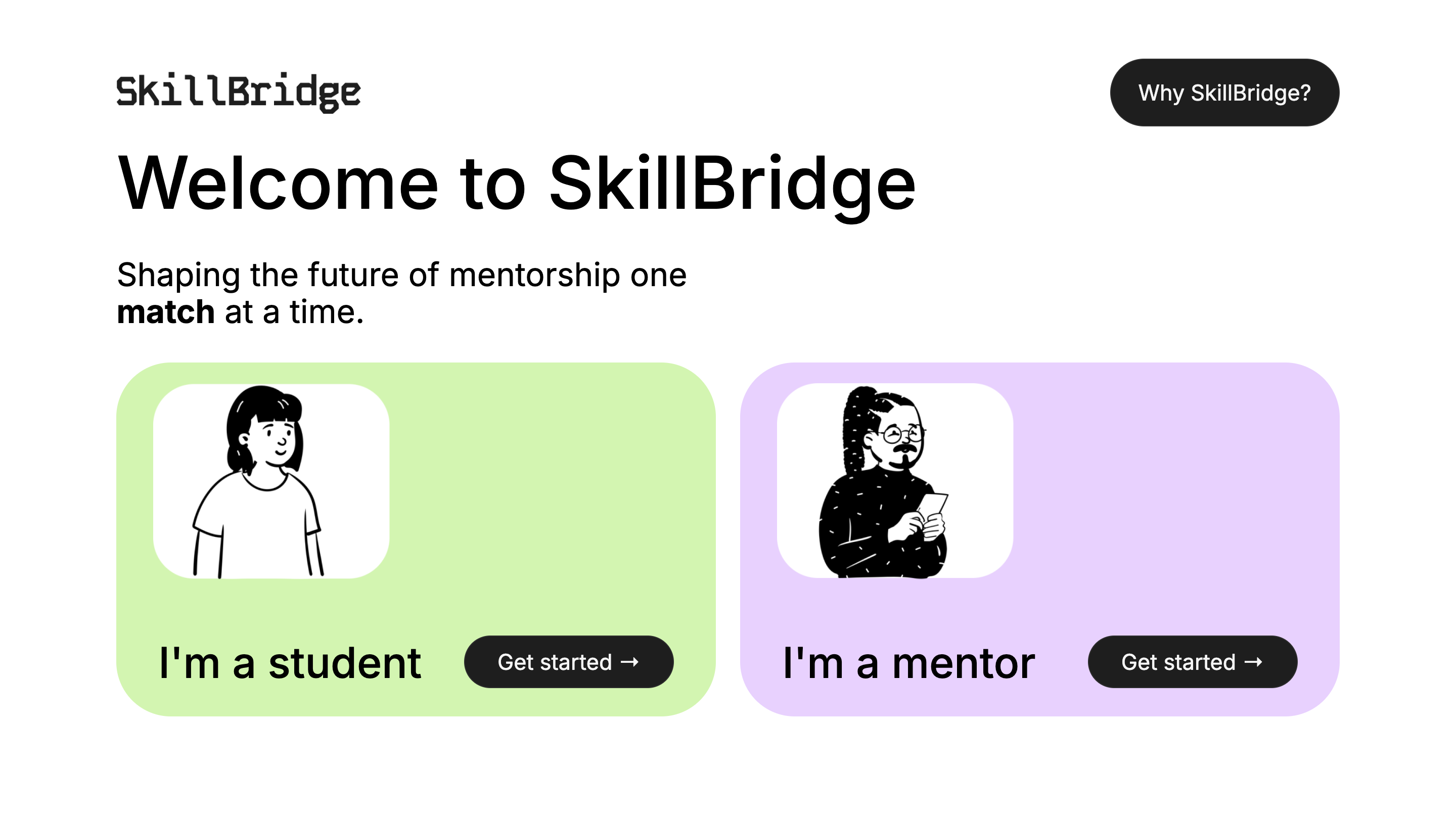
SkillBridge is a platform designed to connect students with mentors who can guide them based on their skills and interests. The algorithm matches the users based on their interests, skill level, and language preferences to create strong and effective connections. This allows students to receive guidance that aligns with their goals, while mentors can share their expertise in a meaningful way.
Once matched, mentors and mentees can collaborate, bridging gaps in knowledge and experience.
How we built it
We began by brainstorming and mapping out user interactions in Figma to create a clear visual prototype. Once the design was finalized, we divided tasks among the team and started development using Python, HTML, CSS, and FastAPI. One of the core features is the k-Nearest Neighbors (kNN) algorithm, which powers the matching process to ensure accurate pairings.
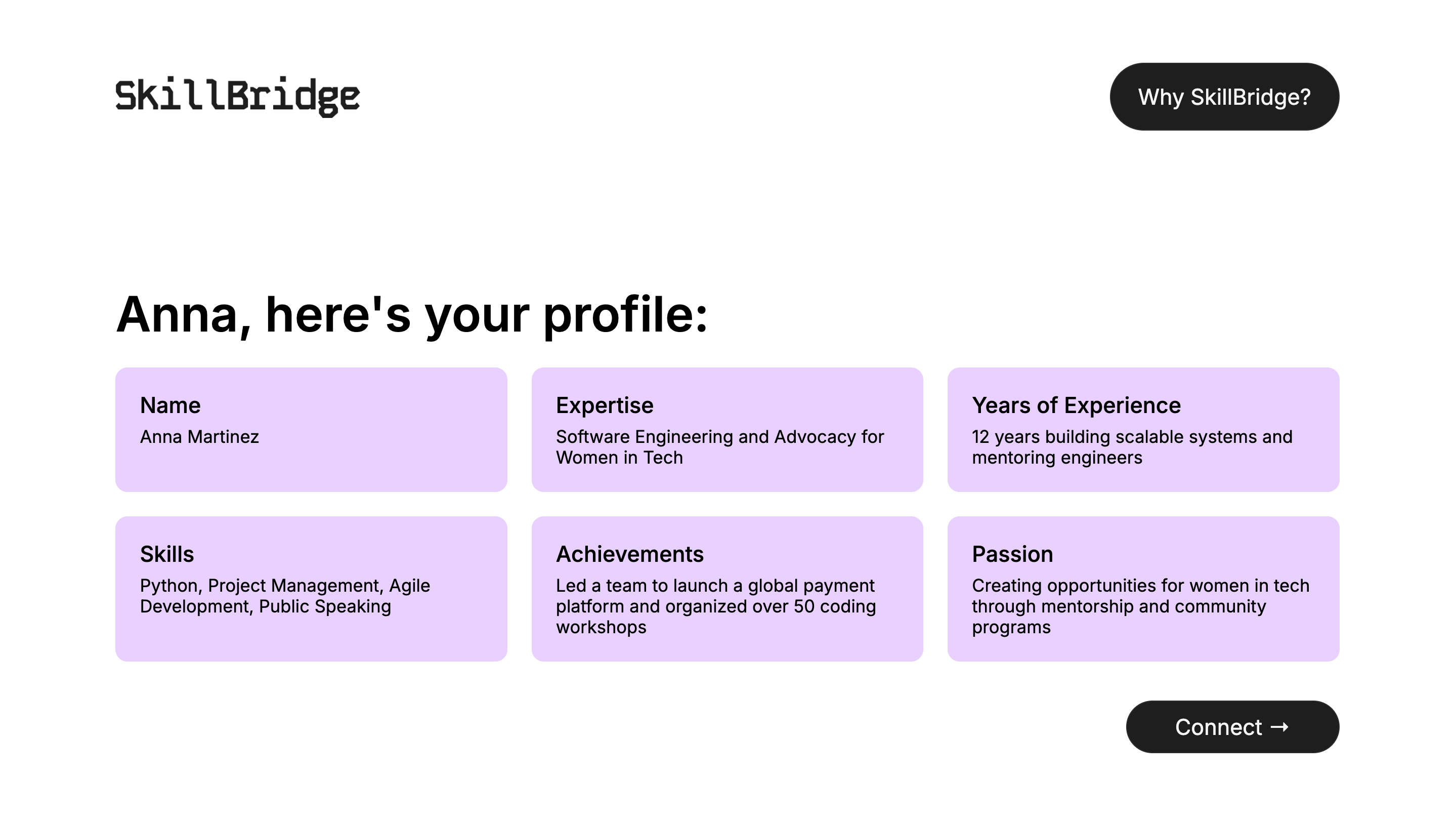
Additionally, we created a neural network fine-tuned on manually labeled resumes. This network was trained to evaluate an individual’s proficiency in specific skills on a 5-point scale. When students and mentors register, they are required to upload their resumes. Our code processes the resumes and assesses proficiency across 50 skills listed in our program. These skill levels are then stored as vectors with 50 dimensions, associated with the profiles of mentors and students.
Using these vectors, our internal algorithm assigns each mentor a minimum proficiency level for skills required in potential mentees. Similarly, students specify the skill they wish to learn and their target proficiency level. When a mentor searches for a mentee, our algorithm first filters students who meet the mentor’s minimum skill requirements. Then, it narrows down the list by excluding students who do not speak the same languages as the mentor.
Finally, the algorithm analyzes the skill vectors of mentors and students. Using the kNN algorithm, it identifies which student’s skill requirements are closest to the mentor’s expertise. The code returns a selection of the most compatible students, allowing mentors to choose from the best matches. Moreover, context-aware neural networks enhance the process by considering experience and life circumstances to create even more meaningful connections.
We also integrated OpenAI tools to enhance the user experience and AWS for scalability. Along the way, we worked in focused sessions, checking in frequently to align on progress and next steps. This approach helped us stay organized and ensure all parts of the project came together seamlessly. Ten cups of coffee and hundreds of debugged lines later, we delivered an interactive demo showcasing SkillBridge’s core functionality.
Challenges we ran into
With this being our first hackathon, we entered with both excitement and uncertainty. One of the main challenges was integrating diverse features into a cohesive minimum viable product (MVP). Coordinating how different components like the user interface and matching algorithm would interact required continuous collaboration and problem-solving.
Another significant challenge was managing the time constraints of the hackathon. Building a functioning platform overnight meant prioritizing features and making tough decisions about what to include. Despite the challenges, we truly enjoyed the process and were able to find creative solutions to keep moving forward.
Accomplishments that we're proud of
We’re proud of the functional demo we created, which highlights SkillBridge’s ability to connect students with mentors. Implementing the kNN algorithm and designing an intuitive user interface within such a tight timeframe were major achievements for our team. Most of all, we’re proud of how we worked together to bring an idea to life and create something together.
What we learned
This hackathon taught us the value of teamwork, adaptability, and effective communication. But more importantly, we experienced the joy of building something from scratch and seeing our vision come to life.
What's next for SkillBridge
Possibly in the future, we could plan to redesign and build upon SkillBridge by adding advanced features such as real-time feedback and enhanced profile customization to improve the matching process further.

Log in or sign up for Devpost to join the conversation.