-
-
-
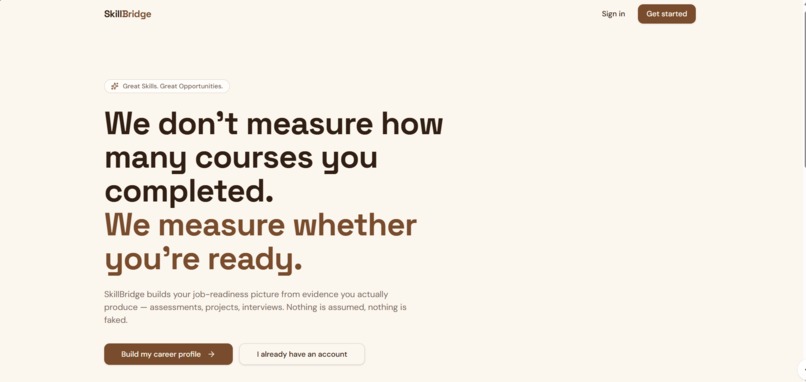
Landing page
-
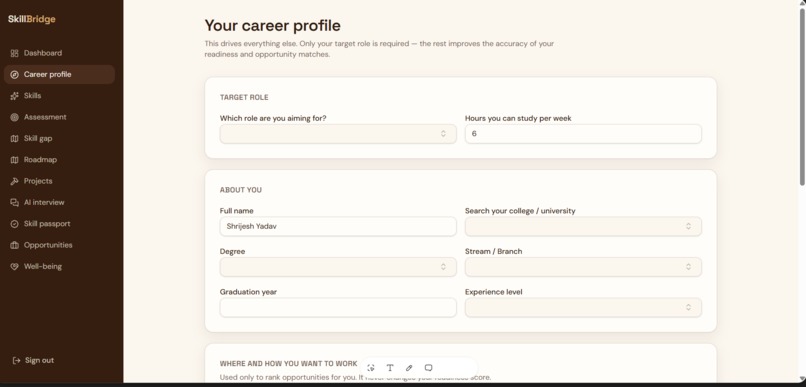
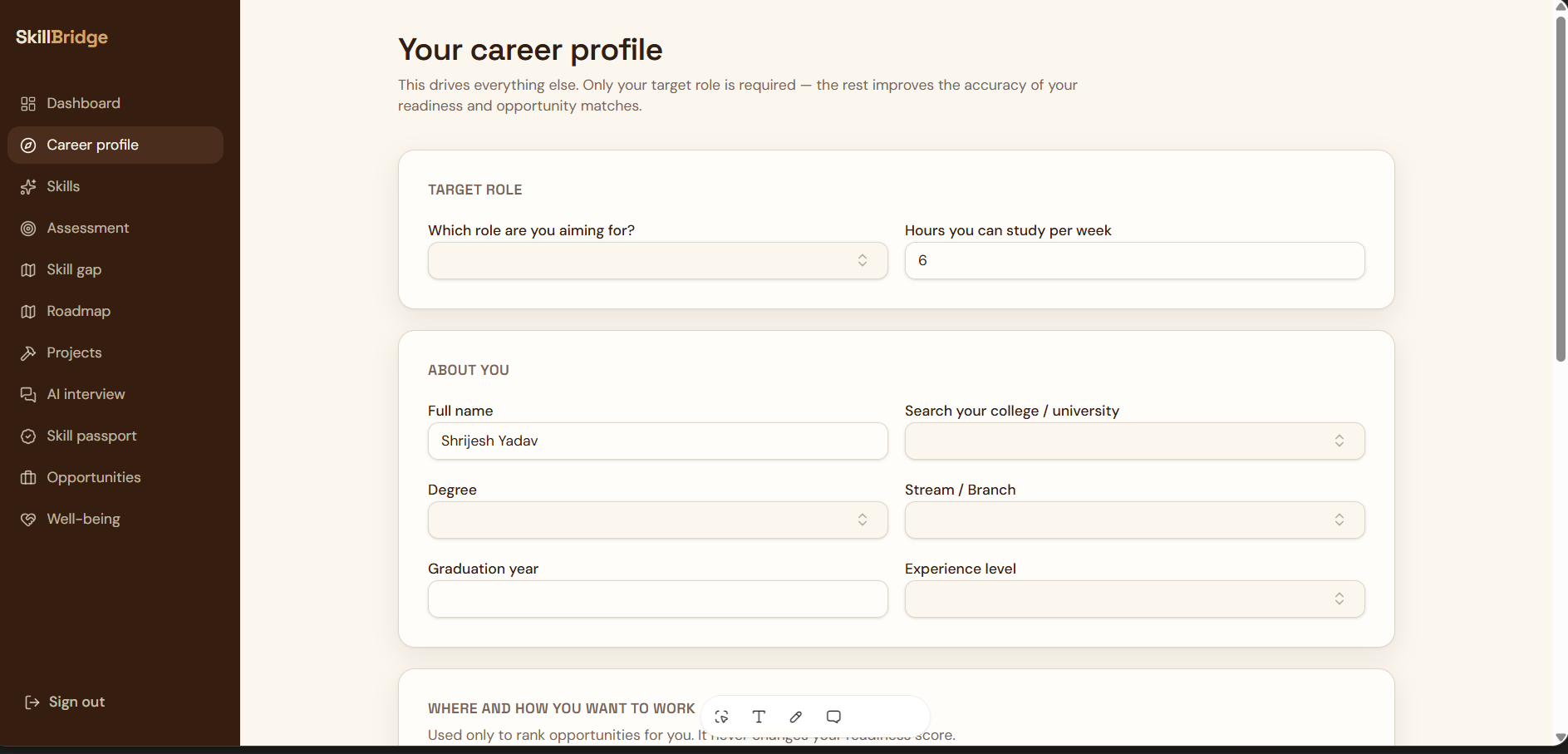
creating profile page
-
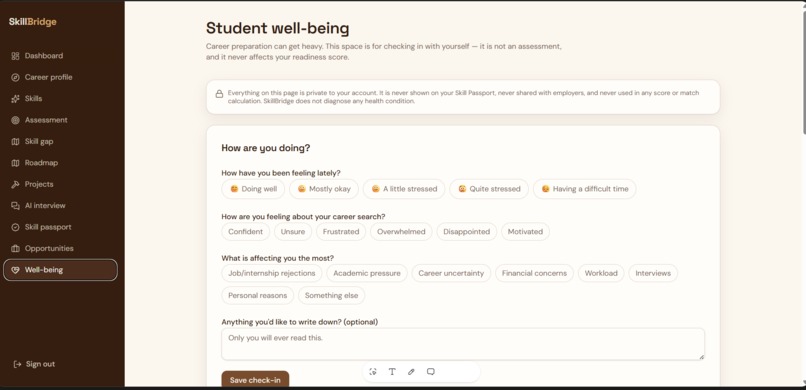
Well being page
-
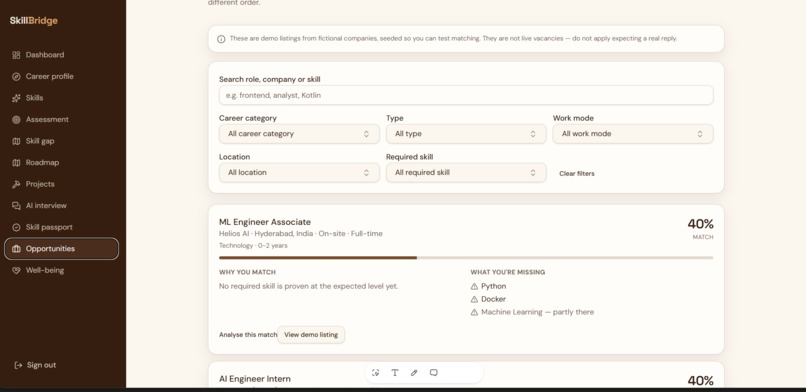
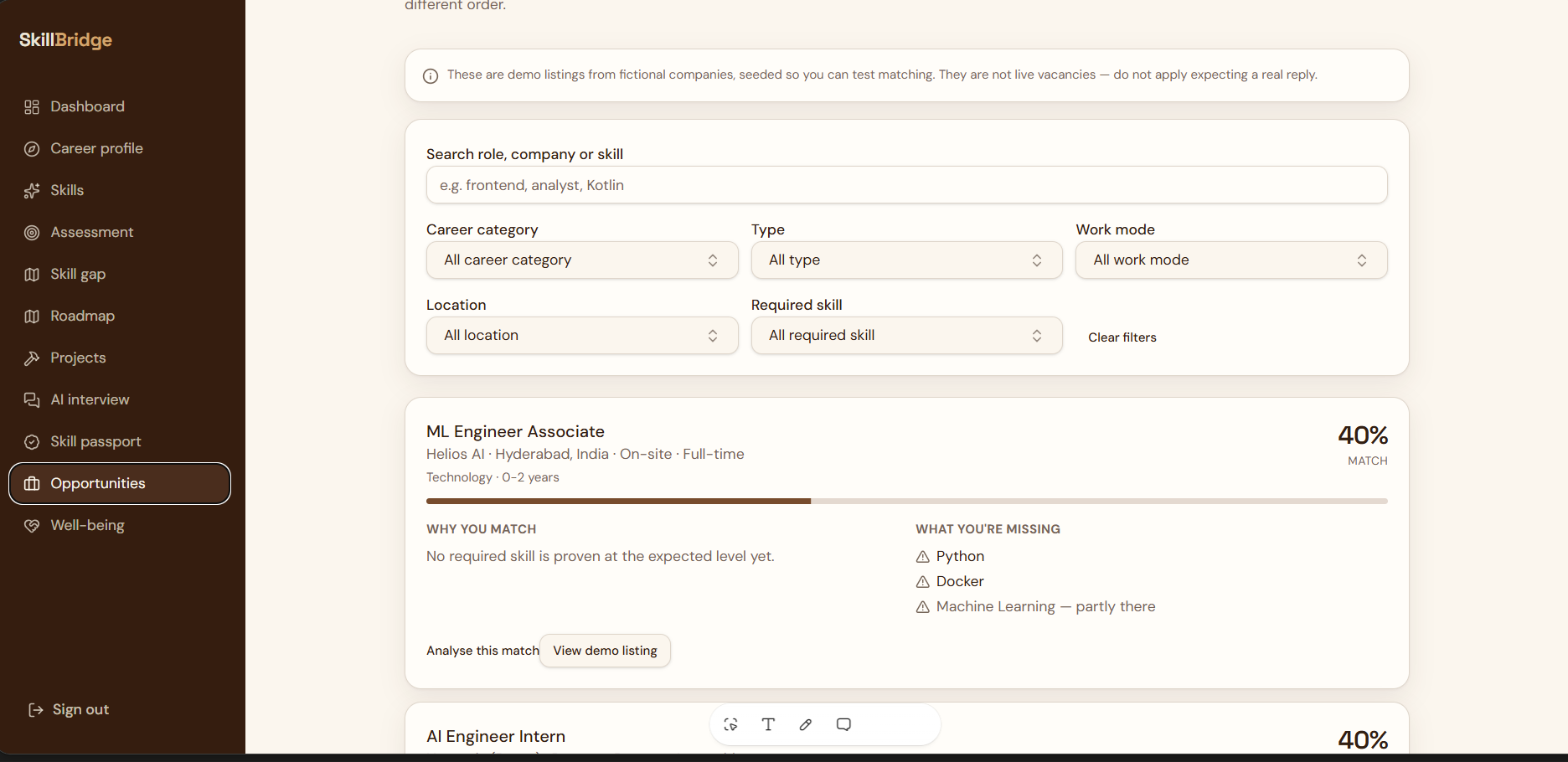
Job opp page and many more in website
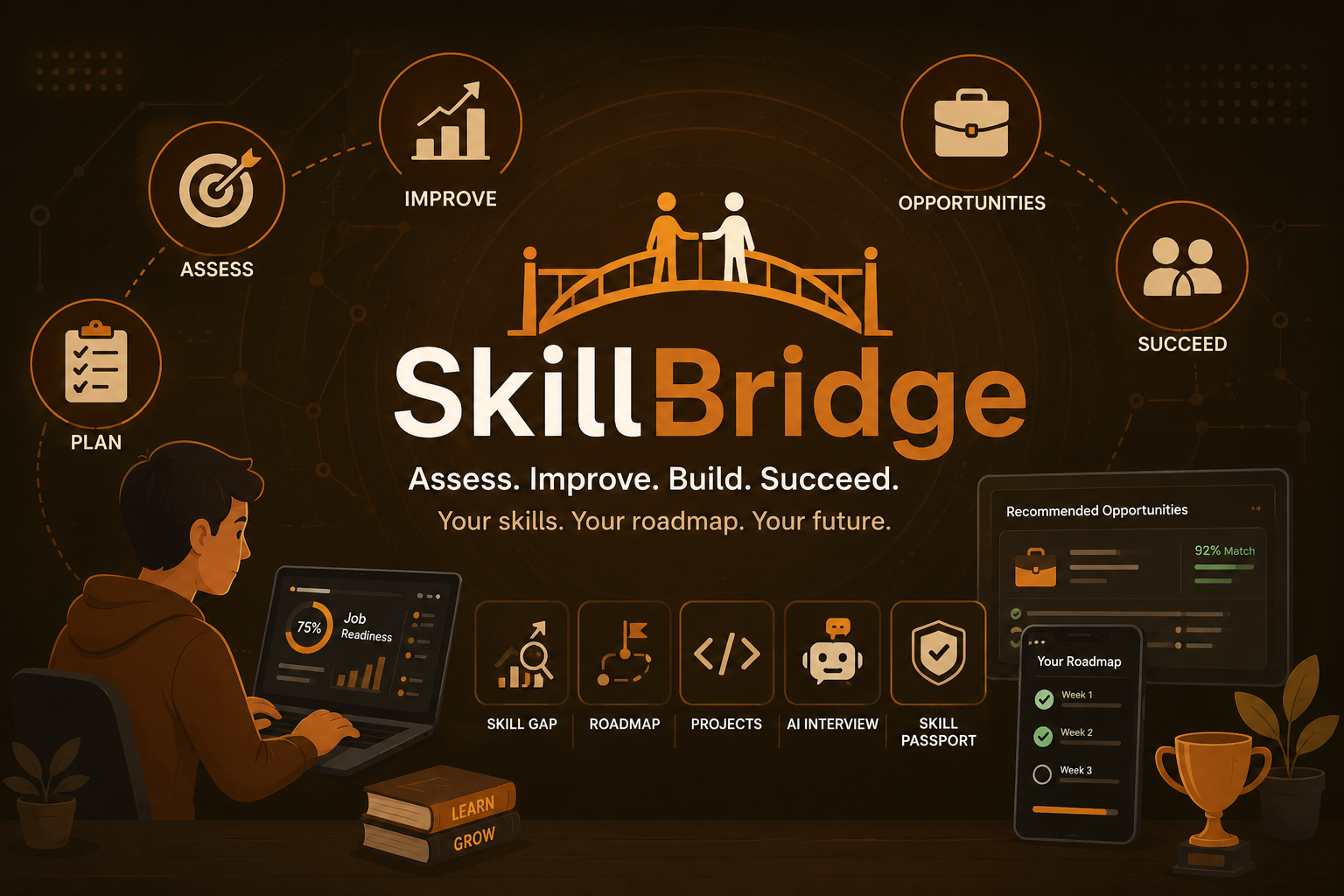
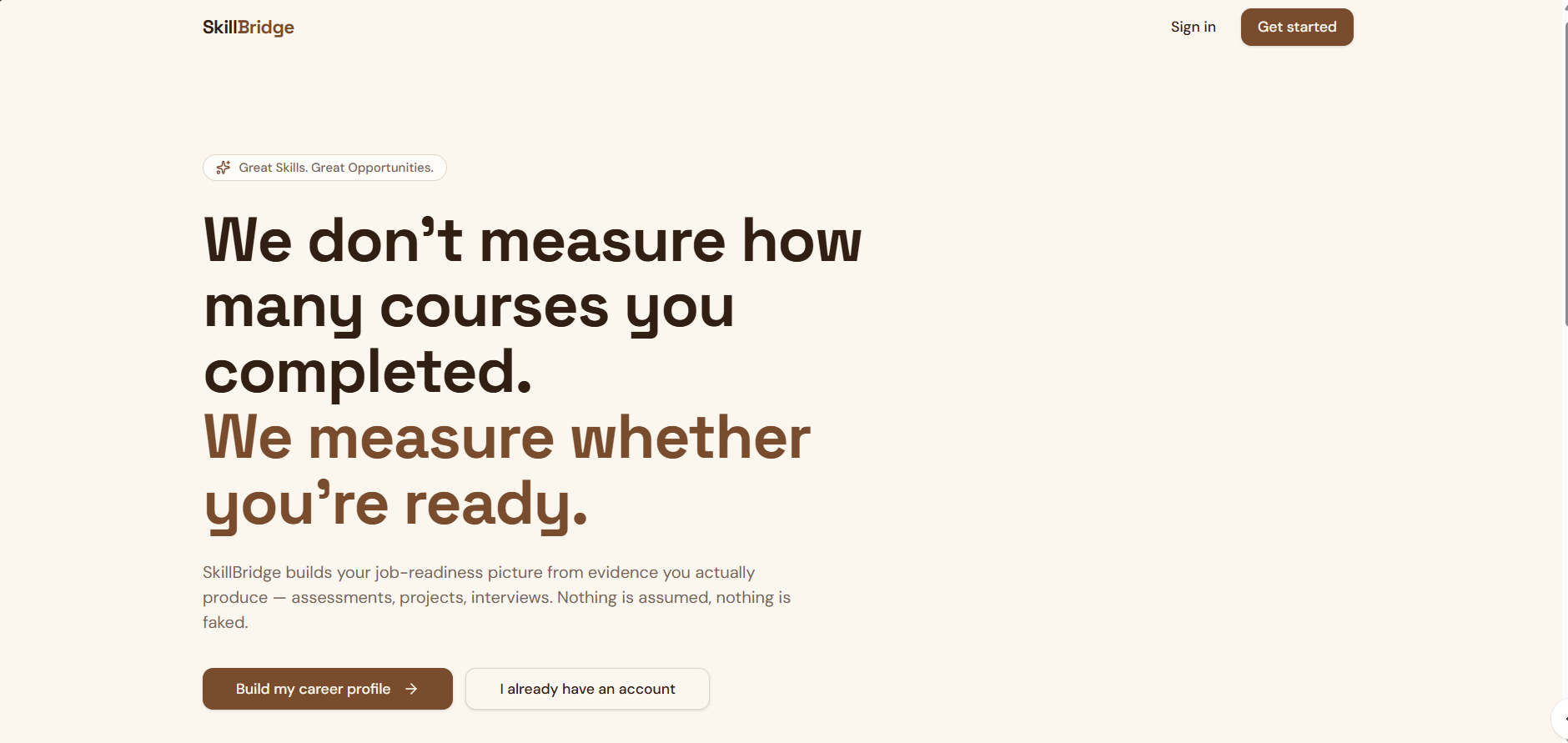
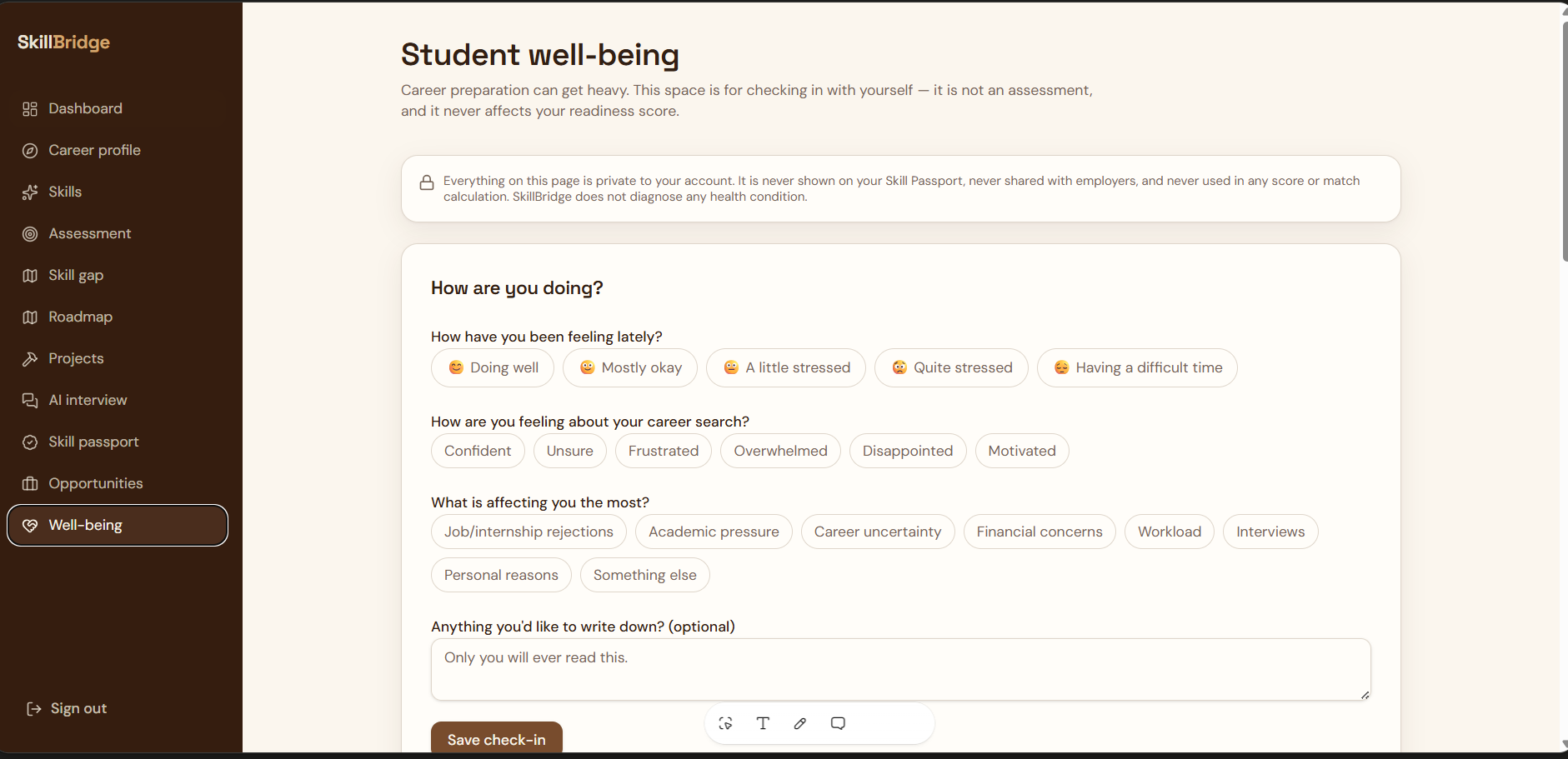
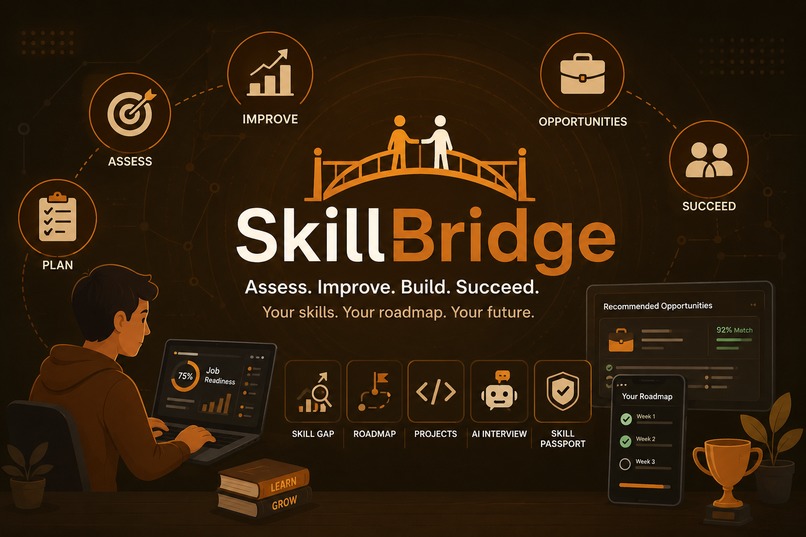
Students often struggle to understand how job-ready they actually are, which skills they are missing, and what they should do next. SkillBridge was built to solve this problem by bringing assessment, skill-gap analysis, learning, portfolio building, interviews, and career opportunities into one platform.
SkillBridge follows a simple philosophy:
Assess → Identify → Improve → Build → Verify → Match
The platform does not simply count courses or rely on self-reported skills. It focuses on real evidence generated by the student's actions. Students can create their career profile, select their skills, take verified assessments, analyze their skill gaps, follow a personalized roadmap, complete portfolio projects, practice AI-powered mock interviews, and build a Skill Passport containing their verified achievements.
The platform also provides opportunity matching. Jobs and internships are ranked according to the student's actual profile, verified skills, target role, education, experience, location, and work-mode preferences. Each match explains both why the student matches and what they are missing.
How We Built It
SkillBridge was built using React 19, TanStack Start, Vite 7, and Tailwind CSS v4 for the frontend. The backend uses a PostgreSQL database with authentication and private storage. TanStack Query handles data fetching and cache invalidation.
Sensitive operations such as assessment grading, AI interview generation and evaluation, and resume extraction are handled through server functions. AI features use the Lovable AI Gateway with Gemini, so users do not need to provide their own API keys.
A major focus while building SkillBridge was maintaining trust in the platform. Readiness scores are not displayed until real evidence exists, self-rated skills are separated from verified skills, and assessment answers remain server-side instead of being exposed to the browser.
What We Learned
Building SkillBridge taught us the importance of designing career tools around evidence rather than assumptions. We focused on making every major score and recommendation traceable to actual user data while connecting assessment results directly to actionable learning, projects, interviews, and opportunities.
Challenges
One of the biggest challenges was designing a system that could provide useful career recommendations without fabricating student achievements. We addressed this by separating user-generated evidence from reference data, keeping assessments server-graded, and making the readiness and opportunity scores explainable.
We also had to connect multiple parts of the career journey—from skill assessment and gap analysis to roadmaps, projects, interviews, and opportunity matching—into one consistent experience.
Built With
- ai
- authentication
- career
- css
- development
- edtech
- gemini
- postgresql
- query
- react
- start
- tailwind
- tanstack
- vite
