-
-
PatchPilot
-
ngrok
-
dashboard
-
description
-
ci.yml
-
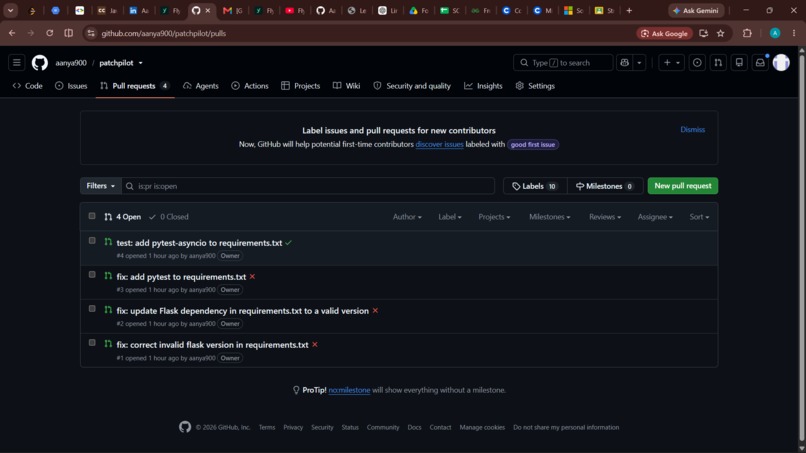
pull requests
-
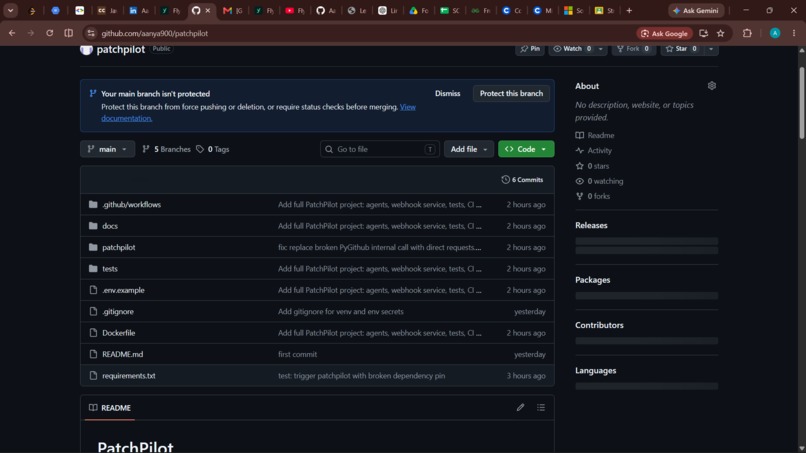
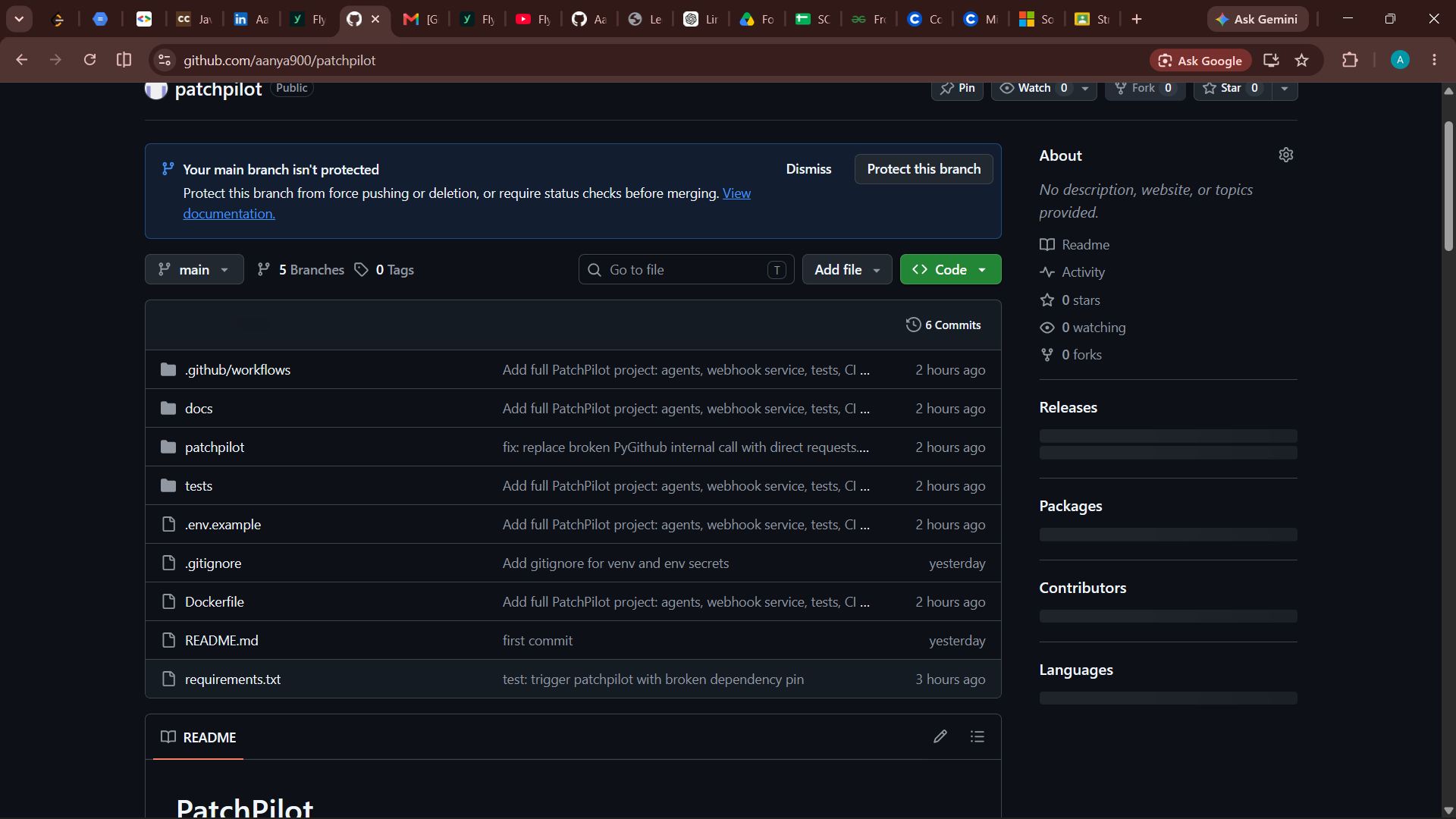
github repo
-
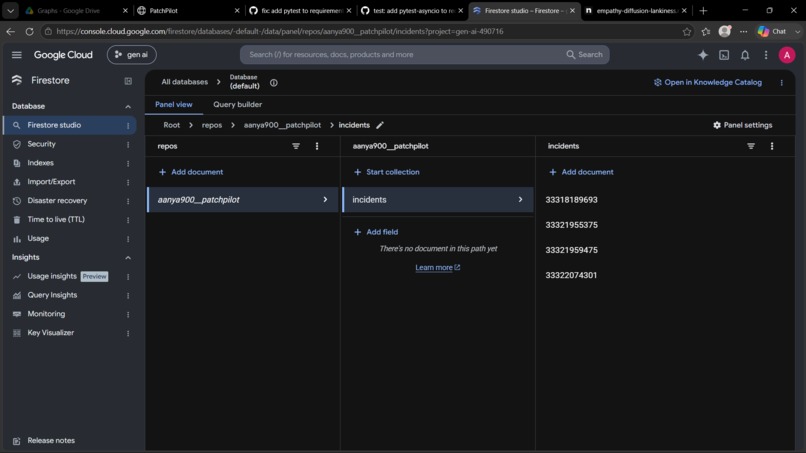
firestore console
-
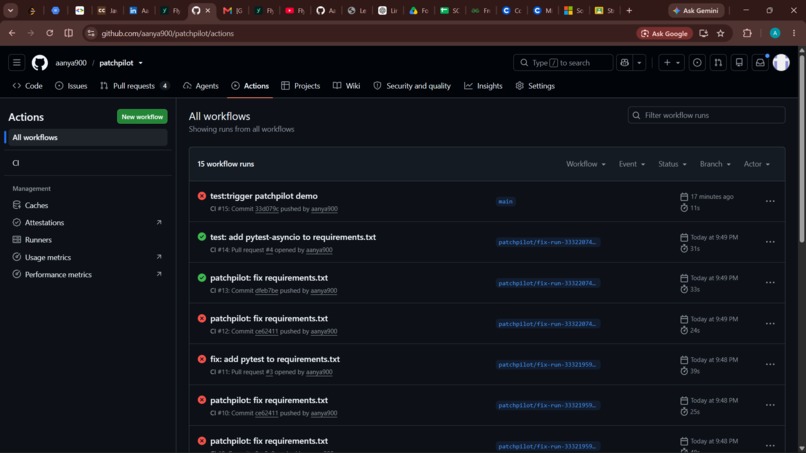
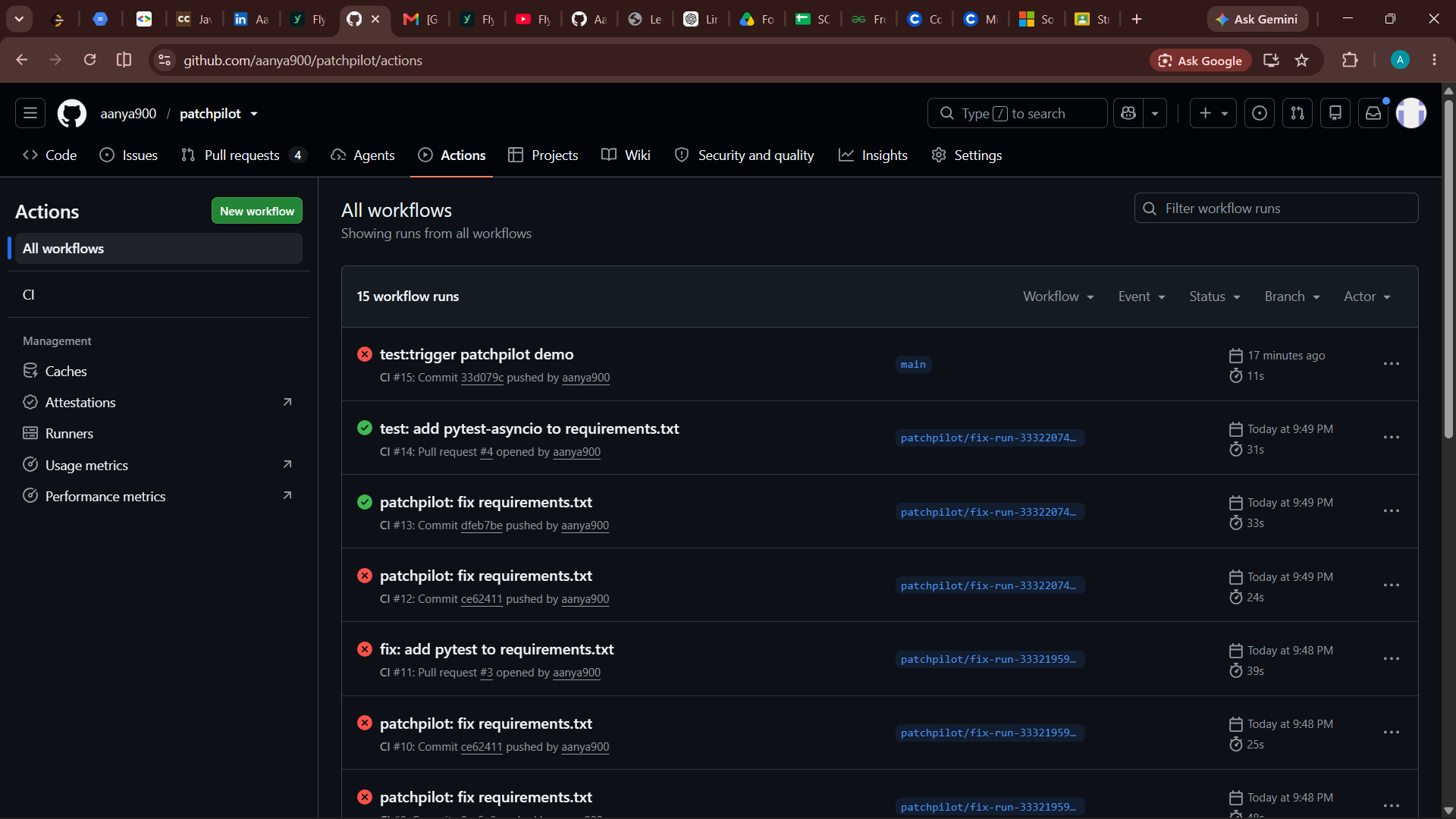
actions
-
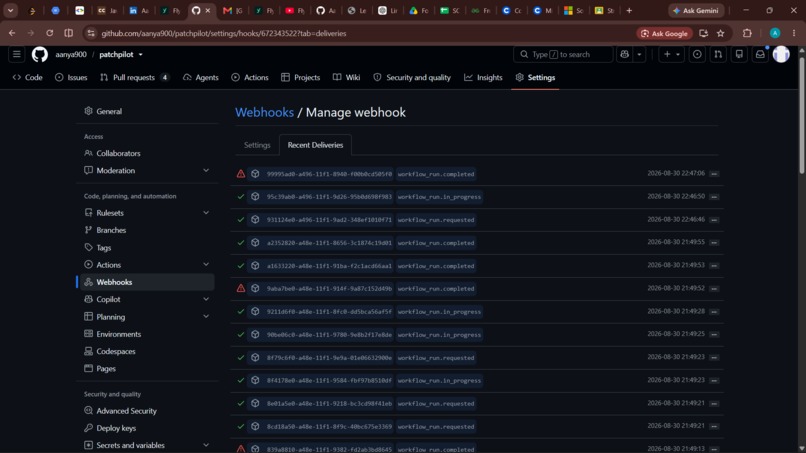
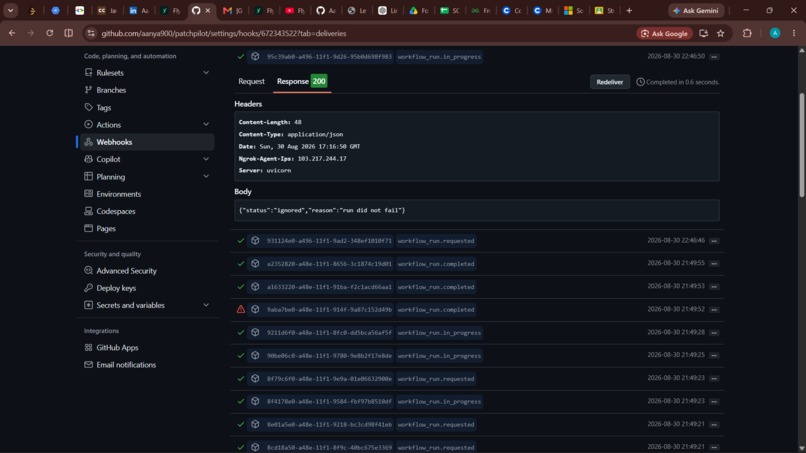
webhooks
-
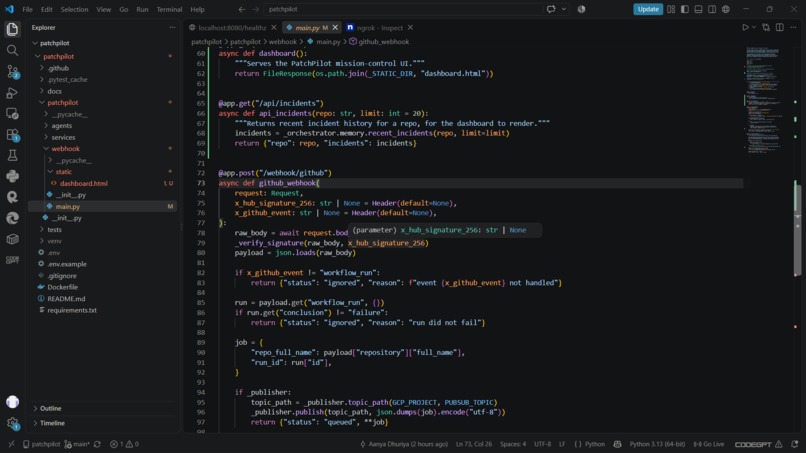
main.py
Inspiration
Every failed CI build costs a developer the same fixed 15 minutes: open the run, scroll past noise to find the real error, figure out what broke, fix it, push again — even when the fix is small and mechanical. We wanted an agent that actually does that triage instead of just summarizing it.
What it does
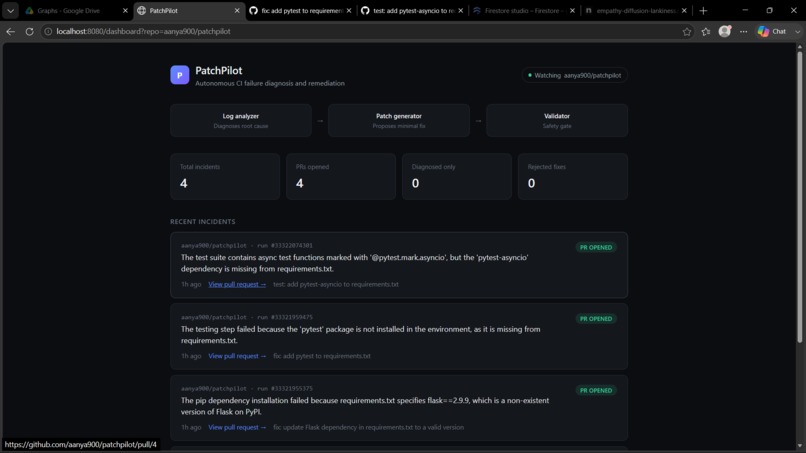
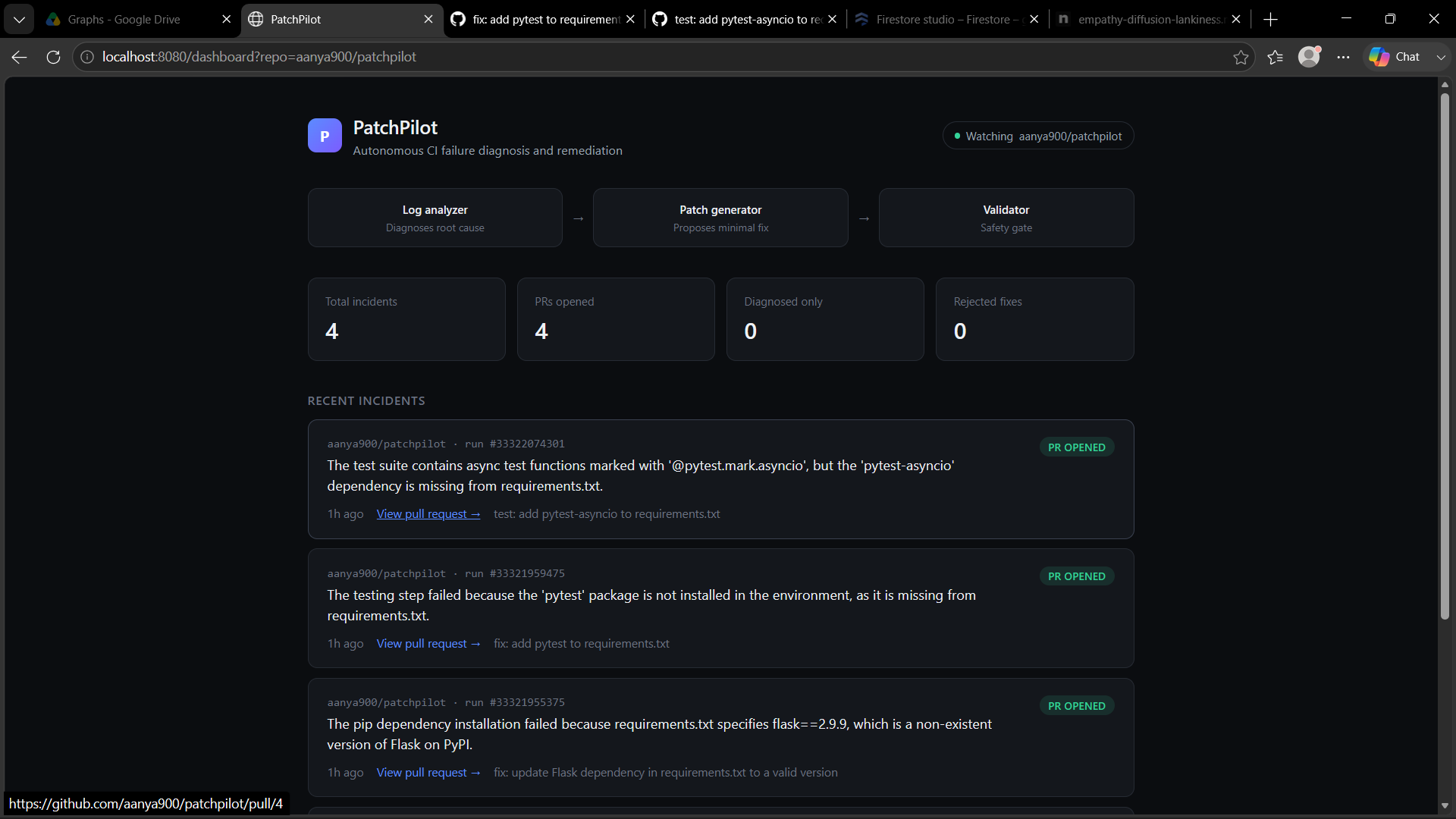
PatchPilot watches a repo's GitHub Actions runs. When one fails, it:
- Diagnoses the root cause from the raw CI logs, using past incidents for that repo as context so recurring failures are recognized, not re-derived from scratch.
- Proposes a minimal, targeted fix — or explicitly declines if it isn't confident.
- Validates its own proposed fix with an adversarial second pass before it's allowed to become a PR.
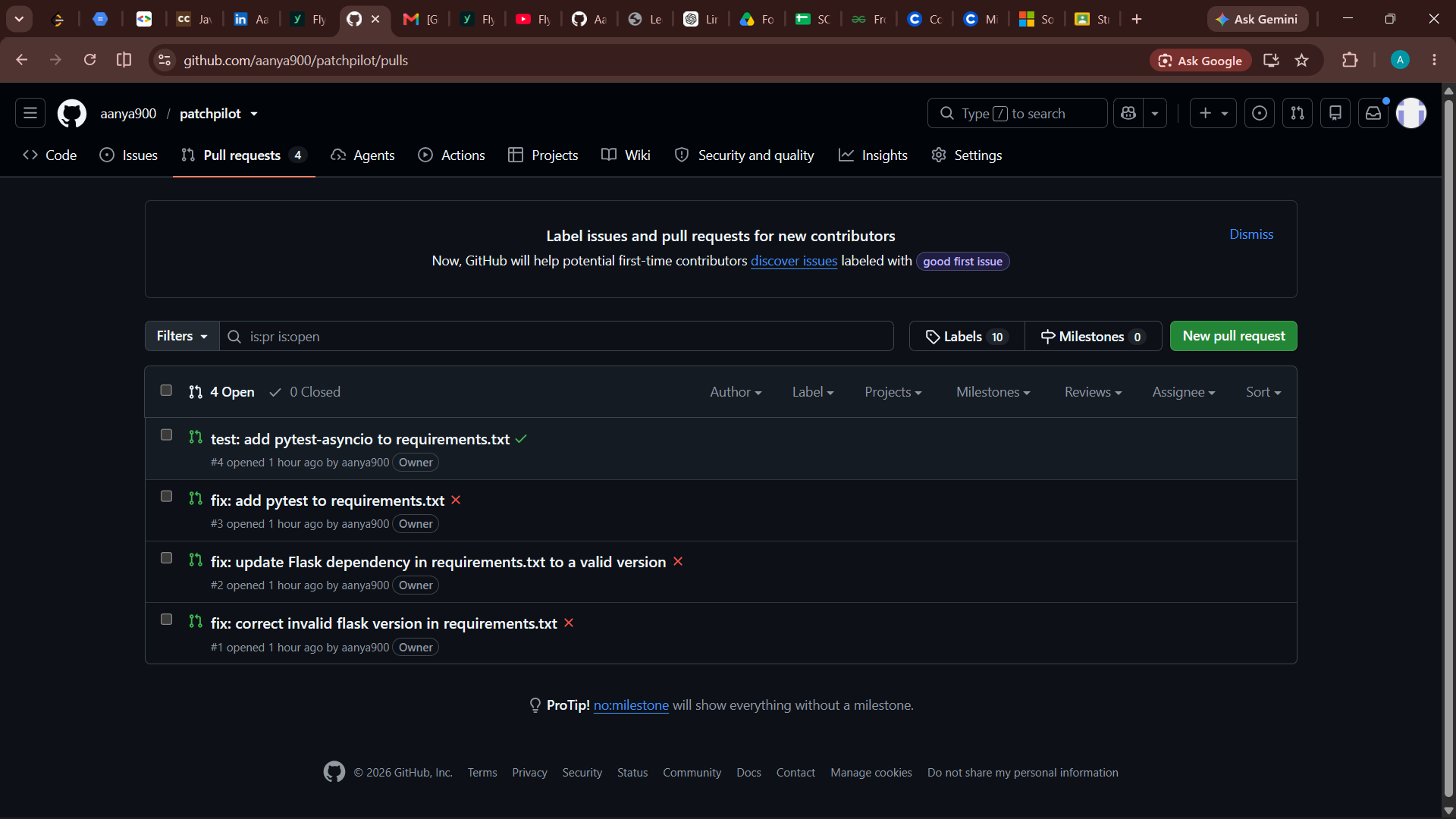
- Opens a pull request with the fix and its reasoning, or comments the diagnosis on the commit if no safe fix exists.
It never auto-merges — a human always reviews the PR.
How we built it
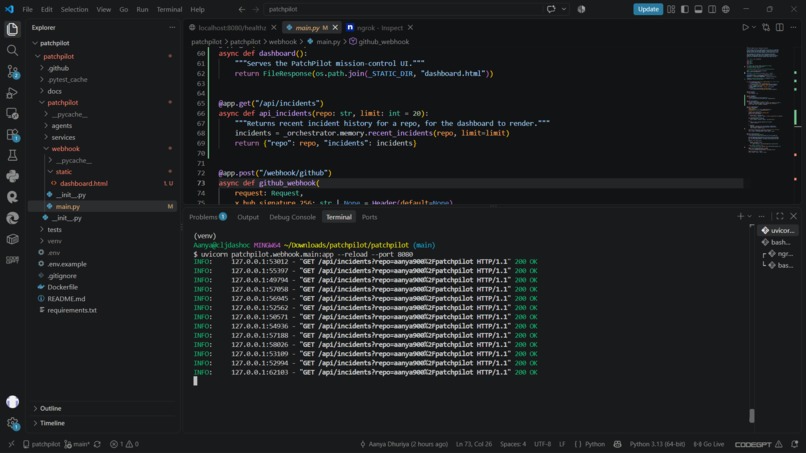
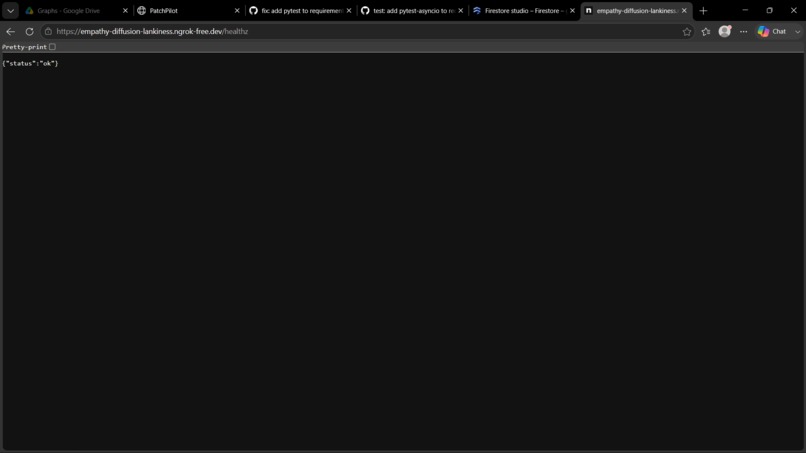
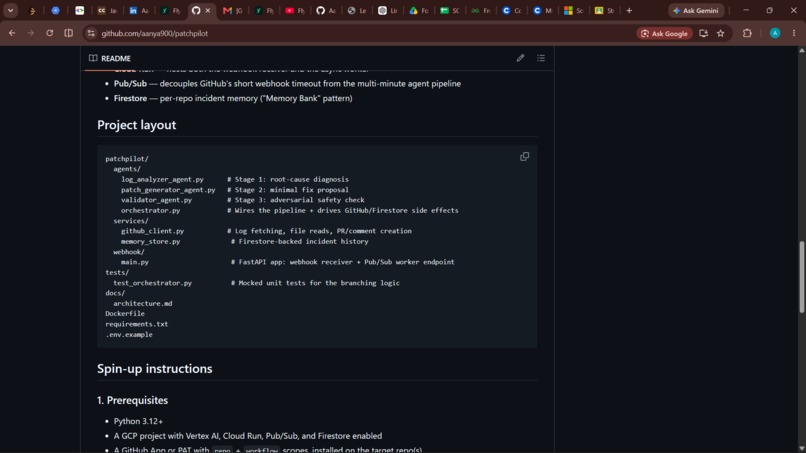
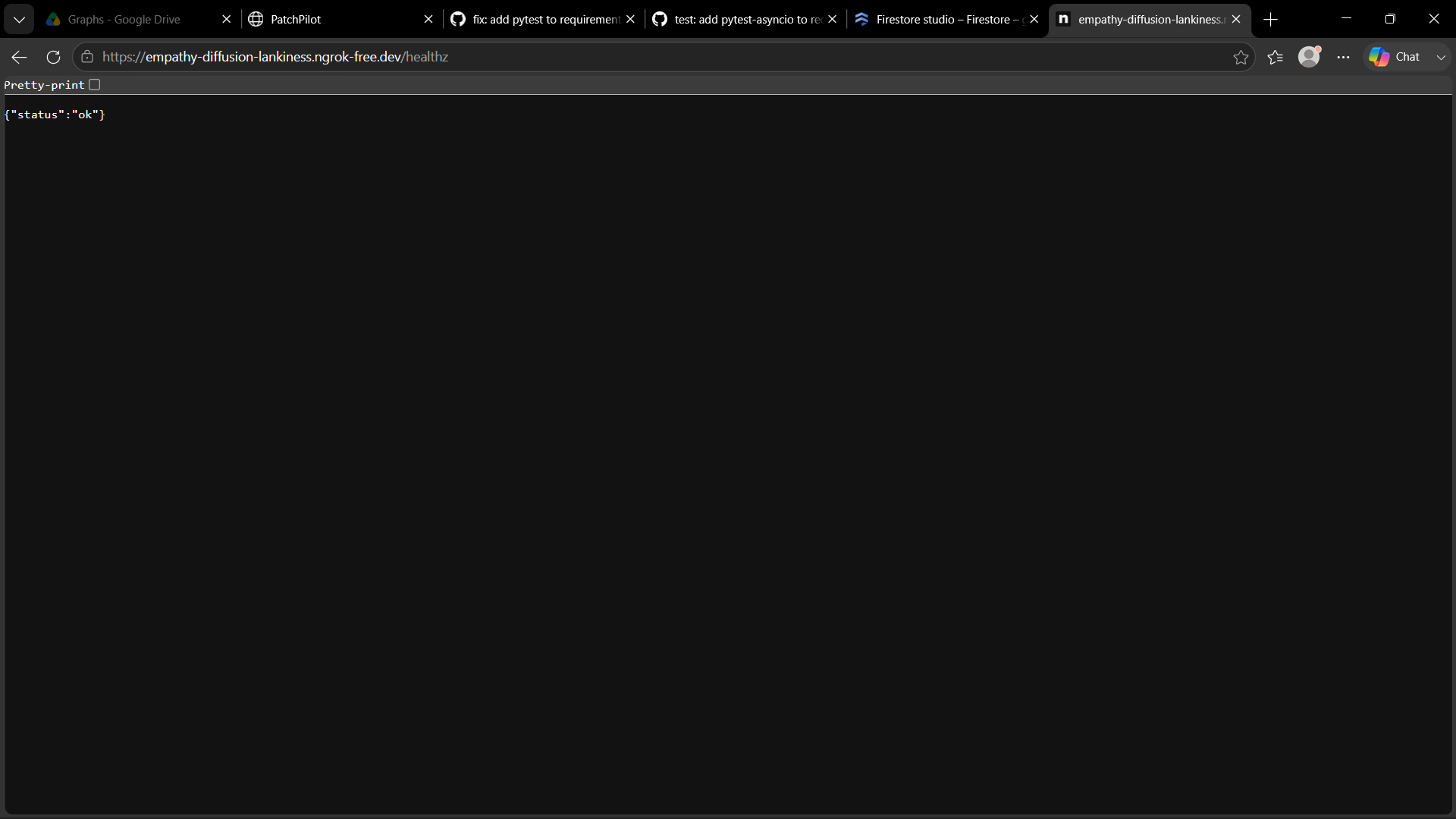
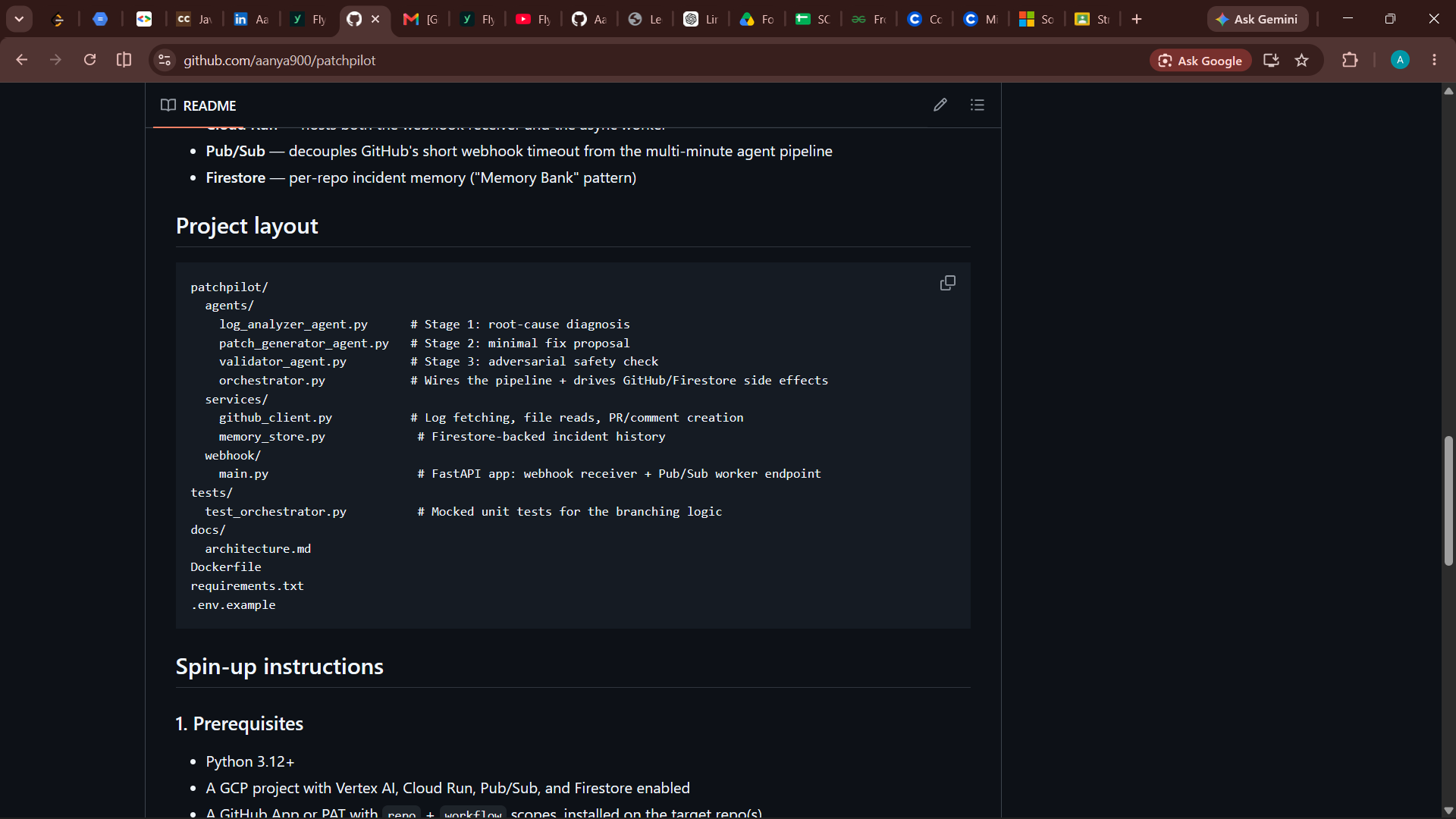
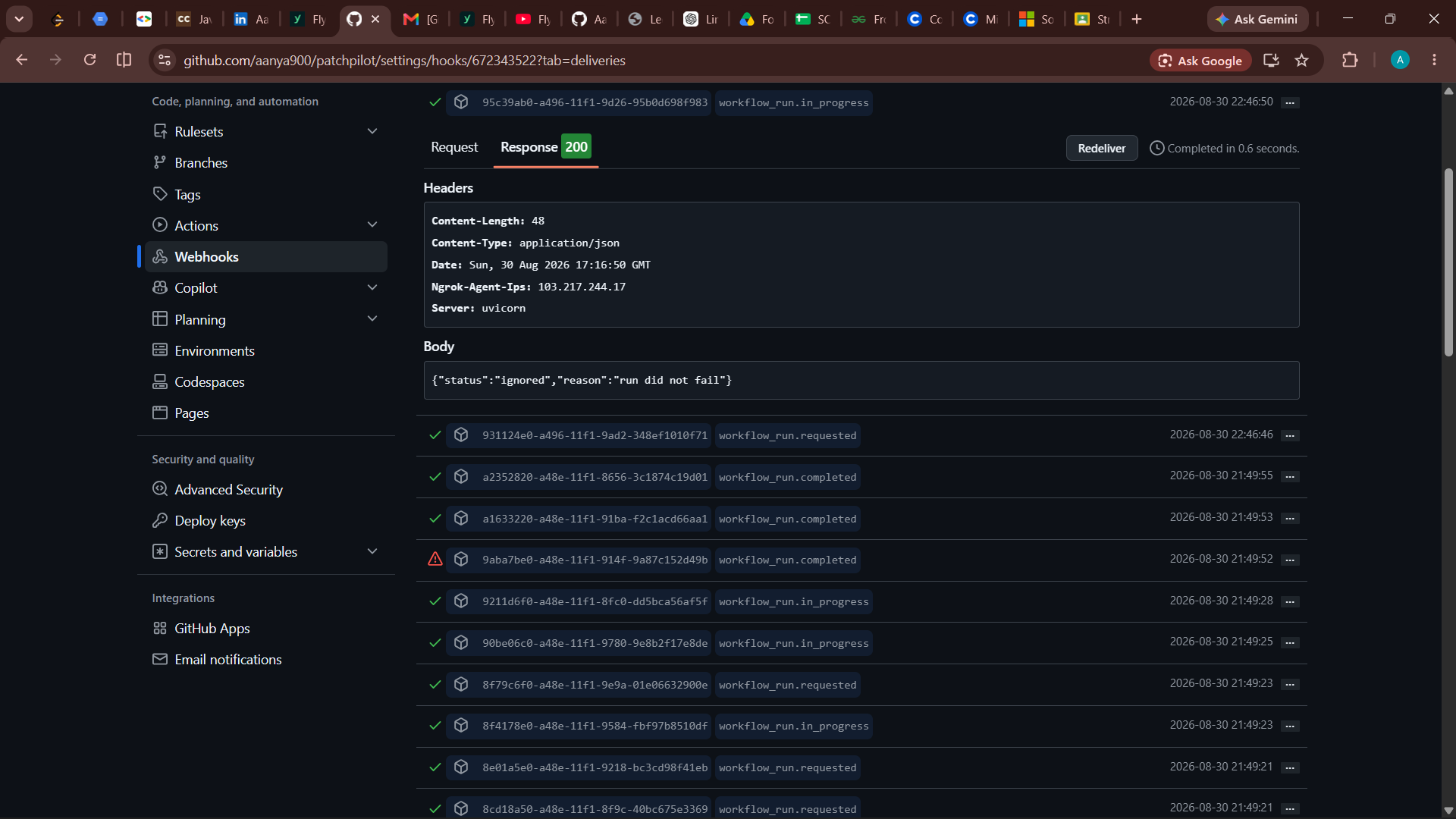
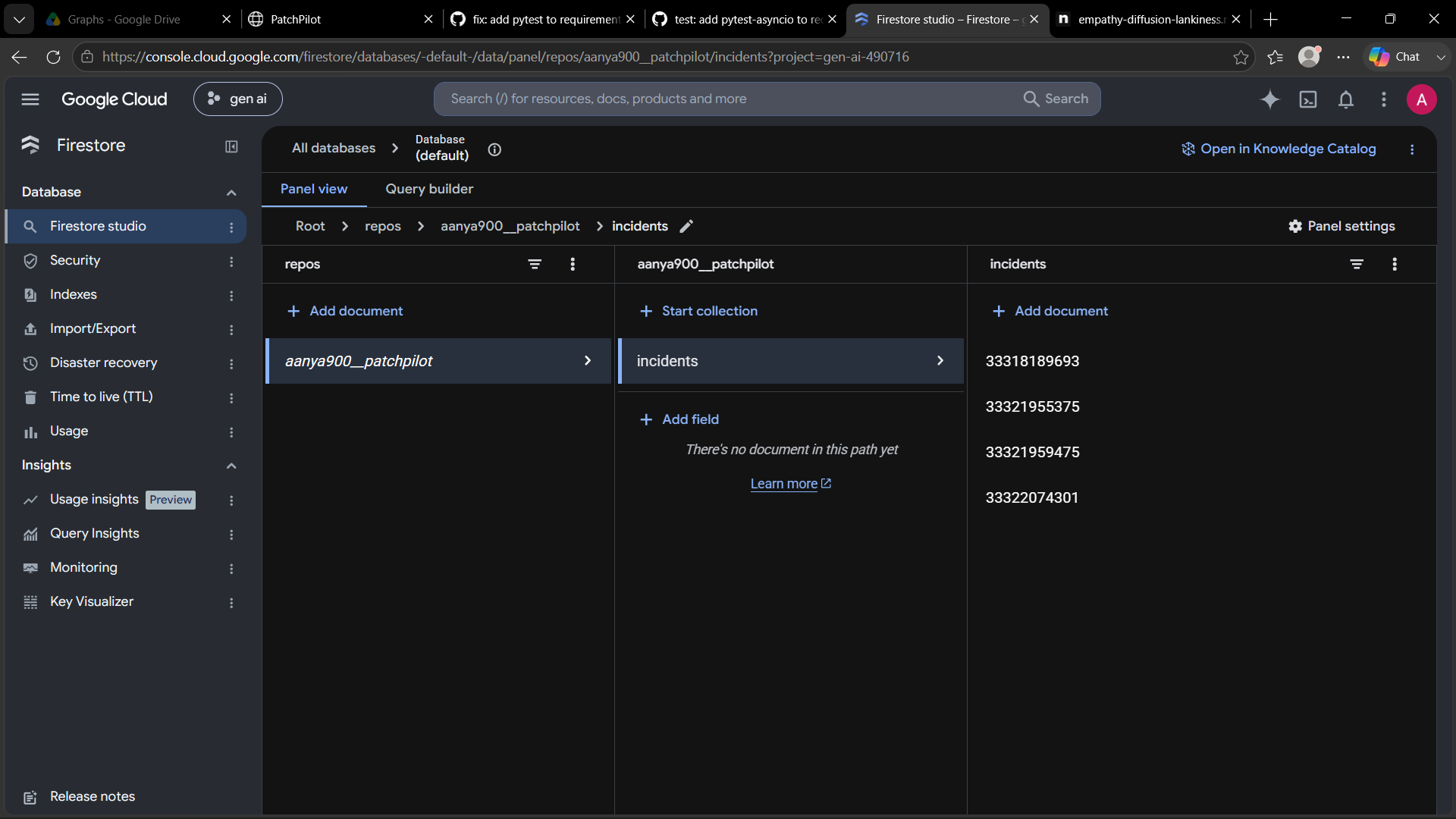
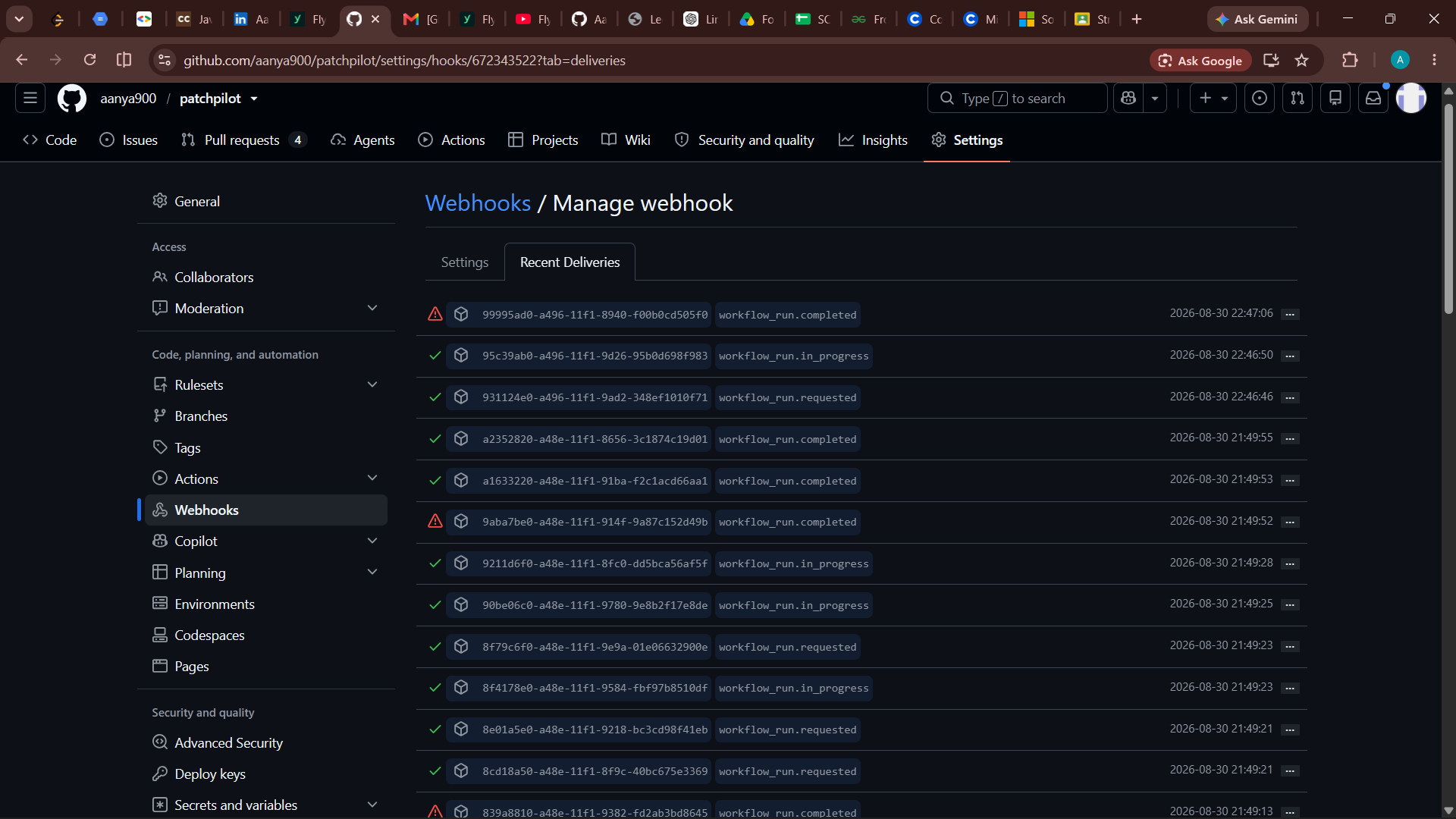
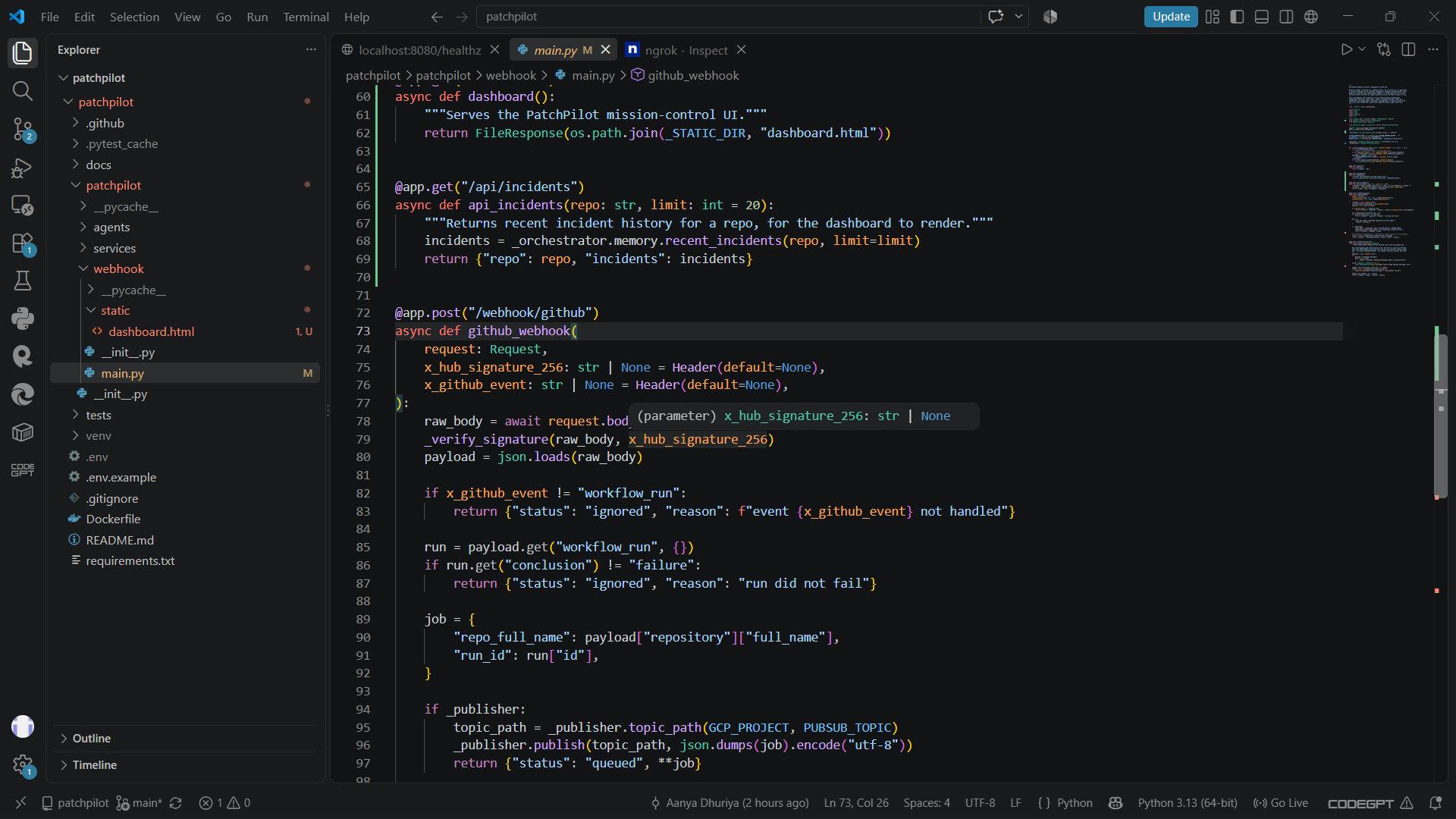
Three Google ADK agents (log_analyzer, patch_generator, validator), each with structured Pydantic outputs, chained in a SequentialAgent pipeline running Gemini 3.5 Flash. A FastAPI service on Cloud Run receives GitHub's workflow_run webhook, publishes the job to Pub/Sub (since a 3-call LLM pipeline plus GitHub API round-trips regularly exceeds GitHub's ~10s webhook timeout), and a second Cloud Run worker picks it up and runs the pipeline asynchronously. Firestore stores a per-repo incident history that acts as lightweight cross-run memory for the diagnosis stage.
Challenges we ran into
- Keeping the agent from guessing: the validator stage exists specifically because a single LLM pass will confidently patch things it shouldn't. Splitting diagnosis → patch → validation into separate agents made it much easier to reject low-confidence or off-target fixes before they ever reach a human's PR queue.
- GitHub's webhook timeout vs. a multi-minute pipeline — solved by decoupling receipt (webhook) from processing (Pub/Sub-triggered worker).
What we learned
Multi-agent pipelines are much safer than single-shot prompting for anything that takes real action — having a dedicated adversarial validator agent catch the patch generator's mistakes made a measurable difference in how often we'd trust the output.
What's next for PatchPilot
Vector-embedding-based similarity search over past incidents for better recurring-failure detection, a GitHub Check Run UI for live pipeline progress, and monorepo support with per-package diagnosis scoping.


Log in or sign up for Devpost to join the conversation.