-
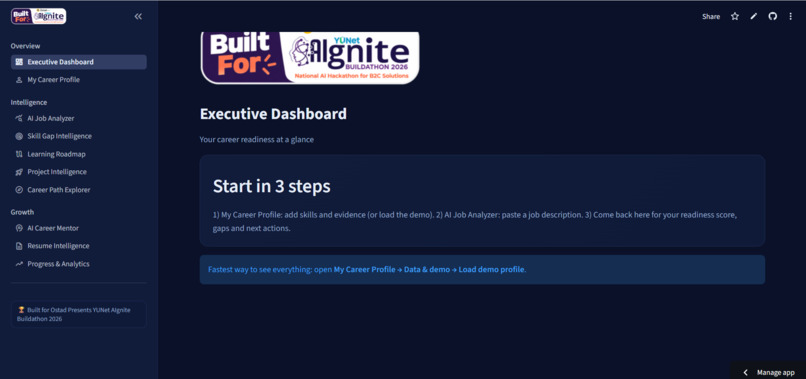
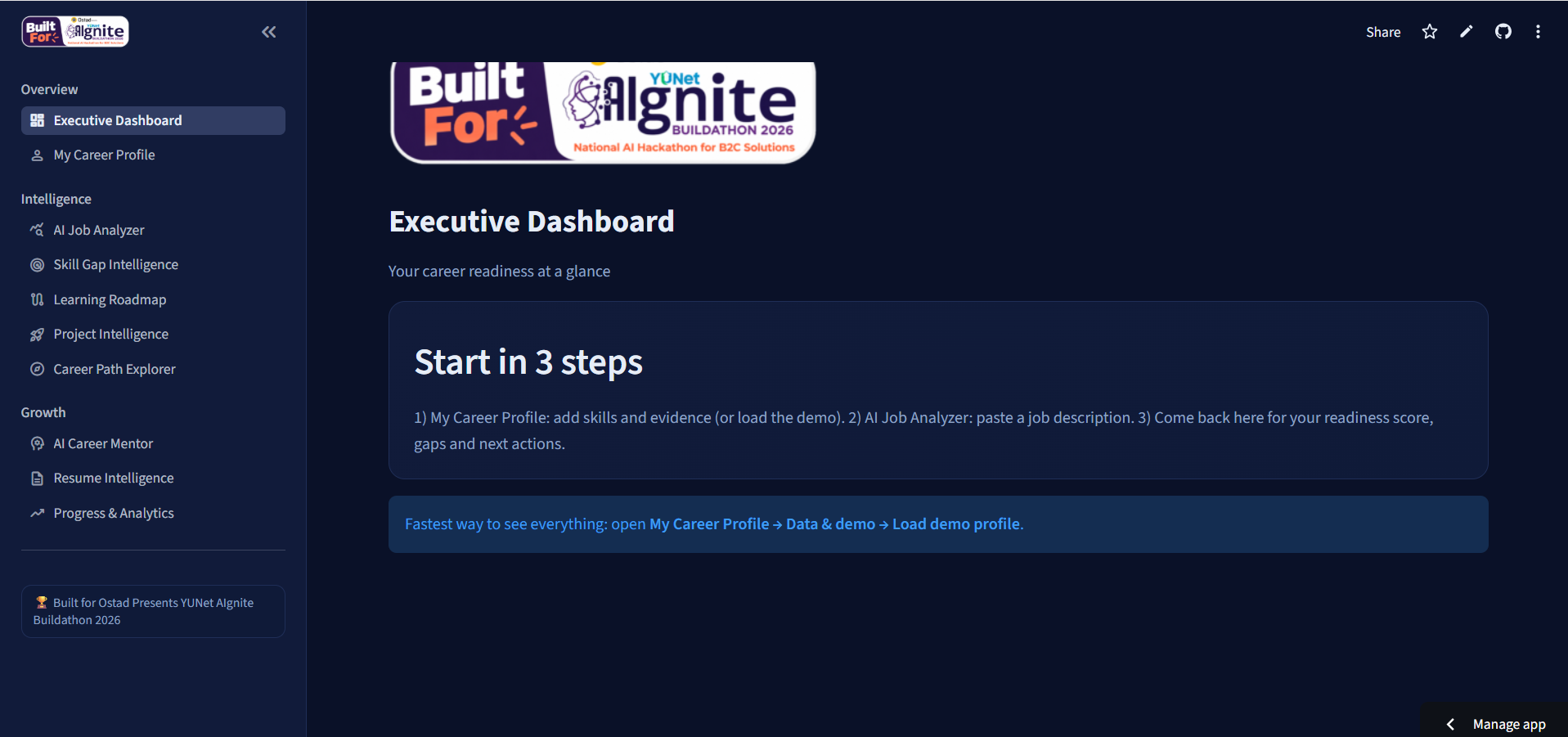
Dashboard — Your Career Readiness at a Glance A centralized overview of career readiness, skills, and progress.
-
-
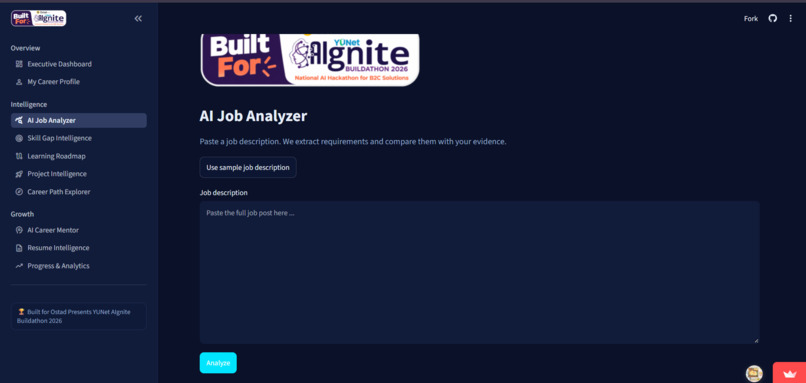
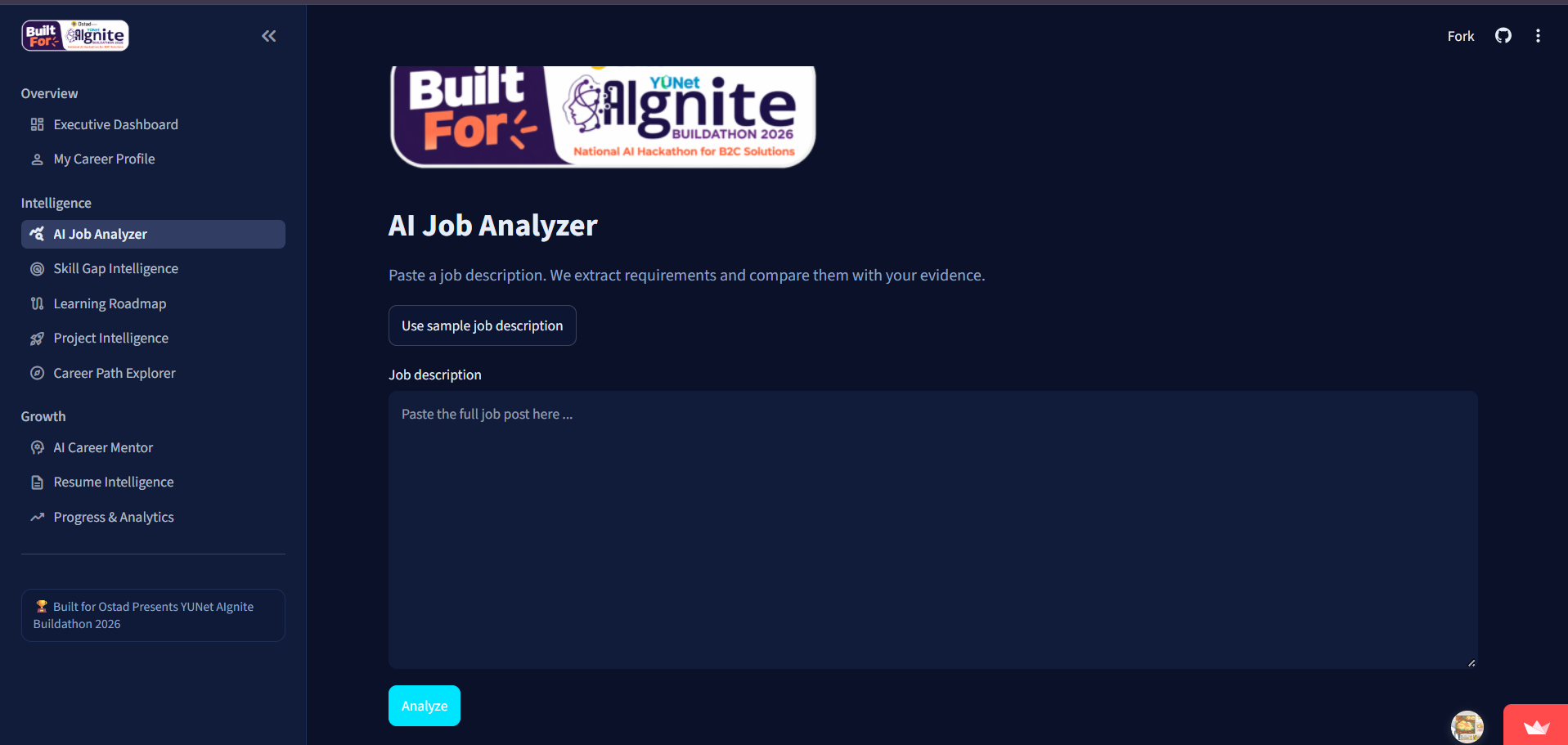
AI Job Analyzer — Understand Job Requirements Analyze job descriptions to identify required skills and evaluate career alignment.
-
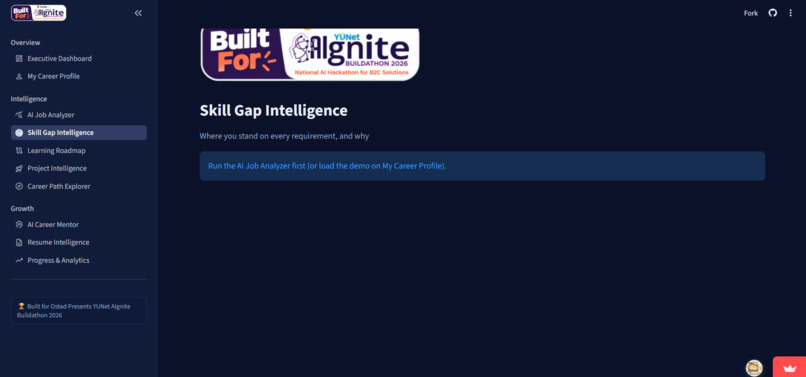
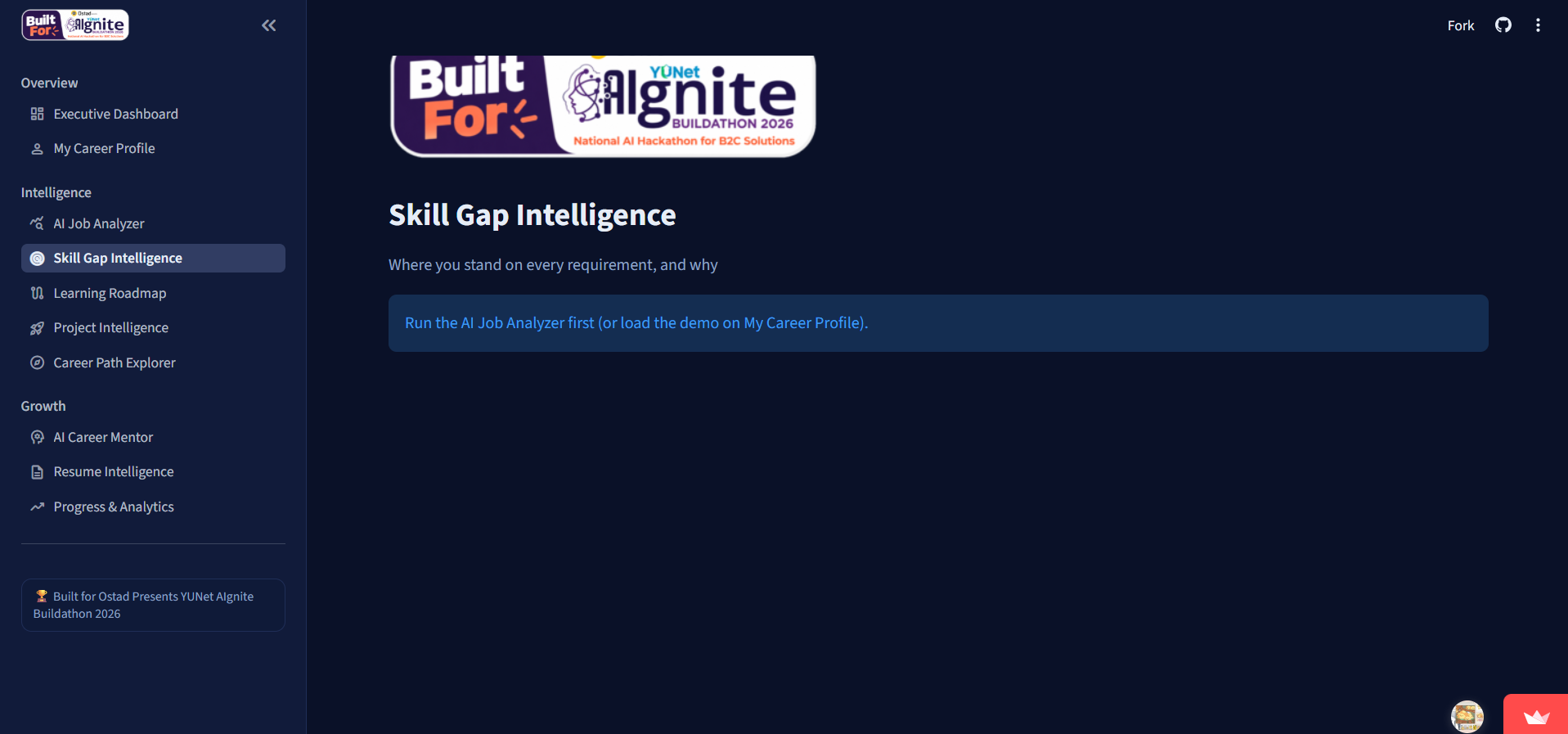
Skill Gap Intelligence — Discover What You Need to Improve Compare existing skills with job requirements and identify areas for improvement.
-
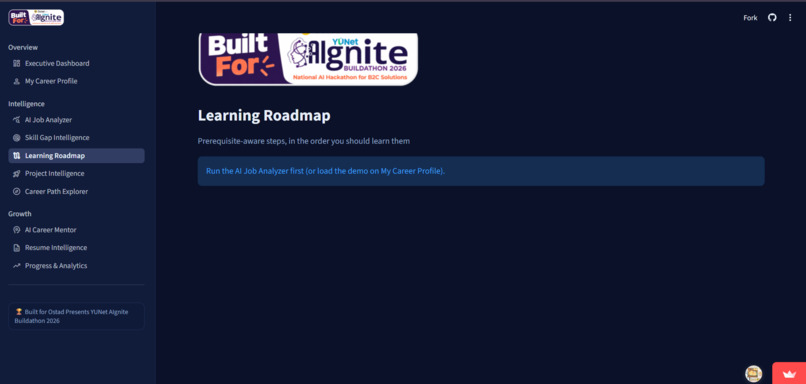
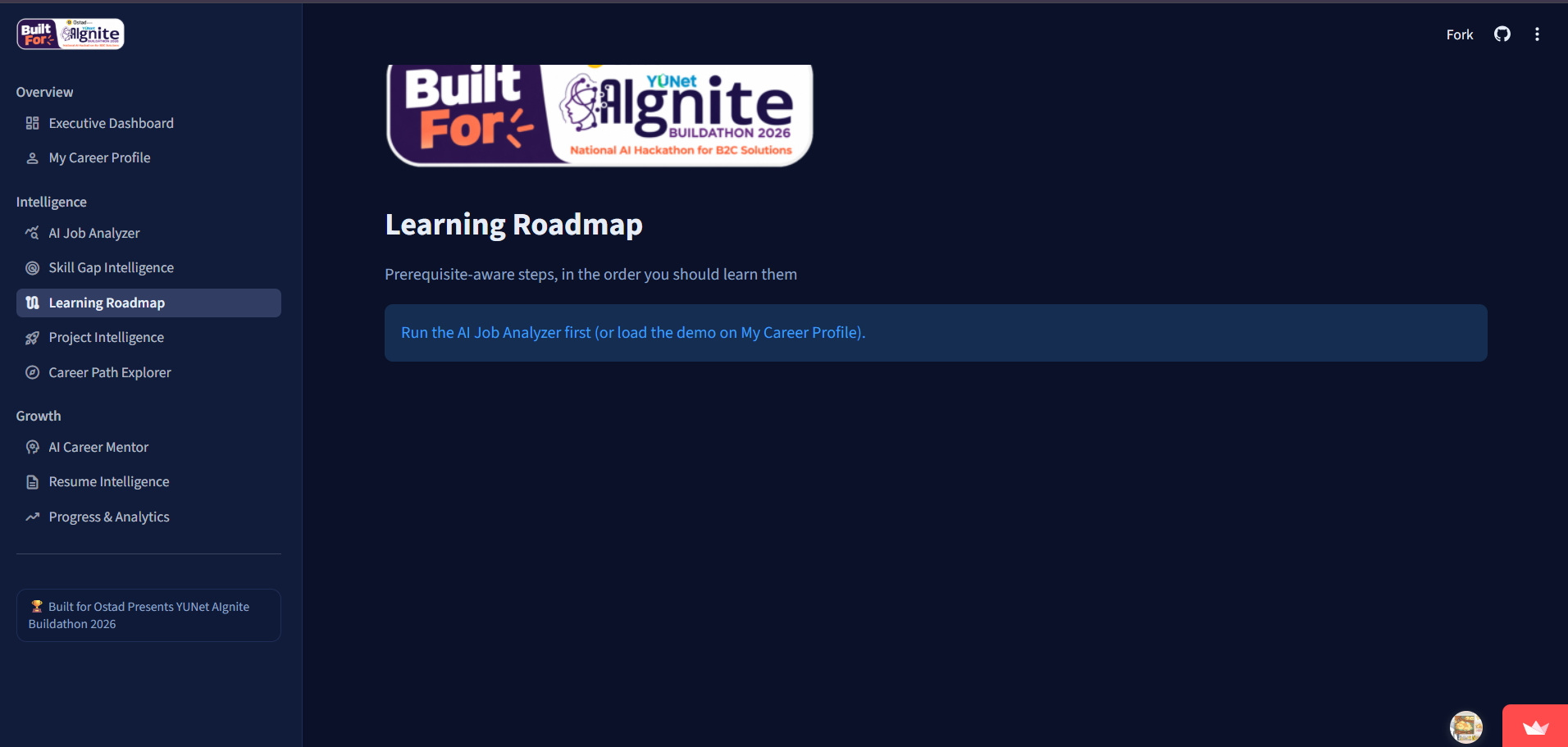
Learning Roadmap — Turn Skill Gaps into Action Transform identified skill gaps into structured learning priorities and actionable tasks.
-
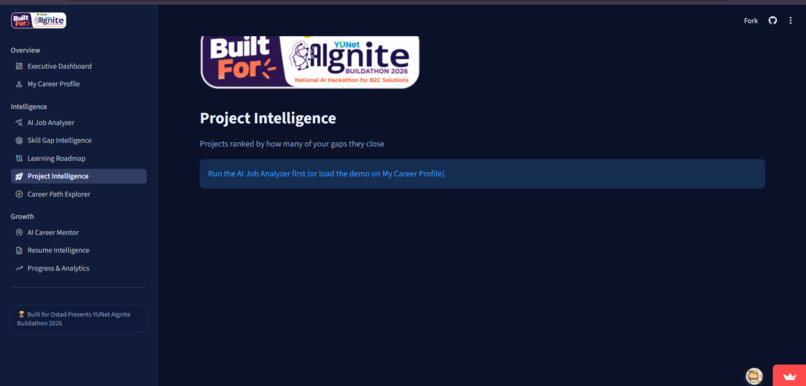
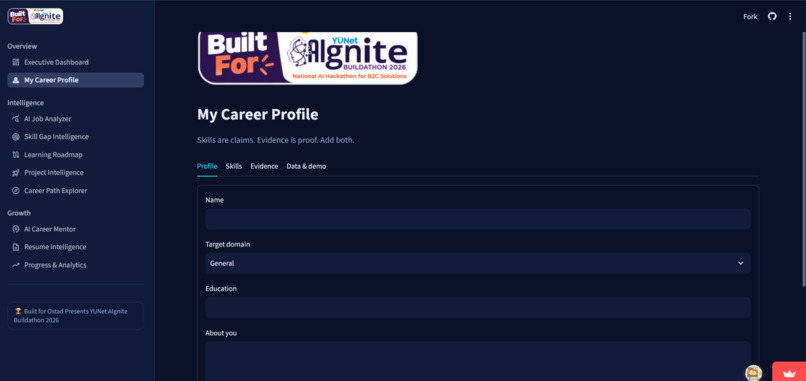
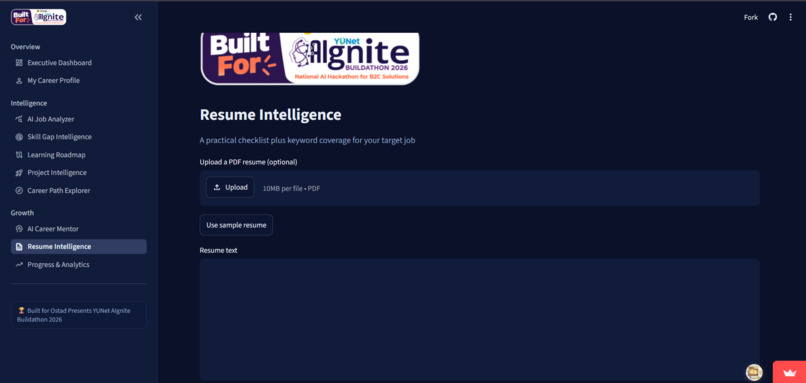
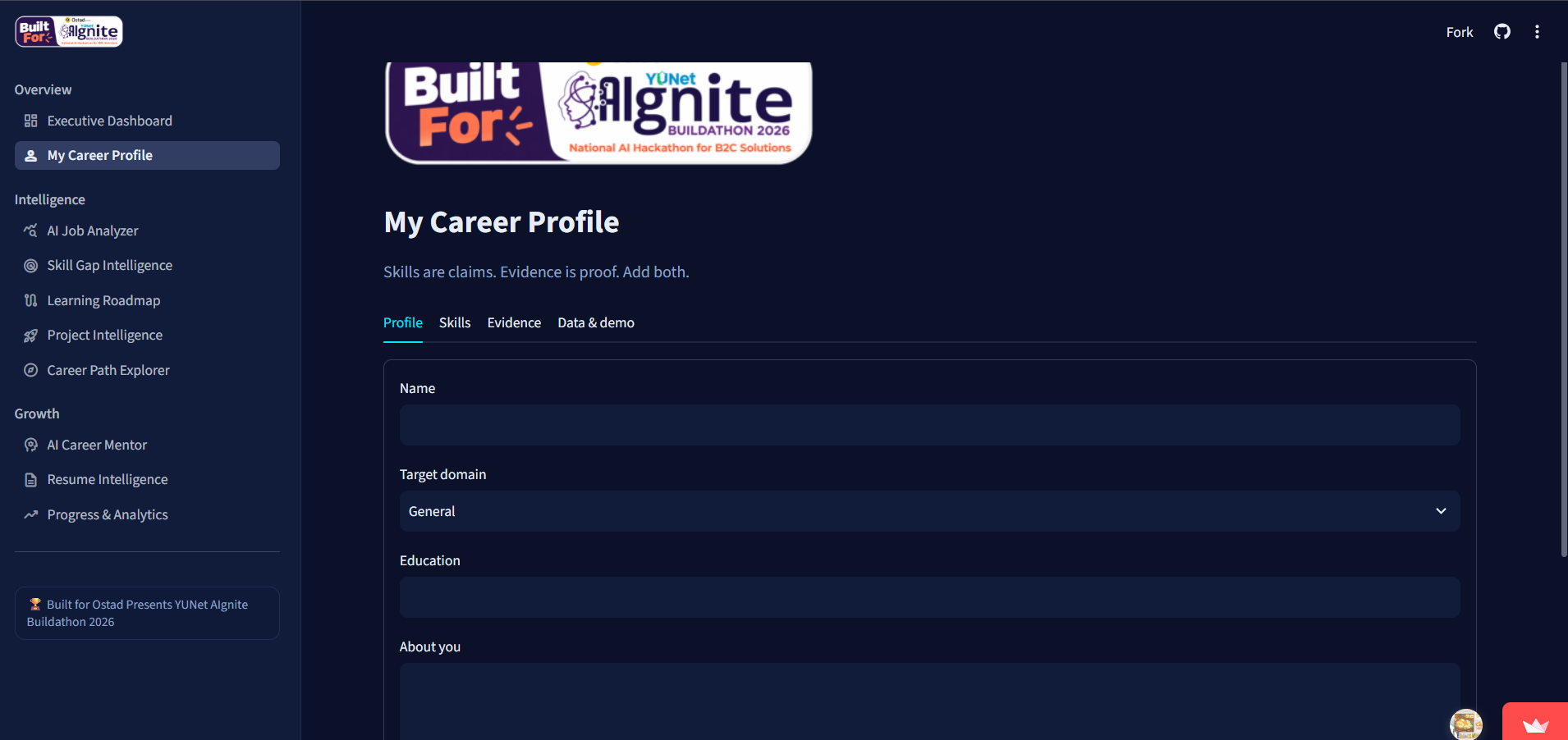
Build Your Evidence-Based Profile Organize skills, projects, and supporting evidence to create a clearer picture of career readiness.
-
-
-
-
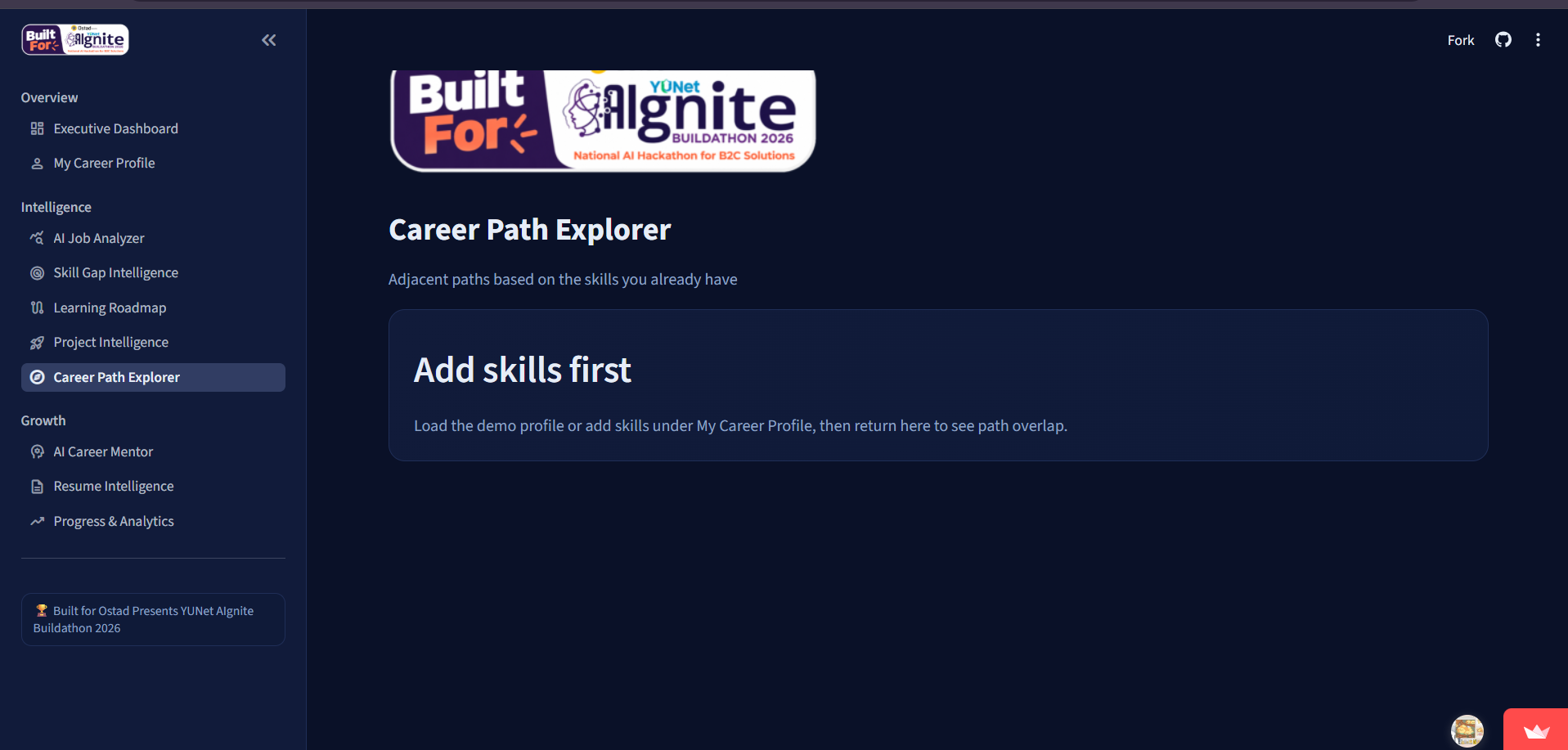
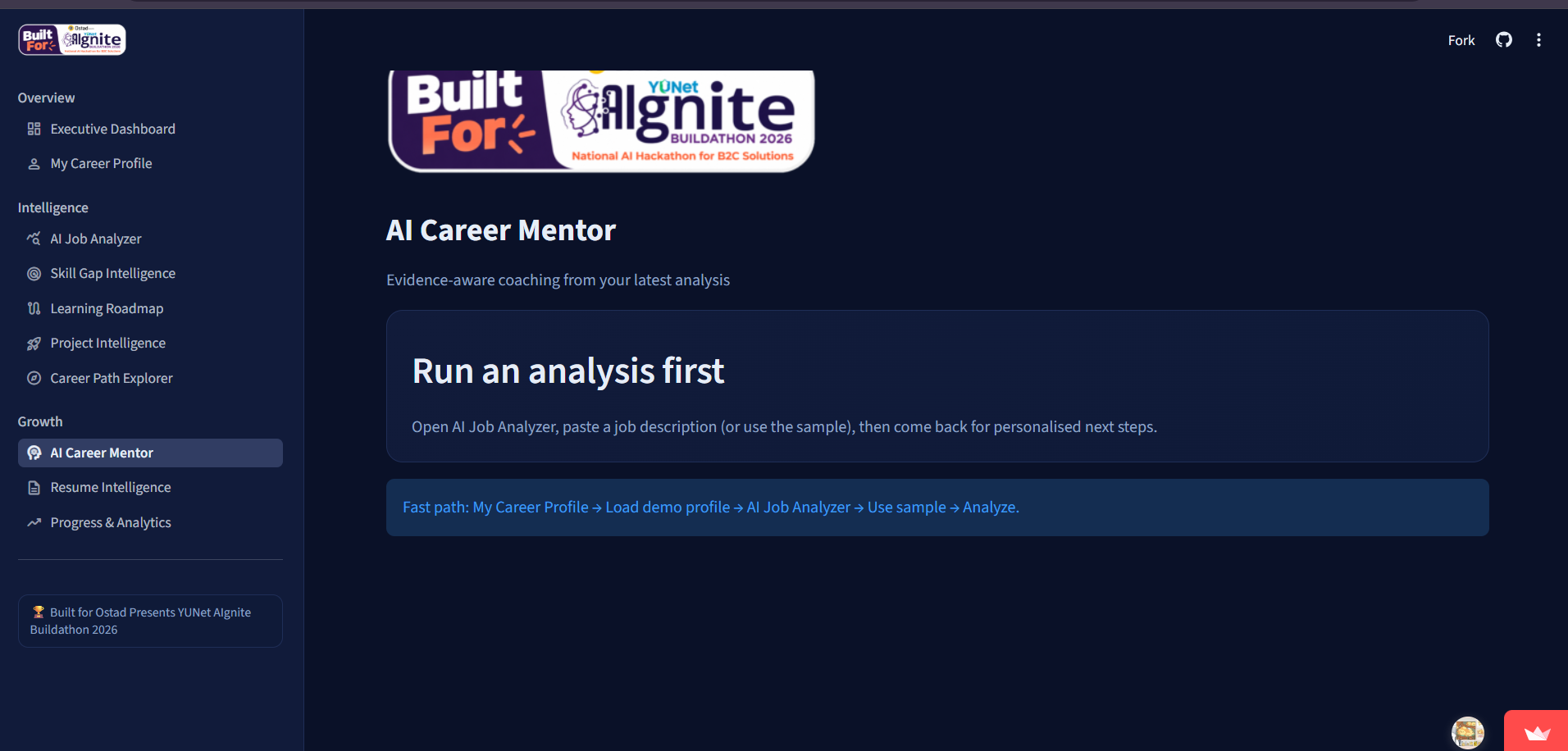
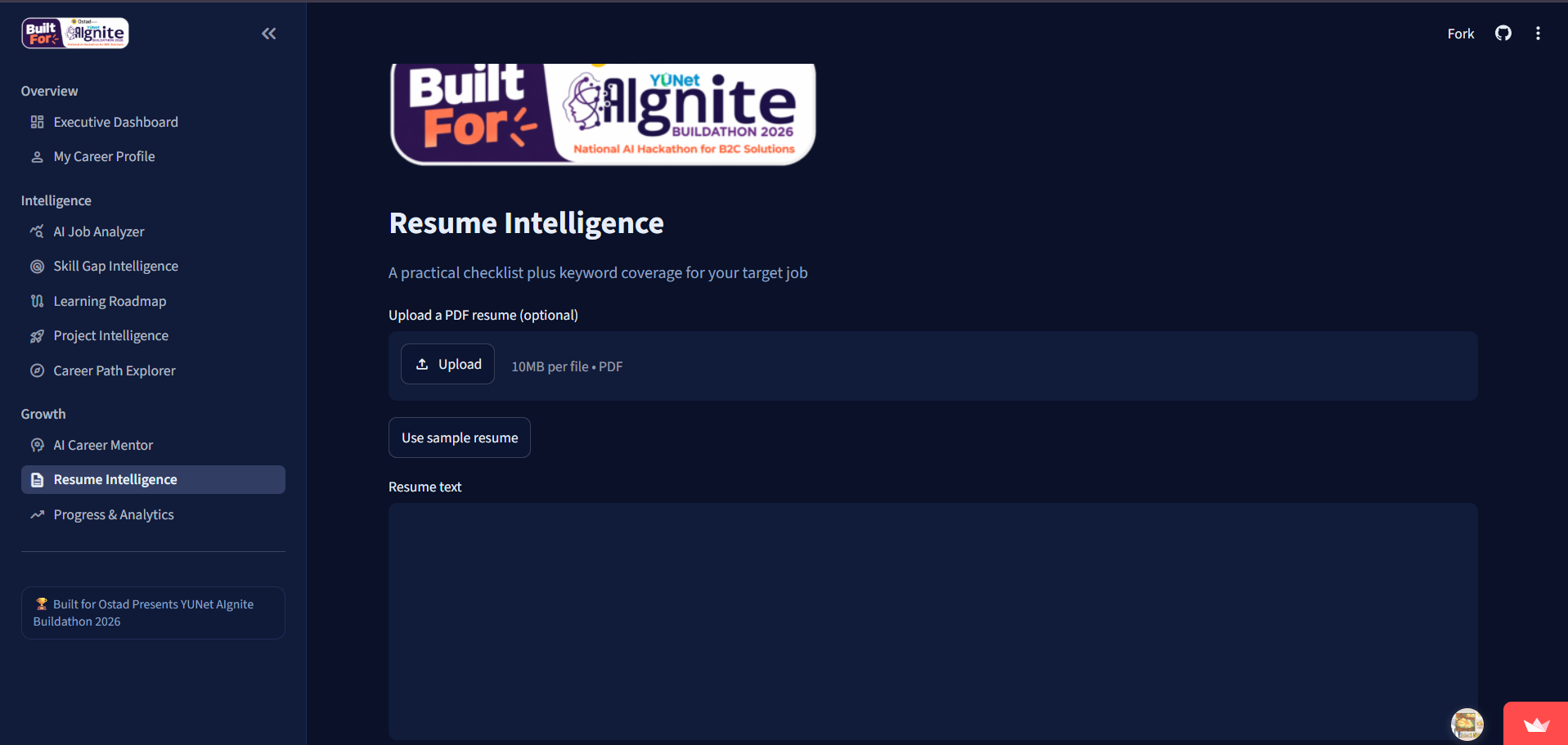
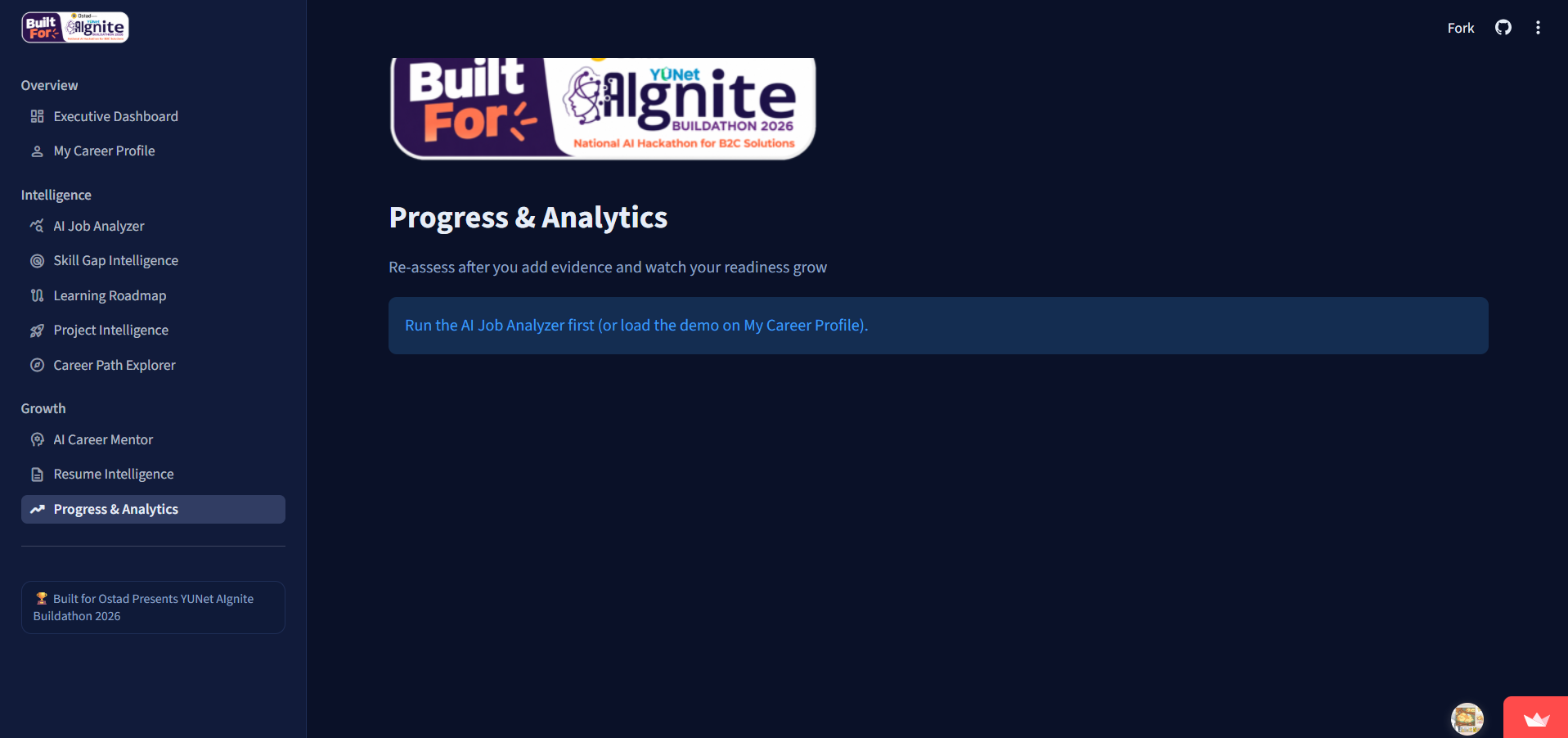
Inspiration
Many students and early-career candidates apply for jobs without clearly understanding how their current skills align with real job requirements.
Job descriptions often contain technical skills, experience expectations, and qualifications. However, students may struggle to determine:
- Which required skills can they actually demonstrate?
- What evidence supports their claimed skills?
- Which skills need improvement?
- What should they learn or build next?
I identified a gap between what employers expect and what students can confidently demonstrate.
This inspired me to build SkillBridge AI — a platform designed to make career readiness more transparent, evidence-driven, and actionable.
What Our Project Does
SkillBridge AI is an AI-powered career readiness assessment platform for students and early-career candidates.
It helps users understand how their available skill evidence aligns with the requirements of a target job.
Instead of simply matching keywords or labeling someone as qualified or unqualified, SkillBridge AI aims to provide a clearer picture of skill alignment and areas that may need improvement.
How It Works
- Job Description Input: Users provide a job description for their target role.
- Skill Extraction: NLP techniques identify relevant skills and requirements.
- Evidence Matching: Extracted requirements are compared with available user-profile evidence.
- Readiness Assessment: A documented scoring approach evaluates alignment between job requirements and available evidence.
- Personalized Roadmap: Identified gaps are translated into actionable learning and project recommendations.
How We Built It
I designed SkillBridge AI around a practical NLP-based assessment workflow.
Core technical components:
- Natural Language Processing (NLP): Processes job descriptions and identifies relevant skill requirements.
- TF-IDF Text Similarity: Helps compare textual information between job requirements and available profile evidence.
- Evidence-Based Matching: Distinguishes different levels of available skill evidence.
- Documented Scoring Methodology: Evaluates skill alignment using defined scoring rules.
- SQLite Database: Supports data storage and assessment-related records.
My focus was to build an understandable and practical system rather than relying on an unexplained AI-generated score.
What Makes SkillBridge AI Different?
My central design principle is Honest AI: Evidence, Not Guesses.
A student mentioning Python on a profile does not automatically prove practical Python ability. Similarly, not finding evidence for a skill does not mean the student lacks that skill.
SkillBridge AI distinguishes between six evidence categories:
- Demonstrated: Strong or direct evidence of practical ability.
- Supported: Available evidence supports the claimed skill.
- Self-reported: The student claims the skill, but sufficient proof is unavailable.
- Related Evidence: Related experience or evidence is available.
- Possible Match: Text similarity suggests a potential match.
- Not Found: No matching evidence was found in the available profile.
My follow three important principles:
- Not Found ≠ Lack of Skill
- Self-reported ≠ Demonstrated
- Similarity ≠ Proof
This approach aims to make career readiness assessment more transparent, explainable, and useful for decision-making.
Challenges I Faced
One of my biggest challenges was designing a meaningful way to compare job requirements with a student's available evidence.
Simple keyword matching can be misleading because the presence of a skill name does not necessarily demonstrate practical ability.
I therefore focused on separating text similarity from actual evidence and making the assessment logic more transparent.
Another challenge was converting identified skill gaps into useful next steps. I wanted the platform to do more than show a score; it should help users understand where to focus their learning efforts.
Balancing technical implementation, explainability, and usability was an important part of the development process.
What I Learned
Building SkillBridge AI taught me that creating a useful AI product involves more than applying an algorithm.
I learned the importance of:
- Responsible use of AI-generated assessments.
- Evidence quality and explainability.
- Designing transparent scoring logic.
- Understanding real user problems before choosing technical solutions.
- Turning analysis results into actionable recommendations.
Most importantly, i learned that an AI system should communicate what it knows, what evidence supports its conclusions, and where its limitations exist.
What's Next?
I plan to continue improving SkillBridge AI with the following features:
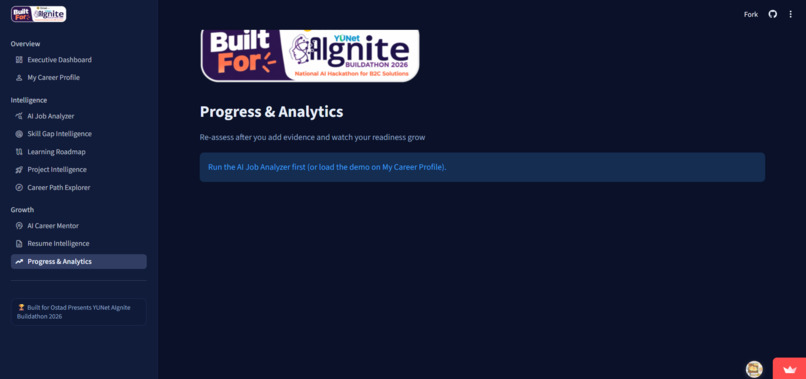
- Bangla Job Description Support: Making career assessment more accessible to Bangla-speaking users.
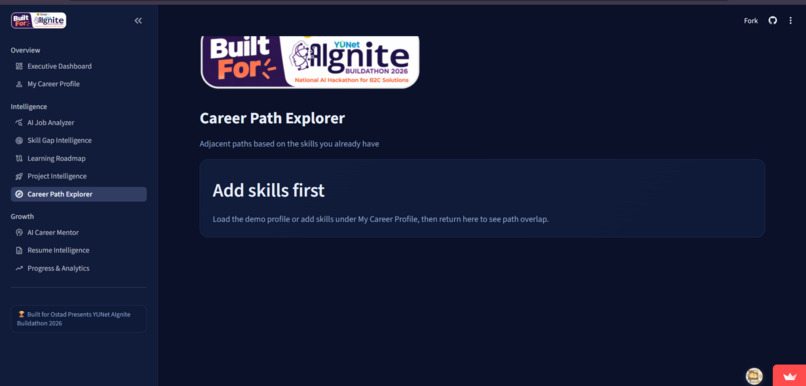
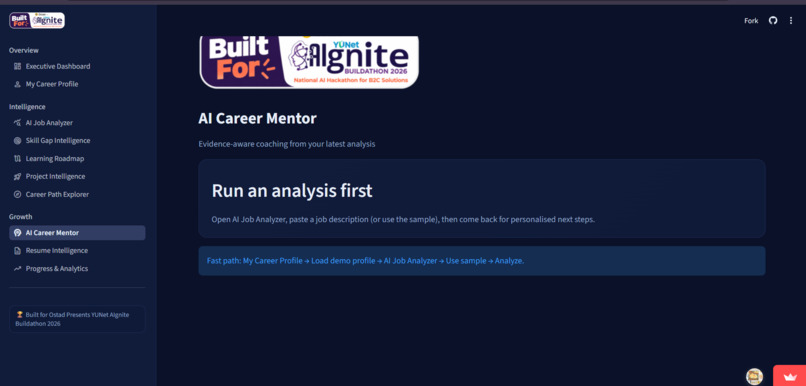
- AI Career Mentor: Providing more interactive career guidance.
- Cloud Profile and Progress Tracking: Helping users monitor their skill development over time.
- Expanded Skill and Job-Domain Coverage: Supporting a wider range of career paths.
- Improved Evidence Evaluation: Making skill assessment more reliable and informative.
My Vision
I believe career preparation should be guided by evidence, not guesswork.
SkillBridge AI aims to help students understand their current capabilities, recognize improvement areas, and take more informed steps toward their career goals.
SkillBridge AI — From Career Uncertainty to Career Readiness.
Built With
- ai
- ml
- python
- streamlit

