
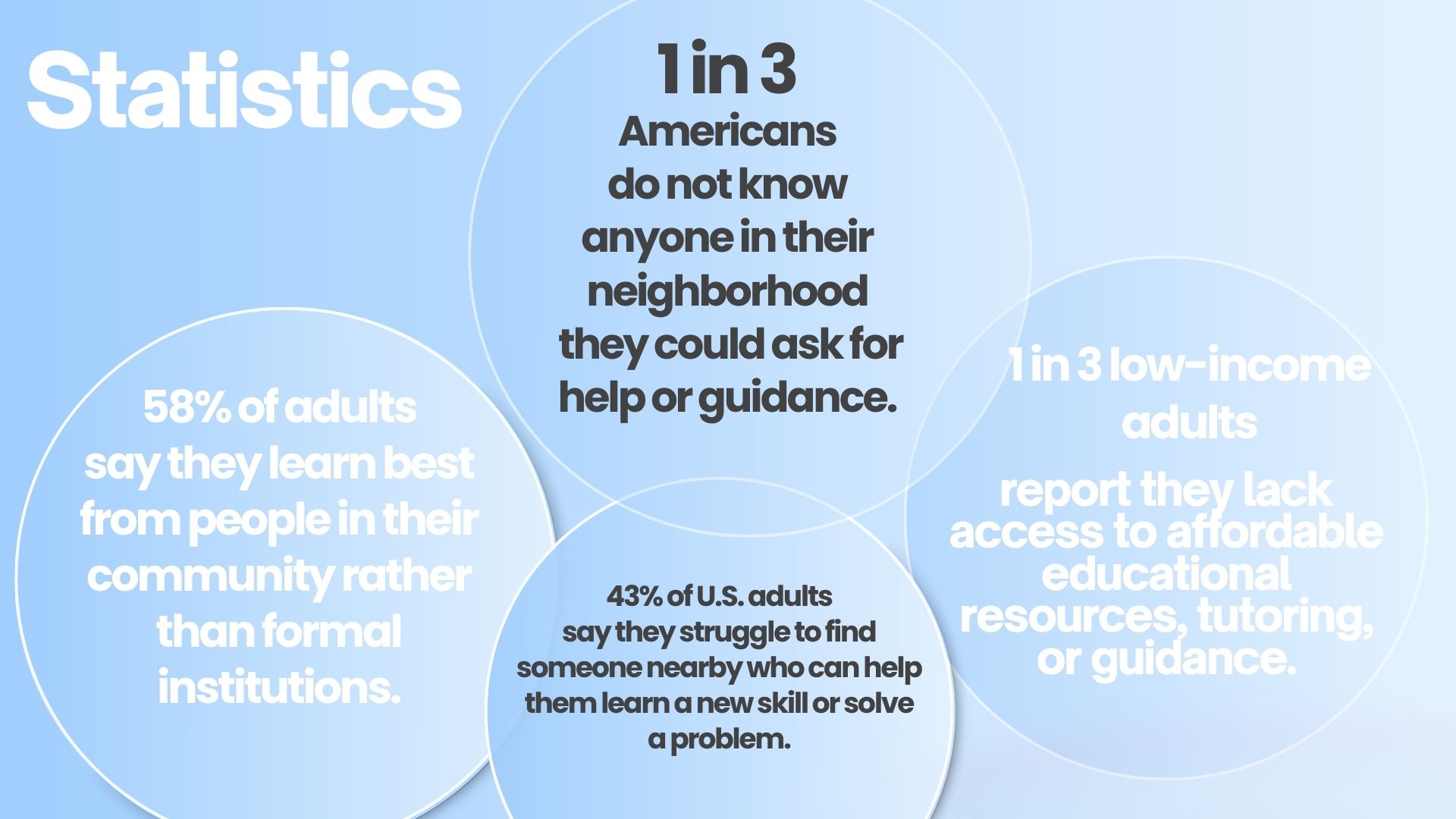
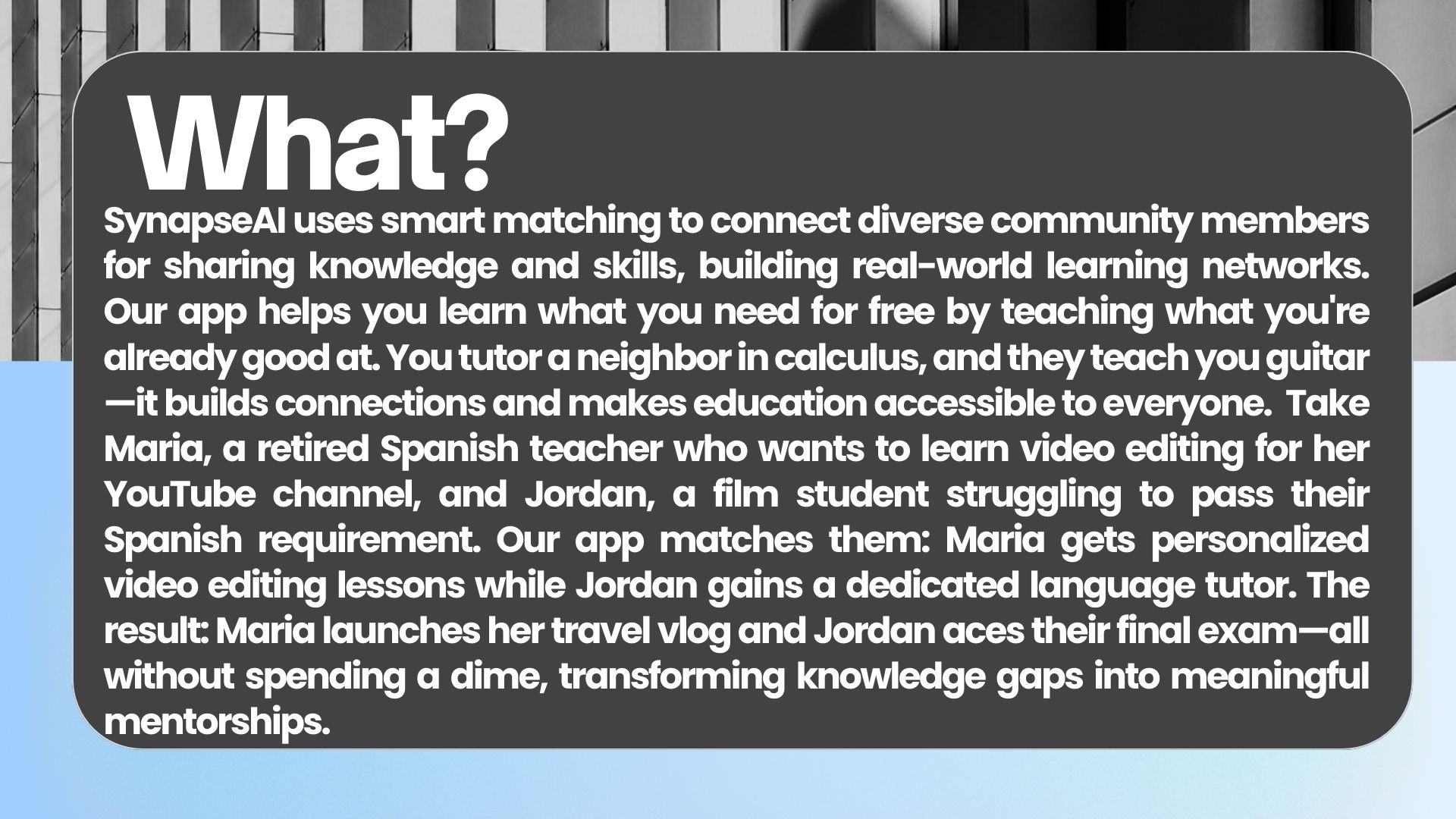
What Inspired Us Education is expensive and inaccessible. We saw neighbors with valuable skills unable to connect with people who needed to learn them. SkillBridge was born from a simple idea: what if the best teacher for you lives just a few doors away? We wanted to make learning free, local, and human.
What We Learned AI can bridge gaps — We learned to use Google Gemini for intelligent matching and real-time translation, making education accessible across languages and backgrounds. Real-time matters — Socket.io taught us how instant communication transforms casual connections into active learning relationships. Design for everyone — We discovered that simple, accessible UI beats flashy features—especially when serving diverse age groups. How We Built It:
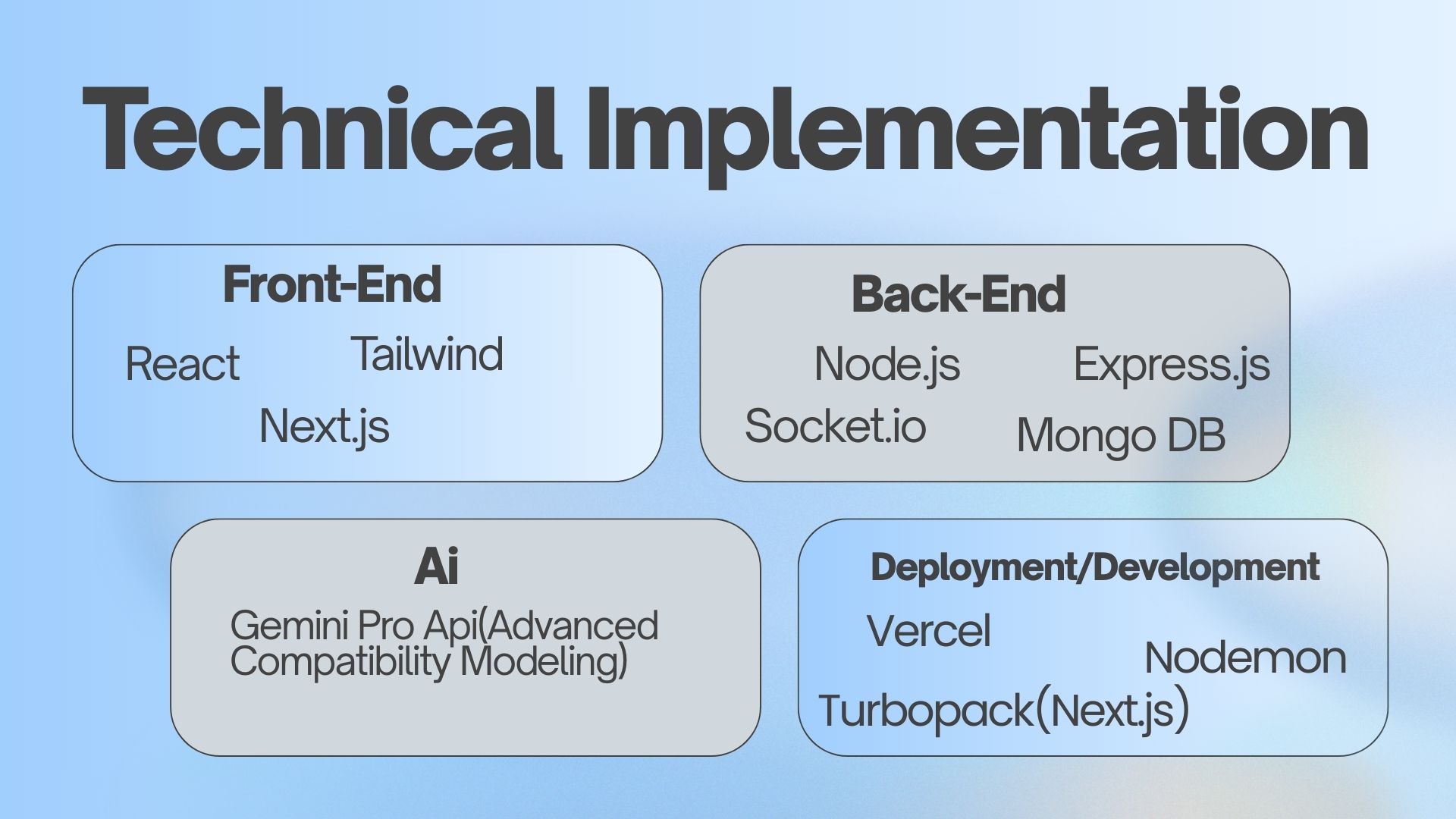
Frontend: Next.js 16, React 19, TypeScript, Tailwind CSS, and shadcn/ui for a responsive, modern interface. React Three Fiber powers our 3D community map.
Backend: Node.js with Express.js and Socket.io for real-time messaging. MongoDB stores user profiles, skills, and conversations.
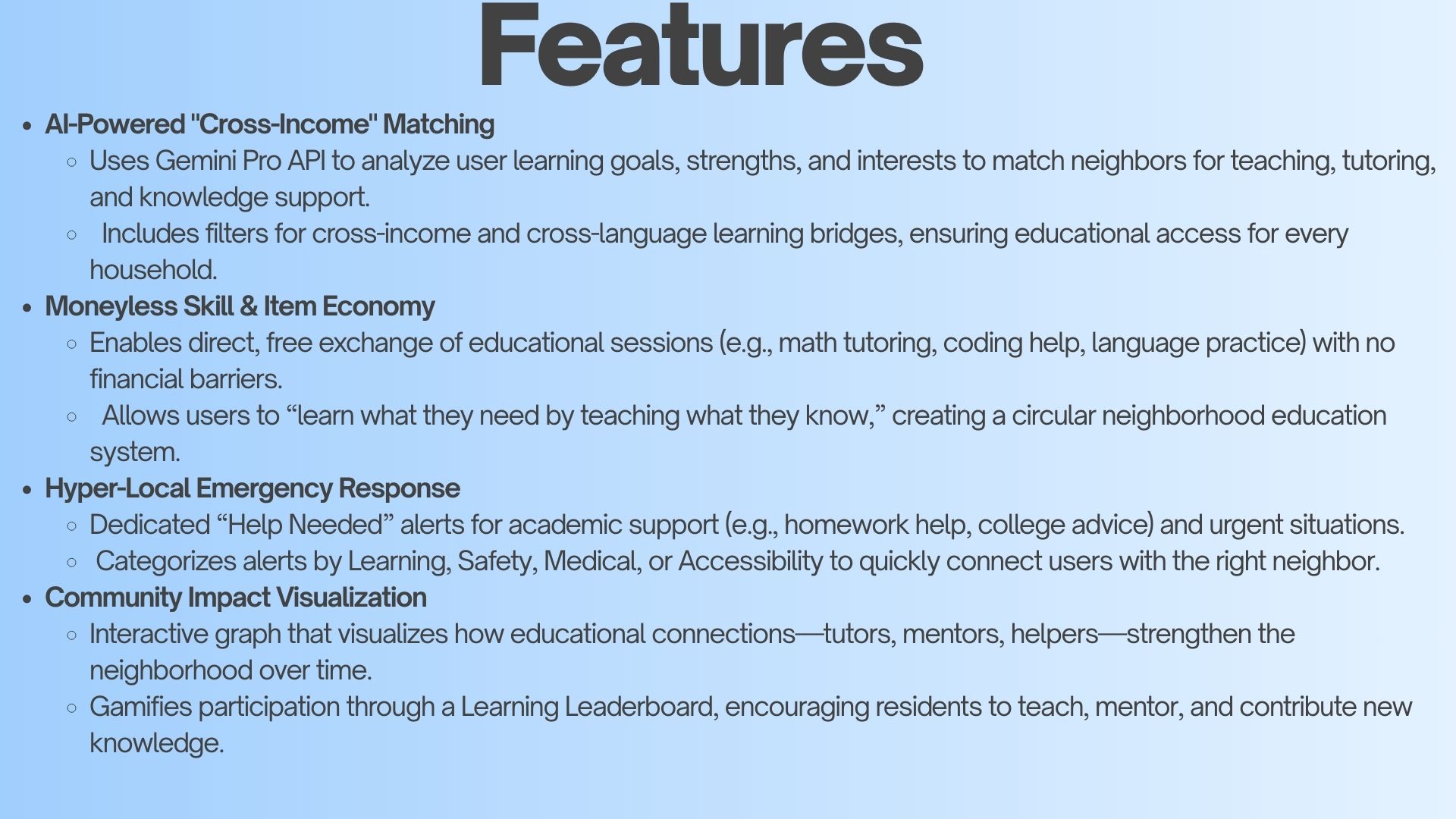
AI: Google Gemini 2.5 Flash handles smart learner-teacher matching, real-time translation, and AI-assisted messaging.
Challenges We Faced:
Creating human AI matching — We iterated extensively to ensure matches felt personal, not robotic, focusing on mutual learning partnerships rather than one-way tutoring.
Real-time at scale — Implementing Socket.io required solving race conditions and message delivery issues with queuing and retry logic.
Translation quality — Early translations lost context. We refined prompts to preserve tone and meaning, making messages feel natural.
Time constraints — With one week, we prioritized ruthlessly: discovery, matching, and communication over advanced features.
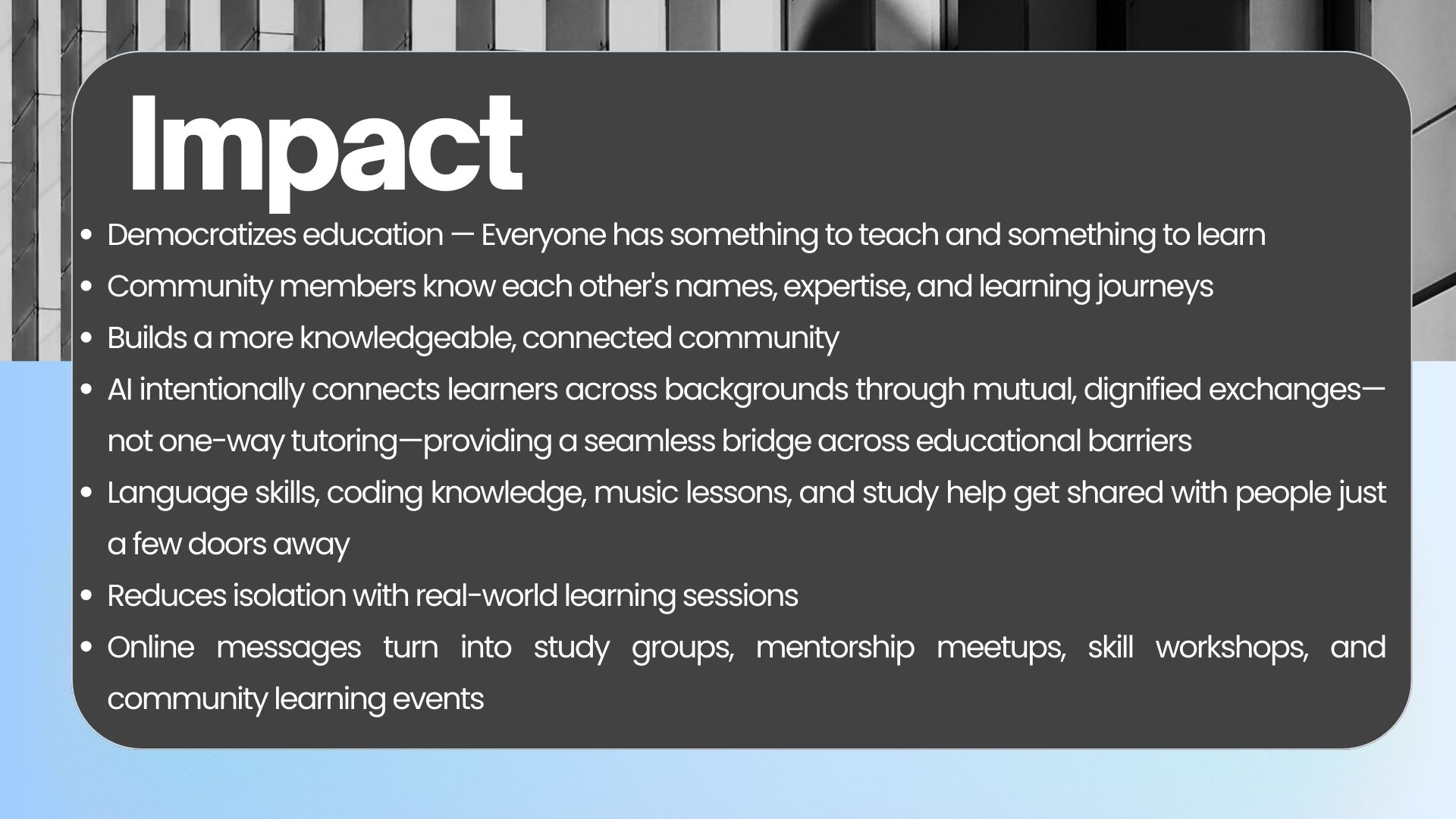
The Result: SkillBridge proves technology can make education free, accessible, and deeply human—one neighborhood at a time.
Built With
- css
- express.js
- fiber
- javascript
- mongodb
- next.js
- node.js
- react
- socket.io
- tailwind
- typescript

Log in or sign up for Devpost to join the conversation.