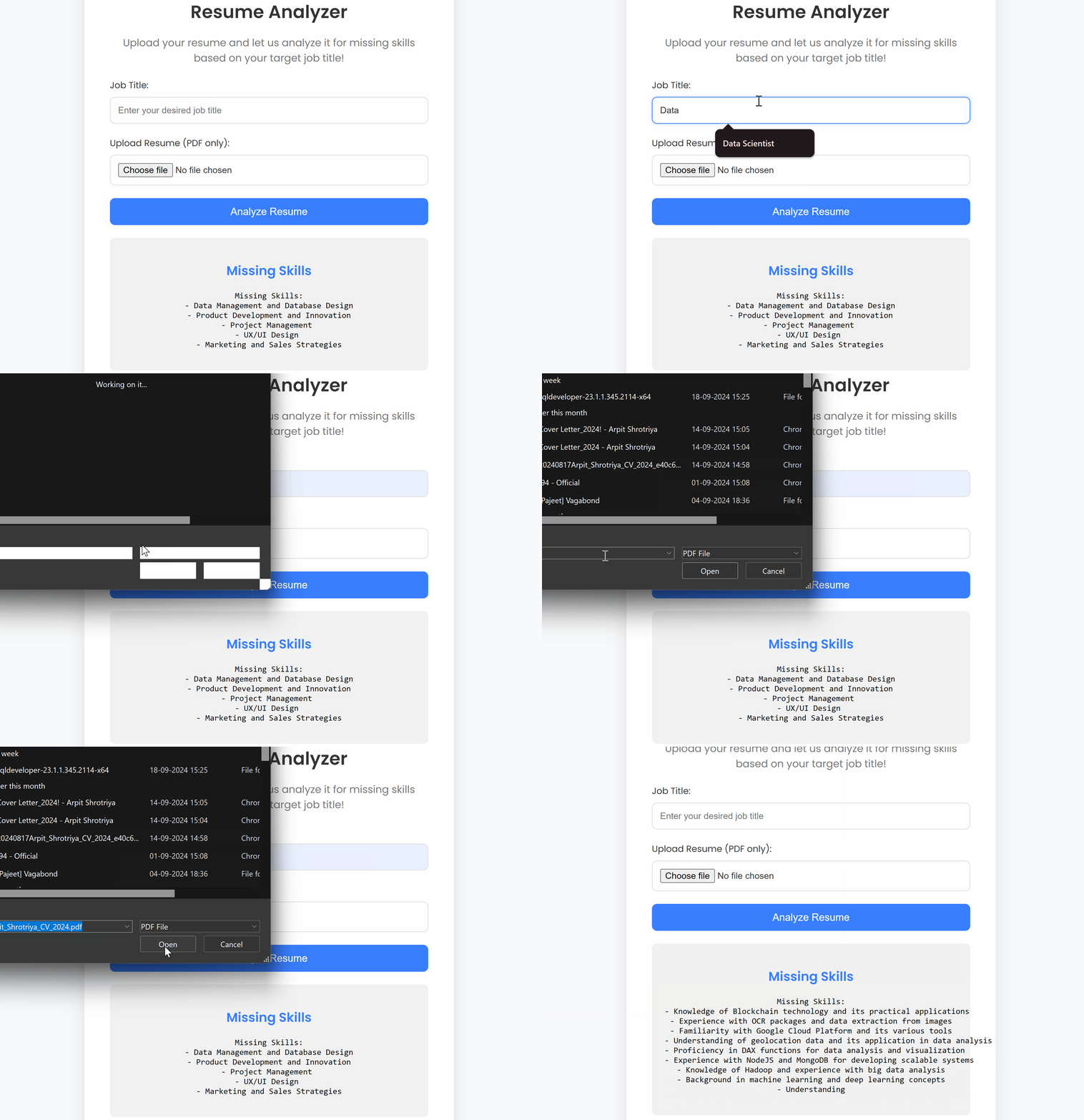
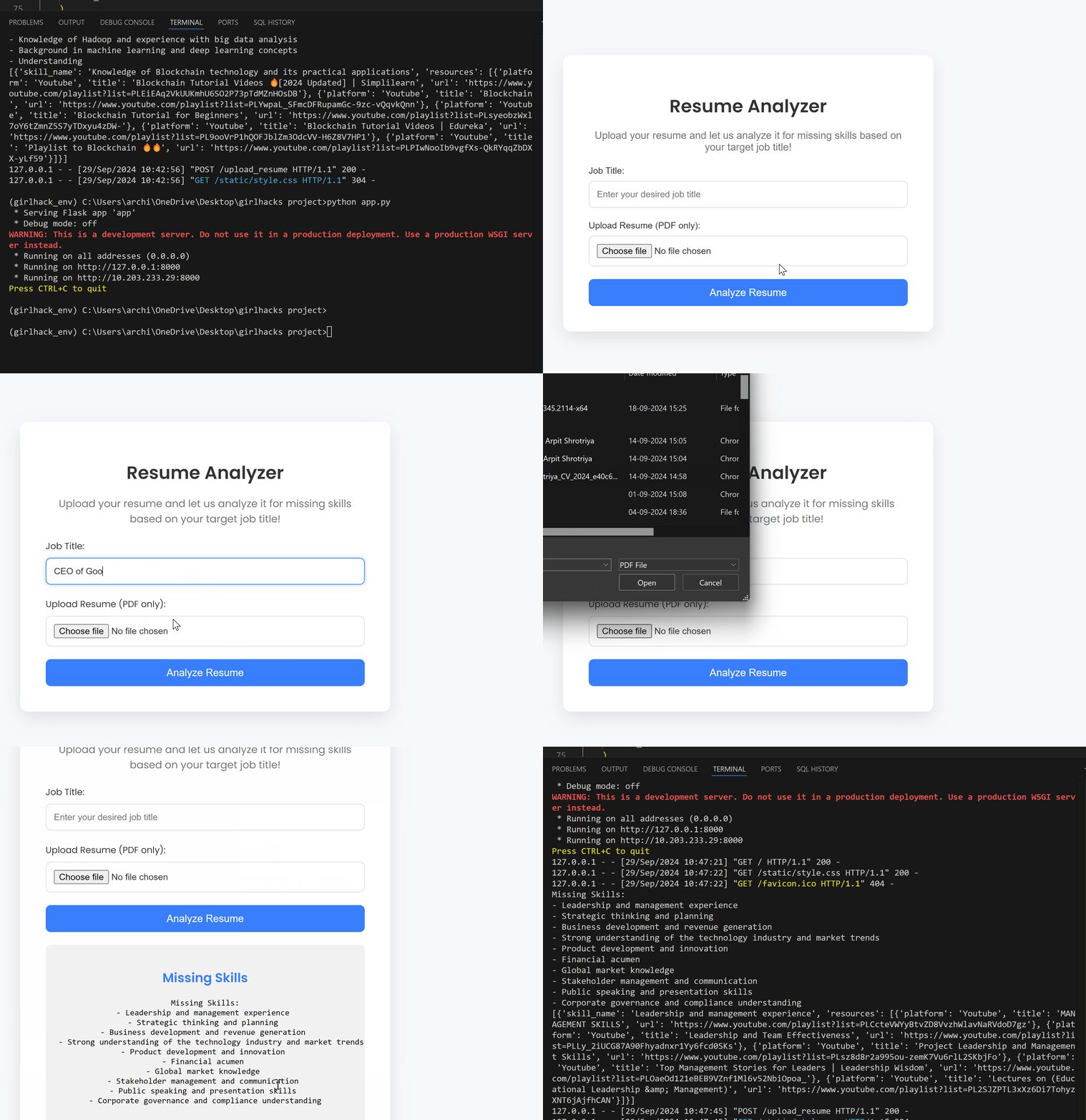
Inspiration The idea for Skill Recommender with Azure stemmed from the growing demand for personalized learning pathways in an ever-evolving job market. With the rise of data-driven decision-making and the vast amount of learning resources available online, it became clear that professionals and job seekers needed an efficient tool to identify gaps in their skills based on their desired job roles. We were inspired by the idea of merging artificial intelligence with online learning platforms like Coursera and YouTube to recommend personalized skill development resources. By leveraging Azure’s powerful AI offerings, we aimed to create a tool that provides meaningful career guidance.
What it does The Skill Recommender takes a resume (in PDF format) and a job title as input. It then analyzes the resume using Azure’s OpenAI capabilities to extract the existing skills of the user. After analyzing the user's skills, it compares them with the top trending skills required for the desired job role. Based on the analysis, it identifies the skill gaps and recommends online courses (from platforms like Udemy, Coursera, and YouTube) to help the user bridge those gaps. The recommendations are provided in an easy-to-read format, which includes links to relevant courses, tutorials, and learning resources.
How we built it We built the Skill Recommender using the following technologies:
Python and Flask: For building the backend server to handle file uploads, resume processing, and communication with external APIs. Azure OpenAI Service: To analyze the resume and extract relevant skills based on the user's job title. This helped us compare the user’s existing skills with the required skills for the job role. YouTube API: To retrieve playlists and tutorials for the missing skills identified in the analysis. HTML/CSS: To create a user-friendly and visually appealing front where users can upload their resumes and view their personalized skill recommendations. PDF Parsing (pdfplumber): To extract text from PDF resumes for analysis. Challenges we ran into One of the primary challenges was integrating multiple APIs, especially handling rate limits and different formats of data returned by external services (like YouTube and Azure OpenAI). Parsing the resumes in a consistent and clean format was another challenge, as resumes come in various formats and layouts. We also had to ensure that the skill extraction was accurate and aligned with the job title provided. Additionally, deployment on Azure came with its own set of hurdles, such as managing server configurations and handling API keys securely.
Accomplishments that we're proud of Successfully integrating Azure’s AI services to accurately extract skills from resumes and compare them to job-specific skill sets. Creating a smooth and responsive frontend where users can easily interact with the application. Providing valuable, actionable learning recommendations from reliable platforms like Udemy, Coursera, and YouTube. Building a system that can be easily expanded with additional APIs and features, making it scalable for future use cases. What we learned We learned how powerful cloud-based AI services like Azure OpenAI can be in analyzing and extracting meaningful insights from text. Working with multiple APIs, we gained experience in efficiently handling external data and designing APIs that can interact with each other. We also improved our understanding of how to build and deploy web applications using Flask and Azure App Services.

Log in or sign up for Devpost to join the conversation.