-
-
History
-
About
-
Result details
-
Result details
-
Result details
-
Result details
-
Result details
-
Result details
Inspiration
Most people still make career decisions based on trends, opinions, or social proof, not structured analysis.
We wanted a tool that lets someone test a career move before spending months (or years) learning the wrong things.
SkillTree was built to push career planning from guesswork toward data-informed strategy.
What it does
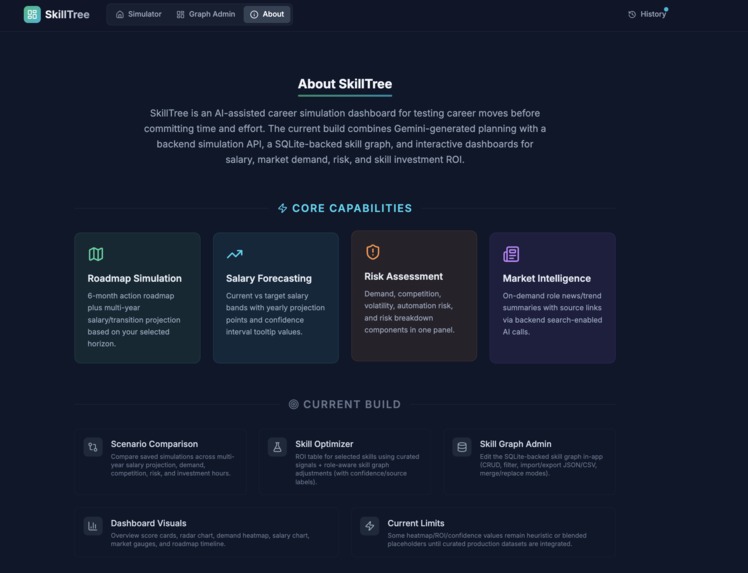
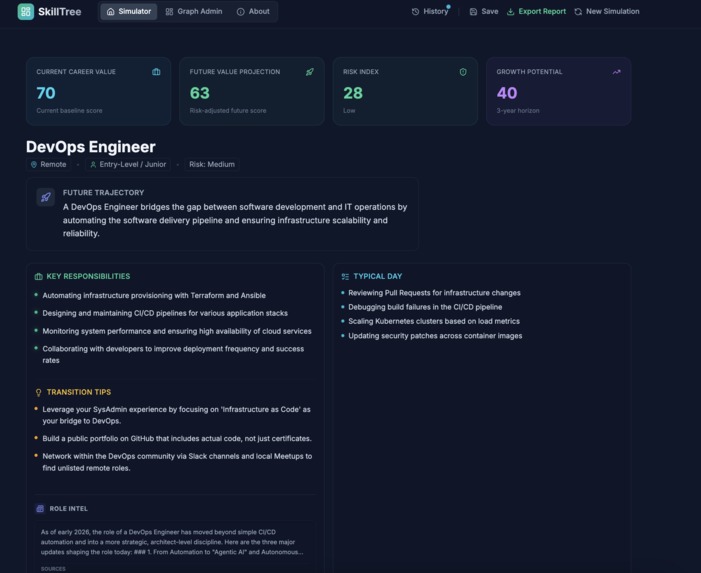
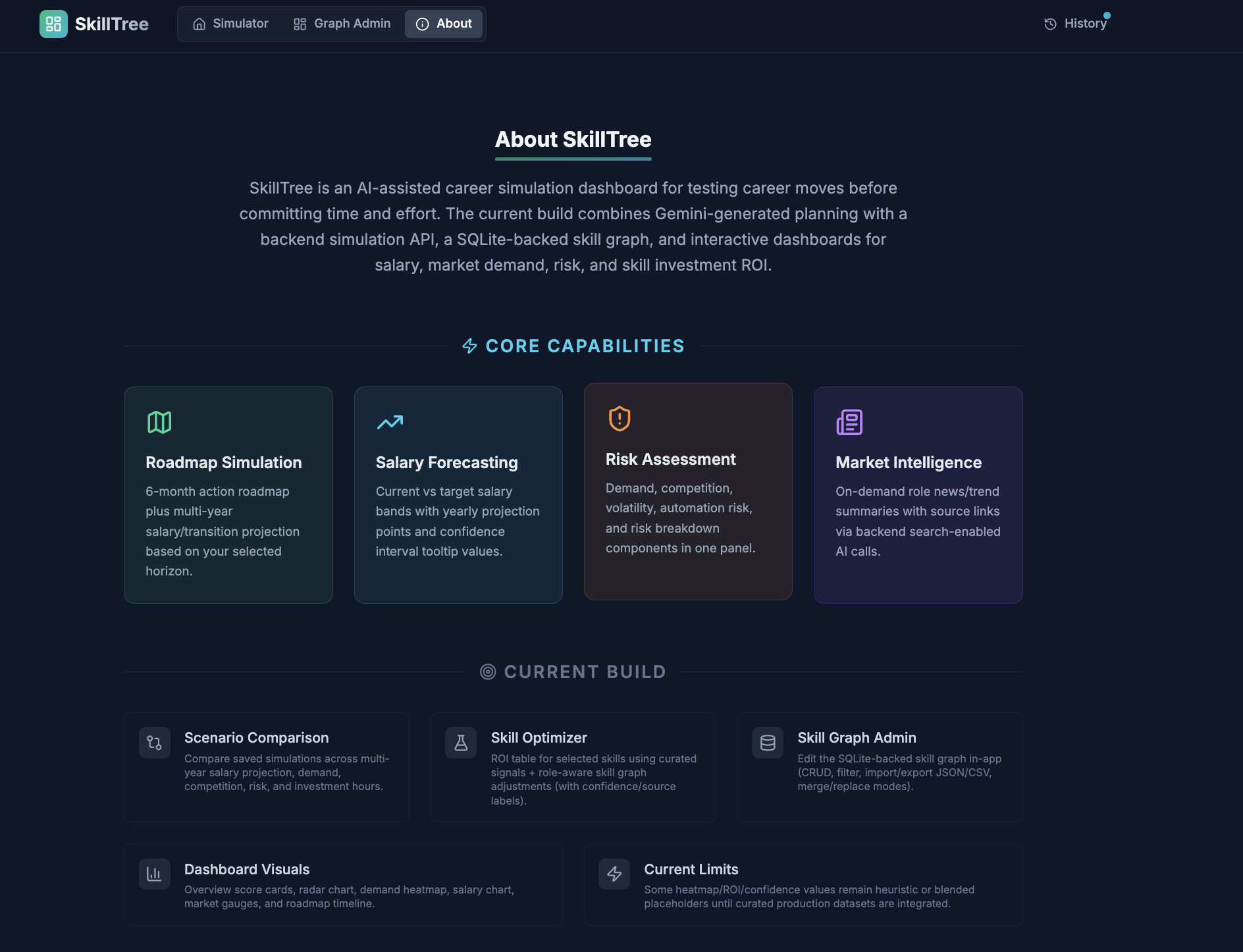
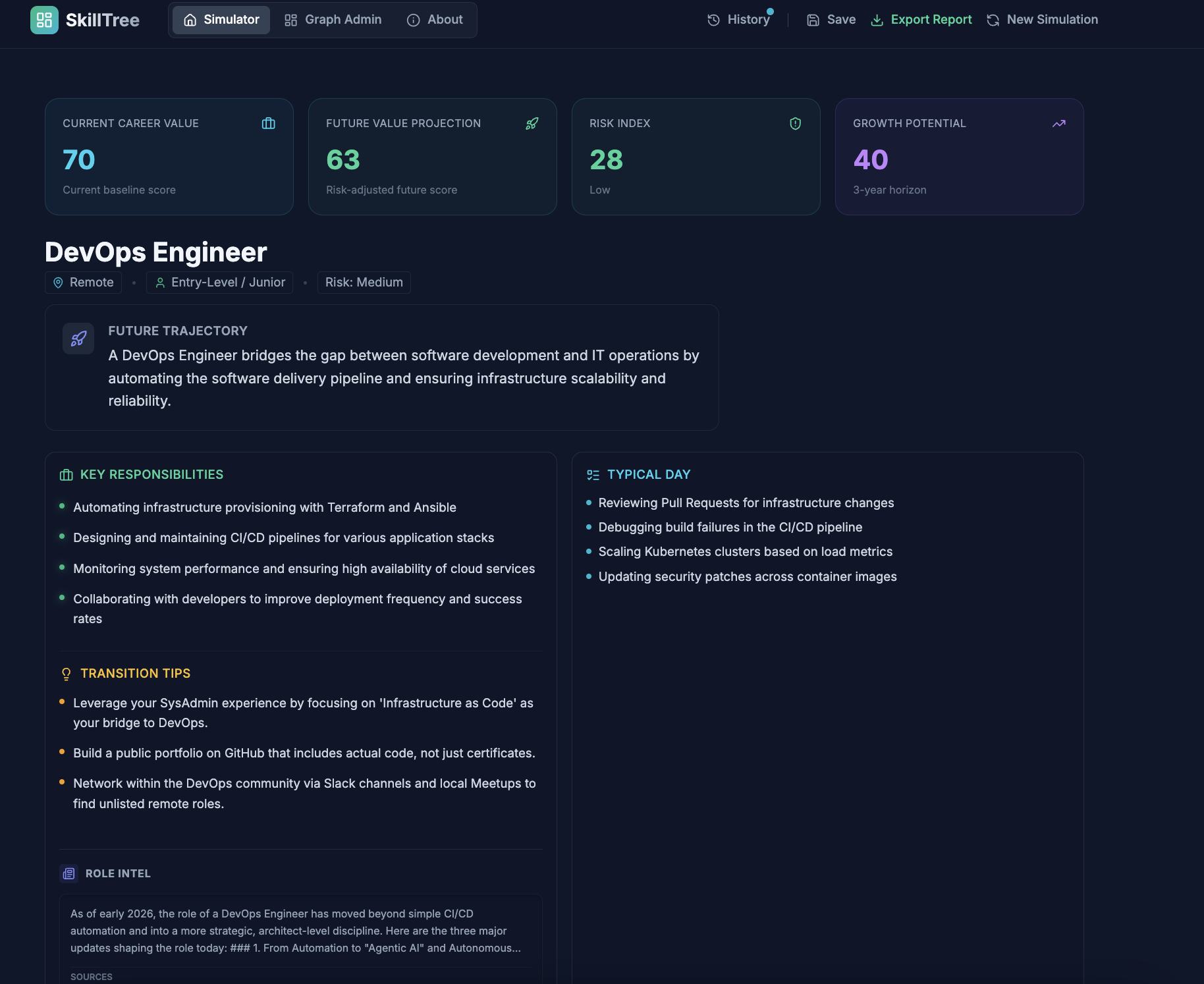
SkillTree is an AI-assisted career path simulation dashboard.
Users enter:
- current role
- years of experience
- current skills
- desired role
- location
- risk tolerance
- time horizon (1-5 years)
- weekly learning hours
SkillTree then generates and visualizes:
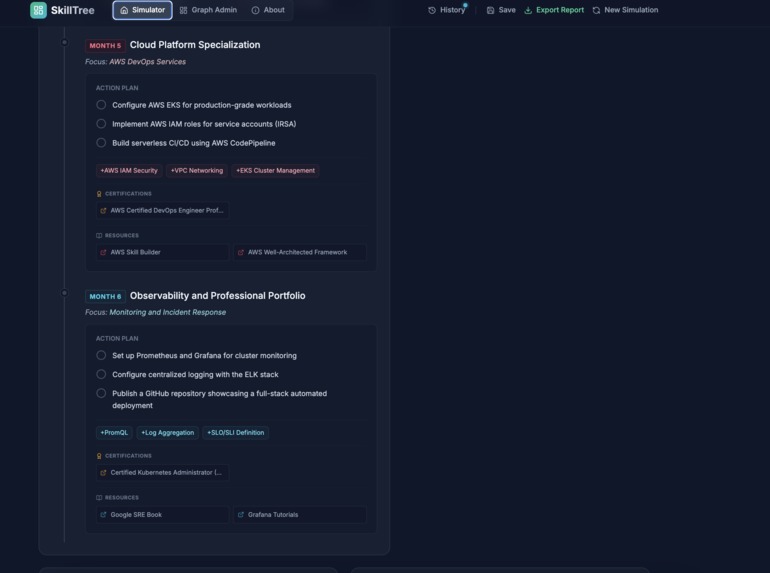
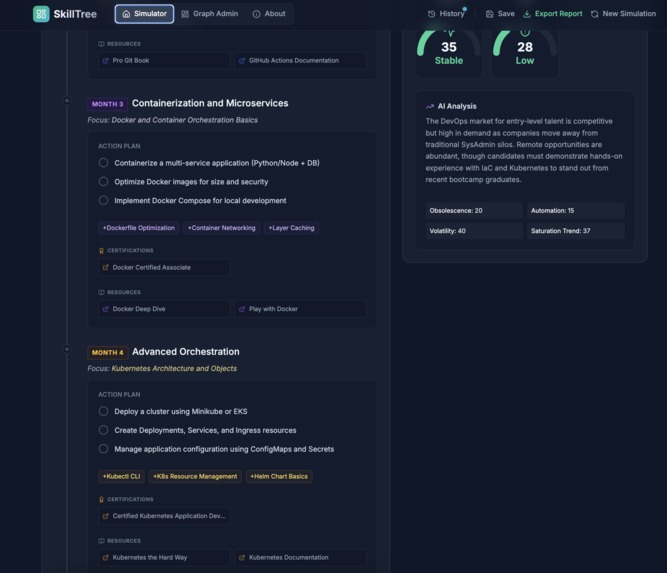
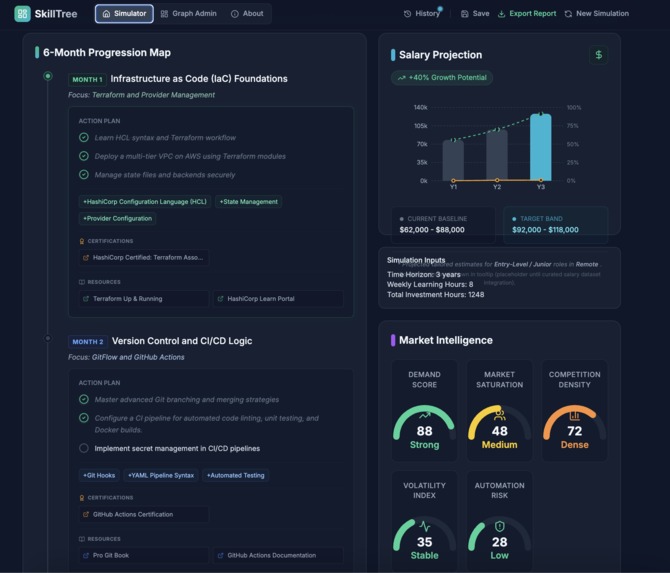
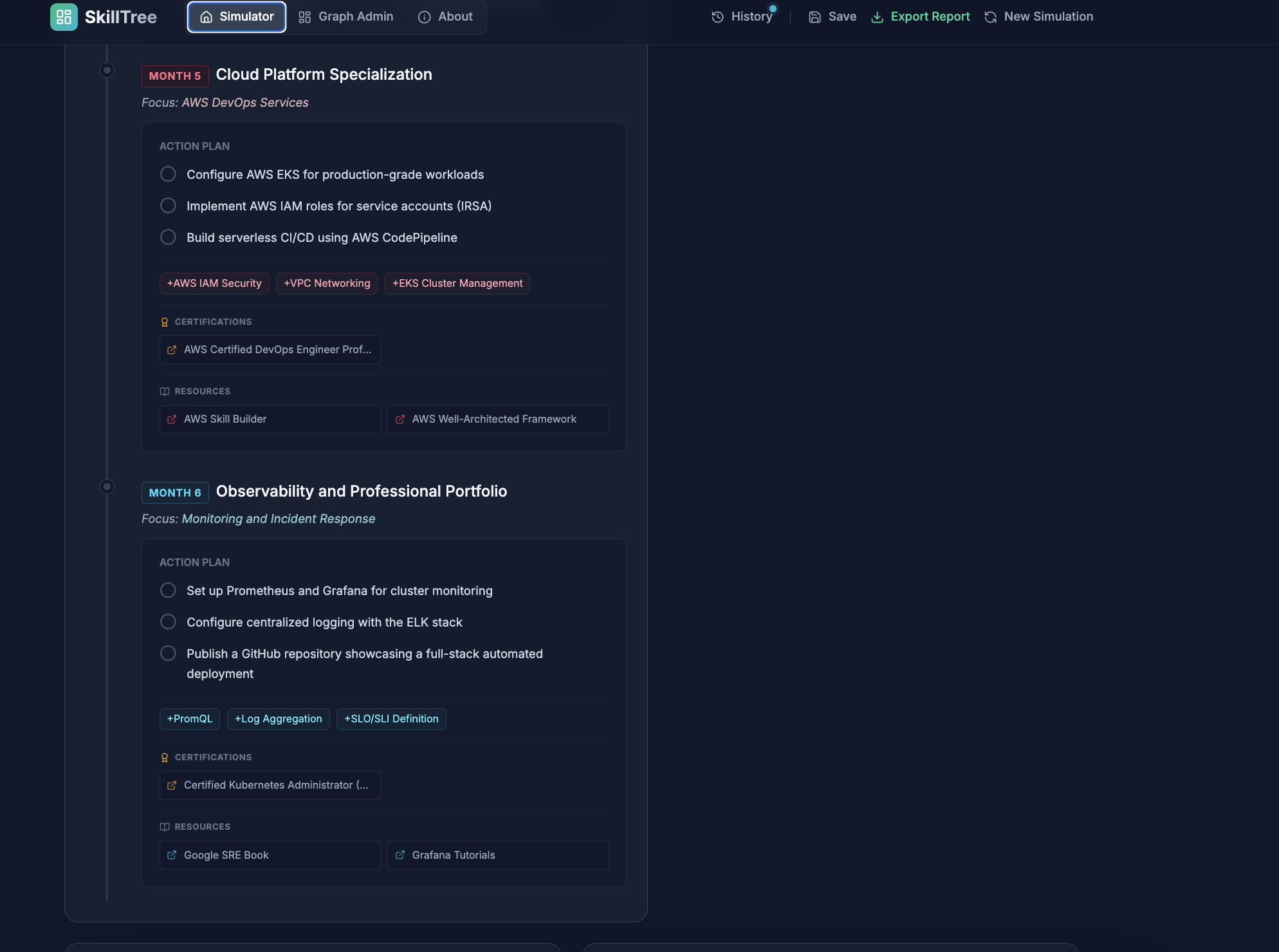
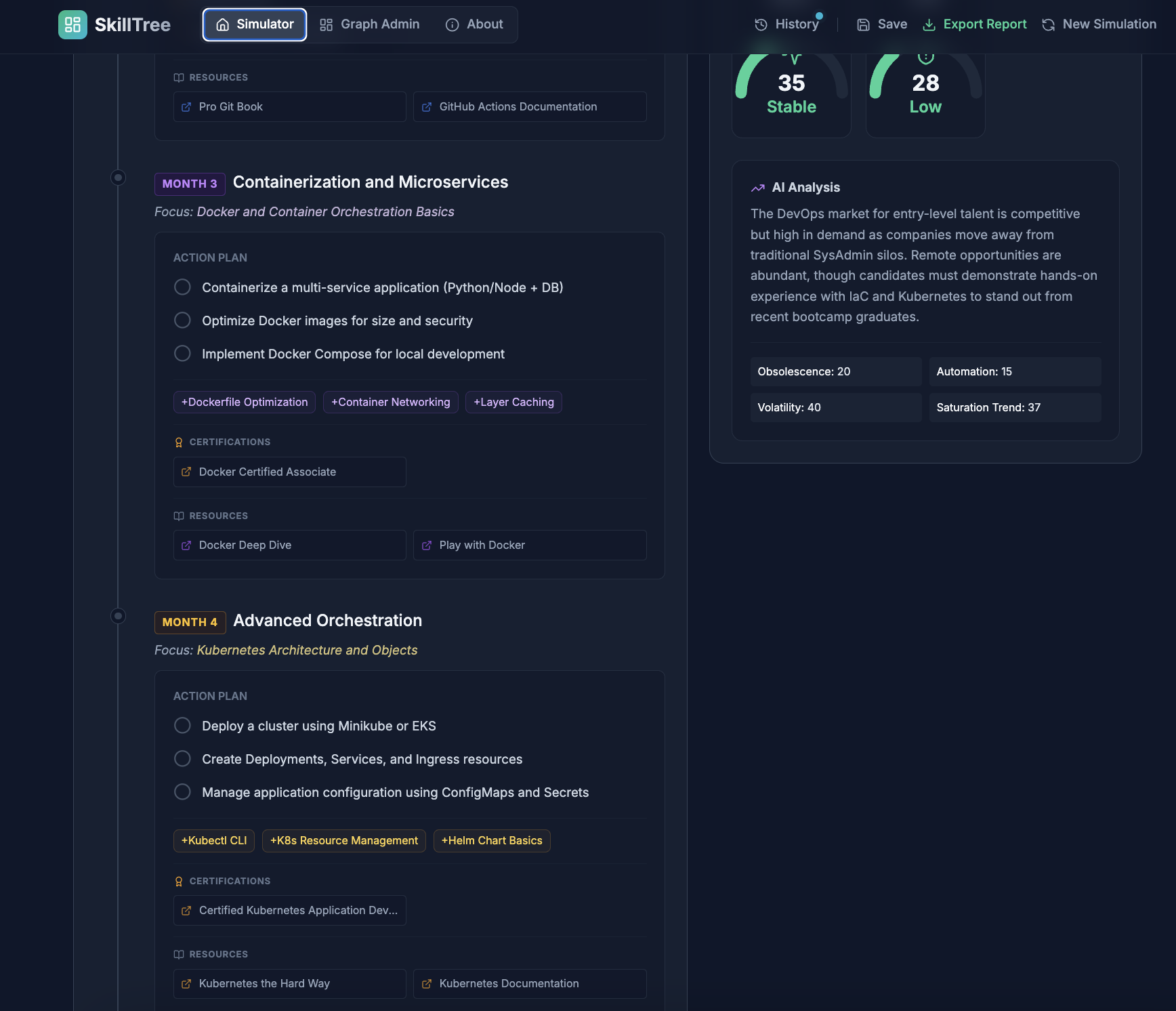
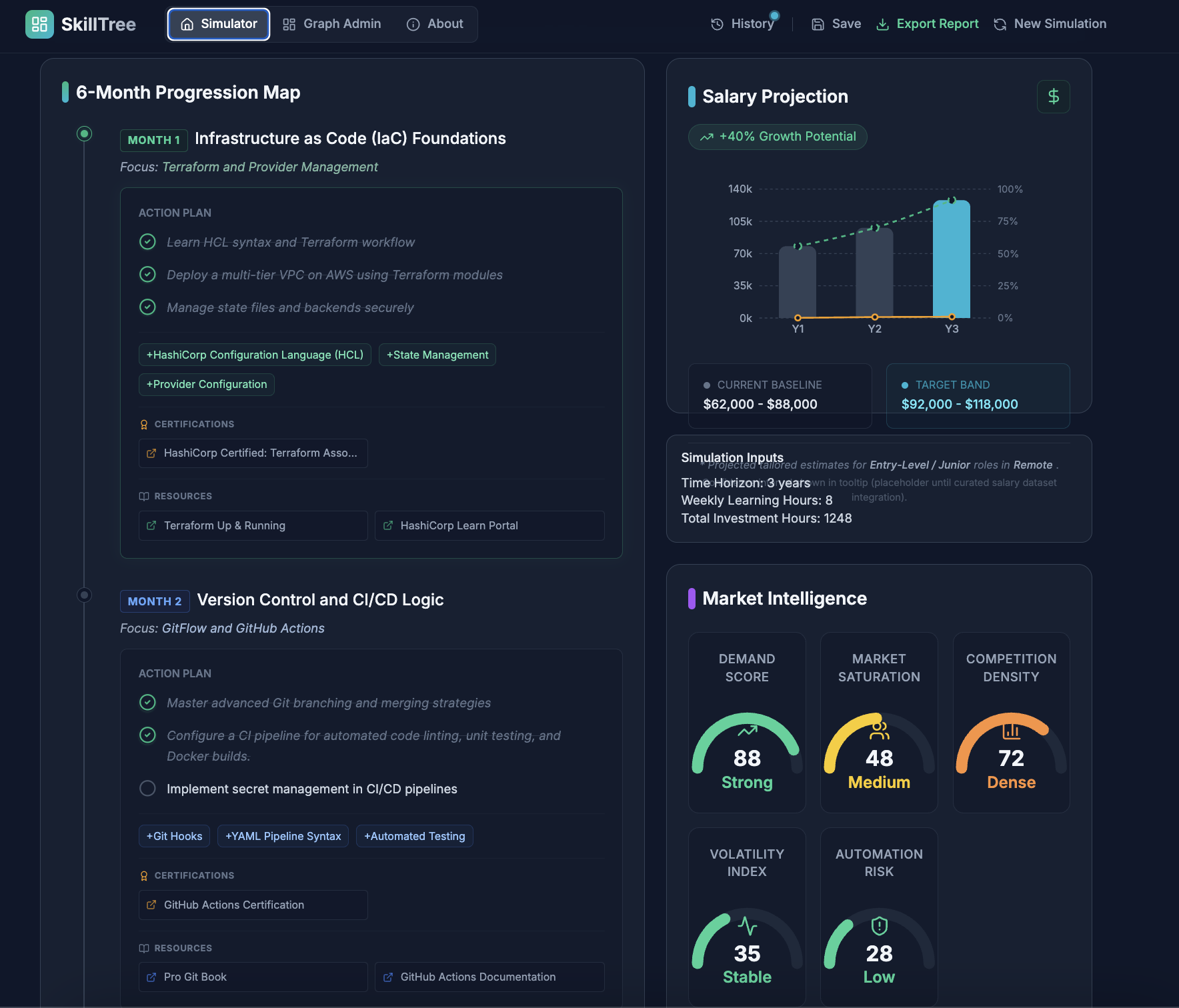
- A 6-month learning/action roadmap (with resources and certifications)
- A multi-year salary projection (1-5 years)
- Transition probability over time
- Market metrics (demand, competition density, volatility, saturation, automation risk)
- Risk breakdown (obsolescence, automation, volatility, saturation trend)
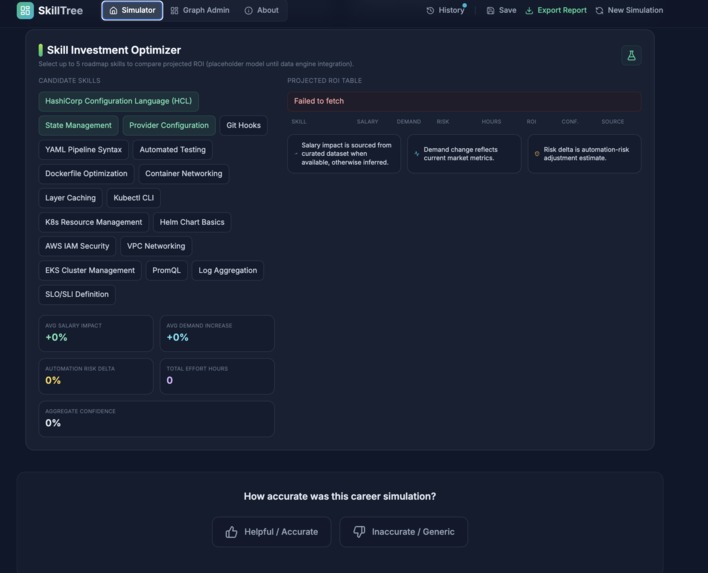
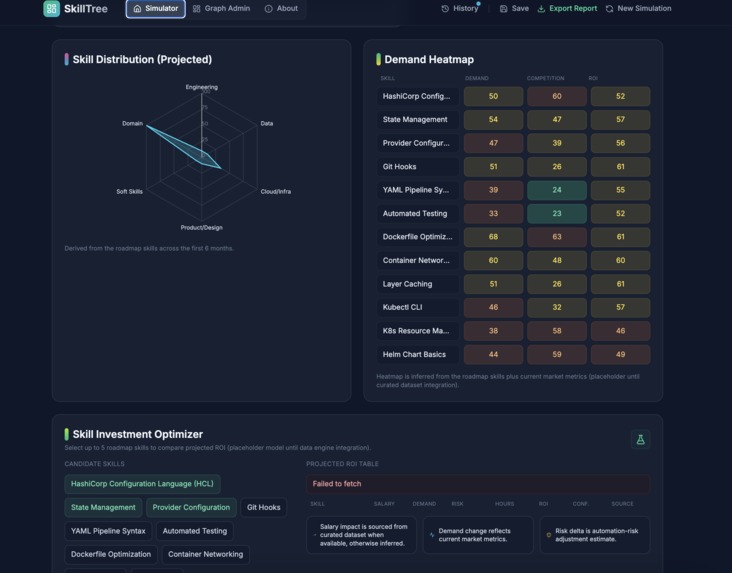
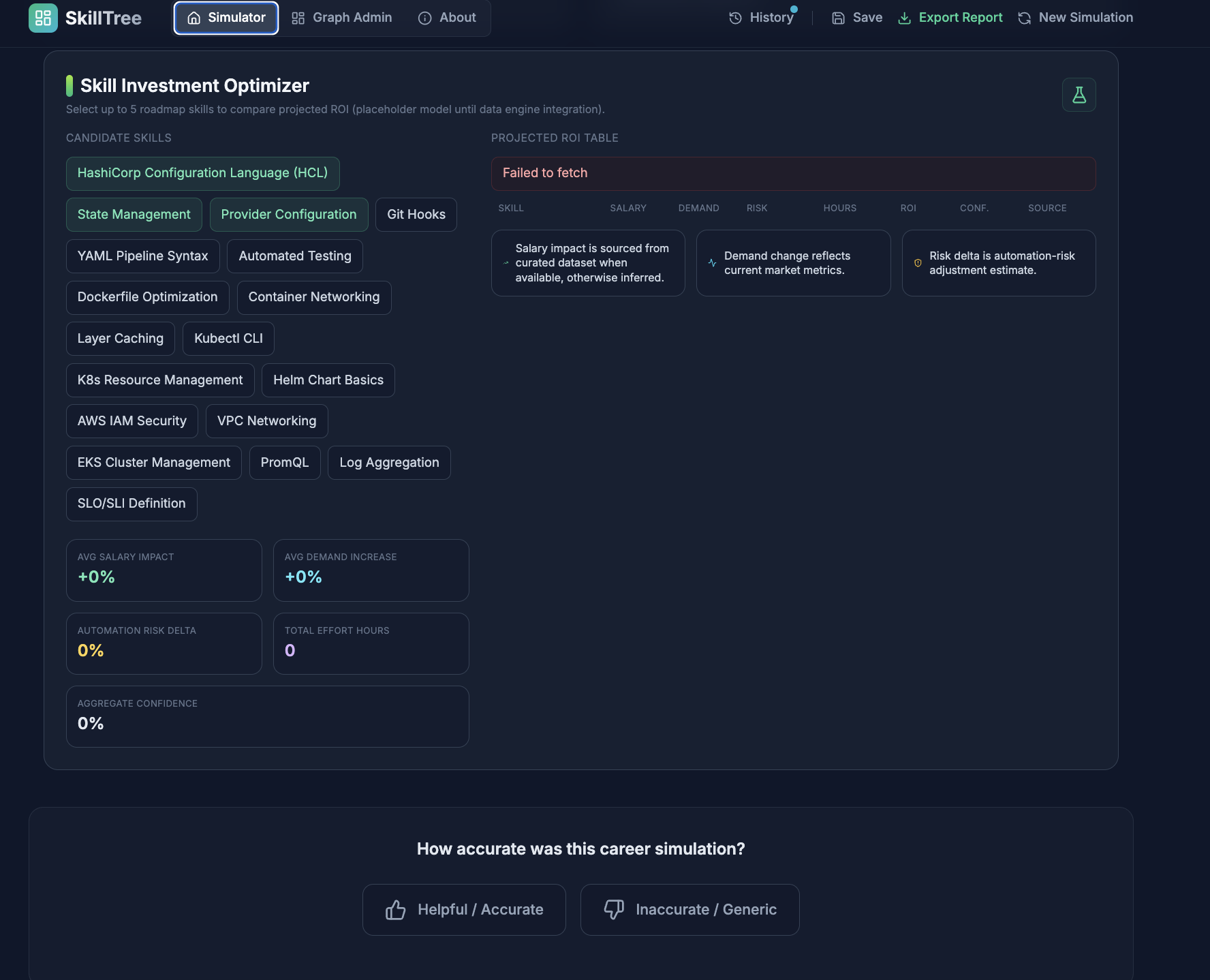
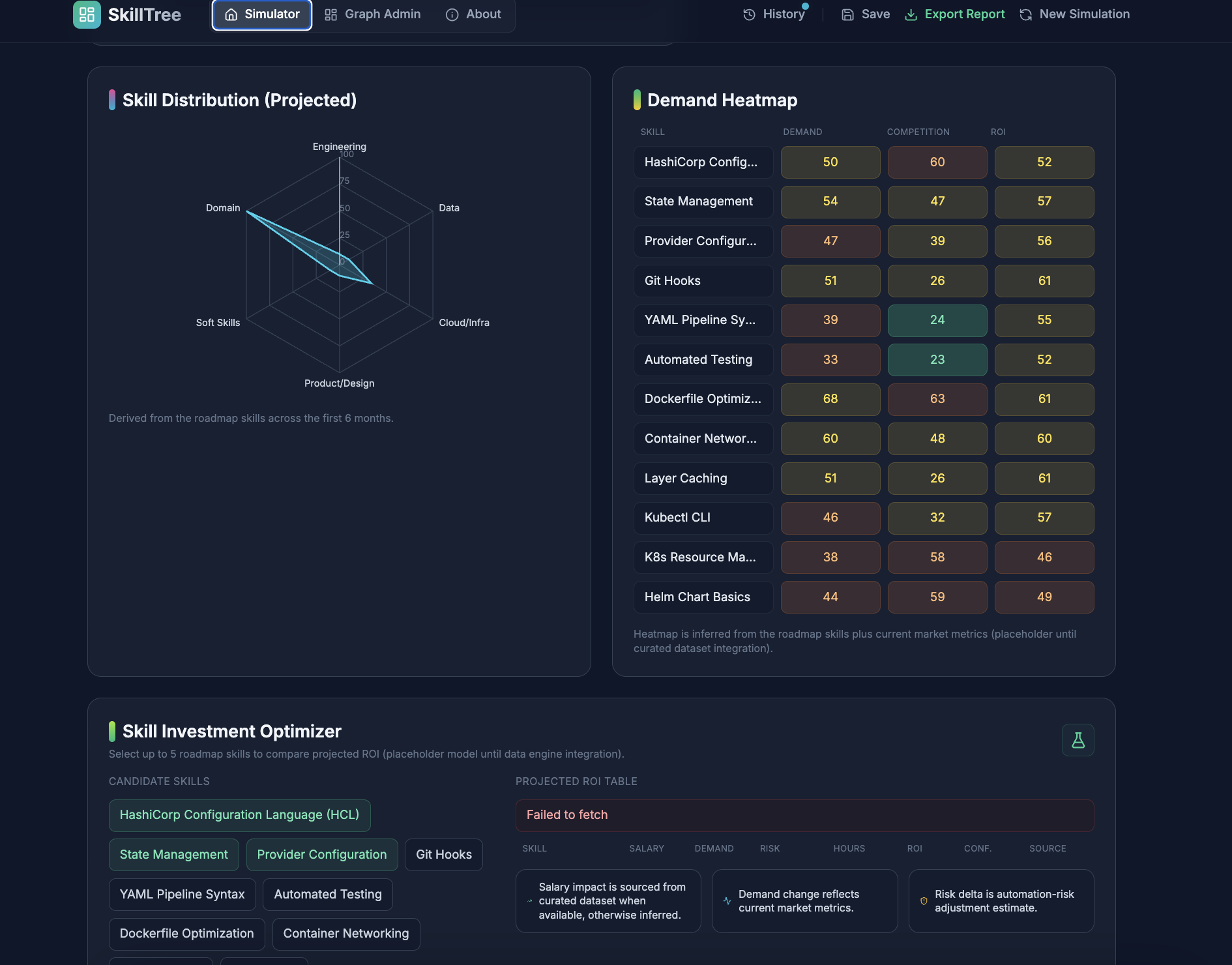
- Skill investment ROI estimates (salary impact / demand increase / risk delta / effort hours)
Users can also:
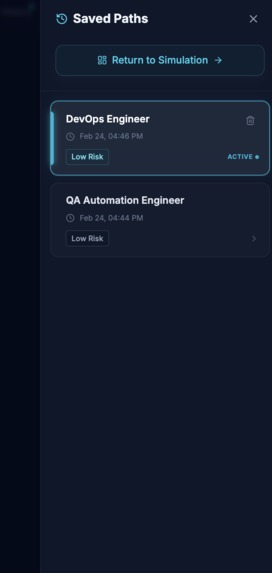
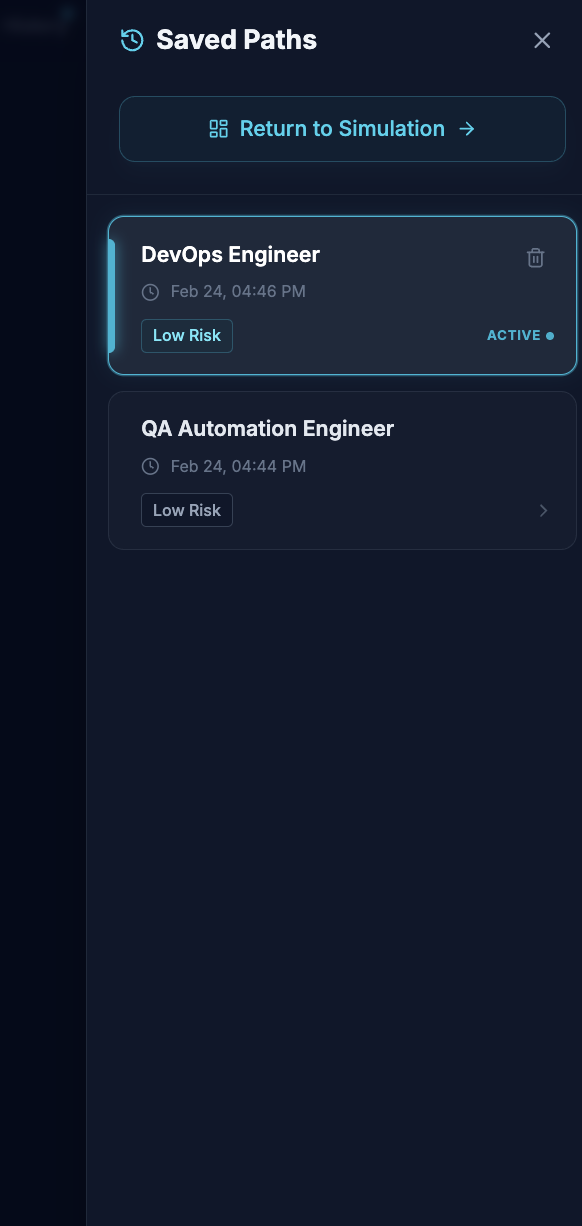
- Compare saved simulations side-by-side
- Export a PDF report
- Load role news/trend summaries with sources
- Edit the underlying skill graph in a built-in admin UI
Instead of only asking "What should I learn?", SkillTree helps answer:
"If I learn this, what could happen to my career in the next few years?"
How we built it
- Frontend: React + Vite + Recharts + Lucide
- Backend: Node + Express API
- AI layer: Gemini (
@google/genai) for roadmap/simulation/news/action suggestions - Skill graph: SQLite (
better-sqlite3) with CRUD/query endpoints - In-app Graph Admin: create/edit/delete/import/export JSON/CSV for skill graph edges
- Skill optimizer: backend endpoint using curated skill ROI signals + role-aware graph adjustments
The current system blends:
- AI-generated planning/simulation outputs
- a local persisted skill graph (shared by simulation + optimizer)
- curated skill signal data for some ROI estimates
- heuristic fallback scoring where full datasets are not yet integrated
Challenges we ran into
- Moving from a frontend-only prototype to a backend API architecture (to avoid exposing API keys)
- Defining simulation outputs that feel useful while staying honest about uncertainty
- Designing a reusable skill graph that can influence both simulation and ROI optimizer logic
- Building a graph admin workflow that is fast to iterate on during a hackathon
We addressed this by:
- introducing a backend proxy/API layer
- surfacing confidence intervals and metric breakdowns in the UI
- keeping a clear separation between curated data, graph signals, and heuristic fallbacks
Accomplishments that we're proud of
- Built a working multi-scenario career simulator
- Added multi-year projections plus risk/market breakdown visualizations
- Built a SQLite-backed skill graph with live in-app admin tools
- Implemented a skill investment optimizer with curated + graph-adjusted scoring
- Shipped an end-to-end backend API + frontend dashboard flow
What we learned
Career growth is multi-dimensional.
Salary alone is not enough — risk, demand, competition, and skill longevity all matter.
We also learned that predictive UX needs transparency:
- users trust the output more when they can see assumptions, breakdowns, and confidence bands
- an editable graph/admin UI is valuable even in early demos because it makes the system feel inspectable
What's next for SkillTree
- Real job market / salary datasets (reduce heuristic placeholders)
- Confidence intervals backed by real compensation distributions
- Skill graph persistence + management improvements (auth, versioning, audit trail)
- LinkedIn / GitHub profile import
- Personalized AI career mentor
- Team talent planning / workforce intelligence dashboard
SkillTree can evolve from a personal career simulator into a broader workforce intelligence platform.


Log in or sign up for Devpost to join the conversation.