-
-
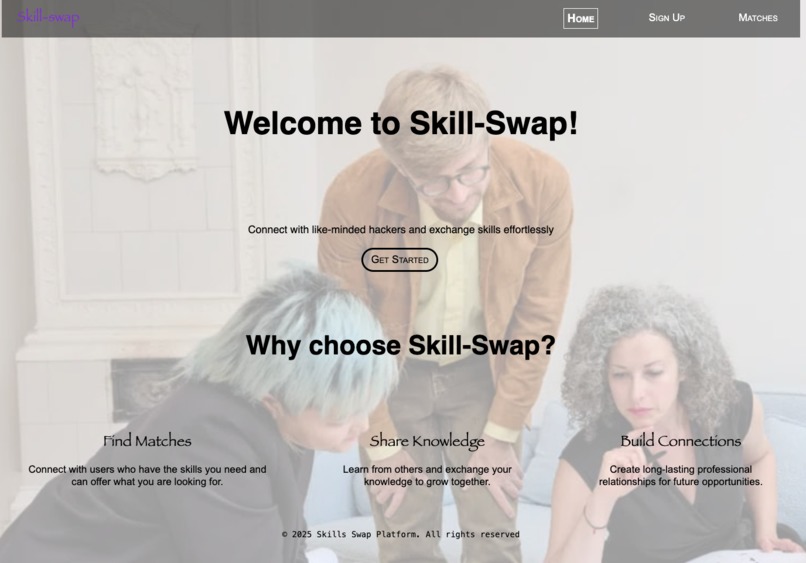
homepage
-
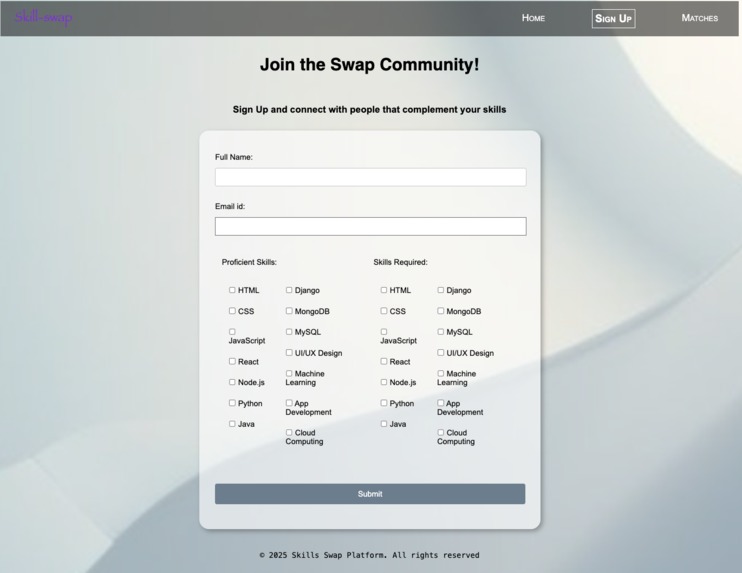
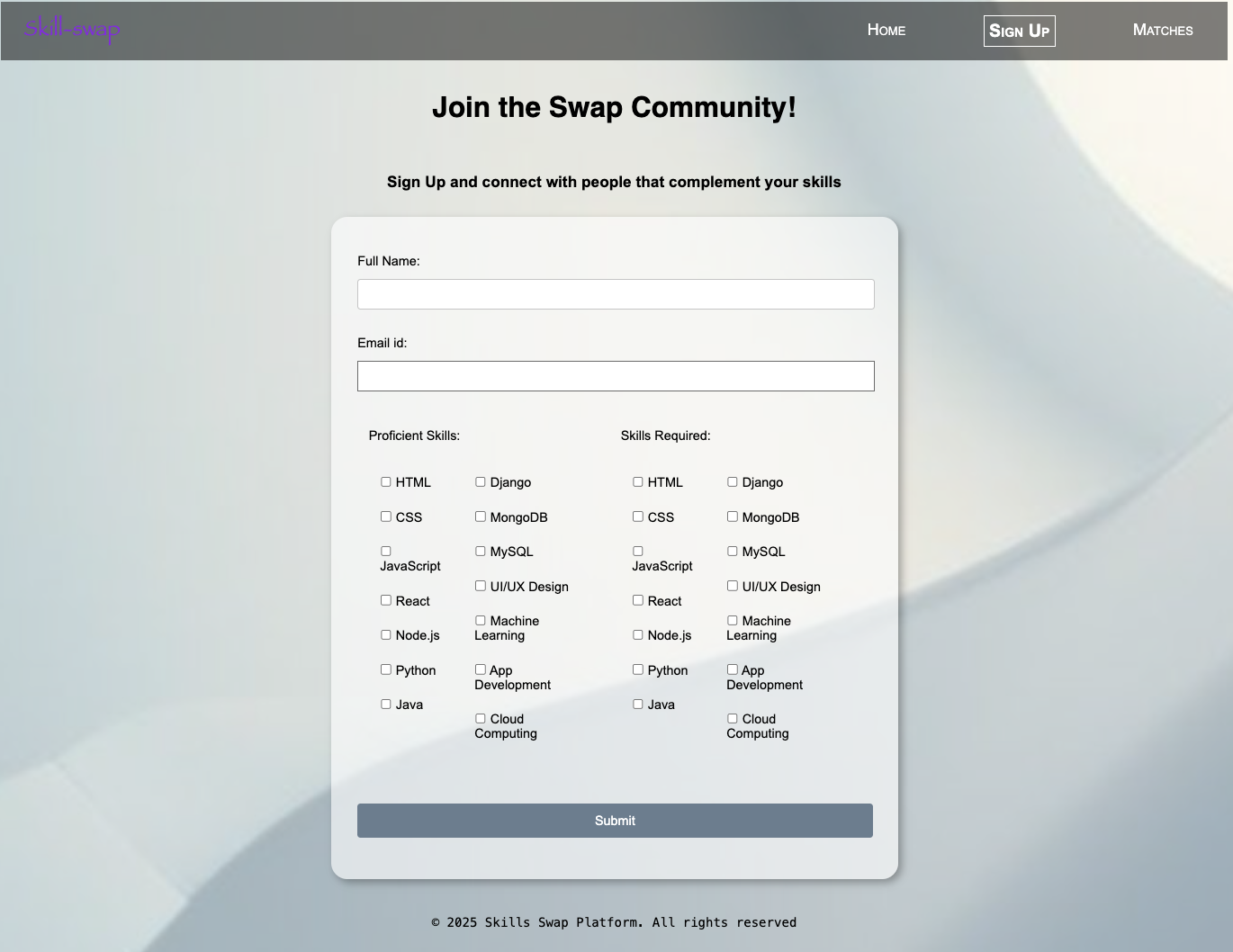
signup page
-
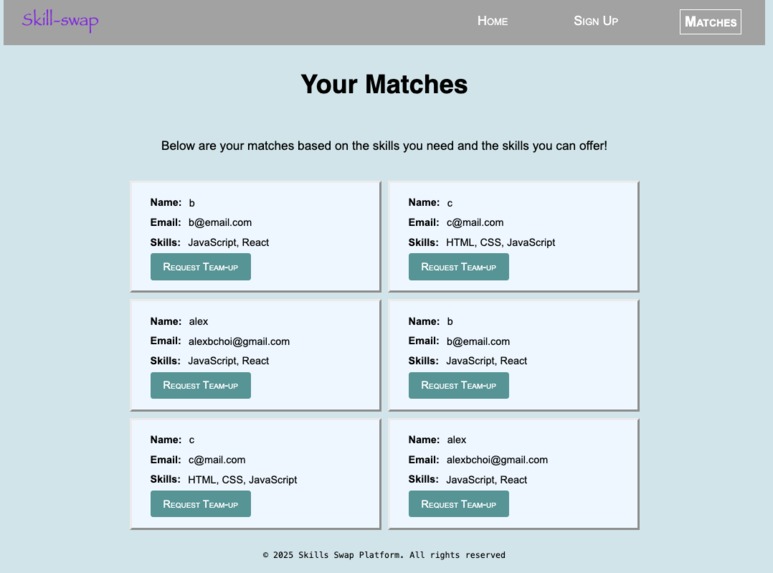
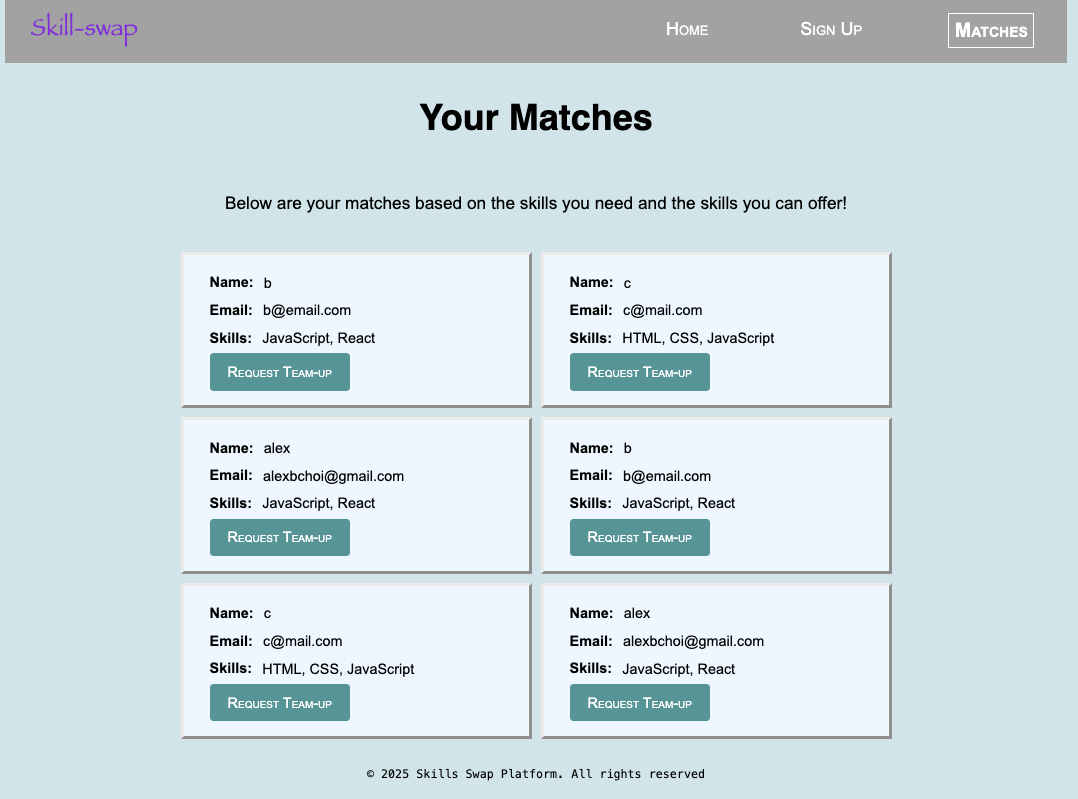
matches page
Inspiration
This project was inspired by my experiences at hackathons, where it was sometimes challenging to find the right people with complementary skills. I saw the need for a solution that could quickly and efficiently connect participants based on their strengths and learning goals. I wanted to build a platform to simplify this process and make collaboration more accessible.
What it does
The Skill Swap is designed for hackathon participants to connect with one another based on the skills they possess and the skills they need. It facilitates networking and collaboration in environments like hackathons where team formation and skill matching are key to success. The platform matches participants based on their skill sets and makes it easy for them to reach out and collaborate.
How we built it
- Frontend: We used HTML, CSS, and Vanilla JavaScript to create the user interface. The main features include user sign-up, profile creation, skill input, and a dashboard for browsing participants with specific skill sets.
- Backend: We used Node.js to handle requests and MongoDB to store and manage data. The backend was responsible for processing user data, storing skill information, and performing skill-matching queries.
- Skill Matching Algorithm: We developed a simple algorithm that matched users based on the skills they had listed and the skills they were looking to learn. This made it easier to connect participants with complementary skill sets.
Challenges we ran into
- Data Modeling: One of the biggest challenges was designing the database schema to efficiently store user data and their associated skills while ensuring that the platform could perform skill-based queries efficiently.
- Skill Matching Logic: Developing an effective skill-matching algorithm was tricky. I had to balance precision and performance to ensure the system was both accurate and fast enough to handle real-time requests.
- Frontend Optimization: With the platform being simple and relying on Vanilla JavaScript, optimizing performance for a smooth user experience was a bit challenging, especially when it came to managing dynamic data and ensuring the interface was responsive.
What we learned
- Vanilla JavaScript: This was my first time working exclusively with vanilla JavaScript for a full-stack application, which gave me a deeper understanding of how JavaScript functions both on the client and server side.
- MongoDB: I expanded my knowledge of NoSQL databases by using MongoDB to store and manage user data, such as their profiles, skills, and preferences.
- Backend Development: I learned how to set up a backend using Node.js and MongoDB, including building RESTful APIs to handle user requests and manage the data flow.
What's next for Skill Swap
The next steps for the Skill Swap Platform include enhancing user profiles with more personalization options, such as location and experience level, and improving the skill matching algorithm to include proficiency levels and availability. Adding a user review and rating system, real-time chat functionality, and advanced search filters will enhance user experience. Integrating with hackathon platforms, creating mobile app versions, and building community features like forums and group collaborations are also planned. Additionally, incorporating usage analytics, insights for users, and exploring monetization options like a freemium model will ensure the platform’s growth and sustainability.


Log in or sign up for Devpost to join the conversation.