-
-
the app icon
-
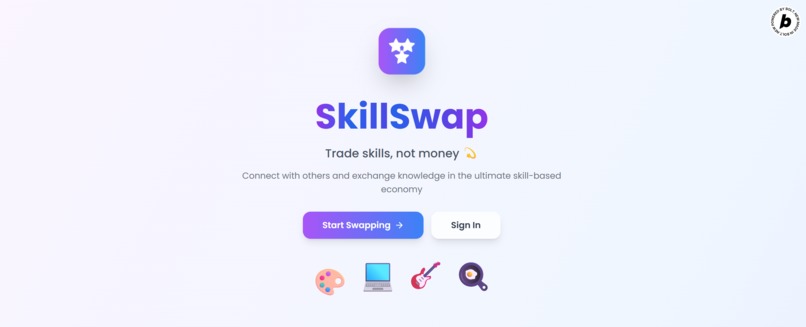
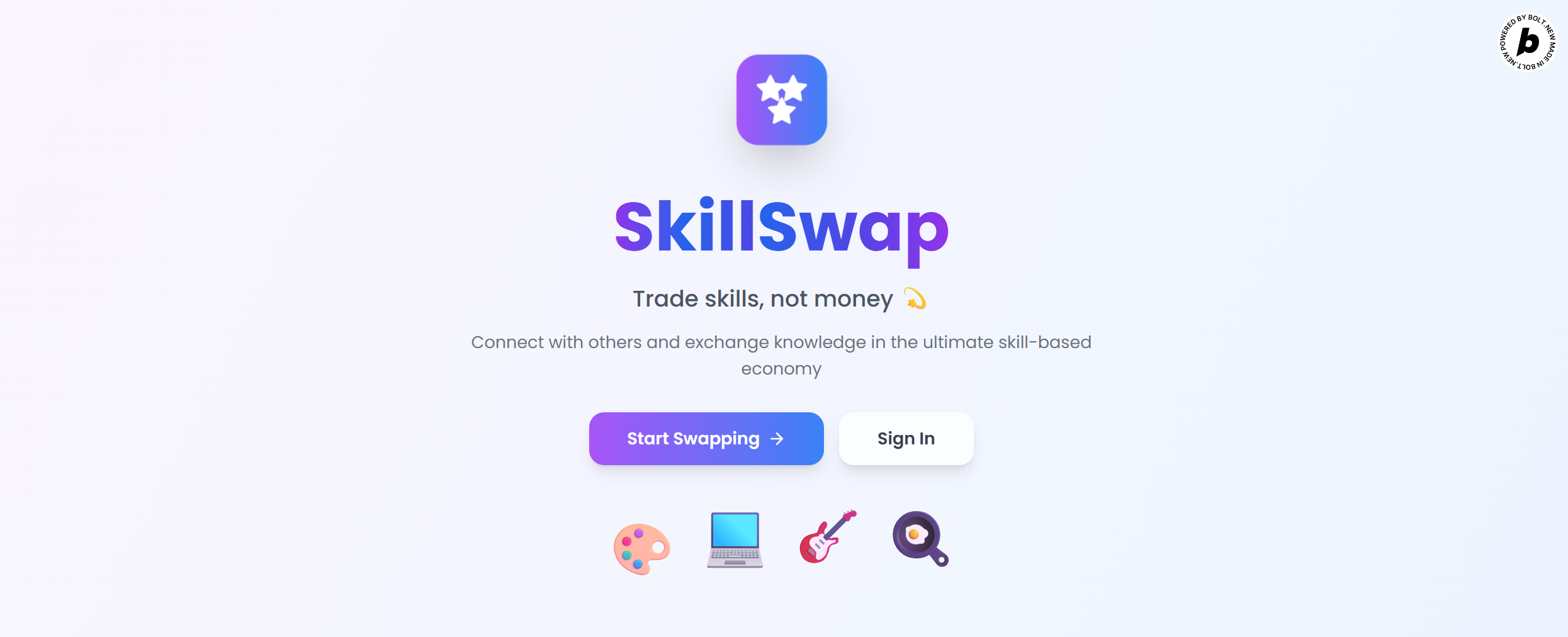
Landing page header section
-
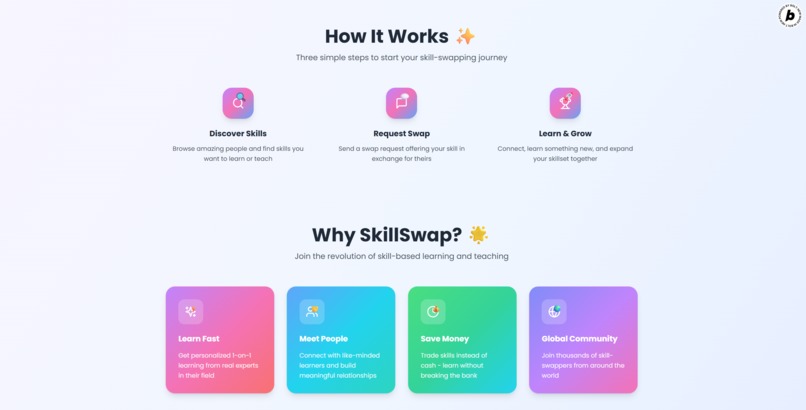
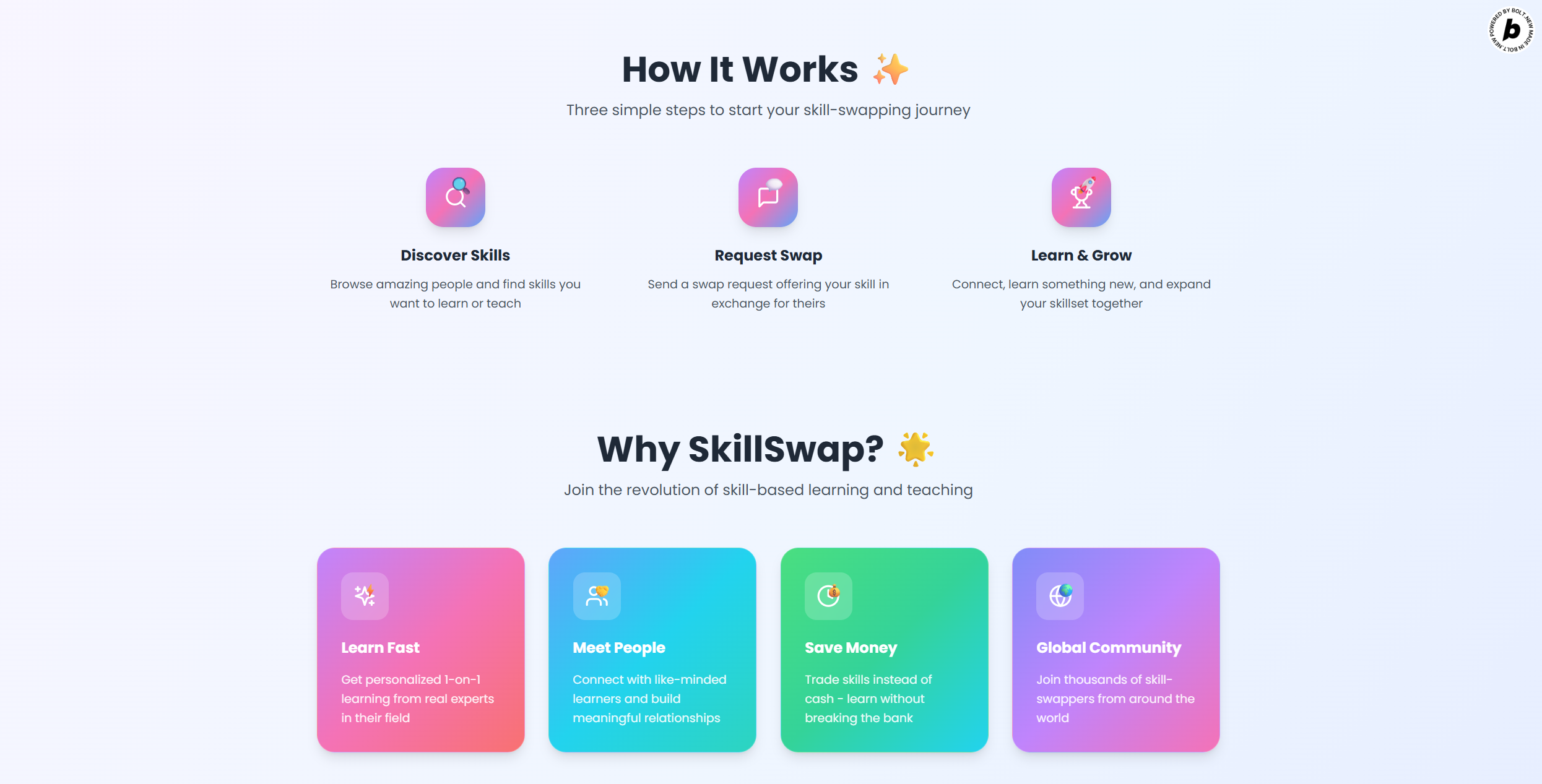
Landing page
-
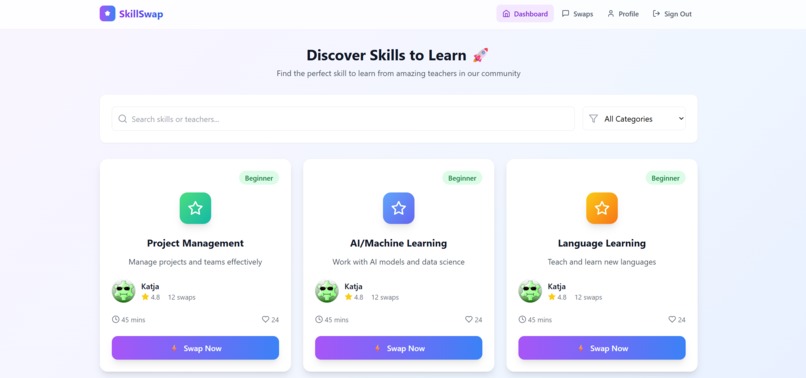
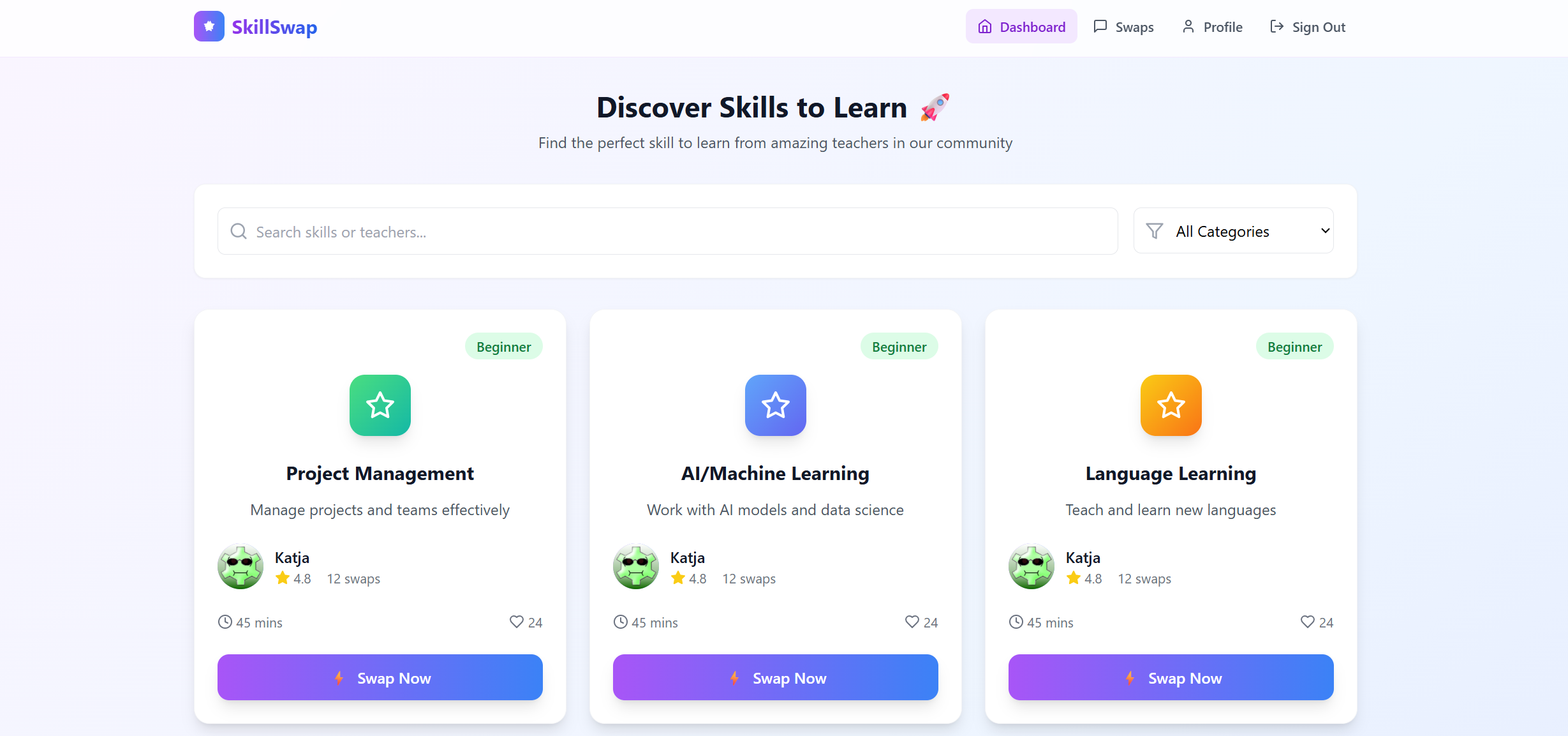
When logged in_Skill Swap Dashboard
Inspiration
The idea for Mini Skill Swap came from my personal passion for learning — especially learning from other people. I’ve always found that the most memorable things I’ve learned came not from traditional courses, but from spontaneous, human exchanges: a friend showing me how to edit a video, a colleague explaining a shortcut in a tool, or someone online breaking down a concept in minutes.
That made me wonder:
What if we had a platform where anyone could offer a mini skill and learn something in return — instantly, like a human-powered trade system?
Instead of content overload and impersonal platforms, I wanted to build something fun, lightweight, and human-first — where you don’t need money, long commitment, or credentials. Just curiosity and something to offer.
This app was also inspired by Gen Z culture — fast, social, and playful. Skill swapping felt like a great format for a peer-to-peer, joyful exchange of knowledge.
What it does
Mini Skill Swap is a playful web app that enables users to trade skills directly with one another — like bartering, but with knowledge.
Here’s how it works:
Sign Up & Onboard: Users create an account and go through a short onboarding process where they select the skills they can offer and the ones they want to learn.
Browse Skills: On the home page, users see other members who are available for swaps, along with the mini skills they offer — things like “Learn Canva in 30 min” or “Intro to Yoga”.
Request a Swap: If a user finds a skill they want to learn, they can click Request Swap, choose one of their own skills to offer in return, and send a short message.
Swap & Learn: Once both parties agree, the swap is confirmed and they can connect (future versions will support video call or message-based learning).
Profile Page: Users can manage their offered and learned skills, view active or past swaps, and edit their profile preferences.
The currency of the app is not money — it's skills. Your value in the app is determined by what you can teach, and your reward is what you get to learn.
Everything is designed to be:
Quick: Each skill is taught in 30-minute sessions
Fair: You must offer something in order to learn something
Human: The whole experience encourages connection and curiosity
How we built it
I built Mini Skill Swap using Bolt.new as the frontend builder and Supabase as the backend database.
The app is structured around a few core flows:
Authentication — Users sign up and log in using email/password.
Profile Creation — After onboarding, users create their profile and select which skills they can offer and which ones they’d like to learn.
Skill Swapping — The key interaction of the platform: users browse skills from others and request a swap by offering one of their own in return.
Technically:
Supabase handles user data, skills, and swap requests, with carefully configured tables and row-level security (RLS) policies for safe access control.
Bolt.new was used to create the user interface, conditional flows, form logic, and dynamic state transitions based on user profiles.
The UI is minimalistic and intuitive, keeping the focus on interaction and discovery.
A usual or any other test (by the judges log in) credentials can be used as a log in to explore the app.
I have three different sign ups in the app so that the idea of the app can be tested out.
This is actually my third attempt at creating this app — and I’ve built it using only around 10 million credits in total. In the first attempt, I manually created all Supabase tables and RLS policies myself, but the authentication simply wouldn’t connect to Bolt.new despite all configurations being in place. So for this third (and final) version, I connected Supabase first, used the correct login/signup data structure directly, and skipped mock data entirely — connecting live data from the start.
Challenges we ran into
Oh, where do I begin? 😅
This app may look simple now, but behind the scenes it took a lot of trial, error, and rebuilding. I actually attempted to build Mini Skill Swap three times during the hackathon.
Attempt #1: I manually created all Supabase tables and row-level security (RLS) policies myself, which I was really proud of. But when I connected it to Bolt, authentication just wouldn’t work. Sign-up and login flows were completely stuck. I spent hours debugging everything from field names to policy expressions — nothing helped. It was incredibly frustrating.
Attempt #2: Tried simplifying the app with mock data — but then I realized it wasn’t testing the actual core of the idea: real-time, live skill swapping. It felt empty without authentication and user profiles working correctly. I scrapped that version quickly.
Attempt #3 (Final Build): I went all in with a fresh Bolt build, connected Supabase first (not afterward), and used the correct structure provided by Bolt to ensure login worked immediately. That finally fixed the authentication block, and I could start building the real app logic again.
Other challenges included:
Figuring out how to structure user ↔ skill ↔ swap relationships clearly in the database.
Debugging flows in Bolt logic when buttons weren’t triggering correctly. (the sign up / log in button would just load endlessly or it would look like the next page is actually loading but then the screen jumps back to the original sign up /log in page)
Feeling a bit overwhelmed sharing my project idea with others for the first time — it took a lot of courage to post and ask for feedback, but it was absolutely worth it.
Accomplishments that we're proud of
Building Mini Skill Swap was a rollercoaster — but there were several wins I’m genuinely proud of:
Rebuilding (and not giving up) This was my third full rebuild of the app, and I’m proud I didn’t quit when the login flow broke or when I got stuck for hours. Instead, I paused, learned, and started again — with better structure and more confidence each time.
Getting Supabase Auth to Work After so many failed attempts, I finally connected Bolt.new and Supabase in a way that fully supported signup and login, with live user data flowing through the app. This was a personal “YES!” moment.
Designing a Flow That Feels Fun Even though I’m not a designer or developer (especially not a developer), I created a user experience that feels clear, playful, and purposeful. People understand what the app is for immediately — and that means a lot to me.
Putting My Idea Out There Creating a waitlist, sharing my idea with others, and seeing people respond positively — especially when I was nervous to share — was huge. It reminded me that even small ideas can resonate if you put them in the world.
Building a Concept I Believe In I didn’t just build an app — I built something I would actually use. Something that reflects my values around learning, generosity, and human connection.
What we learned
This project taught me more than I ever expected — technically, creatively, and emotionally.
Technical Learnings How to connect Supabase and Bolt.new properly — starting with the database structure and letting Bolt guide the setup instead of doing it manually.
How row-level security (RLS) in Supabase works, and why it’s so important for user-specific data.
How to troubleshoot logic flows in Bolt, especially around buttons, routing, and form data handling.
Why sequence matters — connecting things in the right order saved me hours of frustration later.
Creative/UX Learnings How to simplify an idea into a usable MVP — cutting features down to the essence: sign up, offer a skill, swap.
The power of a clear landing page and call to action — even just a simple waitlist or test credentials can make your app feel "real" to others.
Personal Growth I learned that it's okay to rebuild — failure isn’t a dead end, it's just feedback.
I realized how powerful it is to share an unfinished idea, receive feedback, and keep building with energy and joy.
I saw how community support fuels progress — feedback and encouragement gave me a real boost when I needed it.
What's next for Skill Swap
Mini Skill Swap is just getting started — and I’m excited to keep evolving it beyond the hackathon.
Short-Term Improvements Add a swap confirmation and messaging system so users can chat or schedule their learning sessions.
Improve filtering and sorting — let users discover skills by categories or tags like “creative”, “tech”, or “fun”.
Add progress tracking to help users see which skills they've offered and learned.
Mid-Term Vision Launch a mobile version with notifications and an even smoother UX.
Add social features like follower lists, badges, and a karma system for active swappers.
Include AI suggestions to match users with relevant skill partners automatically.
Long-Term Vision I want Skill Swap to become a global micro-learning movement — where people use their existing knowledge to grow, connect, and share, all without money or pressure. Think of it like a "LinkedIn for practical peer-to-peer learning", where curiosity becomes your social currency.
Whether you're learning “how to meditate” or teaching “Notion hacks in 20 minutes,” Skill Swap is about turning what you already know into a chance to discover more — and I’d love to bring this vision to life with a growing community.
Built With
- bolt.new
- flows
- logic
- react
- supabase

Log in or sign up for Devpost to join the conversation.