
Inspiration
High-volume hiring forces recruiters into a difficult trade-off: move quickly or give every candidate a thoughtful, human experience. Teams spend hours reviewing resumes, coordinating interviews, chasing references, and reconciling data across disconnected tools.
We created Skill Society around a simple principle: AI should remove repetitive work and surface evidence—not make the final hiring decision. Recruiters should have more time for meaningful conversations, while candidates receive a faster, clearer, and more consistent journey.
What it does
Skill Society brings the hiring journey into one connected platform:
- Employers can build and publish branded career sites that showcase their culture, benefits, open roles, and employee value proposition.
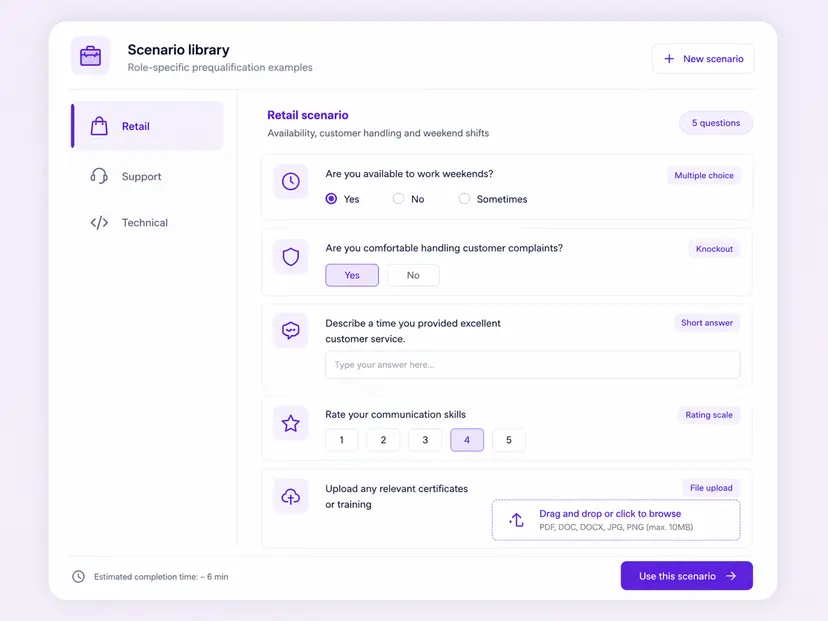
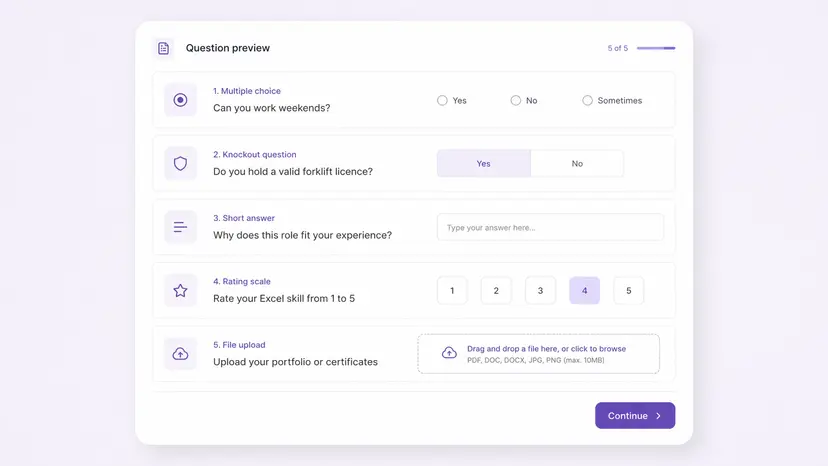
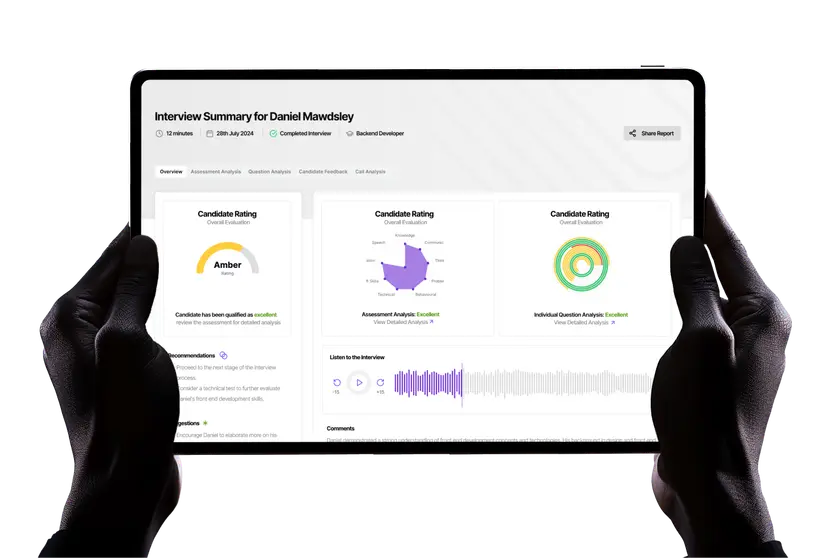
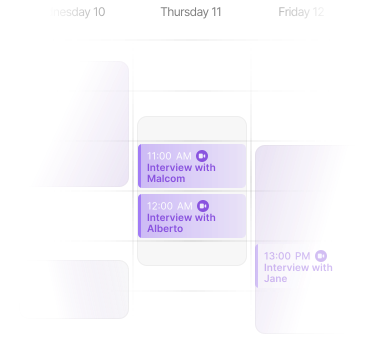
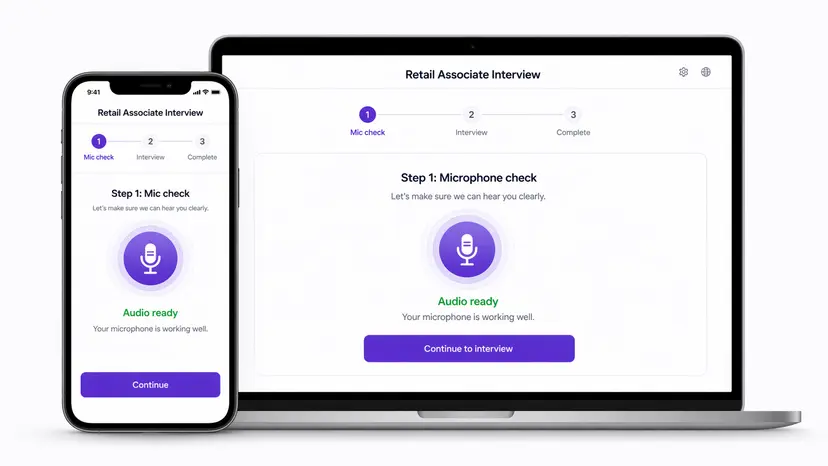
- Candidates can be pre-qualified through configurable screening and conversational AI interviews.
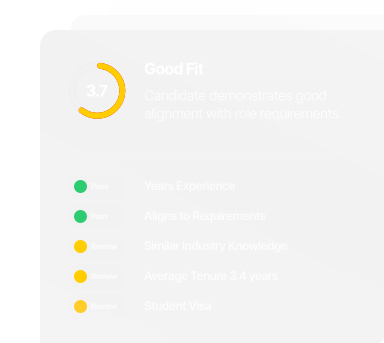
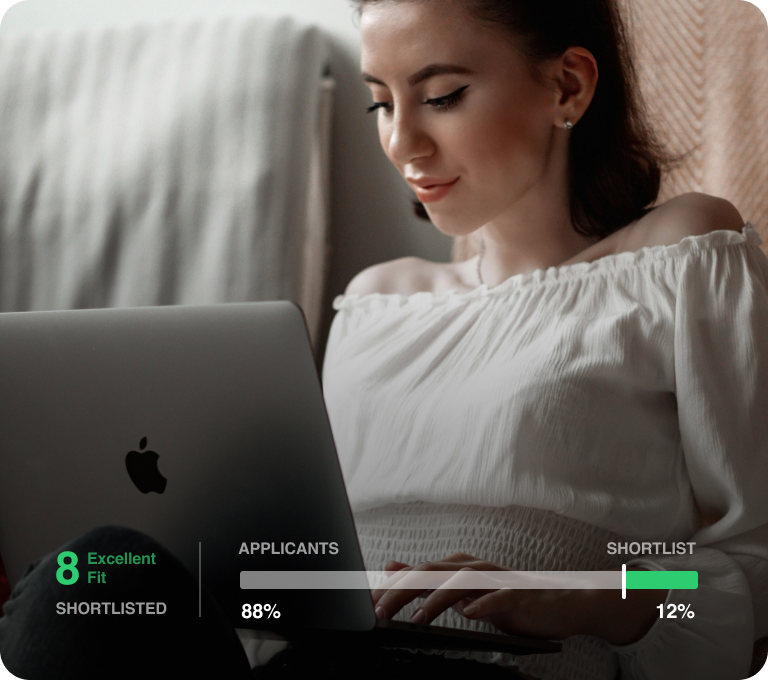
- TalentFit compares each CV against the active job description and produces a role-specific 0–5 score with strengths, gaps, and concerns for human review.
- Recruiters manage candidates through searchable, sortable, stage-based tables and can open detailed assessments without leaving the workflow.
- The platform supports scheduling, reference checks, ATS integrations, branded communications, and hiring analytics.
- Administrators can safely delegate roles and features to hiring-team members, with live revocation, subscription limits, quotas, and audit trails.
The result is one consistent experience from the first career-page visit through screening, assessment, interview, reference checking, and decision-making.
How we built it
We built Skill Society with Next.js 16, React, TypeScript, ShadCN UI, and Tailwind CSS. Supabase and PostgreSQL provide multi-tenant storage, Row-Level Security, transactional RPCs, audit logging, and the authoritative permissions and analytics layers. The wider AI workflow uses OpenAI/Azure OpenAI and Vapi, with integrations orchestrated through services such as Nango, Cal.com, and Upstash.
The career-site builder uses validated, schema-versioned documents with optimistic draft revisions, immutable published versions, previews, rollback, media management, SEO controls, and custom-domain routing. A shared renderer keeps the editor preview and public site consistent, while account branding also flows into interviews and candidate emails.
Permissions are calculated from live database state by intersecting the account’s subscription, overrides, per-user feature delegation, and role assignments. Pages, server actions, APIs, and database functions independently enforce those rules.
We also created privacy-friendly first-party career-site analytics, with bounded payloads, HMAC-derived visitor buckets, database-level rate limiting, and canonical database aggregates. Testing spans PostgreSQL suites, Vitest, Jest, and Playwright, including production-snapshot validation.
Challenges we ran into
The hardest challenge was making authorization genuinely secure. Hiding navigation was not enough: we had to protect every page, action, API, download, and service-role query while supporting role-scoped access, subscription entitlements, historical read-only access, quotas, and immediate revocation.
Safely evolving production data was another major challenge. The career-site migration needed to be replay-safe, preserve legacy sites, support rollback builds, and work with public-only production snapshots without importing authentication credentials.
Analytics also required careful definitions. Applicants, assessments, workflow events, deleted records, and inactive roles all have different lifecycles. We moved those definitions into canonical PostgreSQL projections so every dashboard uses the same facts.
Finally, we had to keep large candidate tables fast and usable. TalentFit details are now loaded only when requested, stale requests are cancelled, and reusable responsive table components provide filtering, sorting, pagination, and clear empty states.
Accomplishments that we're proud of
In five days, we delivered 29 commits spanning 529 files, 12 database migrations, and 98 newly created test files.
We are especially proud that the result is more than a hackathon prototype. It includes fail-closed authorization, immutable publication history, audit trails, rate limiting, production-safe snapshot tooling, canonical analytics, and guarded internal account switching.
We also delivered a complete branded career-site experience with 15 reusable content blocks, publishing and restoration, media and SEO management, custom-domain support, first-party analytics, and branding that continues through interviews and emails.
TalentFit now sits directly inside the candidate workflow, giving recruiters fast access to role-specific evidence while keeping humans responsible for every outcome. We also created reusable feature and industry-page patterns so the product can be explained consistently across healthcare, retail, logistics, and manufacturing.
What we learned
We learned that permissions are product logic, not a UI feature, and must be enforced at every system boundary.
We learned that trustworthy analytics require one canonical definition of each metric, especially when soft deletion, multiple assessment types, and tenant boundaries are involved.
We also learned that using the same validated schema and renderer for editing, previewing, and publishing eliminates an enormous amount of drift. Finally, codifying our own conventions into reusable components, tests, and an internal feature-page auditing skill helped us move quickly without sacrificing consistency.
What's next for Skill Society
Next, we want to pilot the new experience with high-volume hiring teams and measure improvements in career-site conversion, review time, candidate response rates, and time-to-hire.
We plan to expand the career-site builder with additional templates, multi-page and localised sites, easier custom-domain setup, and collaborative editing. We also want deeper ATS write-back, richer funnel and cohort analytics, and more comparison and calibration tools for TalentFit.
Alongside those features, we will continue strengthening accessibility, observability, load testing, enterprise identity support, and security—so Skill Society can scale from a single role to complex hiring organisations without losing the human experience at its core.
Built With
- codex
- gpt5.6
- nextjs
- vercel

Log in or sign up for Devpost to join the conversation.