-
-
-
-
-
-
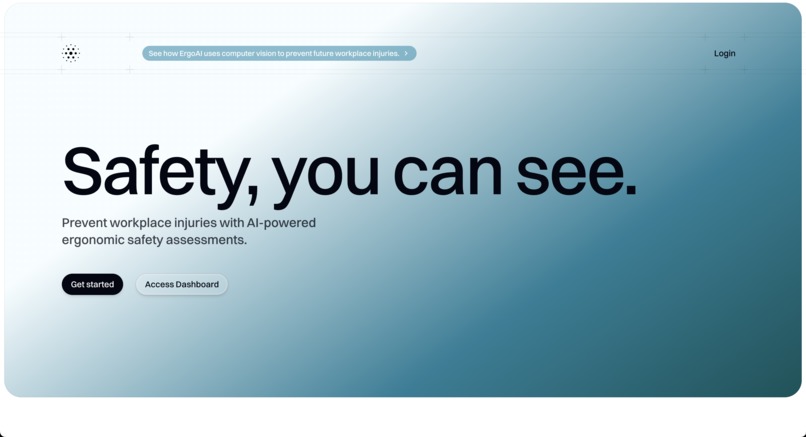
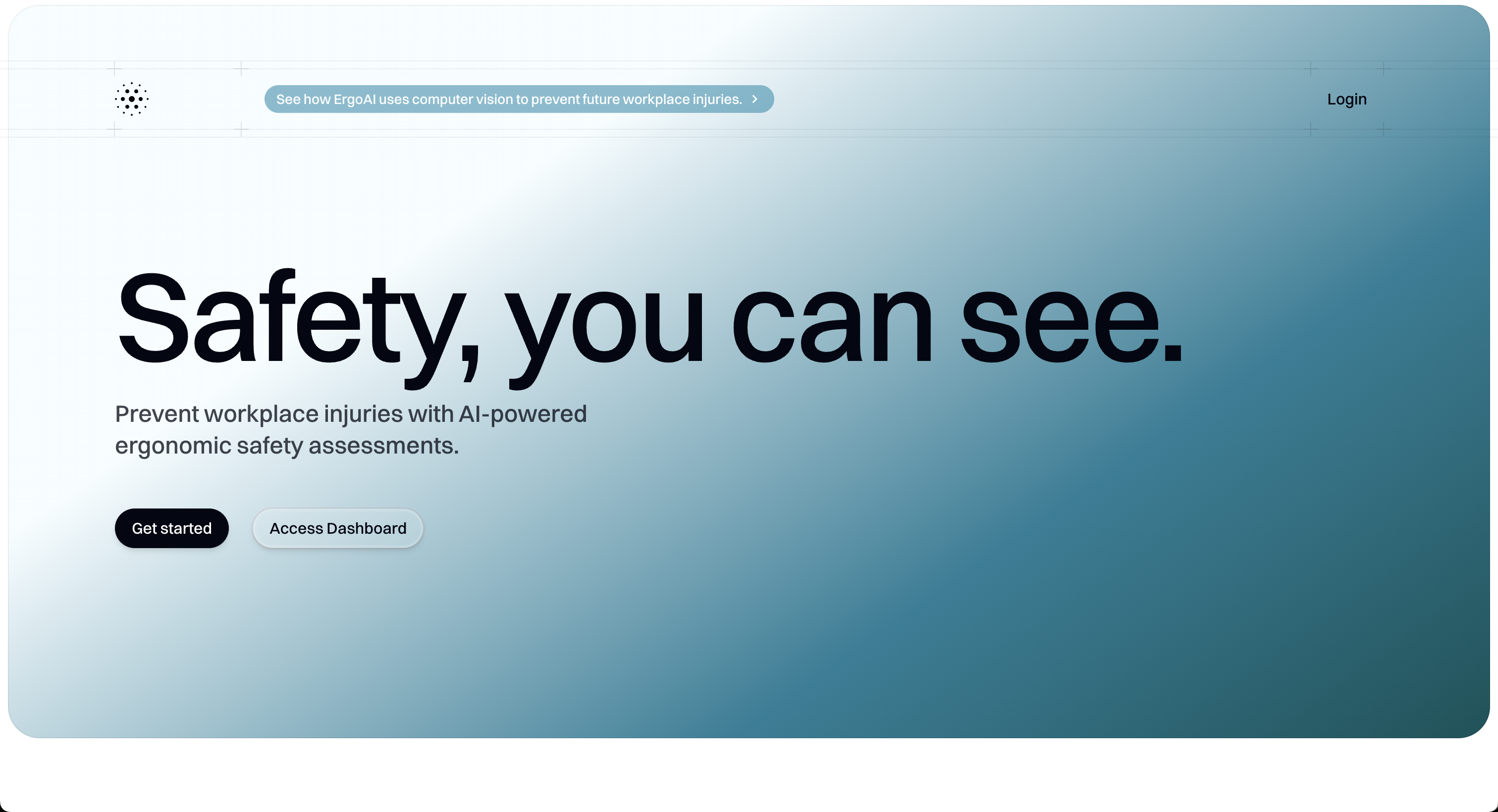
Landing Page
-
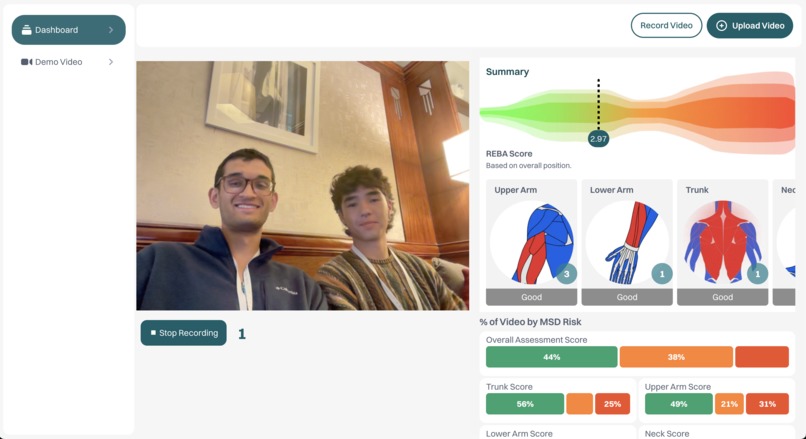
Realtime Analysis Dashboard
-
💡Inspiration
The inspiration for ErgoAI came from firsthand experiences working part-time jobs in warehouses, factories, and supermarkets. Musculoskeletal Disorder (MSDs) injuries lead to significant insurance costs, amounting to $180 billion globally and $90 billion in the US alone. Traditional ergonomic assessments are often outdated, n operator-dependent, and unreliable. Conventional methods are reactive, identifying issues only after injuries occur, rather than preventing them. Existing processes are resource-intensive and rely heavily on human operators, causing inconsistencies. Additionally, there is a lack of awareness about how AI can effectively improve ergonomic assessments. We saw the impact that repetitive physical tasks and poor posture can have on workers, leading to injuries that jeopardize both their health and livelihood. The REBA test, popularly used in industry, is easily automated - and that's what we did with our proprietary computer vision and artificial intelligence software.
👁️What it does
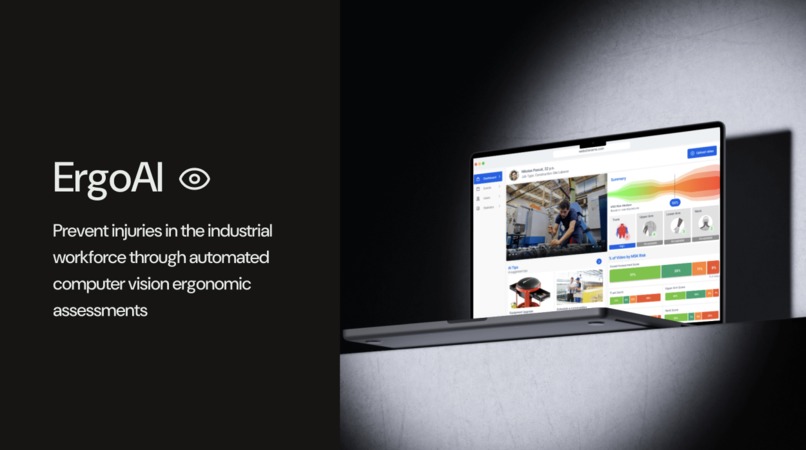
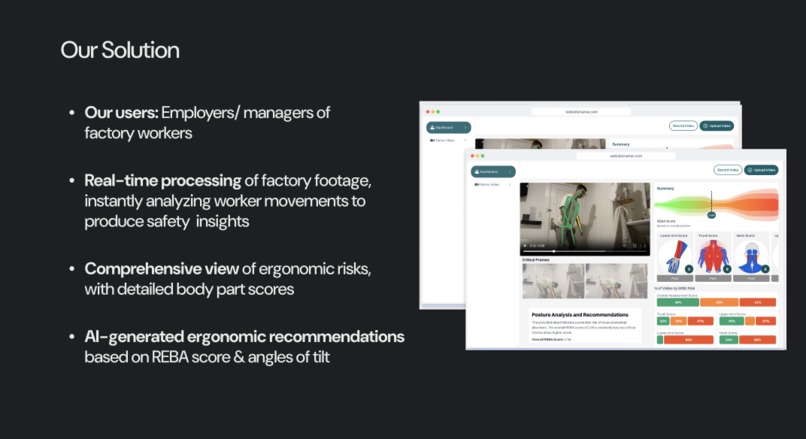
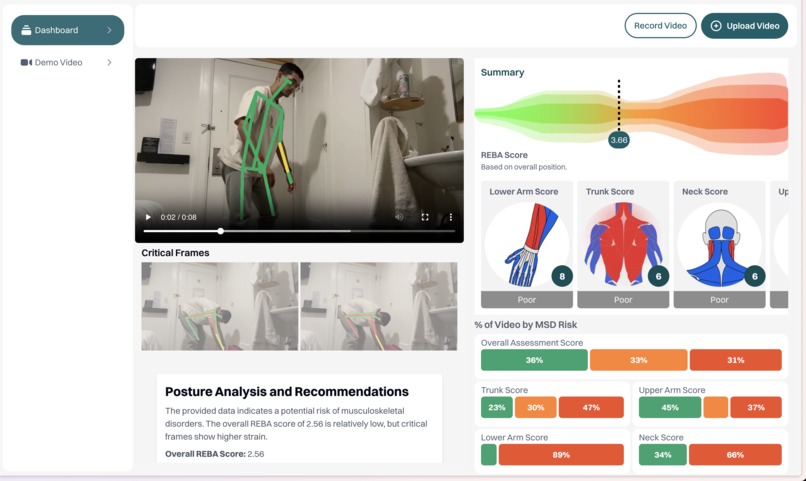
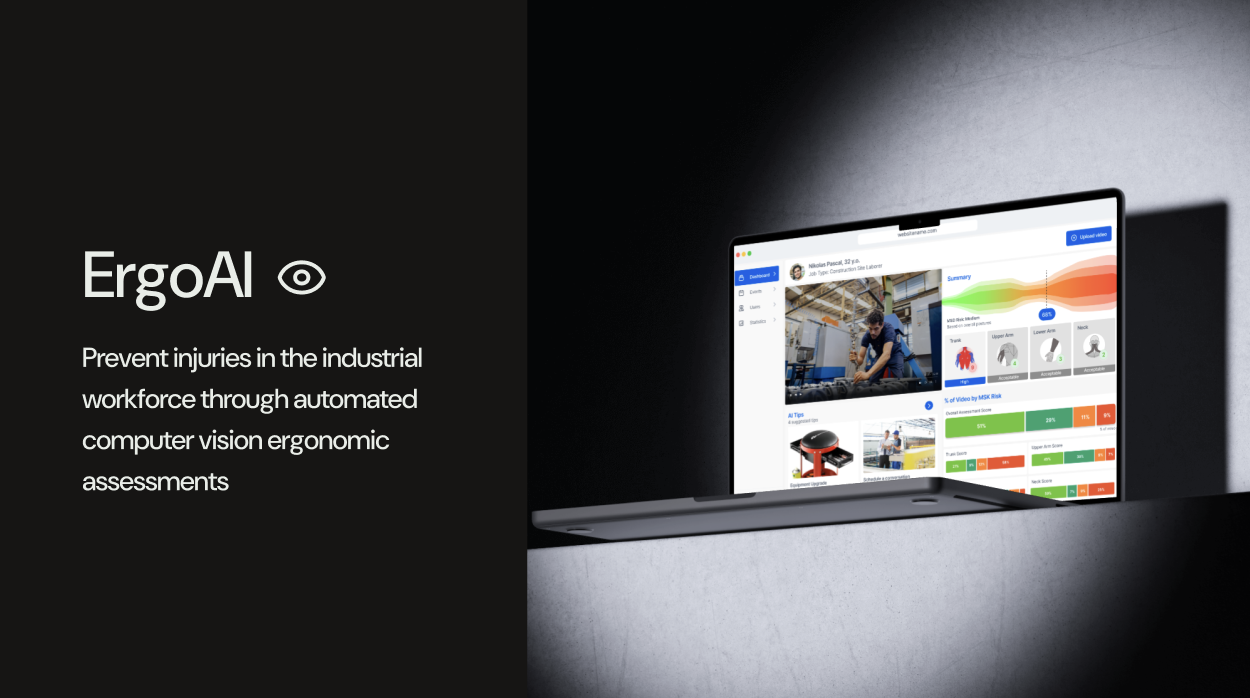
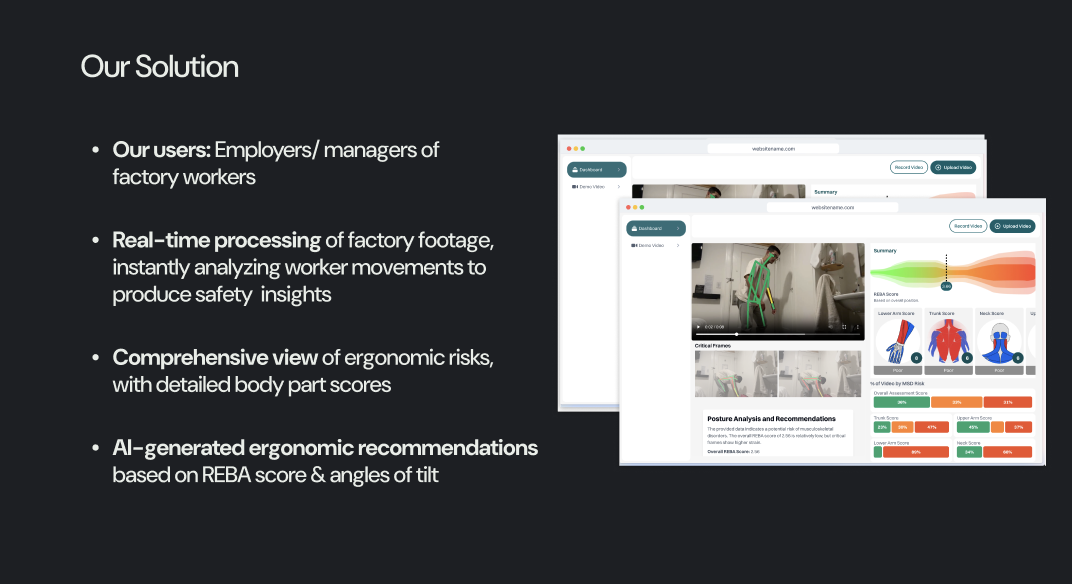
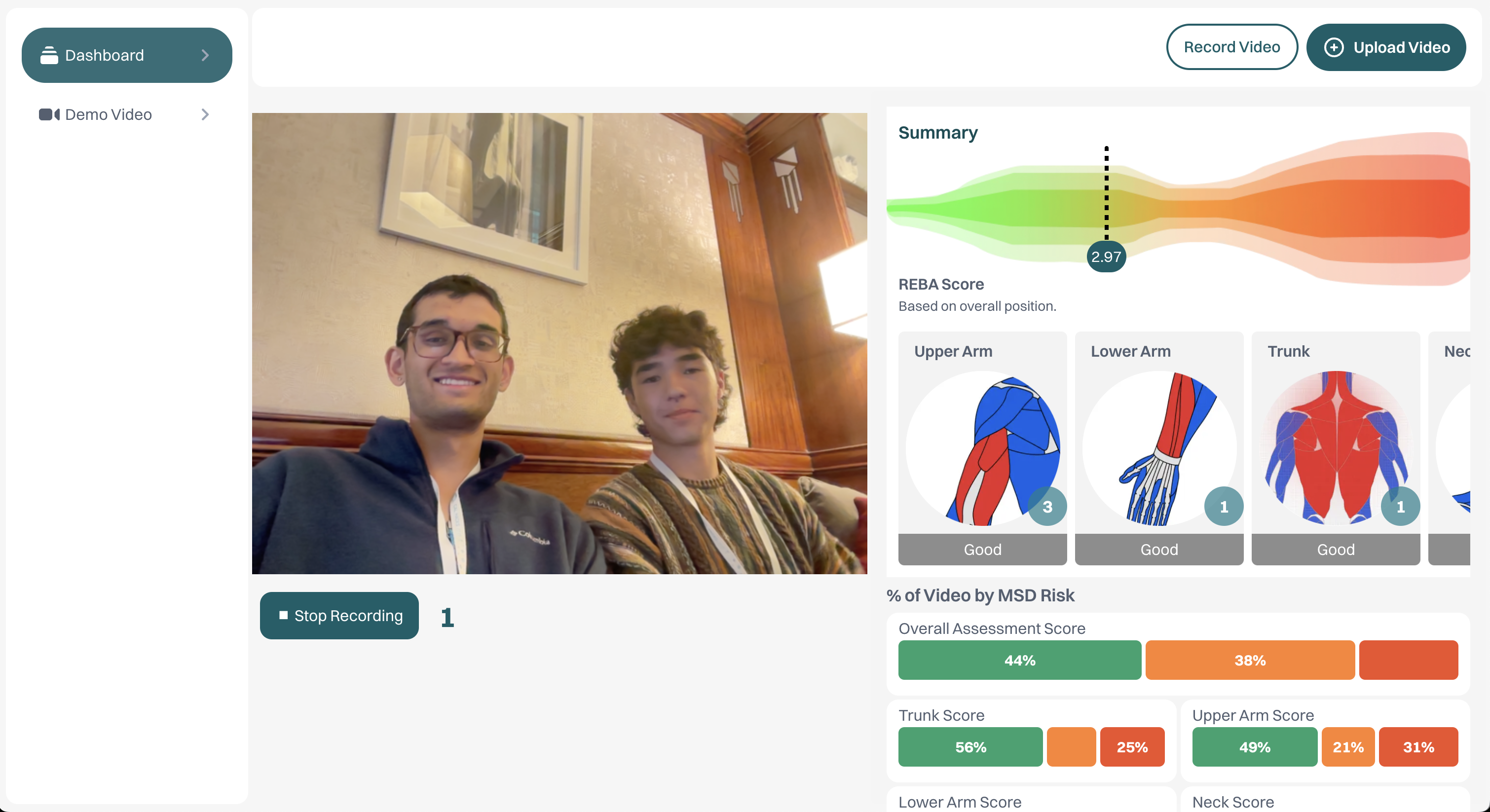
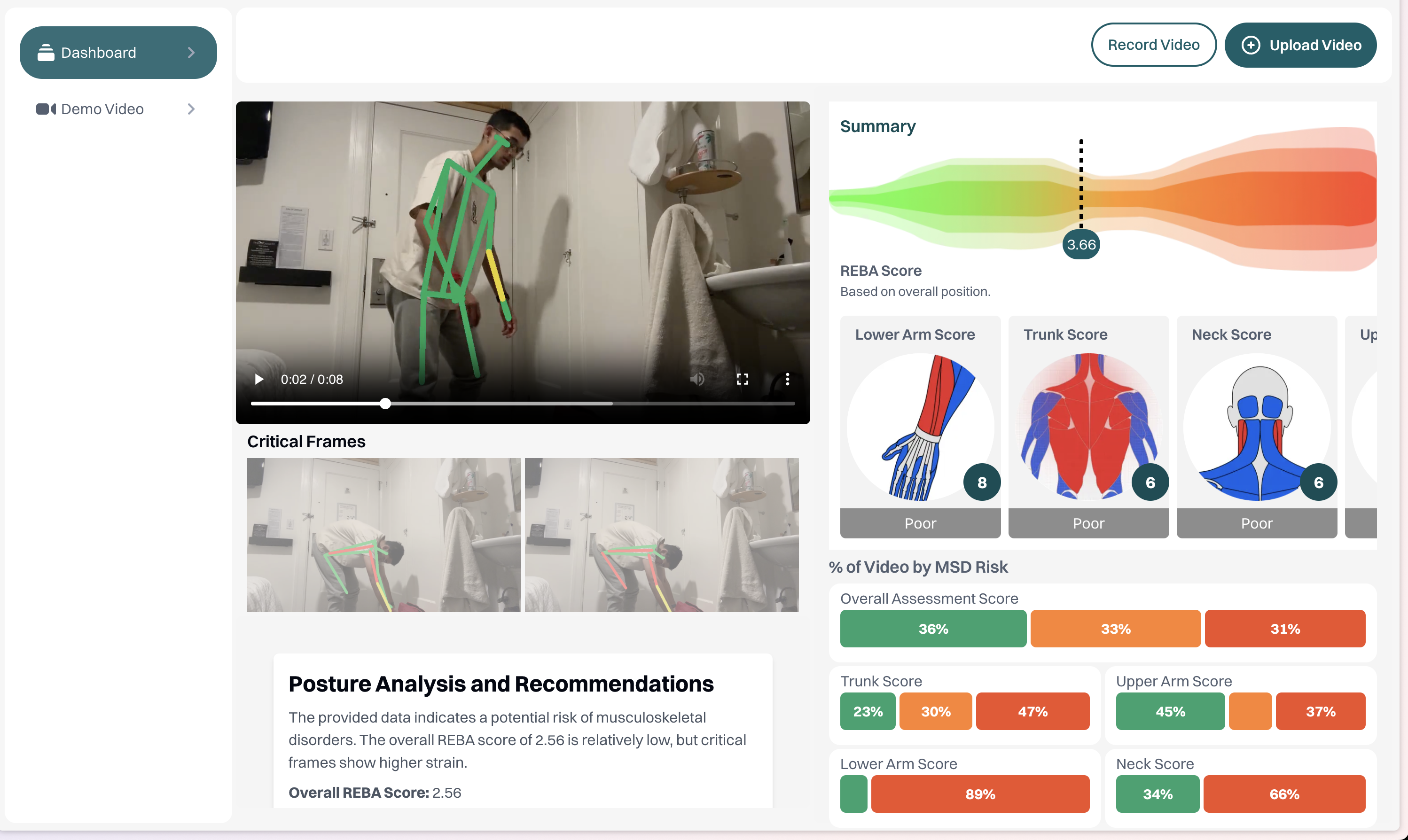
ErgoAI leverages advanced computer vision technology to analyze employees’ posture in real-time. We have 2 models, one where employers can send previously recorded videos and it runs real-time analysis. Next, we have a realtime mode that analyzes videos in realtime using realtime data processing from SingleStore to our advantage. In both models, we analyze the posture and compare to industry standard to the REBA scale and identify what the employee needs help on, what they could use assistance in, and what is an important issue to address. To further support injury prevention, ErgoAI generates AI-driven, personalized recommendations aimed at helping workers adjust their movements and improve their ergonomics.
📊How we built it
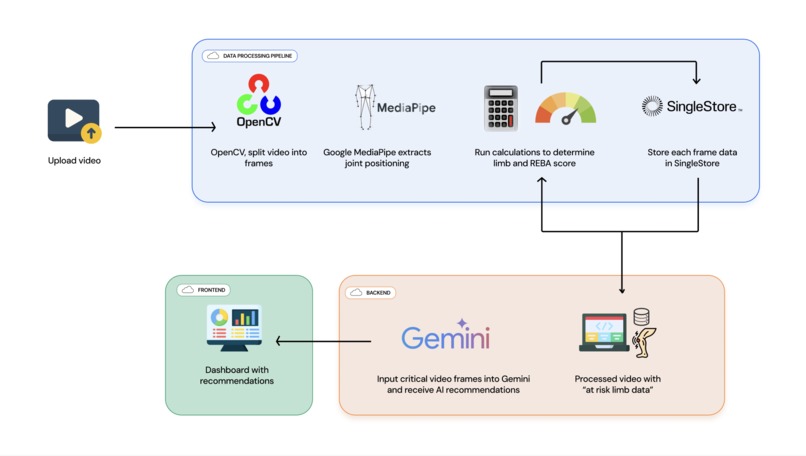
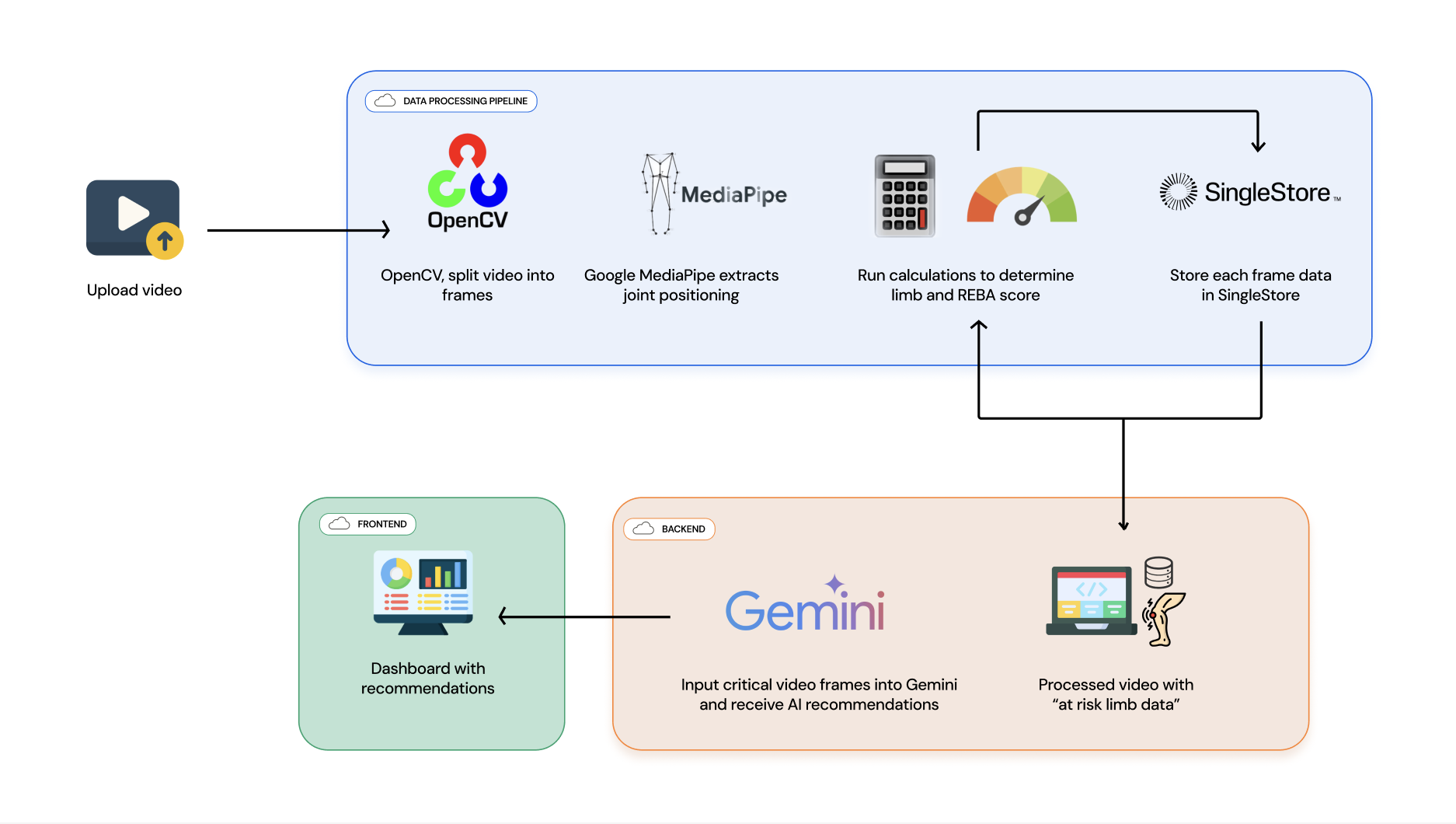
ErgoAI was built using SingleStore to handle real-time data processing and video streaming capabilities. The backbone of the system is a seamless integration of real-time video feeds with our posture analysis algorithm. The frontend is solely using Nextjs and the Tailwind CSS framework. The real magic is the backend, all conducted in a python backend communicating using FastAPI to the frontend. Our python script is using various libraries like OpenCV, Numpy, YOLOv5, and real-time Gemini contextualizations to provide an overall and complete analysis.
⛰️Challenges we ran into
With only 2 developers on the team, everything was a time crunch. Caleb worked mostly on backend and Arjun on frontend, but everything needed to be done quick in order for the project to get done in time.
- One challenge we ran into was getting our computer vision script to replicate the actual REBA test. There are tons of factors that go into the test, and every calculation had to be done with precision and quickly.
🏆Accomplishments that we're proud of
We’re proud of the way we navigated the complexities of integrating real-time video streaming with our posture analysis tool, especially given the challenges with SingleStore. The smooth collaboration between our design and development teams played a key role in bringing this project to life. By efficiently working together and iterating on feedback — communicating about what is possible and not especially within these 72 hours— we were able to transform a concept into a functional and innovative solution that has the potential to make a real impact on workplace safety.
😸What we learned
From a technical standpoint, we gained a deeper understanding of handling real-time data streams and integrating them with AI-based analytics. We also honed our skills in optimizing backend architecture for faster processing and better front-end responsiveness. On the softer side, we learned the importance of clear communication between cross-functional teams and how early collaboration between designers and developers can streamline the development process and lead to better outcomes. Adapting to challenges and refining our problem-solving approach were key takeaways that will inform how we handle future projects.
🤷What's next for ErgoAI
Our vision for ErgoAI is to make it a long-term solution that continues to evolve with the needs of the modern workplace. We plan to expand its capabilities by integrating more advanced AI models that can not only detect posture issues but also predict potential injuries before they occur. We also aim to incorporate machine learning algorithms that will enable the system to learn from past data and provide even more accurate and personalized recommendations. Additionally, we’re exploring partnerships with ergonomic experts and wellness programs to create a comprehensive ecosystem that promotes a culture of safety and well-being for employees worldwide. Our goal is to transform ErgoAI into a proactive tool that doesn’t just react to problems but actively prevents them, ultimately reducing workplace injuries and improving productivity.
Built With
- gemini
- javascript
- mediapipe
- next.js
- opencv
- react
- singlestore
- typescript
- yolov5

Log in or sign up for Devpost to join the conversation.