Inspiration
My kid loves to draw, but every drawing tutorial has the same blind spot: it can show what to do, but it can't see what the child actually did. YouTube can't notice a wobbly ear. And one-on-one art lessons aren't available to every family. I wanted a teacher that watches the canvas — and Build Week's stack (Codex + GPT-5.6 + gpt-image-2 + GPT-Realtime) was exactly the toolbox to build one.
What it does
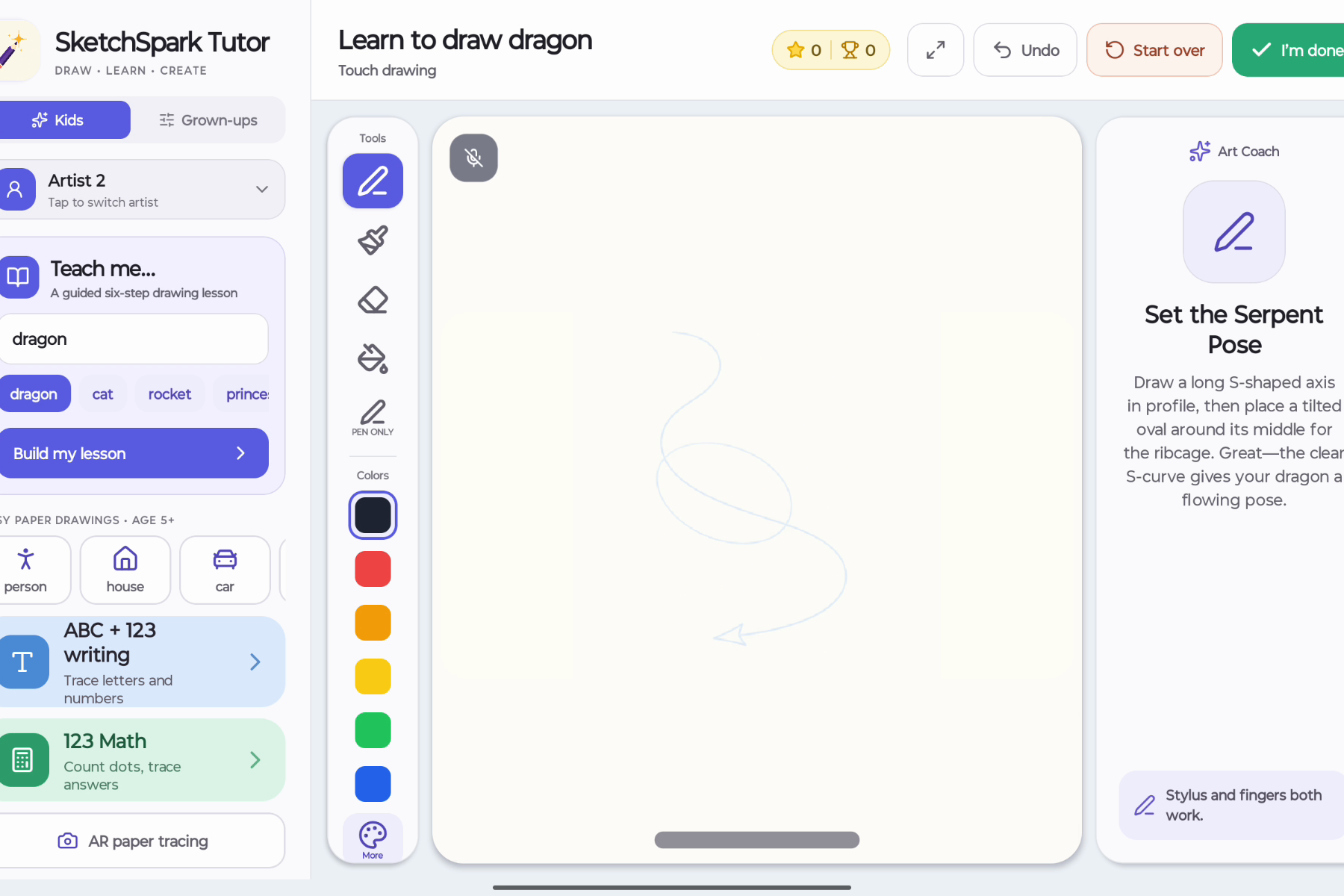
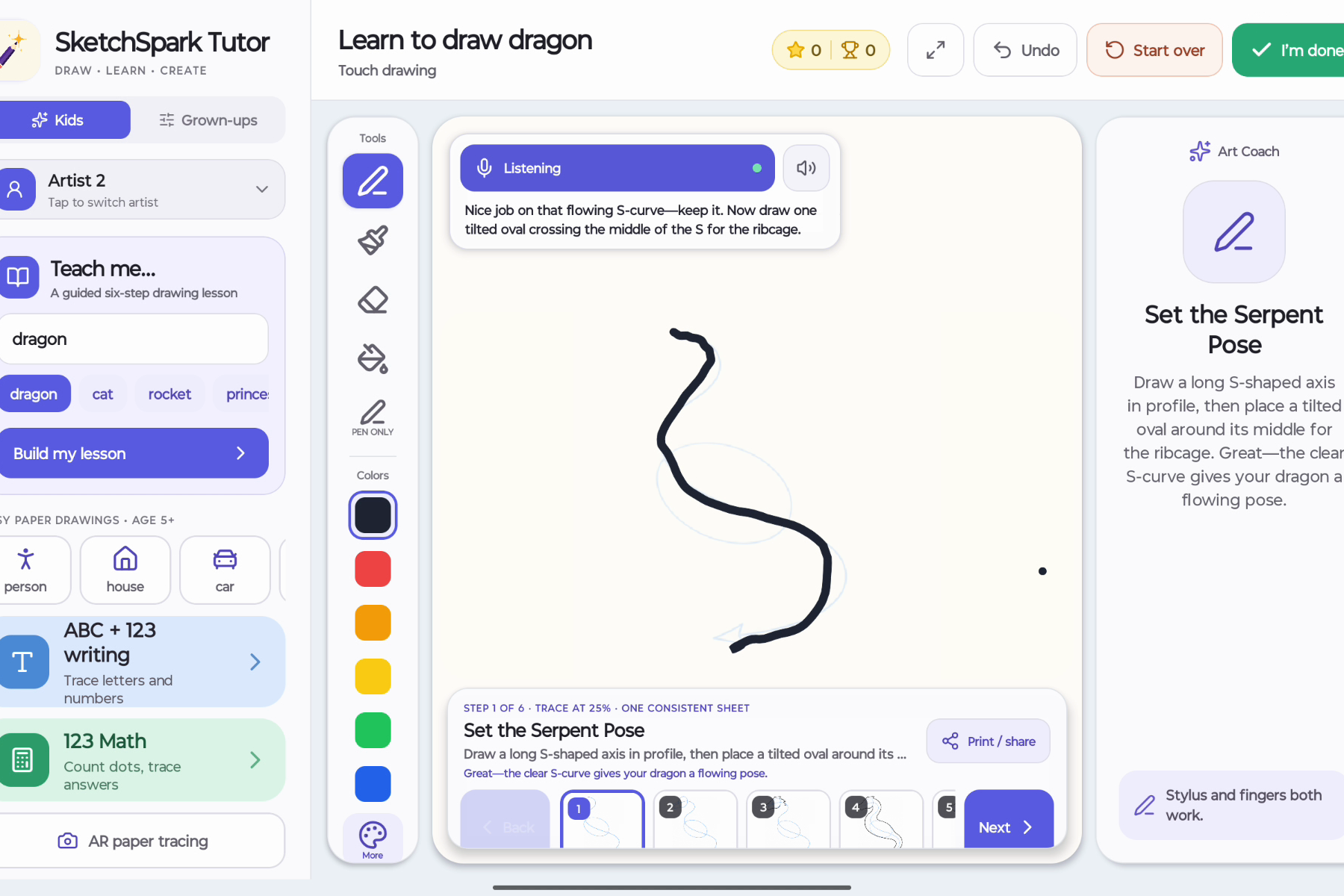
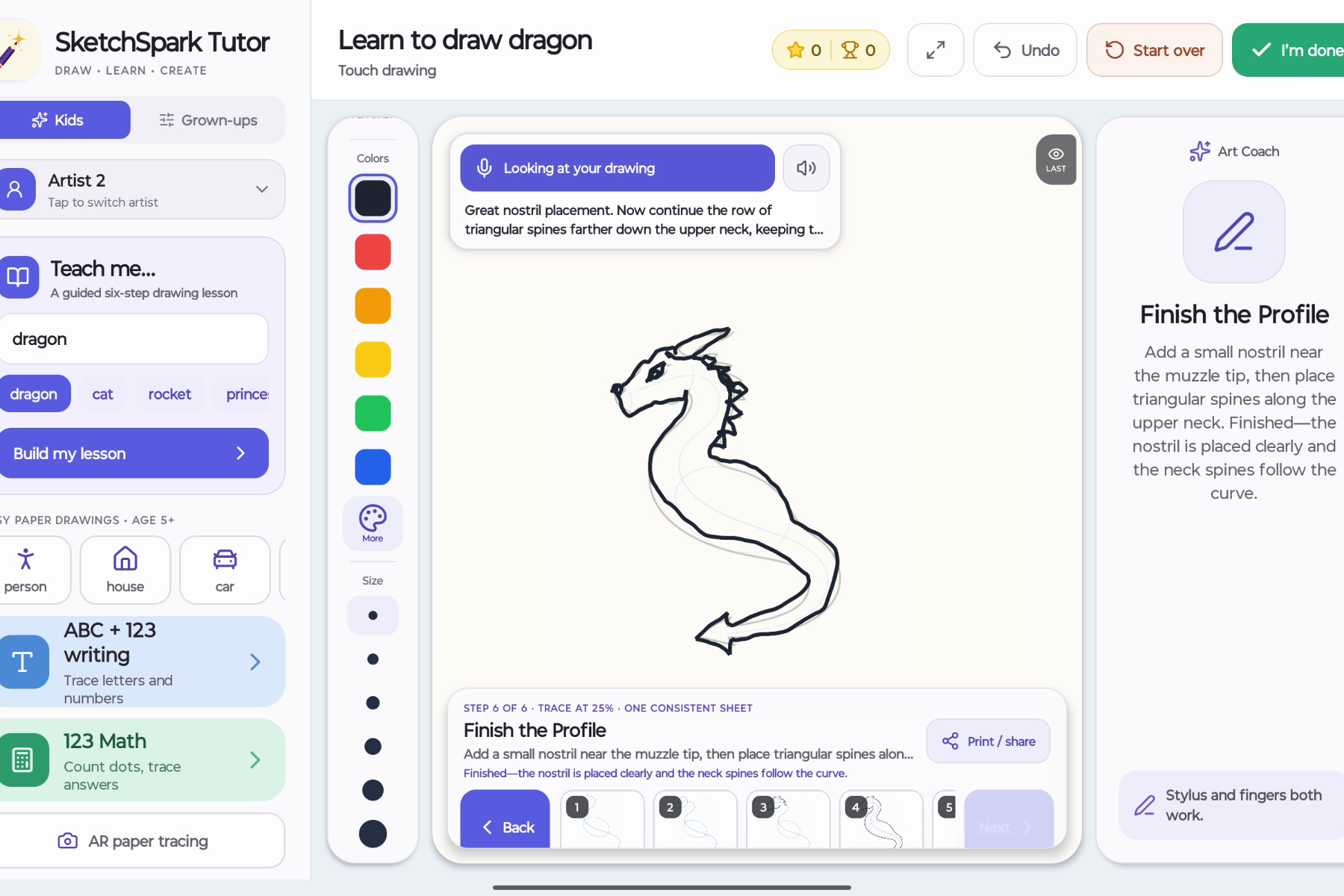
SketchSpark Tutor is a tablet drawing studio where the AI art teacher actually sees your child's work.
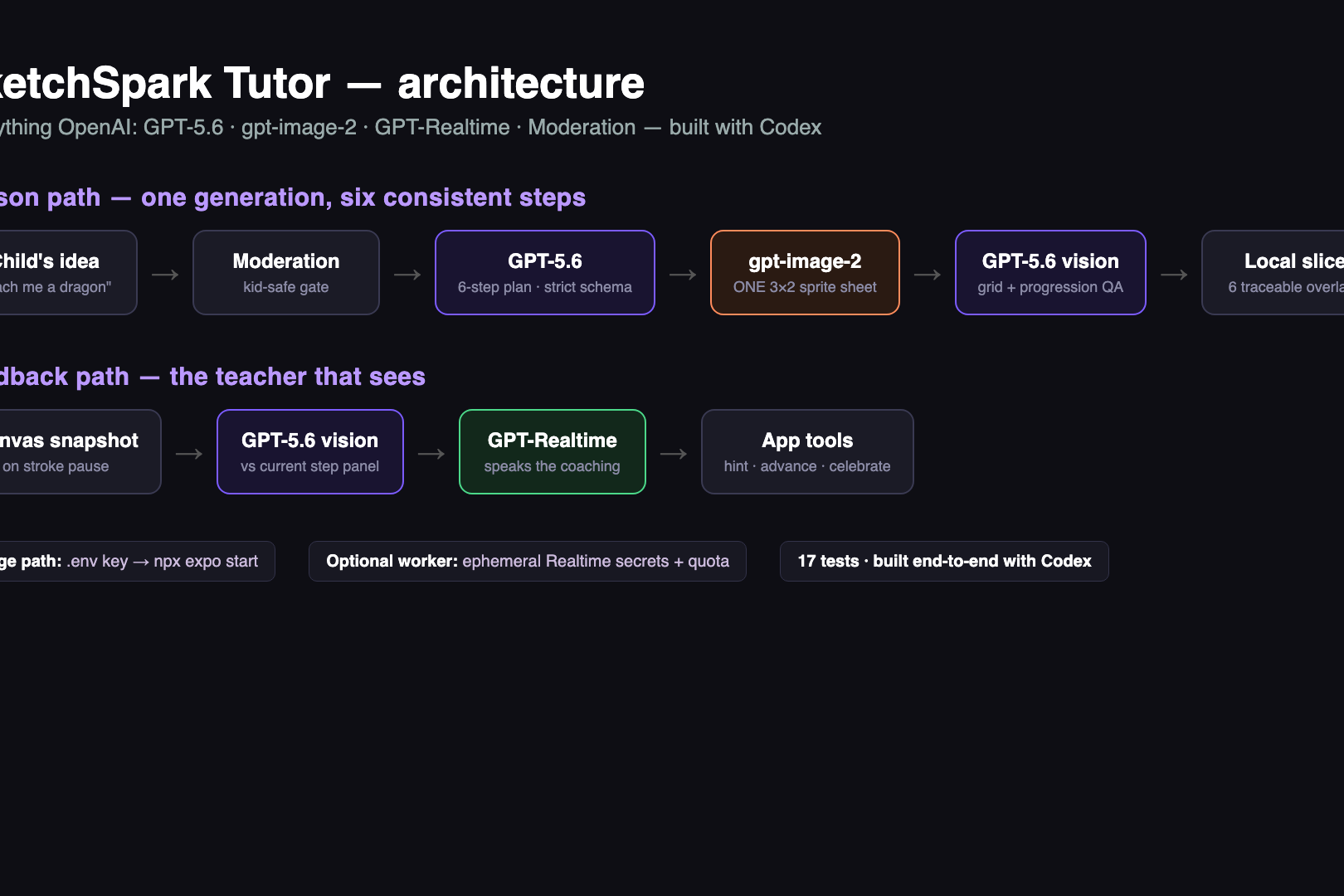
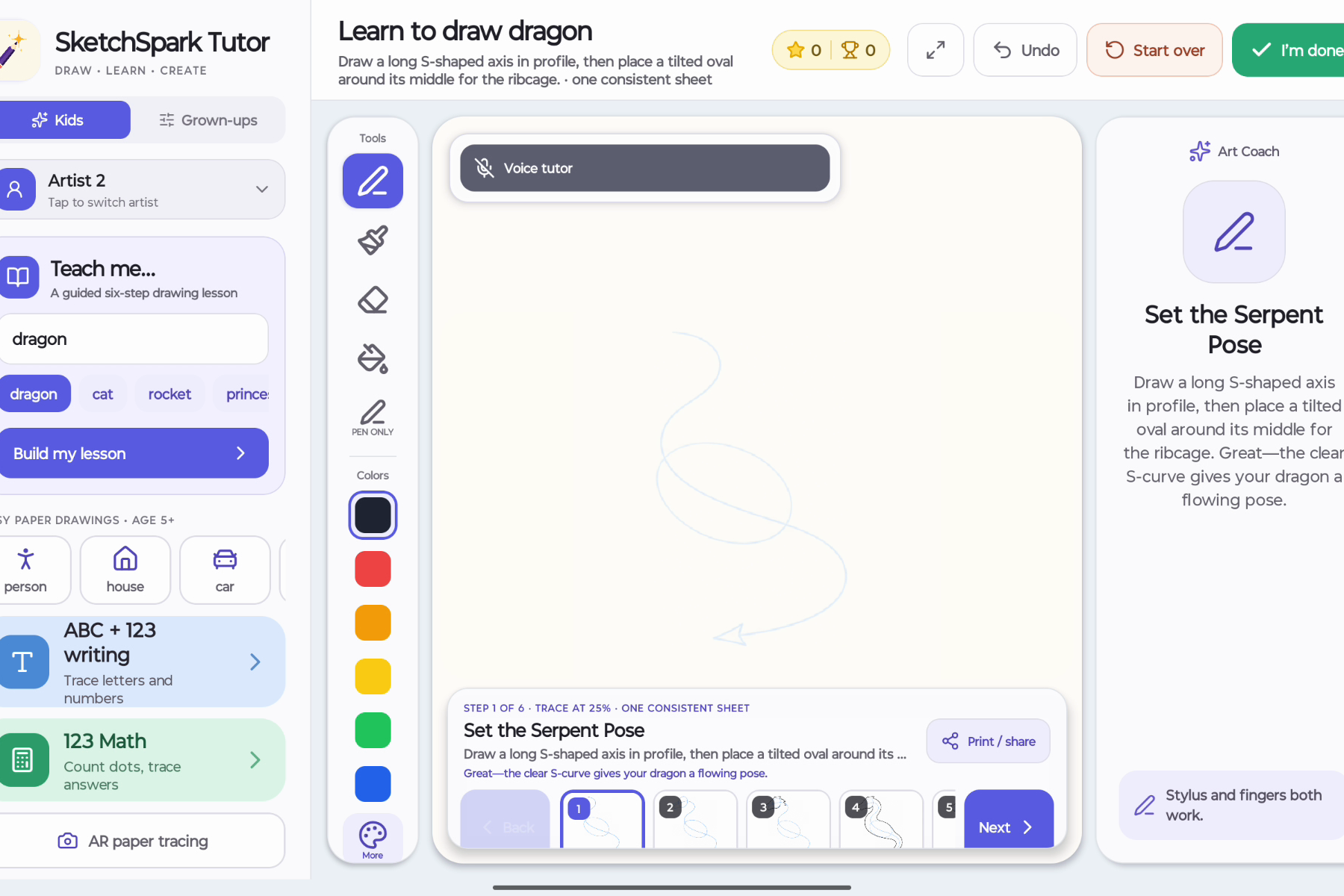
Ask it for anything — "teach me a dragon" — and GPT-5.6 writes a strict, age-aware six-step lesson plan. Then gpt-image-2 renders those steps as one numbered 3×2 sprite sheet in a single generation. That's the core insight: one generation means every panel shares the same image context, so the dragon in step 6 is the same dragon as step 1 — something six separate generations can never guarantee. GPT-5.6 vision validates the grid, the app slices it deterministically, and each step becomes a translucent ghost overlay the child traces with real construction lines.
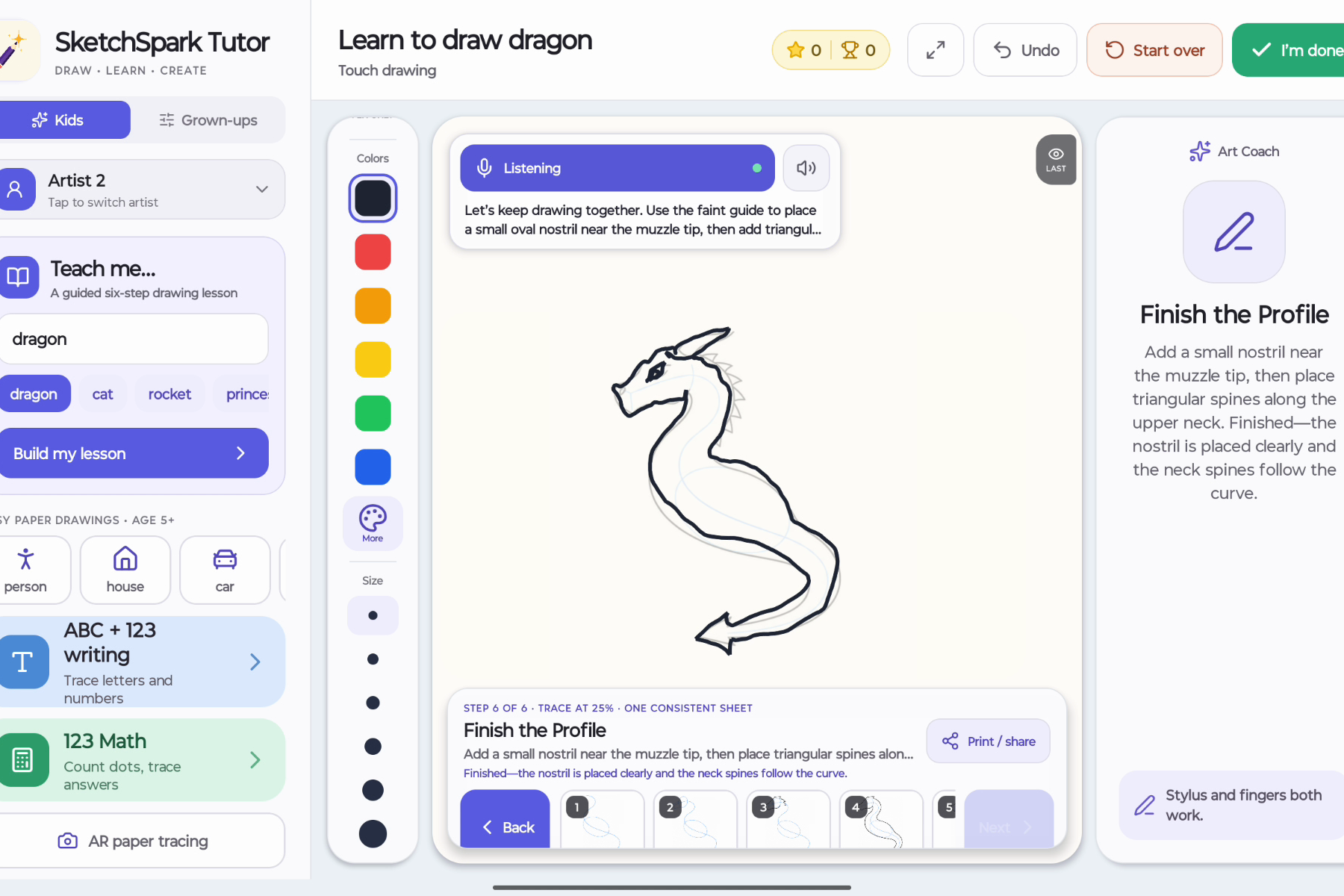
Turn on the voice tutor and it becomes magic: when the child draws and pauses, the app sends the actual canvas plus the current step panel to GPT-5.6 vision, and a GPT-Realtime tutor speaks the feedback out loud — praising what's right, nudging what's next. It can look at the canvas, show hints, advance steps, and celebrate with confetti — real app tools, not pretend conversation.
It's built as a complete family product: onboarding with age bands, voice or text coaching, parental-gated settings, moderation on all free text, printable lesson sheets, offline states, lesson caching, and save-and-continue.
How we built it
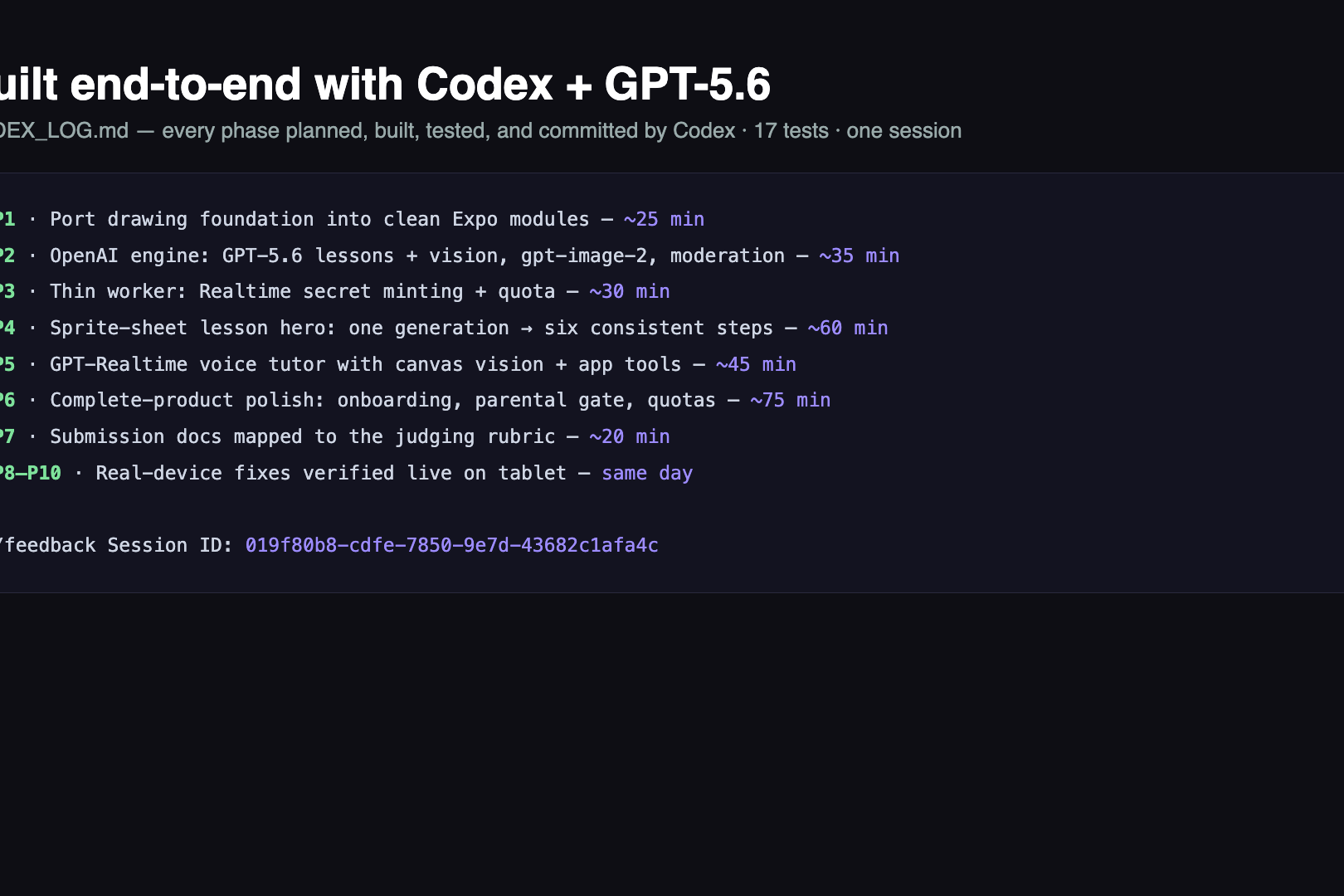
Codex (GPT-5.6), end to end, in one session. I wrote a build brief and drove Codex phase by phase: it ported my drawing foundation into clean Expo/TypeScript modules, implemented the whole OpenAI engine (GPT-5.6 structured outputs + vision, gpt-image-2, Moderation, GPT-Realtime over WebSocket), built the sprite-sheet lesson pipeline and the voice tutor, wrote 17 tests, and verified every phase before committing it. The receipts are in CODEX_LOG.md — every phase, prompt summary, and timing — and the /feedback Session ID in this submission is the primary session where all of it happened. An optional thin Cloudflare Worker mints ephemeral Realtime secrets and enforces per-device quotas; the judge path is pure BYOK — one env file, one npx expo start.
Challenges we ran into
Real hardware humbled us, twice. On a real Android tablet, finger strokes near the canvas edge produced phantom lines snapping to the screen edge — palm touches mixing into the stroke. Codex fixed it with pointer locking, a spike filter, and coordinate clamping. Then the floating lesson panels blocked the child from finishing circles — so Codex fitted the whole traceable area inside the unobstructed viewport and made every panel collapse the instant a finger touches the canvas. And keeping six generated panels consistent took a real system: delta-based step prompts, locked framing rules, a vision QA pass with one retry, and bounding-box anchoring so the trace overlay never drifts.
Accomplishments that we're proud of
The sprite-sheet insight — one generation, six consistent steps, with construction guide lines the model adds like a real art teacher. A voice tutor that comments on the strokes that are actually on the canvas, not imaginary ones. And the fact that a kid took it from "teach me a dragon" to a finished, traced dragon with a gold medal — on a real tablet, the same day it was built.
What we learned
GPT-5.6's structured outputs are strong enough to be load-bearing: strict lesson schemas, vision validation verdicts, and critique JSON all held up. Single-context image generation beats stitching independent generations for consistency. And Codex changed how I work — it wasn't autocomplete, it was a builder that planned, implemented, tested, and committed while I directed and verified from the product seat.
What's next for SketchSpark Tutor
Pressure-sensitive strokes for older kids, an avatar face for the tutor, AR paper tracing, classroom packs (one teacher account, thirty young artists), and more subjects like handwriting and geometry — the ABC + 123 and Math modes are already scaffolded in the app.
Built With
- cloudflare-workers
- codex
- expo.io
- gpt-5.6
- gpt-image-2
- gpt-realtime
- openai-api
- react-native
- typescript

Log in or sign up for Devpost to join the conversation.