

Inspiration
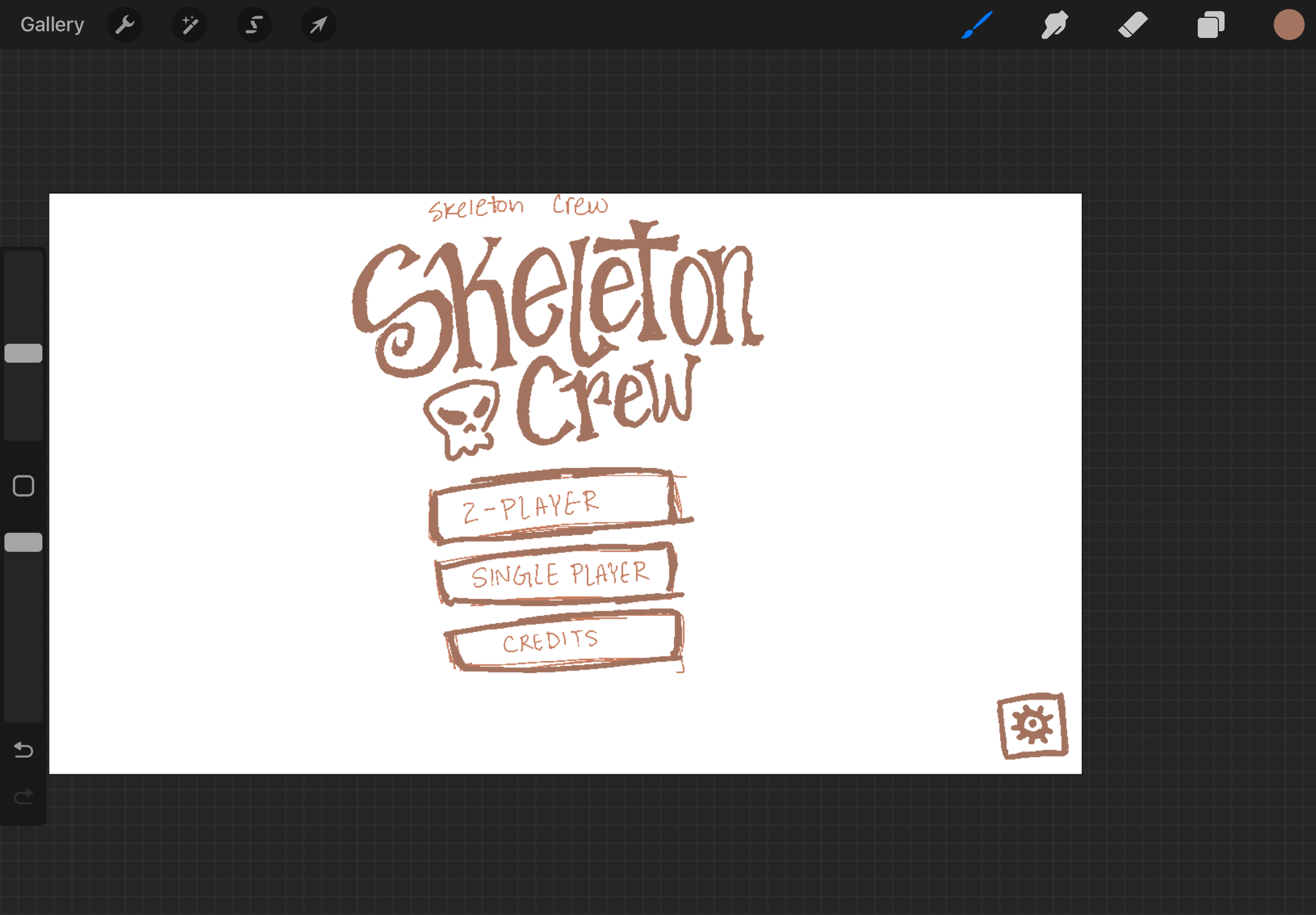
Game Idea: We drew inspiration from classic co-op games we loved growing up, such as Fireboy and Watergirl, but wanted to add a unique twist by incorporating combat mechanics for a more action-packed experience. Art: For the character sprites, one of our artists took inspiration from the charming style of Kindergarten. To nail the pirate theme, we created mood boards with images sourced from Pinterest, sparking creativity for the game's visual design. Music: Our music producer, heavily influenced by the work of Porter Robinson, crafted a soundtrack that blends that inspiration with elements from iconic game soundtracks, creating a dynamic and immersive musical experience.
What it does
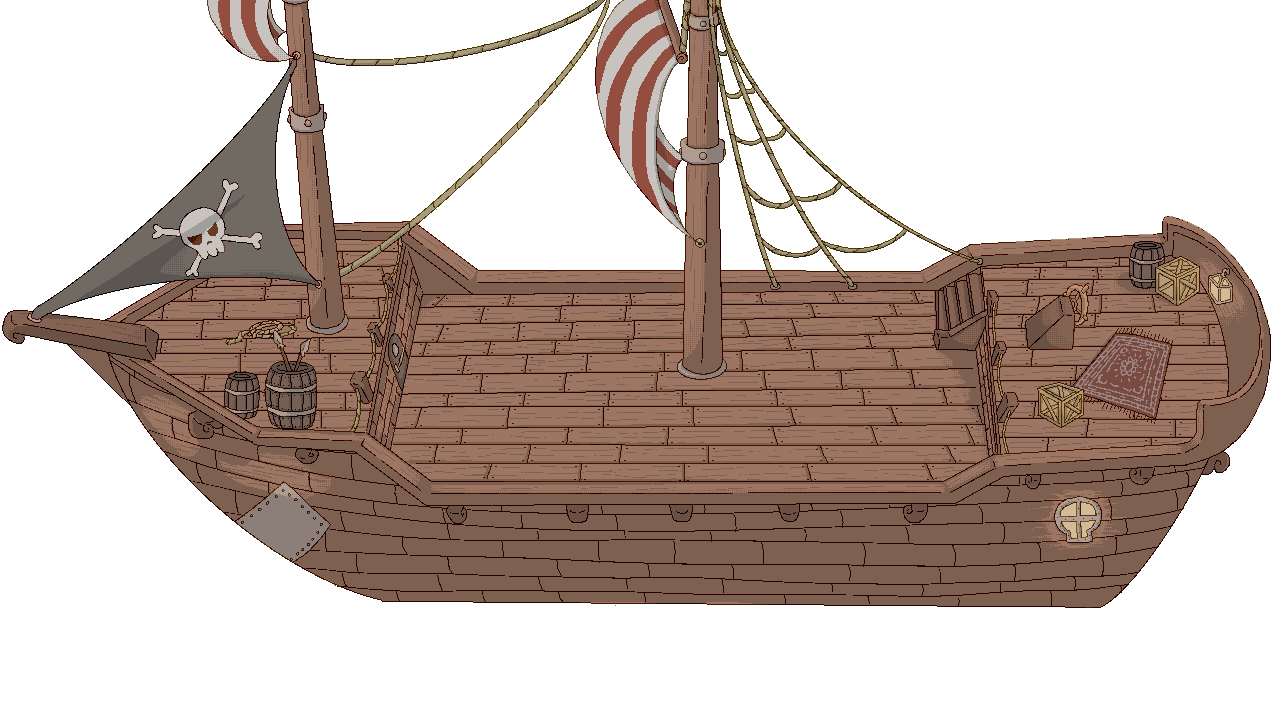
Skeleton Crew is a co-op fighting game designed for two players on a single computer. One player controls their pirate using the WASD keys, while the other uses IJKL. Together, you must fend off waves of monsters invading your ship, battling to survive and protect your treasure!
How we built it
We started by creating a bulk of the art
Challenges we ran into
Git Repository Issues with Unity Managing a large team while using Git in Unity proved to be a challenge. Merging changes and resolving conflicts became complicated, especially as the project grew in size.
Scalability We started with ambitious ideas, brimming with optimism. However, as the jam progressed, we realized that many of our big concepts, such as additional enemies and complex scenes, couldn’t make it into the final release due to time constraints. We had to scale back and focus on the essentials.
Prioritization With limited time, prioritizing tasks became crucial. To manage this, we created a productivity board in Canva to track key tasks for each role: Coders, Artists, and our “Interns” who handled documentation, playtesting, and UI. The board helped us keep track of what needed to be done, who was responsible, completed tasks, and revisions. Bug reporting for coders was also streamlined through this system.
Health Sleep deprivation hit us hard from the start. Many team members began the jam already exhausted and tried to push through by convincing ourselves we could operate like “25/8 corporate machines.” Eventually, the stress led to headaches and burnout. To combat this, we instituted mandatory nap times to prioritize mental and physical well-being.
Inexperience Our team was made up of individuals with diverse skill sets, from Unity and C# coders to 2D and 3D artists, a music producer, and even cybersecurity majors. This diversity was both a strength and a challenge, as we had to bridge gaps in experience and knowledge across disciplines.
Lack of Up-to-Date Tutorials Game development is a rapidly evolving field, and game engines like Unity are constantly updating. Unfortunately, Unity dropped Unity 6 just a day before the jam, forcing us all to update. Many tutorials we relied on were outdated and incompatible with the latest version, making it difficult to find reliable resources during critical moments.
Bug Fixing We ran into numerous bugs and errors, many stemming from repository management. Some team members occasionally forgot to pull updates before pushing their code, causing merge conflicts that took valuable time to resolve. Additionally, fixing one problem often led to a cascade of new issues, making debugging a challenging and time-consuming process.
Time Constraints Completing a full game in just 24 hours is no small feat. While having a large group seemed like it would make things easier, it introduced the need for constant communication to avoid missteps. To streamline collaboration, we resorted to yelling "PULL!" or using a Discord bot to notify everyone of repository updates, minimizing potential errors from poor synchronization.
Custom Assets Creating all of our art and music from scratch proved to be incredibly time-consuming, with few shortcuts available. Many of us are perfectionists and wanted every detail to be flawless, but given the time constraints, we often had to step back, accept what we’d created, and hope that, if you squinted, it looked good enough!
Accomplishments that we're proud of
We’re incredibly proud that we built everything in the game ourselves, from music and art to buttons, code, and sound effects. Each team member brought their unique skills to the table, creating animated sprites, backgrounds, character designs, custom UI elements, and original audio. It was a time-intensive process, but the payoff was immense. The moment we saw all the pieces come together, especially in the final product, was a huge source of joy for the entire team. Hearing our game run smoothly and watching our work in action sparked celebrations and happy cheers. While the journey was tedious at times, the sense of accomplishment we felt was truly rewarding.
Here are some of our higlights:
- Figuring out animation implementation
- Implementation of artists’ assets into the game
- Learning game development from scratch to reach a workable level
- Being proud of going from an idea to a tangible result
- Finishing the original music and sound effects
- Planning on such short notice
- Getting closer with friends and teammates.
- Breaking into skills from an industry never previously tapped
What we learned
The artists learned a new art style, pixel art. Pixel art was fun to do but definitely hard starting off. It was some of our first times using unity so a lof of us learned how to use Unity. We also learned outside-the-box thinking, we learned to come up with ideas that could be different from games already out there.
What's next for 20 Floors Up
We were thinking of continuing as a studio and definietly joining more game jams. Though it was stressful, a lot of us really enjoyed working together :)


Log in or sign up for Devpost to join the conversation.