-
-
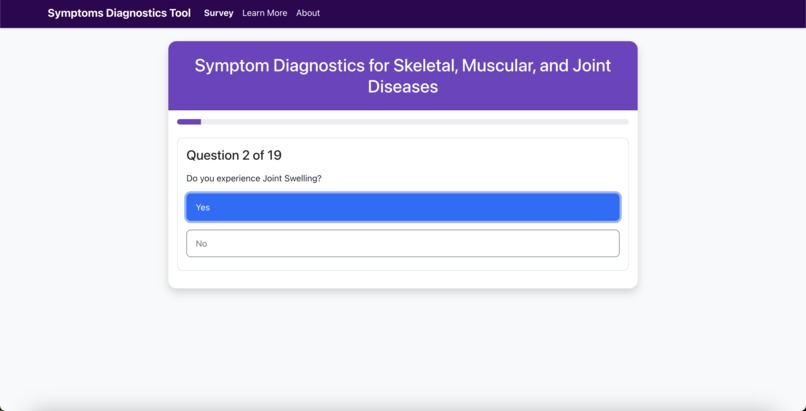
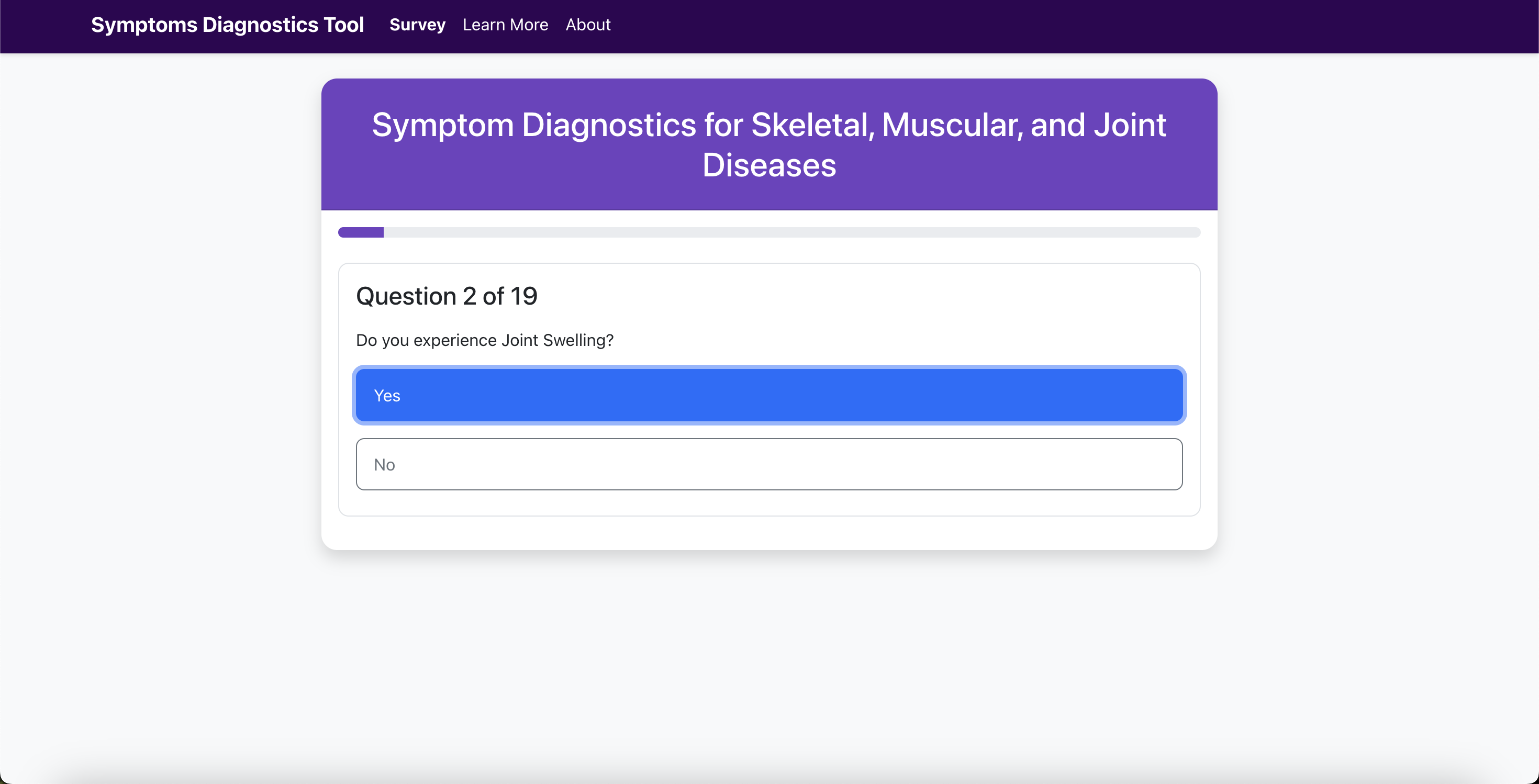
Questionnaire
-
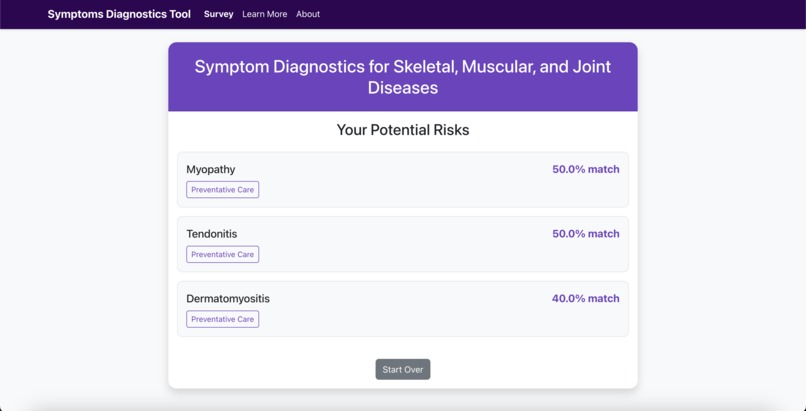
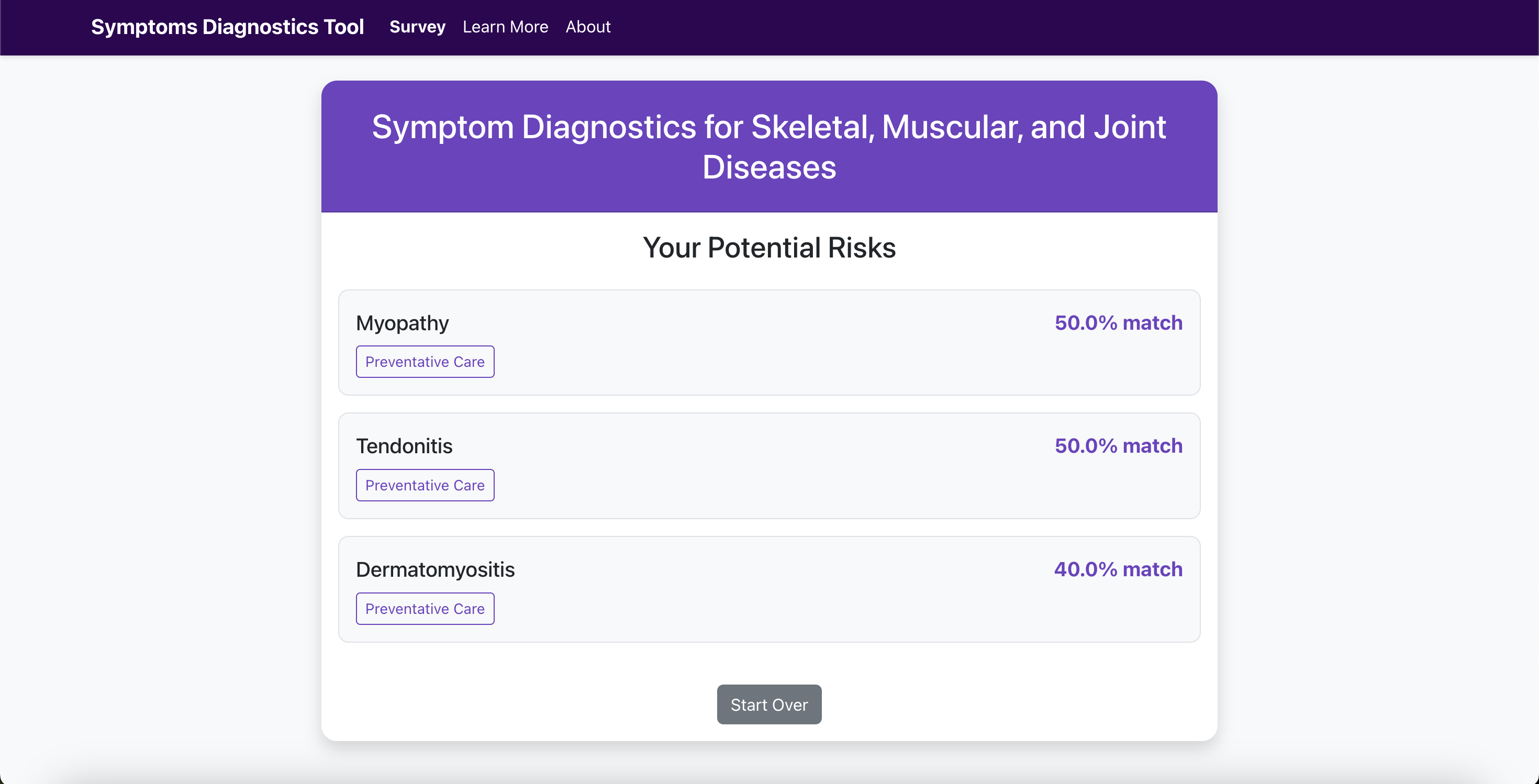
Results
-
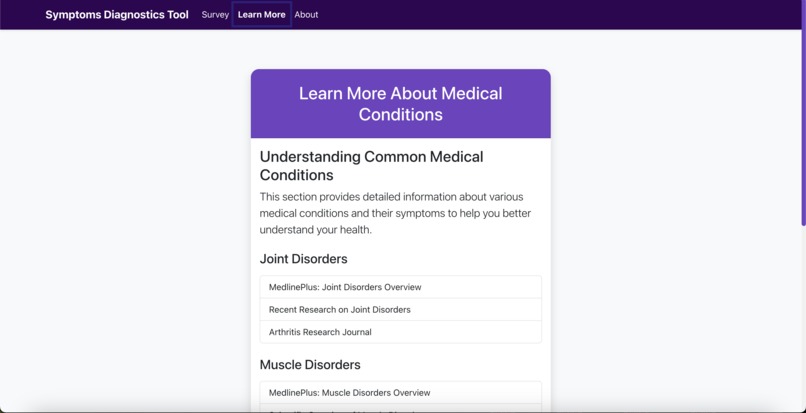
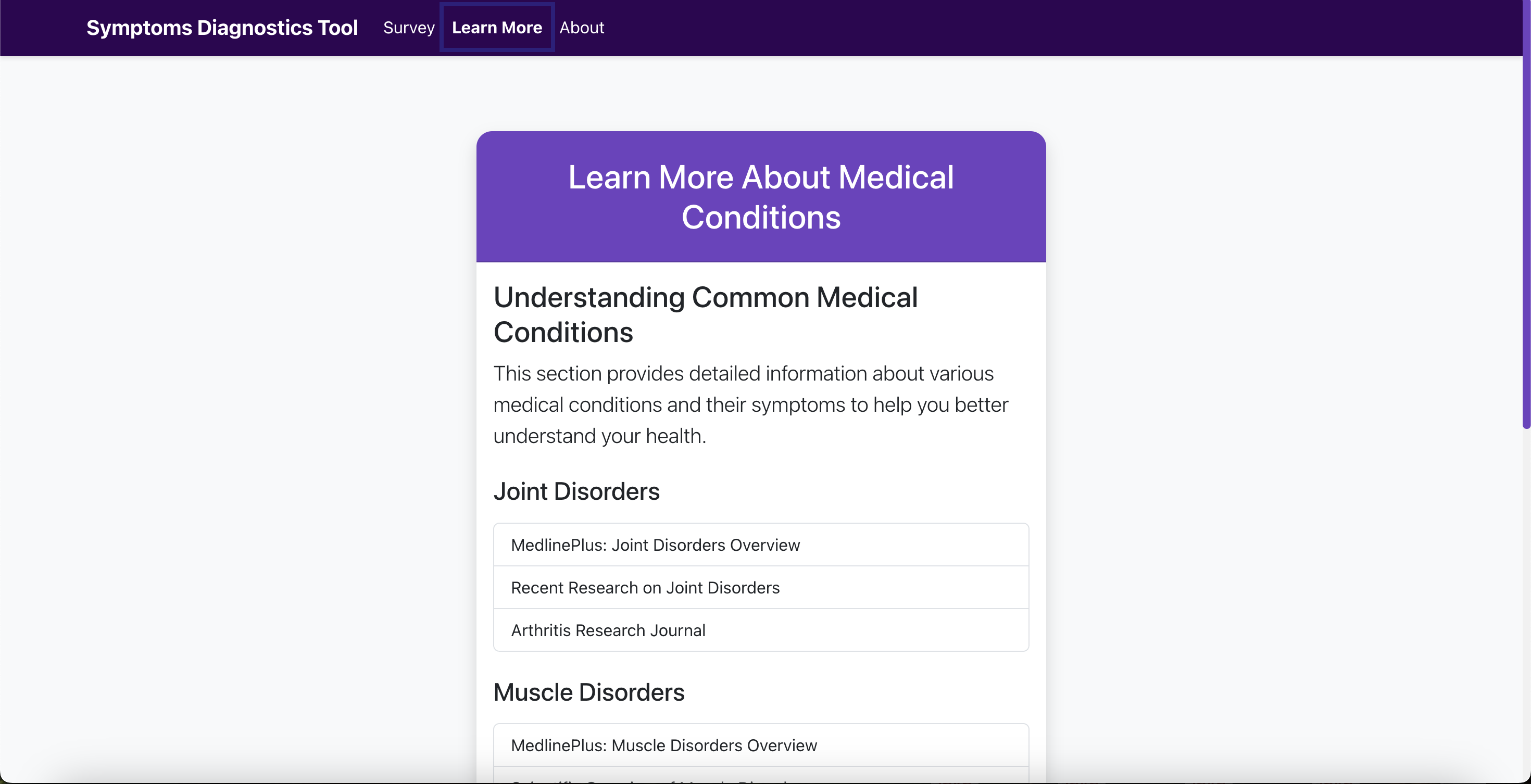
Resources & Learning More
-
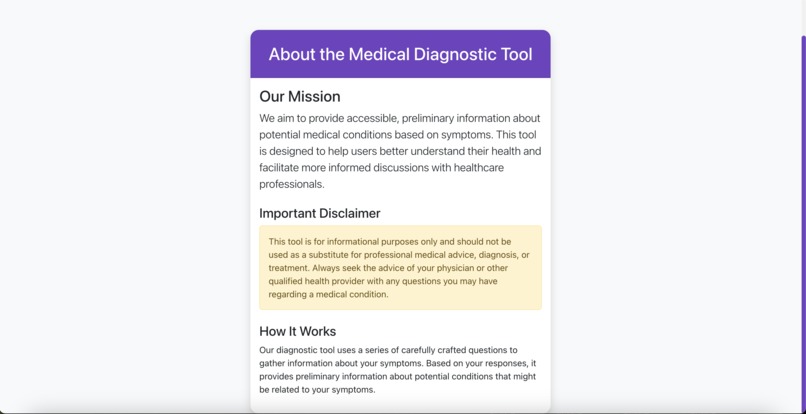
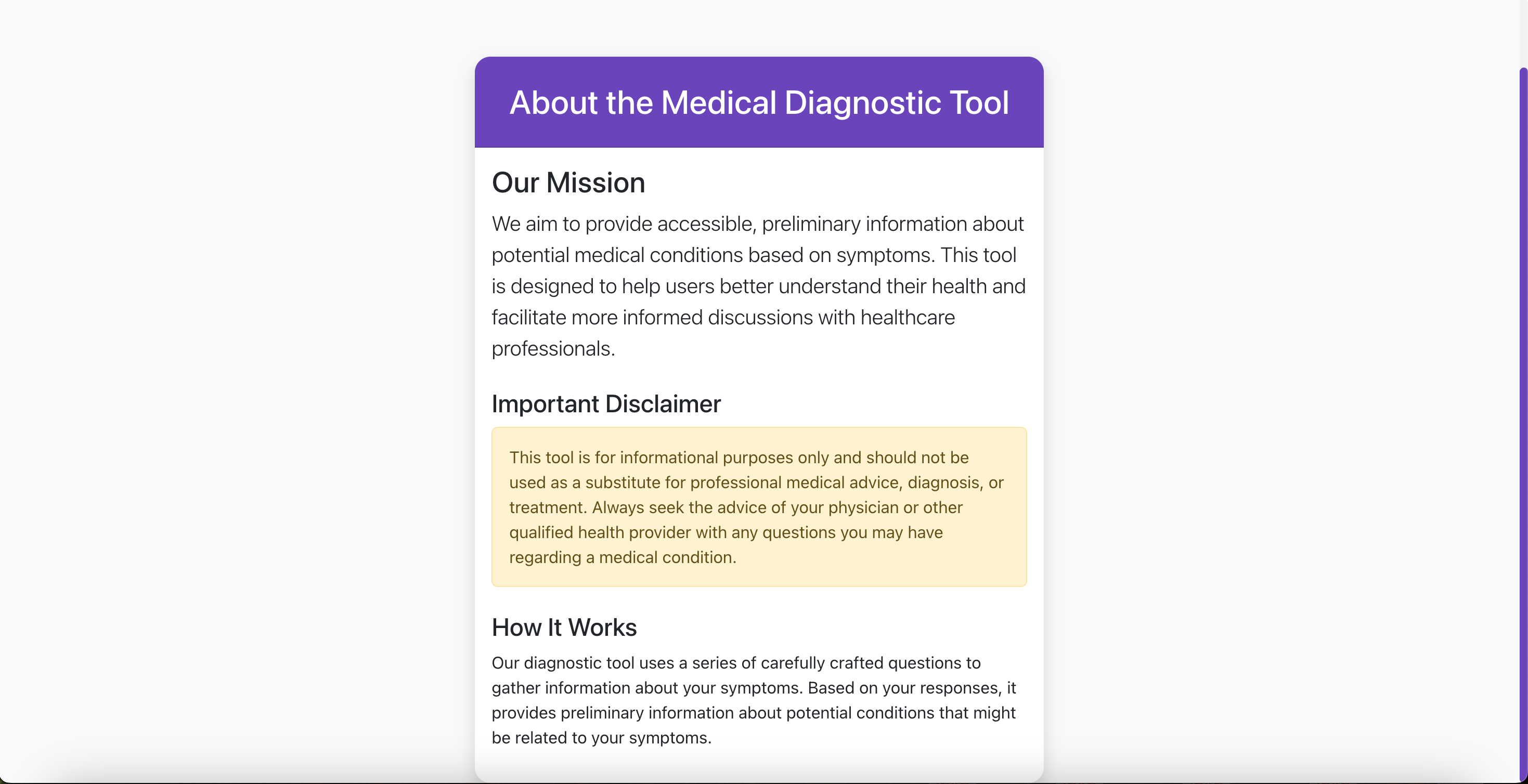
Our Mission
Inspiration
Skeletal, muscular, and joint disorders are not very commonly known nor diagnosed, and we wanted to raise more awareness for the potential risks that come with these disorders and their common symptoms.
What it does
Our website uses a simple questionnaire with five preliminary questions on symptoms a user may be experiencing. Based on the answers to these questions, the users are prompted to fill out an additional questionnaire, with more in-depth prompts. The top three conditions that matched the users' responses are then provided at the end, along with percent matches, preventative care measures, and links to specific resources about each disease.
How we built it
We used HTMl, CSS, Javascript, and React to implement our website. This allowed us to style the website to our liking, as well as making it fully functional through buttons. We planned the design and placement of our navigation bar, buttons, and forms through Figma.
Challenges we ran into
We ran into some challenges regarding API keys, which we ended up not using due to the time limit. Instead, we relied on simple frontend design to display more information about potential diagnoses. Additionally, we ran into many challenges using GitHub, as this was one of the first times we truly used this platform. By googling our many errors and using the GitHub help site, we understood how to make branches, commit, push, pull, and merge. We also learned how to resolve merge conflicts.
Accomplishments that we're proud of
We are incredibly proud of how much we learned about GitHub and git commands. We came into this not knowing much, but now we feel comfortable with helping others with using GitHub and how the platform works. Additionally, we are proud of creating a functional website with interactive buttons and links. We are also proud of the research we put into our website as we had to learn a lot about skeletal, muscular, and joint disorders.
What we learned
We learned a lot about how to use GitHub, git, and terminal commands. We now understand how to resolve merge conflicts, make PRs, and commit changes. We also learned about skeletal, muscular, and joint disorders, which were all topics of healthcare we didn’t know much about going into this project. Additionally, we learned about frontend and backend development.
What's next for Skeletal, Muscular, and Joint Disease Diagnostics Tool
We hope to continue to improve our calculations algorithm and provide even more resources for individuals to ensure they have the best possible resources to improve their health and seek professional medical advice. We are also looking to incorporate a database that stores past data for individual users and an AI chatbot that could provide advice for users to help manage their symptoms.

Log in or sign up for Devpost to join the conversation.