-
-
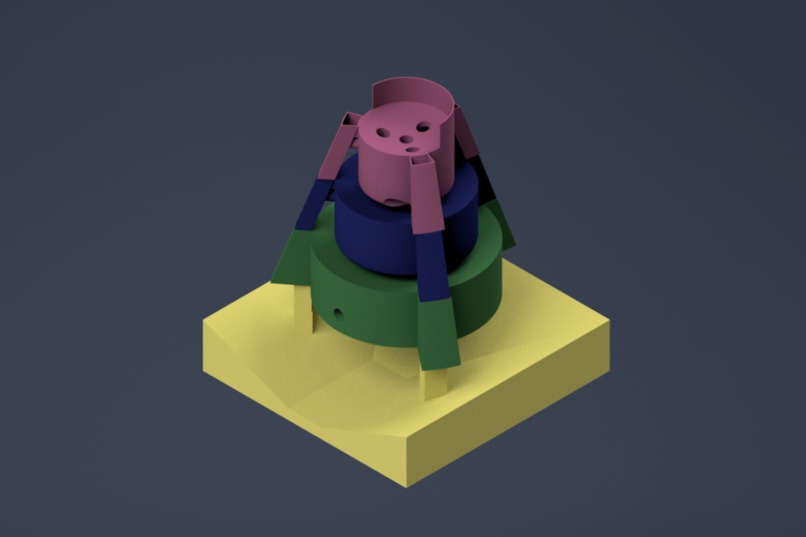
Assmebly model of the SkeeLaunch tower.
Inspiration
We were first inspired to design SkeeLaunch with the goal of creating a unique desktop game to promote workplace productivity. We initially brainstormed miniature versions of sports that already exist, from basketball to bowling, which could fit on a tabletop while being both engaging and portable. We also aimed to create a game that balanced luck and skill, keeping each round short, random, and fun for quick breaks from work. The final concept combines the launching mechanism of mini-basketball with the structure of skeeball, plus our own creative twists that add new layers of excitement to the game.
What it does
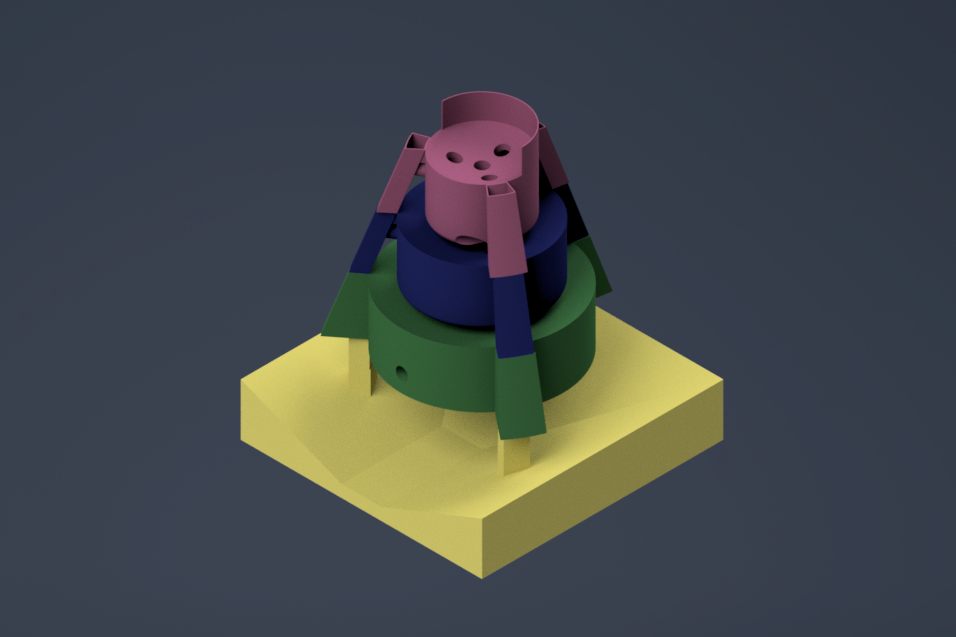
This game involves using our custom-launcher and aiming a small ball onto our main game board tower, which consists of three layers with skeeball-like holes to pass through. The objective is for the ball to reach the center of each layer, allowing it to descend to the next level. But beware! There are several other holes on each level that would result in losing the game, allowing for randomness and excitement when taking a short break from work.
How we built it
The game was built using Autodesk Inventor. We modelled and assembled the key components of our game, including the launcher and three-layer tower, to ensure accurate dimensions and smooth fit between parts. In addition, we designed a tunnel system and ramp base that guide the ball back to the player, creating a reliable ball-return mechanism that enables continuous gameplay and an enhanced user experience.
Challenges we ran into
We initially thought of having three equidistant holes for each layer, with one leading to winning the game. However, due to our funnel-shaped design for each layer, we realized there was a possibility that the ball would remain stuck in the middle. So, we pivoted to have the “winning hole” remain directly in the center, eliminating the problem and improving our design.
We also struggled with building the tunnel system, as we had to figure out a way to ensure the winning ball would gain enough momentum to move onto the next layer and prevent any interference between tunnels. To resolve this challenge, we designed three supports within our design, thus each hole could have a chute to exit the game system.
Accomplishments that we're proud of
Our team is proud of designing a novel game that combines unique components created from scratch. We are also proud of our abilities to correctly calculate the distances and dimensions of the parts, allowing the assembly to line up perfectly once assembled.
What we learned
We gained essential skills in teamwork and CAD throughout this engineering design process. When initially developing our design, we effectively communicated our ideas to one another through sketches. We also learned how to render images and animations in Autodesk Inventor.
What's next for SkeeLaunch
One next step for SkeeLaunch would be creating a collapsible system, allowing the game to be packed-up and transported to one’s desk with ease. In addition, we could expand the ball-return system. Since its current process is simply exiting from the winning hole, we could make it look more special when the ball is being shot out after earning their winning point.

Log in or sign up for Devpost to join the conversation.