-
-
-
-
-
-
-
-
-
-
-
-
-
-
-
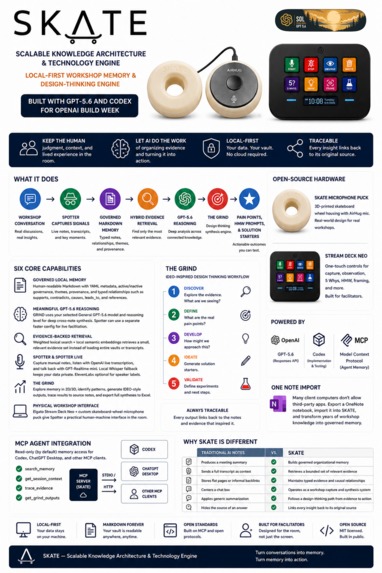
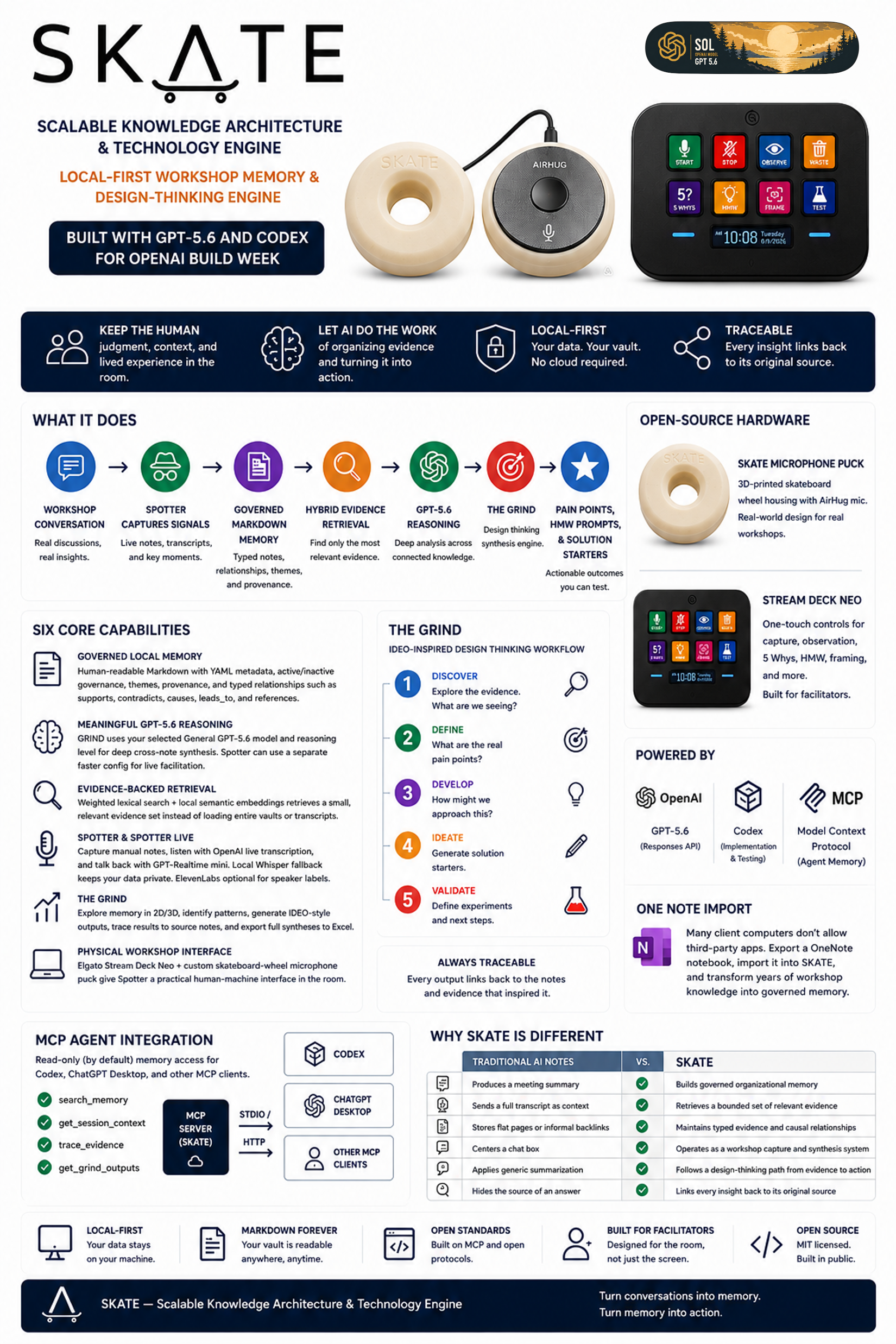
Skate Infographic
Inspiration
You can’t vibe code personality.
Years ago, I watched a 60 Minutes story about IDEO and the way its teams approached design thinking. What stayed with me wasn’t the brainstorming—it was watching people from completely different backgrounds build on one another’s ideas until something genuinely new emerged.
It felt less like a meeting and more like an orchestra. Great ideas weren’t owned by one person; they were built together.
That idea never left me.
Over the last decade, I’ve worked across engineering, innovation, consulting, and AI. I’ve filled notebooks, OneNote pages, Markdown files, and whiteboards with observations, customer quotes, sketches, and workshop outputs. Every project generated valuable knowledge, but six months later, it was scattered across transcripts, folders, sticky notes, and meeting summaries that nobody opened again.
There are already plenty of note-taking apps.
There are plenty of Markdown editors.
There are plenty of AI meeting summarizers.
I didn’t need another place to write notes.
I needed a workshop assistant—something that could help me facilitate better conversations, preserve the evidence behind decisions, and help teams move from observations to action.
That’s why I built SKATE: Scalable Knowledge Architecture & Technology Engine.
What It Does
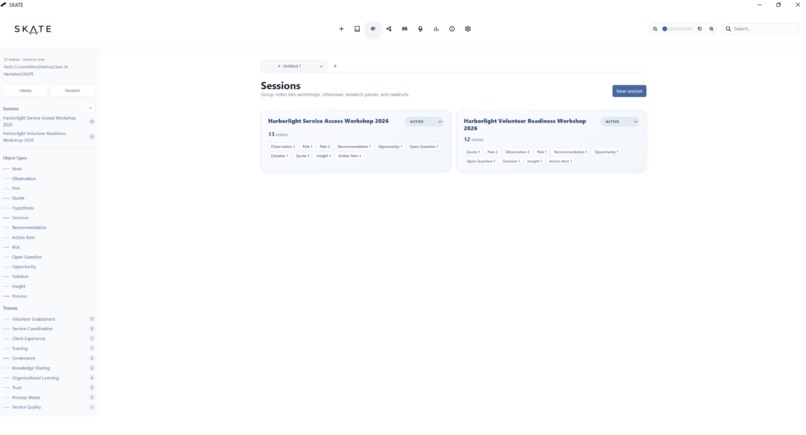
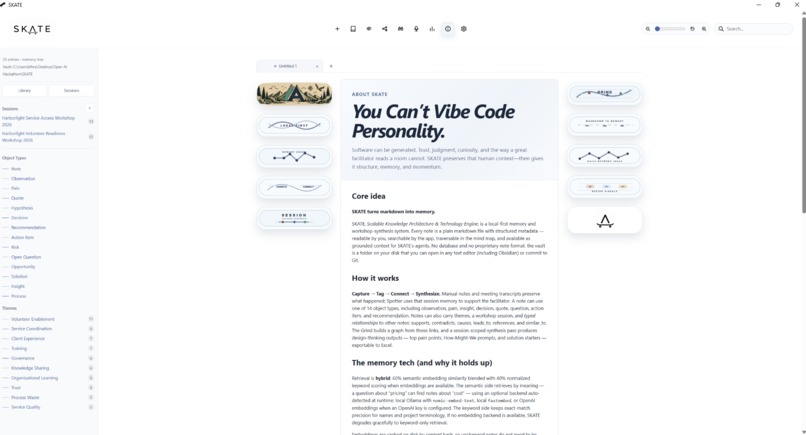
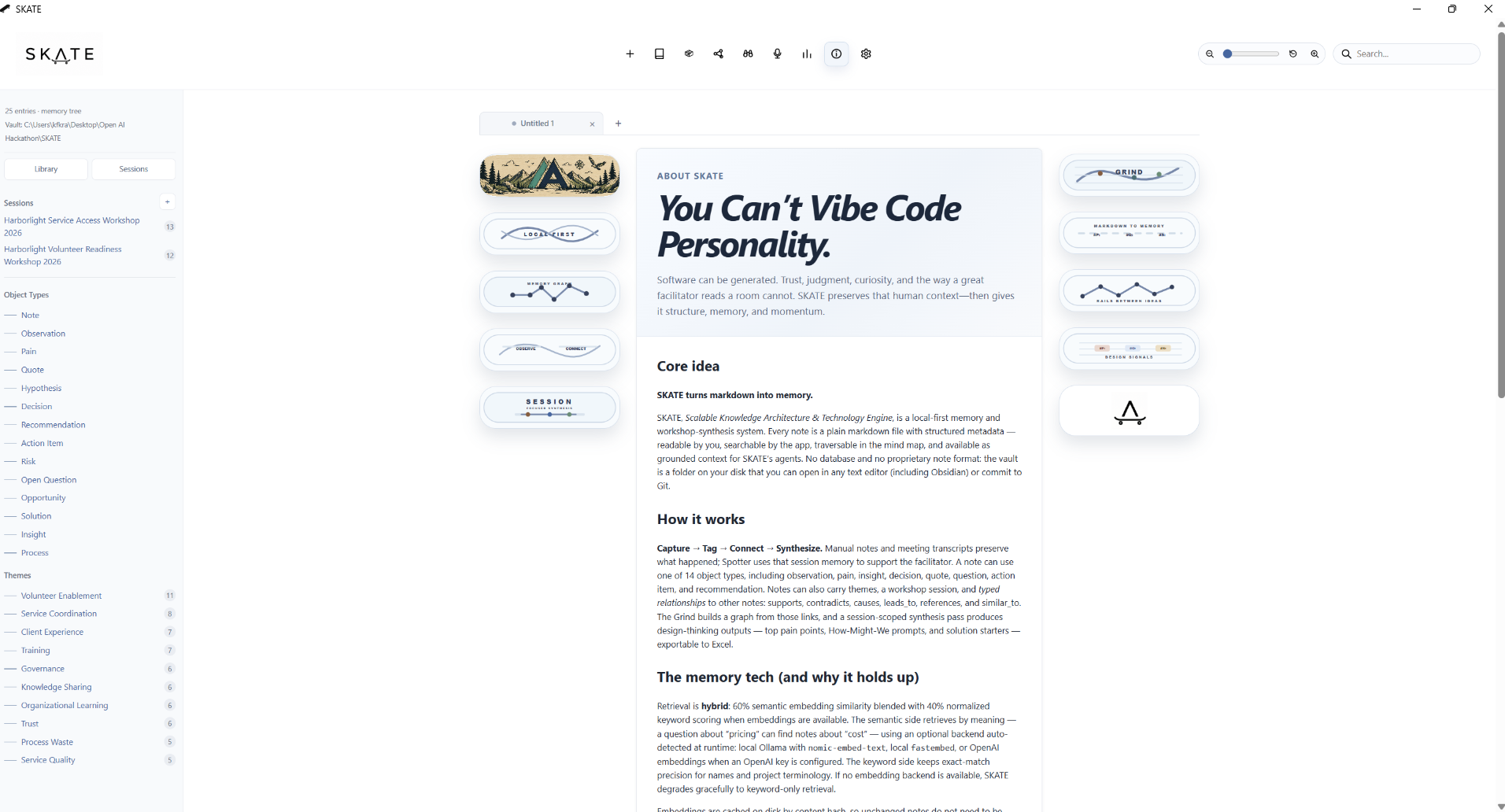
SKATE is a local-first organizational-memory and design-thinking engine built for collaborative workshops.
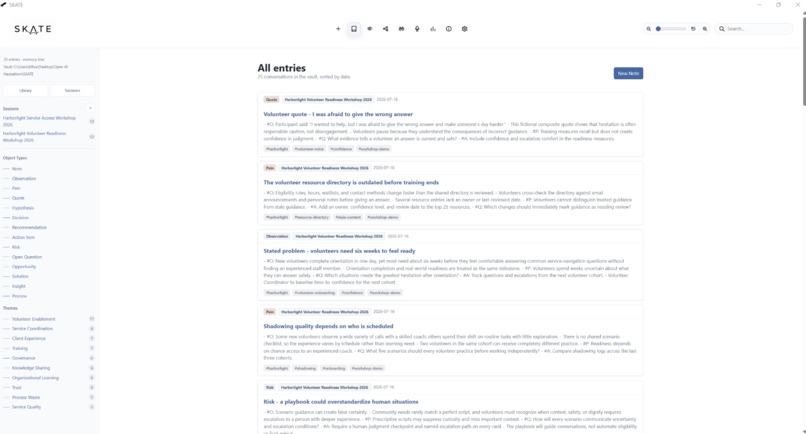
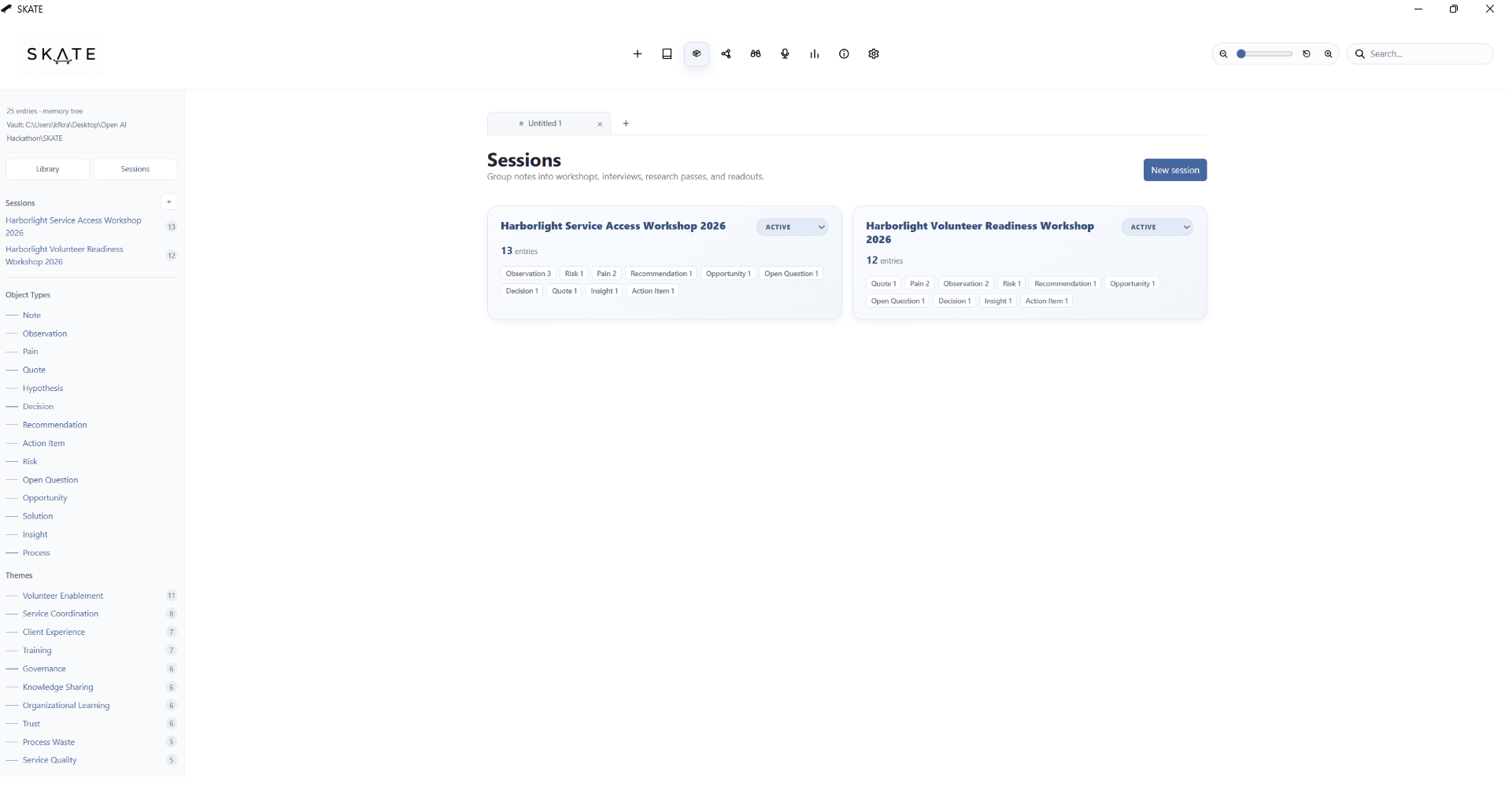
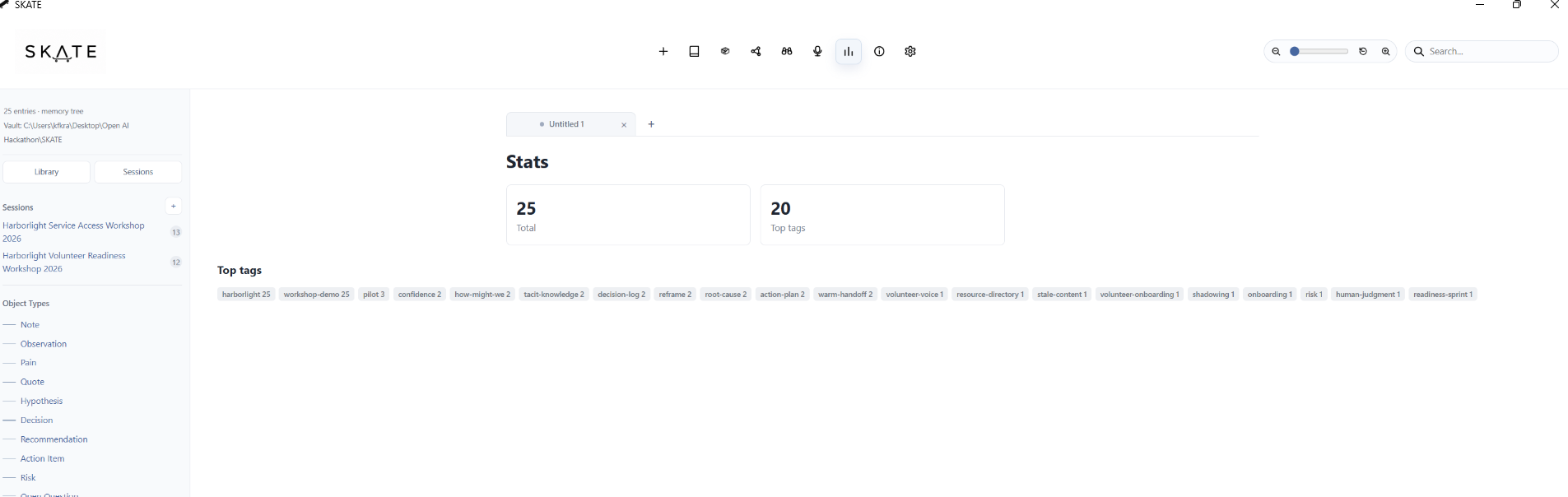
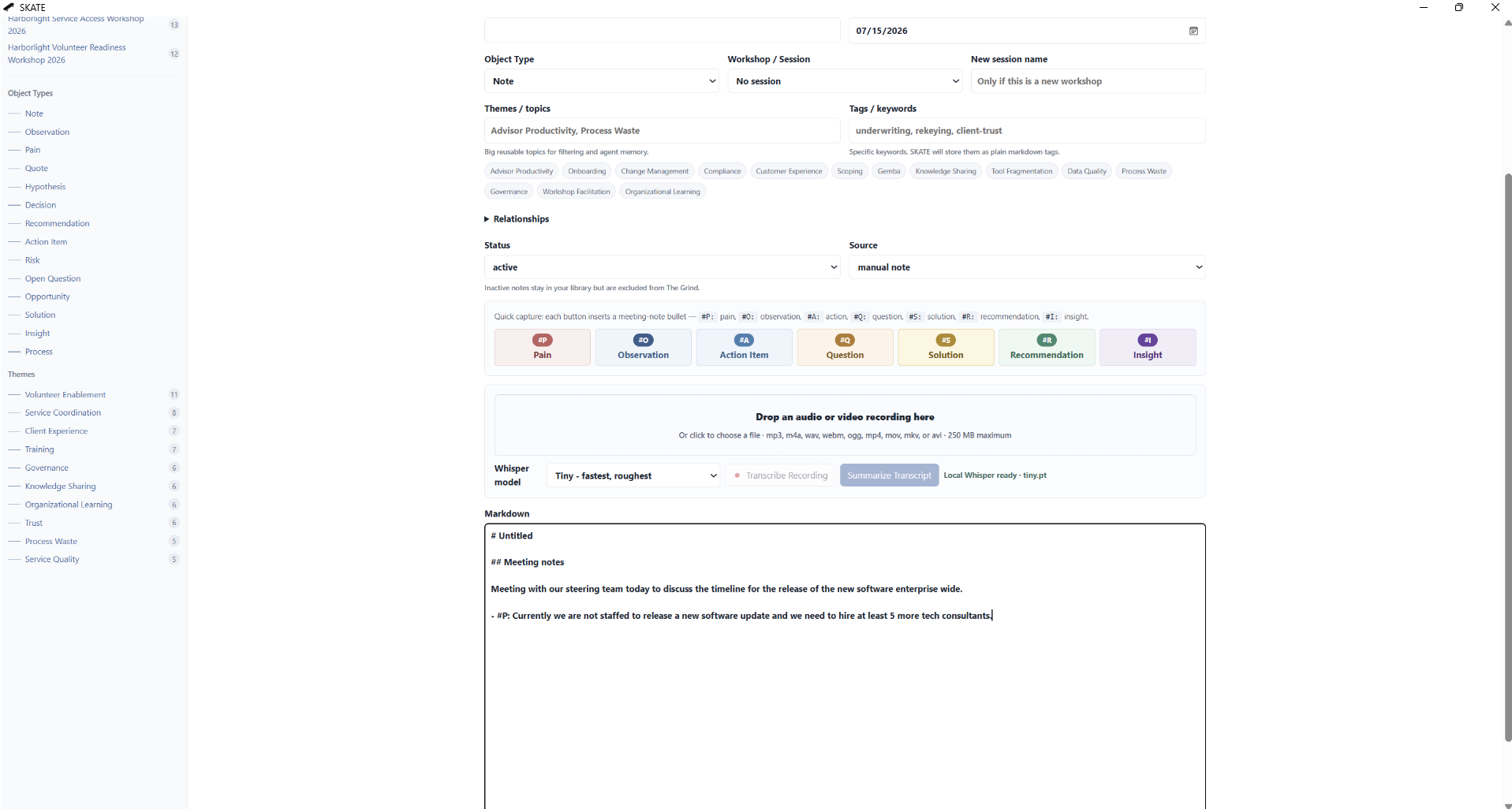
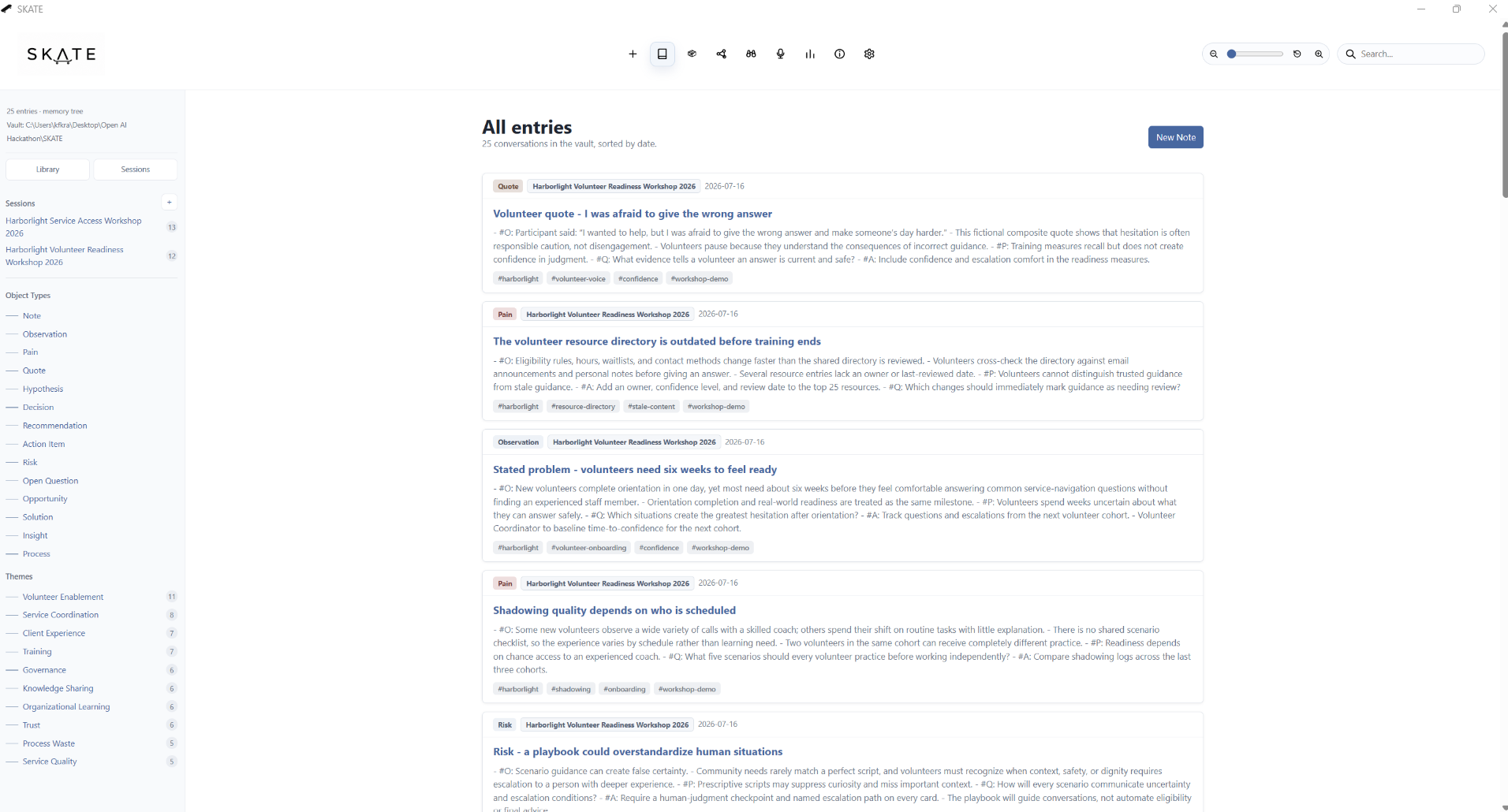
Instead of treating a meeting as a transcript, SKATE captures structured organizational memory. Notes become governed knowledge with relationships, provenance, themes, and evidence that AI can meaningfully reason over.
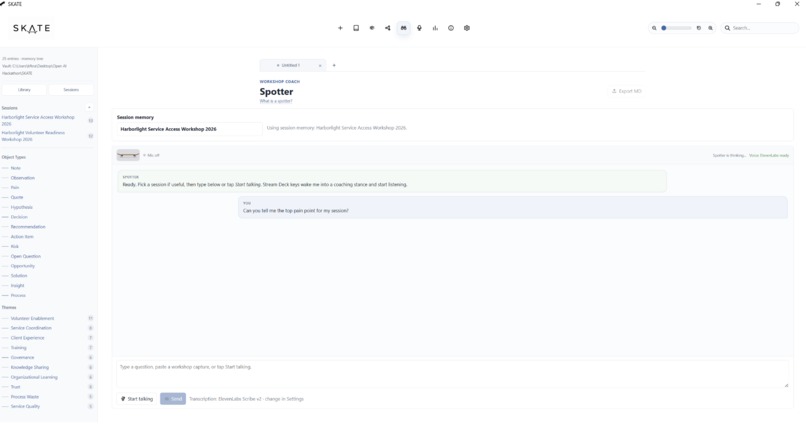
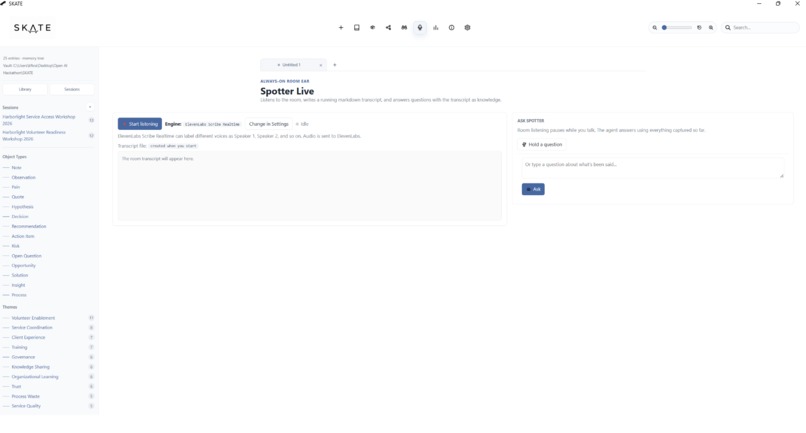
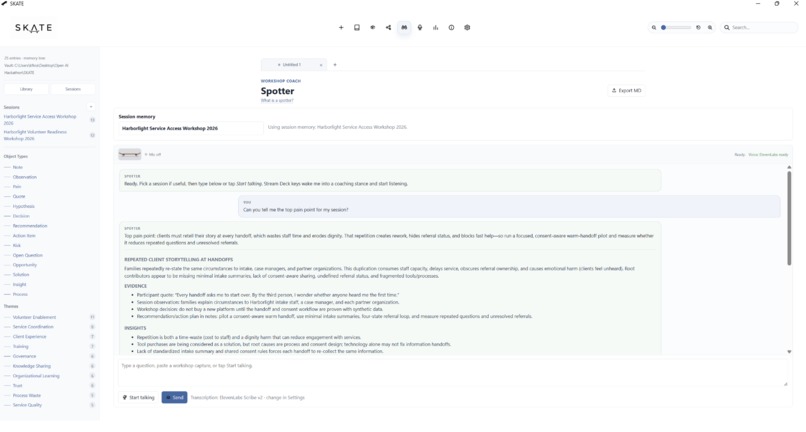
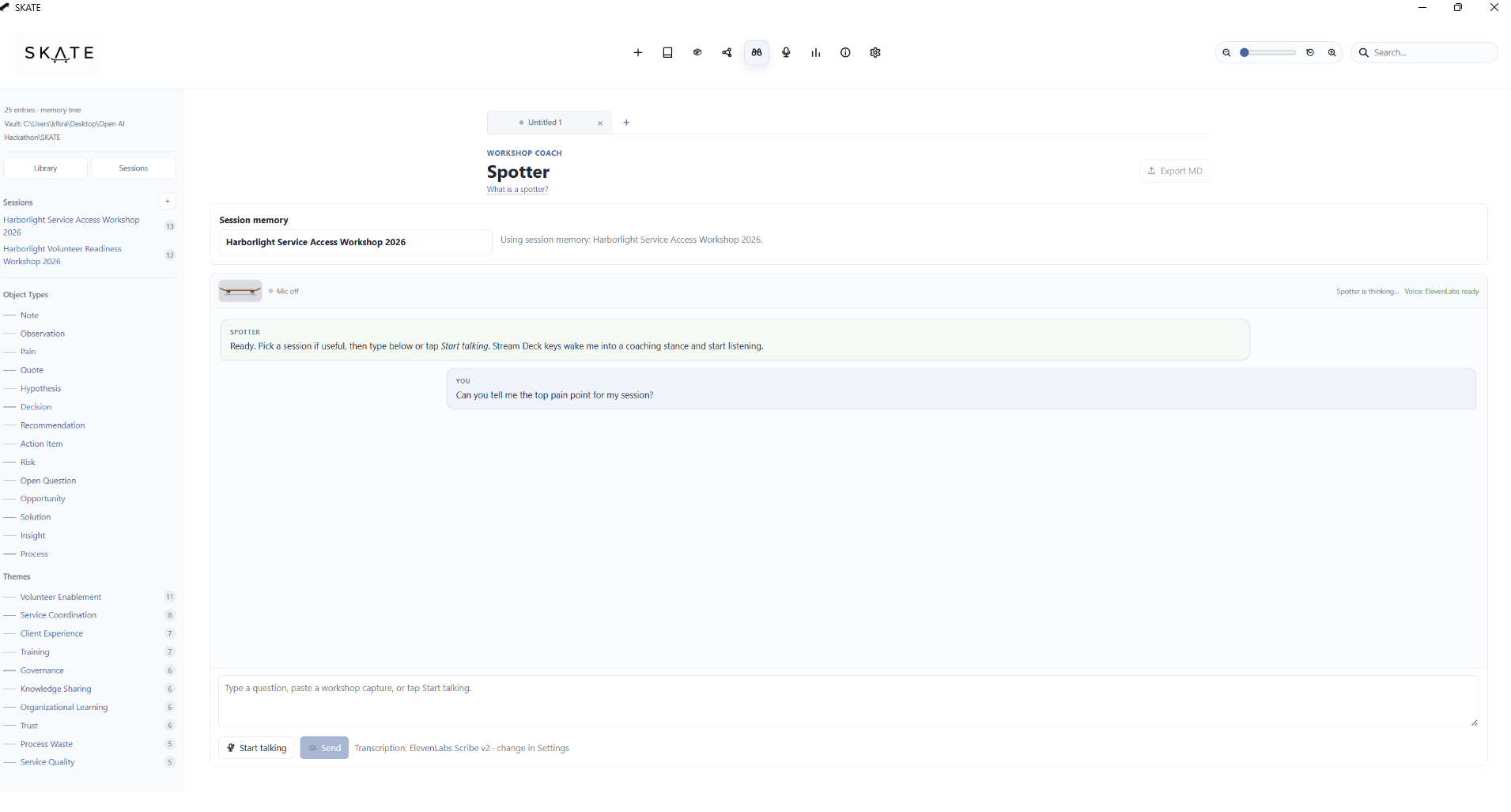
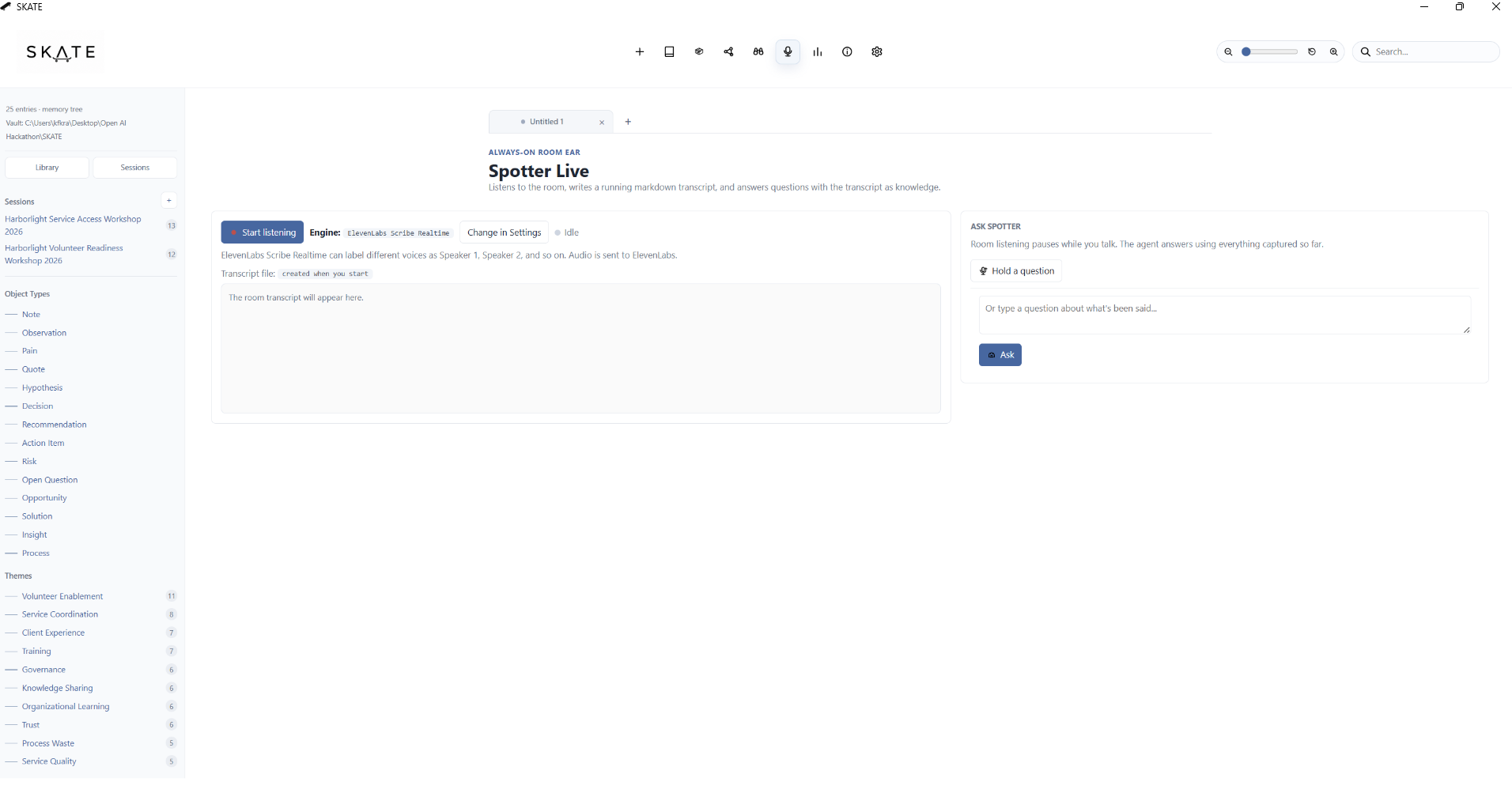
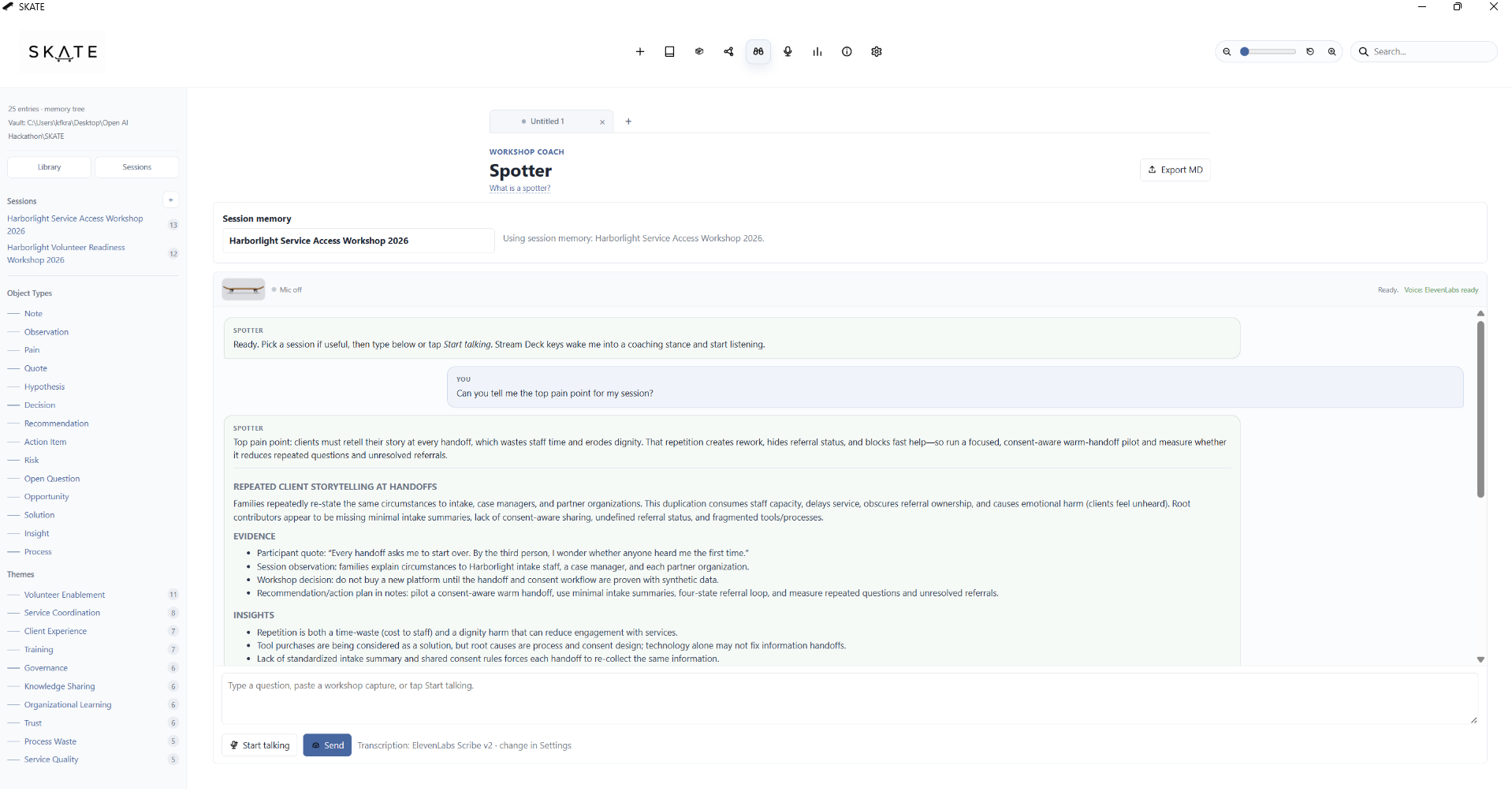
At the center of SKATE is Spotter, an AI workshop facilitator that listens during conversations, captures important signals, and helps guide the facilitator without taking over the room.
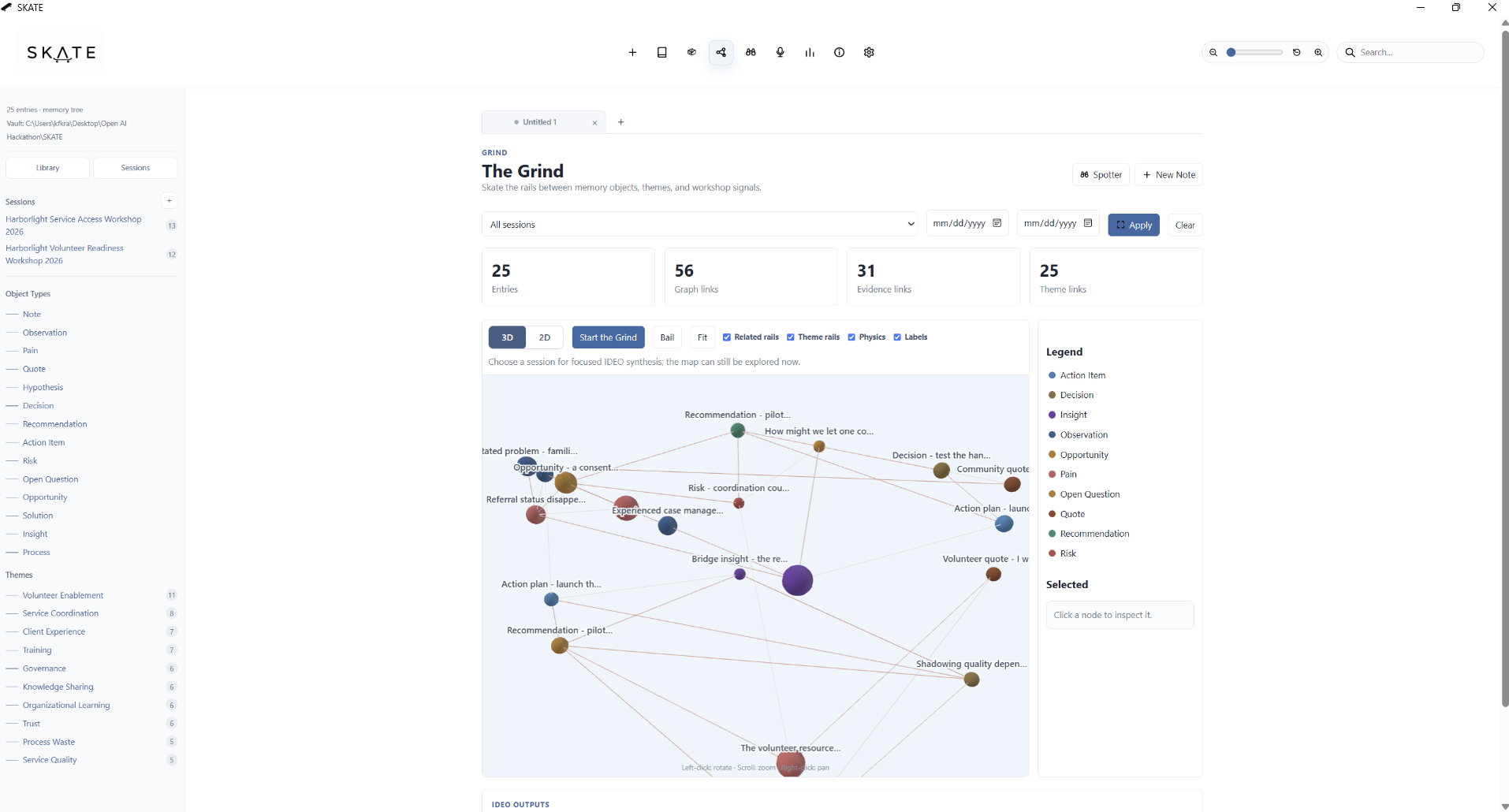
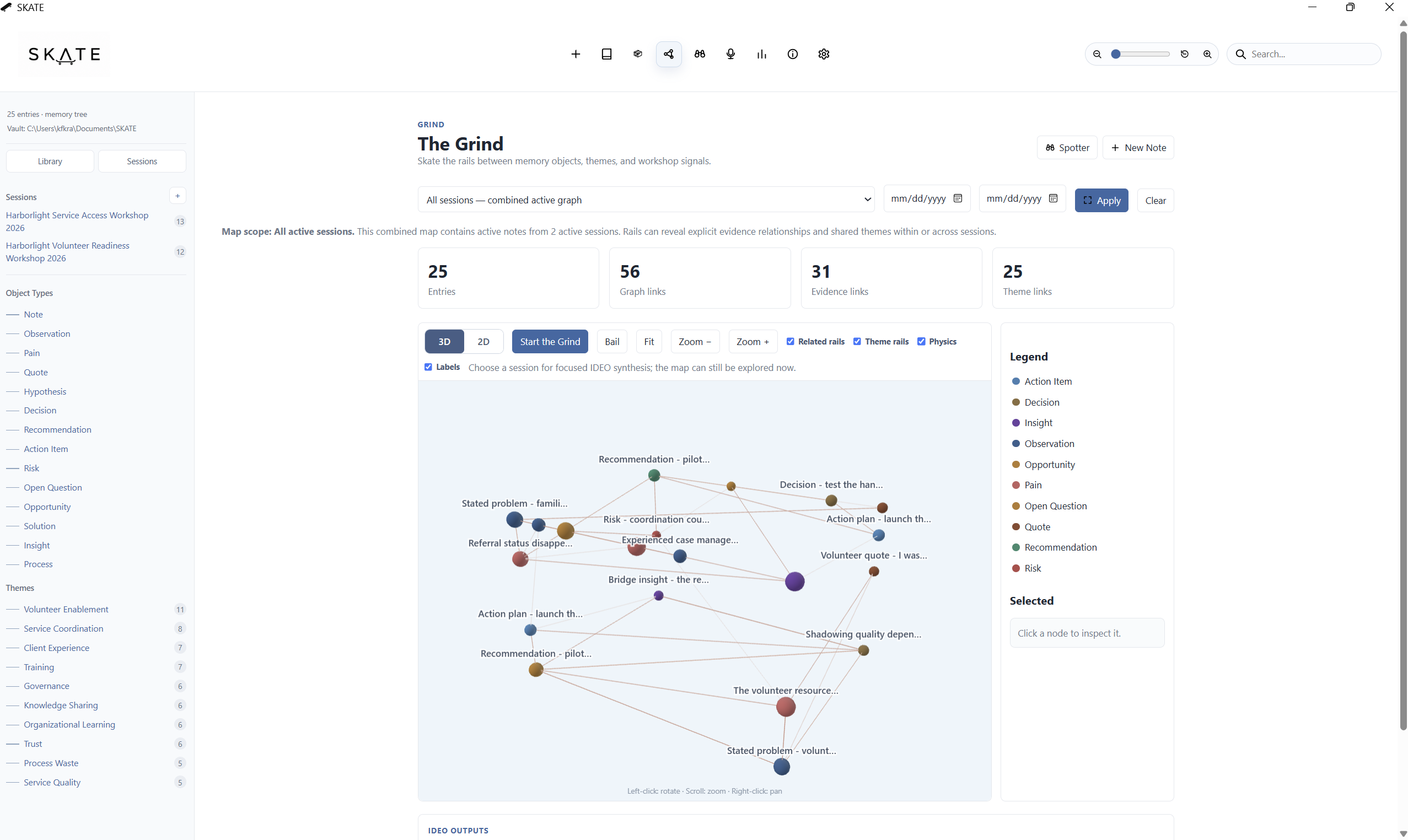
Then comes The GRIND.
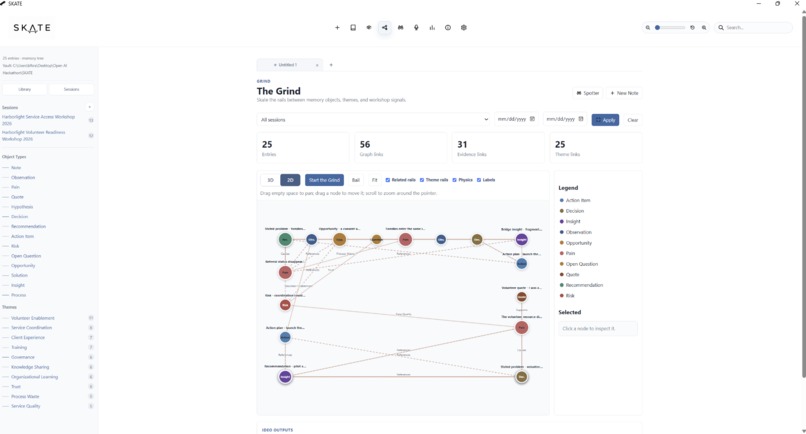
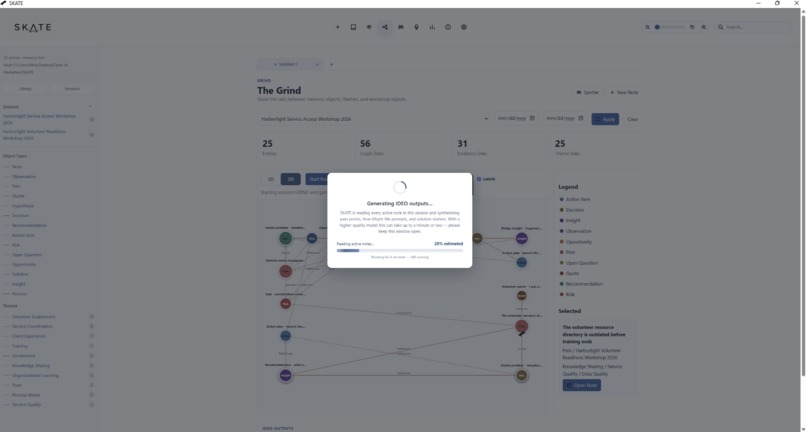
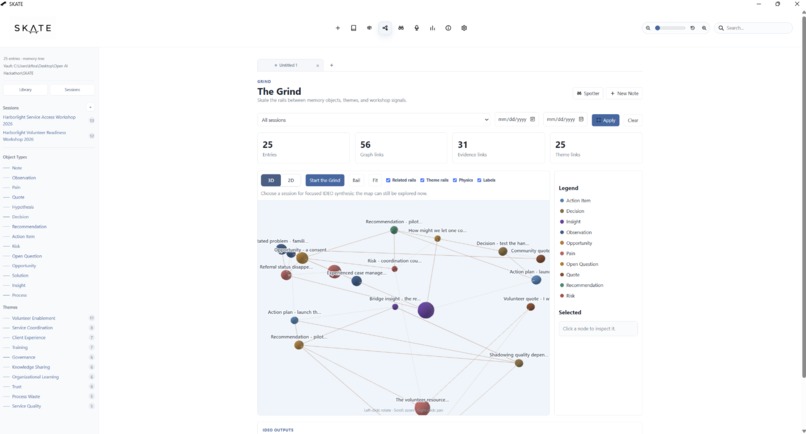
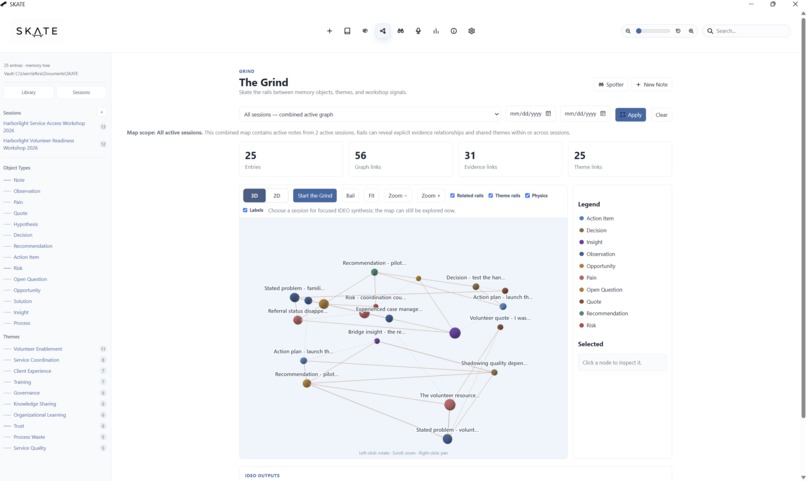
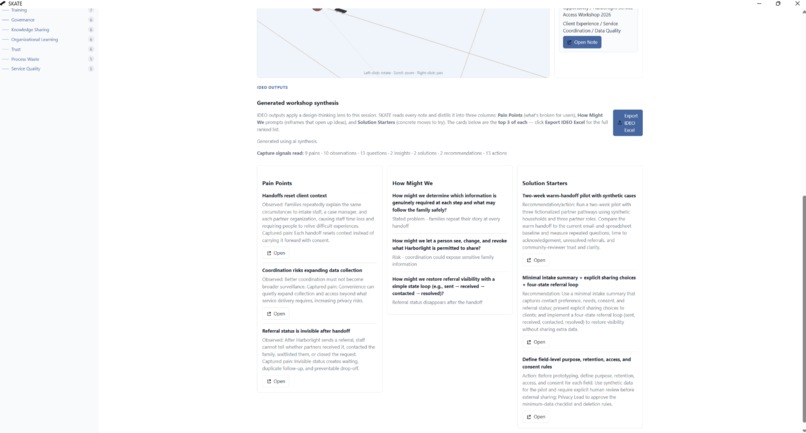
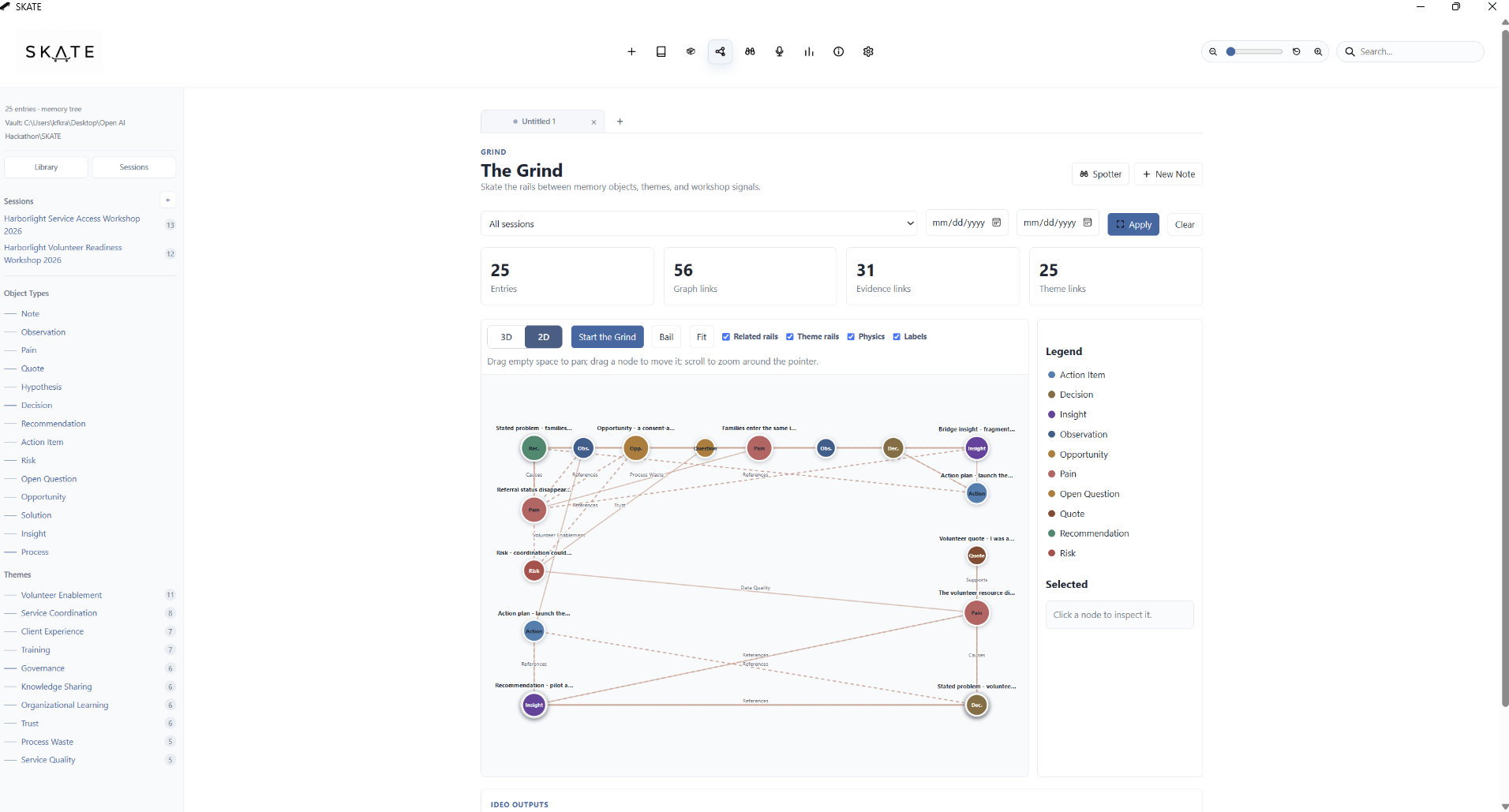
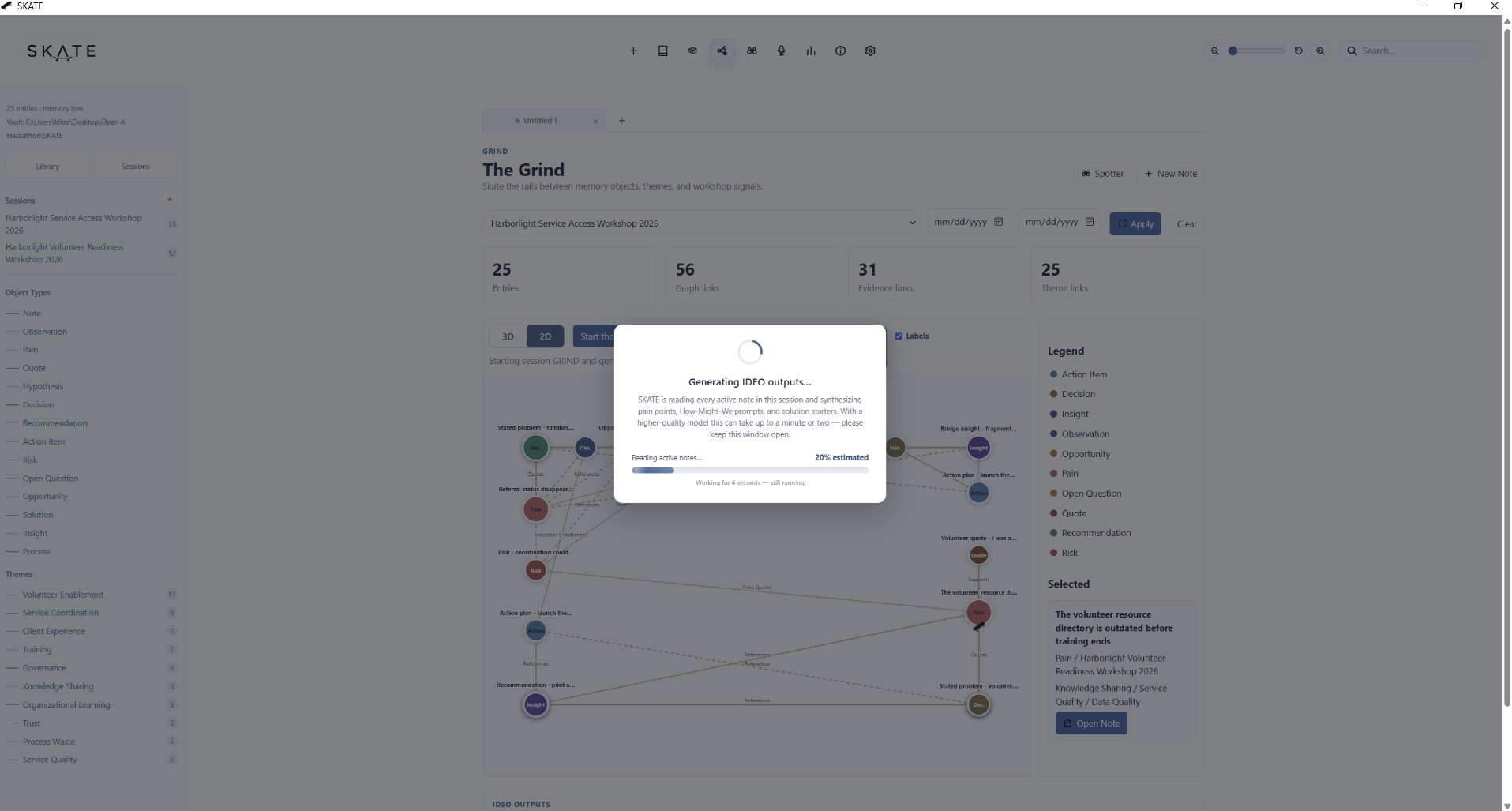
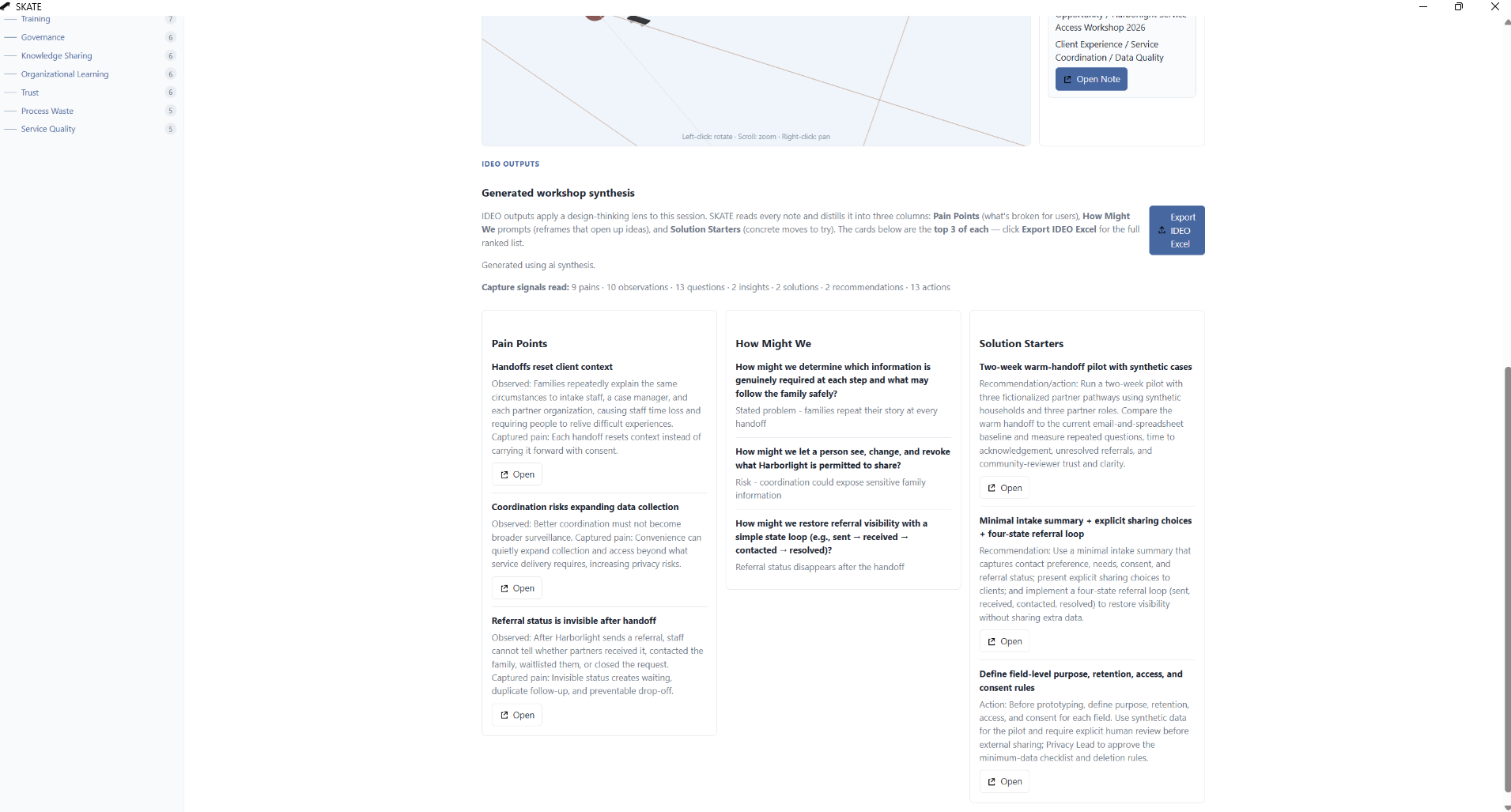
The GRIND is an IDEO-inspired design-thinking engine powered by GPT-5.6. It reasons across workshop evidence to identify patterns, surface pain points, generate How-Might-We opportunities, propose solution ideas, and create experiments that teams can test.
Every recommendation remains connected to the original evidence that inspired it.
SKATE also exposes its memory through the Model Context Protocol (MCP). This allows Codex and other compatible AI agents to search memory, trace evidence, create and edit notes, and work from organizational knowledge instead of starting every conversation with an empty context window.
How I Built It
SKATE is a native Windows desktop application built with Python, FastAPI, Markdown, WebSockets, MCP, graph visualization, Whisper, OpenAI APIs, and optional ElevenLabs services.
GPT-5.6 powers the product itself. It performs evidence-backed reasoning, drives The GRIND, and helps Spotter facilitate workshops.
Codex became my engineering partner throughout the project. It helped me build features, refactor the architecture, debug difficult problems, write tests, improve packaging, and ship ideas much faster than I could have alone.
The product vision, facilitation methodology, workshop workflow, hardware concepts, and architectural decisions came from me.
Codex helped me turn those ideas into working software.
Challenges I Ran Into
The hardest problem wasn’t AI.
It was deciding what deserved to become memory.
Too much structure makes note-taking slow. Too little structure gives AI nothing meaningful to reason over. Finding that balance took dozens of iterations before SKATE felt natural enough to use during a live workshop.
Realtime voice introduced another set of challenges. Supporting OpenAI Realtime, local Whisper, optional ElevenLabs speaker diarization, and keeping everything synchronized without interrupting the workshop flow required several different approaches.
Packaging the application into something judges could install and run also became a project of its own. Building a reliable Windows installer, bundling the MCP server, handling first-run setup, and making the desktop experience feel polished took almost as much effort as building the AI features.
Accomplishments I’m Proud Of
I’m most proud that SKATE feels like a complete product instead of a collection of demos.
SKATE:
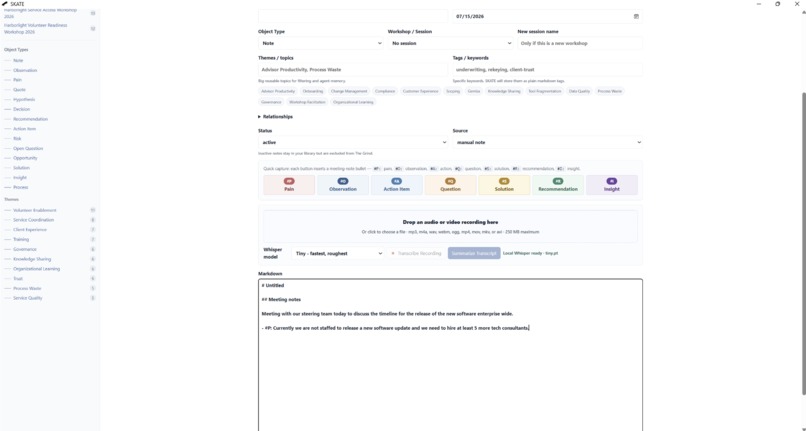
- Captures live conversations and ordinary meeting notes
- Builds governed organizational memory
- Uses GPT-5.6 for evidence-backed reasoning
- Runs an IDEO-inspired design-thinking workflow
- Exposes memory through MCP so Codex can search, retrieve, create, and edit organizational knowledge
- Extends into the physical world through an open-source, 3D-printed skateboard-wheel microphone puck and Stream Deck interface
The physical interface allows facilitators to work naturally without living inside a chat window.
One feature I’m especially proud of is the OneNote importer.
Many of my consulting clients don’t permit third-party note-taking software on their laptops, so OneNote is often the only place I can capture workshop notes. Rather than asking people to change the way they already work, I wanted SKATE to meet them where they are.
Export a OneNote notebook, import it into SKATE, and years of workshop knowledge can become governed organizational memory that GPT-5.6 and Codex can reason over.
I’m also proud that everything remains local-first. Notes remain ordinary Markdown files that their owners can access without SKATE.
What I Learned
I came into this project thinking memory was mostly a retrieval problem.
I left believing it is really a governance problem.
Good organizational memory isn’t about storing everything. It is about preserving context, identifying what matters, maintaining evidence, and making knowledge reusable months later.
I also learned that summarization and design thinking are very different.
A summary tells you what happened.
Design thinking helps you decide what to do next.
That is where GPT-5.6 really shines.
What’s Next
The next step is making SKATE an even better teammate.
I want to develop deeper MCP capabilities that allow agents like Codex to work directly with organizational memory, richer design-thinking workflows, better visualization of knowledge over time, stronger retrieval benchmarking, and additional open-source hardware that makes AI feel like a natural participant in the room instead of another window on a laptop.
The long-term vision hasn’t changed since I started:
I don’t think the future of AI is replacing the people in the workshop.
I think it is helping them remember what they learned together.
That’s what SKATE is trying to build.
Built With
- codex
- gpt-5.6
- openai
- python


Log in or sign up for Devpost to join the conversation.