-
-
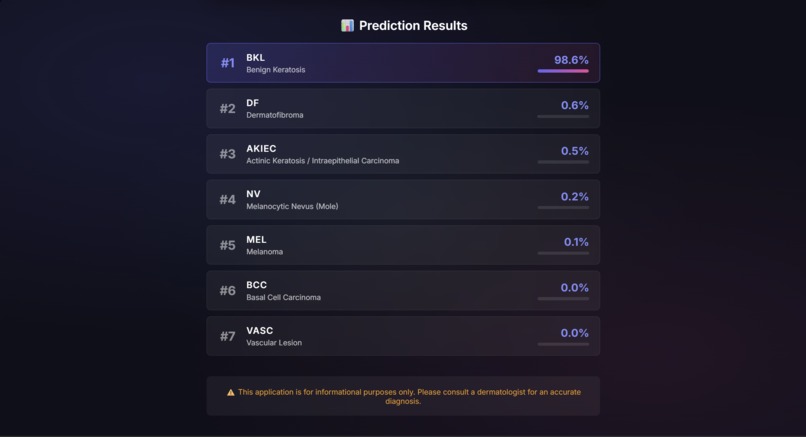
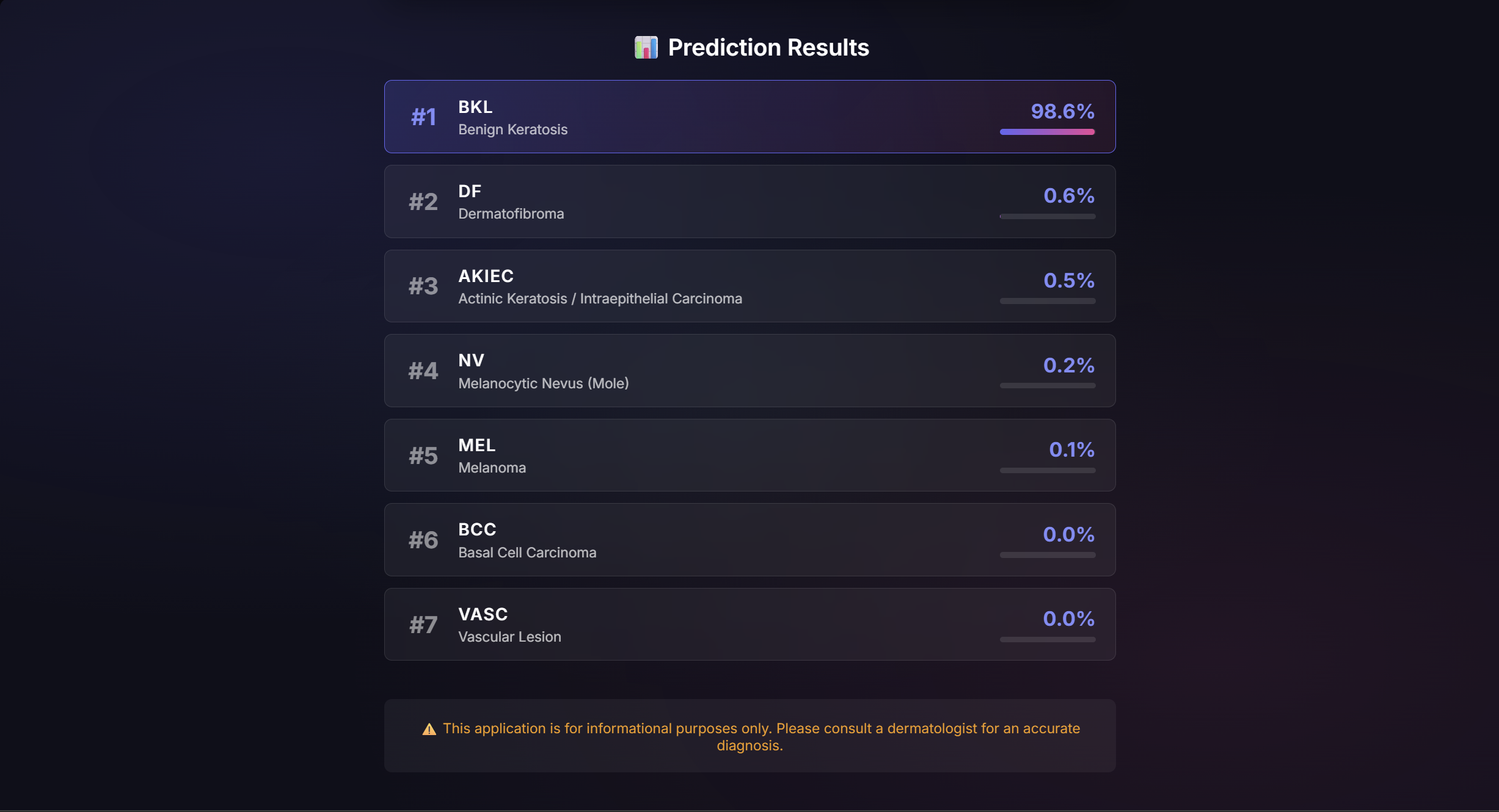
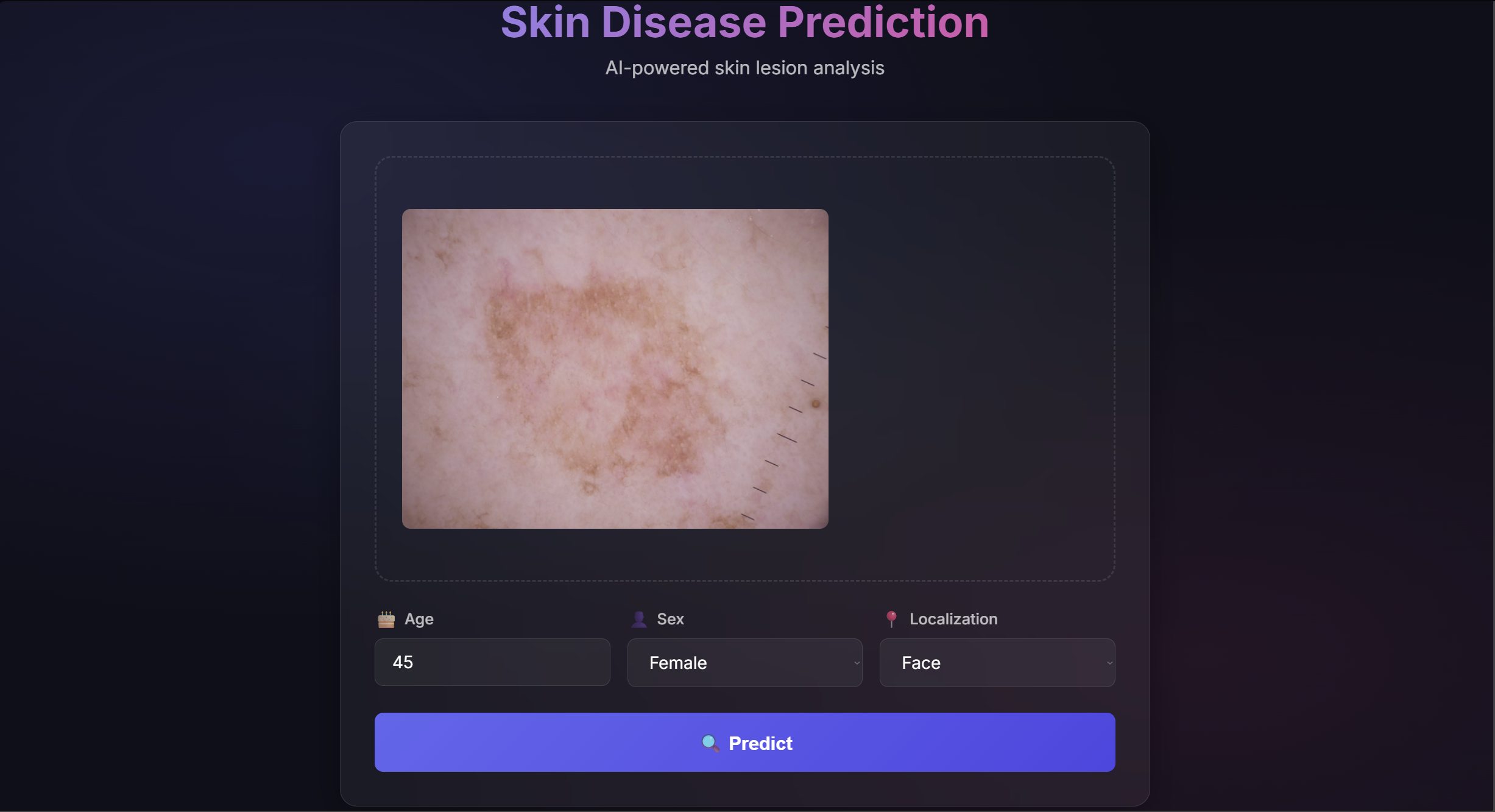
Tryout Results
-
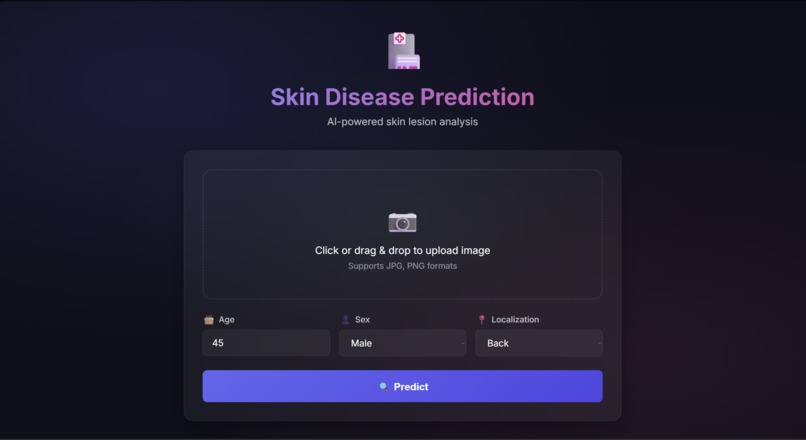
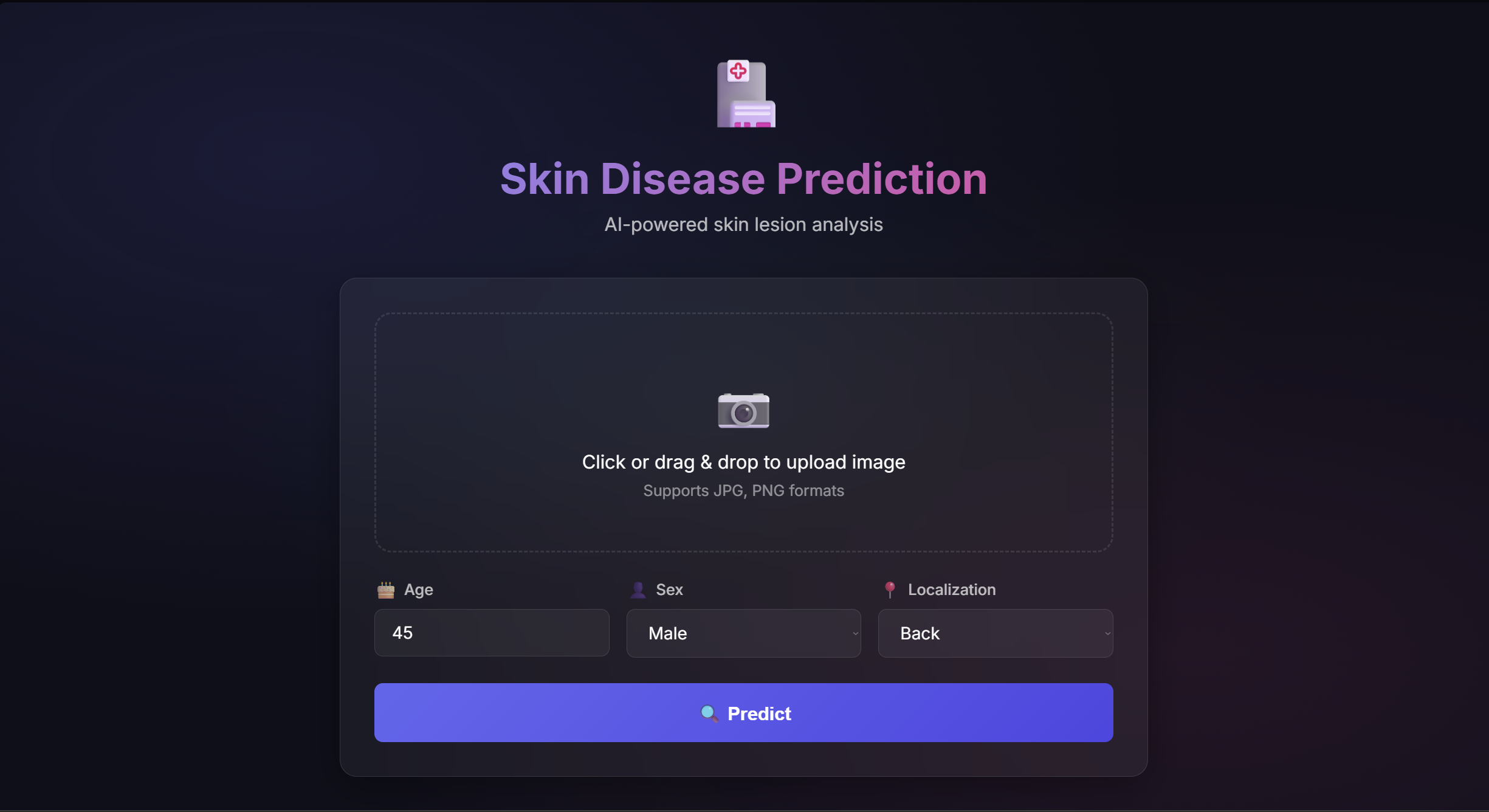
Main Page
-
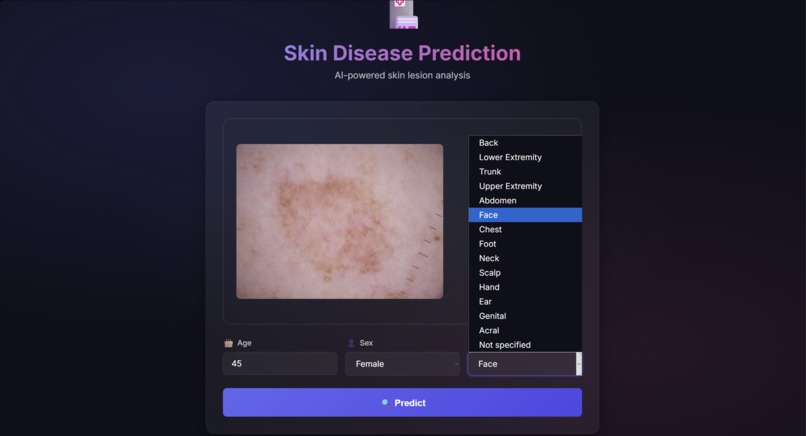
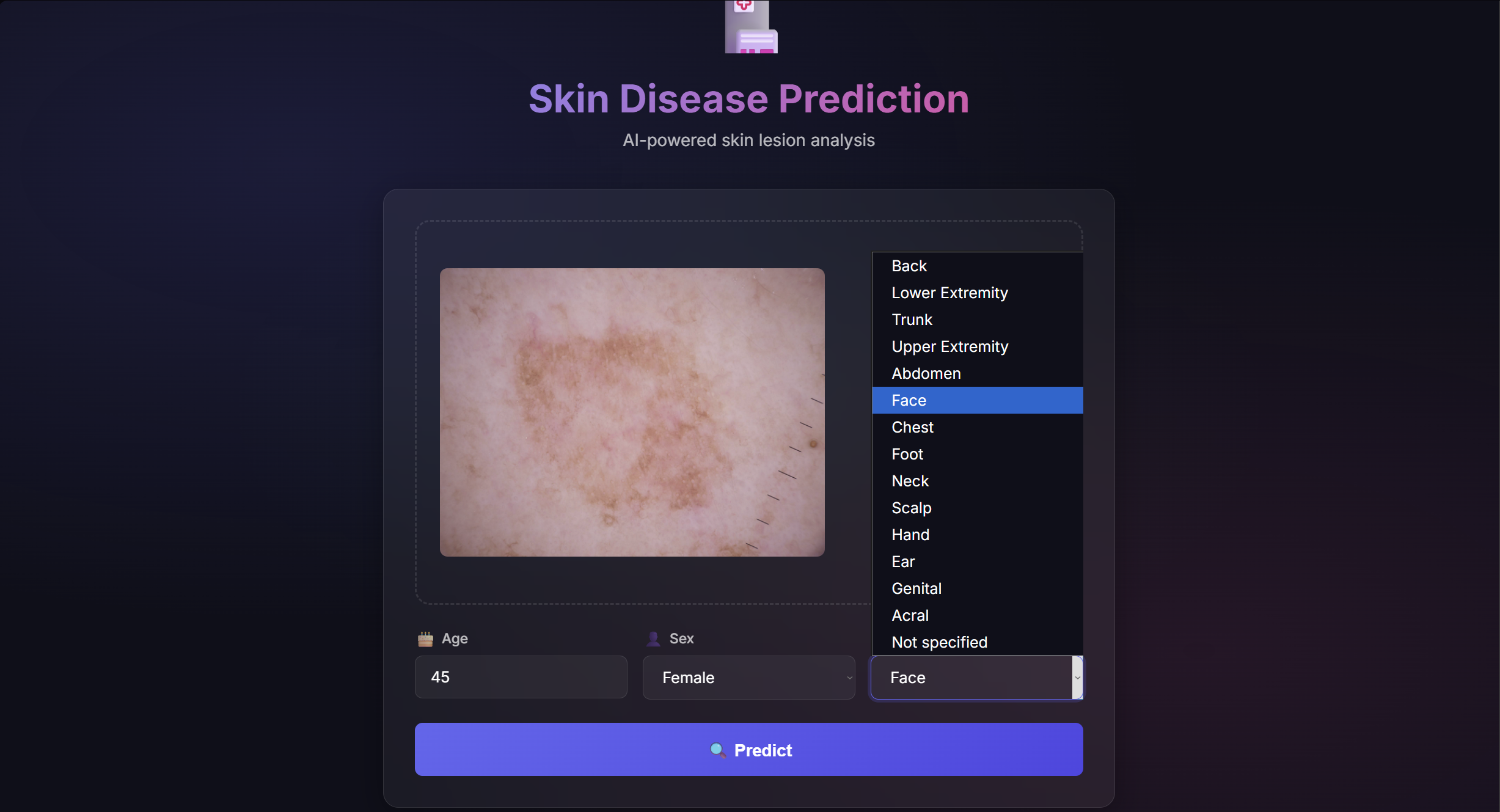
Localization Items
-
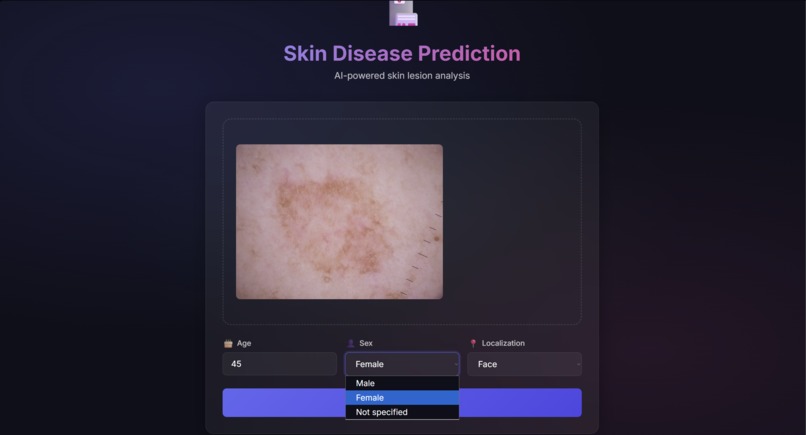
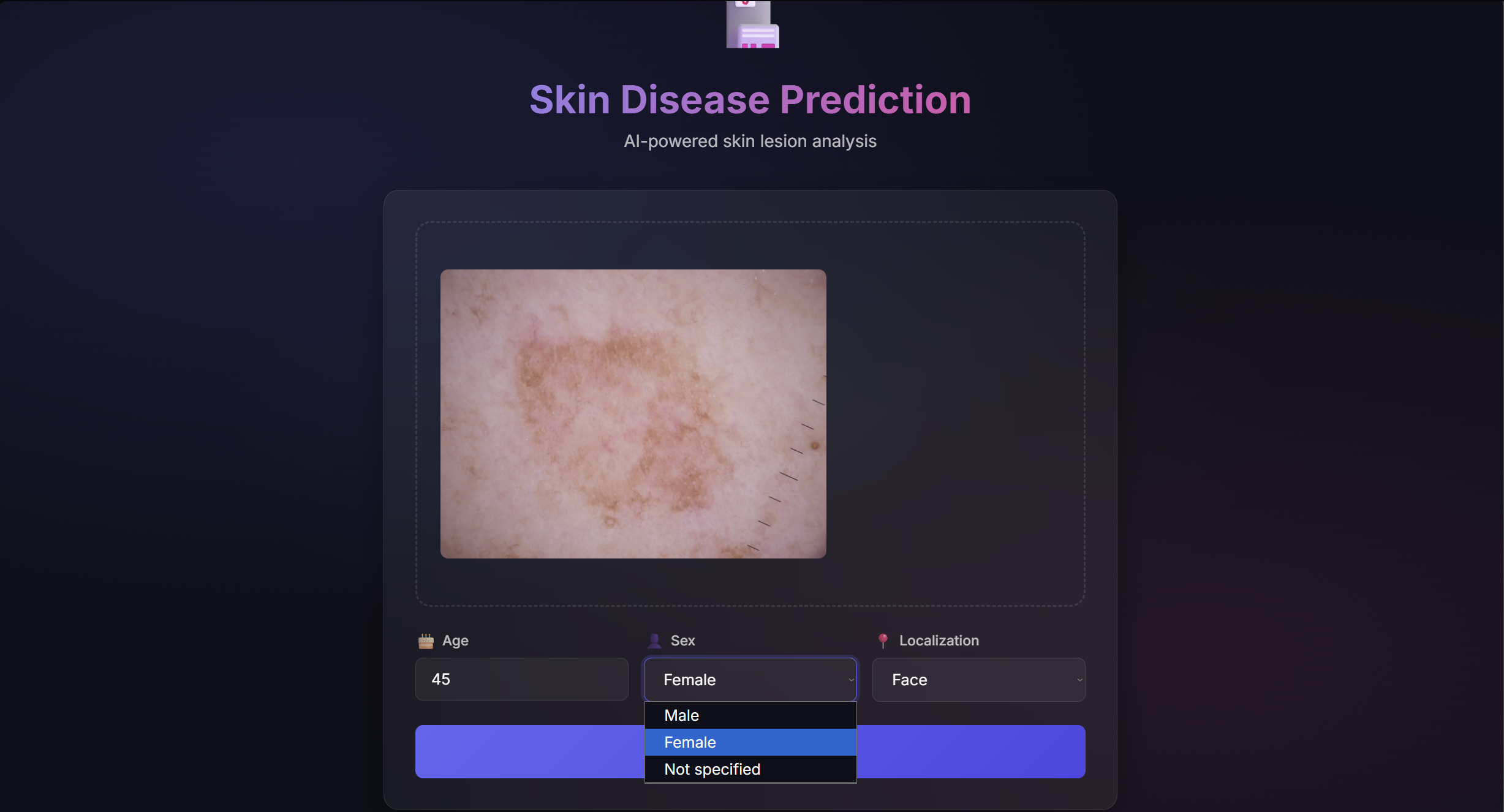
Gender Items
-
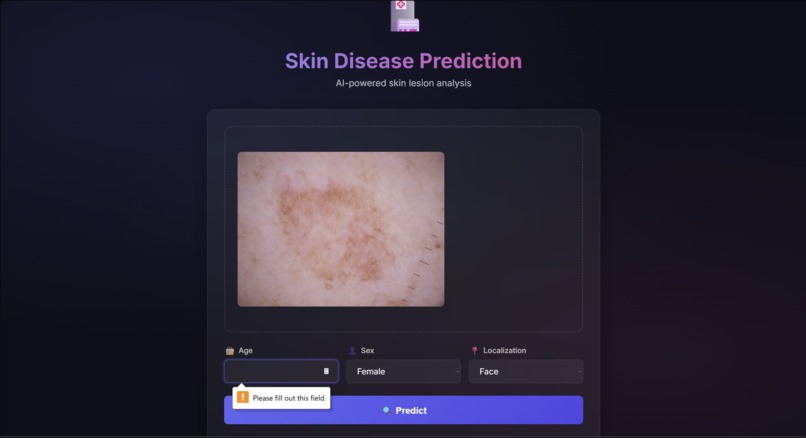
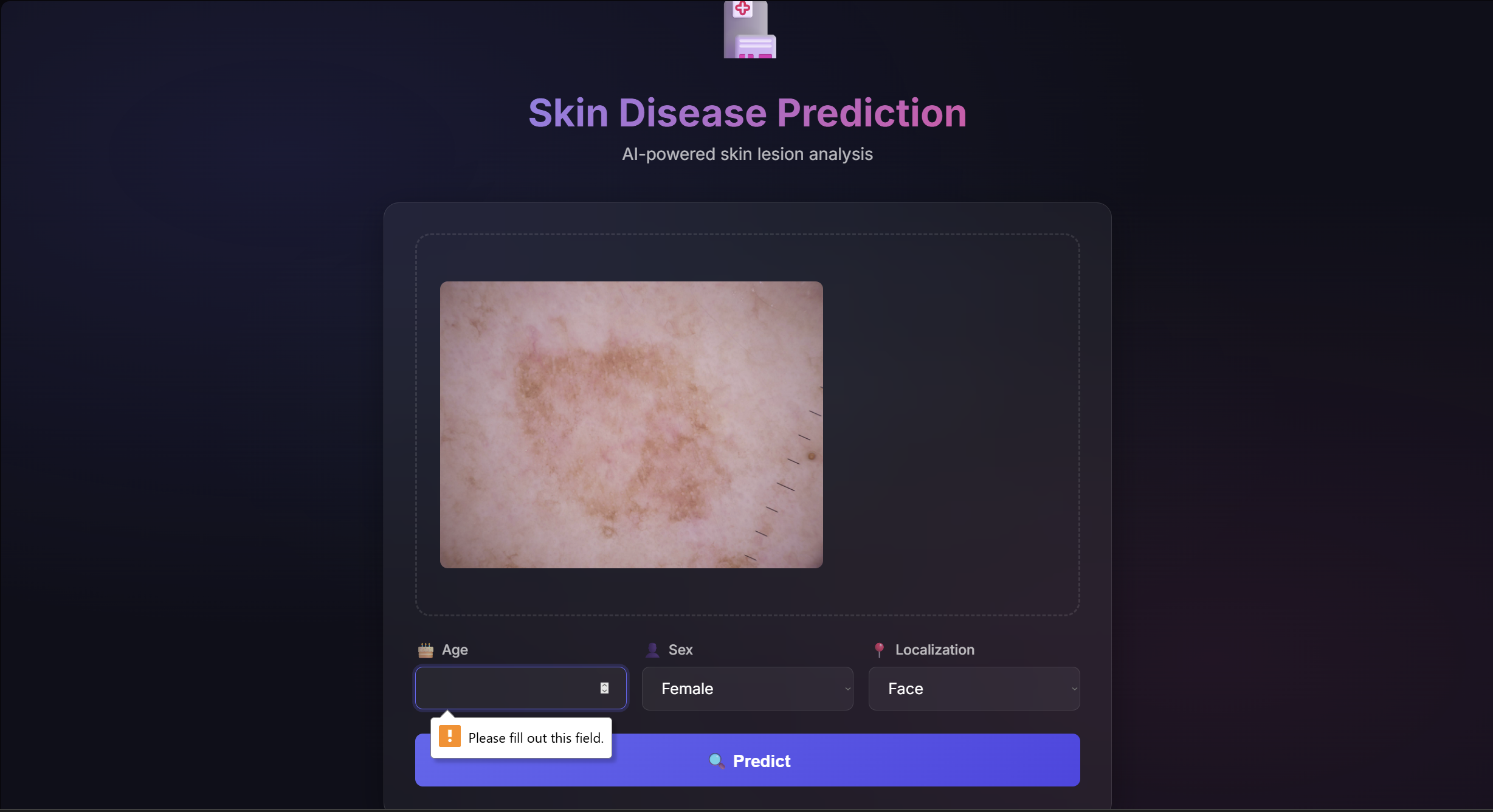
Blank Age Warning
-
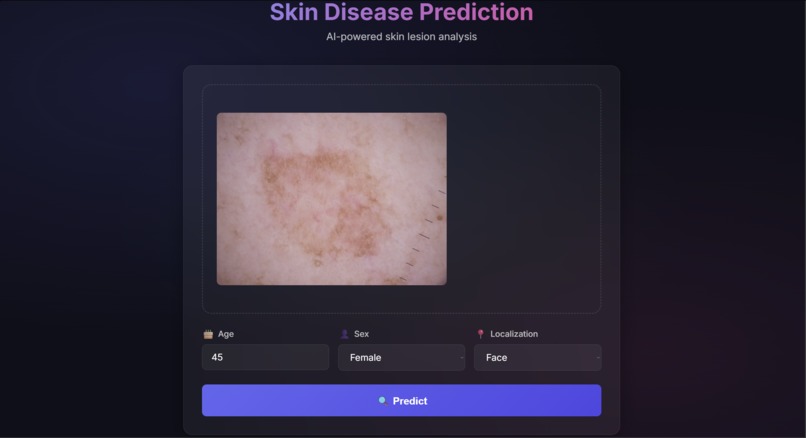
Tryout
-
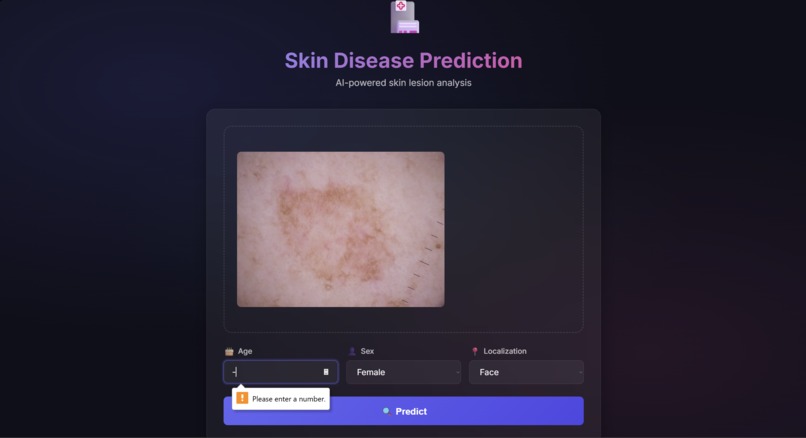
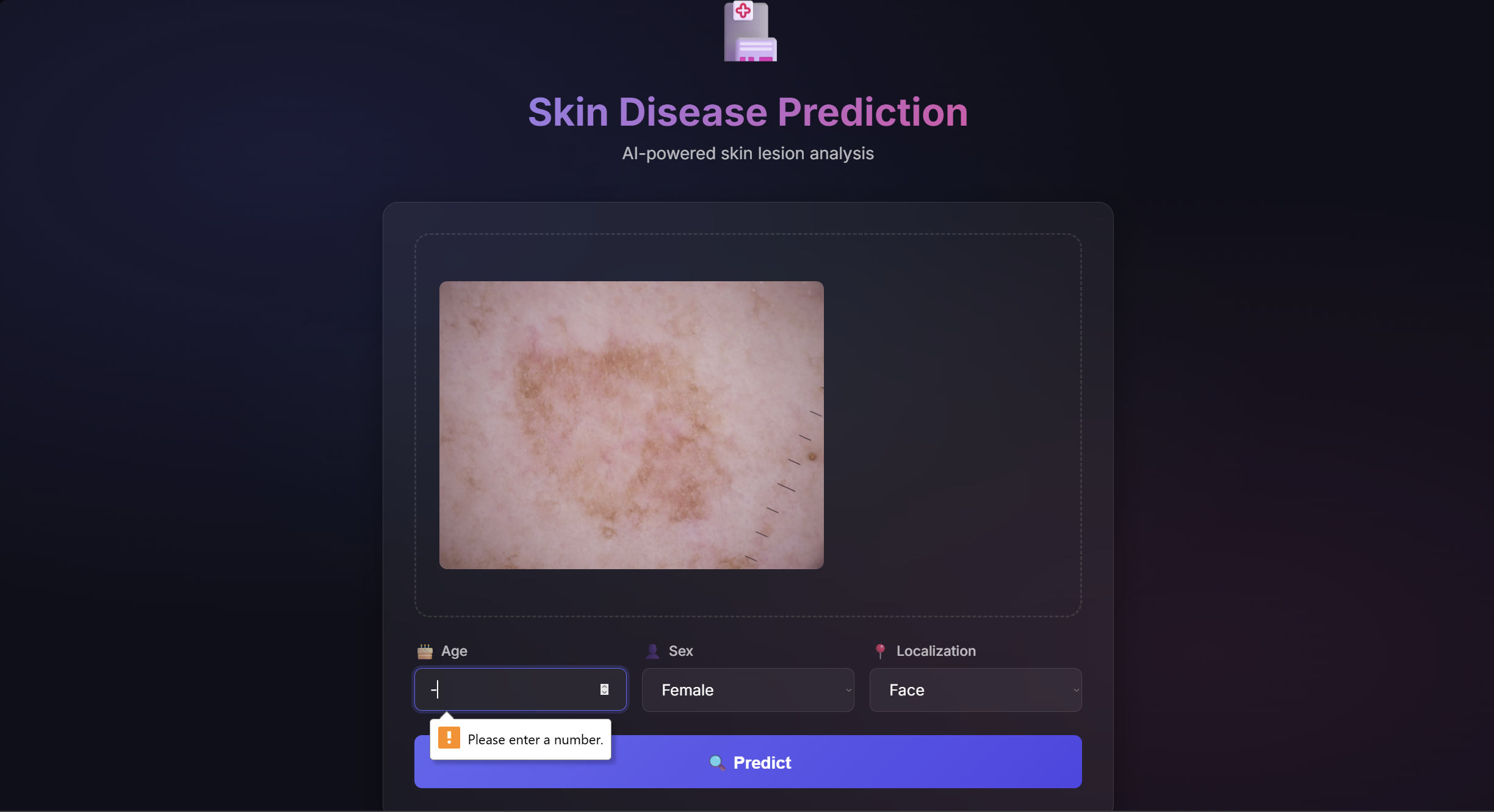
Unvalid Age Entry Warning
Inspiration Skin cancer rates are increasing globally, yet access to dermatologists remains limited for many people. This motivated us to create skAIn—an AI-powered diagnostic tool for skin lesion classification. The name skAIn cleverly combines "sk" (skin) + "AI" + "n", highlighting the connection between dermatology and artificial intelligence.
What We Learned We learned how to build a multimodal deep learning system that processes both dermoscopic images and patient metadata (age, gender, body location). An important lesson was preventing data leakage by ensuring the same patient never appears in both training and validation sets.
How We Built It Image Branch: Pre-trained EfficientNetV2-S model for feature extraction Metadata Branch: Embeddings for gender and body location, plus normalized age Fusion Layer: Combined features from both branches Training Strategy: Two-phase approach—first training with a frozen backbone, then fine-tuning
Challenges We Faced The dataset had an uneven distribution of skin disease categories, so we applied class weighting to handle the imbalance. Additionally, we implemented stratified group splitting to prevent patient overlap between training and validation data.


Log in or sign up for Devpost to join the conversation.