-
-
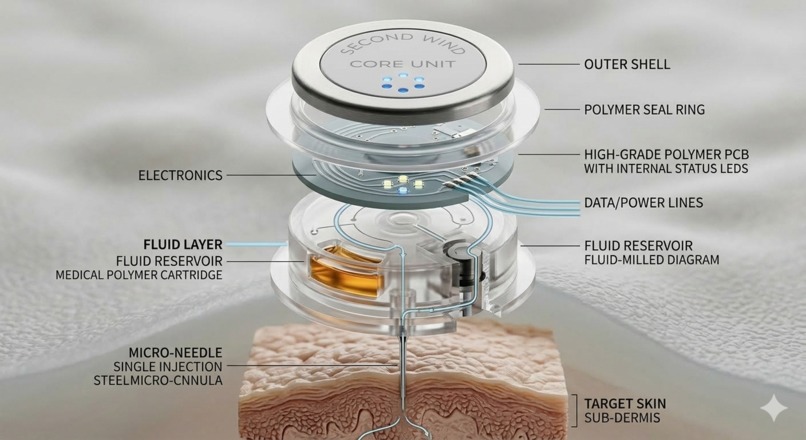
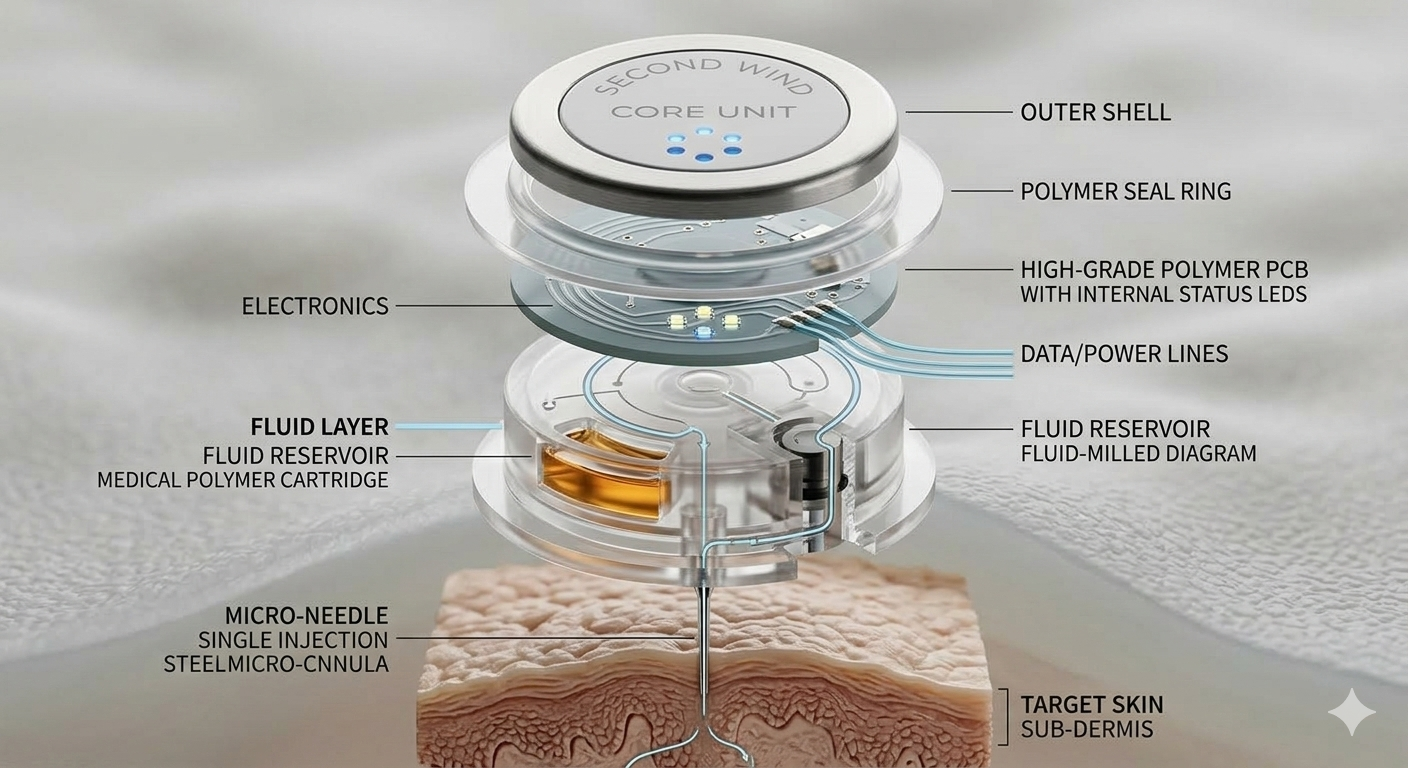
A breakdown of the Second Wind technology
-
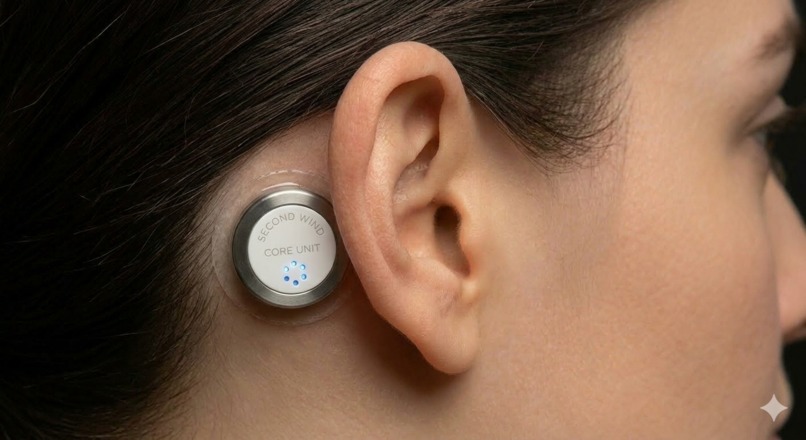
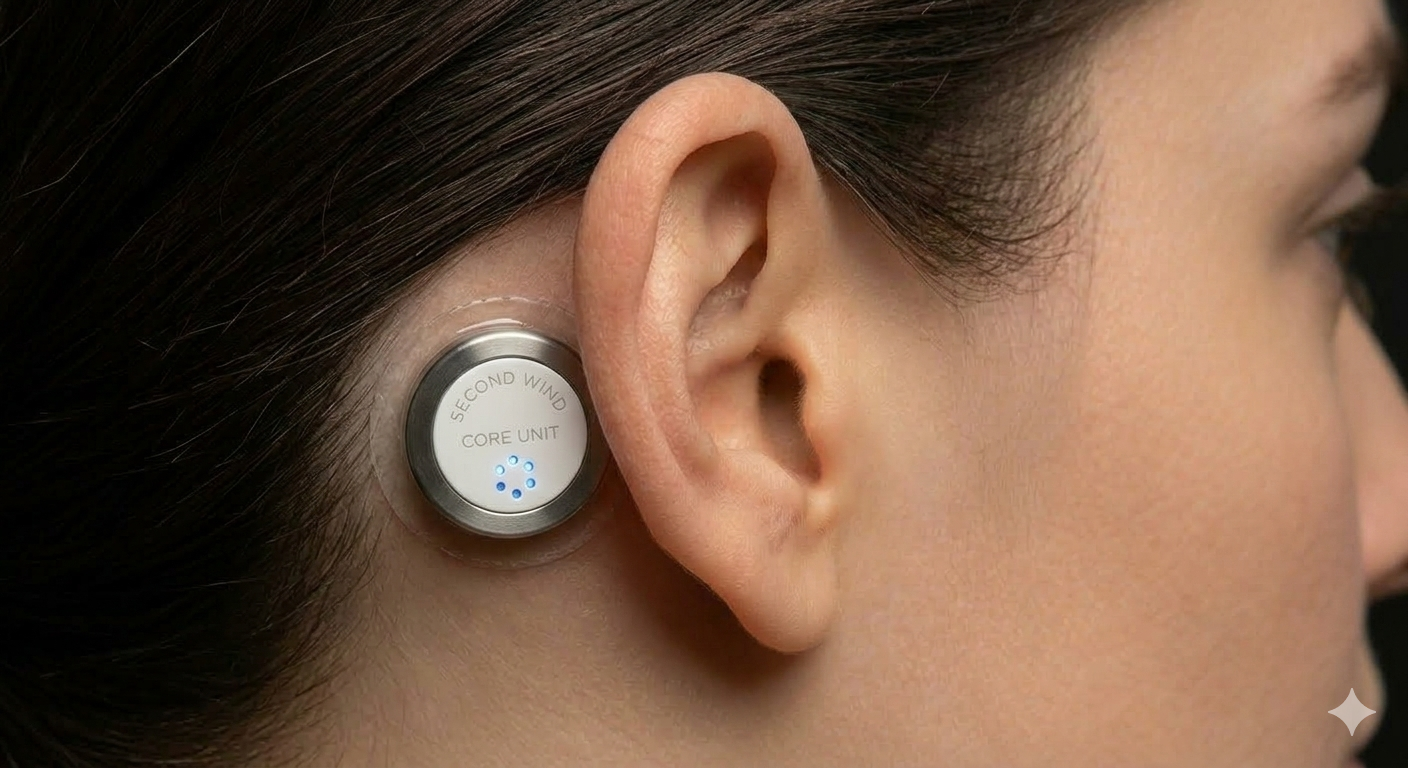
The Second Wind Patch Adhered to human skin
Inspiration
Second Wind is a conceptual health technology designed to support people in moments when their body reaches a critical limit. The system combines a wearable electronic patch placed behind the ear with a connected mobile application to monitor key physiological signals and respond when thresholds are exceeded.
Second Wind is designed for two primary contexts: medical monitoring and emergency support for adventurers. In medical settings, healthcare professionals can use the device to observe pain distribution across the body and receive alerts when predefined thresholds are reached. The device can also administer a controlled dose of pain relief medication when triggered, either automatically or manually through the application.
What it does
Second Wind is a smart patch worn behind the ear that monitors pain signals and internal body temperature. The data is visualized in the app through a heat map on a 360° body avatar, allowing users or healthcare professionals to quickly understand where issues are occurring.
How we built it
We built the prototype in Figma, heavily leveraging Figma Make to generate the initial structure and interactions. We then refined the design manually, adjusting details with tools like the point and edit tool to better shape the final experience.
Challenges we ran into
Throughout the project, we faced several constraints that shaped our process. With only two team members and a limited timeframe, we had to prioritize speed, clarity, and rapid iteration.
We also encountered some unexpected real-world circumstances that affected our available time during the hackathon. Additionally, we spent a significant amount of time attempting to connect a Figma library to Figma Make, but were ultimately unable to get the connection working, which limited how efficiently we could reuse components.
Despite these challenges, we adapted our workflow, relied on rapid prototyping, and focused on building a clear and functional concept within the time available.
Accomplishments that we're proud of
We’re proud that from a single initial idea, we were able to develop two distinct systems, one for medical monitoring and one for adventurers facing extreme conditions.
We’re also proud of the potential real-world impact the concept could have, particularly in situations where rapid monitoring and emergency response could make a life-saving difference.
Despite the many constraints of our personal and professional lives during the hackathon, we were able to collaborate, adapt, and bring the concept to life within a short timeframe.
What we learned
Through this project, we learned how to effectively use and adapt designs with Figma Make, quickly turning rough concepts into functional prototypes. Working within a tight timeline also strengthened our ability to collaborate under pressure, communicate decisions quickly, and divide work efficiently.
We also learned the importance of problem-solving on the fly, adapting our workflow when tools didn’t behave as expected and finding alternative ways to move the project forward.
What's next for Second Wind
The next step for Second Wind is refining the prototype and expanding the system beyond a conceptual demonstration. This includes improving the interface, developing more detailed interaction flows, and further defining how the device and app communicate with one another.
Future exploration would also focus on validating the concept through user research with healthcare professionals and outdoor enthusiasts, as well as investigating the technical and regulatory requirements needed for a device of this nature.
Ultimately, the goal would be to evolve Second Wind from a design prototype into a more robust and testable product concept that could realistically support both medical monitoring and emergency response scenarios.
Built With
- figma
- figmamake


Log in or sign up for Devpost to join the conversation.