-
-
Intro
-
Solution
-
Why we can win!
Inspiration
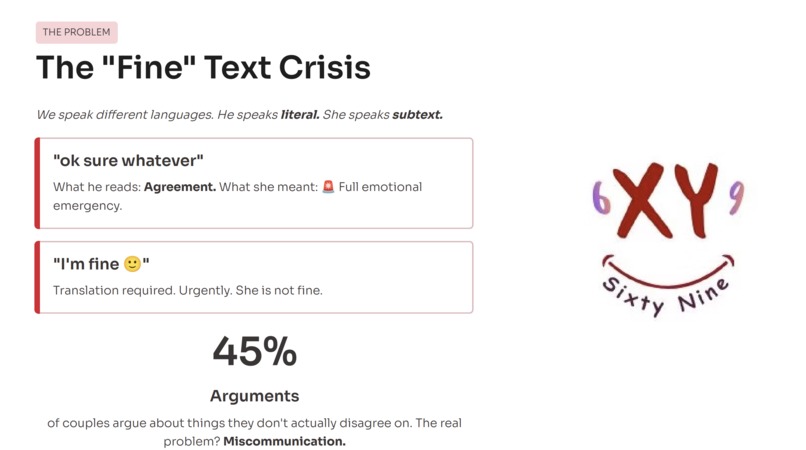
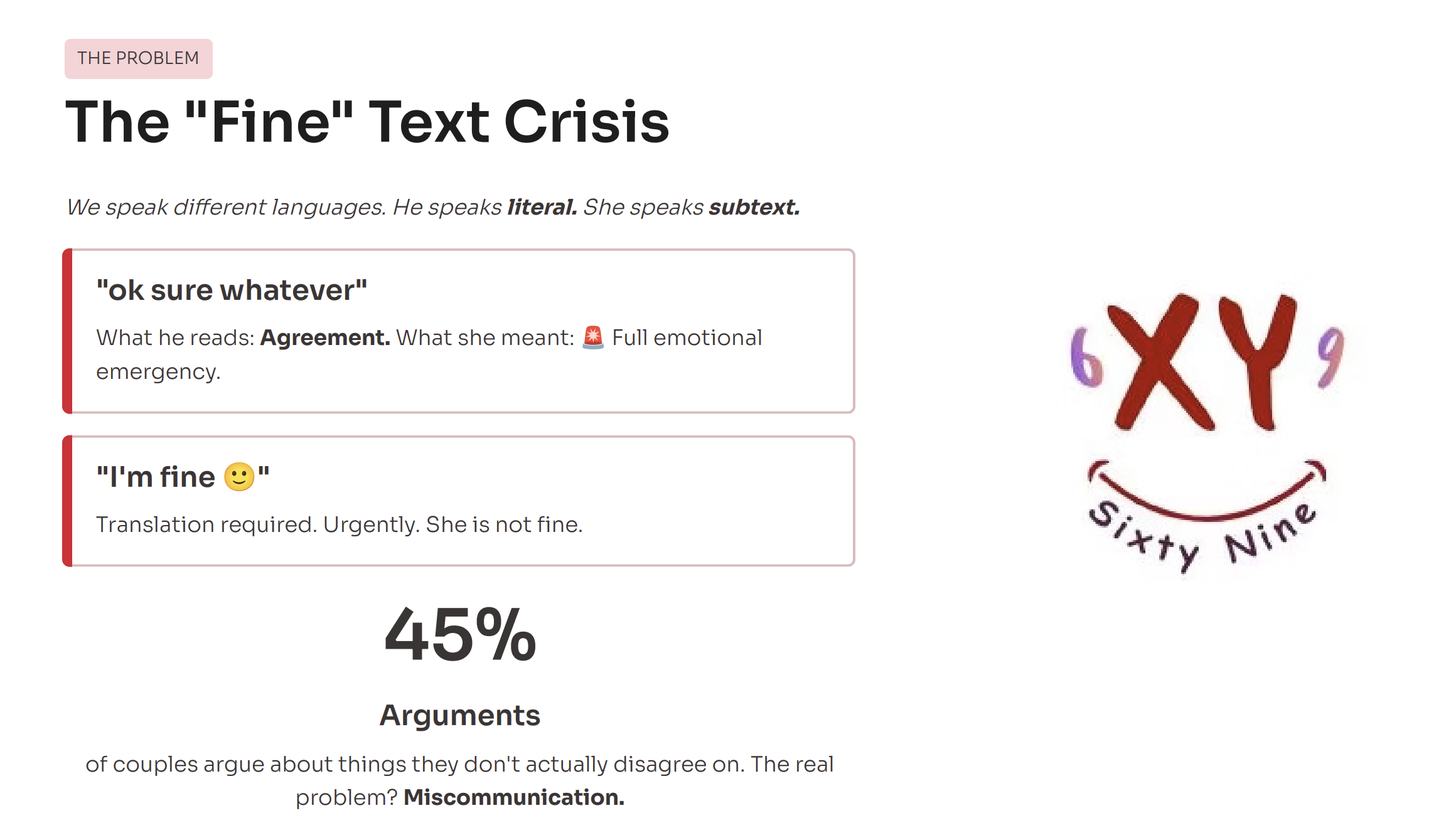
We’ve all been in situations where a simple message turns into a full-blown misunderstanding. “I’m fine” never actually means fine, and “ok sure, whatever” rarely means agreement.
A lot of these conflicts don’t come from bad intent — they come from people interpreting the same words very differently. We realized that most arguments in relationships, friendships, and even families, happen because people are speaking in different emotional languages.
We wanted to build something that helps people feel understood instead of misunderstood.
What it does
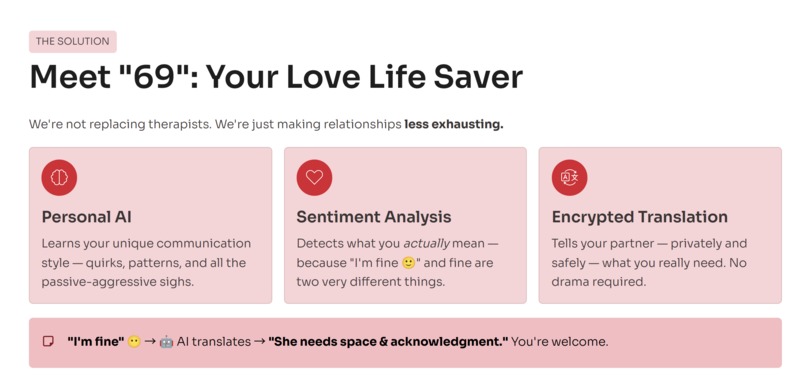
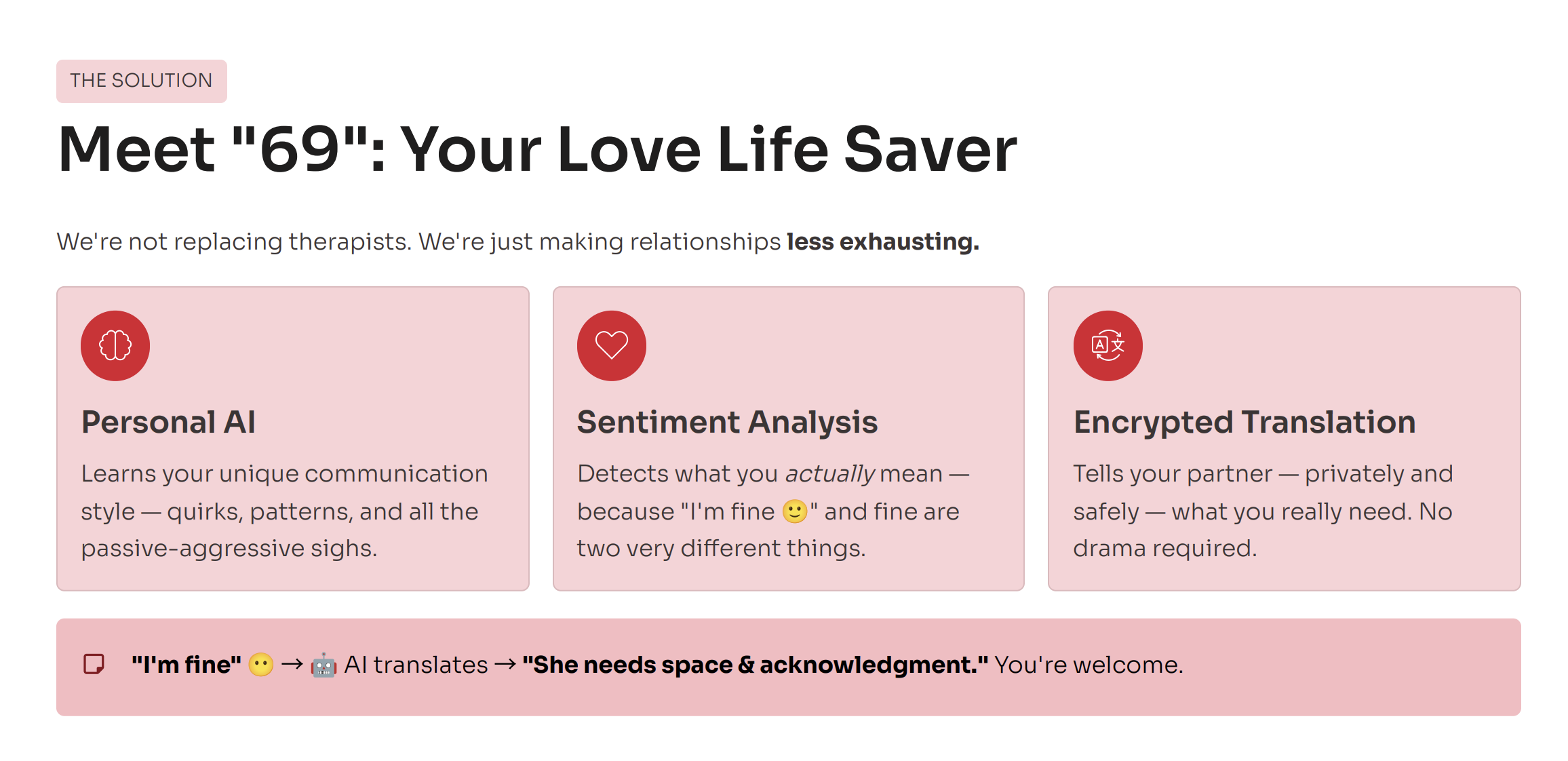
Sixty Nine is an AI-powered perspective translator.
You paste in a message or situation, and it breaks it down into:
what the other person might be feeling What they might actually mean where misinterpretation could happen How can you respond more clearly
It doesn’t take sides; it helps both sides understand each other better.
How we built it
We used an LLM to analyze conversational input and structured the output into clear components like emotion, intent, and suggested response.
Instead of just generating text, we focused on making the output feel like a guided breakdown, so users can actually follow the reasoning.
We also designed it to feel conversational and human, not robotic, like a calm third person helping you think through the situation.
Challenges we ran into
One big challenge was avoiding bias and stereotypes. We didn’t want the AI to assume things based on gender or reinforce clichés, so we made everything completely gender-neutral and context-based.
Another challenge was making sure the AI doesn’t sound like it’s telling you what to think. Instead, we framed outputs as possible interpretations, not absolute truths.
We also had to balance humor with sensitivity, relationships are emotional, so the tone had to feel supportive, not dismissive.
Accomplishments that we're proud of
We built something that people can immediately relate to. Everyone who sees it has a “wait… this actually happens” moment.
We’re especially proud of turning something abstract like feelings and tone into something structured and understandable.
And we did it while keeping the experience light, human, and even a little funny.
What we learned
We learned that trust is everything when building AI for personal situations. People don’t just want answers, they want to feel understood and safe.
We also realized that making AI explain why it says something is just as important as the answer itself.
And most importantly, we learned that miscommunication is way more universal than we thought.
What's next for Sixty Nine
Next, we want to expand beyond personal relationships into all types of communication, including friendships, family dynamics, and professional settings like teams, managers, and clients. Miscommunication isn’t just a relationship problem; it’s a human problem.
We also want to make the system more personalized by learning individual communication styles over time, how different people express emotions, give feedback, or respond under stress.
In the future, we’d integrate directly into messaging platforms and workplace tools to provide real-time, context-aware suggestions during conversations.
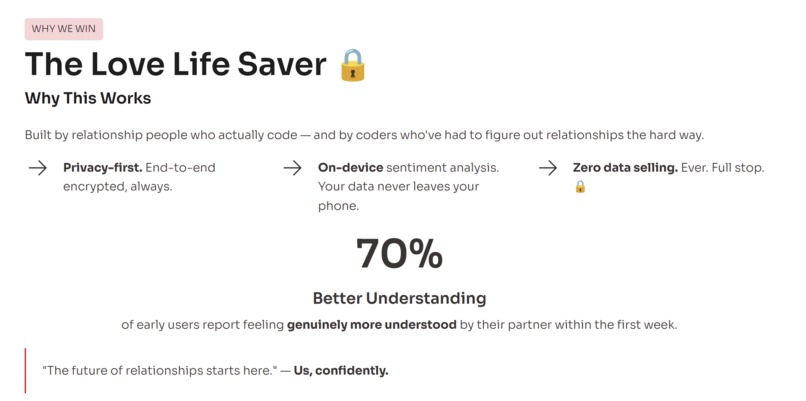
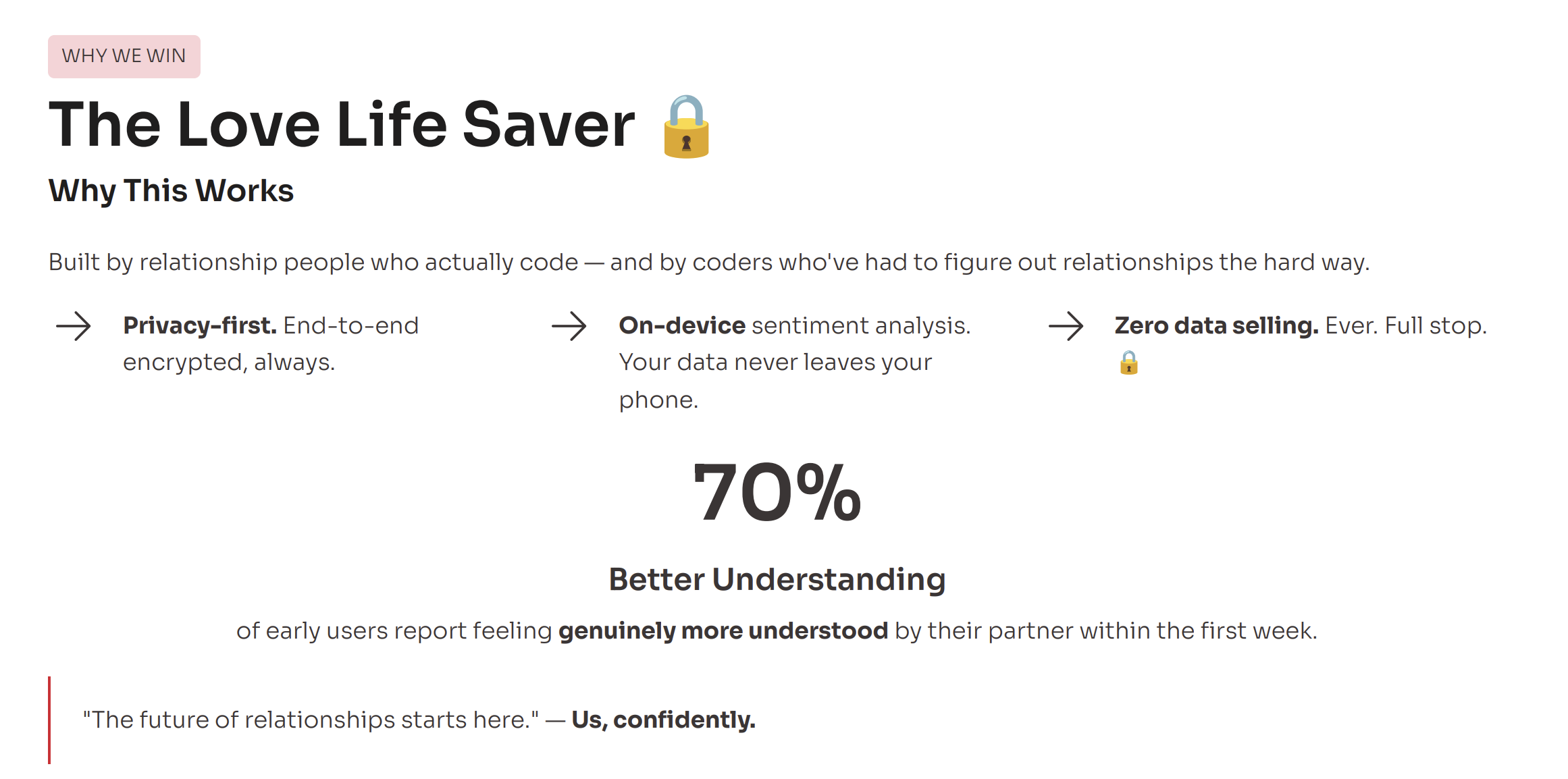
On the trust side, we aim to strengthen privacy by keeping everything secure, transparent, and fully user-controlled.
Ultimately, our goal is to build a tool that helps people communicate with more clarity, empathy, and understanding, whether it’s in personal moments or professional conversations.
Built With
- react
- tavus

Log in or sign up for Devpost to join the conversation.