Inspiration
Working day and night on screens saved us from late submissions, but could not save us from bad posture. When we tried using traditional posture detection systems, we realised that although they made us sit better initially, they did not offer any insights into how to actually fix our posture. To tackle this problem, we built Sitwise---a system for detecting and correcting posture, aiming to develop long-term good habits.
What it does
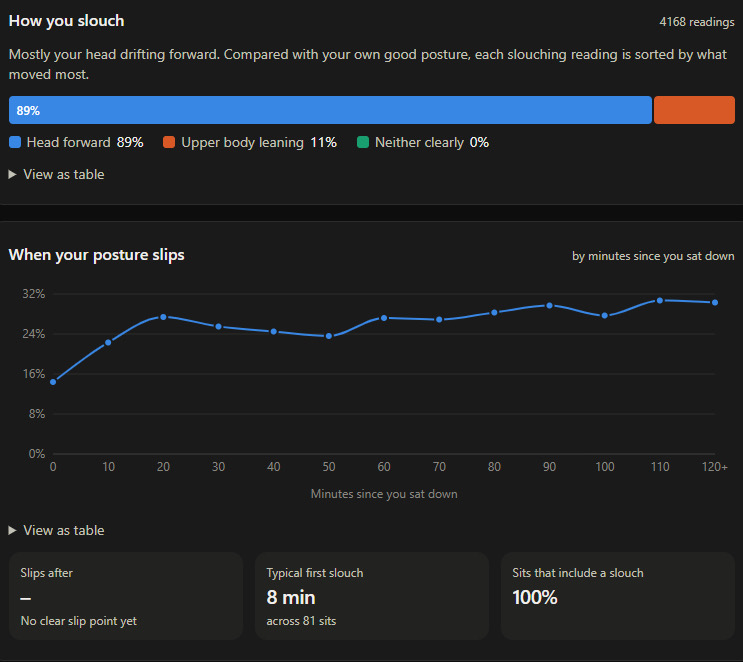
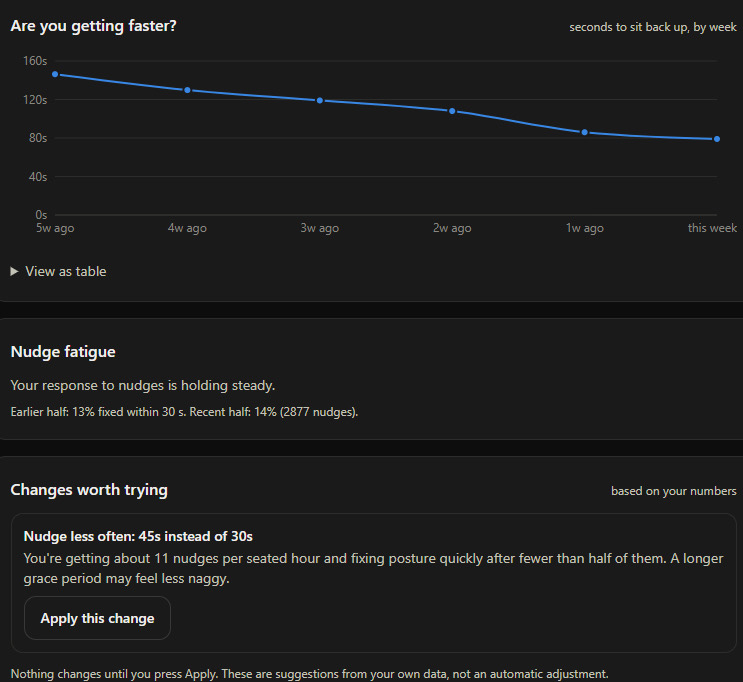
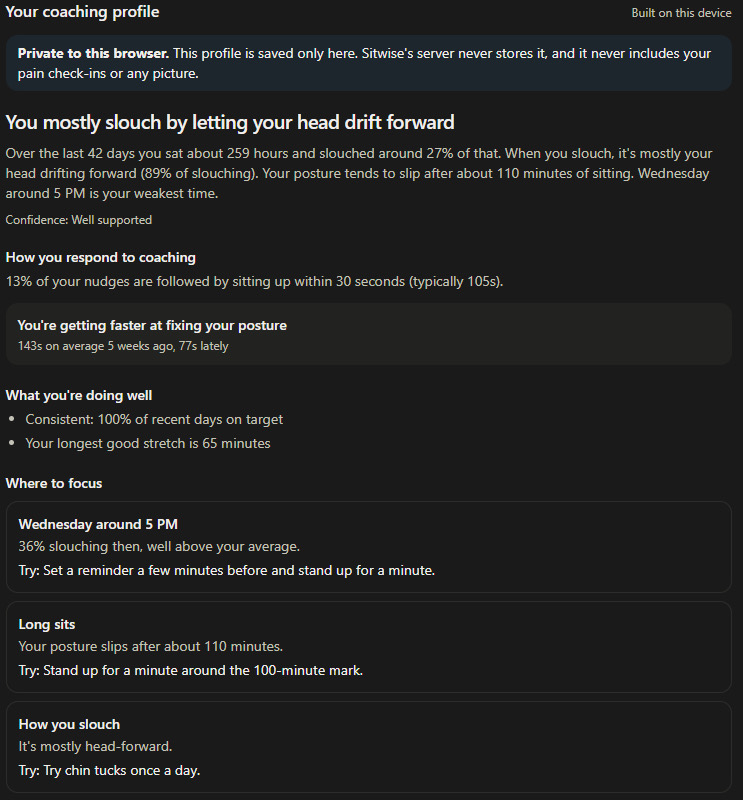
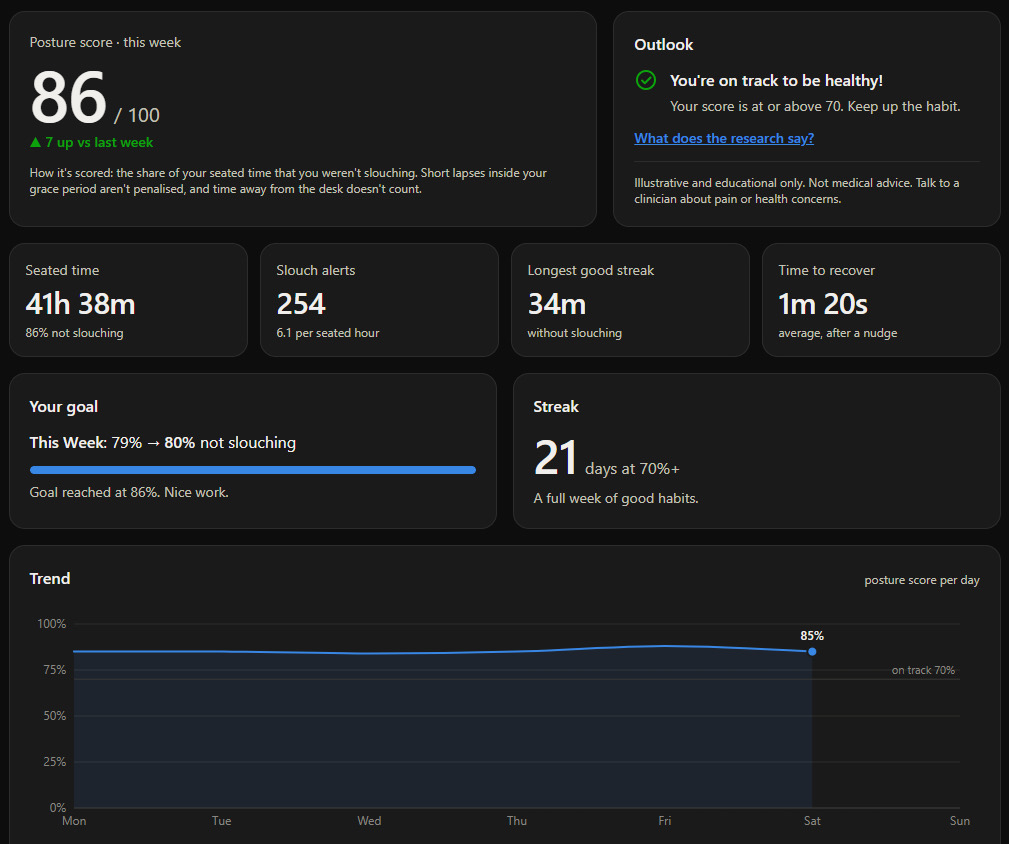
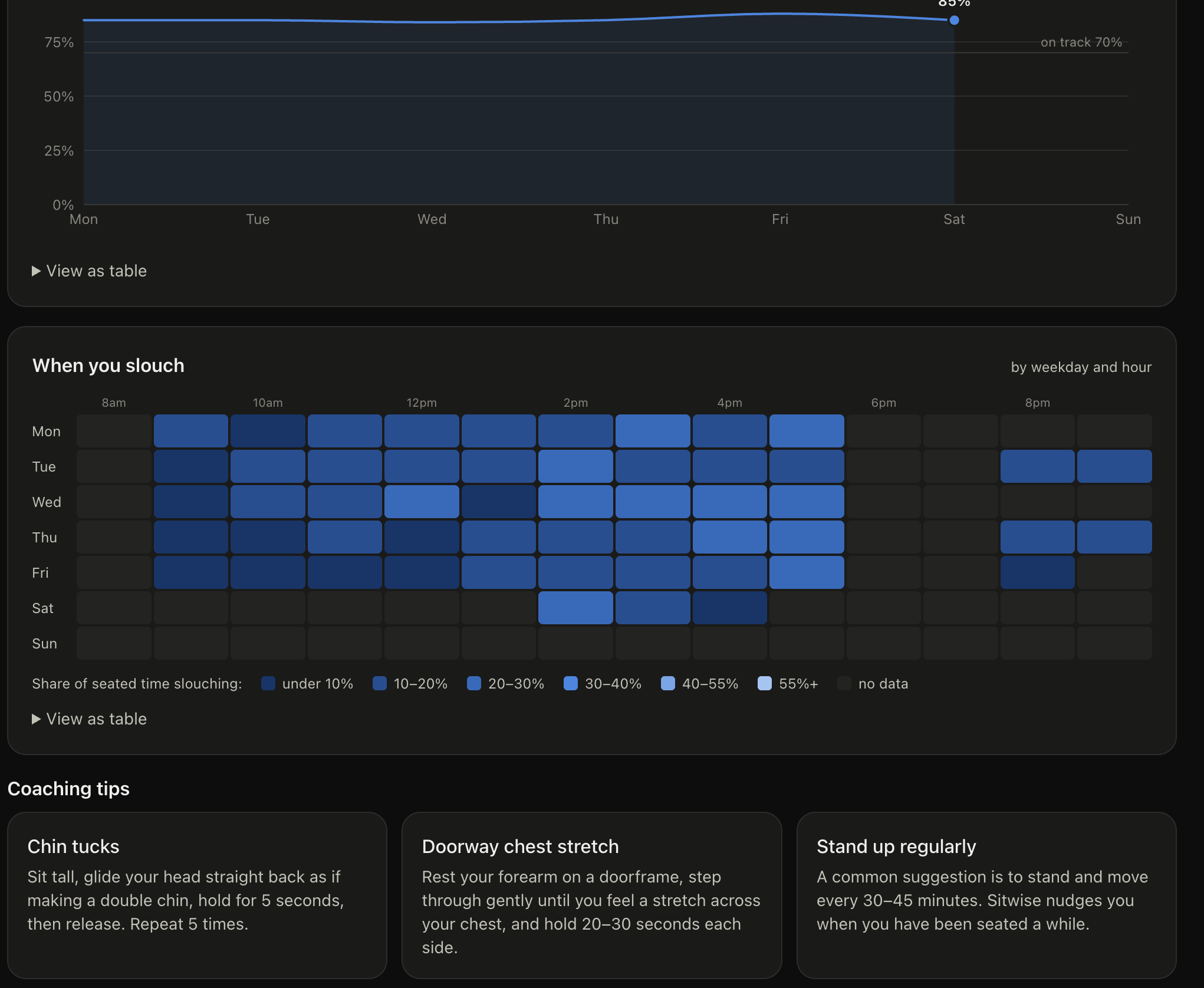
Sitwise helps you improve your posture over time through personalized insights and real-time feedback, acting like a virtual posture physician on your screen. It analyzes your sitting habits, identifies recurring posture problems, recommends targeted exercises, and highlights potential long-term consequences of poor posture.Once your phone's camera is paired with Sitwise on your workstation, it continuously monitors your posture and classifies it as good, slouching, or away. When you start slouching from good posture, it also sets your status to drifting, and if you've been slouching for more than your desired amount of time, it sends an instant notification reminding you to correct your posture.Beyond real-time monitoring, Sitwise tracks your daily posture score, sitting time, recovery time, and good-posture streaks. It provides weekly and monthly insights to identify when your posture tends to deteriorate and what needs improvement.Its personalized Coach feature recognizes your posture patterns, recommends targeted exercises, and adapts notification frequency based on how you respond to reminders. With progressive goals, daily streaks, and weekly challenges, Sitwise helps you stay consistent and build healthier habits over time.Ultimately, Sitwise goes beyond reminding you to sit straight. It helps you understand your body, recognize unhealthy patterns, and actively work towards better posture
How we built it
Sitwise is built using React and TypeScript for an interactive dashboard, with Flask powering the backend and Tiger Data (PostgreSQL) storing posture history for long-term analysis. We use MediaPipe and OpenCV for real-time pose detection, allowing the system to analyze body alignment and provide instant posture feedback while keeping camera footage on the user's computer.For the hardware component, we designed and 3D-printed a custom camera attachment that extends from the chair's armrest, positioning the phone at an optimal side angle to capture the user's back and upper-body posture accurately.We also integrated Gemini for personalized coaching insights and the Web Push Notification API to deliver posture reminders directly to the user's phone. Together, these technologies combine computer vision, custom hardware, and personalized analytics to create a real-time posture correction system.
Challenges we ran into
Another challenge was ensuring that Sitwise's health insights remained accurate and evidence-based. We initially wanted to predict the long-term health consequences of poor posture, but found that existing research only establishes certain associations between posture and discomfort, not direct causation. We didn't want to mislead users with unsupported medical predictions. Instead, we introduced weekly pain check-ins alongside personal posture data, allowing users to identify patterns between their posture habits and discomfort over time. We also included an evidence section that distinguishes established research from uncertain findings, ensuring Sitwise provides useful health insights without making misleading medical claims.
Accomplishments that we're proud of
We’re proudest that the whole chain works end to end: in our test, a simulated camera feed went through the Camera page, the MediaPipe model and the Flask API and drove the user status from good to drifting to slouching, firing a nudge at the right moment and recovering when the posture did. We kept the privacy promise by construction rather than by policy: frames only ever reach a server bound to 127.0.0.1, an outgoing-field guard refuses anything but numbers, and Gemini sees a de-identified payload only after the user previews it and consents. We built a coaching layer that goes well past detection (a fatigue curve, a head-forward versus lean fingerprint, nudge-response and alert-fatigue analysis, and one-click setting suggestions), and we decided not to do health prediction and rather a personal pain-versus-posture comparison that had clear evidence to back it up. The backend has a serverless state machine, API paths, and more than 300 tests on Postgres stores.
What we learned
We learned that real-world limits shape how you build things. Our hosting has no timers, so we kept the posture logic simple and stateless, which also made it easy to test. We learned that testing against a “pretend version” of a service isn't enough: our tests used a stand-in for Gemini and all passed, but our first call to the real Gemini failed because of a bug the stand-in could never show, so we now also test with the real library and log why a call fails. We learned what one side camera can and can't see, so when the model can't tell, it says so instead of guessing. We learned to read the research before designing around it, which turned a scary health prediction into a personal comparison. And we learned to agree as a team before rewriting shared git history.
What's next for Sitwise
Next, we want coaching that adapts. Today we measure how you respond to every nudge and suggest a setting change you apply with one click. Adaptive nudging would use that history to tune grace period, wording and channel automatically with approval, and a local calendar overlay would hold nudges back during important periods like meetings. We want to deepen the Gemini integration to further personalize coaching, creating more in-depth reports based on more data with the on-device profile as a fallback. Finally, we want to fully create an iOS app on top of the web app, so that the information is more accessible on your phone.
