-
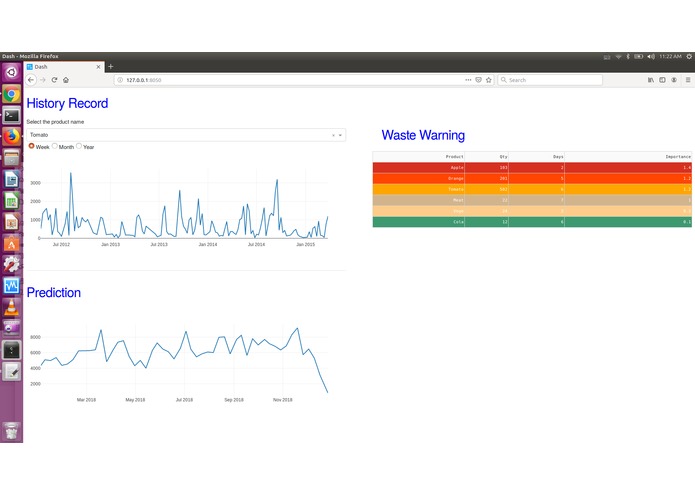
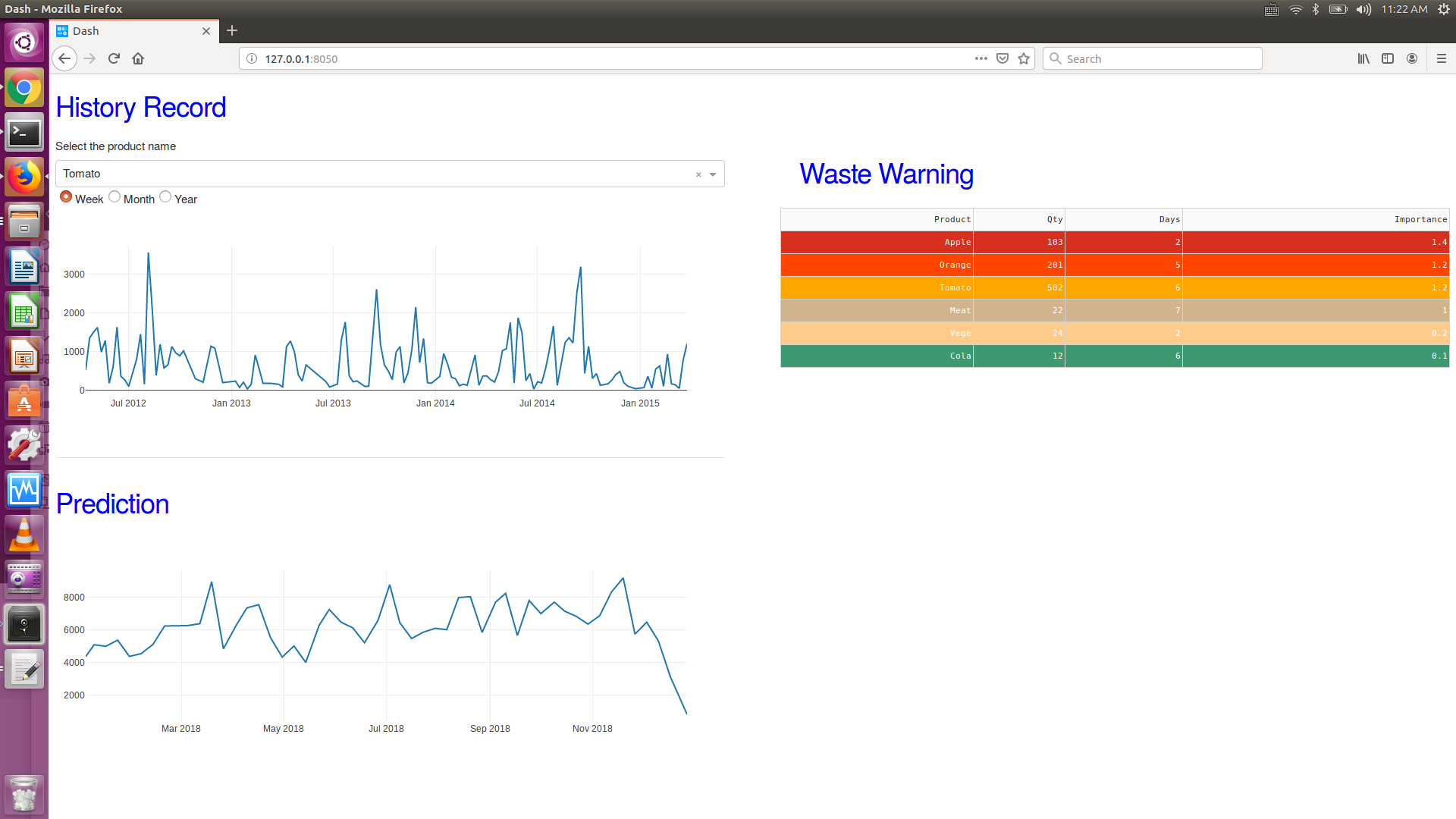
A minimal viable dashboard that performs descriptive and predictive analysis
-
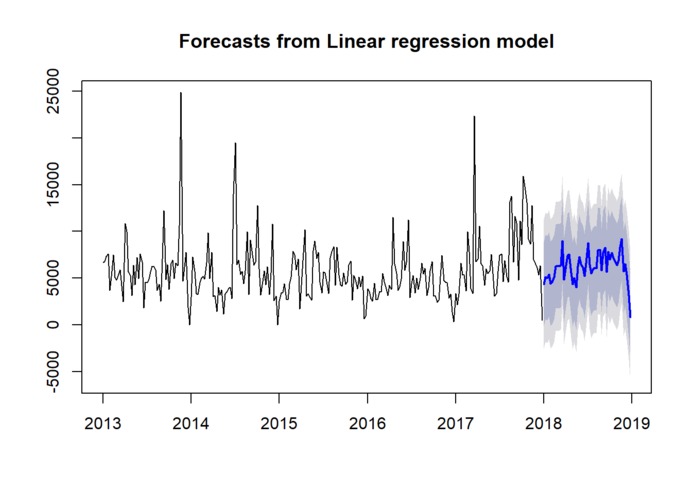
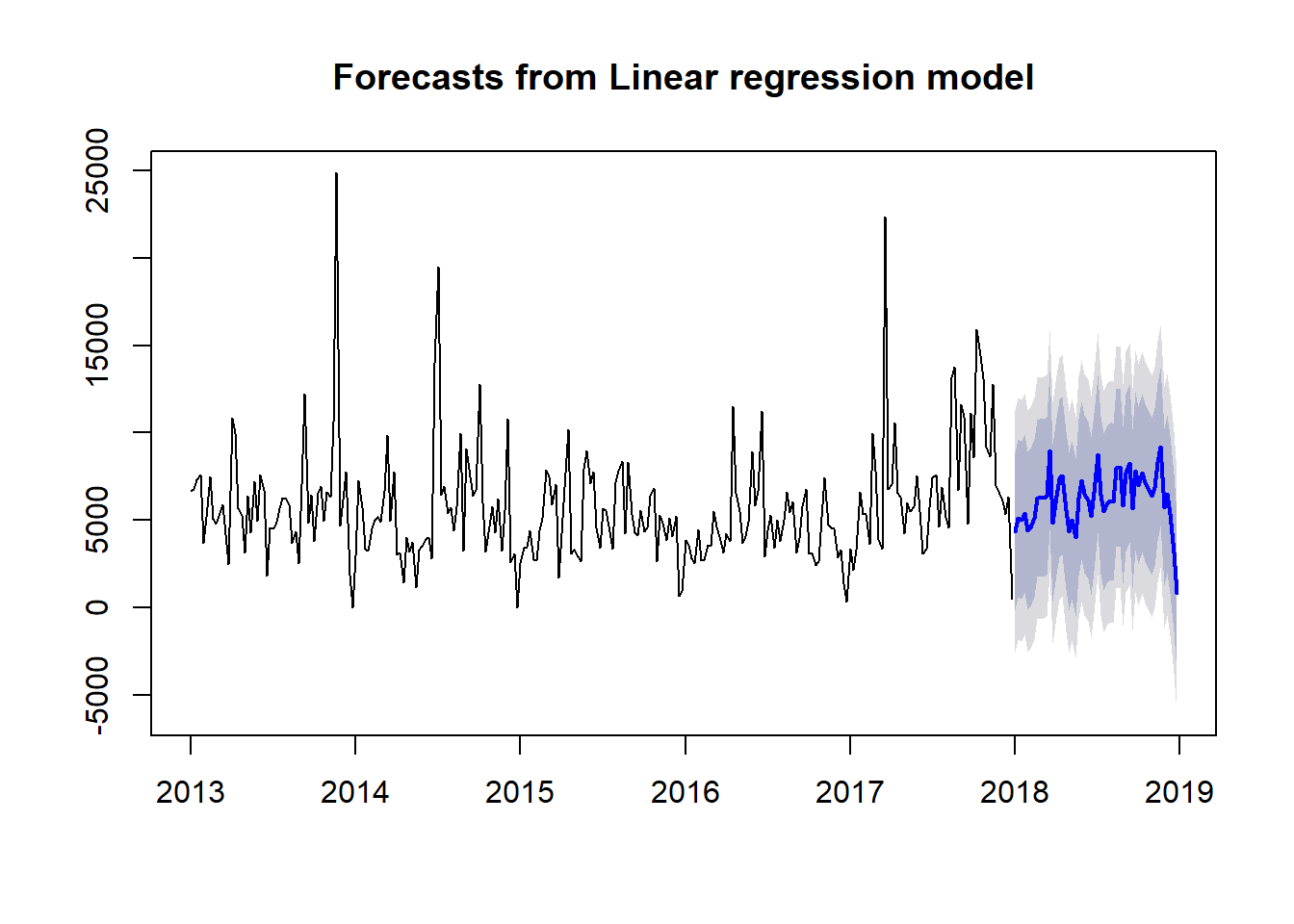
Past and forecast of perishable food products donations
-
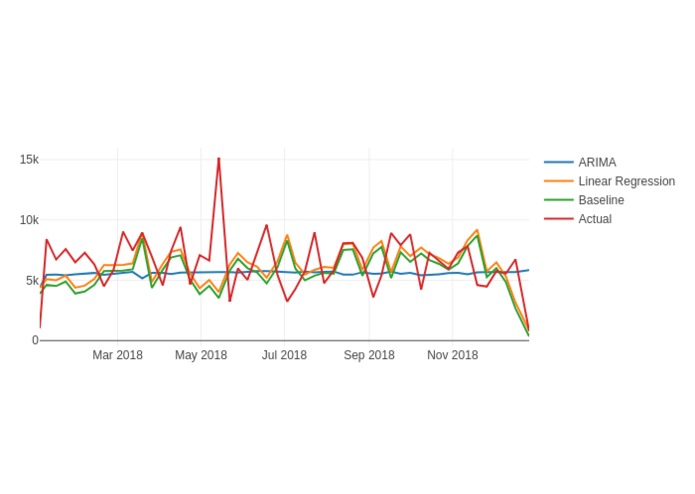
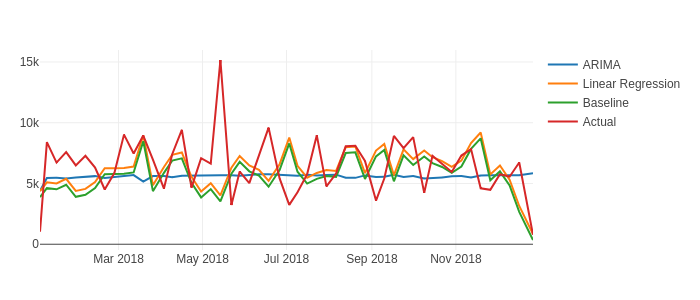
A comparison of the prediction models we worked on
Inspiration
Moisson Montréal is a little miracle in itself: it distributes 15,6 millions of kg of food anually to people in need. Unfortunately, such a volume of food makes the logistics a difficult problem. This can lead to food waste, due for instance to unexpected high volumes of perishable products.
What it does
We devised a set of tools to give confidence to food bank managers about the decisions they make. This exploratory data analysis aims to give more confidence to food ban supply chain managers at Moisson Montréal. With a better access to their own data, as well as predictive models for food donations, we are confident that AI can help Moisson Montréal avoid food waste while still providing for those in need.
Our tools not only give Moisson Montréal better insight about their own data. It also outputs donation volume predictions for the most critical item category they have to handle: perishable food items. This insight will allow Moisson Montréal to make better decision about when it is safe to give food to non-partners to avoid food waste.
How we built it
We used R and Python to dig through a large volume of inventory data so that we can gain insight about the food donation patterns at Moisson Montréal. We used AI models such as Seasonal ARIMA to output predictions for perishable food donations.
Challenges we ran into
The data was in a very bad shape. Unfortunately, Moisson Montréal might not even have the technical expertise required to get data scientists started efficiently. We did not let that stop us, however: with careful scrubbing and a lot of detective work, we were able to recover a very usable data about incoming food donations.
Accomplishments that we're proud of
We are confident that our model is an important first step to predict food donation patterns at Moisson Montréal. Also, very importantly, we established a machine learning methodology that will allow future works to improve on those models with confidence.
What we learned
We had time, energy, and will to make things better. But sometimes the people you want to assist do not even have the resources to better communicate their needs. They operate on tight constraints, and have very critical ongoing tasks. They can't take time off from providing food to people in need so that they can build predictive models. Dealing with this type of constraint was a very rich experience, and we hope despite all of this our contribution really is AI for Good.
What's next for Situational Awareness for Food Bank Management
Our predictive model already does a good job at predicting the volume of incoming perishable items. We think the next steps to improve this model is to go outside of the existing dataset. Sentiment analysis over the internet, and a careful evaluation of the media attention that Moisson Montréal, could prove to be critical in predicting how much donations will come in in future weeks. This would give managers at Moisson Montréal even more confidence in decisions and assessing when they can expect a surplus.
We also hope the predictive model can be improved from within, using an LSTM neural network architecture. We did not have enough time, or perhaps data, to bring this to fruition. However, we still think it could be possible with a better understanding of the available data, to maximize
A better understanding of the data would also give Moisson Montréal more opportunities about supply chain optmization. Had we had a good understanding of shipment and palette data, we could have worked on palette optimization models that help Moisson Montréal reduce food waste while still helping people in need.
Built With
- python-r-dash


Log in or sign up for Devpost to join the conversation.