-
-
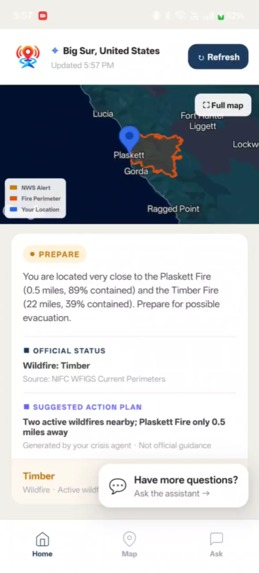
Home Page
-
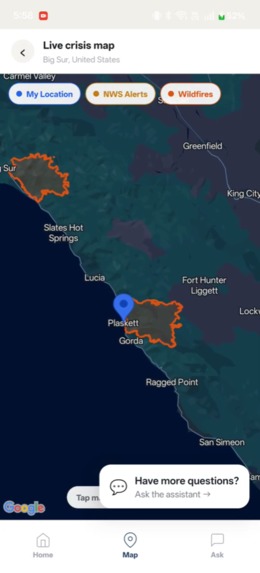
Interactive Map
-
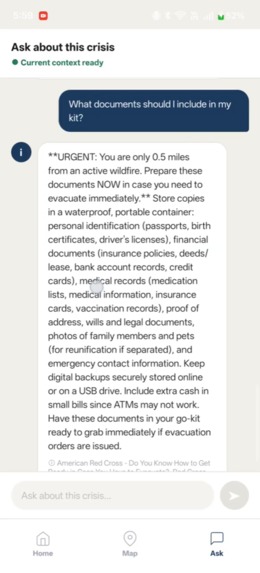
Chatbot
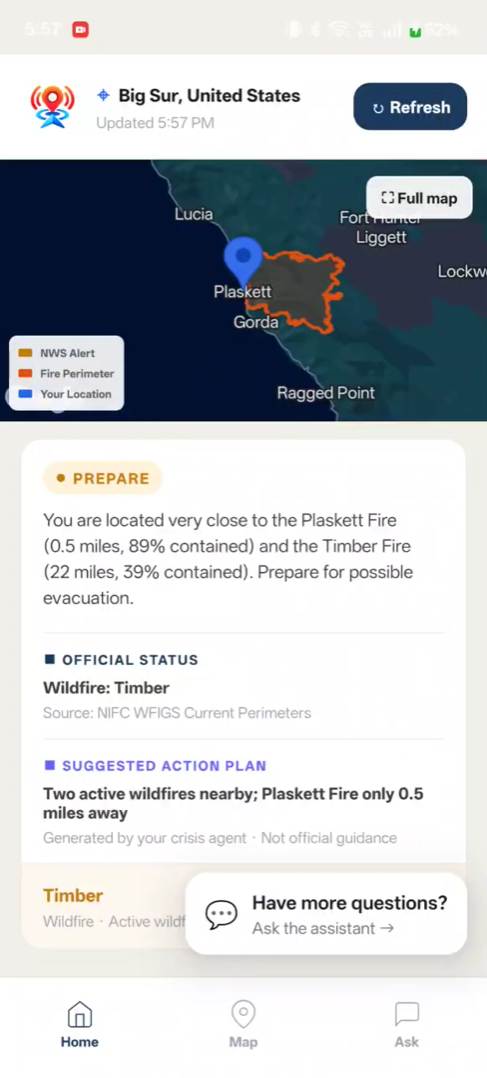
Inspiration
SituAlert was inspired by how confusing and stressful emergencies can feel when people do not know what they are supposed to do. During the Los Angeles fires last year, one of our friends at UCLA became increasingly worried as the fire appeared to be moving closer to campus. She was waiting for guidance from the school, but no clear instructions came for some time. Unsure whether she should stay or leave, she eventually decided to evacuate on her own. At the same time, students at nearby schools like USC were also unsure whether the fires affected them or whether they needed to take any precautions. At Cornell, we had a similar experience last winter when a major blizzard caused the university to shut down for several days. It was our first time dealing with a severe winter storm, and we wished there had been clearer guidance on what to prepare, what risks to watch for, and what actions to take. These experiences made us realize that emergency information often exists, but it can be fragmented, delayed, or difficult to interpret. We wanted to build a tool that helps people quickly understand what is happening around them and what they should do next.
What it does
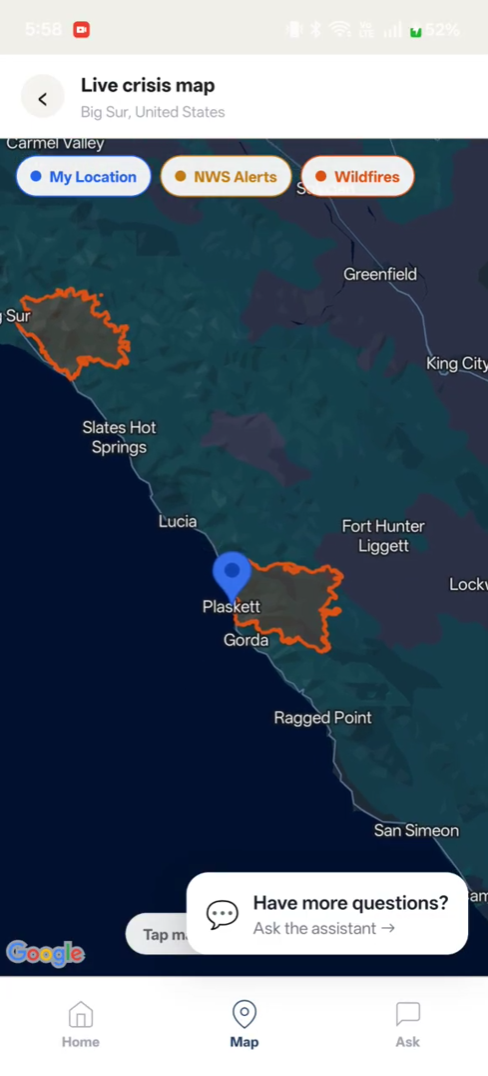
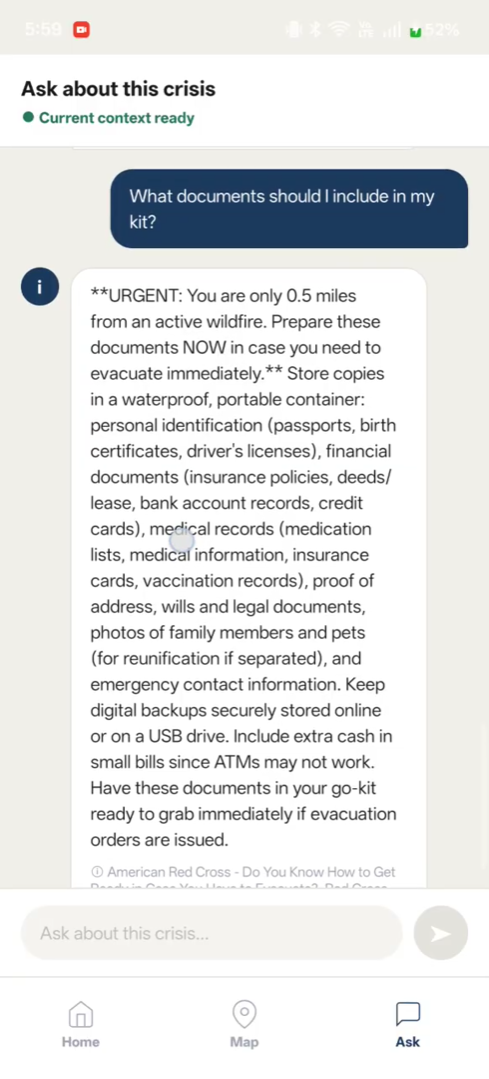
SituAlert is a location-based crisis awareness app that helps users understand nearby emergencies and respond with confidence. Users can refresh the app to identify crises near their current location, view them on a map, and receive an AI-powered action plan tailored to the situation. Rather than generating advice from unverified information, SituAlert’s responses are based on trusted, official sources. Users can also ask follow-up questions through a conversational interface, making it easier to understand how an emergency may affect them and what steps they can take next.
How we built it
We built SituAlert as a React Native mobile application with a location-aware interface and Google Maps integration. On the backend, we used AWS services and the Strands Agents SDK to create an agent that gathers relevant emergency information, reasons over the situation, and generates clear recommendations based on verified sources. We designed the product around a simple flow: identify the user's location, detect relevant nearby crises, present them visually, and translate complex emergency information into concise, actionable guidance. Because SituAlert was built within a short hackathon timeline, we focused heavily on designing a modular system that could support additional crisis types, data sources, and features later.
Challenges we ran into
One of our biggest challenges was learning and integrating several unfamiliar technologies at once. Setting up AWS, configuring the backend endpoints, and learning how to work with Strands required significant experimentation and debugging. We also had to work around AWS's 30-second timeout. Our original agent workflows could take too long to gather information, reason through it, and return a response, so we had to rethink how the agent operated and optimize each step to make the overall pipeline fast enough. This forced us to balance the depth and quality of the agent's reasoning with the practical constraints of a real-time product.
Accomplishments that we're proud of
We are especially proud that SituAlert was our first project working extensively with location-based data. Getting Google Maps, geocoding, nearby crisis information, and the rest of the application to work together was both challenging and rewarding. We are also proud of taking an agentic product from 0 to 1 within a short timeframe. We began with a broad problem, scoped it into a realistic product, designed the user experience, implemented the mobile app and backend, and built a functioning AI agent around it. More than any individual feature, we are proud that we were able to turn a real problem we had personally experienced into a working prototype.
What we learned
This project gave us hands-on experience with AWS, the Strands Agents SDK, agentic workflows, location-based systems, and mobile development. We also learned a great deal about product scoping. With limited time, we had to decide which features were essential to the core experience and which could be postponed. We intentionally designed our scope to be flexible so that we could reduce complexity if needed without losing the main value of the product. Breaking large features into smaller tasks and budgeting time across design, frontend development, backend development, and integration also became essential as the project progressed.
What's next for SituAlert
The next step for SituAlert is putting it in front of a larger group of users. We want to understand whether the guidance is genuinely useful during stressful situations, where users still feel uncertain, and how the experience could better support them. From there, we would continue iterating on the product and expanding its functionality. One feature we would especially like to add is a dedicated "What to Do in an Emergency" guide, giving users access to clear preparedness information even before a crisis occurs. Longer term, we envision SituAlert becoming a broader crisis-awareness platform covering more than just immediate disasters, helping people feel more prepared to respond when unexpected situations occur.
Built With
- amazon-api-gateway
- amazon-bedrock
- android-studio
- aws-lambda
- google-maps
- node.js
- python
- react-native
- strands-sdk
- typescript
- vscode

Log in or sign up for Devpost to join the conversation.