-
-

SitSync - a reminder for people to pause, stand and move.
-
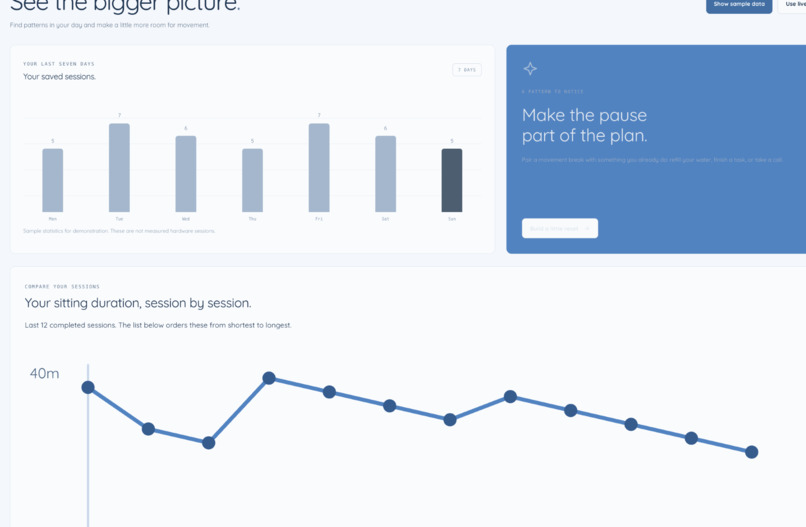
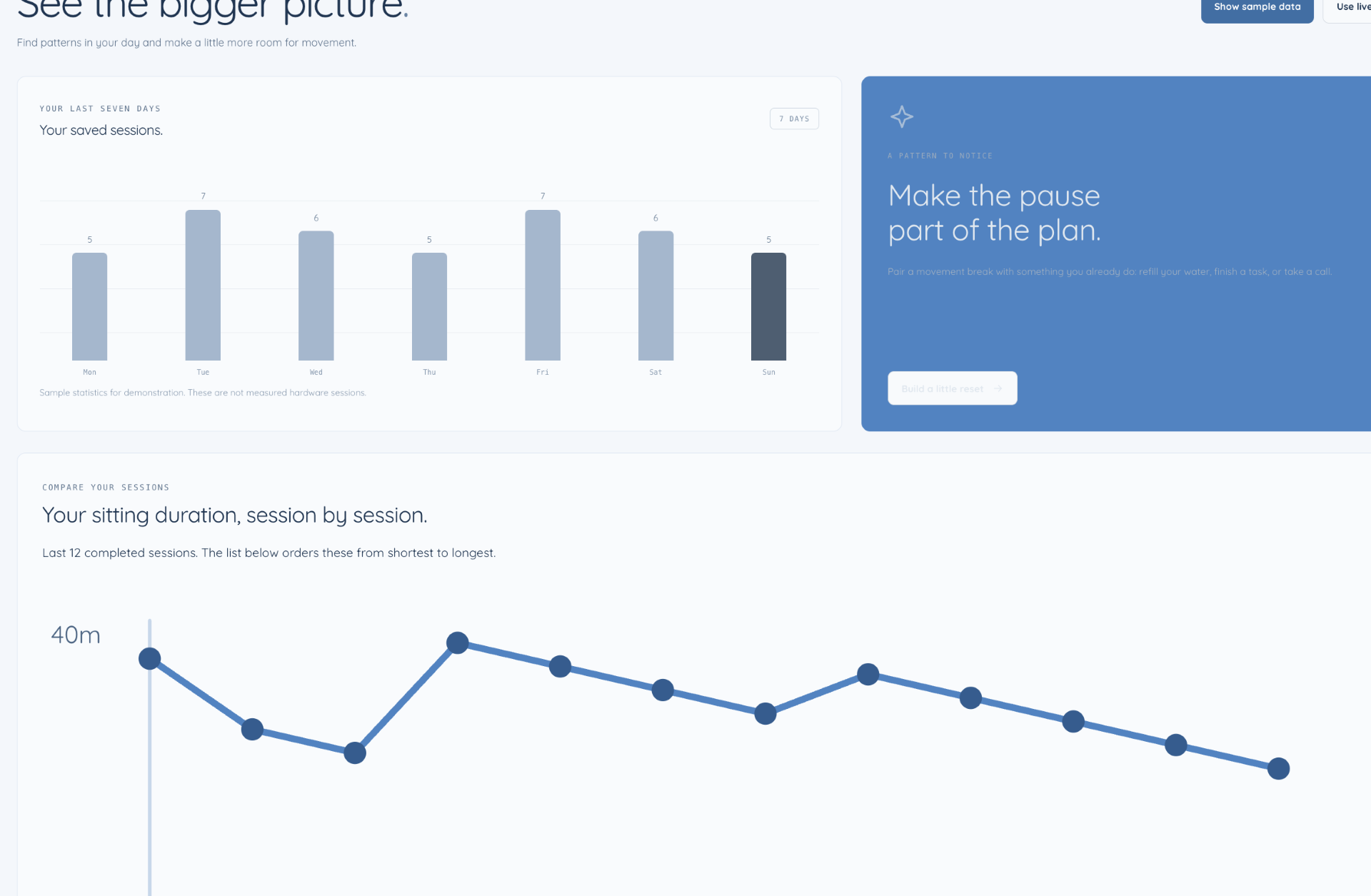
Sitting activity summary and dashboard statistics.
-
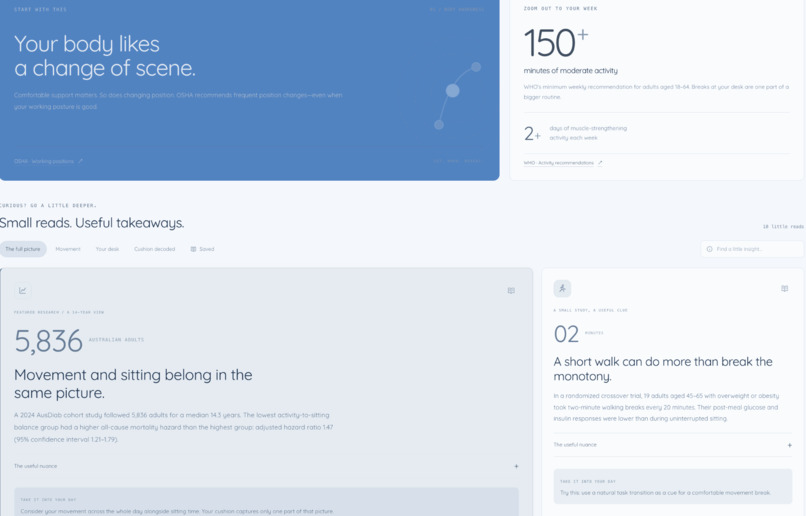
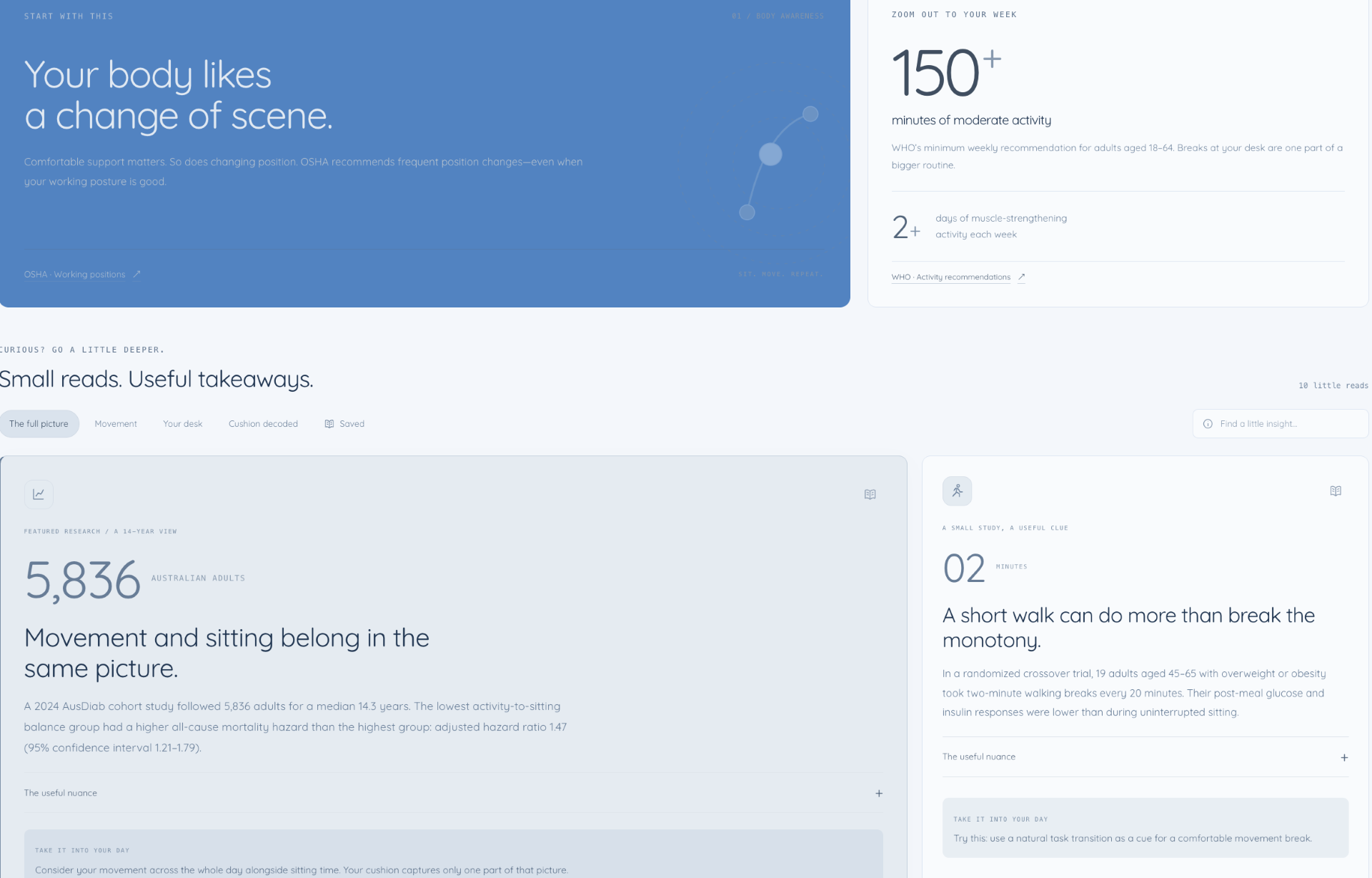
Informative analytics, provign facts, and real data.
-
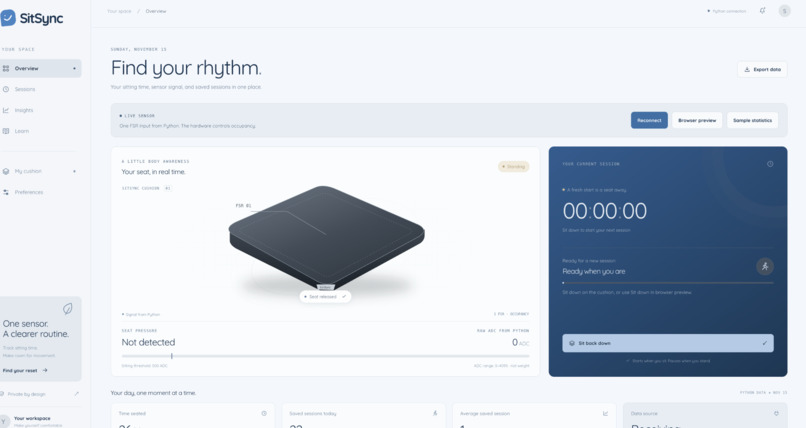
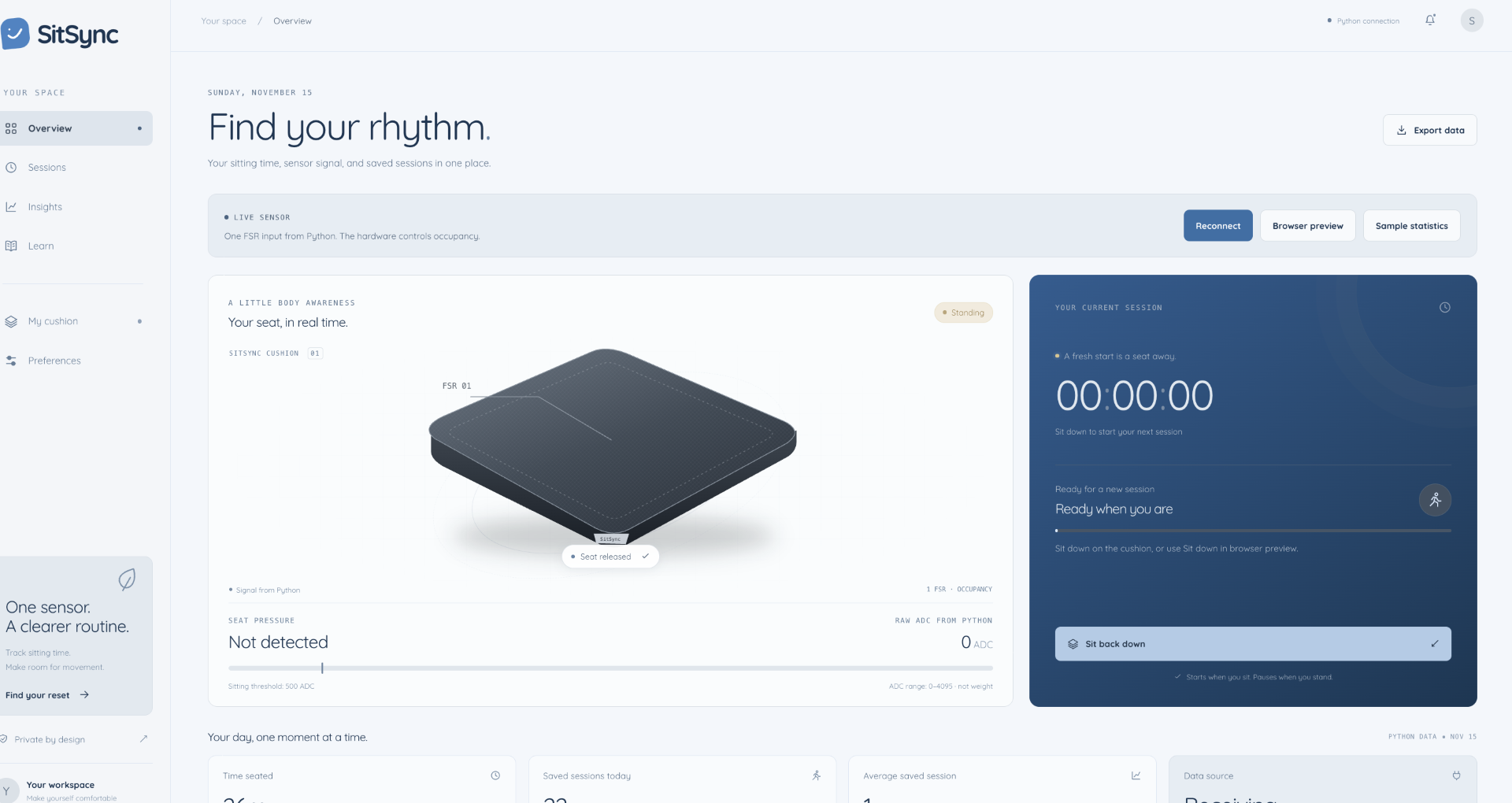
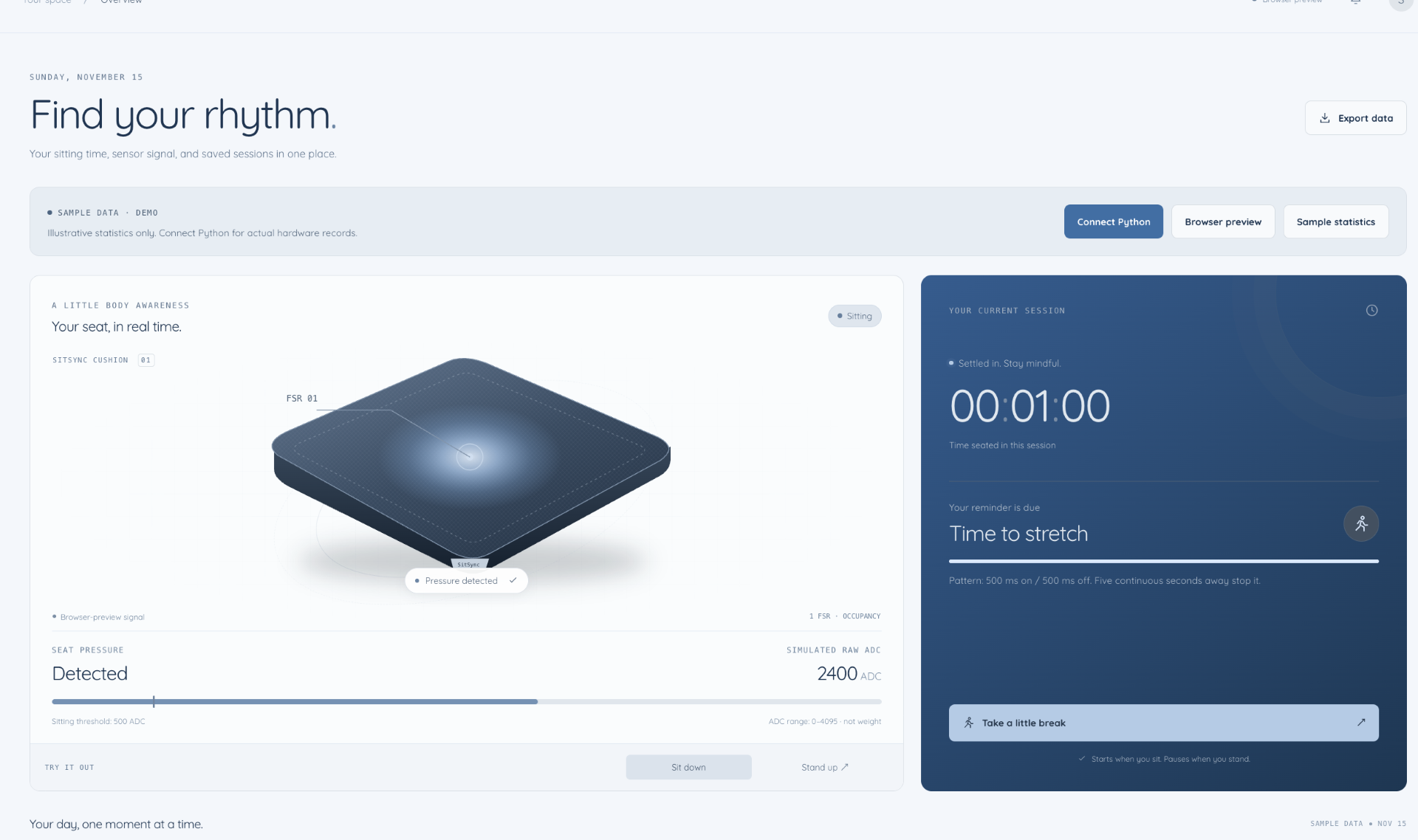
Occupied seat visualization alongside setting timer.
-
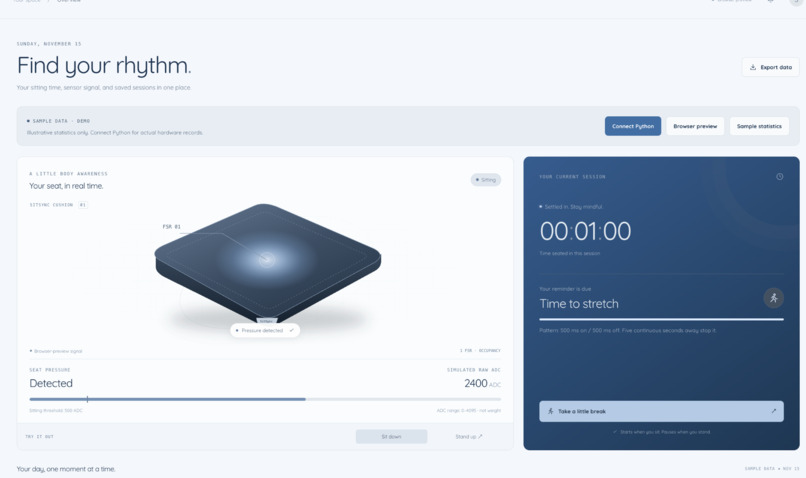
Vibration visualizer.

Inspiration
We realized there was a big problem, especially in a hackathon environment where everybody sits down for long periods of time. This led us to all collectively agree that when you sit in one place for too long, it can cause you to experience aches and stiffness and higher risks of developing type 2 diabetes. This inspired us to create SitSync.
What it does
Sit sync tracks the time you spend sitting in your say and reminds you to take breaks. It's goal is to get you to balance your time working, gaming or studying with short breaks of physical activity to stay healthy. It displays your data on a local website and works completely offline. When It's time to take a break the motor will vibrate to let you know, and will display a notification on the site.
How we built it
We built the front-end with a vanilla website for the front-end using CSS, HTML, and Javascript. For the back-end, we used python with FastAPI and uvicorn. For the hardware we used an ESP32 with the Arduino IDE coding in C++ which was connected to an FSR pressure sensor, and a vibration motor.
Challenges we ran into
We experienced issues with our pins on the pressure sensor at the end of the hackathon. This means that our website could not detect if the user was sitting or not. Additionally, the computer with the video died 10 minutes before the supposed submission time, leading to high stress and frustration.
Accomplishments that we're proud of
We're proud of building a working prototype that was able to interact with the web page. On the web page we were able to build charts and graphs from the data.
What we learned
We learned how to solder and use ESP32, as well as adapt to problems that we faced. Additionally we learned how to use FastAPI, decode and read from JSON files, learned how to send an ESP32 data from python serial, how to connect back-end and front-end. We gained experience in trouble-shooting and prompting.
What's next for SitSync
In the future, SitSync would have been more advanced. We would have added more sensors for accurate readings, ai analytics, a camera so we could accurately determine posture and use haptics to remind users.
AI Disclosure
We used Co pilot, Gemini, ChatGPT and Codex on this project for assistance with front-end and back-end and overviews of how to implement features and troubleshoot.

