-
-
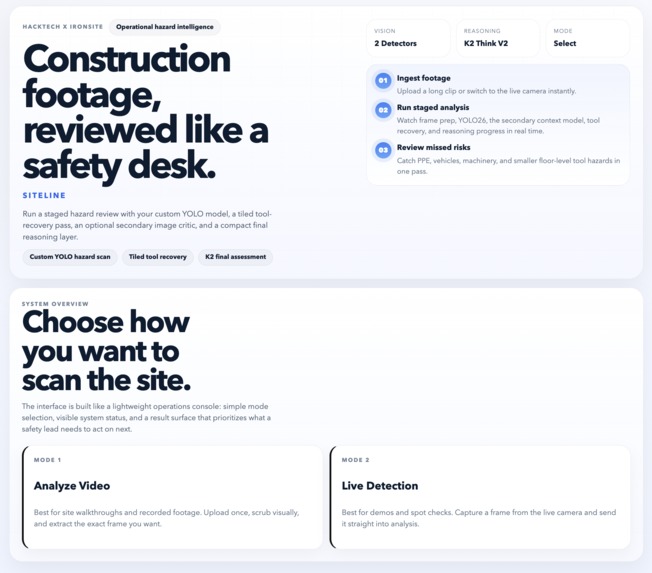
SiteLine Home Page
-
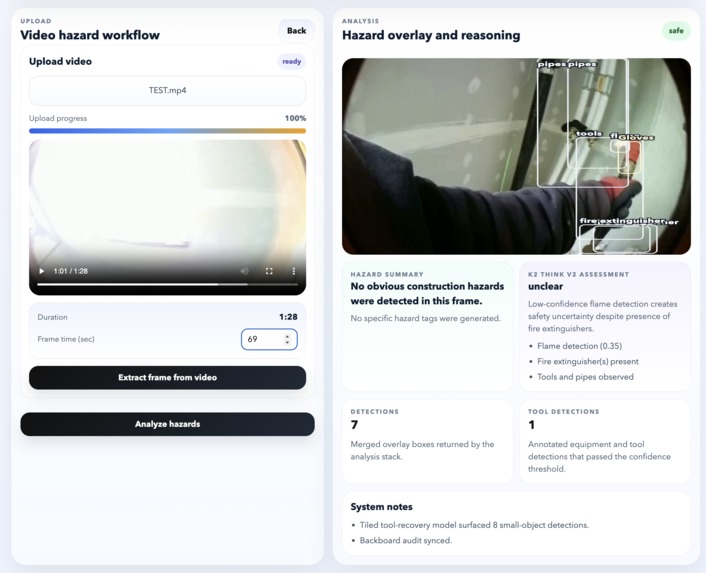
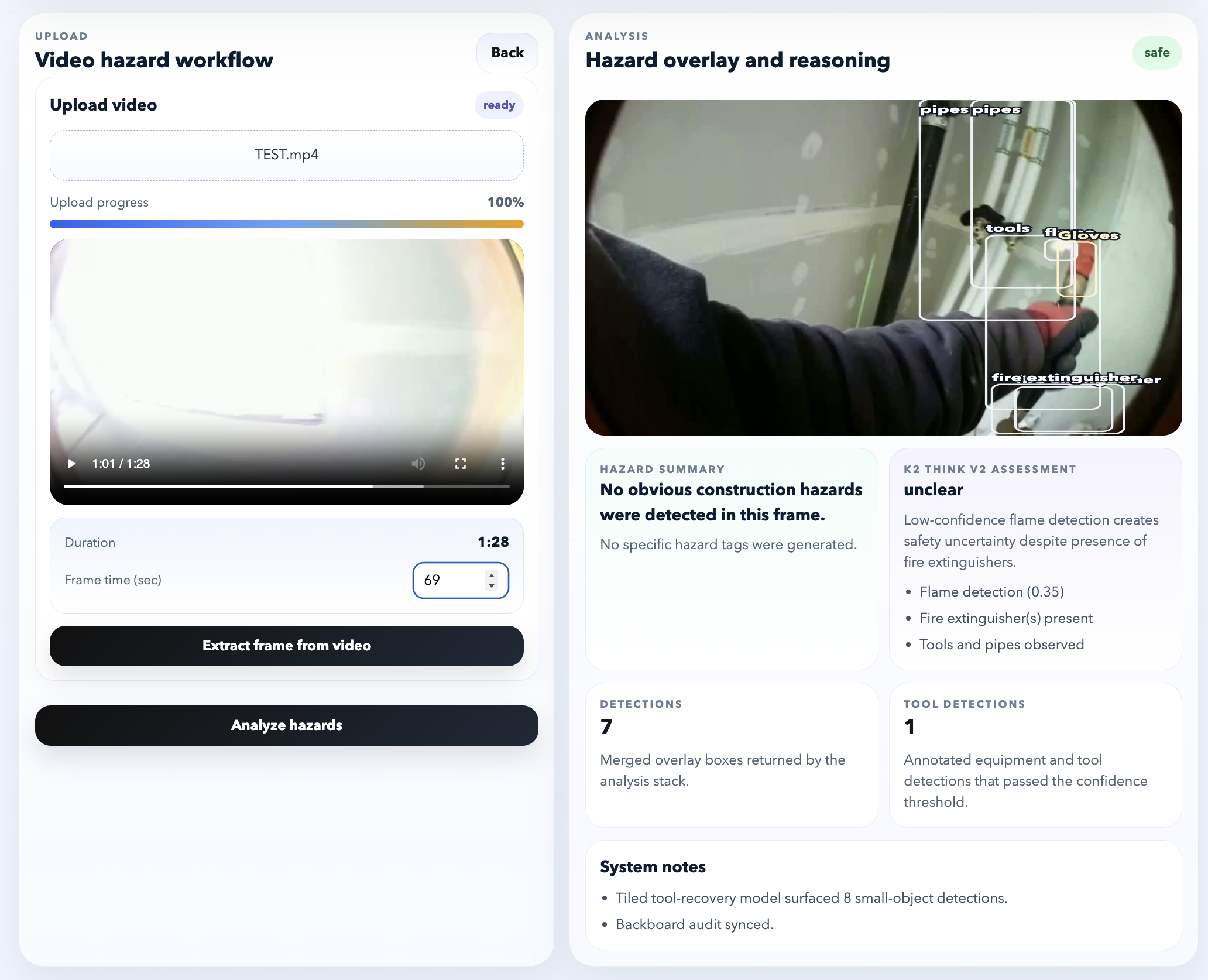
Video Upload Hazard Analysis
-
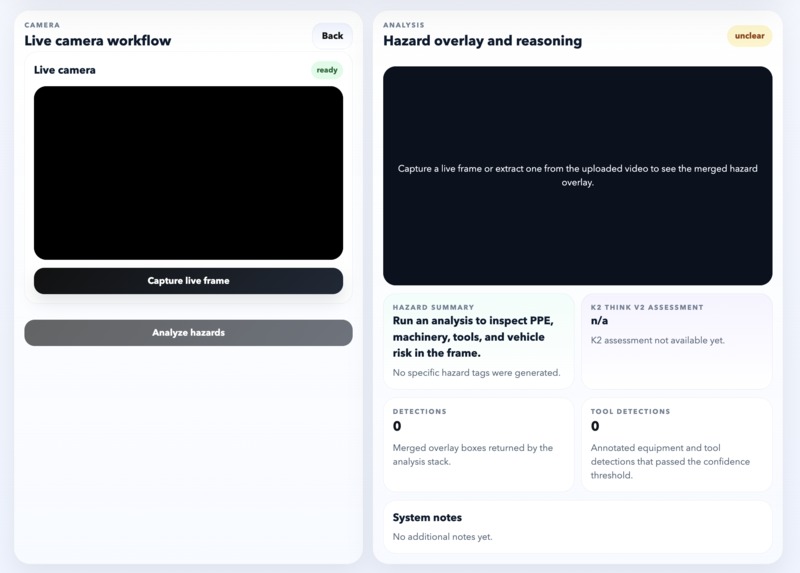
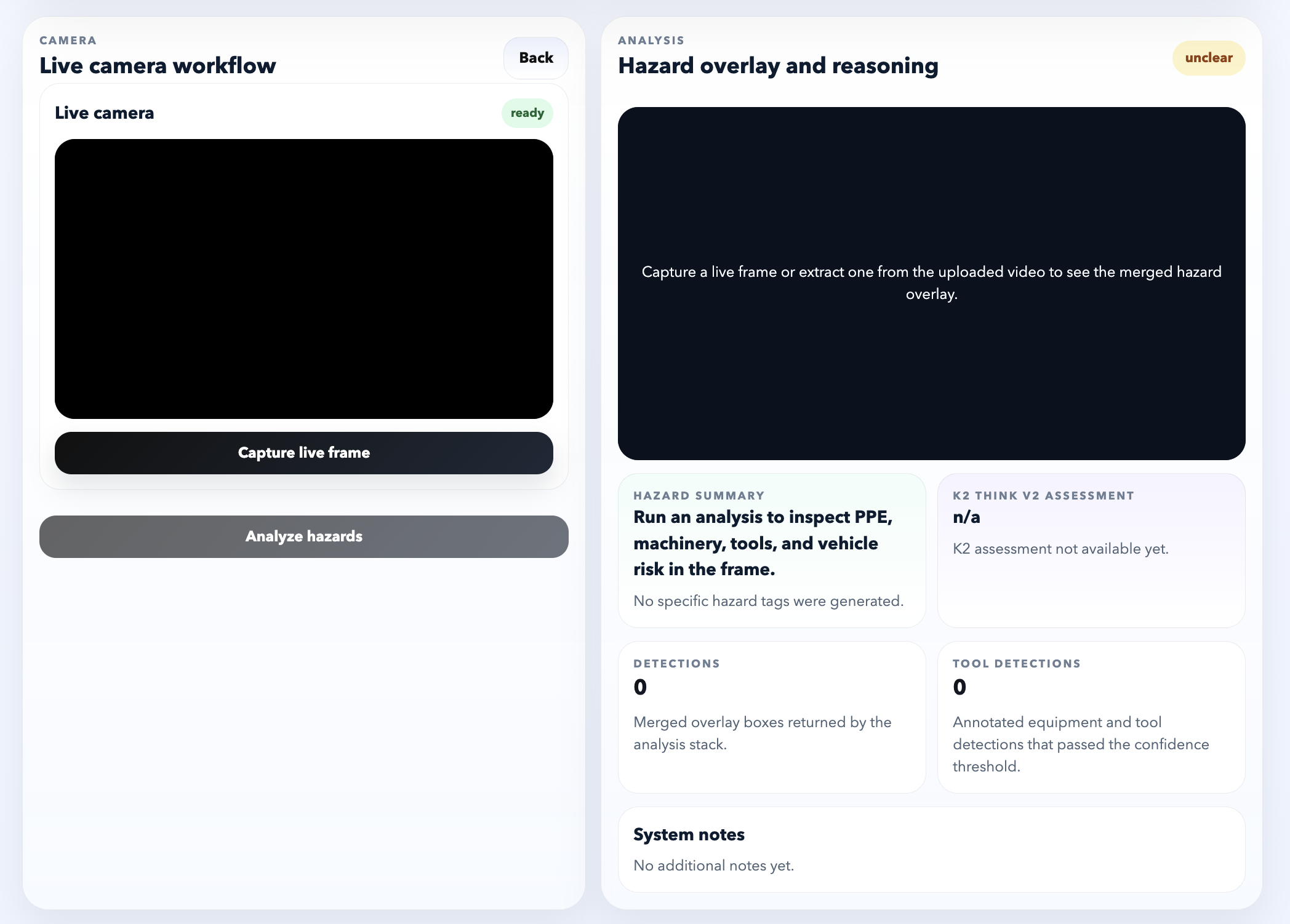
Live Detection Page
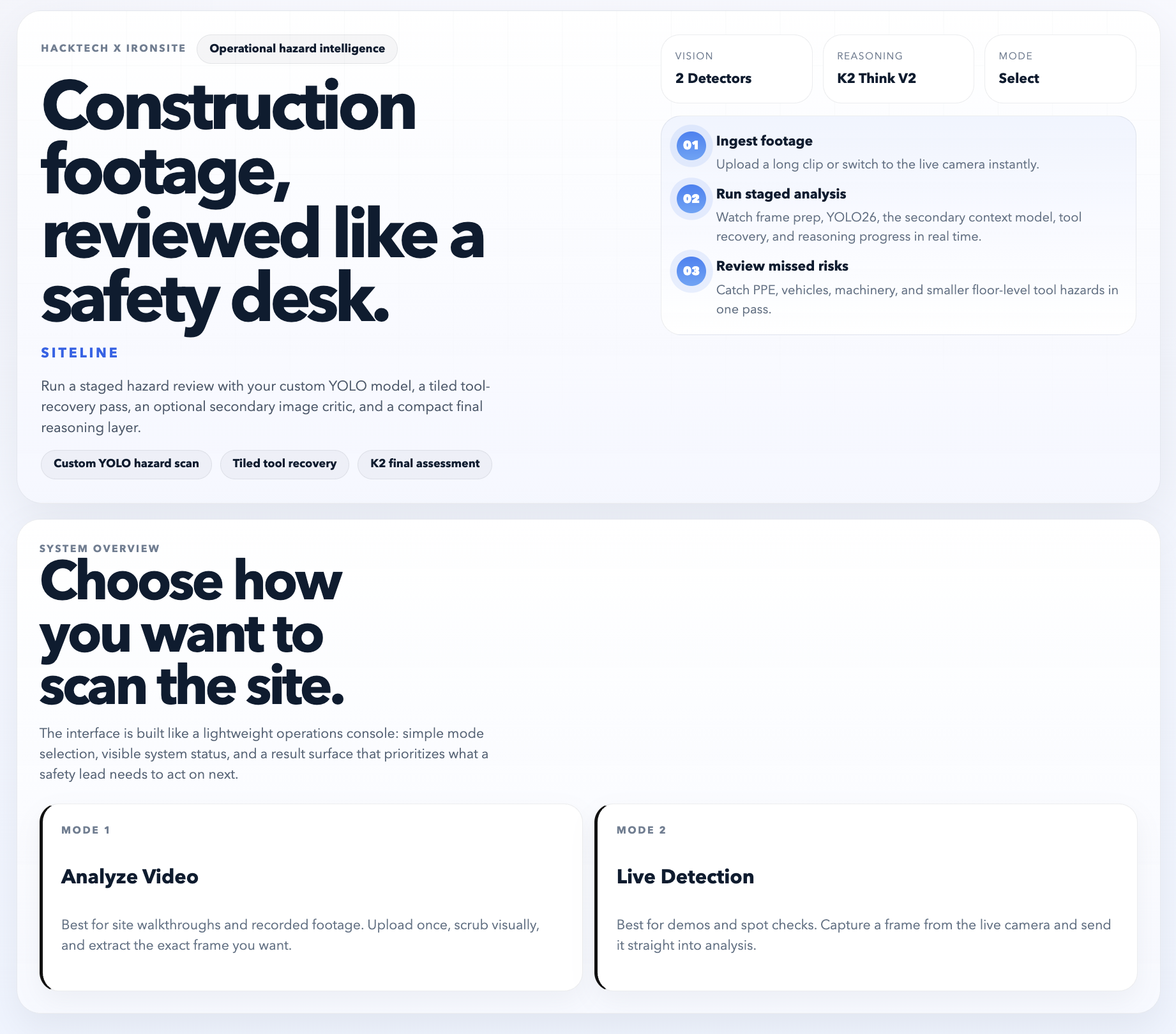
Inspiration
Every single day in the US, at least 2 construction workers lose their lives due to neglected safety issues. Many of the most serious incidents come from falls, falling objects, and other struck-by accidents. These often happen not because hazards are invisible, but because workers are moving quickly, multitasking, or simply do not notice risks in time. We wanted to build a tool that helps workers recognize danger the moment it appears.
What it does
SiteLine is a web app that turns any phone into a real-time construction safety monitor. A worker can open the app, point their phone like a first-person camera, and receive hazard analysis directly from the scene. The app also supports video uploads, so teams can review recorded site footage frame by frame.
For each frame, SiteLine:
- Runs a custom YOLO model to detect relevant objects and hazards in the scene.
- This is our own developed custom YOLO model with more than 5,000 annotations to improve hazard recognition beyond standard safety-item detection.
- Passes those detections into K2 Think V2, which reasons about possible dangers and unsafe conditions.
- Produces a short hazard summary that helps workers or supervisors understand what needs attention.
How we built it
We built SiteLine as a full-stack web application using React and JavaScript on the frontend, with a Node.js backend for handling video uploads, frame extraction, and inference orchestration. We chose a browser-based architecture so the system could run directly on both phones and laptops without requiring a native mobile app, making it easier to test and deploy in real construction settings.
On the frontend, we implemented two analysis workflows: a live camera pipeline using browser media APIs for real-time scene capture, and a video upload pipeline for frame-by-frame review of recorded construction footage. On the backend, we process frames and run them through a custom YOLO computer vision model trained for construction hazard detection. The model returns structured bounding boxes and object labels for relevant hazards in the frame.
We then feed those structured detections into K2 Think V2, which serves as the reasoning layer on top of the vision model. While YOLO handles object localization and classification, K2 helps interpret those detections in context and generate a higher-level hazard assessment. This allows the system to move beyond raw detection outputs and produce a short, more actionable safety summary.
Challenges we ran into
A major technical challenge was that existing pretrained YOLO models were much stronger at detecting obvious PPE categories like gloves, helmets, and safety vests than they were at identifying the specific hazards we cared about, such as dangerous tools, gaps, and environment-specific risks. To improve this, we built our own annotated dataset with more than 5,000 annotations and trained a more specialized custom model for the task.
Overall, SiteLine combines a React-based client, a Node.js inference pipeline, a custom YOLO vision model, and K2 Think V2 for reasoning, creating an end-to-end system for mobile construction safety analysis.
Accomplishments that we're proud of
We are proud that we built a working end-to-end system that runs as a web app across devices. Because it is mobile-friendly, the app can be used directly on-site from a phone, making it practical for real construction workflows instead of just a desktop demo.
We are also proud that we moved beyond prebuilt models or simply using AI agents and started building a custom hazard dataset and model pipeline tailored to the actual problem.
What we learned
We learned that AI tools are powerful, but they are only as useful as the data and problem framing behind them. Off-the-shelf models can look impressive, but they often fall short on specialized real-world tasks without additional human input, curation, and training data.
We also learned a lot about building a full-stack product quickly: from React frontend development to backend inference pipelines to making a workflow usable on both phones and laptops.
What's next for Siteline
Next, we want to improve SiteLine in two major ways. First, we plan to keep expanding and refining our custom annotated dataset so the model generalizes better across real construction environments, lighting conditions, camera angles, and site layouts. Second, we want to move from single-frame hazard review to continuous site monitoring. By using a simple camera network worn or carried by workers, safety leads could track recurring risk signals across the construction site in real time. If the system repeatedly detects hazards such as flames, open gaps, or dangerous tool zones in the same area, supervisors could quickly identify patterns and take action before an injury happens.
Built With
- javascript
- k2-think-v2
- node.js
- python
- react
- yolo

Log in or sign up for Devpost to join the conversation.