-
-
Old house. Attic hatch. Wiring nobody told you about.
-
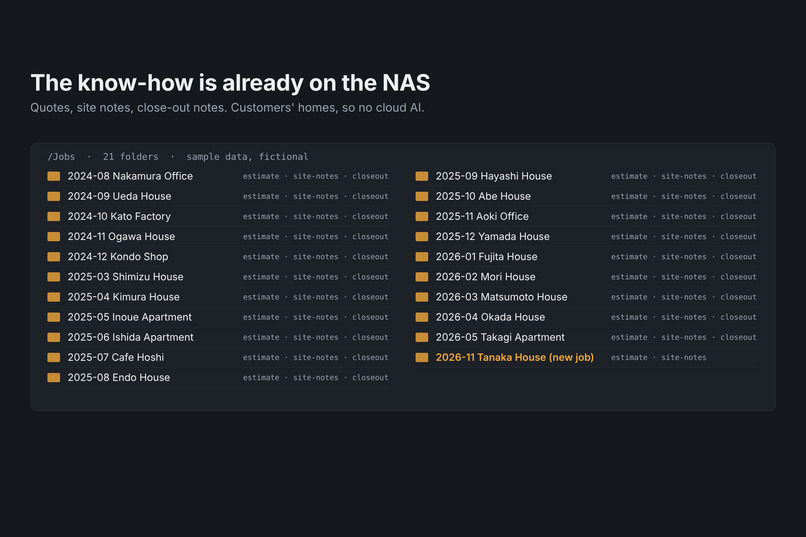
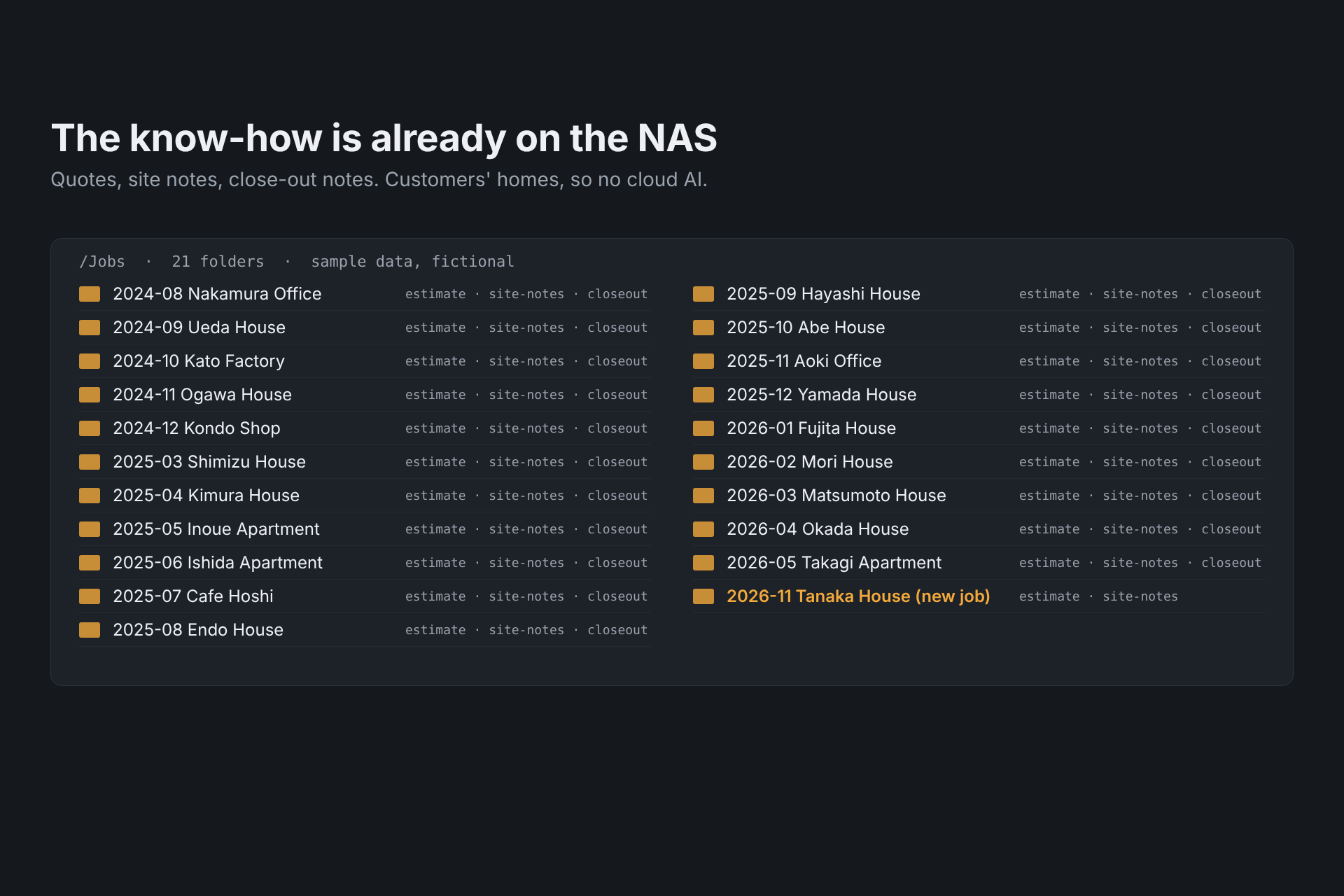
The firm’s job archive already lives on the NAS. All sample jobs are fictional.
-
Briefs you before every job. Learns from every job you finish.
-
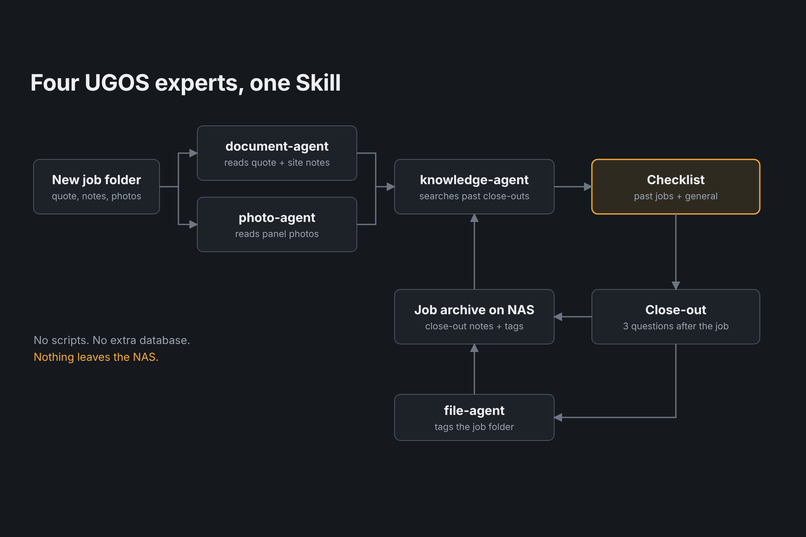
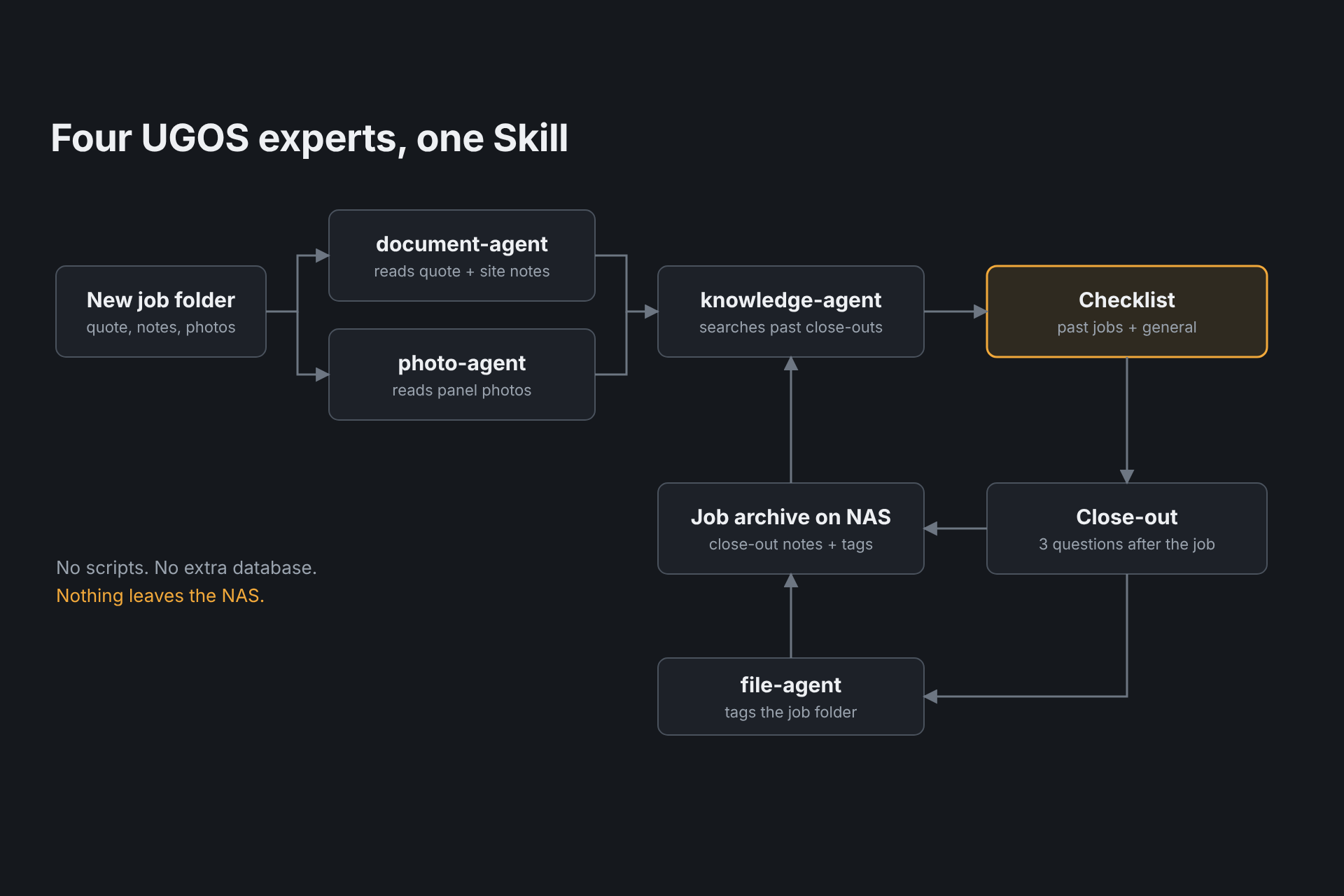
One Skill, four UGOS experts: document, photo, knowledge and file agents. No scripts, no extra database.
-
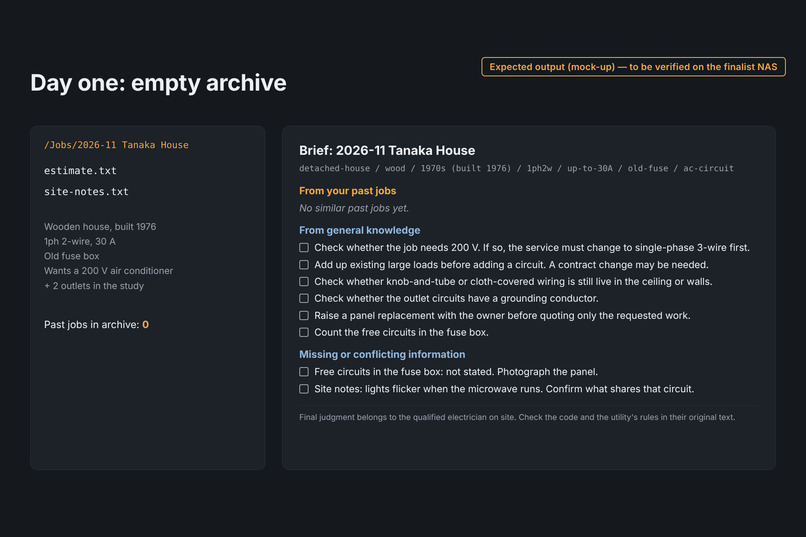
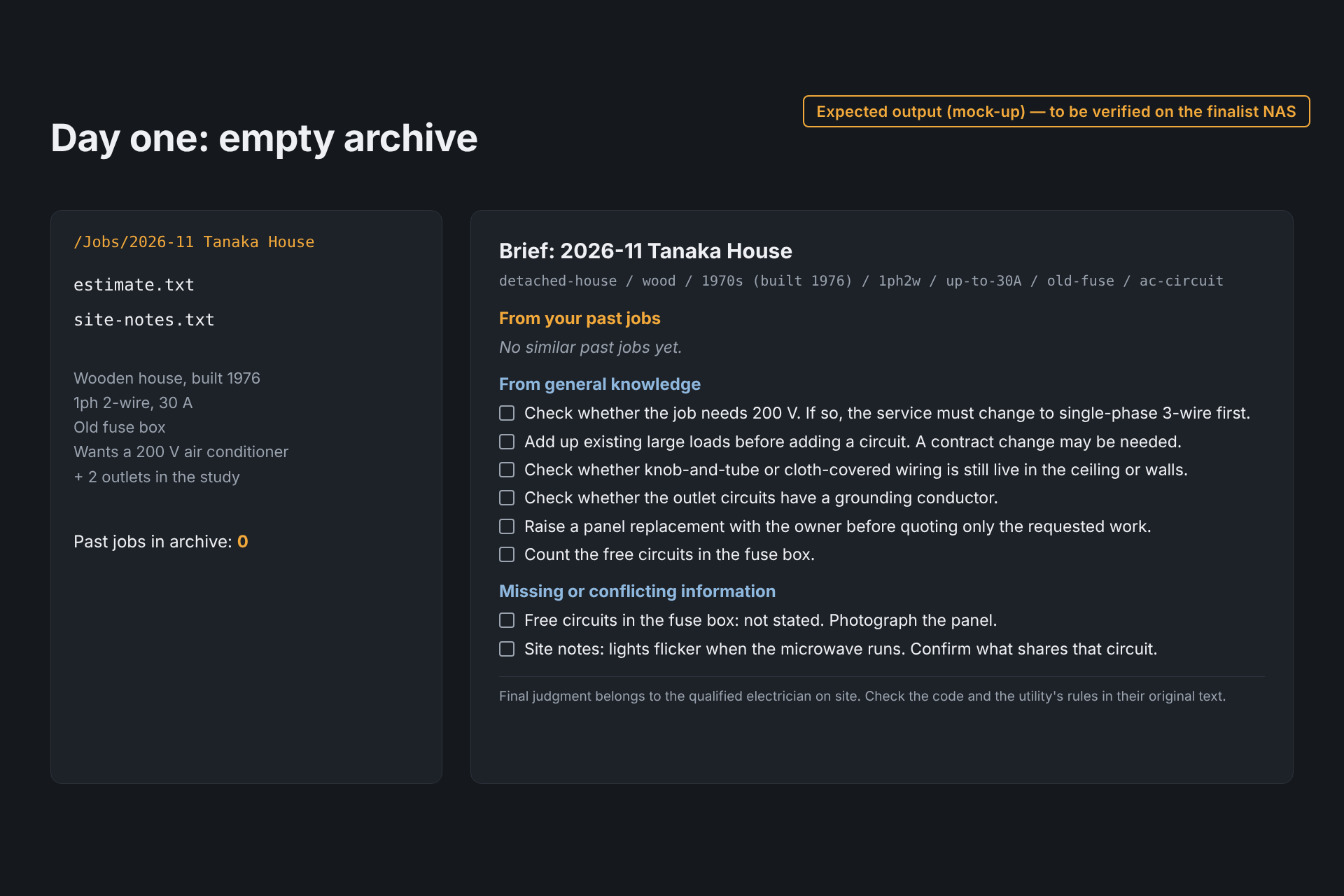
Day one with an empty archive: general checkpoints only, clearly labeled. (Expected output, mock-up)
-
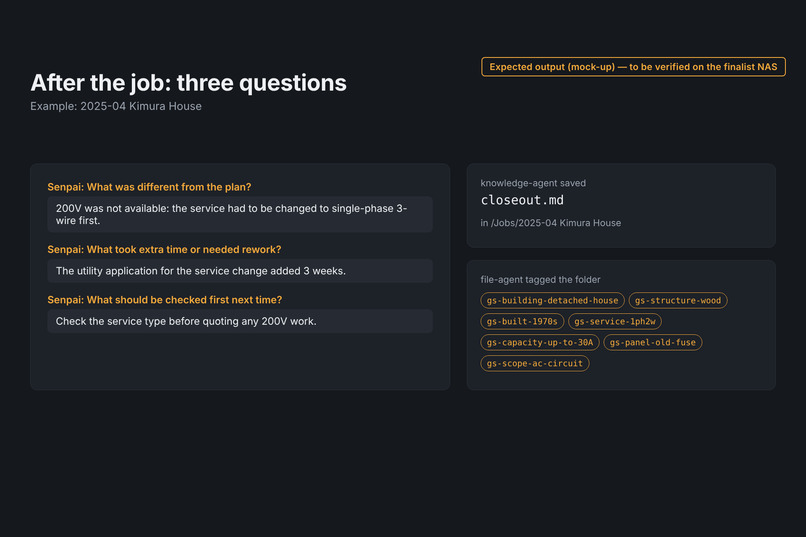
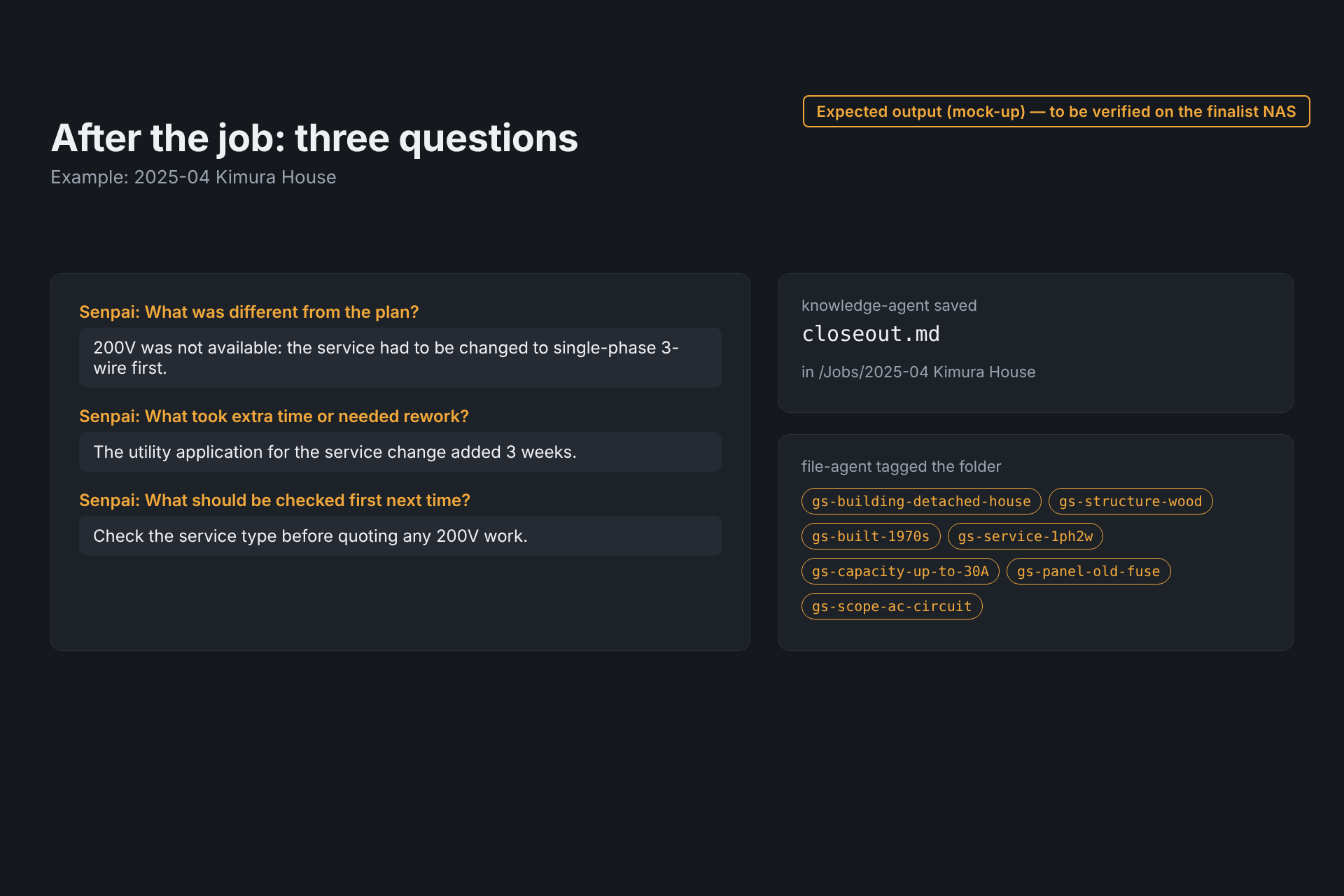
After each job: three questions, saved as closeout.md and tagged for future briefs. (Expected output, mock-up)
-
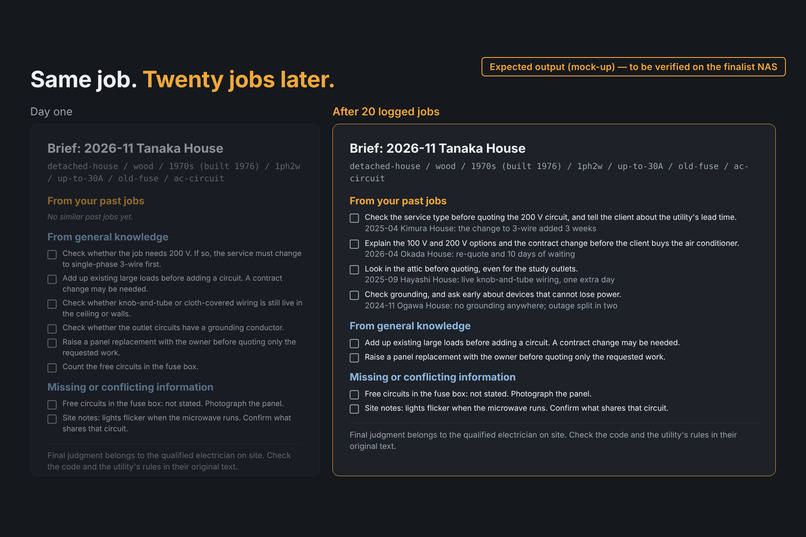
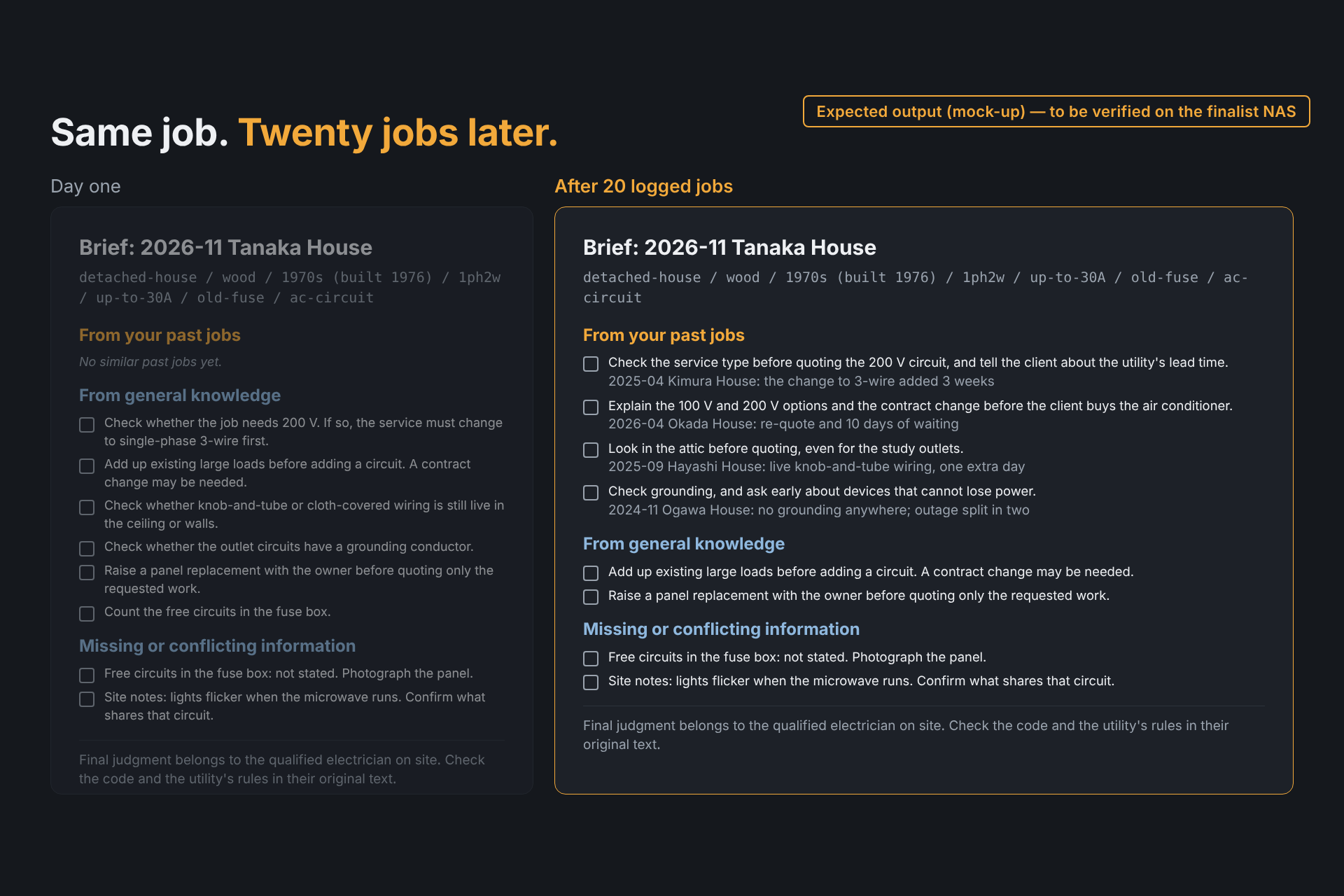
Same job, twenty jobs later: past-job items appear, each citing its source job. (Expected output, mock-up)
-
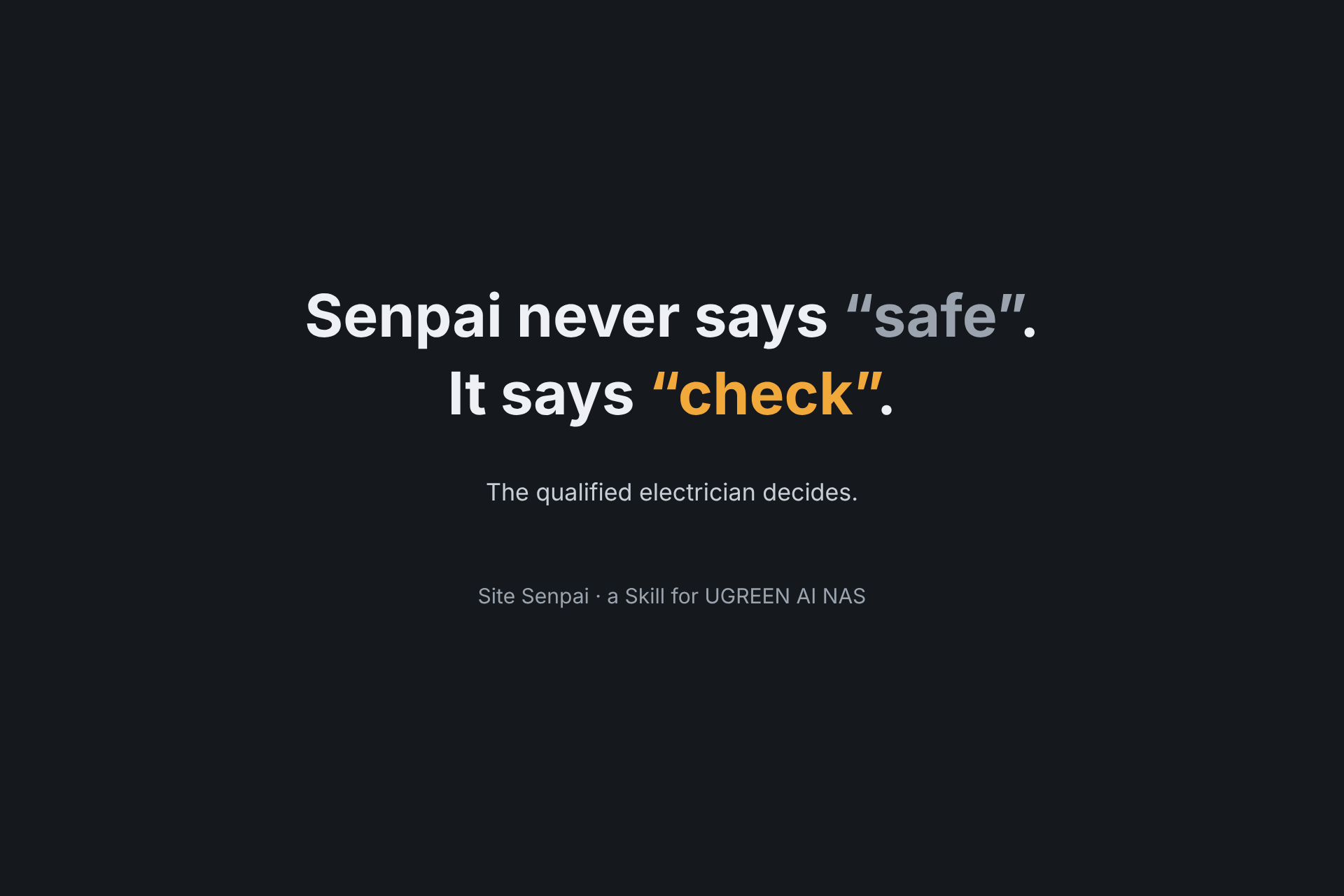
Senpai never says “safe”. It says “check”, and the qualified electrician decides.
Inspiration
A company once asked me for a chat tool that learns from how they handled each past property, so that when a new job comes in it warns them about similar cases. I couldn't build it then. Now I can.
I also just passed Japan's electrician exam. Every new electrician walks into an old house and finds wiring nobody told them about. The know-how that prevents that lives in a few veterans' heads and in job folders nobody has time to search. Those folders hold customers' floor plans and photos, so they shouldn't go to a cloud AI. That's exactly the case for an AI NAS.
What it does
Site Senpai ("your senior on site") is a Skill for UGREEN AI NAS.
- Brief a new job: it reads the job folder (quote, site notes, photos of the panel), finds similar past jobs, and returns a checklist in two labeled groups: From your past jobs (each item names its source job) and From general knowledge.
- Close out a job: it asks three questions (what was different from the plan, what took extra time, what to check first next time), saves the answers as
closeout.md, and tags the job folder.
On day one it works from general checkpoints. Every logged job makes the next brief more specific to your firm. It only ever says "check", never "safe": the qualified electrician decides.
How we built it
SKILL.mdis orchestration only. It delegates each step to four UGOS experts and passes only their real results on:- document-agent extracts job attributes from quotes and notes
- photo-agent reads panel photos and drawings (OCR + vision)
- knowledge-agent searches past close-out notes, saves new ones, and transcribes voice memos
- file-agent tags job folders and provides a tag-based fallback search
- Jobs are compared by seven fixed attributes (building, structure, decade built, service, capacity, panel, scope), stored as tags like
gs-built-1970s. - A general checklist, written in my own words from field practice, lives in
references/checkpoints.md. - All five delegation states and empty results are handled. Replies follow the user's language (English or Japanese).
- No scripts, no external database. The package passes the official Skill checker with 0 errors and 0 warnings.
Challenges
- No custom code allowed. Similar-job search had to come from UGOS's own evidence search and tags, not from a vector database.
- Safety. Electrical work can hurt people, so every item is phrased as a check and every brief ends by handing the decision back to the electrician.
- No hardware yet. The demo video shows expected output built from 20 fictional sample jobs, clearly labeled as a mock-up. It will be verified on the finalist NAS.
What I learned
Writing a Skill is closer to writing a job description for a team than writing code: say exactly what each expert should return, and what to do when it returns nothing.
What's next
Run the validation plan on the finalist NAS: an empty-archive brief, the same brief after 20 jobs, and a conflicting-data edge case.
