-
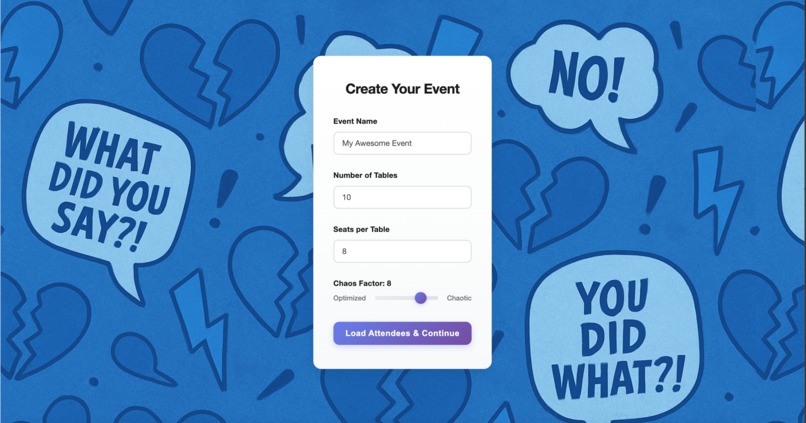
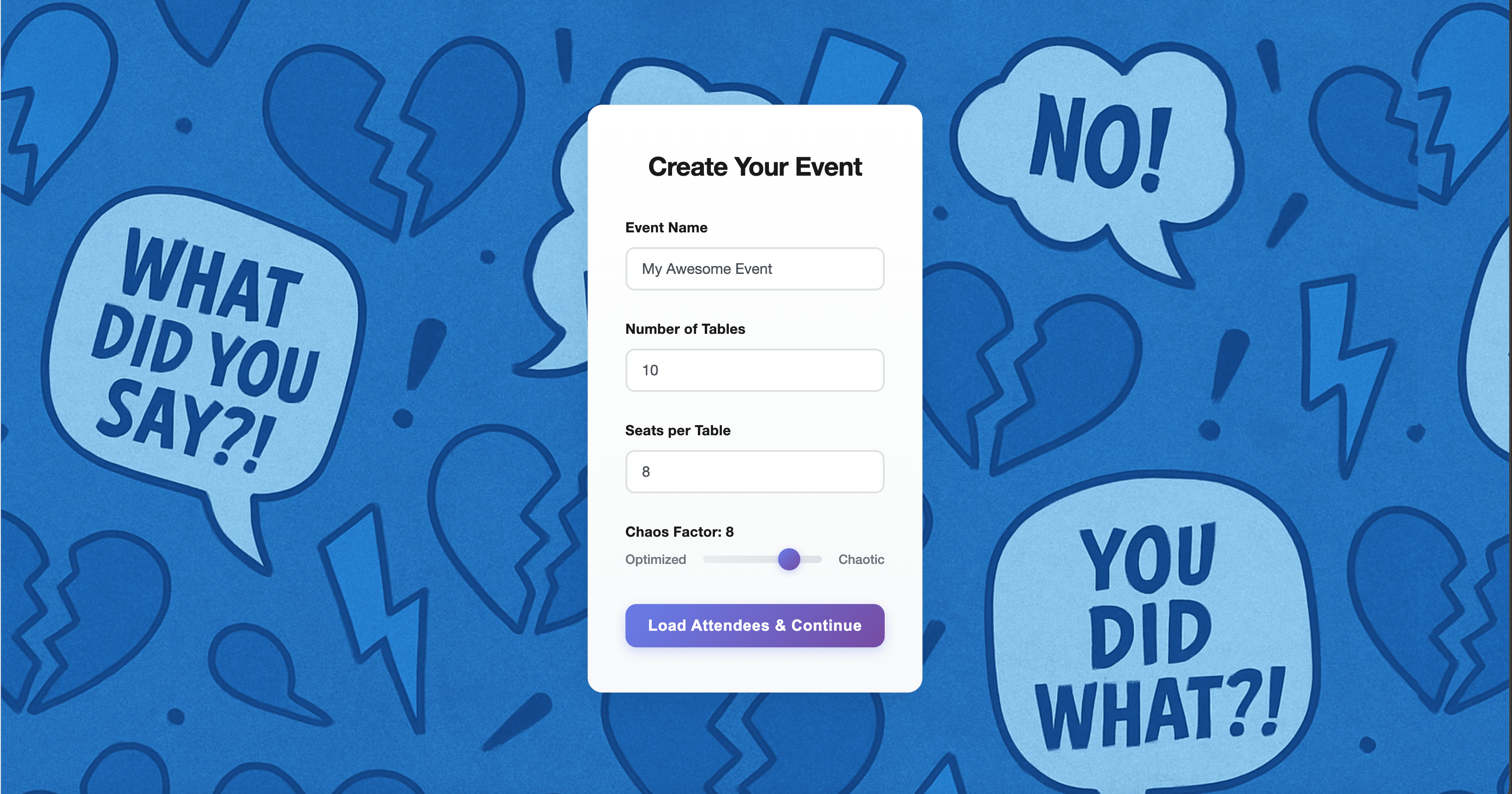
The event creation page within our UI.
-
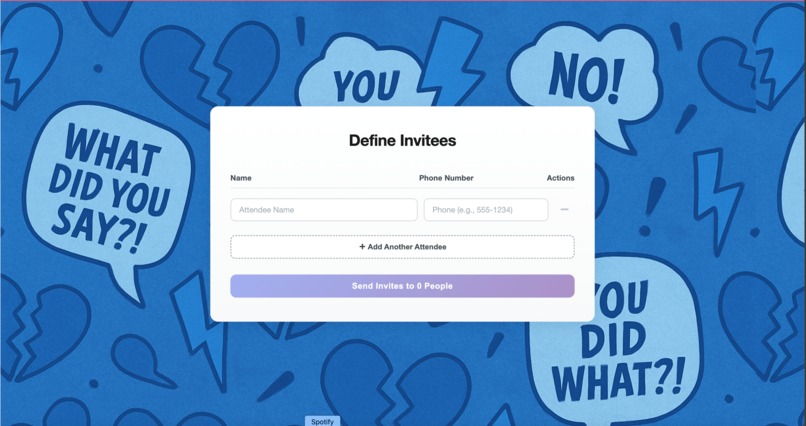
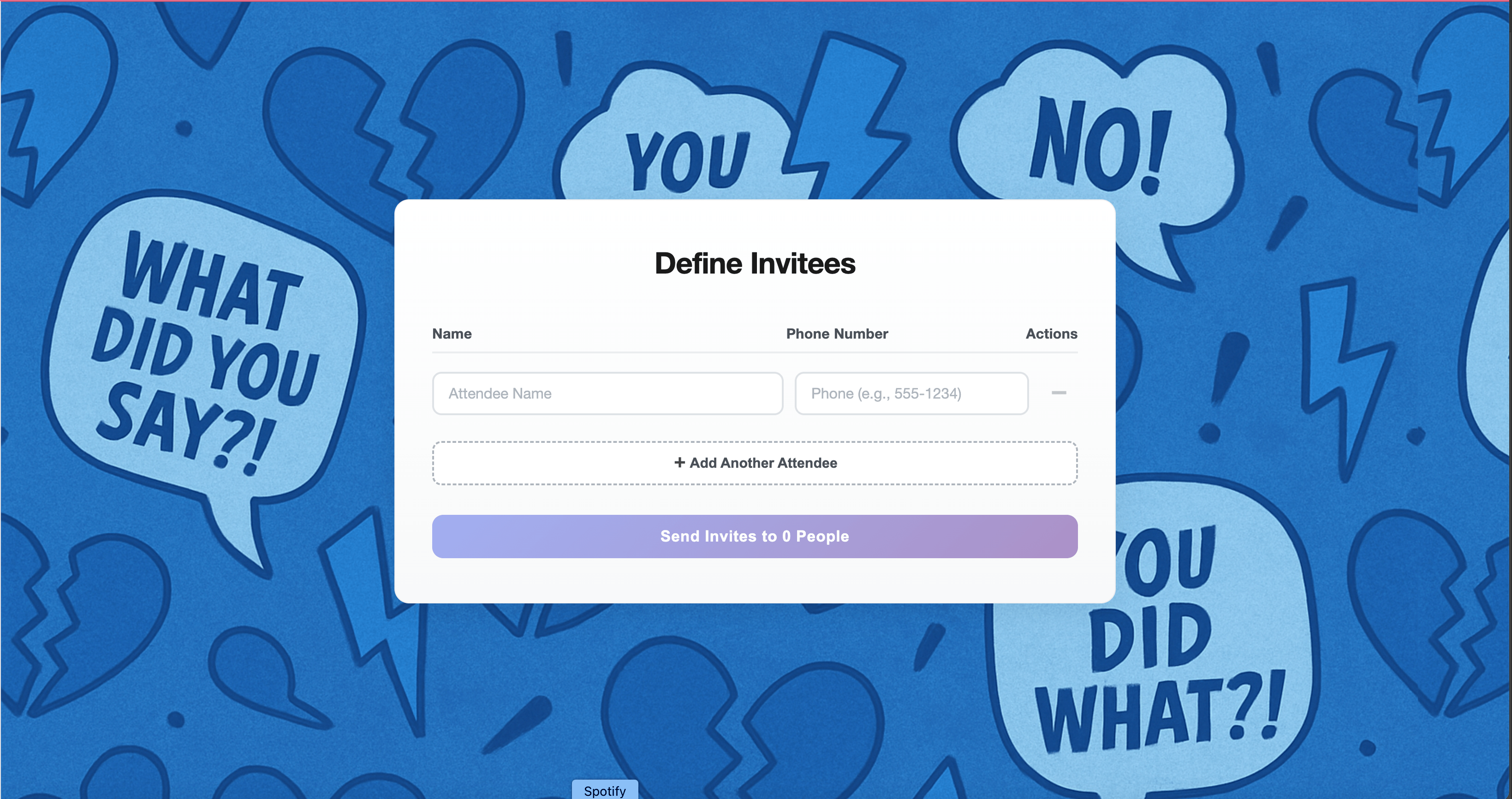
Giving users freedom to add attendees to their event.
-
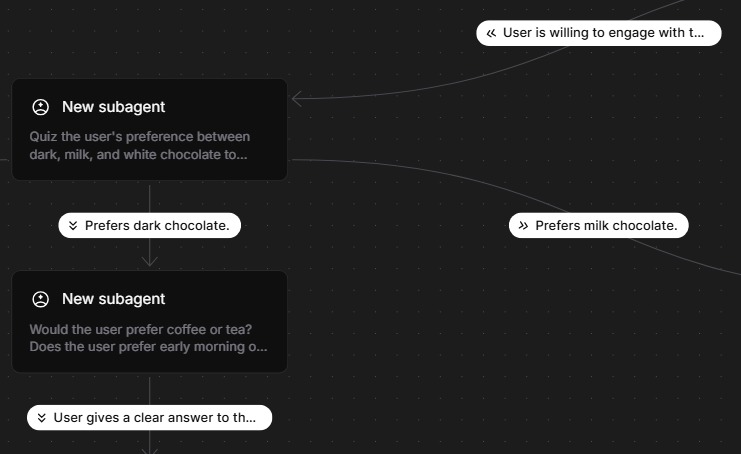
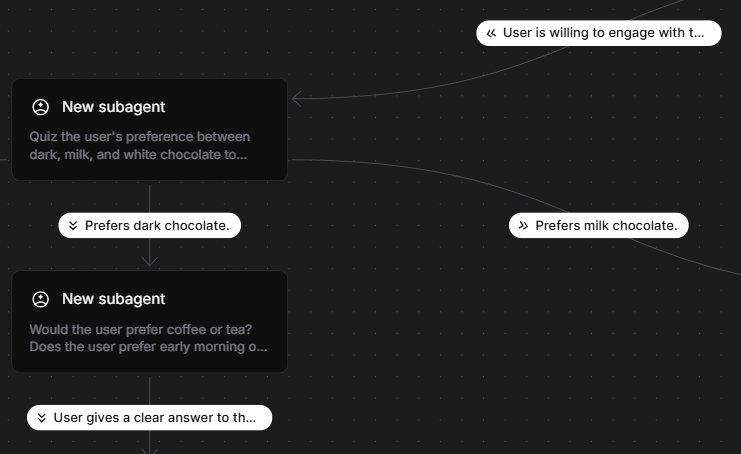
A subset of our ElevenLabs Agent's Workflow.
-
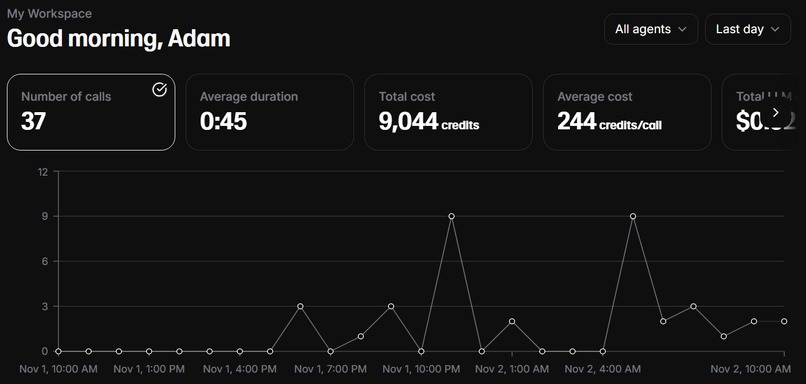
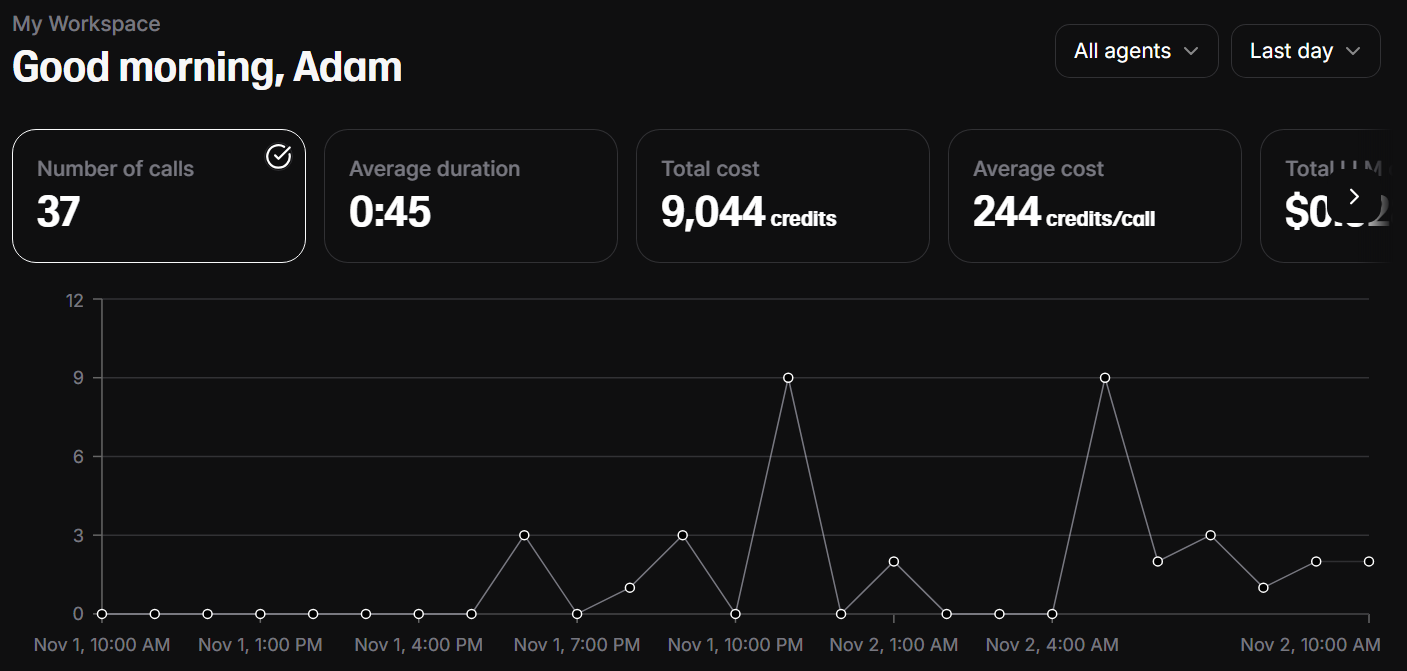
Our ElevenLabs workspace dashboard.
-
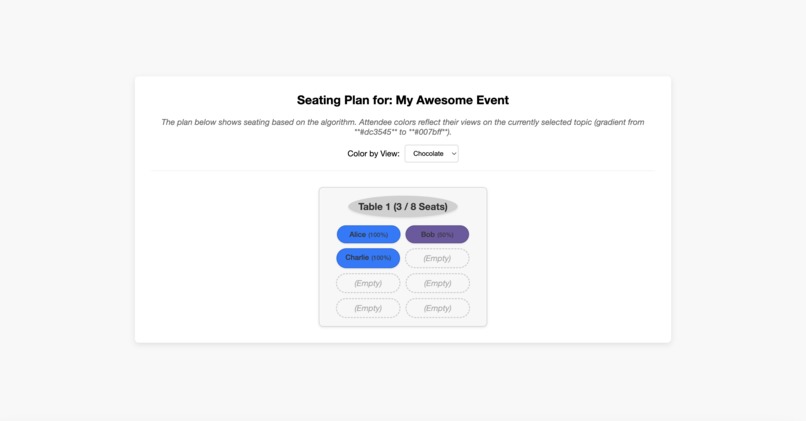
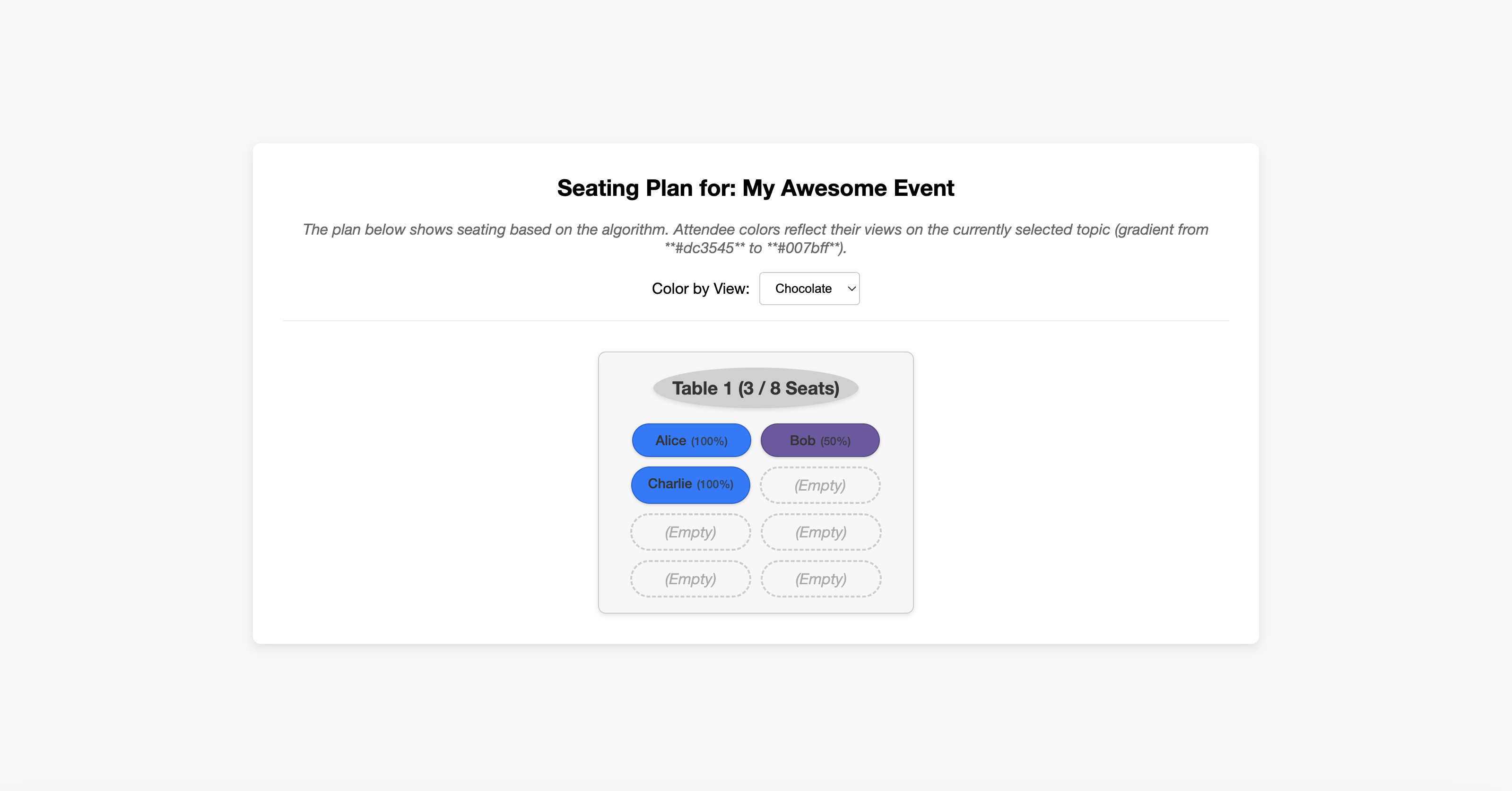
Seating plan.
Inspiration
We’ve all been to that wedding. Hours of forced small talk with a random uncle or your grandma’s bridge partner. So we thought: what if seating plans didn’t have to be polite? What if we added a bit of chaos?
Introducing Sit Happens: a conversational voice agent and seat-matching algorithm that ensures every event, whether dream or disaster, is never boring again. We aim to put the most or least agreeable people together, whenever we can.
What It Does
Our voice agent calls event attendees and playfully analyses their personality through adaptive icebreaker questions.
The system extracts unstructured conversational data, classifies it into Facts and Opinions, and uses this to predict who each guest would mesh or clash with.
Finally, users get an interactive web app that visualises the optimal (or most chaotic) seating plan in real time.
How We Built It
- Frontend: A React app where organisers create events, add attendees, and input phone numbers for the calls.
- Voice Agent: Built on the ElevenLabs Agents Platform, leveraging the new Agents Workflow feature to dynamically adapt to user responses.
- Data Pipeline: Using an ngrok webhook, we pull transcriptions from ElevenLabs into a Postgres database. A Gemini model then structures this text into clear Facts and Opinions.
- Vectorisation: Gemini also generates embeddings for each Fact, capturing personality traits numerically. With pgvector, we store these embeddings directly in Postgres for similarity search.
- Matching Algorithm: Given an
event_id,attendee_id,chaos_score, and Fact, we greedily query for embeddings that maximise or minimise similarity, depending on how chaotic you want the vibe. - Visualisation: The resulting matches generate a dynamic seating chart displayed through our web interface.
Challenges We Ran Into
- Regulatory hurdles: Using a Twilio virtual number with ElevenLabs required identity verification, which is a process that takes hours to approve in the UK.
- Vector database setup:
pgvectoron Windows required a full Visual Studio build environment (20–50 GB!). Docker saved the day. - Integrating multiple moving parts: Getting ElevenLabs, Gemini, Postgres, and the frontend all to talk seamlessly took serious debugging finesse.
Accomplishments We’re Proud Of
- Rapidly mastering the ElevenLabs Agents platform and advanced features like real-time Workflows and post-call webhooks.
- Successfully implementing a vector-based matching system, from embedding generation to efficient querying inside Postgres.
- Expanding our frontend skillset: React, async functions, SASS, and real-time API integration all within a single hackathon sprint.
- Delivering a fully working end-to-end pipeline: voice → structured data → embeddings → matchmaking → visual UI.
What We Learned
Planning pays off.
We spent the first few hours brainstorming and designing the system architecture before touching code, and it made all the difference. Once we started building, everything clicked into place. The result: a project we’re genuinely proud of and one that actually works.
What’s Next for Sit Happens
- Add multi-language support for international events. This can be easily supported within ElevenLabs's framework, specifically.
- Introduce personality visualisation, showing clusters of guests and predicted compatibility scores.
- Integrate real-time seat-swap simulation, so organisers can preview the chaos before committing.
- Package our matching API as a plug-and-play SDK for other event platforms.
Built With
- alchemyapi
- alembic
- claude-sonnet
- elevenlabs-agents
- google-gemini
- ngrok
- pgvector
- postgresql
- python
- react
- uv


Log in or sign up for Devpost to join the conversation.