-
-
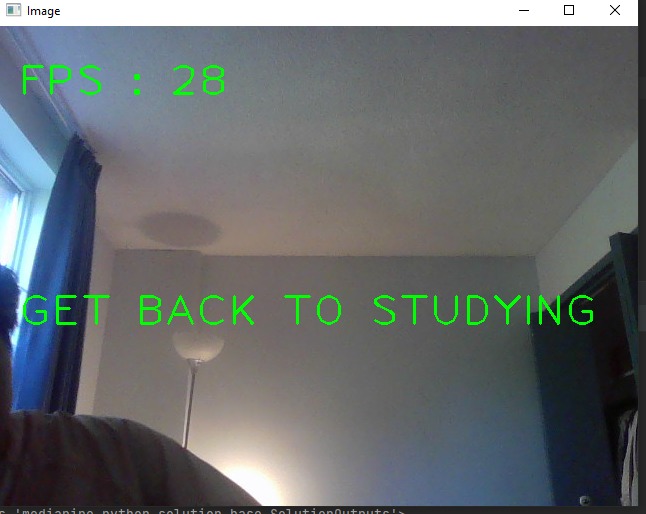
video
-
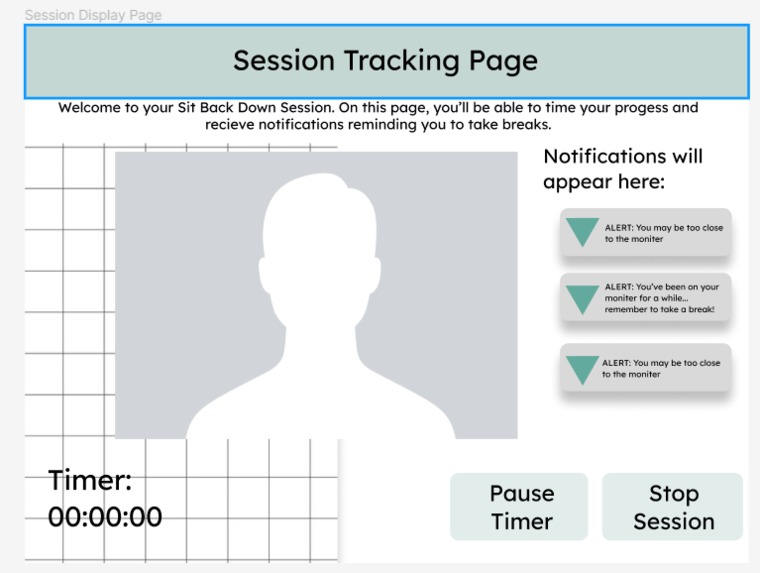
webpage prototype
-
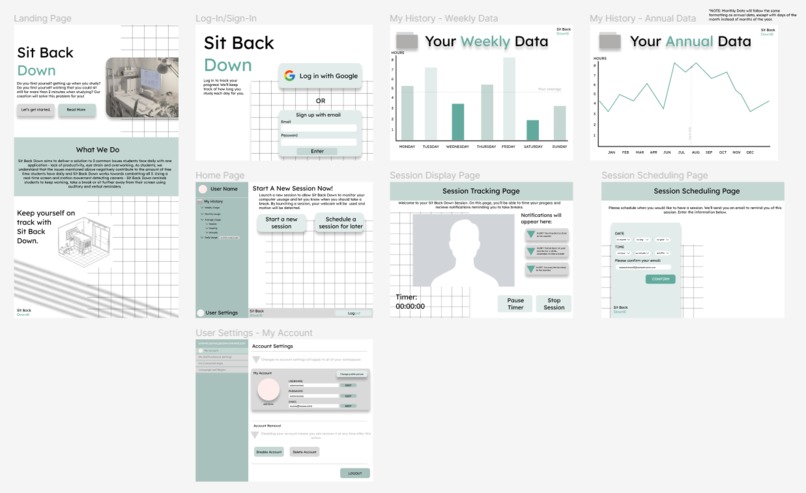
webpage prototype
-
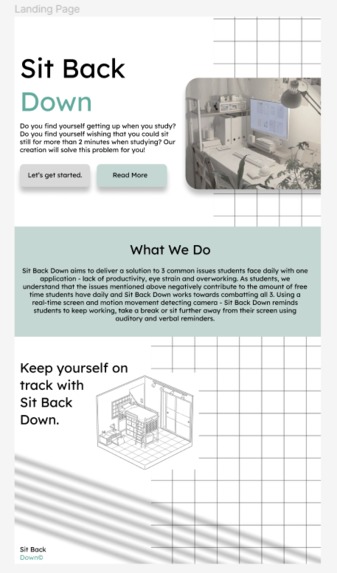
webpage prototype
Inspiration
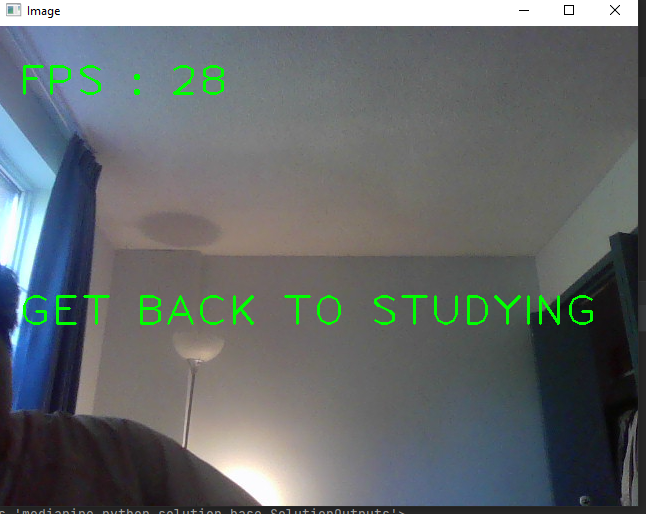
Our inspiration from this project was derived from our mutual belief that healthy productivity gives students many advantages including being able to explore interests outside of school, better sleep schedules and better mental health. As students, we all understand how time-consuming studying can be and how easy it is to get side-tracked - but with Sit Back Down, we’ve created a system to monitor your actions in real time to make sure you’re being as productive as possible without overworking yourself.
What it does
We built Sit Back Down using various softwares introduced to us during the Ignition Hacks and our own research 2022 workshops, including:
- Figma
- Python programming - OpenCV specifically
- Effective UI/UX guides
- Youtube tutorials
How we built it
We built Sit Back Down using various softwares introduced to us during the Ignition Hacks and our own research 2022 workshops, including:
- Figma
- Python programming - OpenCV specifically
- Effective UI/UX guides
- Youtube tutorials
Challenges we ran into
Some challenges we ran into include:
- Using openCV effectively (new to all of us)
- Programming a screen-movement detecting camera
- Getting adjusted to Figma formatting
Accomplishments that we're proud of
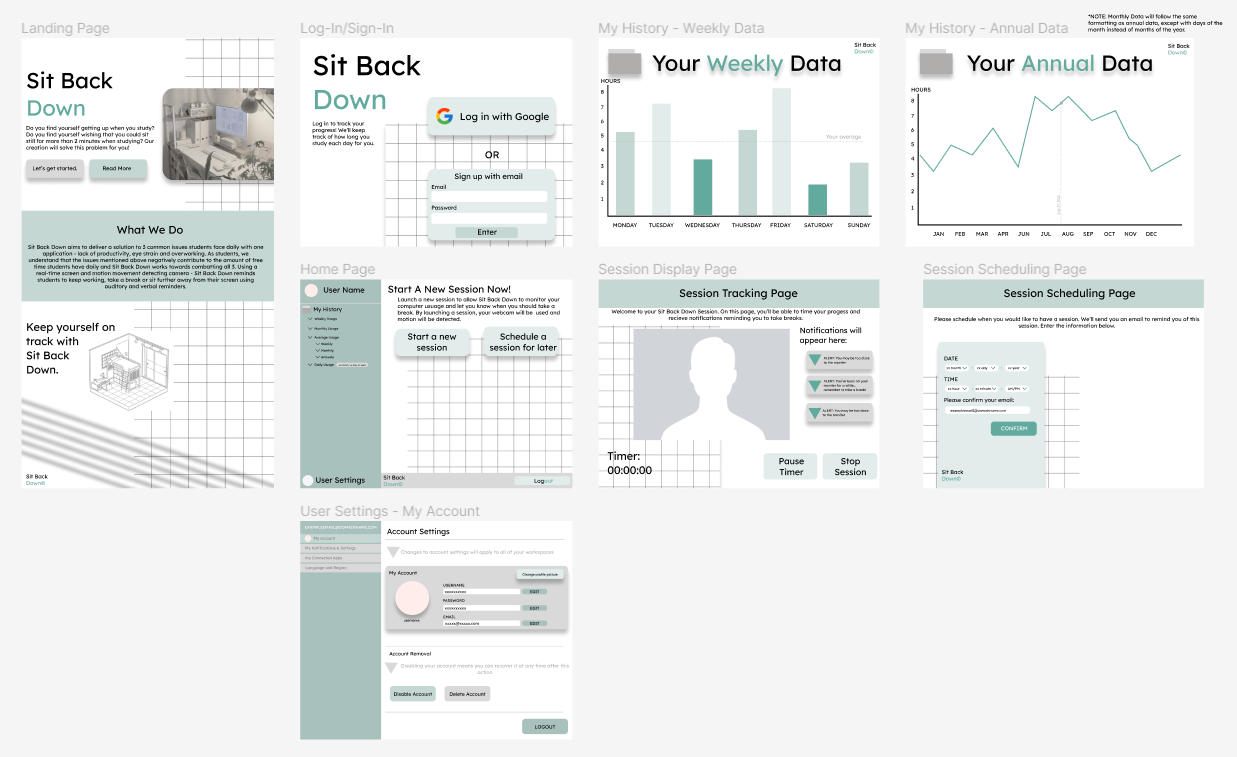
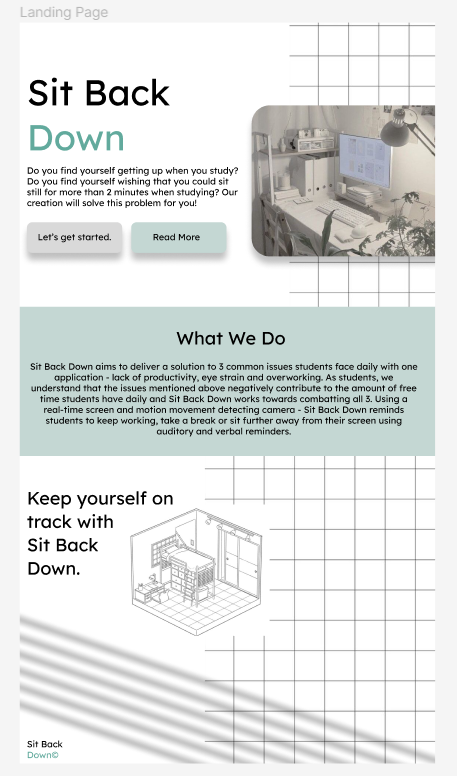
- Appealing website design
- Successful implementation of OpenCV (making the camera mentioned above)
- Adapting to new softwares
What we learnt (Proofs!):
Proof 1: Intro to Web Development During the Introduction to Building Your Own Website workshop hosted by Kevin Cui, we developed a strong fundamental understanding of key web development programming languages such as HTML, CSS and Javascript. We learned that HTML provides the foundation for a webpage, while CSS is responsible for adding style and JavaScript is used for functionality. Through building our own calculator application alongside the host, we were able to learn about important HTML, CSS and Java concepts. We were able to develop a trial website from scratch - but due to time constraints, we switched to other softwares.
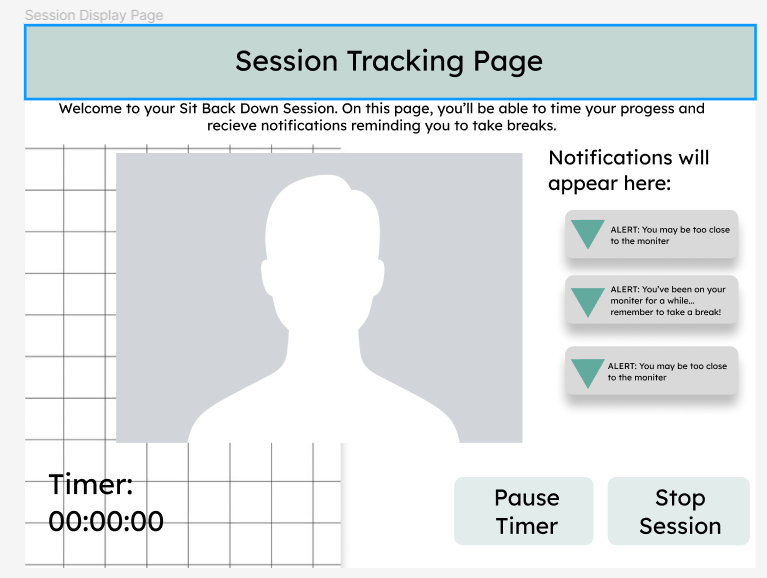
Proof 2: Intro to UI/UX During the Introduction to UI/UX workshop hosted by SparkMark, we were able to learn about a new prototyping software (figma) that provides an alternative to creating HTML-based web pages from scratch. Additionally, we were able to learn about the general UI/UX format used by many websites and implement this format into our own figma model, giving the user the most optimal experience possible.
Proof 3: Intro to Python During the Introduction to Python workshop with Sonny Li, we were able to learn fundamental python concepts such as conditionals, loops, functions, etc. The information we learned through this workshop proved very useful as a large part of our project is based on using OpenCV with Python, and without a fundamental understanding of basic python concepts, navigating through the computer vision library would be very difficult.
Proof 4: How to make the most out of a Hackathon During the How to make the most out of a Hackathon workshop with Angela Chan, we were able to learn more about how to make the most out of our Hackathon experiences. Throughout this workshop, the host discussed common myths associated with Hackathons and debunked them - proving that Hackathons are more open to everyone than they may appear. The host discussed that many people assume you need a fixed mindset, work experience and academic intelligence to excel in a Hackathon when in reality, all you need is an open mindset, willingness to learn more and willingness to ask for opportunities
What's next for Sit Back Down
Our next steps include implementing a working timer that aligns with the camera to prevent eye strain and overworking, enhancing our code to give users auditory reminders to take breaks/sit back/keep working, and enhancing our cameras to be able to detect facial depth - giving the user accurate suggestions in regards to how far away they should be moving from their monitor.

Log in or sign up for Devpost to join the conversation.