-
-
-
-
-
-
-
-
-
-
-
-
-
app
-
-
-
-
💡 Inspiration
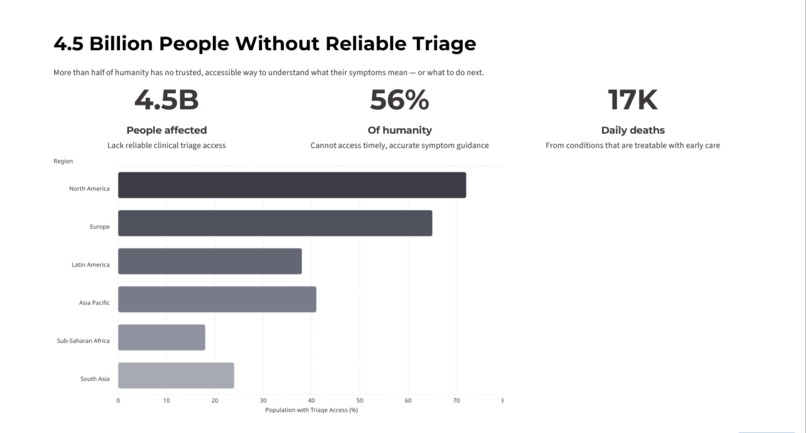
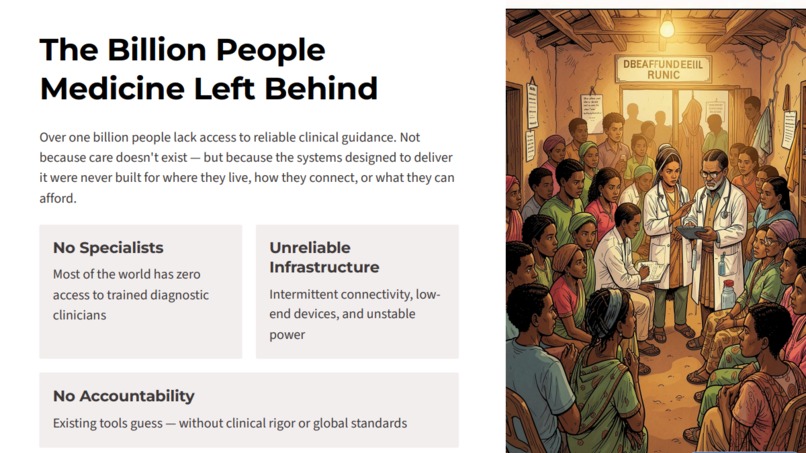
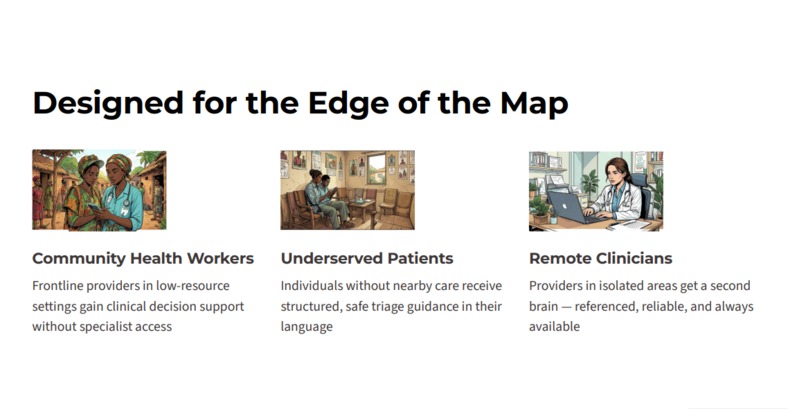
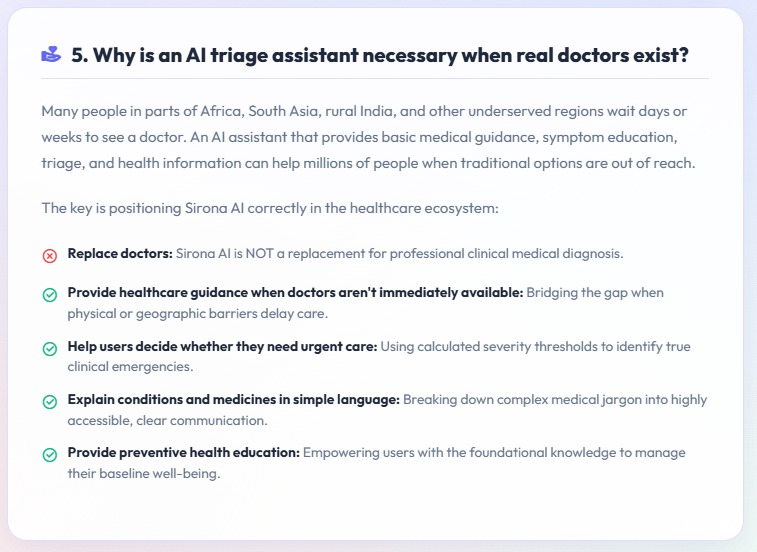
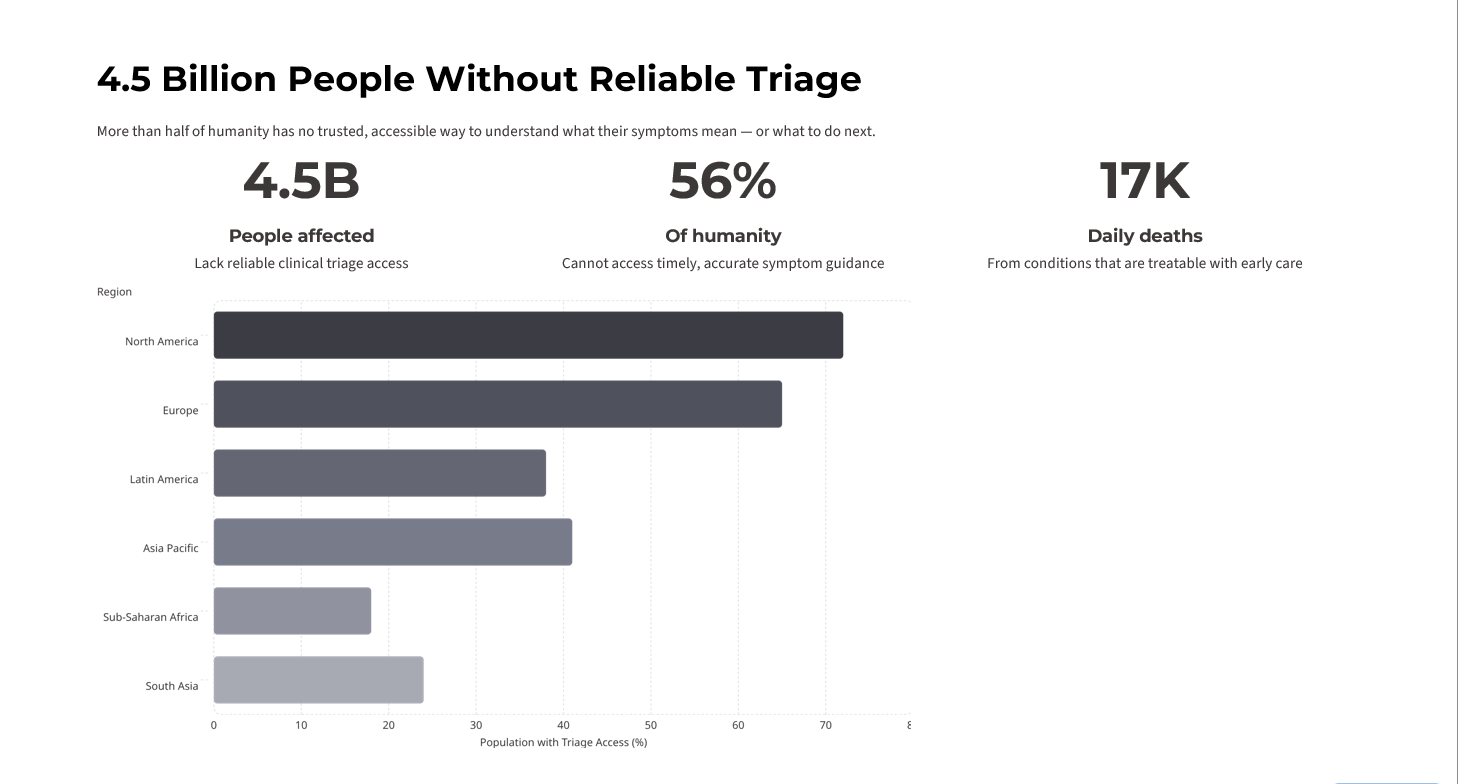
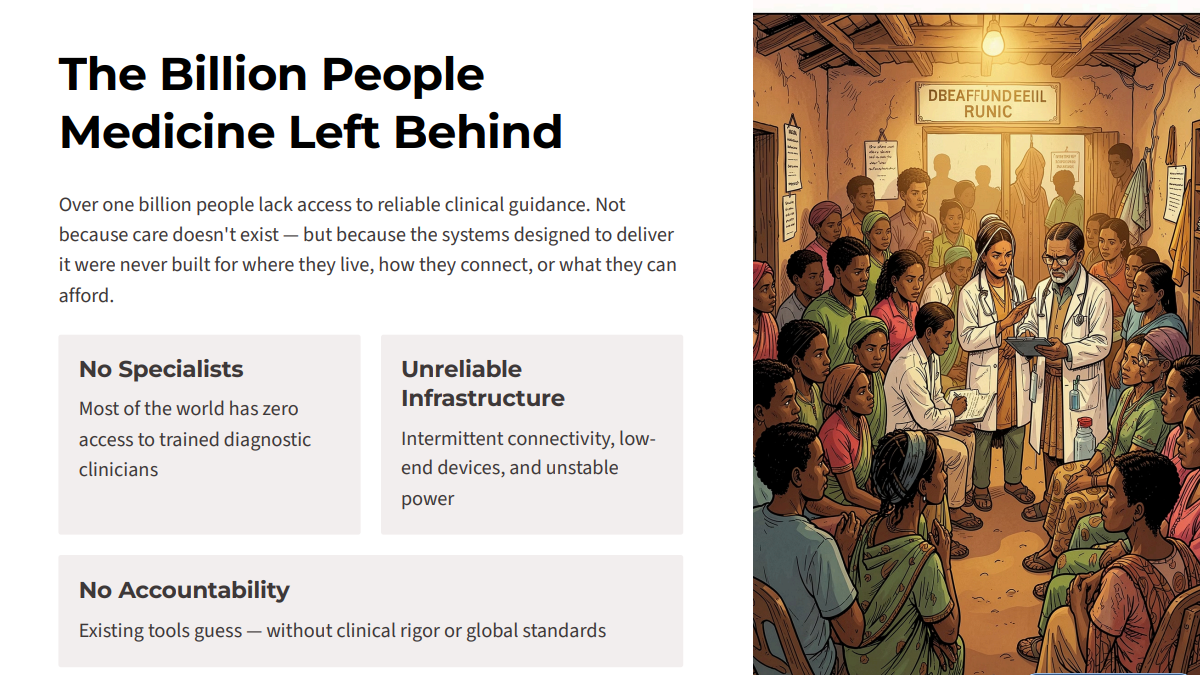
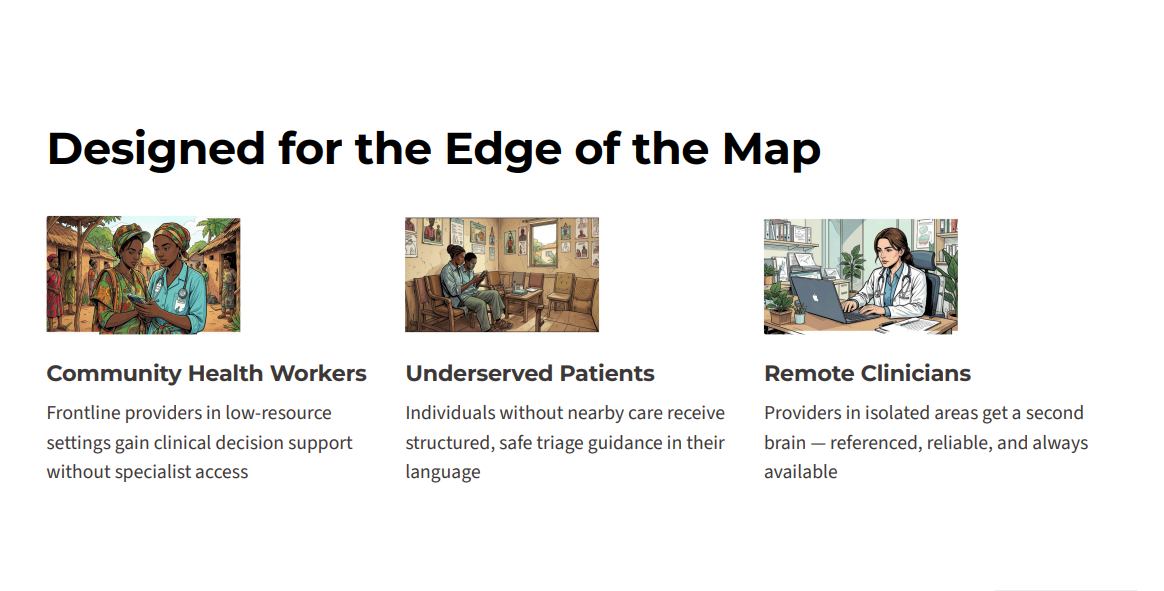
In many rural and underserved communities around the world, access to healthcare is not just expensive—it's often unavailable.
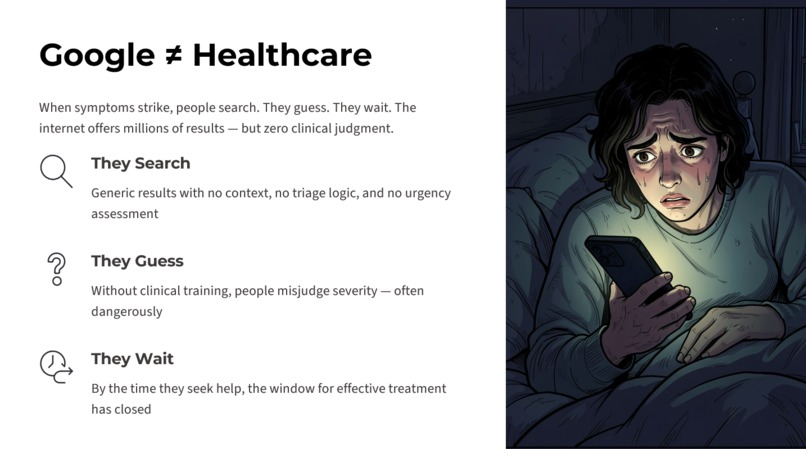
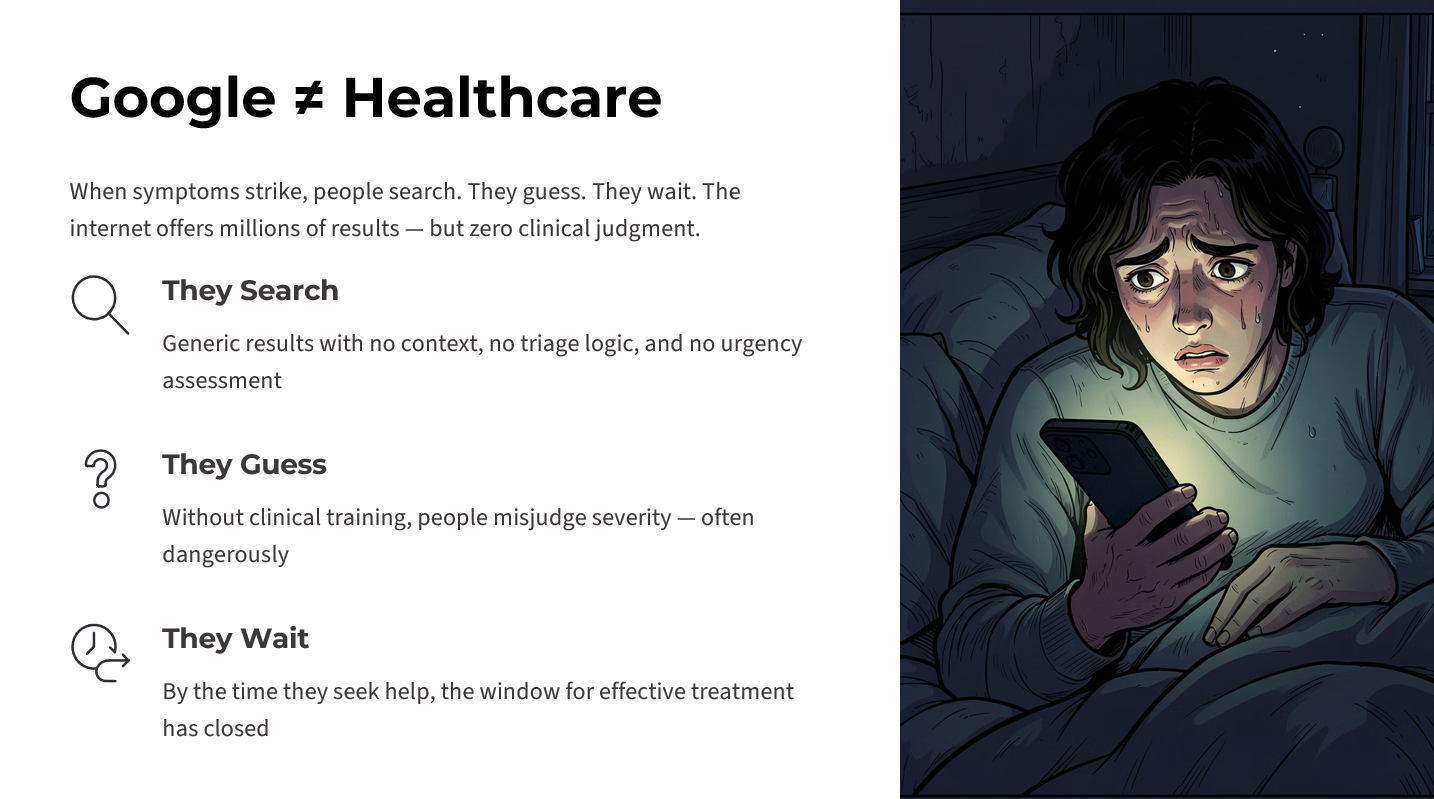
A patient experiencing chest pain, a skin infection, or severe anxiety may need to travel hours or even days to reach a clinic. For many people, the alternative is searching online, where they are confronted with misinformation, worst-case scenarios, and advice that lacks medical context.
Sirona AI was born from a simple question:
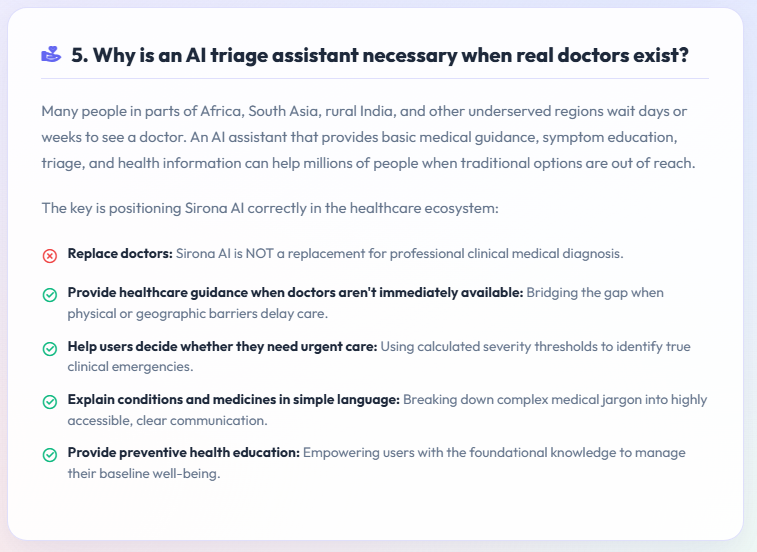
Can AI help people better understand their symptoms and know when they should seek medical care, without pretending to replace a doctor?
Our goal was never to build an AI doctor. Instead, we wanted to create an educational triage and health-awareness platform that helps users understand symptoms, identify potential warning signs, and navigate healthcare decisions more confidently.
Because healthcare is a high-stakes domain, every major design decision was guided by three principles:
- Safety before intelligence
- Transparency before automation
- Education before diagnosis
These principles shaped everything from our AI architecture to our safety systems and user experience.
🩺 What It Does
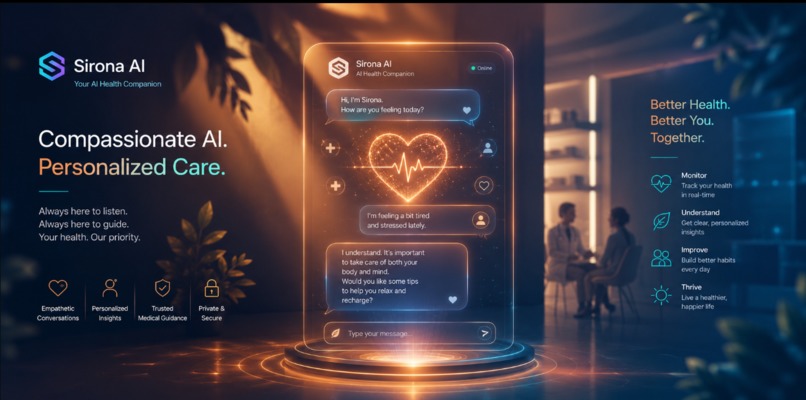
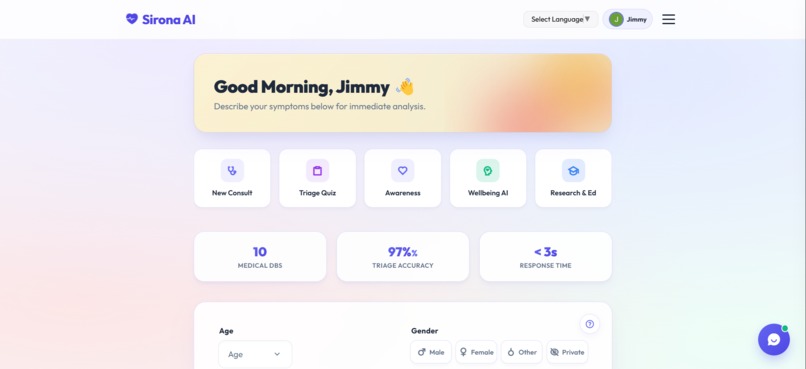
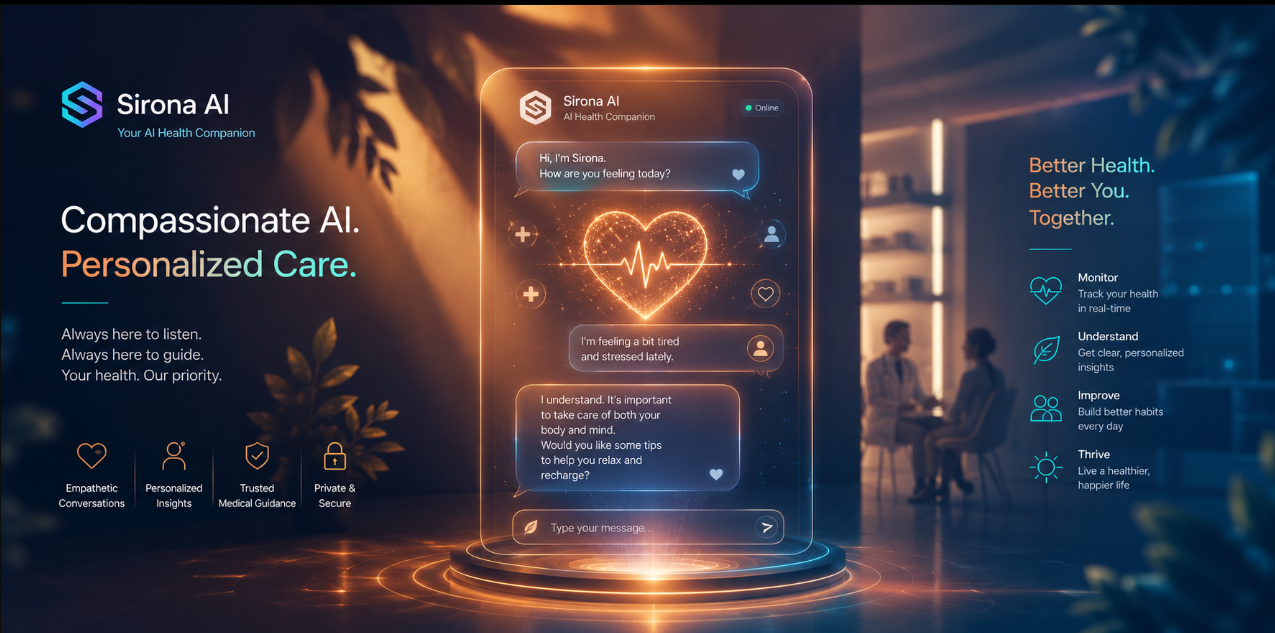
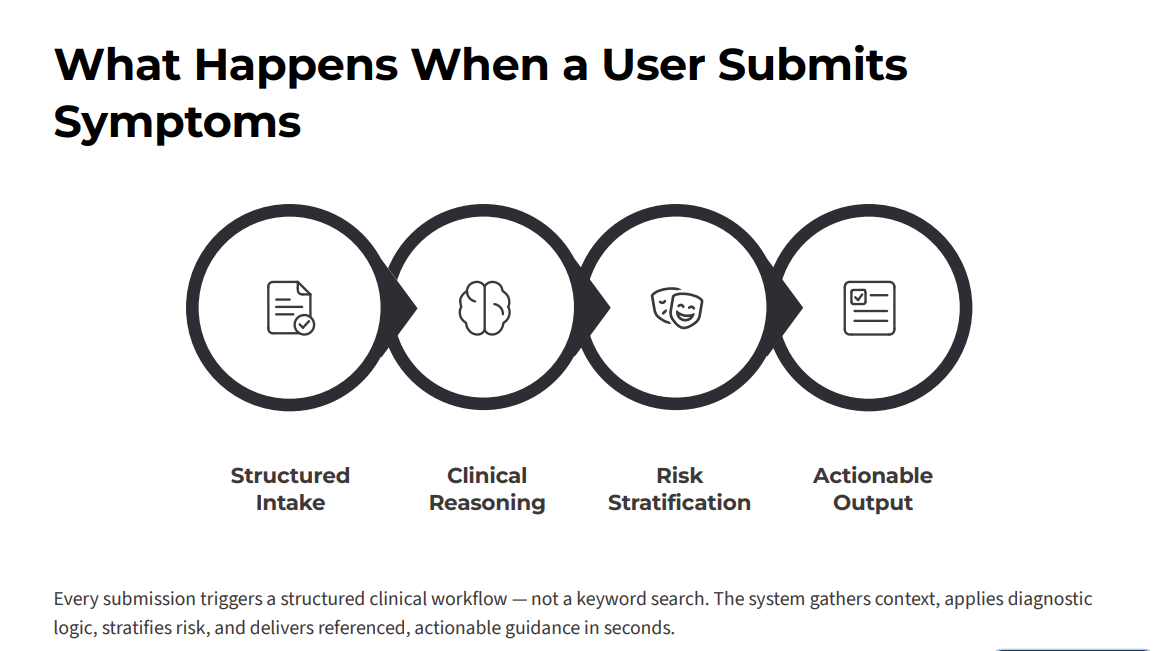
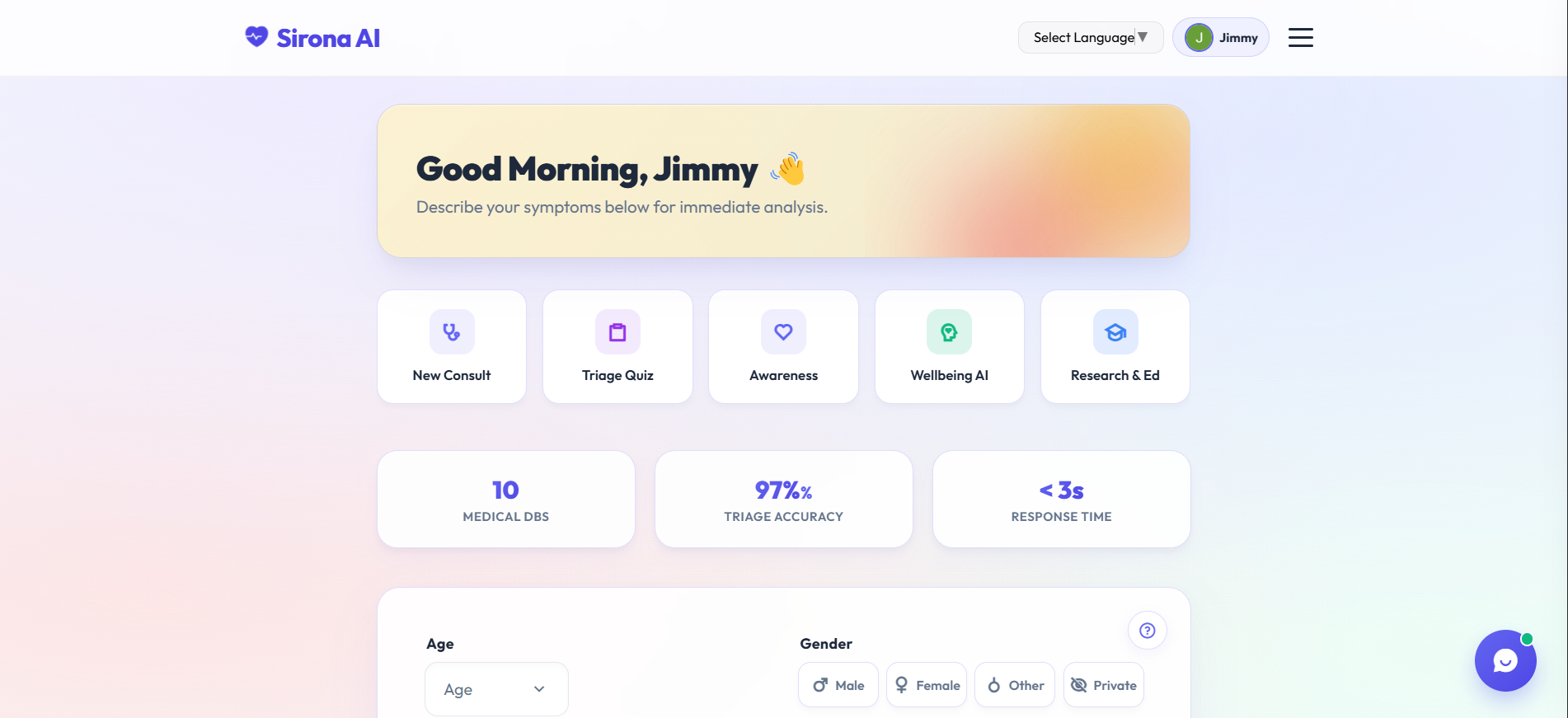
Sirona AI acts as a patient's primary digital point of care:
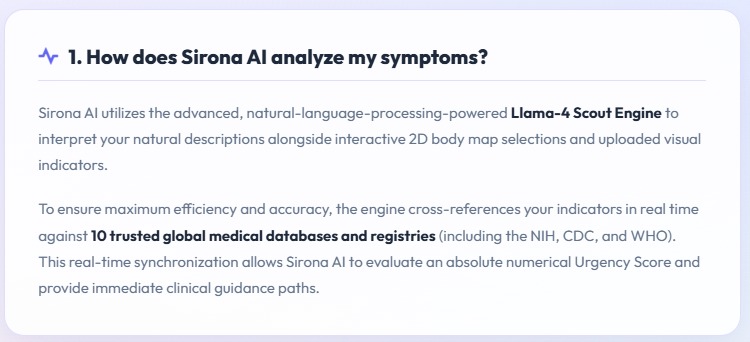
- Multimodal AI Consultation: Combines textual entries, spoken word transcripts, and uploaded symptom photos (e.g., skin rashes, eye redness, localized inflammation) to compile a patient dossier.
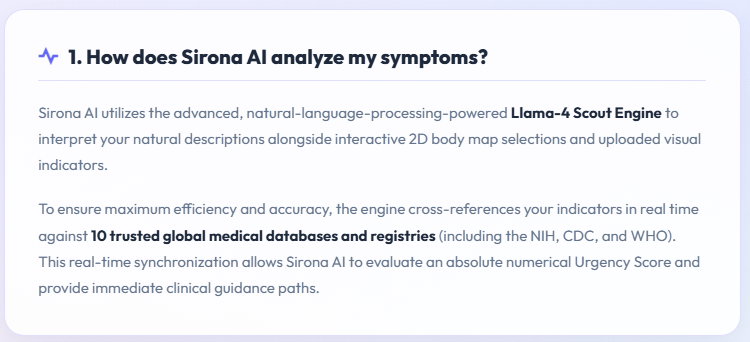
- Deterministic Triage Reports: Connects to the Groq Cloud model to output a structured clinical report containing potential differentials, physiological profiles, contraindications, and next-step actions.
- Multi-Tier Safety Interceptors: Blocks dangerous inputs (e.g., self-harm or acute events) before they reach the API, presenting immediate hotlines and triggering a full dashboard lockdown.
- AI Wellbeing Companion: Offers clinical emotional validation combined with ElevenLabs speech synthesis and customizable white noise ambient soundscapes to de-escalate anxiety.
- Stigma-Free Health Awareness Hub (
awareness.html): Features a private repository on taboo health topics, an interactive Myth vs. Fact flipping hub, and an anonymous local care wall where users can leave supportive thoughts. - Chronic Symptom Tracker: Captures daily health metrics (pulse, oxygen levels, mood, pain rating) to render visual recovery charts using Chart.js.
🛠️ How We Built It
Sirona AI was built to operate serverless-ready and client-centric, optimizing for local speed and bandwidth efficiency:
1. The Technology Stack
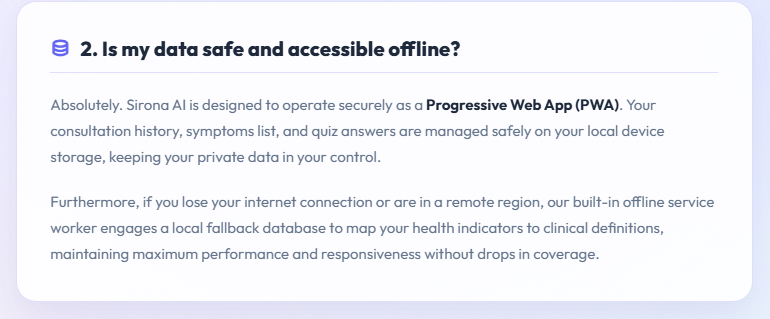
- UI Foundation: Semantic HTML5 structures with customizable SVGs representing the human body map.
- Styling: Vanilla CSS3 Custom Properties (CSS variables) for light/dark theme synchronization, glassmorphism filters, and clean CSS print media rules.
- Core Logic: ES6+ JavaScript handling asynchronous network routing, state controllers, and local dictionaries.
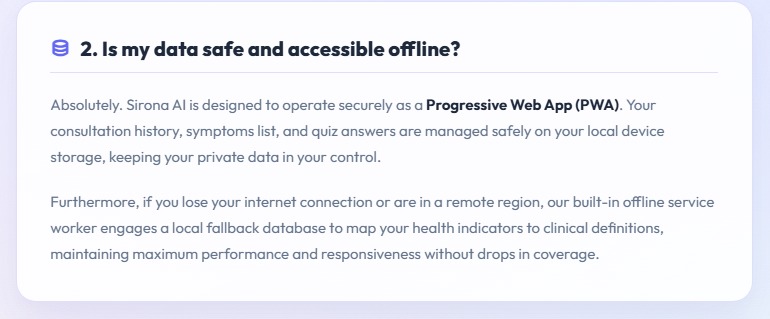
- Database & Auth: Google Firebase (Firestore & Authentication) to manage synced medical logs, user profiles, and emergency Medical IDs.
2. The AI Clinical Triage Pipeline
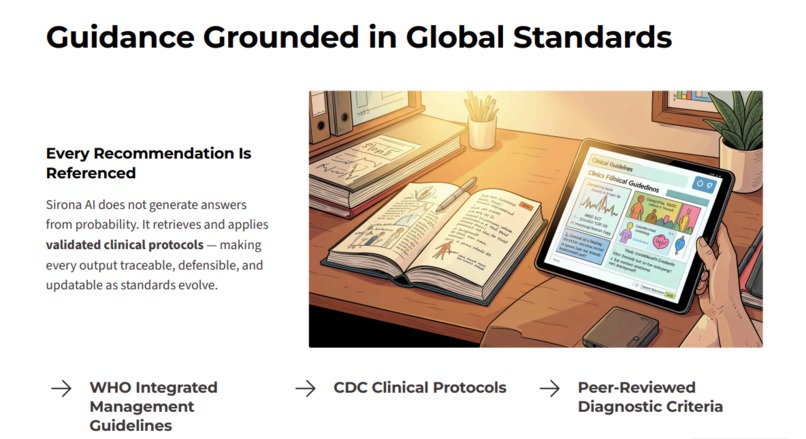
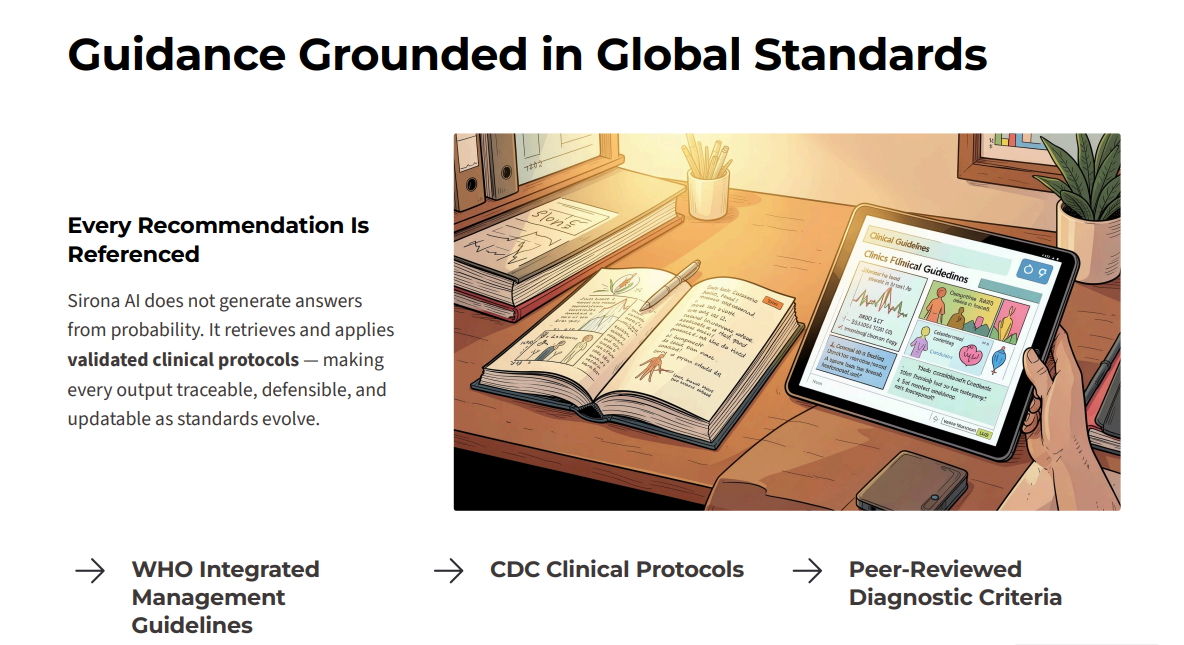
We utilize Groq's low-latency endpoint running the meta-llama/llama-4-scout-17b-16e-instruct model. To bypass clinical hallucinations, Sirona AI wraps client inputs in a strict system prompt that demands cross-referencing against 10 international medical registries:
| Registry Database | Clinical Grounding Purpose |
|---|---|
| PubMed | Correlates symptom clusters with peer-reviewed case file abstracts. |
| OpenFDA | Scans adverse event logs and flags drug recalls. |
| WHO Guidelines | Checks global outbreak alerts and tropical disease distributions. |
| CDC Surveillance | Matches infections against local seasonal timelines. |
| NIH Guidelines | Sources clinical practice guidelines for working differentials. |
| ICD-11 | Maps potential conditions to international medical classification codes. |
| SNOMED CT | Formulates standardized clinical concept terminologies. |
| RxNorm | Correlates clinical drug active ingredients. |
| DailyMed | Pulls FDA pharmaceutical warning labels and contraindications. |
| MedlinePlus | Formulates clear, plain-language patient advice summaries. |
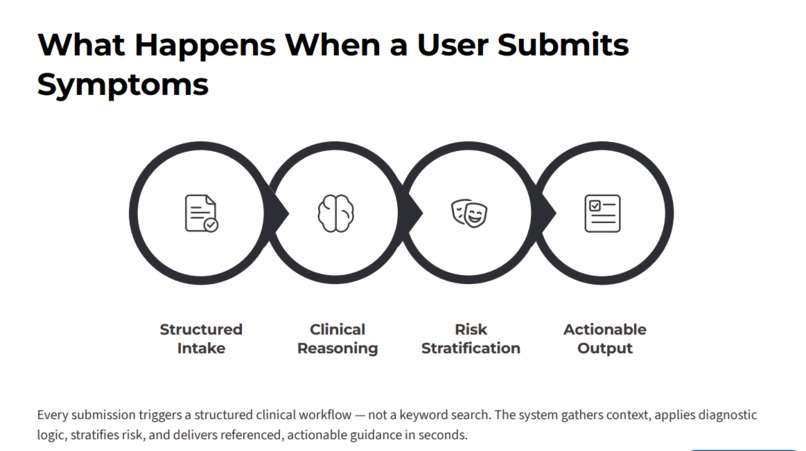
2.1 Workinng mechanism
                    ┌────────────────────────────────┐
                    │      User Inputs Symptoms       │
                    │   (Text, Speech, Photo, Map)   │
                    └───────────────┬────────────────┘
                                    ▼
                    ┌────────────────────────────────┐
                    │    Semantic Safety Filters     │
                    │     (Category A, B, and C)     │
                    └───────────────┬────────────────┘
                                    ├────────────────────────┐
                                    ▼ (Pass)                 ▼ (Fail)
                    ┌────────────────────────────────┐ ┌──────────────────┐
                    │   Injected Medical Context     │ │  Safety Overrides│
                    │  (PubMed, NIH, WHO, FDA, etc.)  │ │  & Emergency Lock│
                    └───────────────┬────────────────┘ └──────────────────┘
                                    ▼
                    ┌────────────────────────────────┐
                    │   Low-Temp Inference Pipeline  │
                    │   (Groq Llama-4 Scout, T=0.15) │
                    └───────────────┬────────────────┘
                                    ▼
                    ┌────────────────────────────────┐
                    │   Structured Output Validator  │
                    │      (Differential Triage)     │
                    └───────────────┬────────────────┘
                                    ▼
                    ┌────────────────────────────────┐
                    │    Urgency Gates & Lockdown    │
                    │    (Score 0-100 Classification)│
                    └───────────────┬────────────────┘
                                    ├────────────────────────┐
                         ▼ (Score < 60)              ▼ (Score >= 60)
            ┌──────────────────────────────┐  ┌──────────────────────────────┐
            │  Detailed Clinical Analysis  │  │  Emergency Safety Protocol   │
            │  • Top 3 Differential (DDx)  │  │  • Strip Drug Protocols      │
            │  • Pathophysiology Summary   │  │  • Lock input forms          │
            │  • Therapeutic Protocol      │  │  • Doctor Referral Banner    │
            │  • Diagnostic Workup Recommendations│  │  • 30-min Safety Countdown   │
            │  • Red Flags & Warning Signs │  └──────────────────────────────┘
            │  • Print-ready A4 PDF Export │
            └──────────────────────────────┘
3. The Mathematical Triage Urgency Model
Sirona AI evaluates urgency programmatically using a combined index score ($M$) from $0$ to $100$:
$$M = w_1 \cdot S_{base} + w_2 \cdot P_{level} + w_3 \cdot V_{metrics} + S_{override}$$
- $S_{base}$ (Base Symptom Severity - 0 to 40): Extracted by analyzing semantic keywords in the symptom text (e.g., sudden onset, localized radiating pain).
- $P_{level}$ (Pain Scale - 0 to 15): Calculated using the interactive slider: $\text{Slider Value} \cdot 1.5$.
- $V_{metrics}$ (Vital Indicators - 0 to 25): Evaluated from vital inputs. Heart rate anomalies add points, and hypoxemia ($SpO_2 < 90\%$) automatically adds $+25$ points.
- $S_{override}$ (Emergency Override - $+50$ to $+100$): Instantly triggered if critical emergency keywords (e.g., crushing chest pain radiating to left arm) are matched, forcing $M \ge 75$ and triggering immediate UI lockdowns.
4. Offline-First PWA Architecture
- Supported by a custom service worker (
sw.js) caching all local pages, assets, and libraries. - When offline, Sirona AI redirects triage submissions to a local key-matching fallback dictionary, evaluating symptoms and calculating emergency scoring completely in the browser's sandbox.
🛠️ Development Journey
One of the biggest challenges was balancing reliability, safety, and accessibility within hackathon constraints.
We explored using Google's MedGemma model because of its medical focus. However, running large medical models required infrastructure that exceeded the project's available resources. During testing on free cloud environments, cold-start times could exceed one minute and sessions frequently disconnected.
To ensure a responsive user experience, we ultimately chose Groq-hosted inference for the hackathon version while focusing our efforts on retrieval, validation, safety, and medical knowledge integration.
This project is currently a proof of concept and educational prototype. It is not a clinical-grade medical system, but rather an exploration of how AI can responsibly improve access to health information for underserved communities.
🏆 Accomplishments That We're Proud Of
- Exceptional UI/UX Fluidity: Built a startup-grade, modern glassmorphic dashboard completely in vanilla CSS and JS, with smooth transitions, custom dark modes, and sound effect synthesizers.
- Multi-Layered Safety Infrastructure: Sirona AI prevents API abuse, handles self-harm queries locally, locks the UI on critical clinical thresholds, and strictly implements a Human-in-the-Loop validation message.
- Interactive SVG Body Mapping: Fully responsive SVG maps that allow patients to visually pin-point locations, automatically populating symptom descriptors.
- Empathetic Wellness Synth: Programmed custom Web Audio API mixers and integrated realistic speech synthesis (ElevenLabs) to provide a comforting presence during anxiety flare-ups.
📖 What We Learned
- Determinism is Vital in Digital Health: We learned that clinical applications must severely restrict LLM creativity. Running Llama-4 Scout at a minimal temperature (
0.15) is essential to prevent medical hallucinations and keep outcomes aligned with established medical registries. - Designing for Privacy Builds Trust: Ensuring that visual assets are kept ephemeral and processed directly in client memory reassures users when navigating private and stigmatized health topics.
- Framework-free Development is Highly Performant: By avoiding heavy React, Angular, or Tailwind builds, Sirona AI registers near-instantaneous load times, making it accessible on outdated mobile hardware and low-bandwidth connections.
🔮 What's Next for Sirona AI — Clinical Triage
- EHR / FHIR Integration: Connect Sirona's clinical reports to Electronic Health Records systems using standard FHIR APIs to allow seamless sharing with medical professionals.
- On-Device Small Language Models (SLMs): Incorporate Llama 3B or Gemma-2B models locally in the browser using WebNN / WebGPU, facilitating highly complex offline analysis without requiring an internet connection.
- Localization & Speech Dialects: Expand translation support to indigenous dialects, incorporating voice-to-text models that parse colloquial clinical descriptions.
- Field Pilot Campaigns: Partner with local community health networks in remote villages to validate Sirona's clinical decision support interface in real-world triage environments.
🛡️ AI Safety, Guardrails & Clinical Risk Mitigation
Sirona AI incorporates a comprehensive, multi-tiered safety system operating at the interface, query translation, and AI inference levels to prevent abuse, secure patient health, and guarantee compliance with global healthcare reference standards:
1. Pre-API Input Safety Shield
The application runs all user symptom text inputs through an active client-side parsing script before dispatching a network call. This shield classifies queries into three categories:
- Category A (Life Threat & Crisis): Listens for self-harm, trauma, or emergency medical keywords (e.g.
"suicide","overdose","severe arterial bleeding","crushing chest pain").- Mitigation: Disables the submit button, clears form memory, locks input panels, and triggers a full-screen, non-dismissible Red Emergency Override Overlay with direct dials to local hotlines (911, 112, 988, SMS 741741).
- Category B (Platform Scope Restriction): Detects off-topic queries, scripting queries, or sports/general questions (e.g.
"python code","match score","weather today").- Mitigation: Blocks transmission to the API and displays an inline scope restriction card.
- Category C (Vague Input Assessor): Intercepts single-word or fragmented inputs like
"pain"or"help".- Mitigation: Renders a supportive prompt explaining how to describe symptoms (onset, pain intensity, localized area) to obtain an accurate reference triage.
2. Inference Guardrails & Hallucination Mitigation
To ensure that Llama-4 Scout behaves predictably and stays grounded in clinical records:
- Low-Temperature Inference (
0.15): The LLM temperature parameter is capped at0.15in the API payload. This suppresses creative probabilistic paths, rendering highly consistent, database-backed analyses. - Mandatory Medical Registry Grounding: Prompt constructors inject real-time context summaries retrieved from 10 global databases (PubMed, WHO, CDC, OpenFDA, ICD-11, etc.), preventing the model from hallucinating non-existent conditions or drugs.
- JSON Output Schema Validation: The AI response is forced into a structured JSON schema. If the response structure fails to parse or is incomplete, Sirona's script captures the error and switches to the local offline dictionary to avoid displaying broken elements to the patient.
3. Triage Urgency Lockdown (Urgency-Gated Protocol)
To protect patients from attempting to treat critical issues at home:
- Routine Care ($M < 60$): Patients receive a full clinical analysis, recommended workup options, and home remedies.
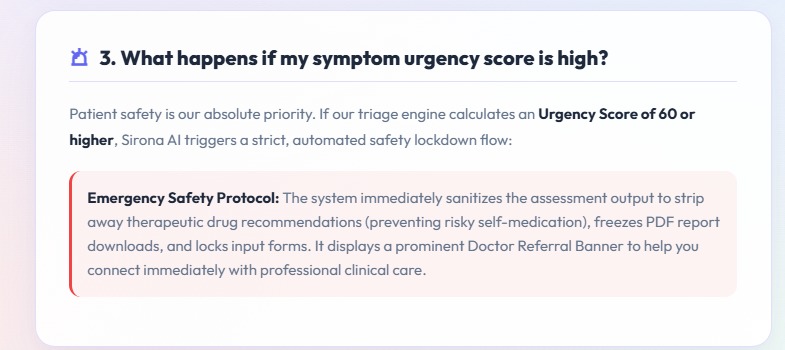
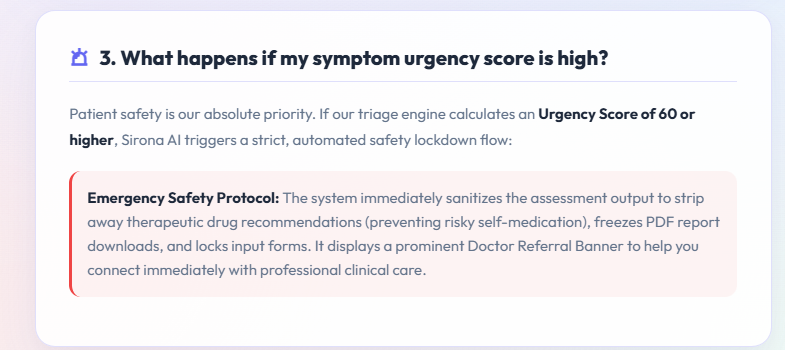
- Urgent Care / Emergency Override ($M \ge 60$): Sirona AI triggers a systemic lockdown:
- Strips all drug names, dosage protocols, or self-care directives from the analysis, showing only a 2-3 sentence warning assessment to prevent self-treatment.
- Overlays a persistent Emergency Banner with quick-calling direct phone buttons.
- Disables and locks the home inputs to prevent subsequent queries.
- Starts a prominent 30-minute safety countdown timer urging the user to contact emergency services immediately.
4. Wellbeing Companion Safety Override
The empathetic Wellbeing Chat Widget (powered by ElevenLabs speech audio synthesis) dynamically monitors active text conversations. If the user mentions self-harm or crisis keywords, the conversation is closed instantly and the system forces the main dashboard into the full Emergency Triage Lockdown.
5. Human-in-the-Loop (HITL) Protocol & Disclaimer
Sirona AI is designed as a clinical decision support and educational reference tool, not a diagnostic authority:
- Every report, printout, and A4 PDF download renders a high-visibility disclaimer emphasizing: "Avoid: making legal or medical decisions."
- All differential results, SNOMED concept maps, and ICD-11 codes are tagged as preliminary reference metrics that must be validated by a licensed healthcare professional.
**For an optimal experience, we recommend using a PC in Light Mode.
Try Sirona:https://sirona.tensormind.app/


Log in or sign up for Devpost to join the conversation.