-
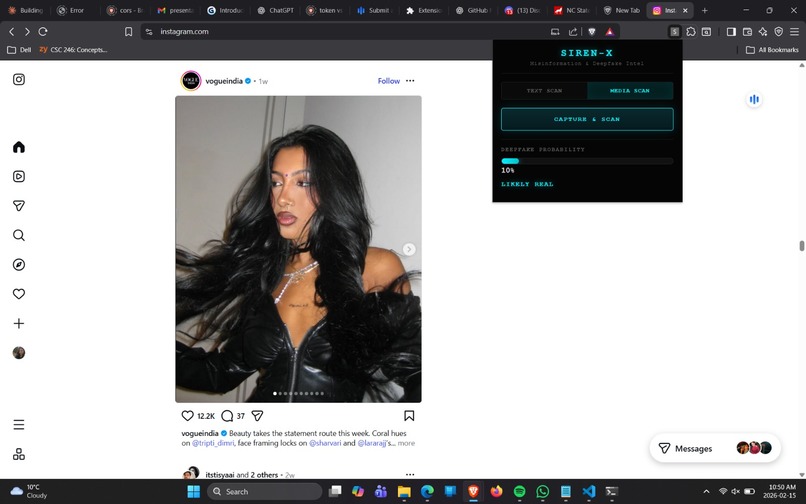
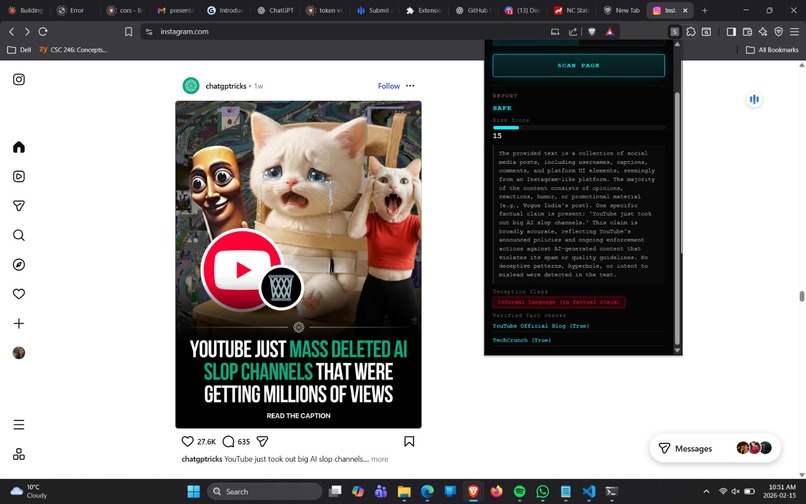
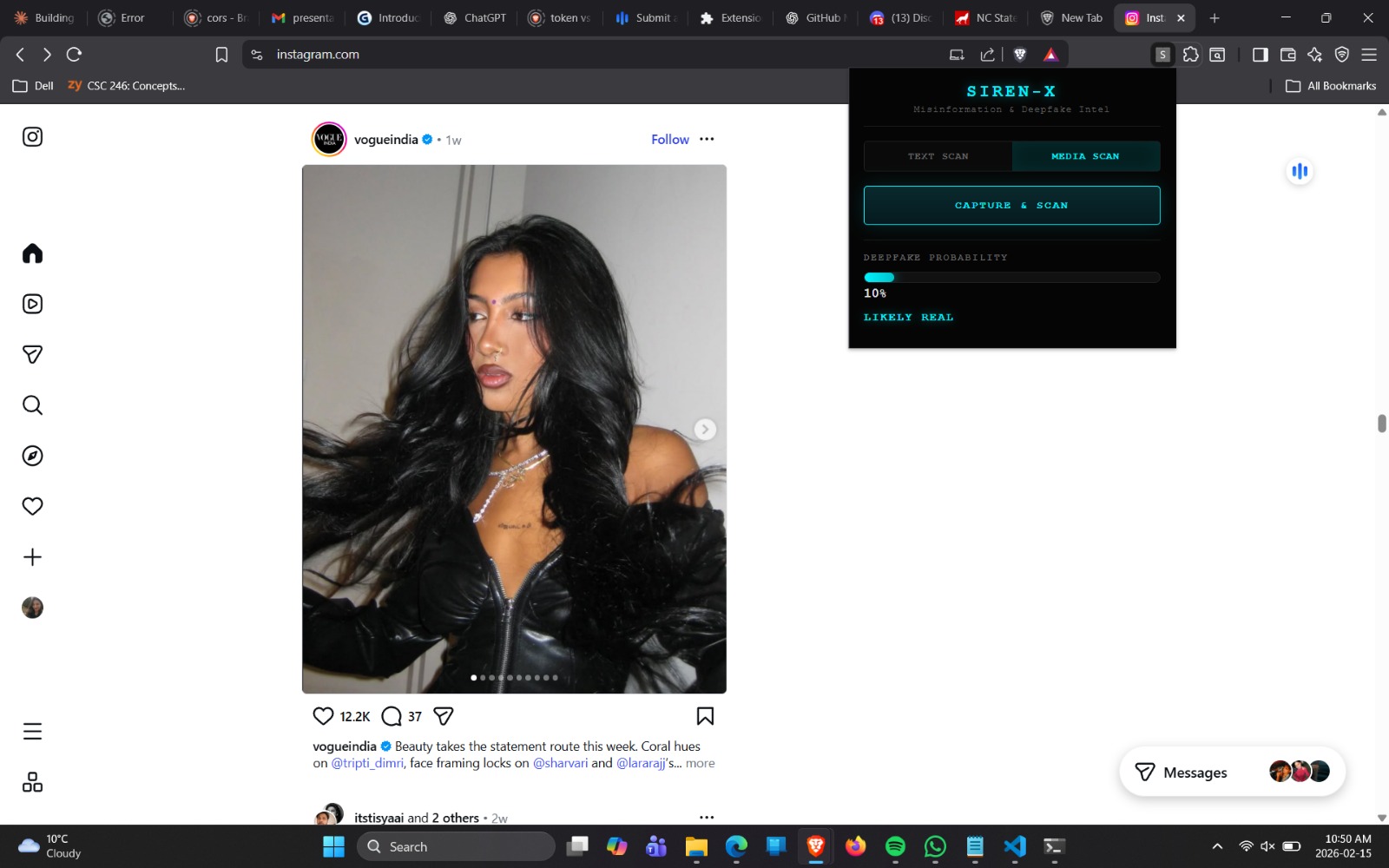
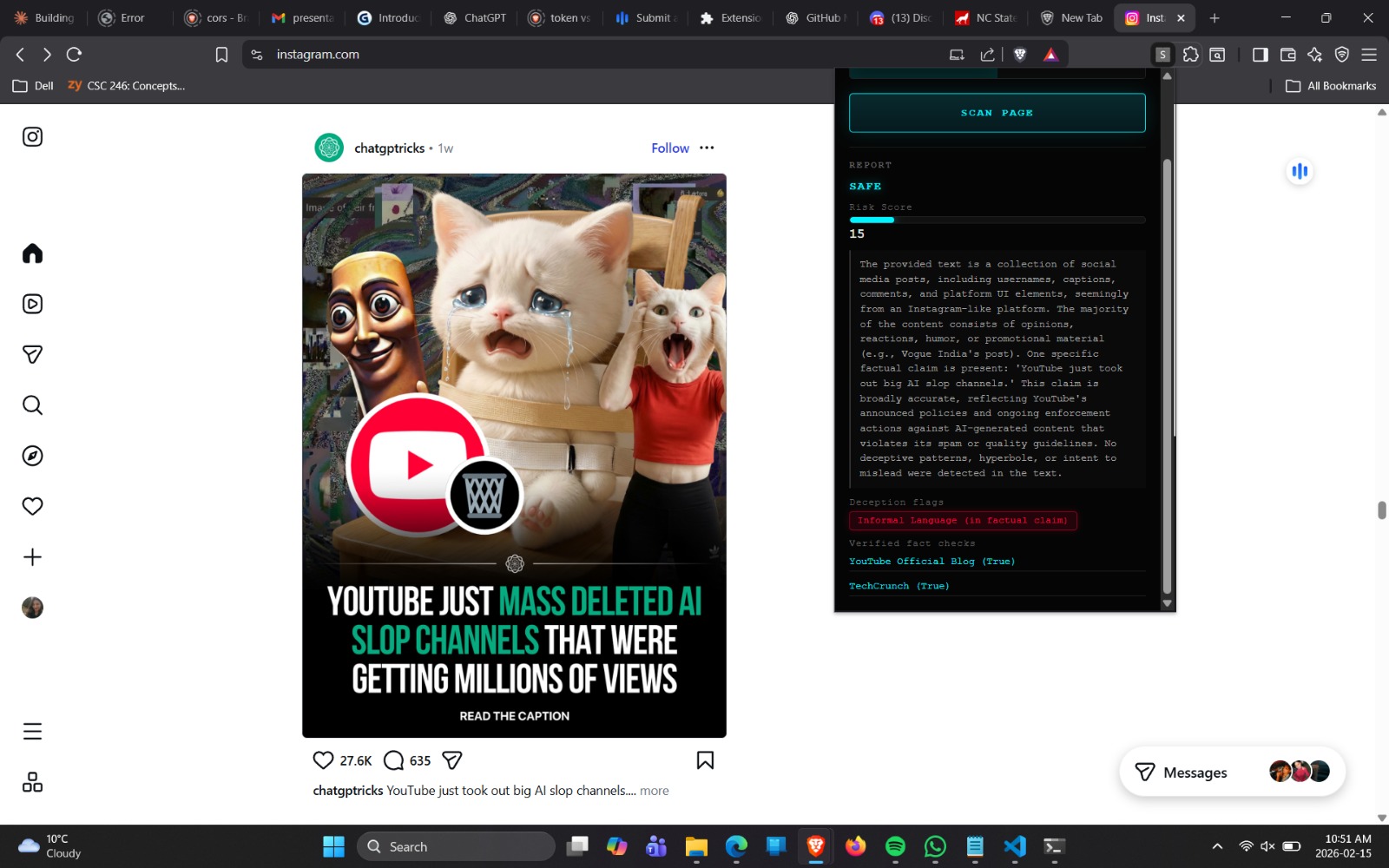
Testing our extension with the posts on instagram
-
-
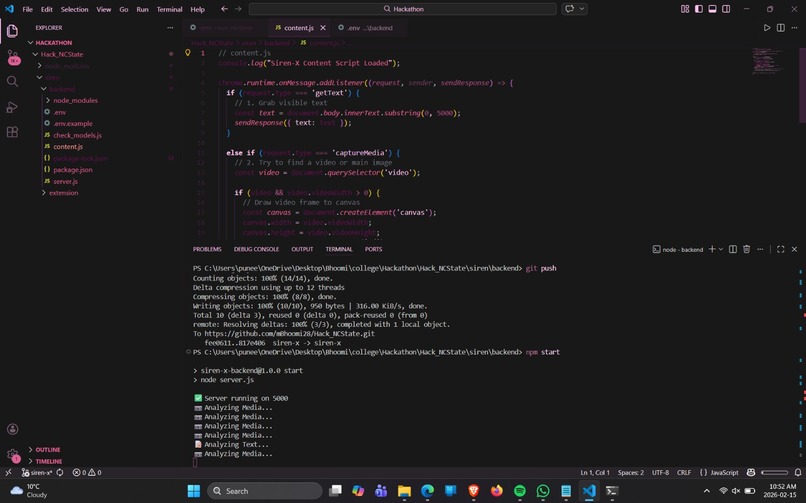
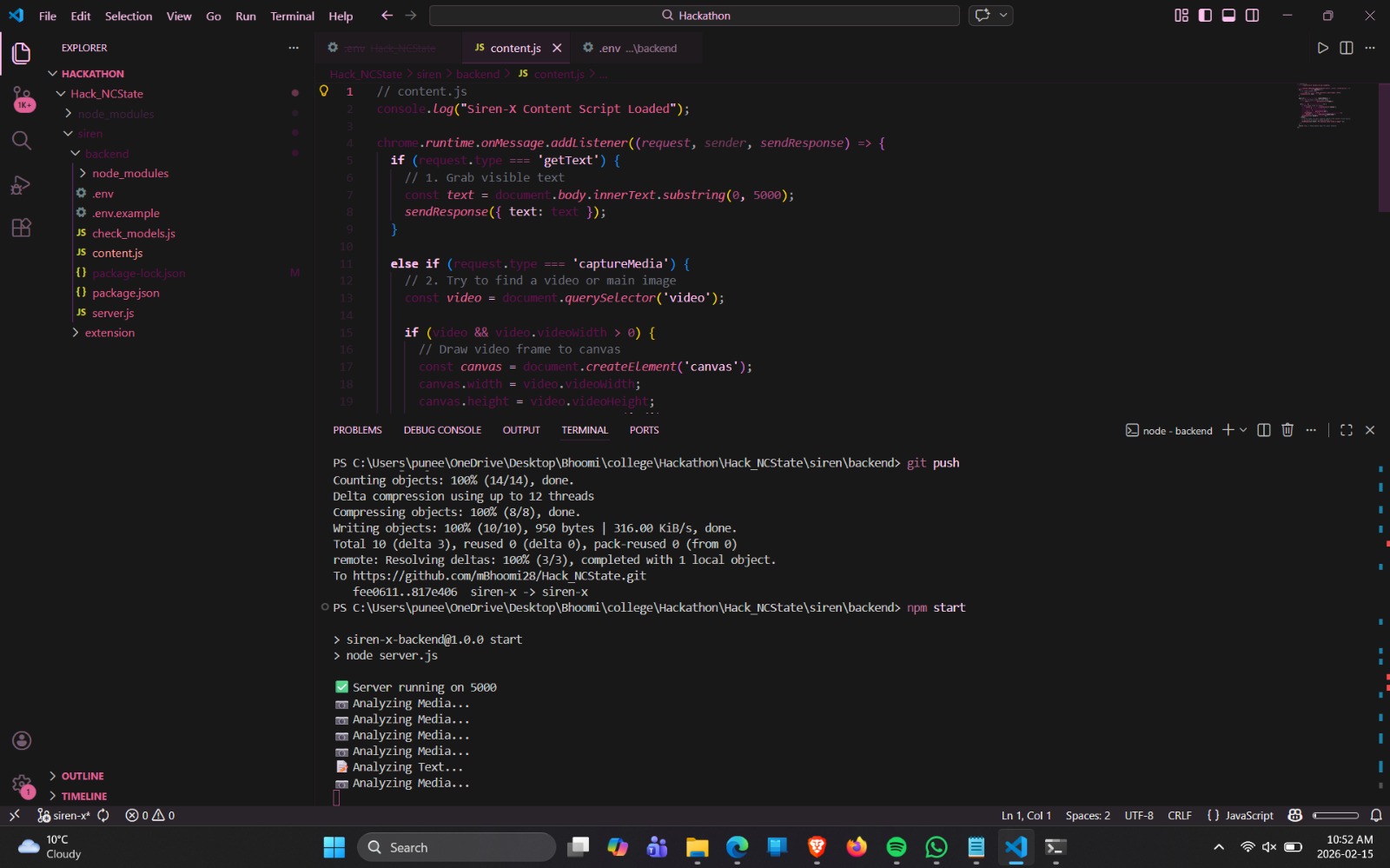
our terminal it worked on
SIREN – Real-Time AI Content Detection for Social Media
Inspiration With the rapid rise of generative AI, distinguishing between real and AI-generated content has become increasingly difficult. As a team, we brainstormed several ideas, but we kept returning to one issue we all experience personally. It is becoming harder to tell what is AI and what is real.
Synthetic media, AI-written articles, and generated images are deeply embedded in everyday social feeds. We wanted to build a tool that gives users clarity and transparency without disrupting their browsing experience.
What It Does SIREN is a browser extension that scans social media posts and text-based articles in real time to determine whether the content is AI-generated or likely human-created. When a post appears in a user’s feed: The extension automatically scans the image or text. A small, non-intrusive badge appears on hover.
The badge displays: Label: “AI-Generated” or “Likely Real” Confidence percentage such as 87 percent AI Optional details explaining the reasoning This allows users to understand content authenticity instantly while continuing to scroll naturally.
How We Built It We built SIREN as a unified browser extension capable of processing both media and text within a single system.
Our architecture includes:
A content script that detects newly loaded posts, including infinite scrolling feeds A background service worker that manages scanning requests securely A backend proxy API that handles detection logic and protects API keys A lightweight and accessible overlay interface that appears on hover without breaking the page layout We integrated detection APIs for both text and image processing and optimized the system to feel fast and responsive.
Challenges We Ran Into
We faced several technical and access-related challenges during development. Early versions struggled with false negatives. Some real images and human-written text were incorrectly classified as AI-generated. We also encountered limitations with certain detection models. Some APIs required restricted access approval, and we were unable to obtain credentials during the hackathon timeline. In addition, we frequently ran into token limitations when calling APIs, which forced us to optimize requests, add caching, and rethink how often scans were triggered. Balancing speed, cost, and accuracy became one of the most important design considerations.
Accomplishments That We’re Proud Of Successfully combining both text and image detection into a single browser extension Designing a clean badge overlay that enhances the user experience without interrupting it Implementing secure API handling through a backend proxy Creating a scalable structure that can support multiple detection models Maintaining strong teamwork, communication, and mutual respect throughout the project
What We Learned How to effectively integrate and manage third-party AI detection APIs The importance of caching and reducing unnecessary API calls How to handle dynamic DOM updates and infinite scrolling feeds The value of building privacy-first systems How collaboration and clear communication improve technical decision-making
What’s Next for SIREN Improve detection accuracy using multiple models Add support for video frame analysis Expand compatibility across more platforms Introduce a user dashboard with scan history and transparency insights Explore lightweight local detection models to reduce API dependency
Our goal is to make SIREN a trusted transparency layer for the modern internet, helping users navigate AI-generated content with confidence.
Built With
- css
- engine
- google.gemini
- html
- javascript
- site


Log in or sign up for Devpost to join the conversation.