
🔥 Why We Built SIREN
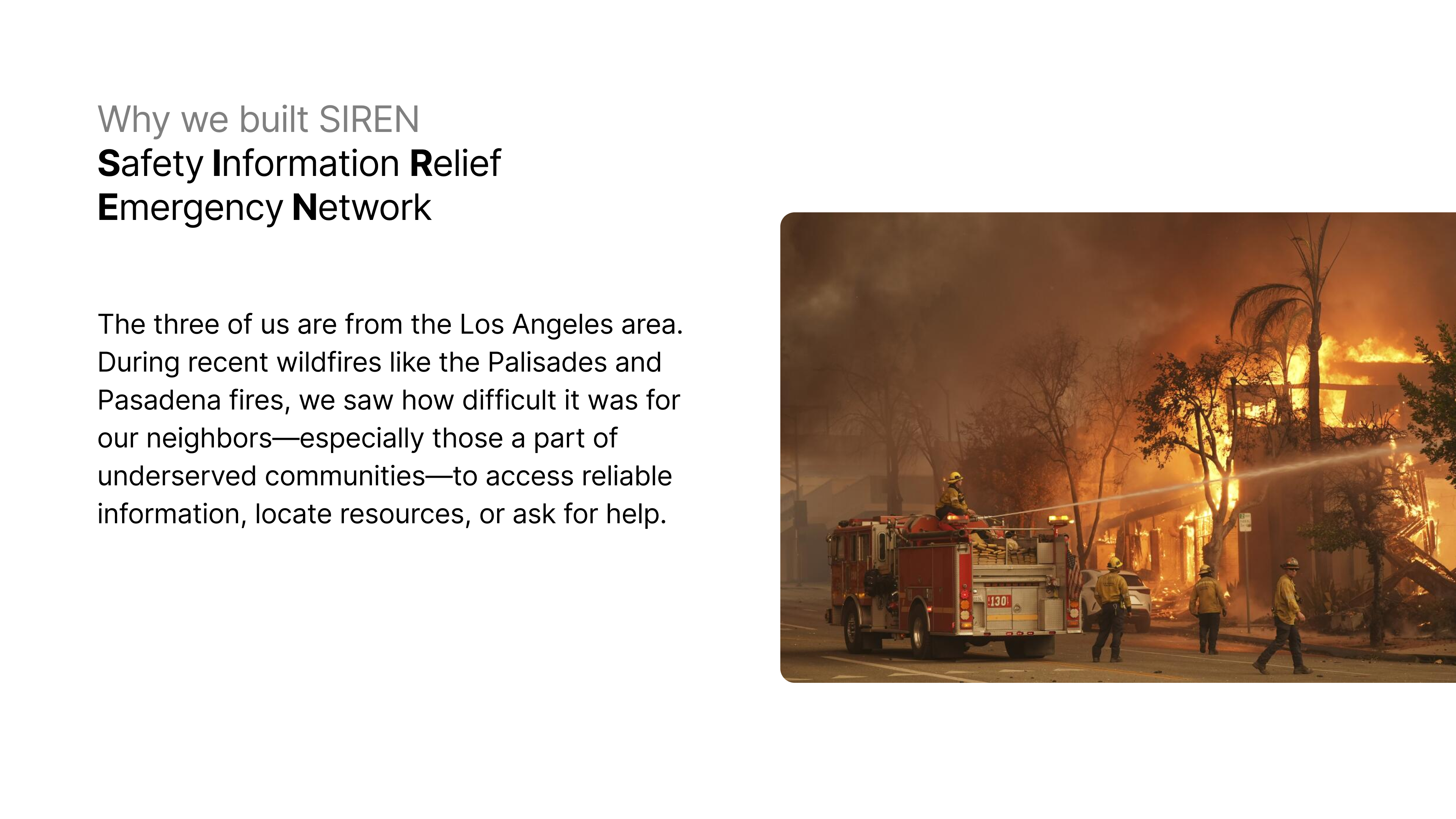
We're a team of three students from the Los Angeles area. During the recent Palisades and Pasadena wildfires, we witnessed how chaotic and disjointed disaster response could be—especially for people in underserved communities. Verified information was scattered, resources were hard to find, and many individuals struggled to ask for help, often due to fear, lack of access, or stigma.
That’s where the idea for SIREN was born: a mobile-first platform that provides real-time disaster support, connects users to verified resources, and allows anyone—regardless of their background—to share what they need or how they can help.
At its core, SIREN is designed to foster community resilience during times of crisis. Whether you're someone experiencing disaster firsthand or someone looking to offer assistance, SIREN gives you the tools to take action.
We built the app using React Native and Expo with assistance from Claude. It was designed in Figma.
📱 What It Does
SIREN offers two core user paths:
1. For Those in Need
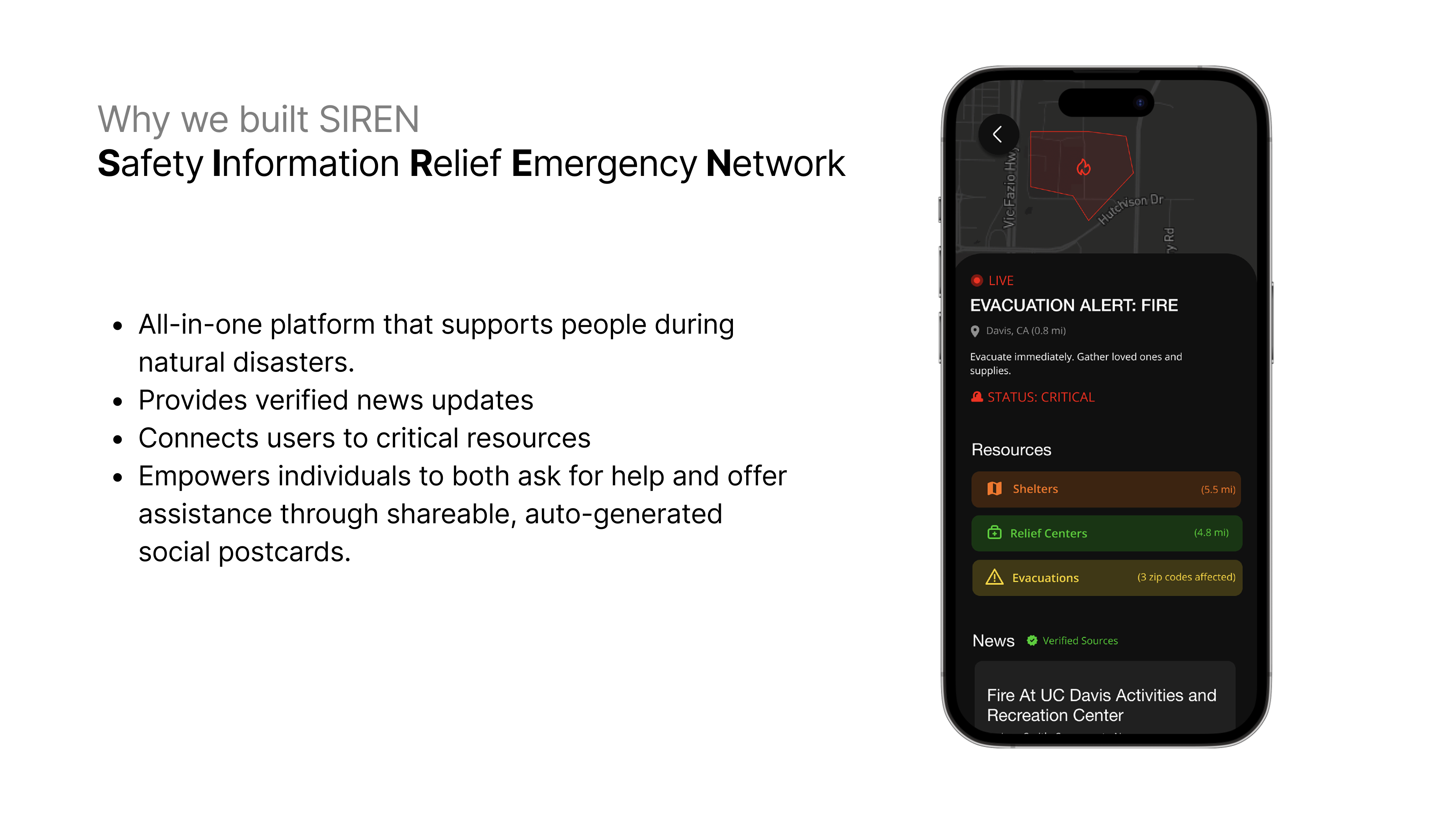
- Live Incident Map centered on your location
- Access to verified shelters, food, medical aid, and incident updates.
- Ability to post personalized requests for help
- Safety Check-Ins to let others know you're okay
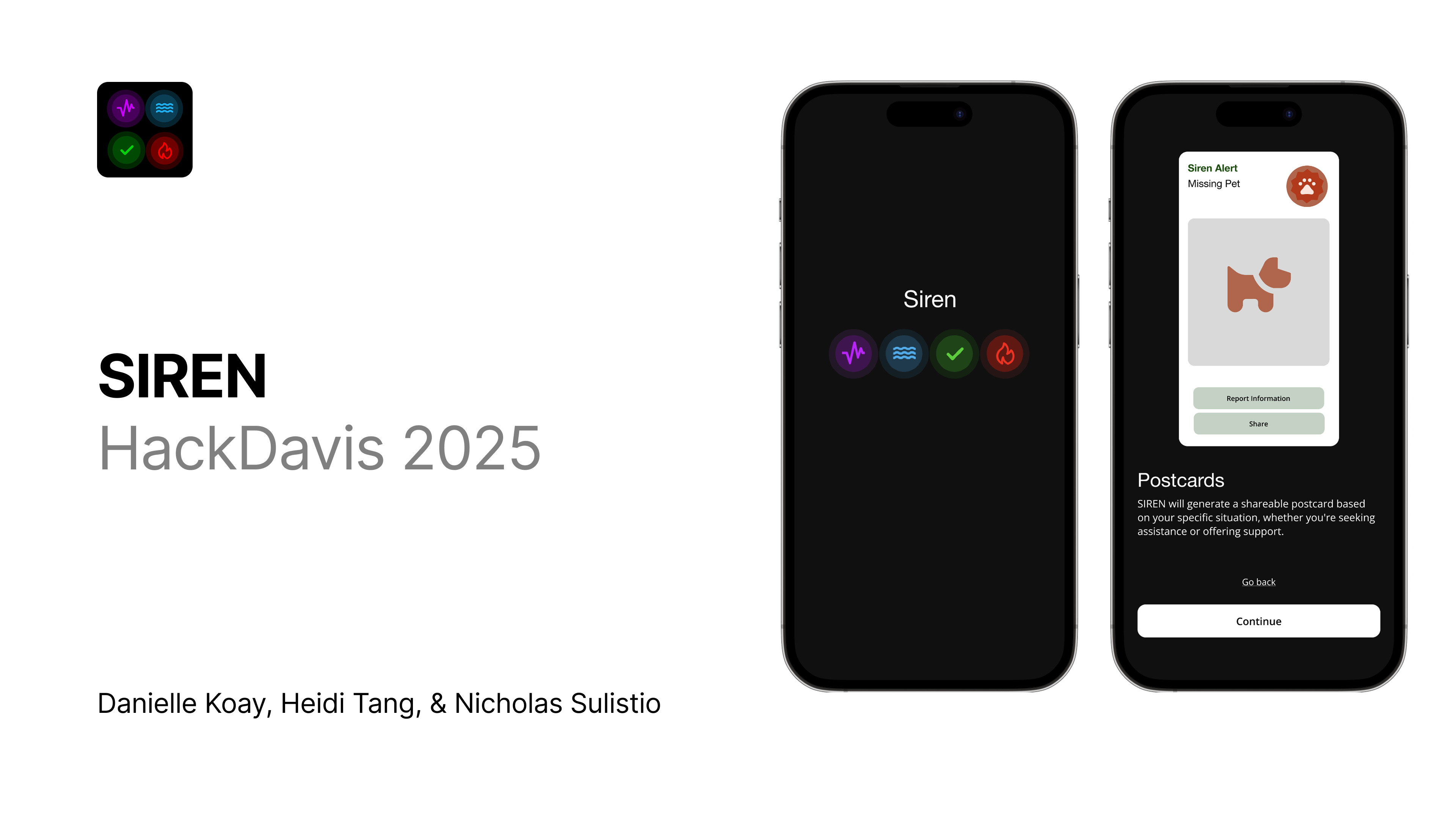
- Generate social postcards to visually communicates your needs or offers, and update your community like Instagram or X
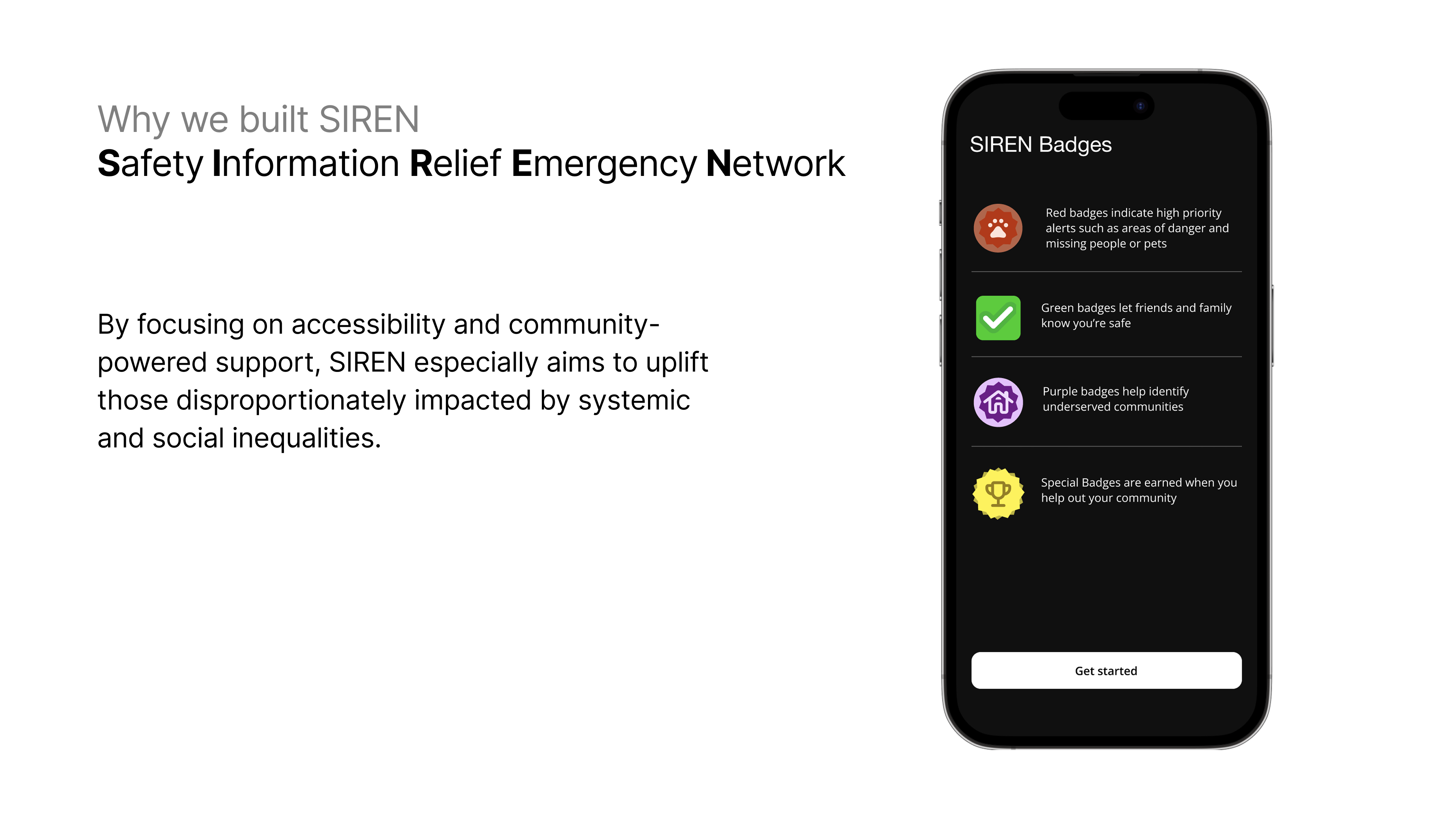
- 🌟 Personalized Badges for Circumstance-Based Support: Users can optionally select badges that indicate important needs—like disabilities, language barriers, or being from an underserved community. These badges help responders offer more targeted aid while preserving privacy and dignity. We also offer anonymous posting options for individuals who may be undocumented or hesitant to reveal personal information, ensuring everyone has a safe space to ask for help.
2. For Helpers / Donors
- Browse ongoing disaster feeds
- See nearby requests for help
- Donate or volunteer directly through the app
- Share your own "I’m helping" postcard to help your community
✊ Tackling Social Injustice
While building SIREN, we kept returning to one reality: natural disasters don’t affect everyone equally. Underserved communities are often hit hardest due to decades of systemic inequality—less infrastructure, fewer resources, and slower response times.
To address this, we designed an equity layer into our platform:
- We identify vulnerable zip codes or populations based on public data
- Aid requests from these areas are given priority visibility
- Resources are filtered and tailored for specific needs, including disability access, language support, or pet assistance
- Helpers are nudged to support areas at the intersection of crisis and injustice
By integrating this level of intentionality, SIREN doesn’t just respond to disasters — it helps to close the response gap.
⚙️ How We Built It
We used:
- Figma for prototyping and user flow mapping
- React Native for the mobile frontend
- Expo to test our demo
- Claude
- iOS Map API for geolocation and live incident overlays
We also spent time researching real community needs through Reddit posts, Twitter threads, and interviews with volunteers and mutual aid organizers. To build an all-in-one tool, we did a competitive analysis of similar apps such as GoFundMe, Citizen, Nextdoor, and PulsePoint.
🚀 What's Next
We’re currently working on:
- Offline support during power outages
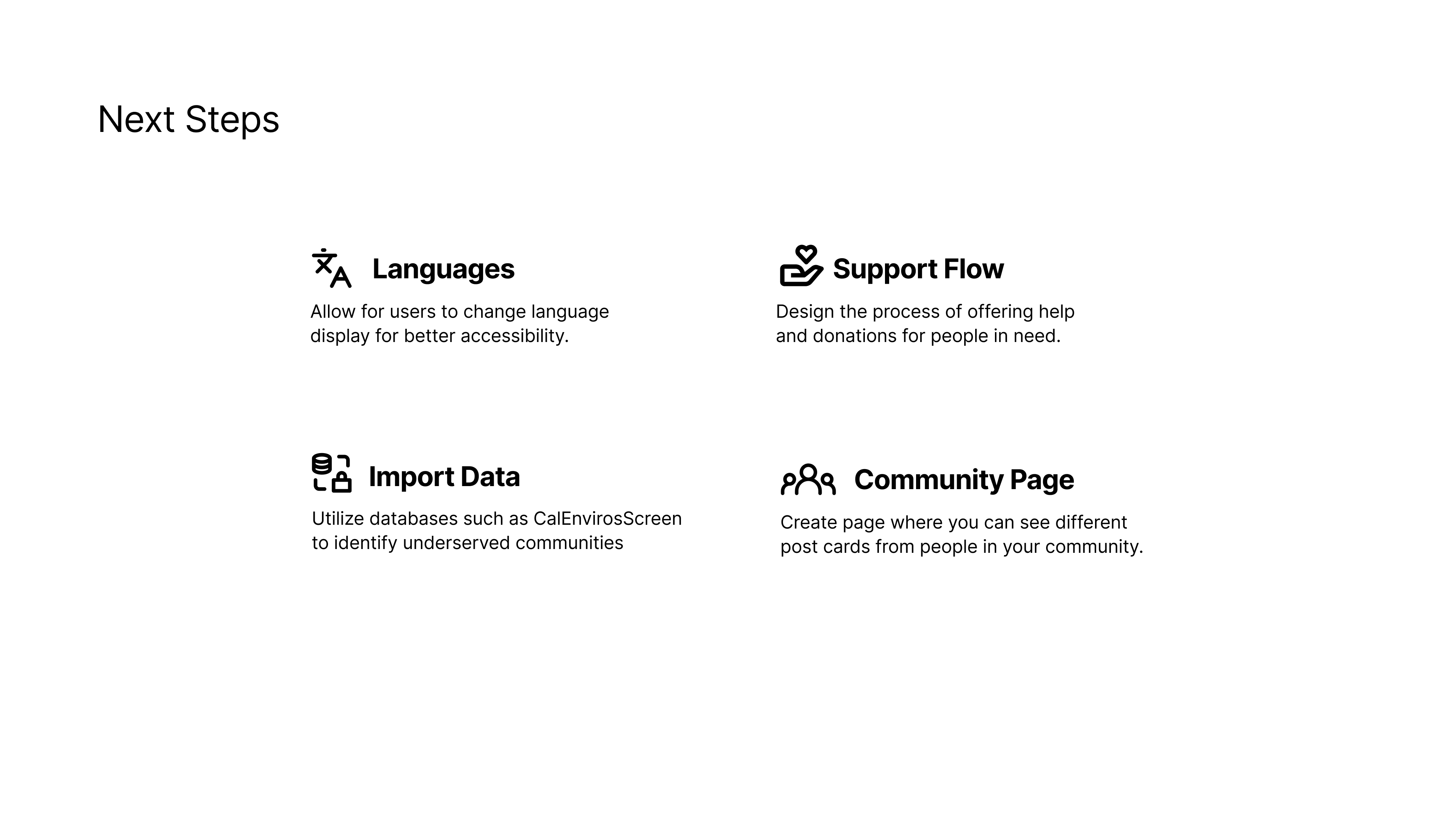
- Automated translations for multilingual accessibility
- A trusted verification badge for helpers and donors
- Design the process of offering help for people in need.
- Create page where you can see different post cards from people in your community, and provide resources.
Our dream is to partner with local governments and grassroots organizations to implement SIREN during future crises.
🌍 Final Thoughts
Disasters strike fast—but with SIREN, communities can respond faster. We believe tech has the power to not only save lives but to uplift the voices of those who are too often left out of the conversation.


Log in or sign up for Devpost to join the conversation.