-
-
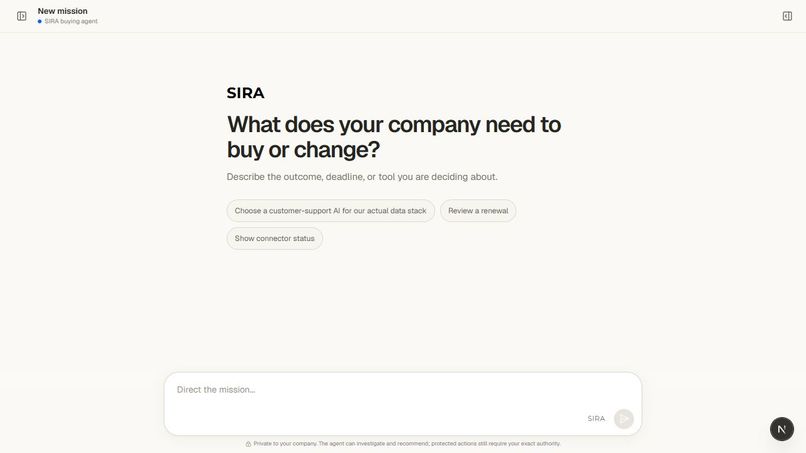
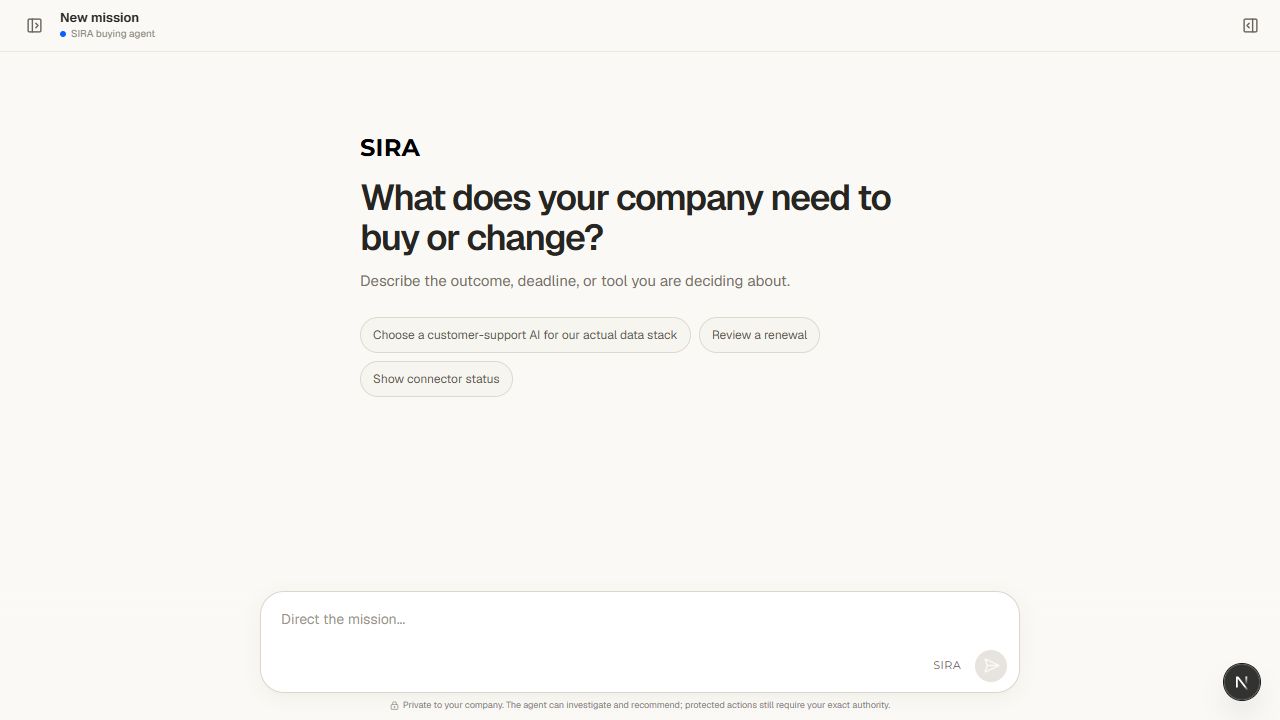
SIRA turns a buying goal into a company-aware mission, investigates options, and requests approval before protected actions.
-
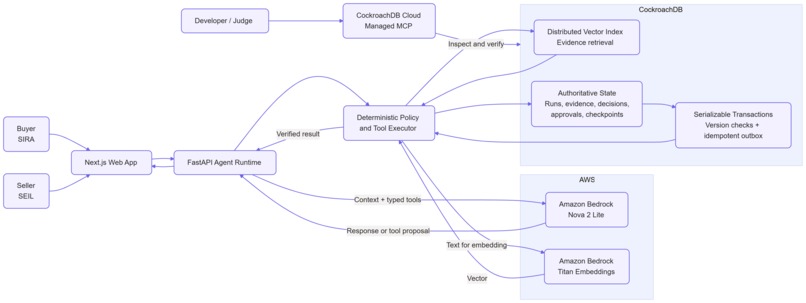
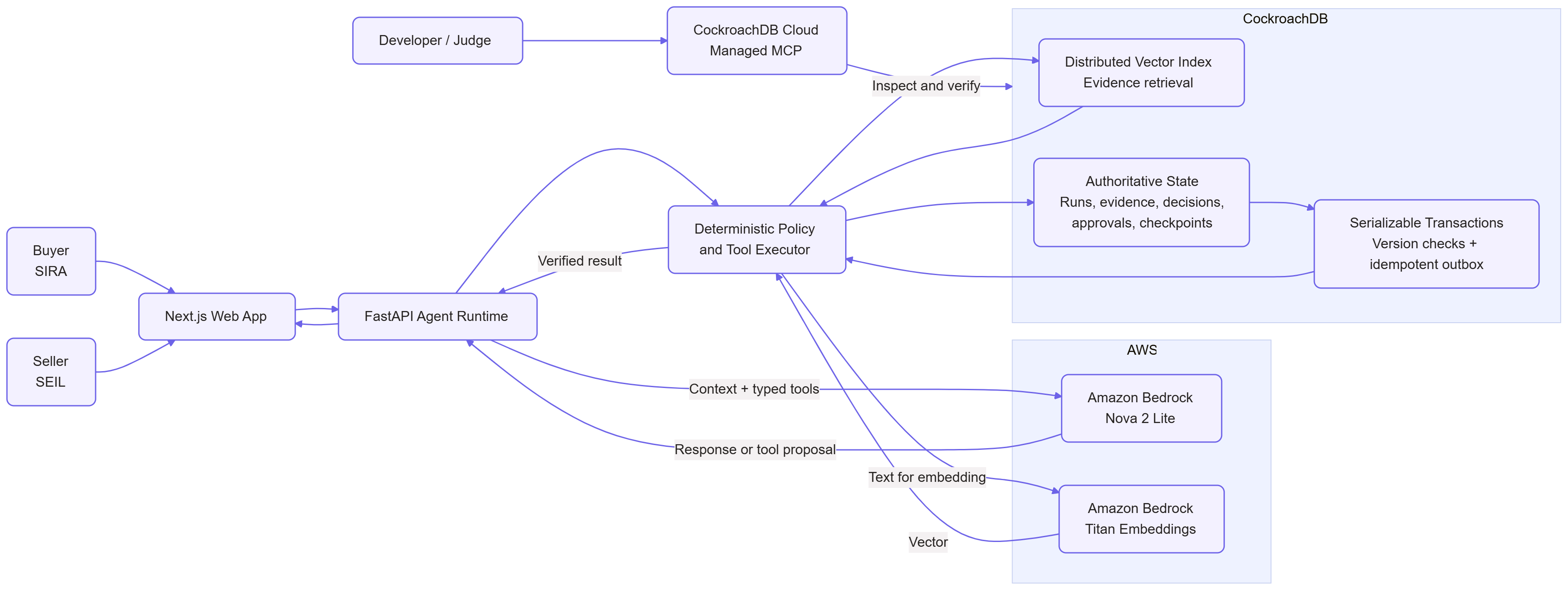
an architectural diagram showing how CockroachDB, AWS services, and your agent interact
-
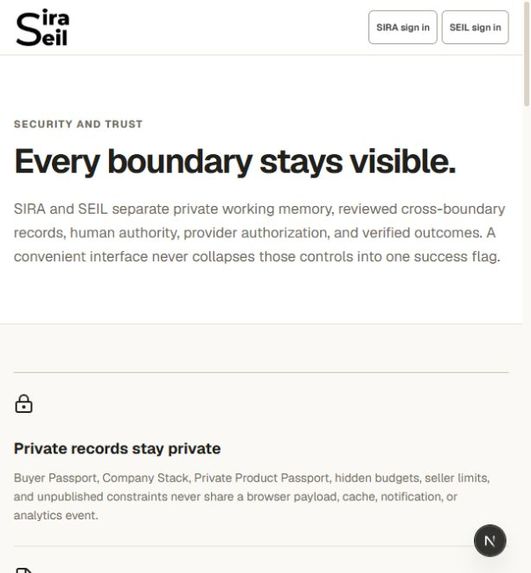
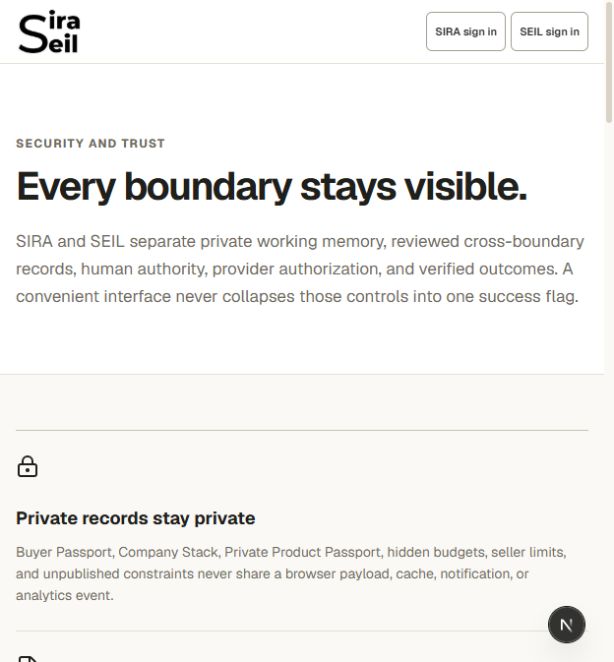
Buyer context and seller drafts remain private; only reviewed, buyer-safe evidence crosses the marketplace boundary.
-
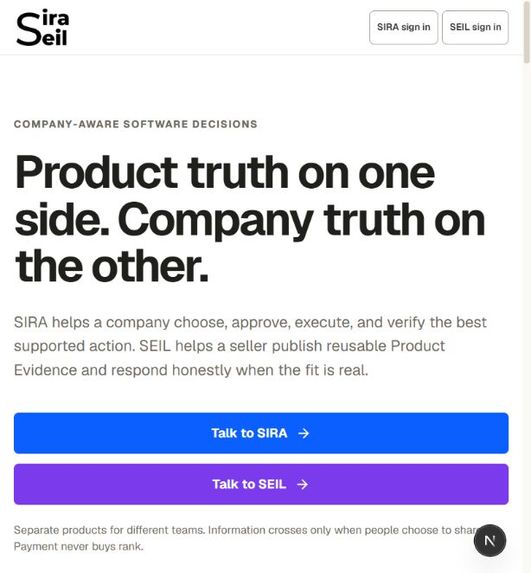
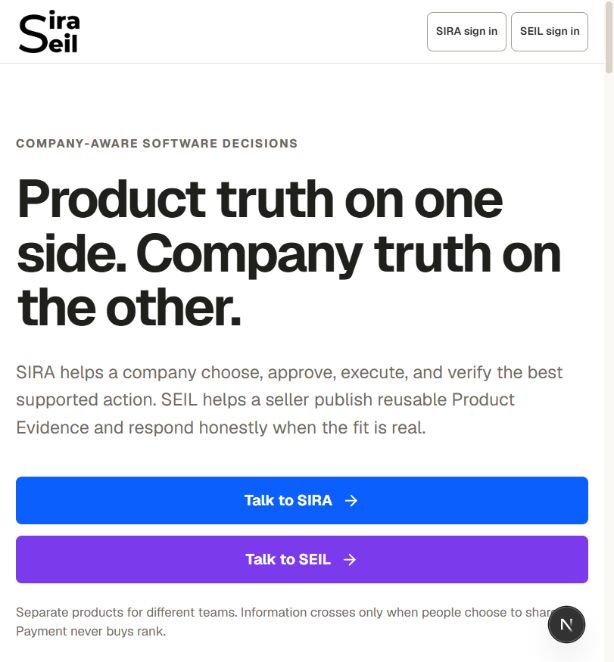
Two-sided agentic commerce: company truth guides SIRA while product truth powers SEIL.
-
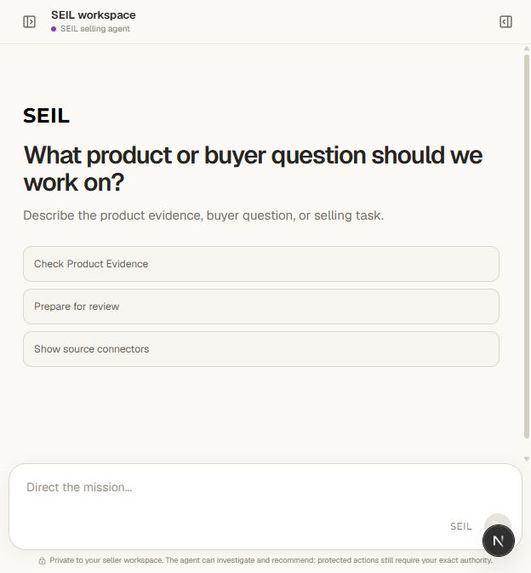
Buyer context and seller drafts remain private; only reviewed, buyer-safe evidence crosses the marketplace boundary.
-
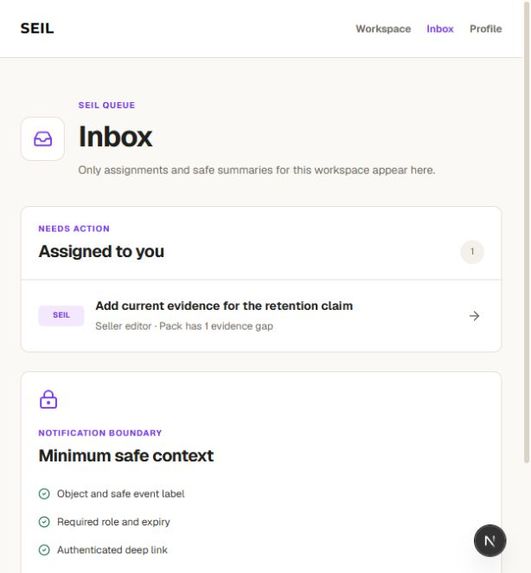
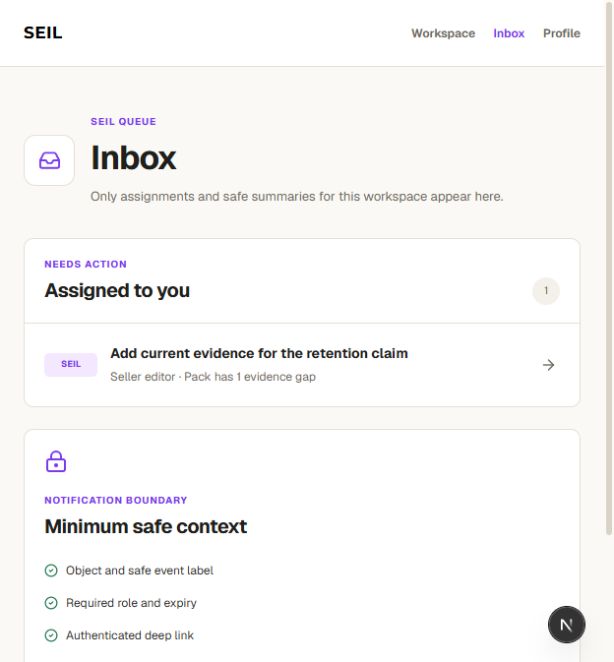
SEIL’s governed inbox exposes assignments and minimum-safe summaries without leaking private buyer or seller context.
-
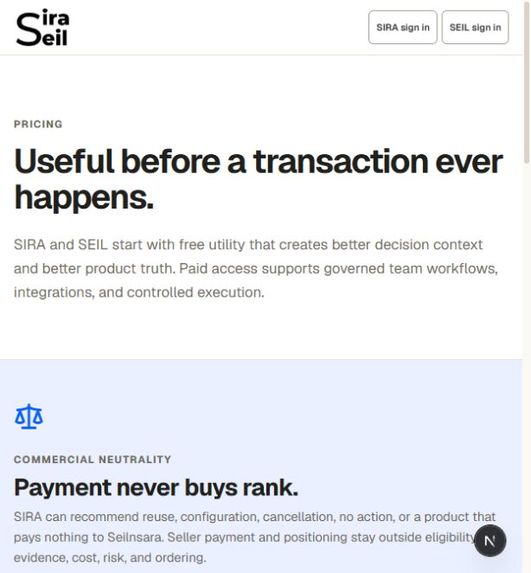
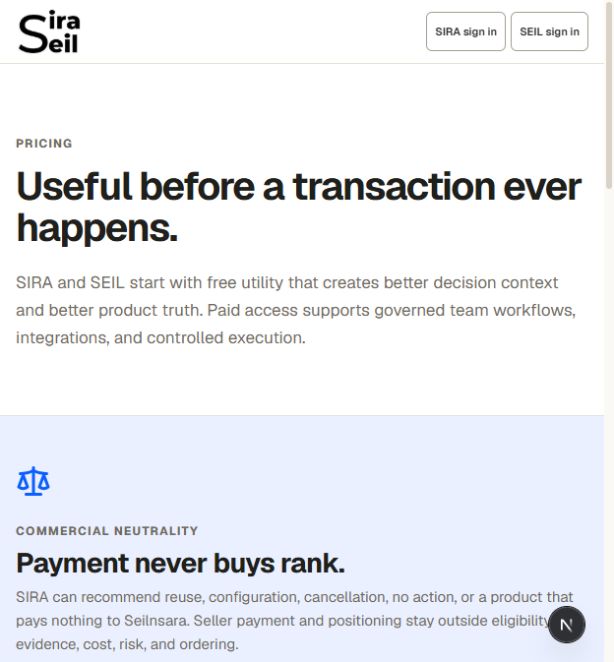
Commercial neutrality is architectural: seller payment never influences eligibility, evidence scoring, or product ranking
-
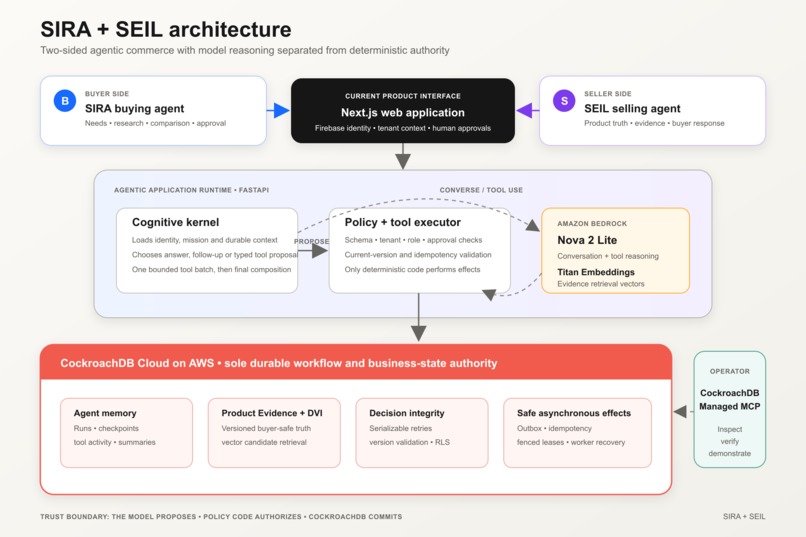
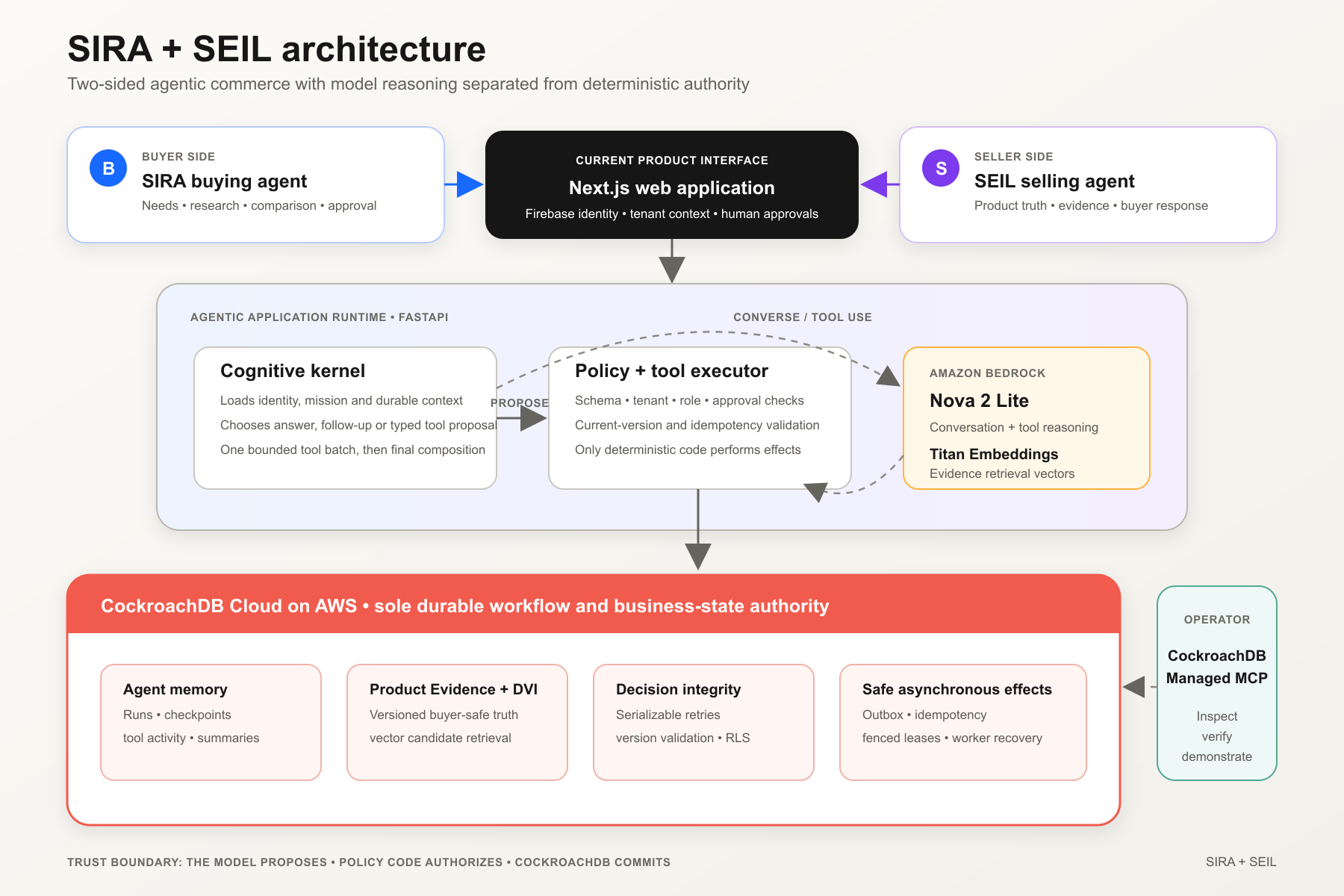
Amazon Bedrock proposes typed actions, deterministic policy code authorizes them, and CockroachDB commits memory, effects.
The problem
B2B software buying begins with feature lists, sales calls, and generic demos. The real problems appear later: a product cannot satisfy a company’s security rules, integration requirements, operating region, or approval process.
At the same time, sellers repeatedly answer the same diligence questions, while buyers compare incomplete and differently structured evidence.
SIRA & SEIL brings both sides into one governed, agentic decision process—before a company commits to a vendor or an expensive proof of concept.
What it does
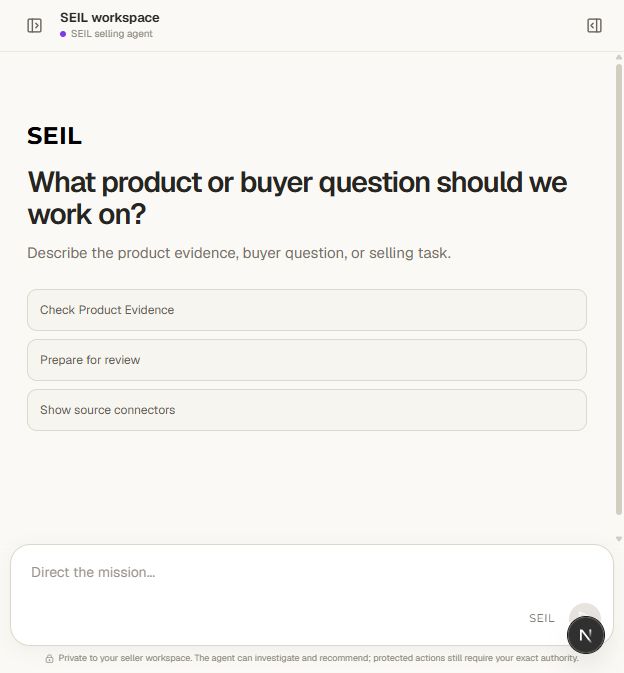
SIRA is the buyer-side agent. It understands the company’s objective, asks follow-up questions when important context is missing, investigates eligible products, compares evidence, and explains its recommendation.
SEIL is the seller-side agent. It turns product capabilities, limitations, integrations, and supporting evidence into reusable Product Evidence that buyers can safely compare.
The agents can reason conversationally and propose tool calls, but they cannot directly change business state. Every tool proposal is validated by deterministic policy code before execution.
How it works
Amazon Bedrock provides the cognitive layer. Amazon Nova interprets missions, asks contextual questions, selects tools, and composes grounded responses. Amazon Titan Embeddings converts product evidence into vectors for retrieval.
CockroachDB is the authoritative state layer for agent runs, checkpoints, evidence versions, decisions, approvals, tool activity, and external effects.
CockroachDB Distributed Vector Indexing retrieves relevant product evidence. Structured eligibility rules then determine whether a candidate actually fits—the vector score never makes the final decision by itself.
Serializable transactions and version checks prevent a recommendation from being committed against evidence that changed while an agent was working. Fenced worker leases and an idempotent outbox prevent abandoned jobs or duplicate delivery from producing duplicated effects.
CockroachDB Cloud Managed MCP provides an independent inspection path for verifying schema, records, and workflow state during development and evaluation.
Security and agent quality
Buyer-private context does not cross into the seller workspace. Seller drafts remain private until a buyer-safe projection is published.
The model is treated as a proposal engine, not an authority. Identity, tenant boundaries, tool arguments, evidence versions, and required approvals are checked by application code.
Protected actions require explicit human approval. The agent never handles payment credentials or claims that an external payment succeeded.
Challenges
The hardest problem was preserving natural agent conversation without allowing probabilistic model output to become an unsafe execution path.
We also had to design durable checkpoints without introducing a second workflow-state system, handle CockroachDB serializable retries correctly, and make concurrent evidence updates visible to decisions already in progress.
What we learned
Reliable agents require more than prompts and tool schemas. They need one authoritative state system, explicit trust boundaries, typed execution contracts, observable tool activity, and recovery semantics.
CockroachDB made it possible to treat agent decisions as durable, concurrent business workflows rather than disposable chat messages.
What’s next
Next we will deploy the complete runtime on AWS, add more evidence connectors, expand evaluation coverage, and support governed purchasing handoffs after human approval.
The long-term goal is a two-sided software marketplace where buyers receive company-specific recommendations and sellers compete on verifiable fit rather than positioning.
Built With
- datahub-core
- datahub-mcp-server
- docker
- fastapi
- next.js
- postgresql
- python
- typescript


Log in or sign up for Devpost to join the conversation.