-
-
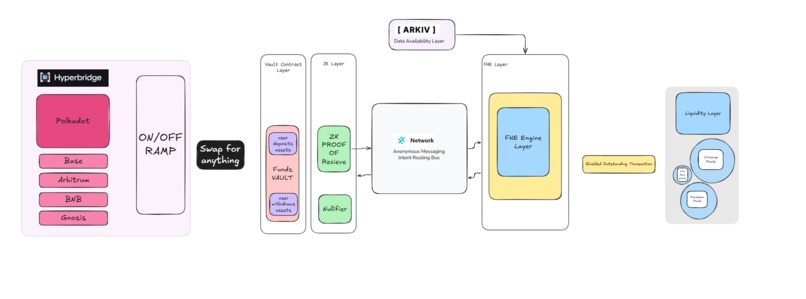
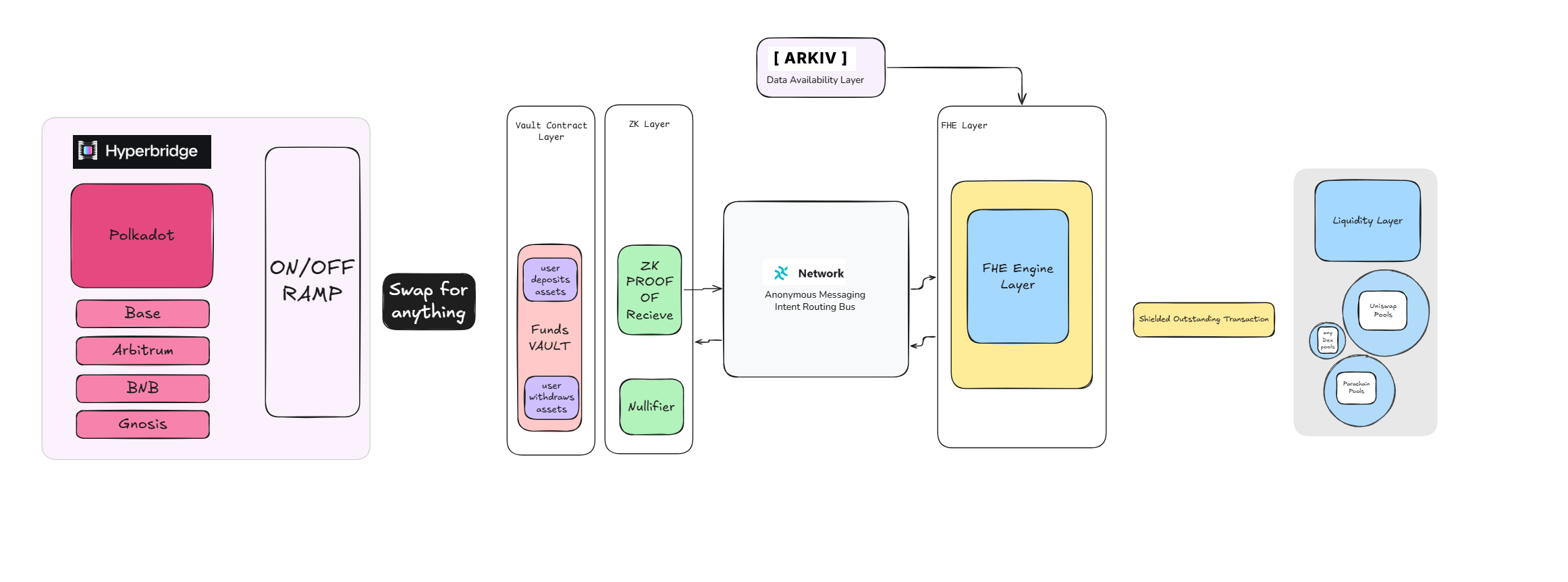
protocol dia
-
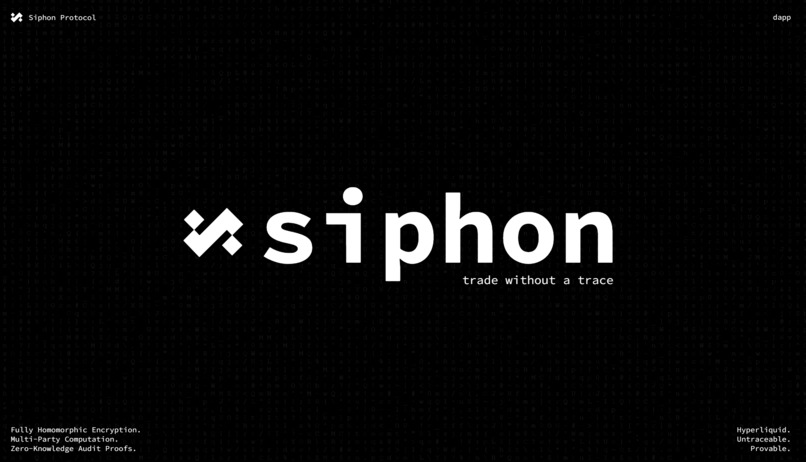
ui1
-
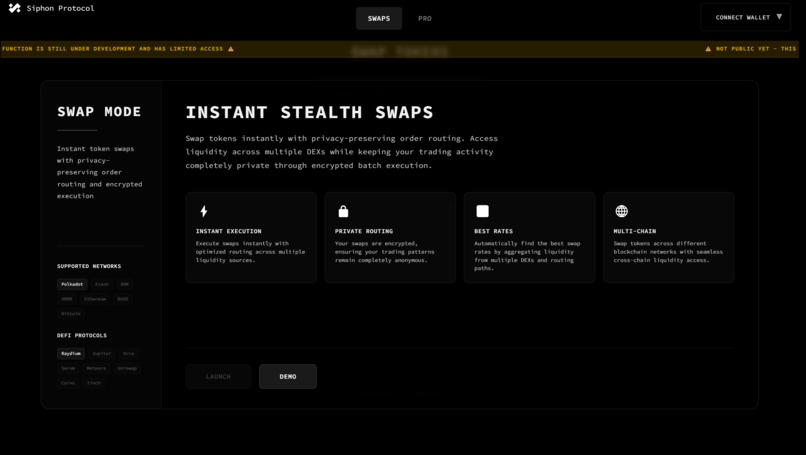
swaps
-

strategy
-

strategy details

Inspiration
DeFi gives users openness — but at the cost of total transparency. Every transaction, every strategy, every move becomes public the moment it hits a blockchain. This leads to frontrunning, copied trades, MEV extraction, and makes it nearly impossible for institutions to participate.
We asked ourselves: “What if privacy, liquidity, and compliance could coexist?” That question became the foundation of Siphon Protocol.
What it does
Siphon enables untraceable, hyper-liquid, compliant DeFi execution using advanced cryptography. Our protocol preserves user identity, trading strategies, and capital flow while keeping all activity verifiably correct.
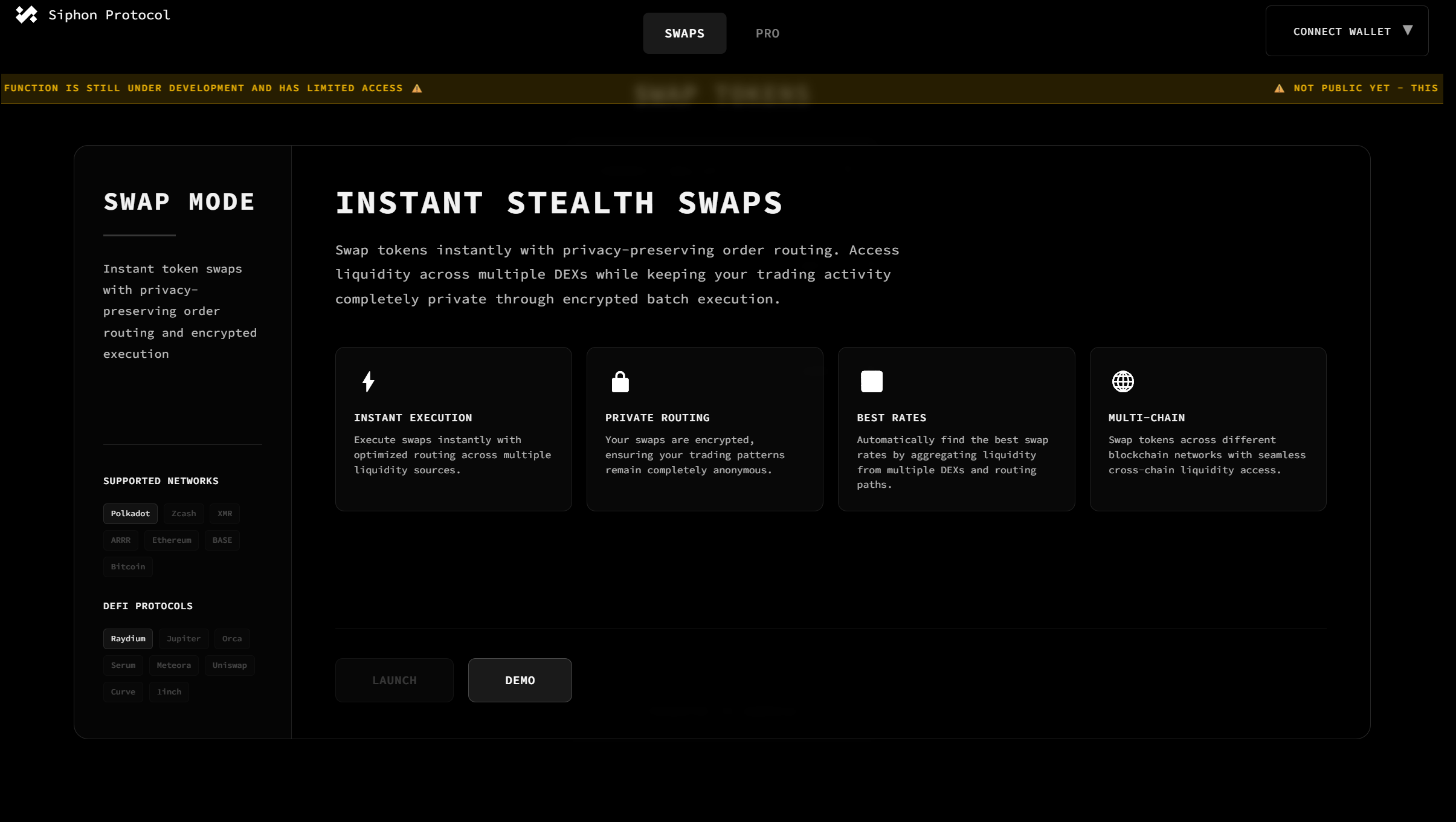
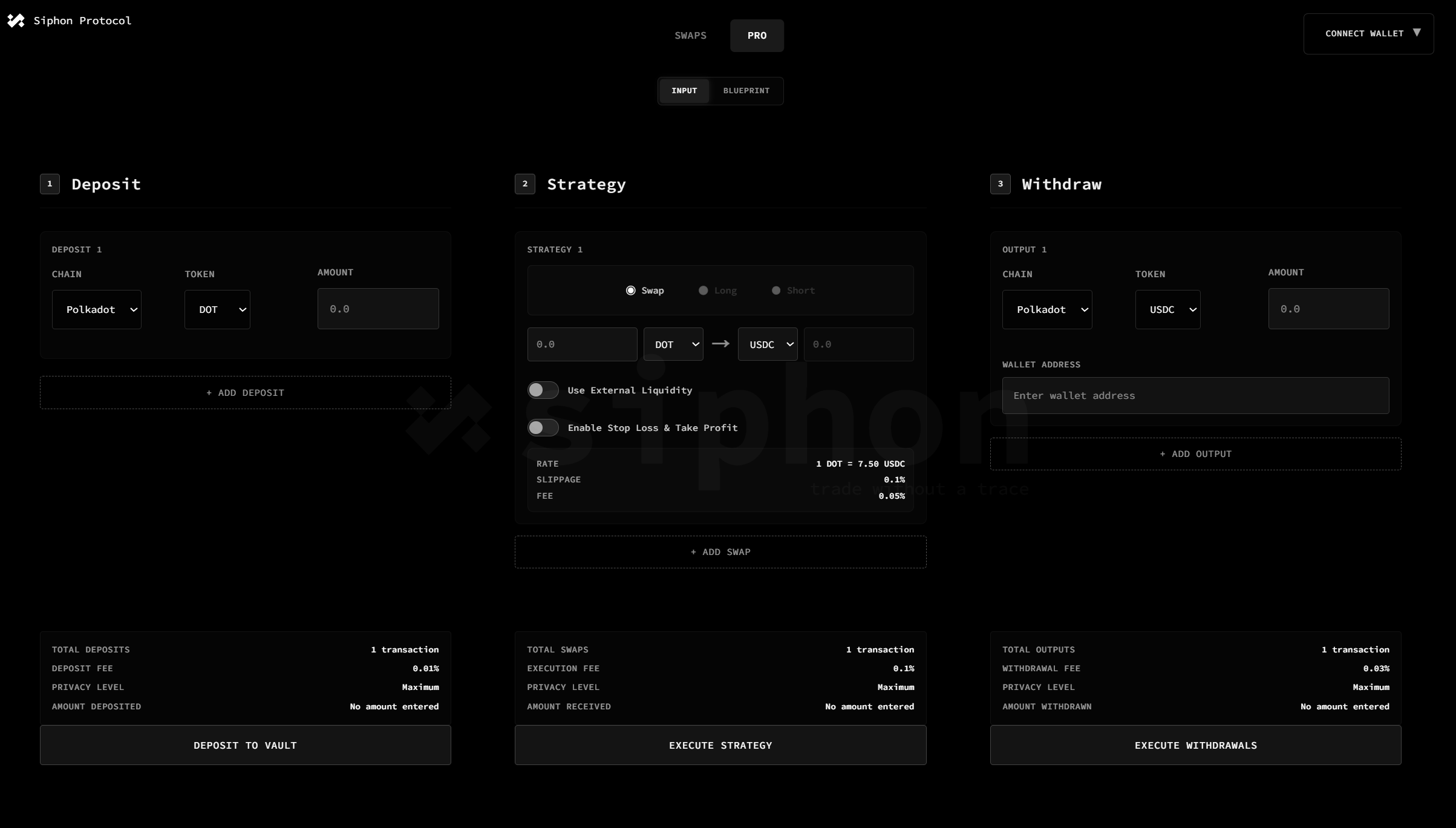
Siphon provides two core services: Stealth Swaps – shielded, atomic, ultra-fast asset conversions Strategies – encrypted automated DeFi execution (DCAs, arbitrage, custom logic)
All while offering a ZK-powered compliance layer that proves transactions are legal without exposing identities.
How we built it
We designed a modular architecture combining: Zero-Knowledge Proofs (ZK) for verifiable execution integrity Fully Homomorphic Encryption (FHE) for confidential state and strategy computation On-chain risk oracles for compliance validation
We built: An initial ZK integrity layer proving that encrypted swaps and operations are computed correctly A prototype FHE execution pipeline enabling private strategy logic A privacy-preserving automation engine for creating encrypted intents (DCAs, arbitrage, etc.)
In simplified form, our system is grounded in: Private + Compliant DeFi = ZK Integrity + FHE Confidentiality
Challenges we ran into
FHE performance Running meaningful computation on encrypted data without killing latency required careful selection of schemes, parameter tuning, and hybrid execution.
ZK circuit design Ensuring proofs remained lightweight while still validating encrypted DeFi operations was a major cryptographic effort.
Cross-chain interoperability Designing a path for atomic, private swaps between chains with different architectures was non-trivial.
Privacy vs. usability Most privacy systems sacrifice UX or liquidity — we needed to keep both intact.
Compliance without exposure Constructing ZK proofs that show “clean liquidity” without revealing identities required deep work on set membership proofs and oracle integrations.
Global team synchronization Building across Germany, the US, and India pushed us into an extremely efficient async development model.
Accomplishments that we're proud of
Built the initial ZK audit layer with proof-based execution transparency Successfully executed encrypted asset swaps in devnet using FHE Validated our risk-screening model with oracle integration Designed a scalable, FHE + ZK–native privacy architecture Passed internal and technical external product validation with strong early adopter interest
What we learned
ZK and FHE complement each other beautifully — one ensures integrity, the other guarantees confidentiality FHE is powerful but must be used strategically to stay performant Private systems need verifiable transparency, not just encryption Institutions don’t just need privacy — they need predictable execution and compliance assurances Cross-chain privacy requires unified trust assumptions and atomicity guarantees Real privacy requires designing from first principles, not retrofitting existing models
What's next for Siphon Protocol
Our upcoming milestones include:
- Implementing atomic cross-chain bridges
- Finalizing and optimizing the ZK audit & compliance layer
- Integrating with major liquidity protocols
- Expanding the encrypted strategies engine for more automated logic
- Launching Open Alpha, including SDK & API for builders
- Advancing institutional partnerships and liquidity channels
Our mission remains clear: Bring real privacy, real liquidity, and real compliance to DeFi — without compromise.


Log in or sign up for Devpost to join the conversation.