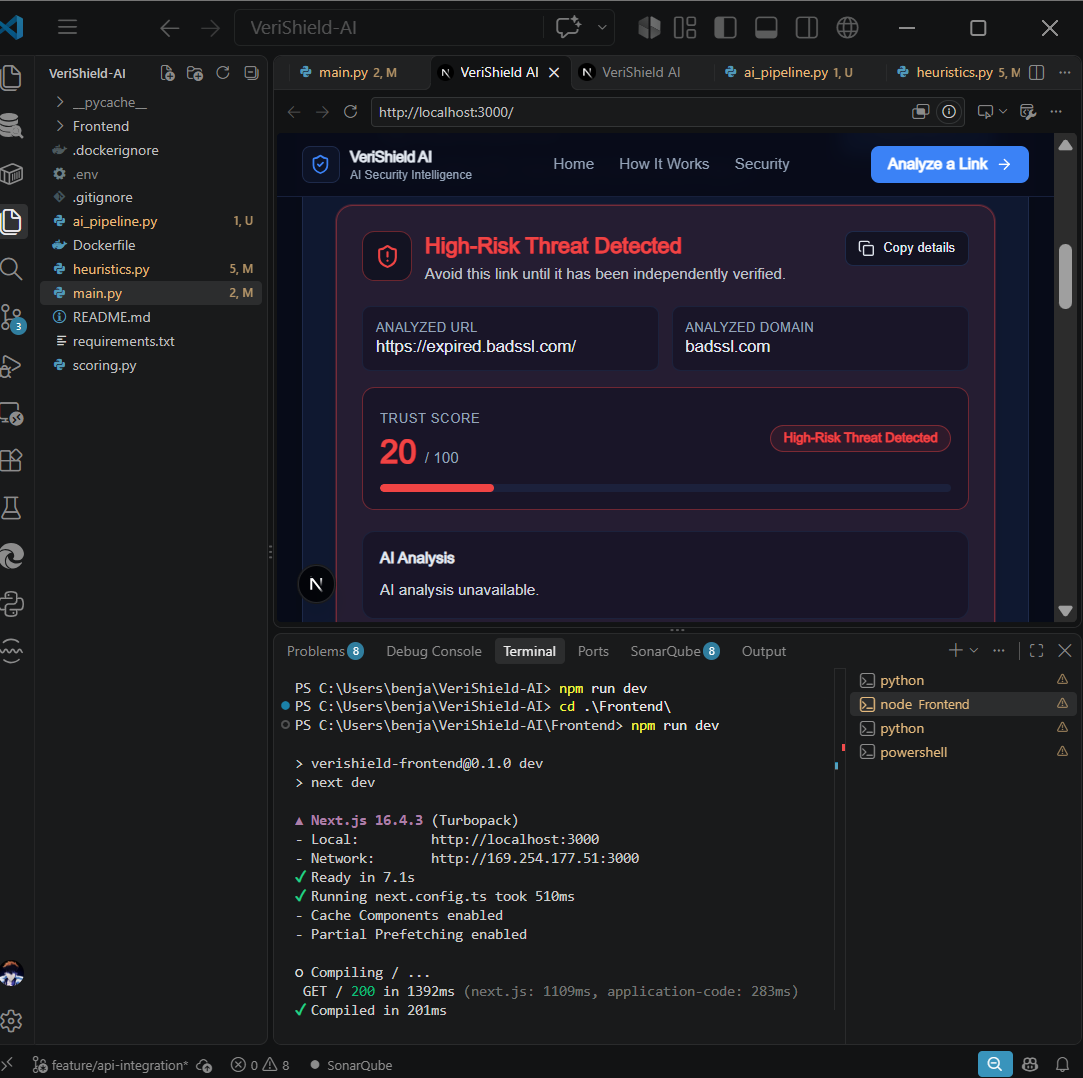
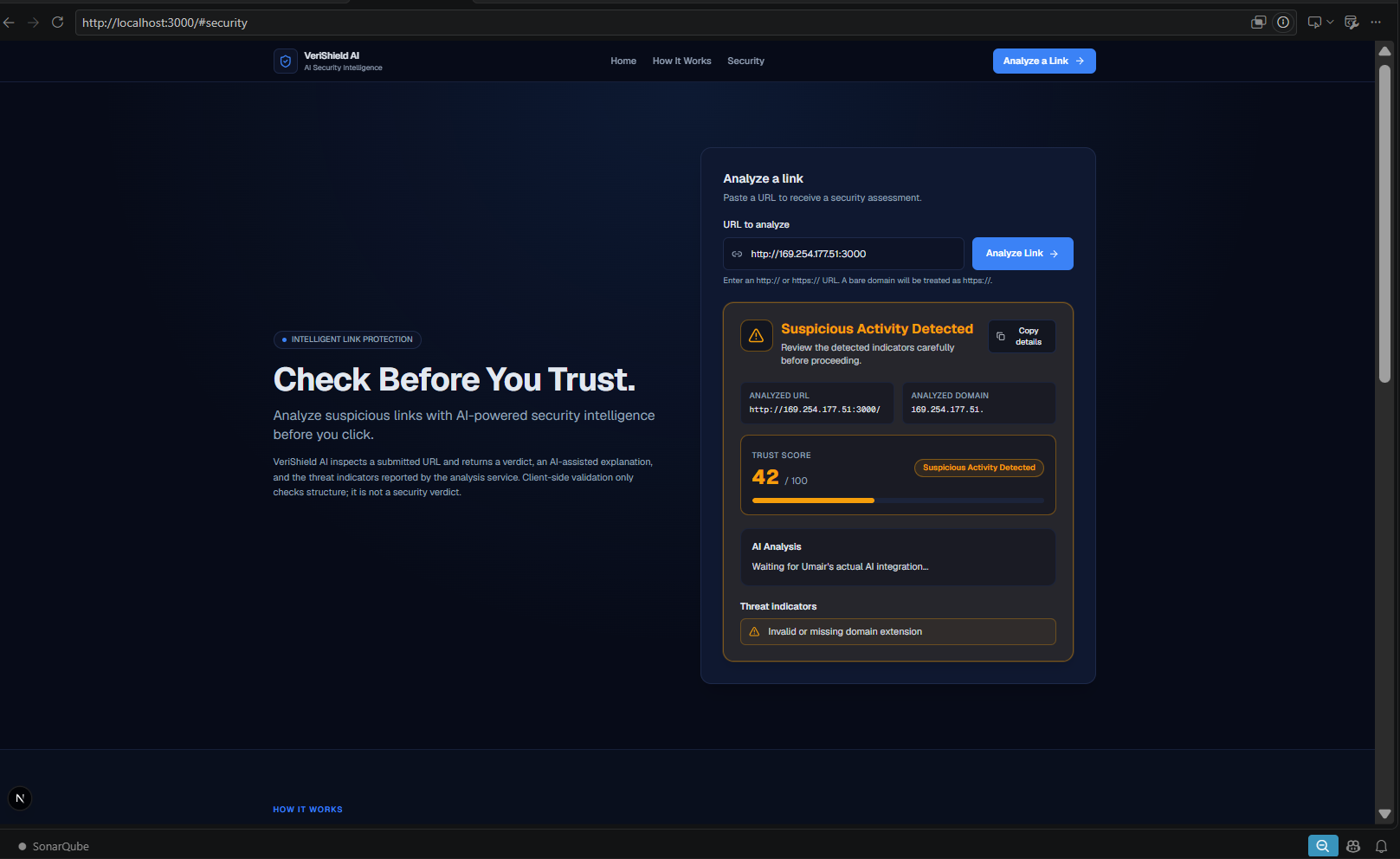
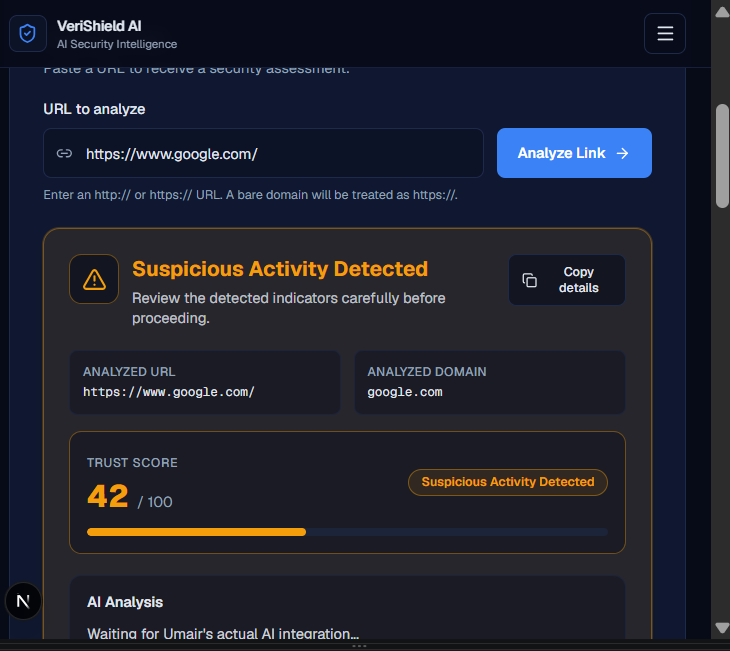
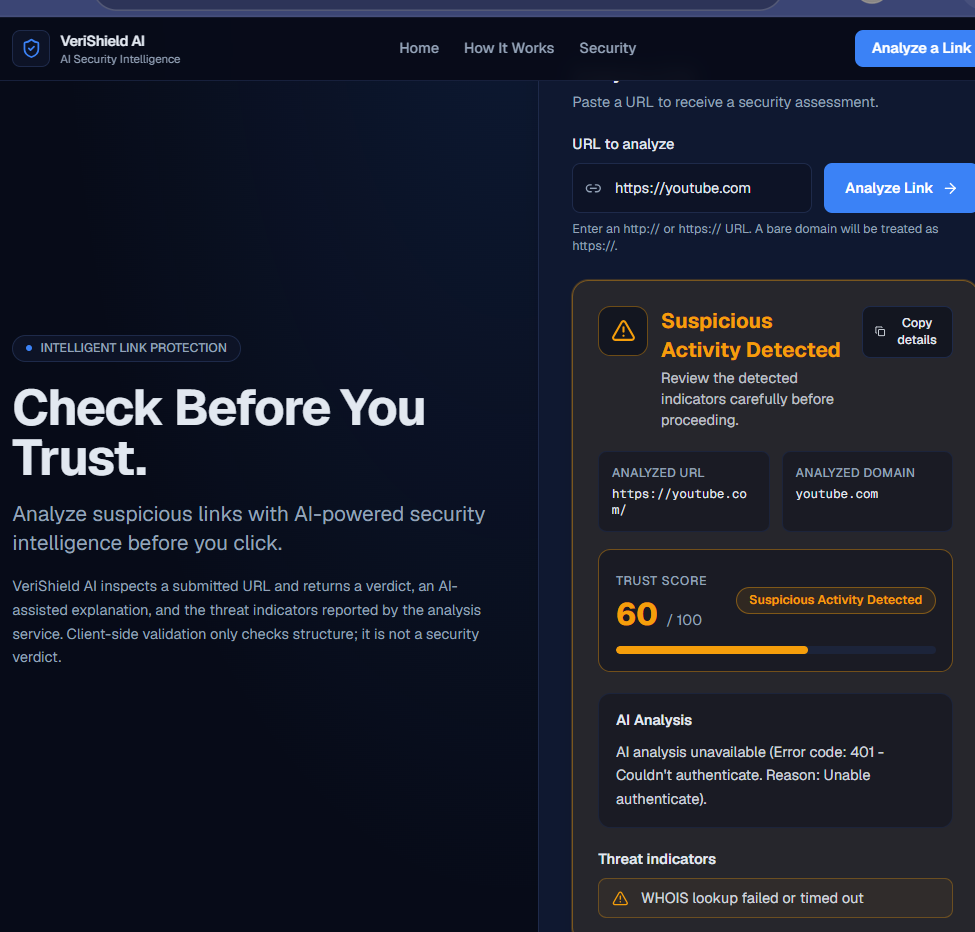
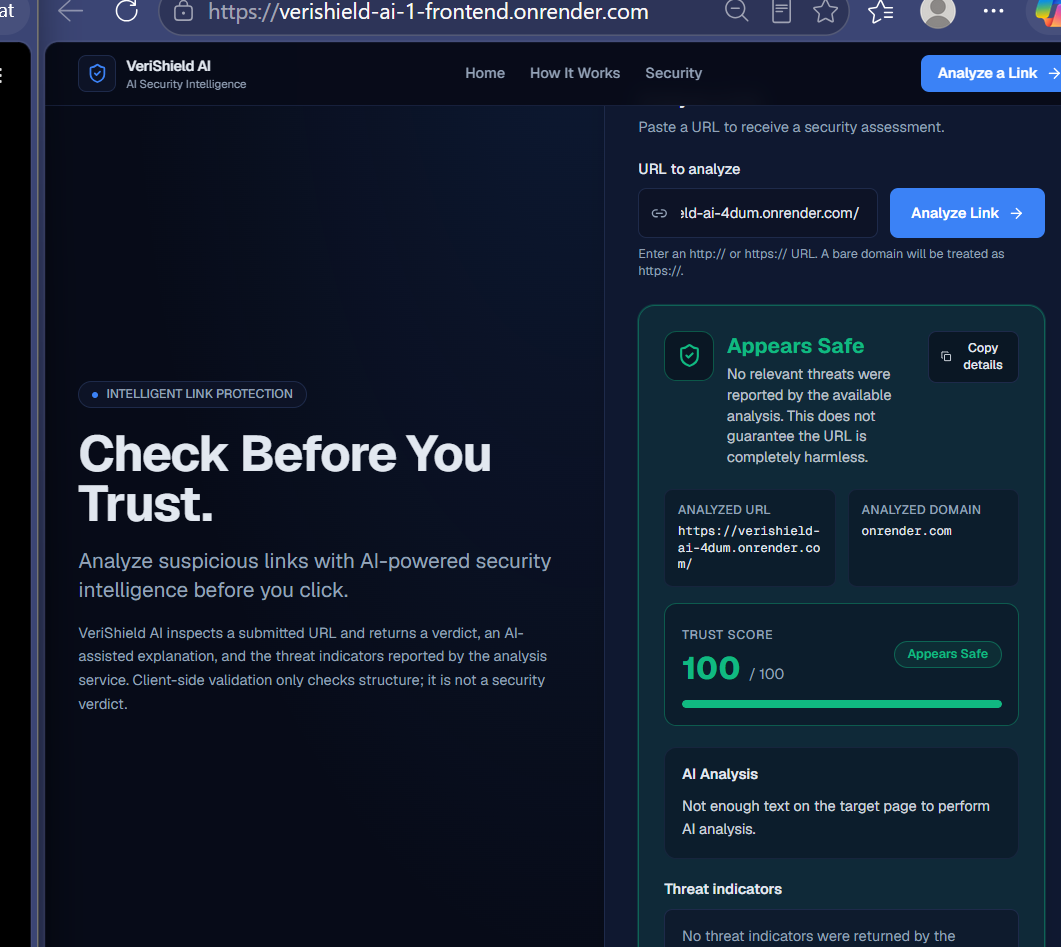

The Core Problem: Phishing, social engineering, and malicious redirects evolve faster than static domain blocklists. Everyday users lack real-time, transparent tools to analyze the hidden infrastructure and psychological manipulation embedded in suspicious links before they click.
The Solution: VeriShield-AI is a self-contained, real-time link validation platform that combines raw network heuristics with generative artificial intelligence to instantly inspect, analyze, and risk-grade URLs.
Infrastructure Discovery & Heuristics: The backend extracts the registered domain using tldextract and executes a custom WHOIS query to analyze registration age, instantly flagging domains under 30 days old as high-risk indicators.
Security & Connection Inspection: The system performs socket-level TLS/SSL inspections to validate certificate integrity and expiration dates, warning users if HTTPS is misconfigured or unavailable.
Behavioral AI Analysis: Target page text is scraped and piped into a self-hosted meta-llama/Meta-Llama-3.1-70B-Instruct model on the Nebius AI Cloud. Acting as a cyber-forensics analyst, the LLM evaluates the copy for synthetic traits, urgency tactics, and impersonation attempts.
Structured Decisioning: The AI outputs a strict JSON payload featuring a unified 0-100 risk grade and specific manipulation tactics, which are compiled and rendered on a responsive, gamified Next.js dashboard.
Technical Stack Architecture: The platform utilizes an asynchronous FastAPI Python backend (containerized via Docker and deployed on Render) and a React/Next.js frontend. The AI pipeline leverages the openai Python SDK, customized with OPENAI_BASE_URL to route requests directly to Nebius Token Factory endpoints.
Engineering Challenges Overcome:
Cloud Firewall Bypasses: Render’s serverless platform blocked outbound Port 43 traffic, timing out the WHOIS queries. This was resolved by engineering a resilient try/except fallback engine to catch timeouts and serve gracefully without halting the UI.
Container Dependencies: python-whois failed silently on python:3.12-slim images because standard Linux whois binaries were missing. The Dockerfile was modified to explicitly inject the required OS-level packages.
SDK Routing: Overcoming 401/404 authentication errors required successfully mapping custom authorization secrets and modifying the default OpenAI base URL to target the -fast Nebius production models.
Future Roadmap: Planned features include deploying headless browser scraping inside the Docker cluster to capture fake login prompts, porting the core logic into a Chromium browser extension for preemptive edge inspection, and building a cryptographic community threat map for decentralized phishing defense.


