-
-
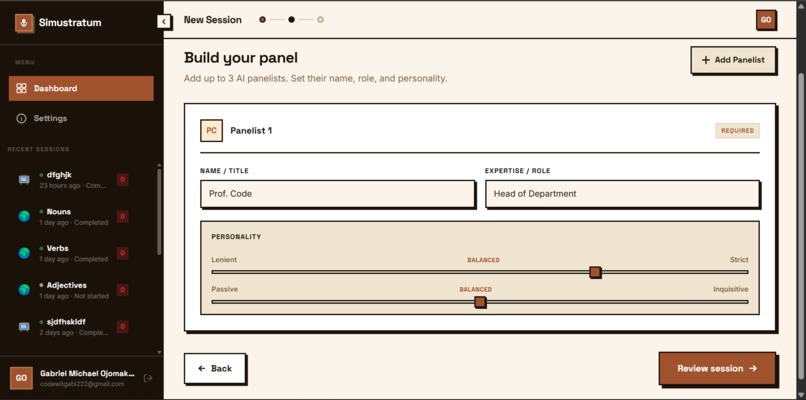
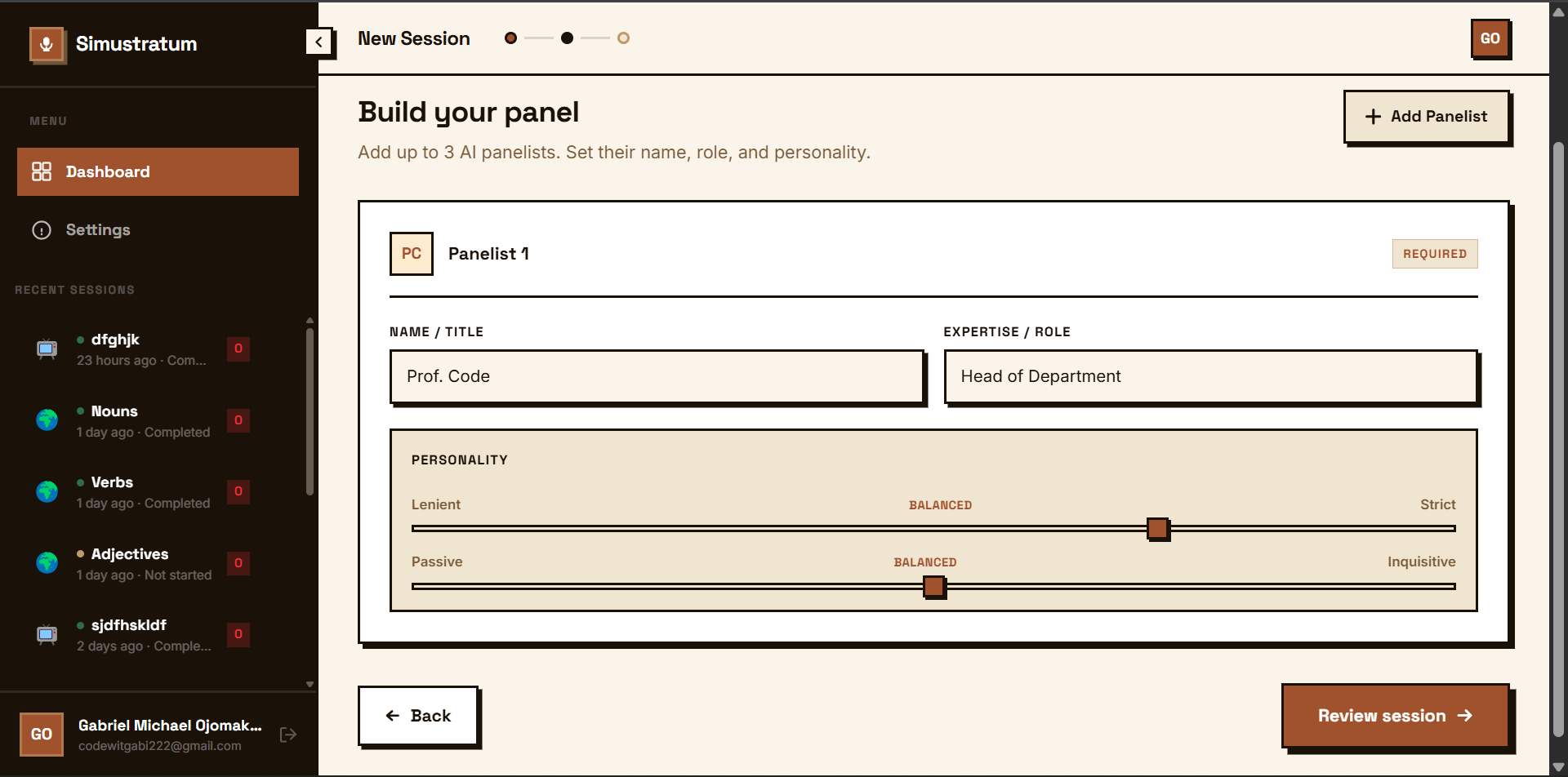
Session panelist selection page
-
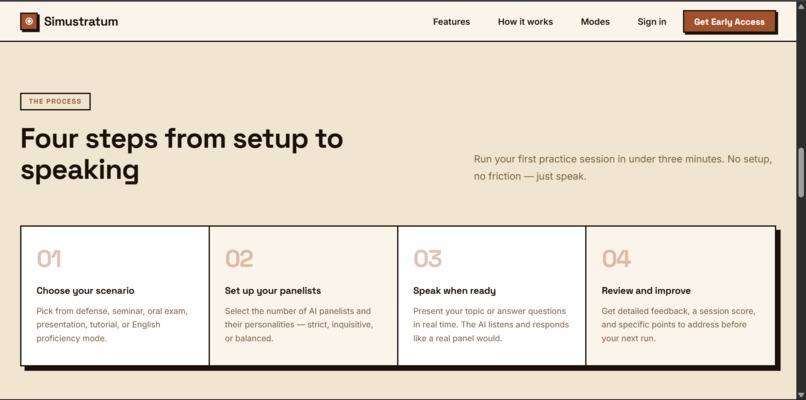
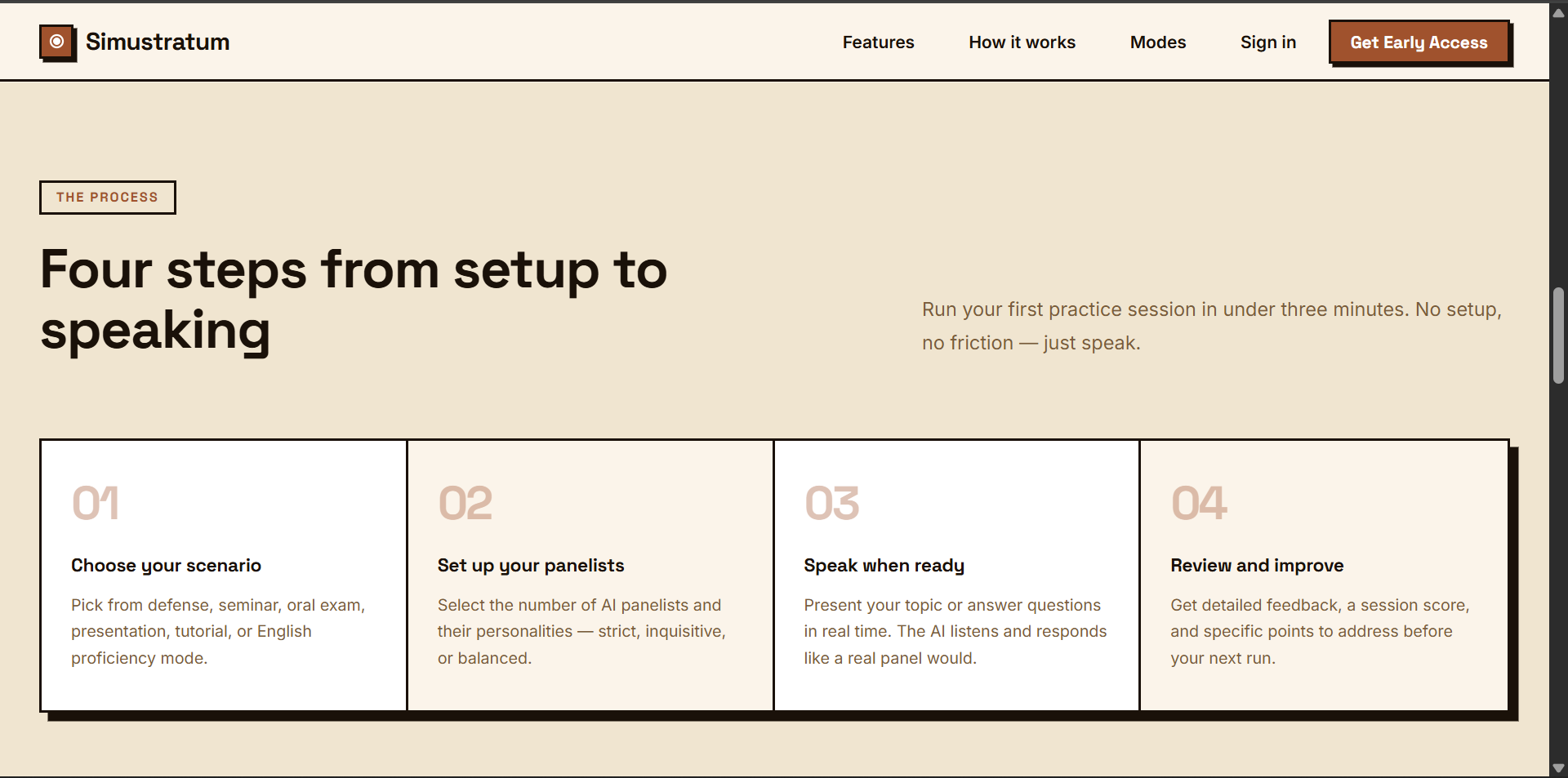
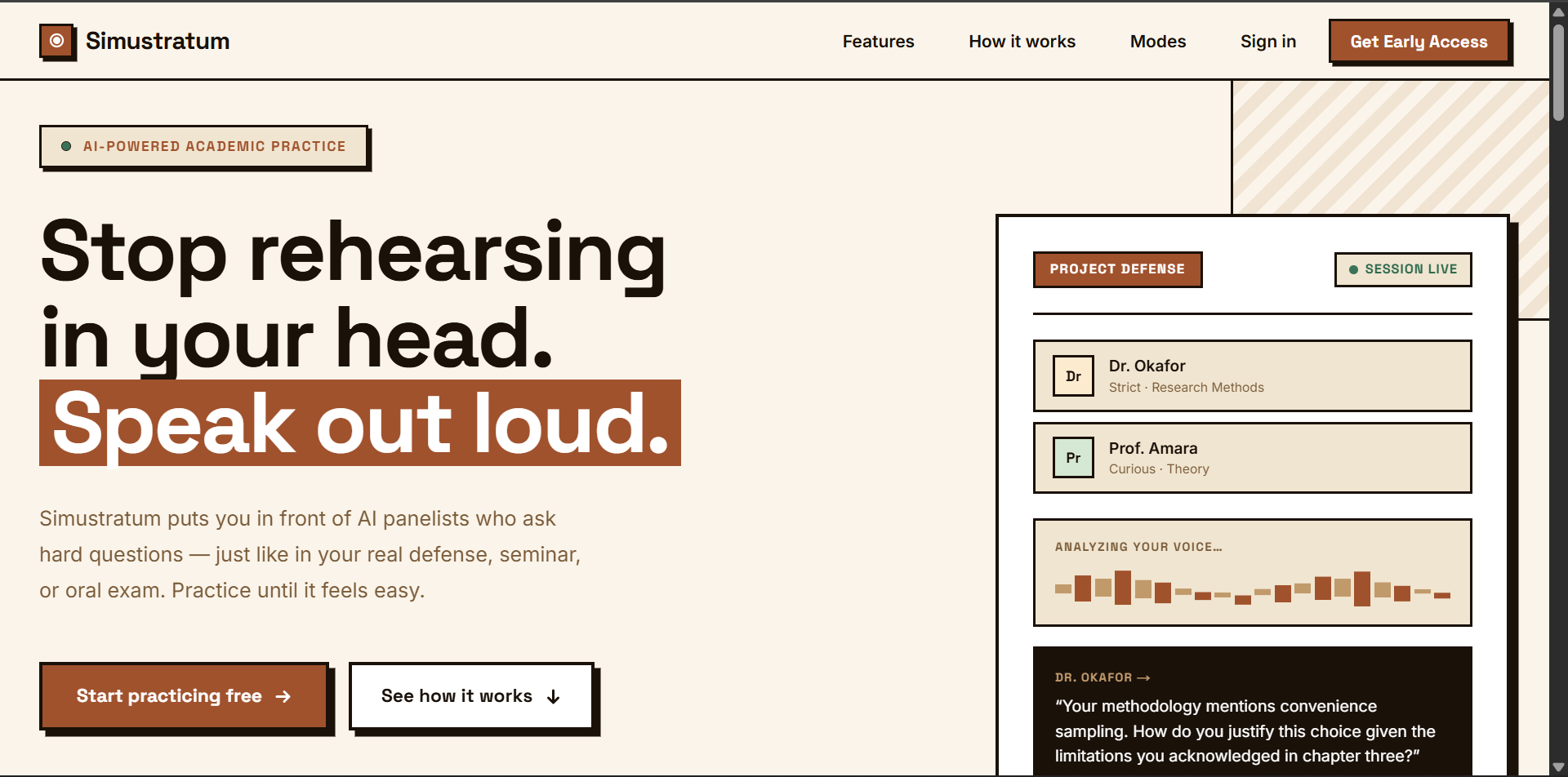
Landing page
-
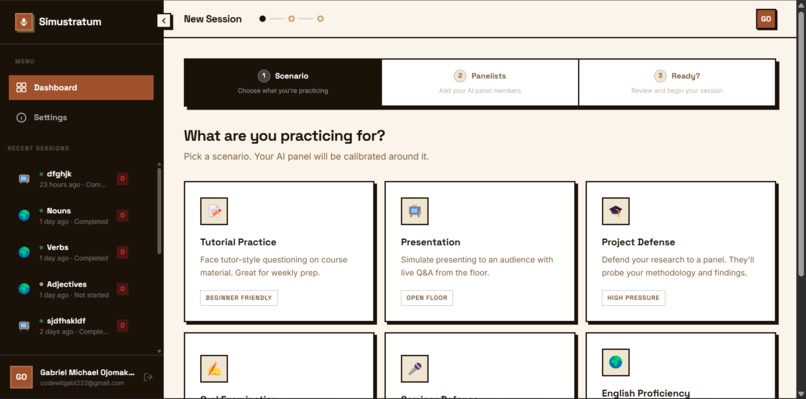
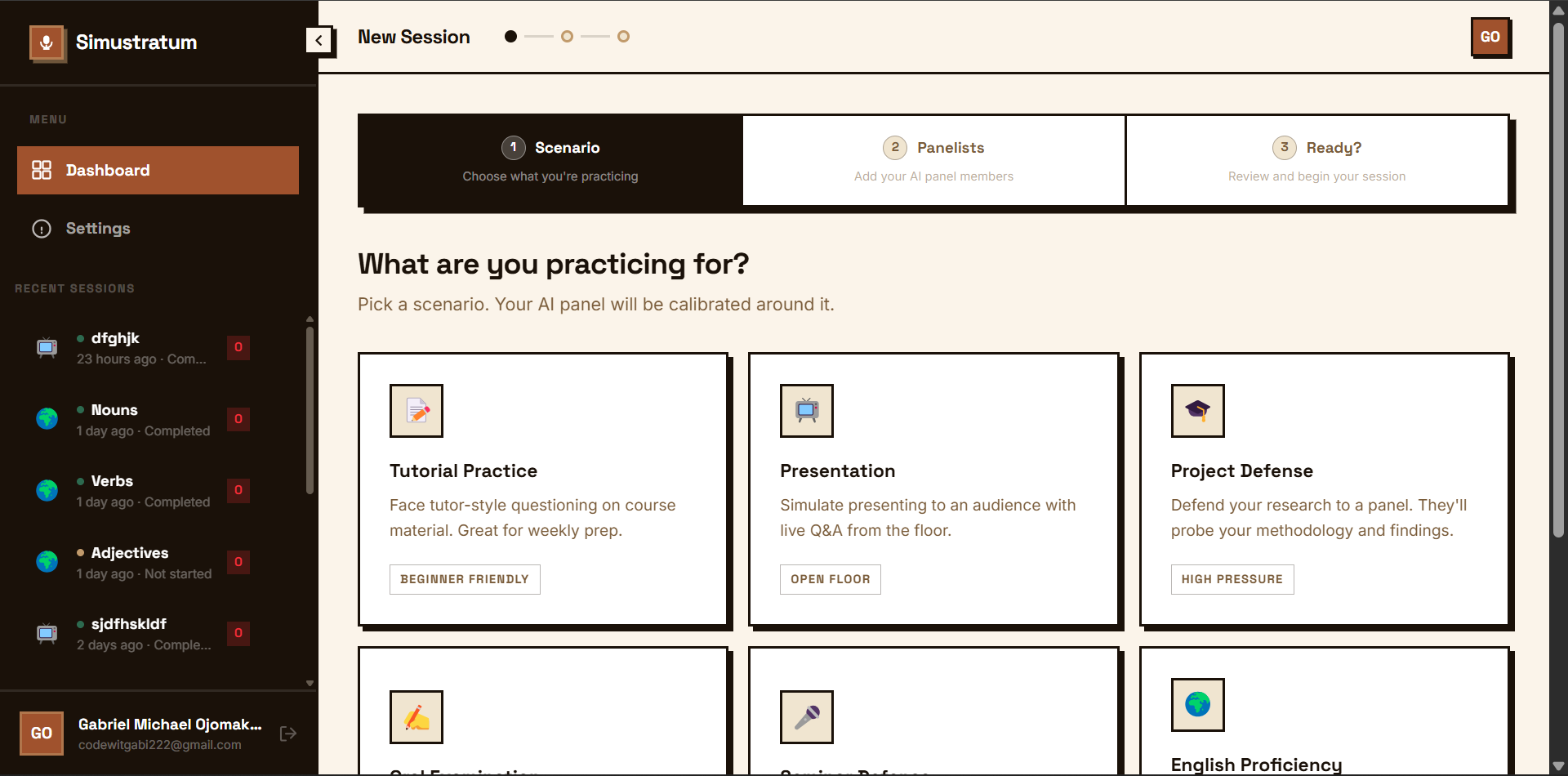
Dashboard
-
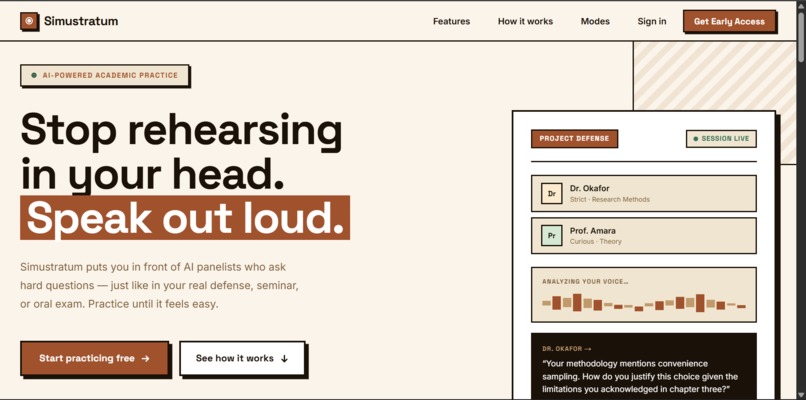
Landing page
-
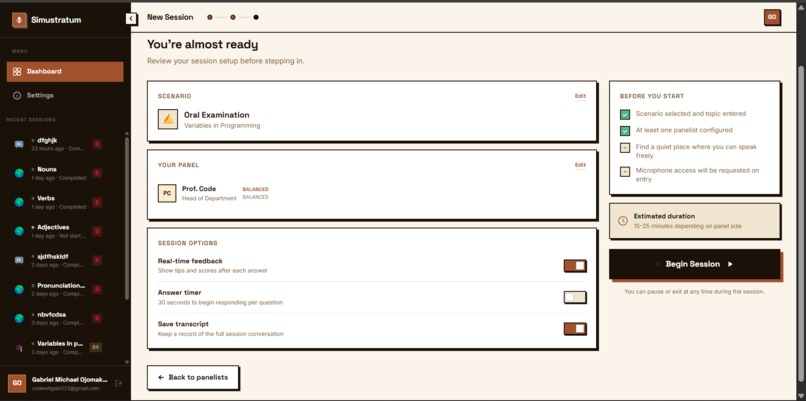
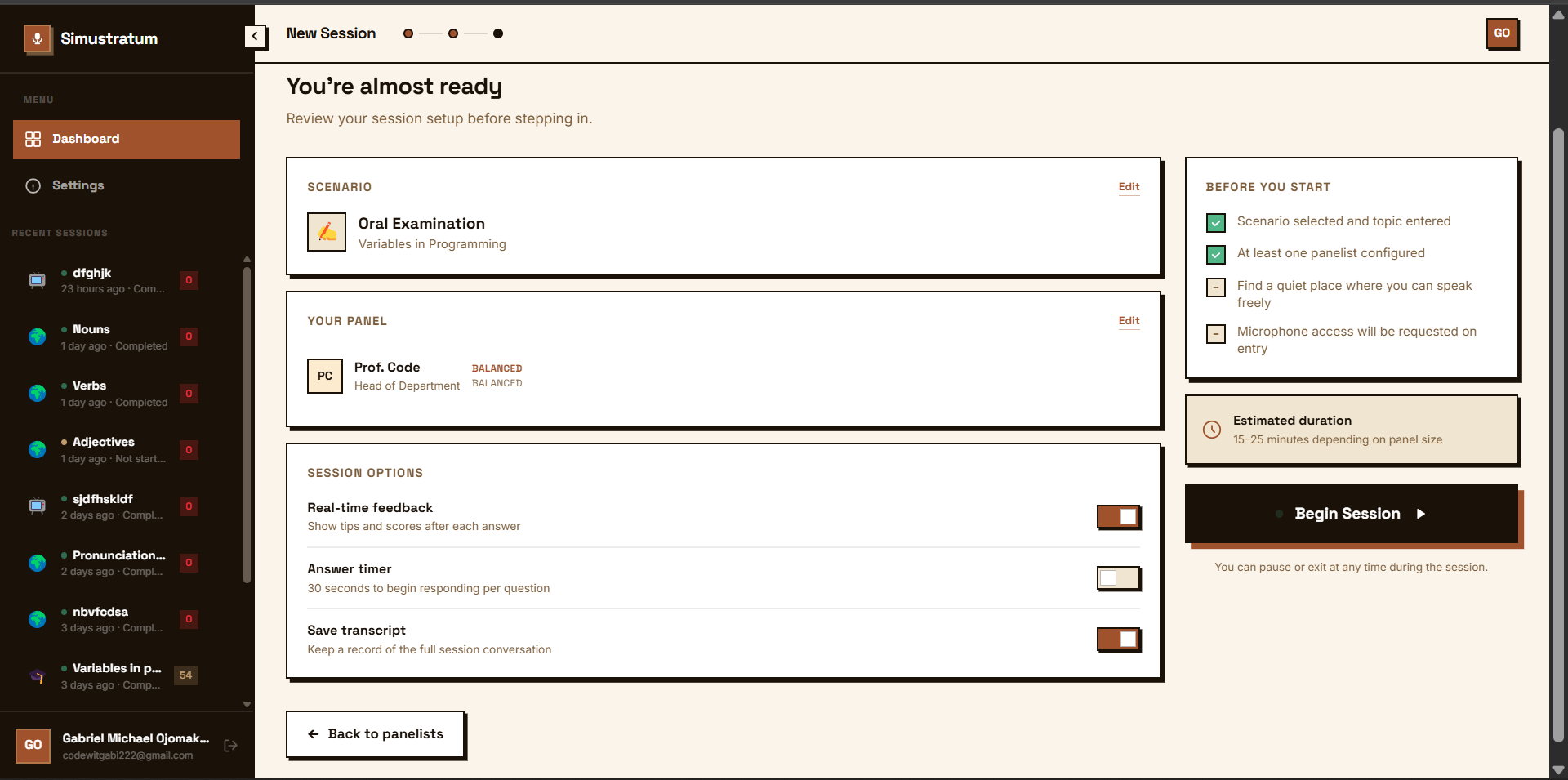
Session ready/review page
-
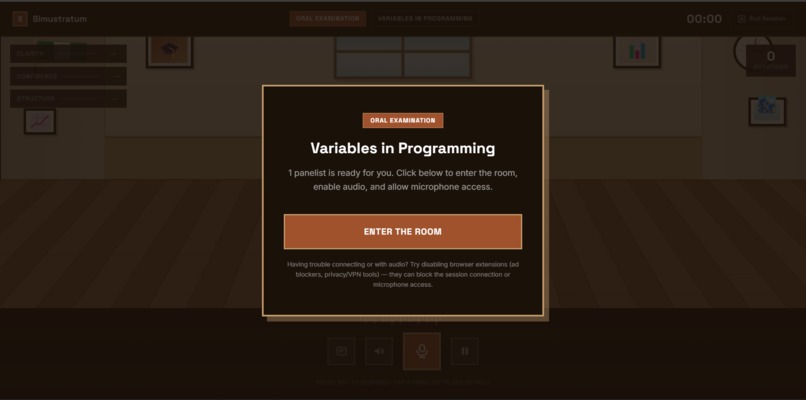
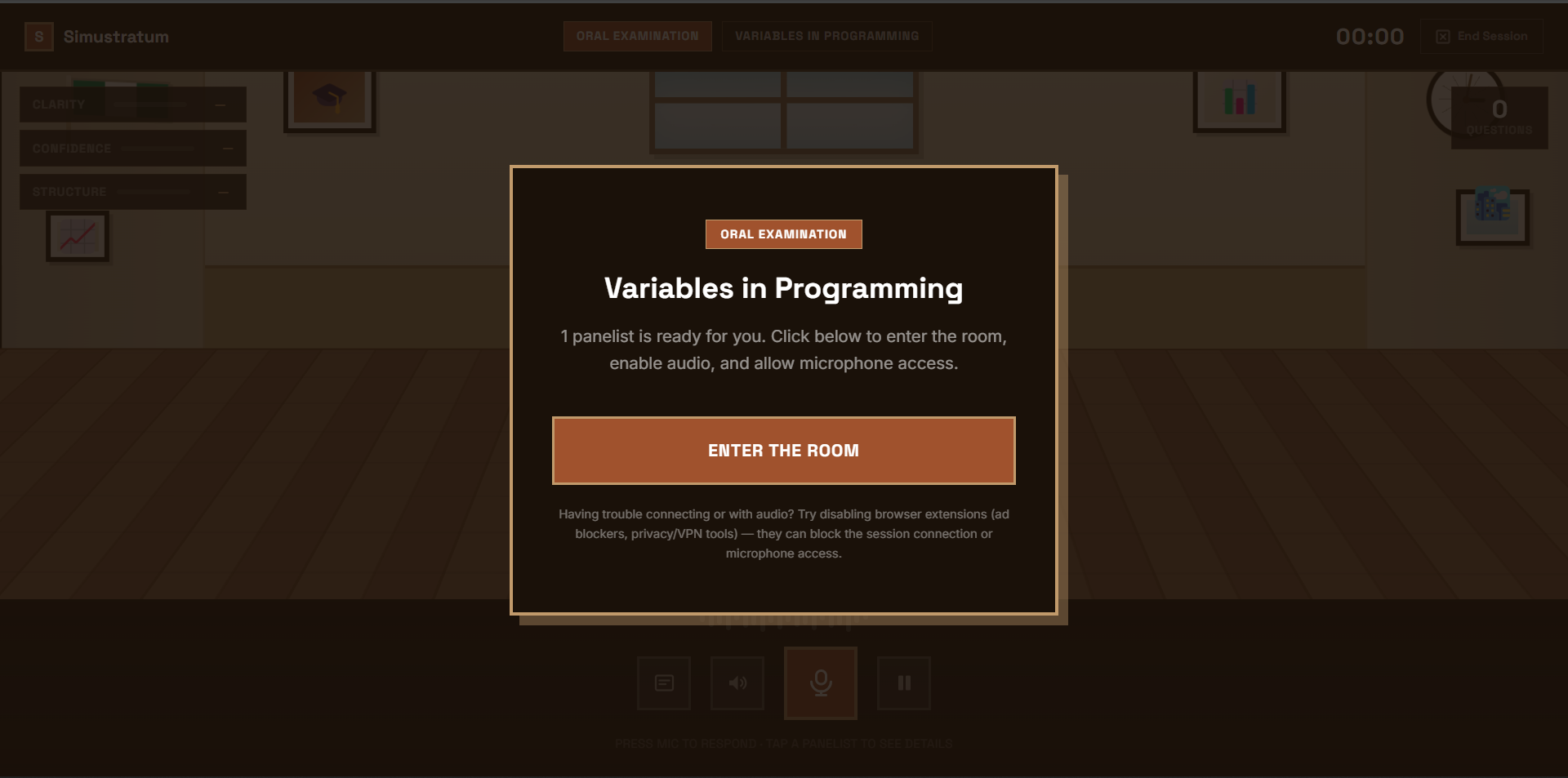
Session modal nudge
-
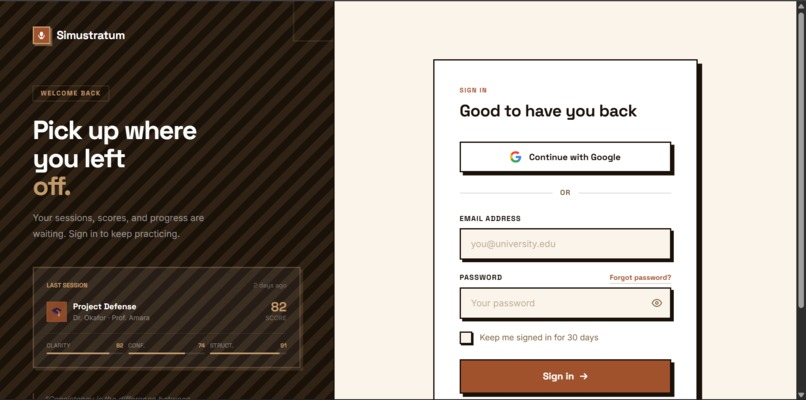
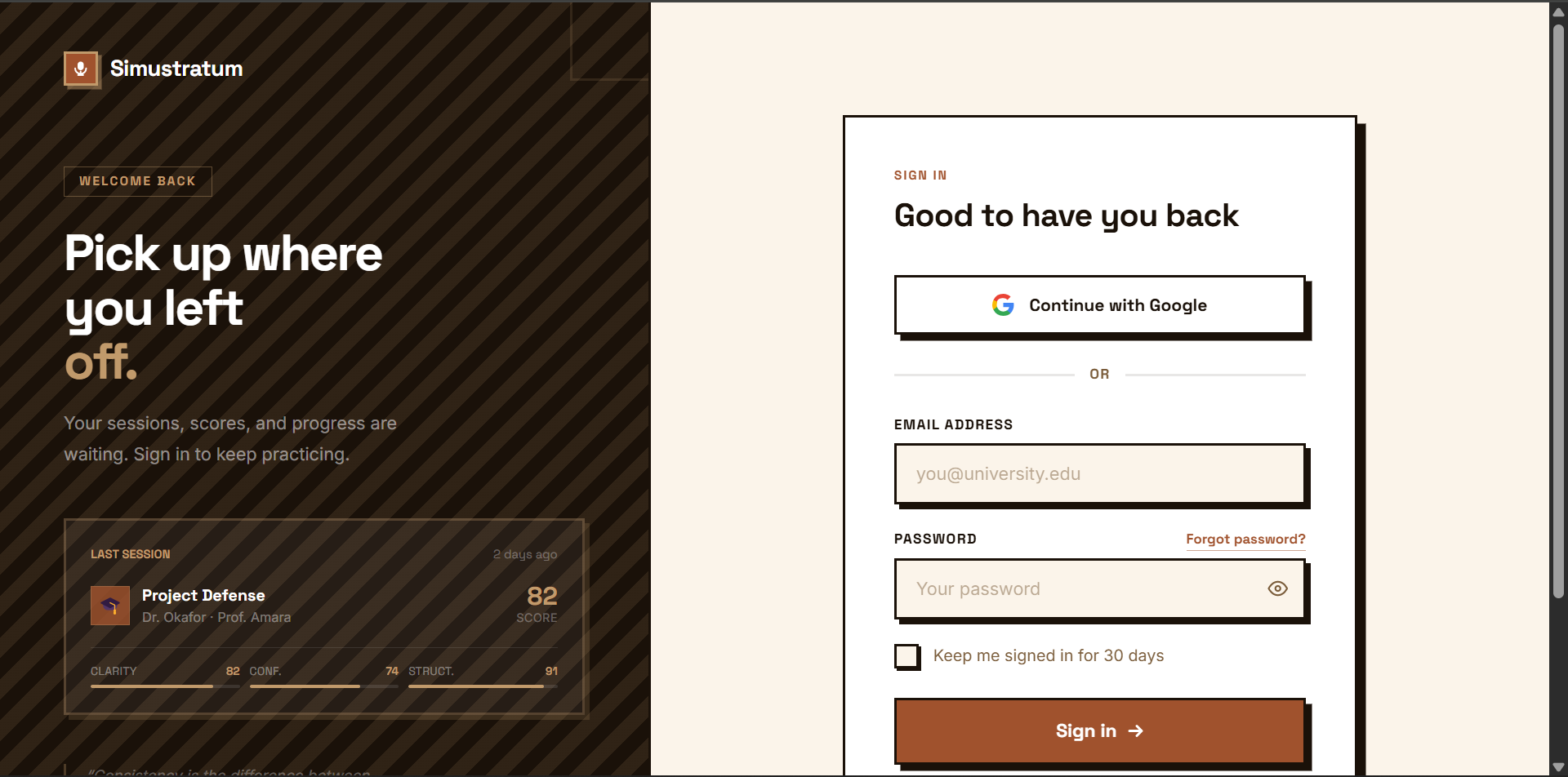
Login page
-
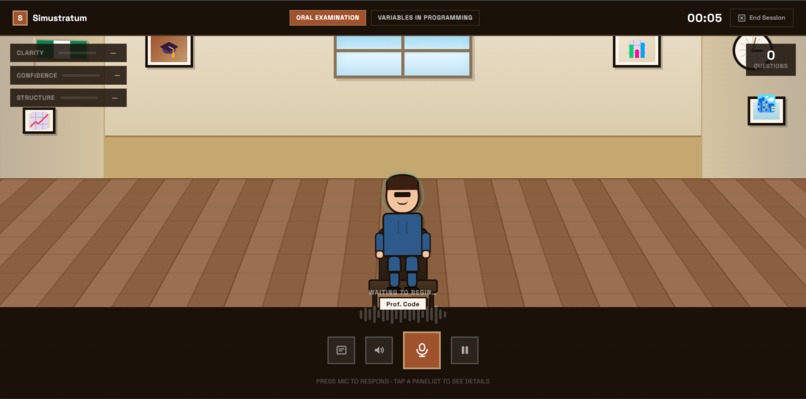
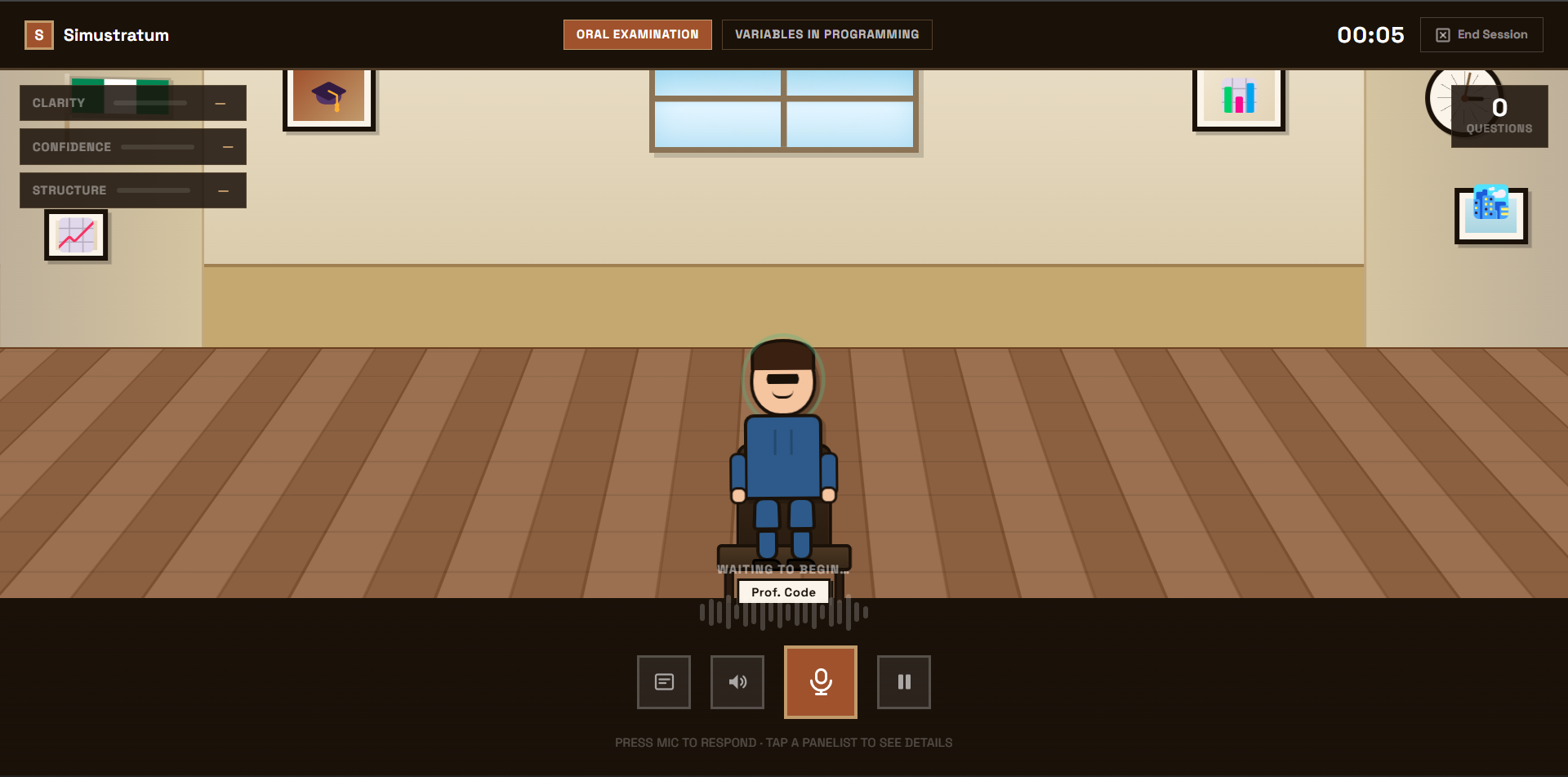
Main session page
Inspiration
Oral defenses, thesis presentations, and technical interviews are high-stakes moments that most people face completely unprepared. There's no good way to practice with realistic pressure, real-time feedback, and multiple evaluators so we built one. Also being students ourselves, we understand what it means to not be prepared before facing lecturers and panelists.
What it does
Simustratum is an AI-powered mock interview platform. You set a topic and scenario (project defense, oral exam, seminar, presentation, English proficiency etc), configure a panel of AI panelists with distinct personalities and strictness levels, and run a live session. The AI panelists ask questions in real time, follow up on weak answers, and score you on clarity, confidence, and structure as you go. When the session ends, you get a full replay with scores and a transcript.
How we built it
- Frontend: Next.js deployed on Vercel
- Backend: FastAPI on AWS EC2, connected to AWS Aurora PostgreSQL as the primary database with IAM authentication, connection pooling tuned to Aurora's token lifetime, and read/write endpoint splitting for performance
- AI: Google Gemini generates contextual questions; Anthropic Claude handles response scoring
- Vector search: Qdrant enables document-grounded questions upload your thesis or slides and the panelists will reference them
- Billing: Stripe (Free tier: 15 sessions/month, 1 panelist & Pro: unlimited sessions and up to 3 panelists)
- Audio: Cloudinary for turn-by-turn audio storage and playback
Challenges we ran into
- Handling Stripe's v10 API, where webhook events are strongly typed objects (not dicts), which caused silent failures until we tracked it down.
- Application not running in production which was later traced down to chrome extensions ending the websocket before connection. Cost us a lost of time debugging
Accomplishments that we're proud of
- The session feels genuinely like a panel interview.
- The panelists have real personality differences you can feel. A strict methodologist will hammer on gaps that a lenient one lets slide. Getting that right took careful prompt design and the per-panelist scoring system.
- We're also proud of the Aurora integration: IAM auth with fresh tokens per physical connection, composite indexes matched to actual query patterns, and reader-endpoint routing for read-heavy routes. Never done something like this prior to the hackathon
What we learned
A lot was learned over the course of the hackathon. These are a few of those lessons
- "just use PostgreSQL" hides a lot of real architectural decisions; token lifetimes, connection pool behavior under Serverless v2 scaling, reader/writer topology.
- Deployment on EC2.
- Nginx configuration for http and websocket upgrades.
What's next for Simustratum
- Recruiter and professor accounts that can assign sessions and review candidate replays
- Adaptive difficulty — the AI escalates question complexity based on your rolling score
- Post-session coaching report with specific improvement suggestions
- Most importantly, getting it in the hands of real users
Built With
- amazon-ec2
- anthropic
- aurorapostgresql
- cloudinary
- gemini
- git
- nextjs
- nginx
- python
- qdrant


Log in or sign up for Devpost to join the conversation.