-
-
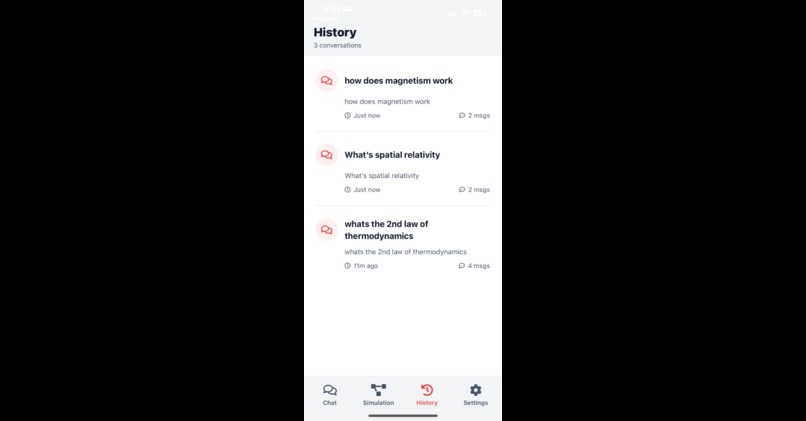
Light History Page - IOS
-
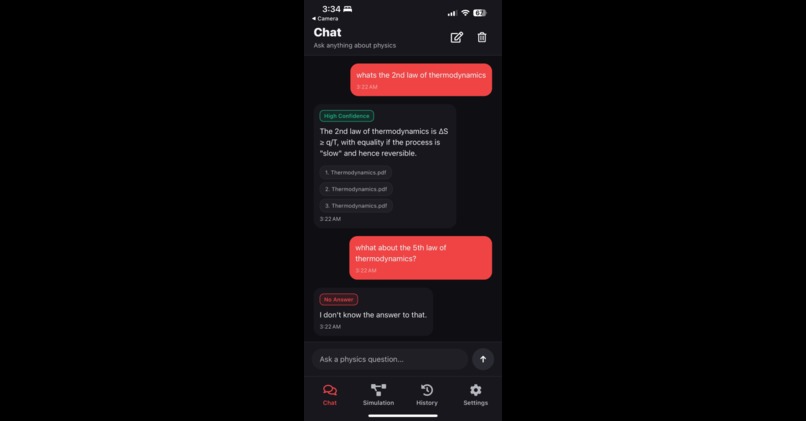
Dark Chat Page - IOS
-
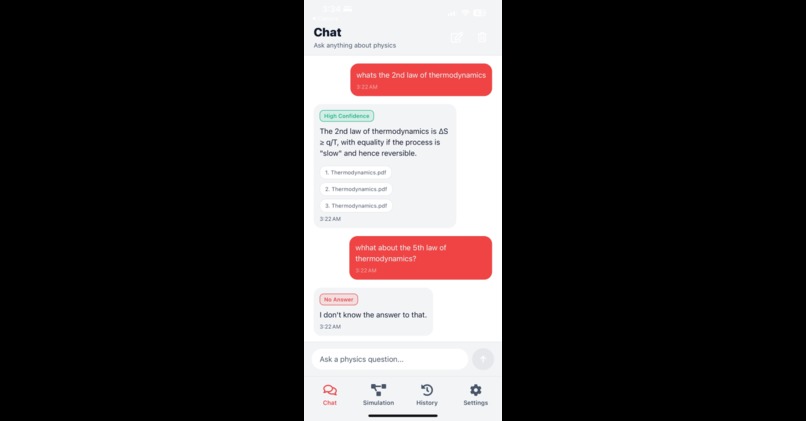
Light Chat Page - IOS
-
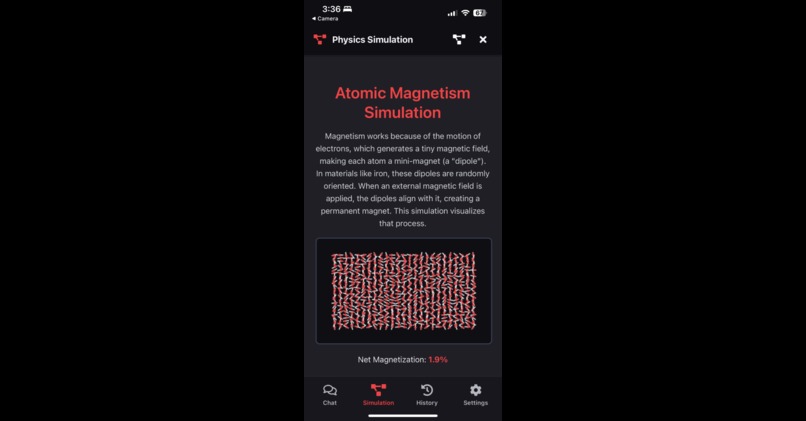
Simulation 2 - IOS
-
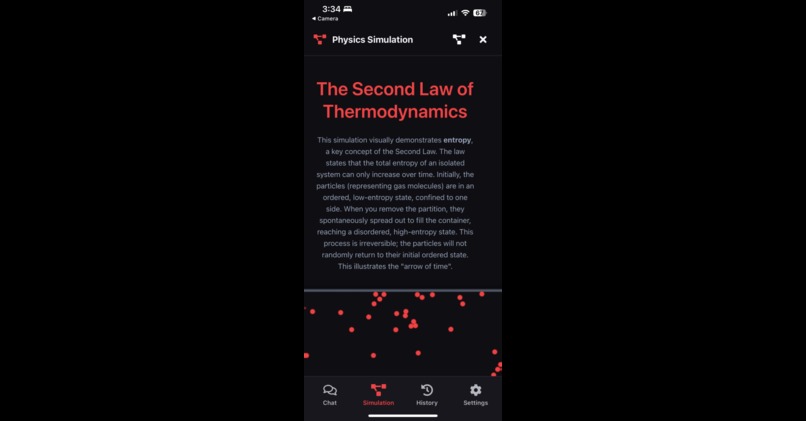
Simulation 1 - IOS


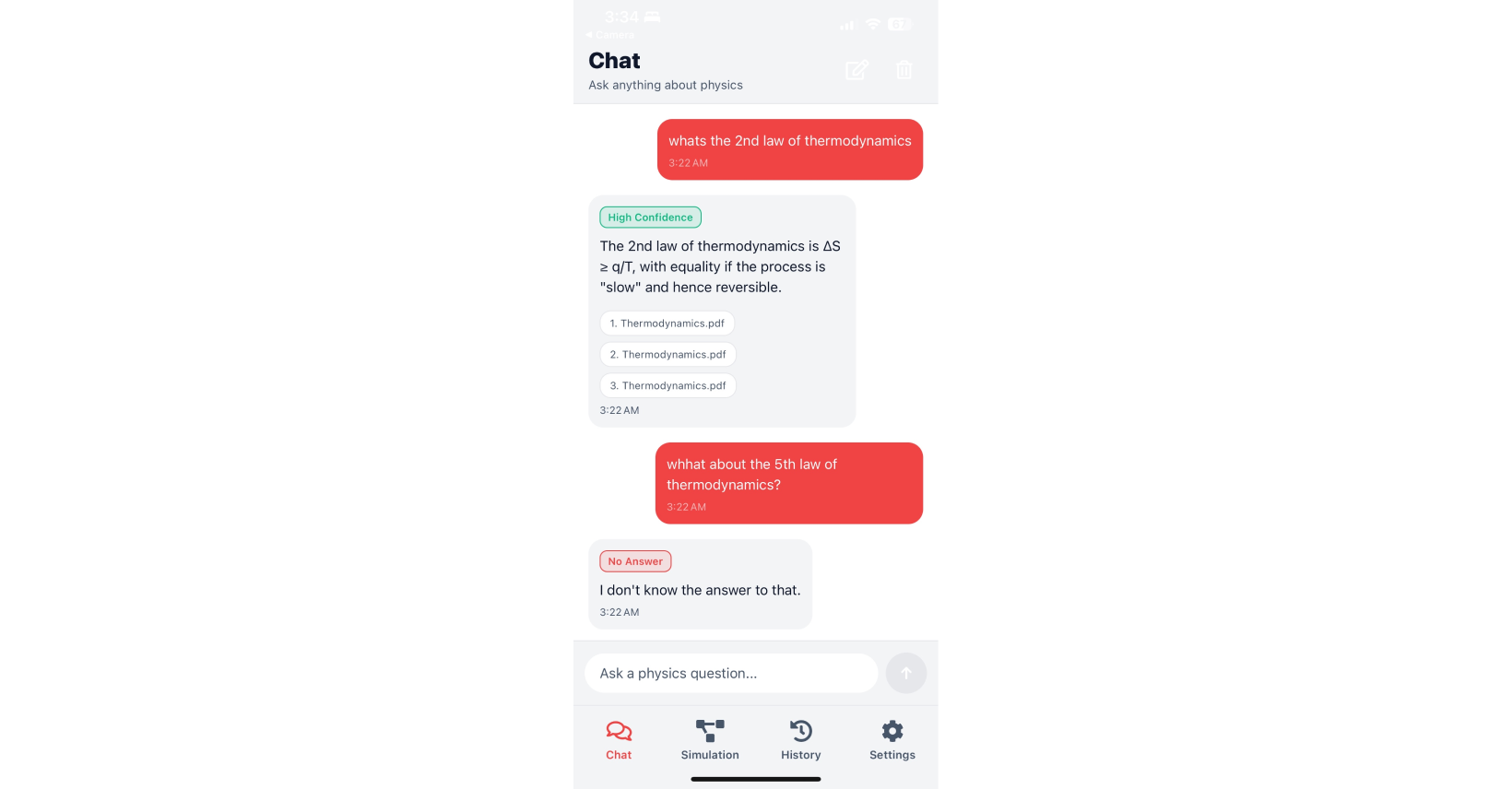
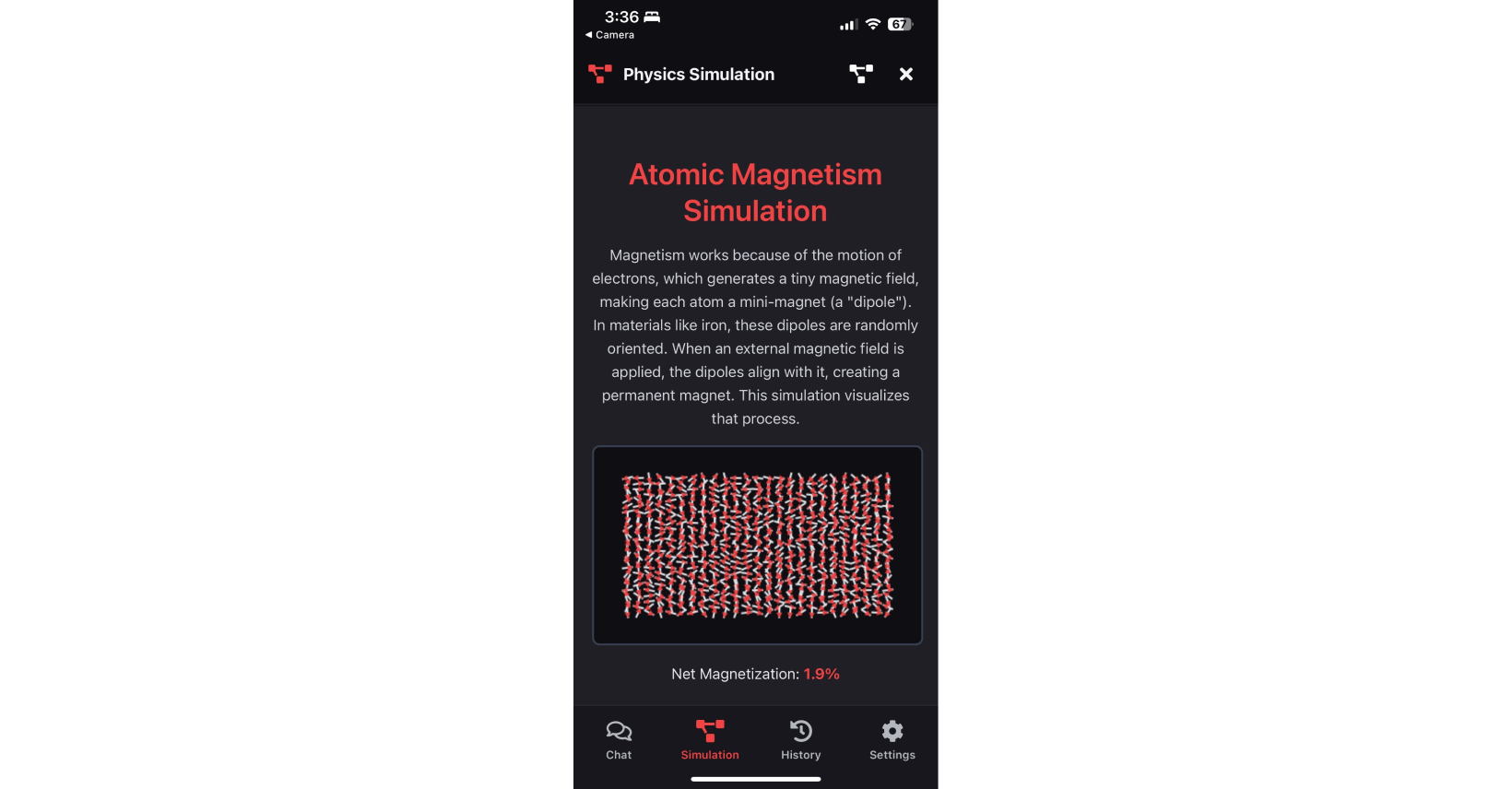
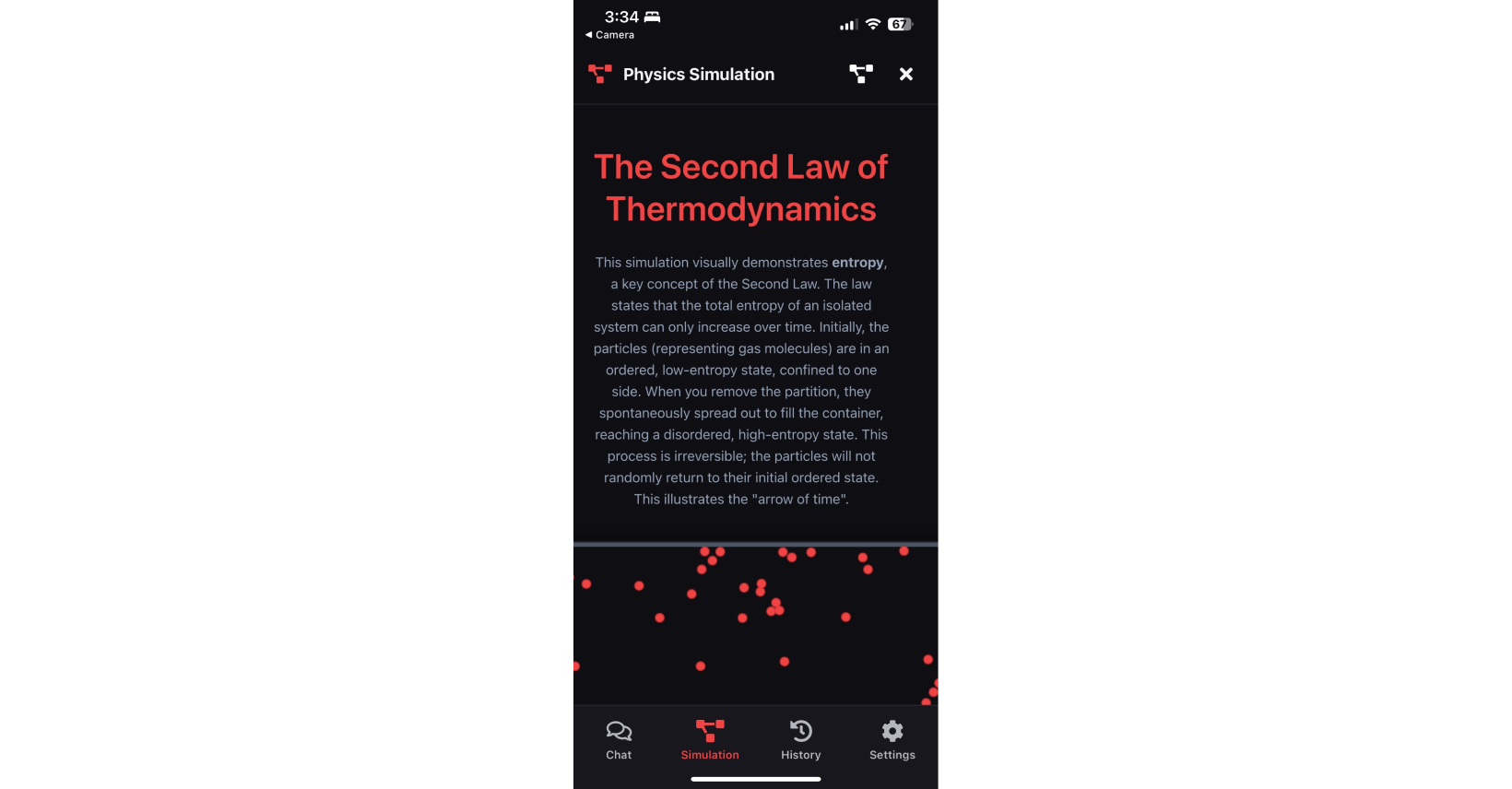
Simulare: Learn by Simulating
Inspiration
While studying mechanics, we struggled to see how concepts like the Coriolis force actually worked. Textbooks described it mathematically, but the intuition was missing. When we turned to ChatGPT, the responses were informative yet too general and it couldn’t produce interactive simulations.
That sparked an idea: what if learning physics could be visual, conversational, and grounded entirely in verified textbooks?
That’s how Simulare was born — from the Latin simulare (“to simulate”) and a play on simulate + learn.
Our goal: to create an immersive learning platform that combines trusted academic content with visual and auditory experiences, giving students a complete way to see, hear, and experiment with what they learn — free from hallucinations or misinformation.
What It Does
Simulare brings textbooks to life.
It retrieves information from undergraduate-level physics textbooks, then generates:
- Concise, reliable explanations grounded in the text
- Interactive physics simulations that can be customized and regenerated
- Conversational learning through an integrated voice agent that explains, quizzes, and discusses concepts naturally
The platform also features a clean, modern UI with login/logout, responsive design, and seamless synchronization across devices — offering a unified experience for learners on mobile and desktop.
How We Built It
- Frontend: Built with React Native and NativeWind CSS inside an Expo Go environment for smooth cross-platform deployment.
- Backend & RAG Pipeline: Powered by a Snowflake API integrated with a corpus of undergraduate textbooks. We built custom retrieval pipelines to generate precise, context-aware prompts.
- Simulation & Content Generation: The Google Cloud Gemini API produces both textual and simulation outputs based on the retrieved context.
- Conversational Interface: Integrated ElevenLabs Agent, which draws from the same knowledge base for accurate and natural voice interactions.
This architecture allows Simulare to dynamically retrieve trusted data, generate simulations, and discuss them with users — all in real time.
Challenges We Faced
Every step came with its own set of challenges:
- Snowflake API integration — most examples used Streamlit, so adapting it for our environment required deep debugging and experimentation.
- ElevenLabs integration — its dependencies occasionally clashed with other UI components, leading to stability issues.
- Cross-platform consistency — ensuring identical performance and layout on macOS, Windows, Android, and iOS was surprisingly tricky.
Through trial, patience, and teamwork, we learned how to engineer interoperability between multiple APIs and frameworks — a skill often more demanding than writing everything from scratch.
Accomplishments We’re Proud Of
- Full multi-platform support — Simulare runs seamlessly on macOS, Windows, Android, and iOS.
- Custom navigation stack system — each tab maintains its own state, so interactions persist even when users switch contexts.
- Scalable architecture — our RAG + LLM + Audio pipeline can be extended to new subjects and datasets with minimal reconfiguration.
- User-centric design — clean UI/UX focused on engagement, accessibility, and conceptual understanding.
What We Learned
This project taught us to:
- Combine Snowflake, Gemini, and ElevenLabs APIs into a unified workflow.
- Handle complex asynchronous data flows while maintaining UI responsiveness.
- Optimize for cross-platform compatibility in React Native.
- Collaborate efficiently while dividing technical and creative responsibilities.
Most importantly, we learned how simulations can bridge the gap between abstract formulas and real-world understanding — making concepts like ( F = ma ) or Coriolis acceleration something students can see, not just calculate.
What’s Next for Simulare
Simulare’s future is all about scaling education through interactivity.
Next steps:
- Partner with schools and universities to tailor simulations to specific textbooks and curricula.
- Build a community hub for students and teachers to share simulation templates and experiment ideas.
- Expand coverage to chemistry, biology, and mathematics.
“Simulare doesn’t just explain physics — it lets you experience it.”
Built With
- elevenlabs
- expo.io
- express.js
- gemini
- mongodb
- nativewindcss
- node.js
- react-native
- snowflake


Log in or sign up for Devpost to join the conversation.