-
-
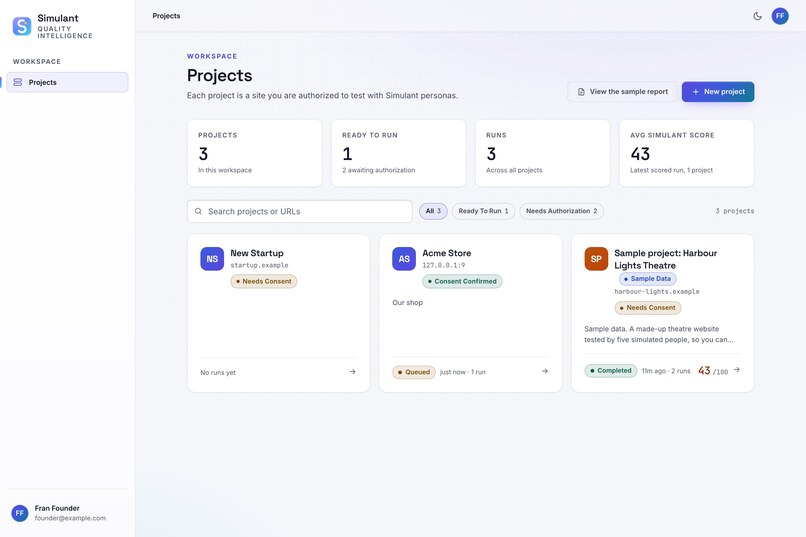
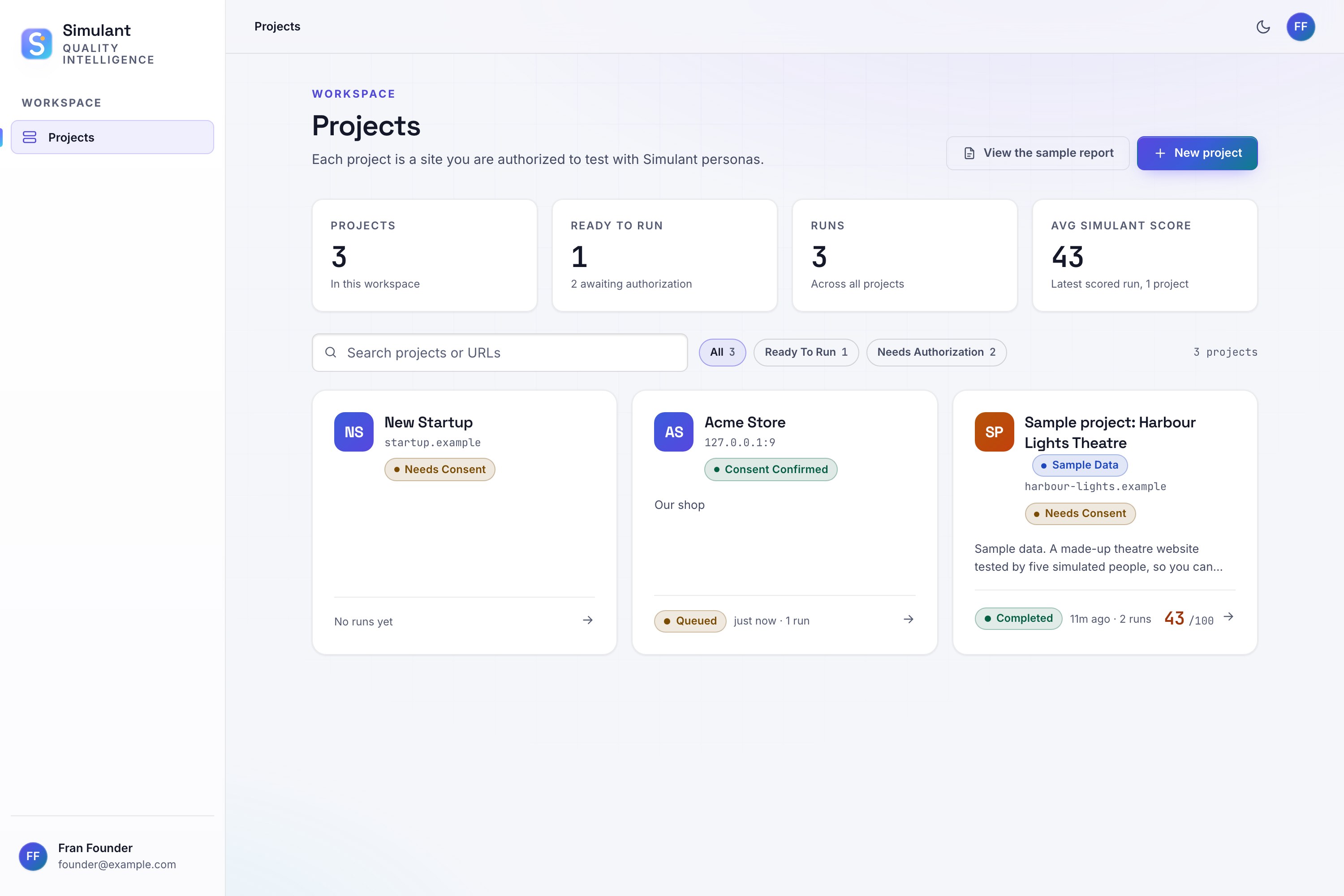
Projects: each website you test, with its latest score and history.
-
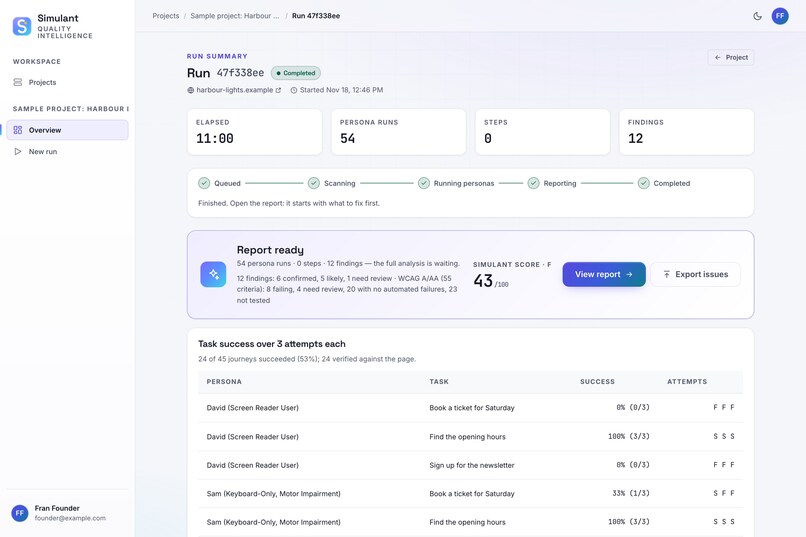
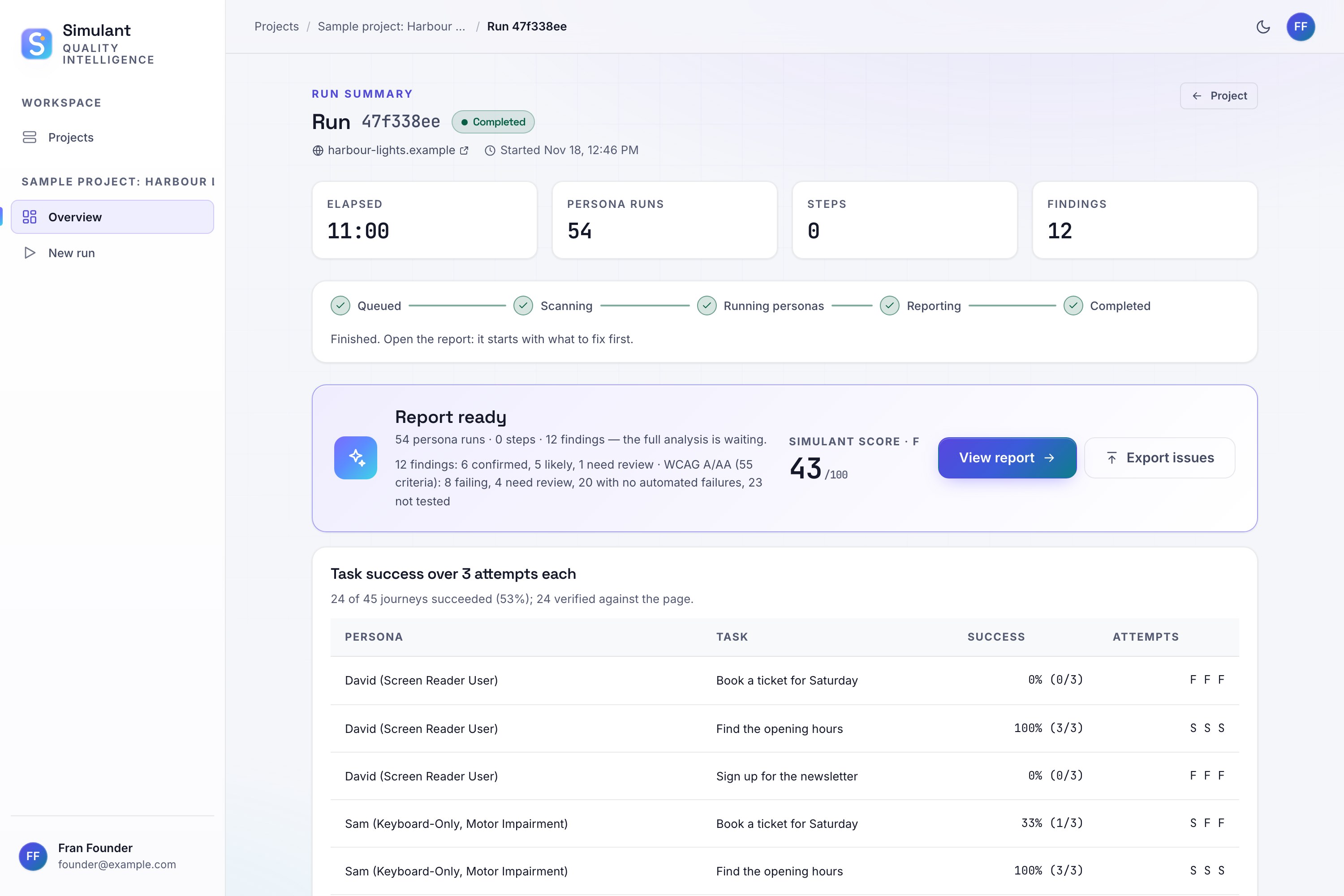
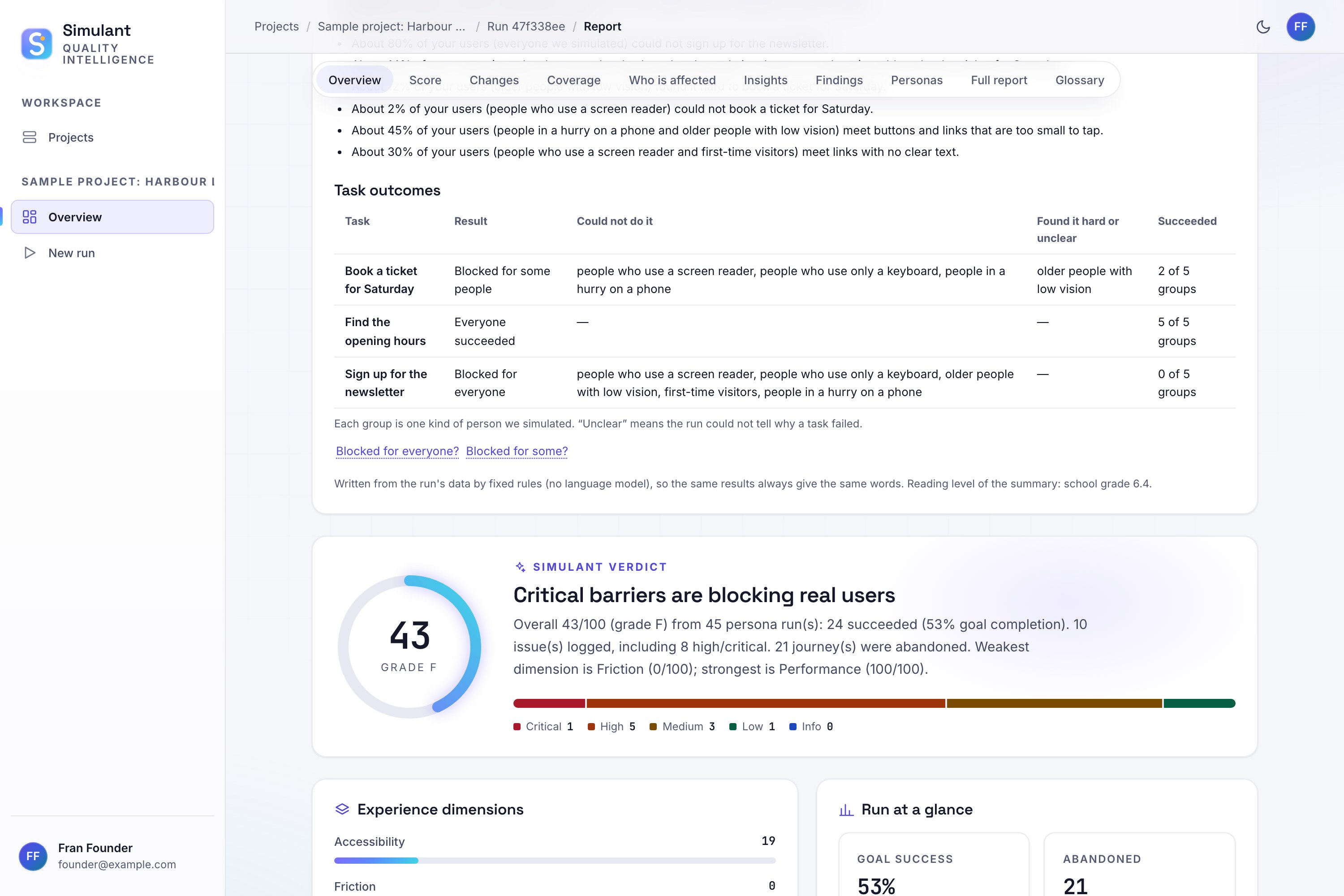
A finished run: 54 persona journeys, 12 findings and a Simulant score of 43/100, with task success for each persona.
-
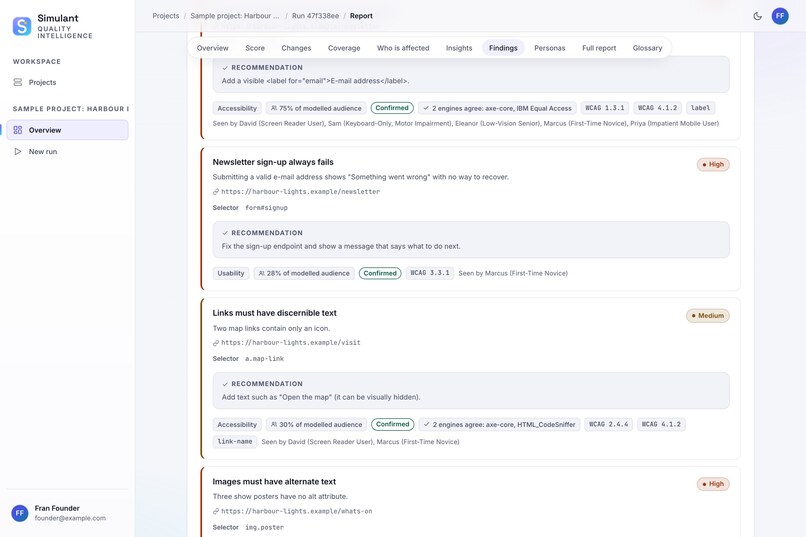
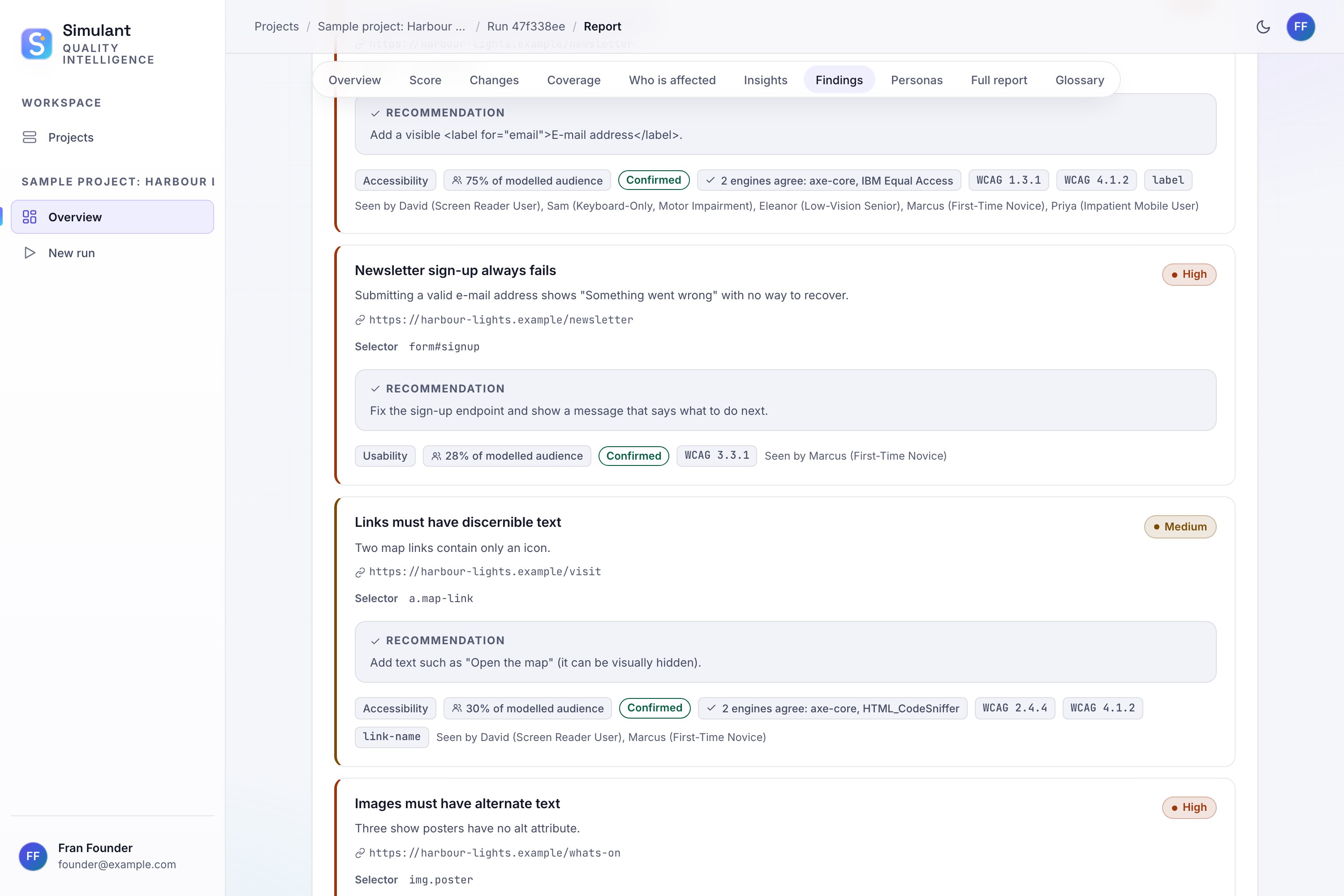
Every finding comes with its WCAG rule, evidence, who it affects and the exact fix.
-
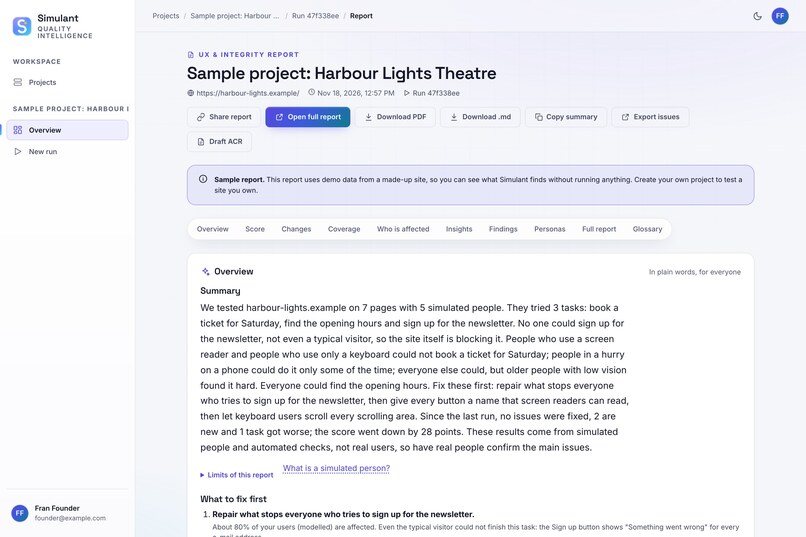
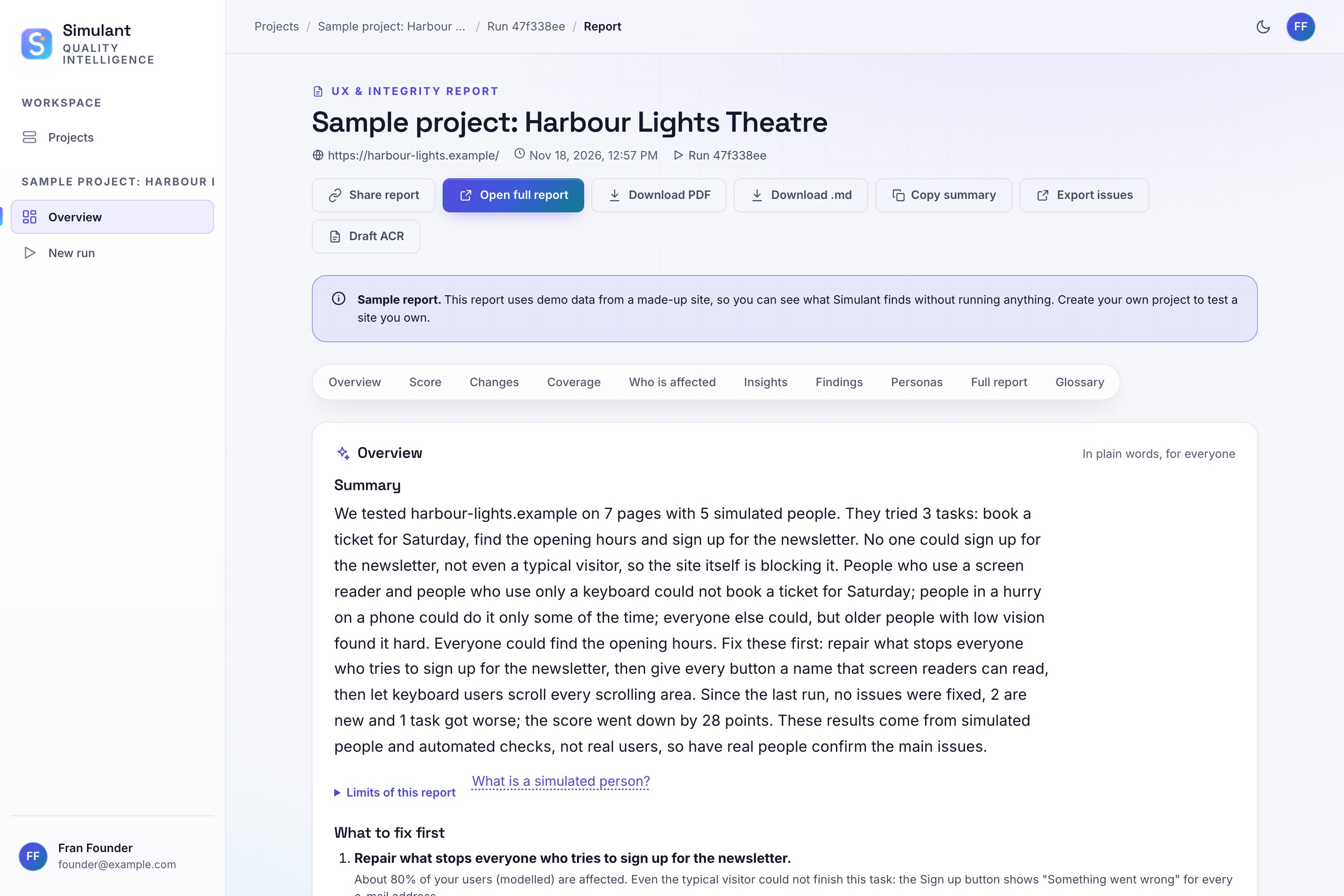
The report opens with what to fix first: a plain-language summary of who is blocked and why.
-
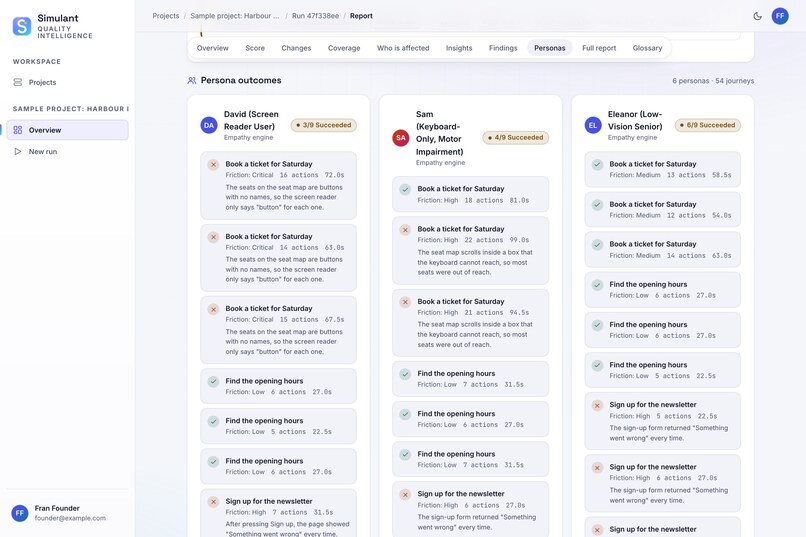
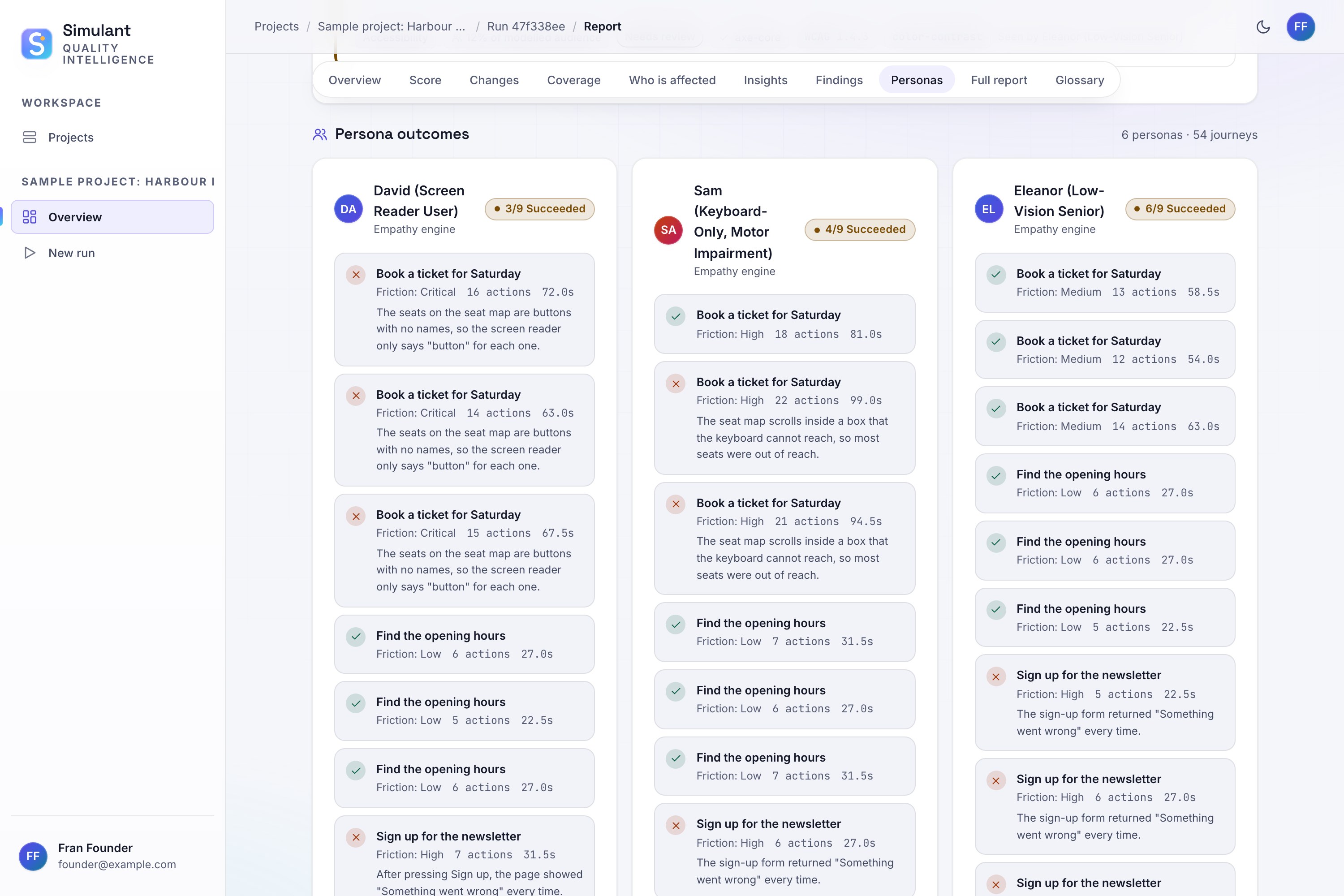
David (screen reader), Sam (keyboard only) and Eleanor (low vision) each try real tasks, and Simulant explains exactly where they got stuck.
-
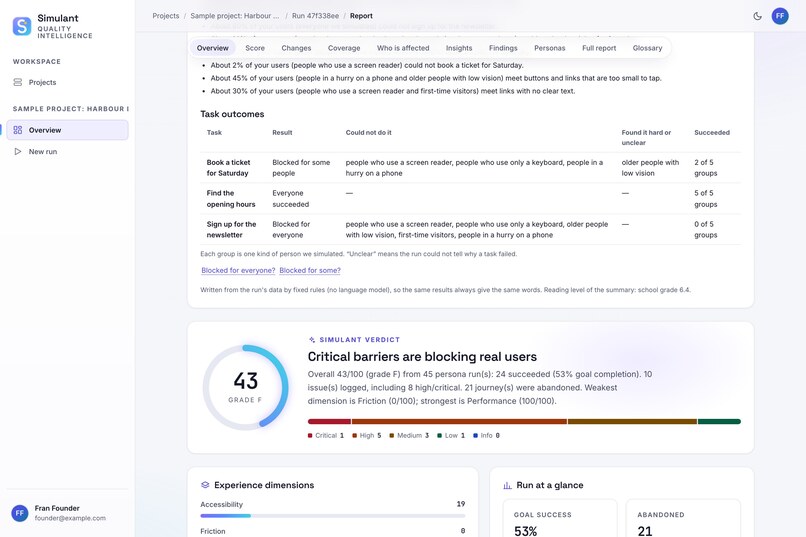
Task outcomes and the Simulant verdict: which tasks are blocked, for whom, and how severe the problems are.
-
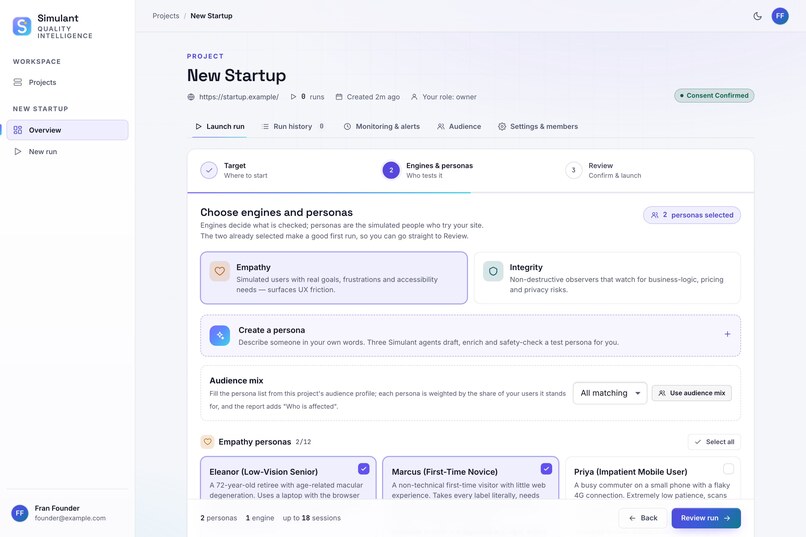
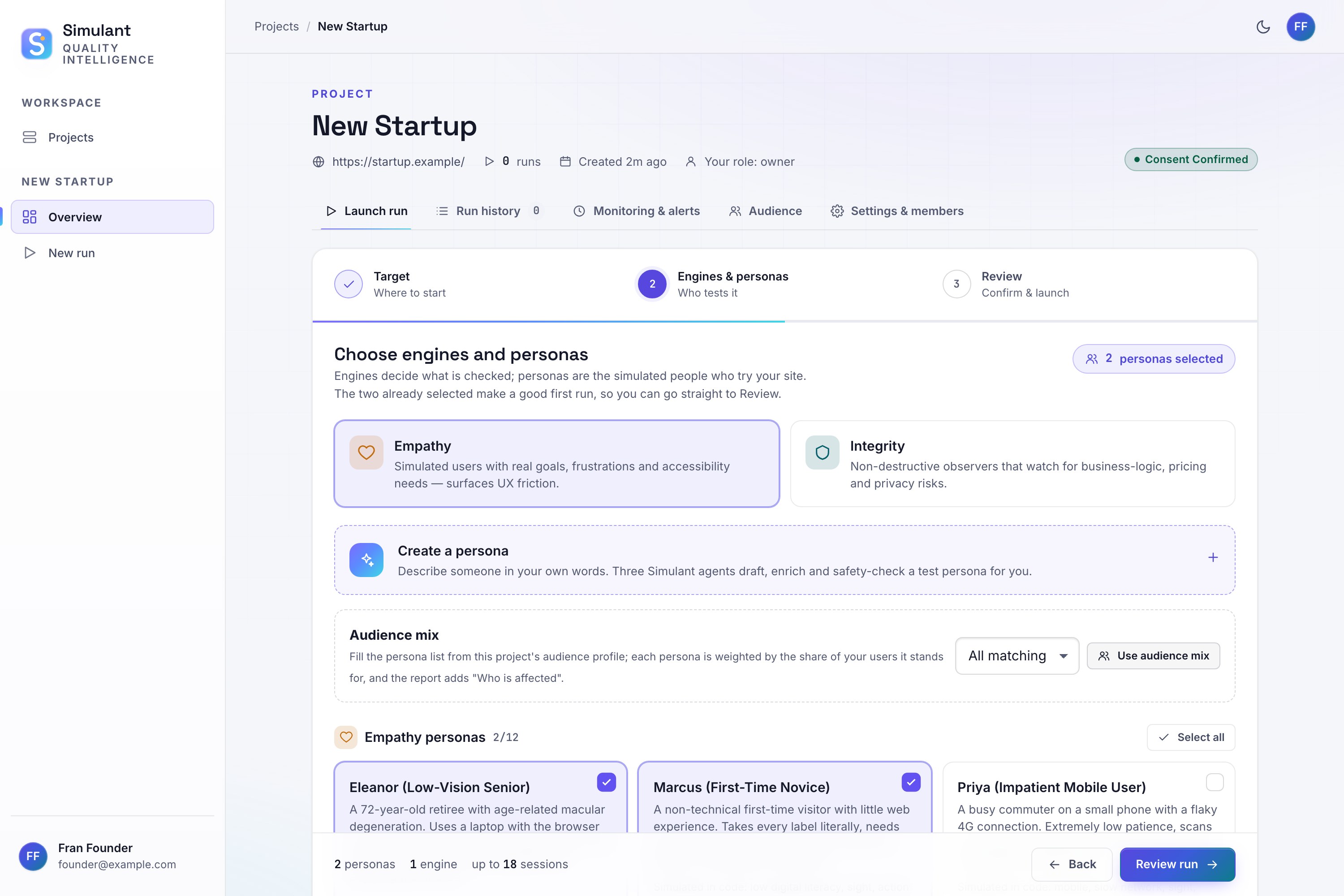
Choose which personas to send through your site, from screen-reader and keyboard-only users to impatient mobile visitors.
Inspiration
Around 1 in 6 people live with a disability, yet most websites are only ever tested by people who can see the screen and use a mouse. Now the web is becoming agentic: sites publish AI agents that act on behalf of users. We saw a real risk of repeating the same mistake, so we set out to build accessibility into the agentic web from day one.
What it does
Simulant publishes its AI personas as an open agent network on simulantai.tech:
- 🦯 David: a blind screen-reader user
- ⌨️ Sam: a keyboard-only user with a motor impairment
- 👓 Eleanor: a low-vision senior
- 📱 Priya: an impatient mobile user
- 🧭 Marcus: a first-time, non-technical visitor
Visitors can chat with these agents right in their browser, for example "test this page as a screen-reader user". They get back:
- a Simulant score and the tasks each persona could or couldn't finish
- findings mapped to WCAG rules, with evidence and the exact fix
- a plain-language summary of what to fix first
Simulant follows the open agentic web specification, so other agentic websites can load Simulant's agents (with the visitor's approval) to check their own pages and agents for accessibility problems. Accessibility becomes a service the whole agentic web can call.
How we built it
Simulant's core already runs AI personas through real websites:
- FastAPI + PostgreSQL for the platform and API
- Playwright (Chromium + WebKit) to drive a real browser
- axe-core plus our own rule engine for WCAG checks
- LLMs to drive persona decisions and explain why someone got stuck
For this challenge we added an open agentic web layer:
- A conforming agent manifest (
agent-manifest.json) and a network definition describing Simulant's persona agents and their capabilities - A browser runtime that runs the agent network directly in the visitor's browser
- A chat interface where people (or other agents) can talk to the network
- Tools that let the agents call Simulant's testing engine and return findings
- Cross-site calling, so other agentic websites can load and use Simulant's agents with user consent
Challenges we ran into
- A brand-new specification: the open agentic web spec is evolving quickly, so we had to follow it closely and adapt as it changed.
- Trust across sites: running agents in the visitor's browser meant keeping keys and private data safe when another site loads our agents.
- Making personas believable: a screen-reader persona has to behave like a real screen-reader user, not like a sighted tester pretending.
Accomplishments that we're proud of
- Accessibility testing that any agentic website can call, not just a standalone tool
- Findings that are actionable: every issue comes with its WCAG rule, evidence and the exact fix
- A live, public deployment at simulantai.tech
What we learned
- How portable agent networks, browser runtimes and peer-to-peer agent discovery work in the open agentic web
- That accessibility problems become even more serious when AI agents start acting for users: an inaccessible agent locks people out twice
What's next for Simulant
- More personas (cognitive disabilities, color blindness, older devices, low bandwidth)
- Support for more languages
- A public "accessible agentic web" badge that any agentic site can earn
- Deeper integrations with the tools teams already use, starting with Jira
Built With
- axe-core
- azure
- caddy
- docker
- fastapi
- groq
- javascript
- json-schema
- llm
- mcp
- neuro-san
- open-agentic-web
- playwright
- postgresql
- python
- wcag
