simul8r.ai: Democratizing End-to-End Testing Through AI
Inspiration
Working in corporate engineering environments, we consistently witnessed the same frustrating bottleneck: QA teams couldn't keep pace with development velocity. While engineering teams shipped code at lightning speed, testing remained manual, technical, and slow. We saw brilliant product managers who could articulate perfect test scenarios but lacked the coding skills to implement them. Partner service teams spent hours manually verifying integrations. Customer success teams identified critical user journey issues but couldn't translate them into automated tests.
The inspiration hit us: testing is fundamentally about simulating human behavior. If we could remove the technical barriers through natural language, we could democratize testing across entire organizations.
What it does
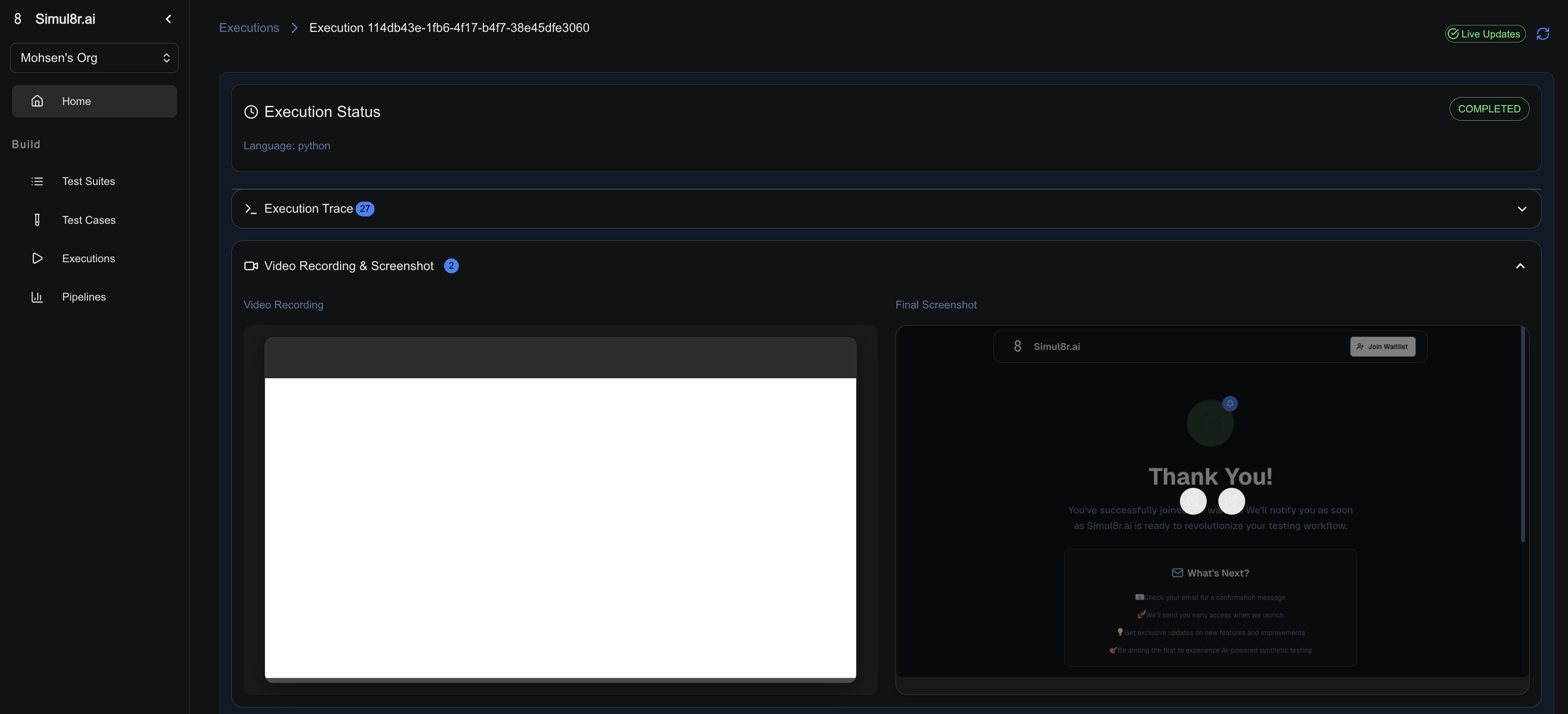
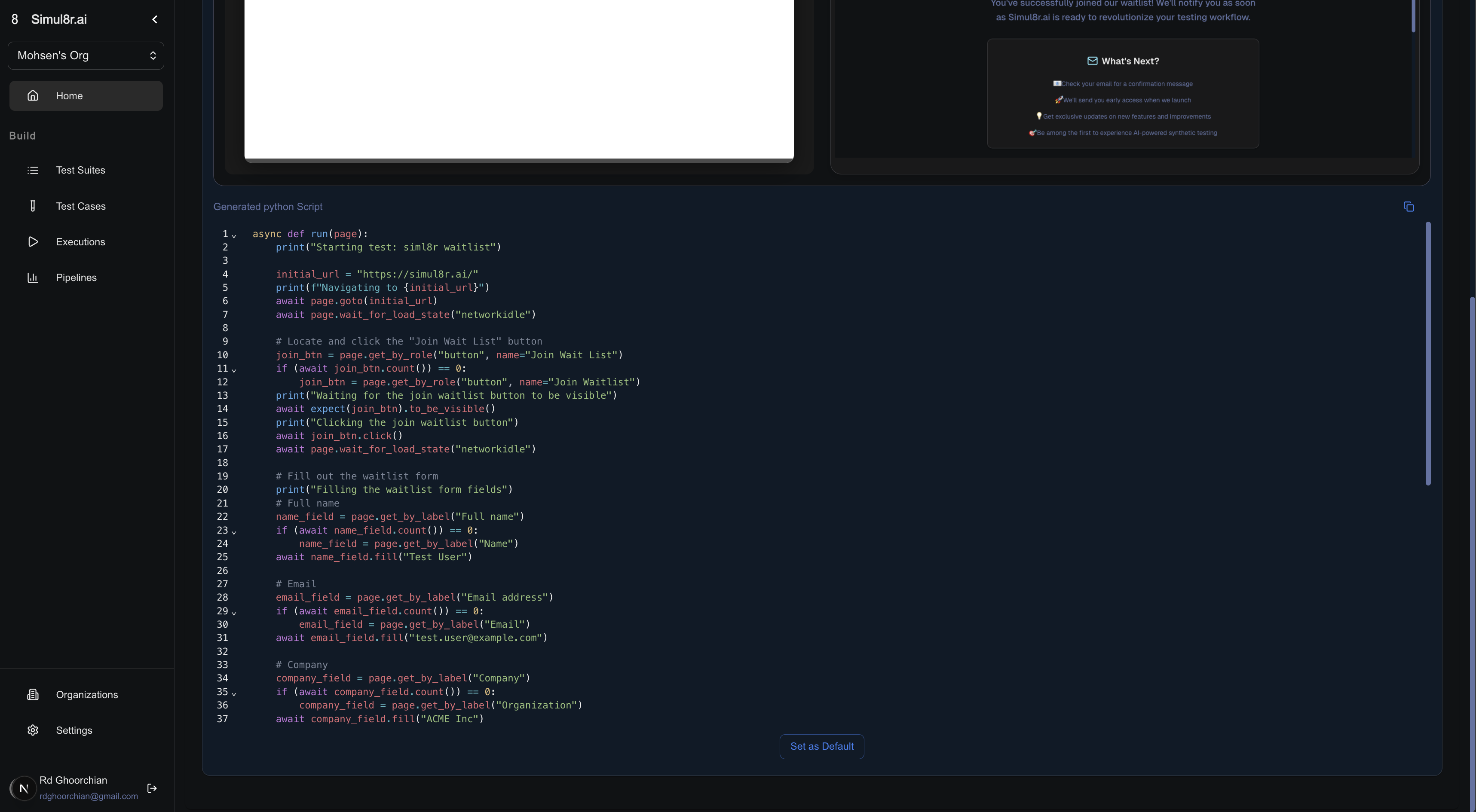
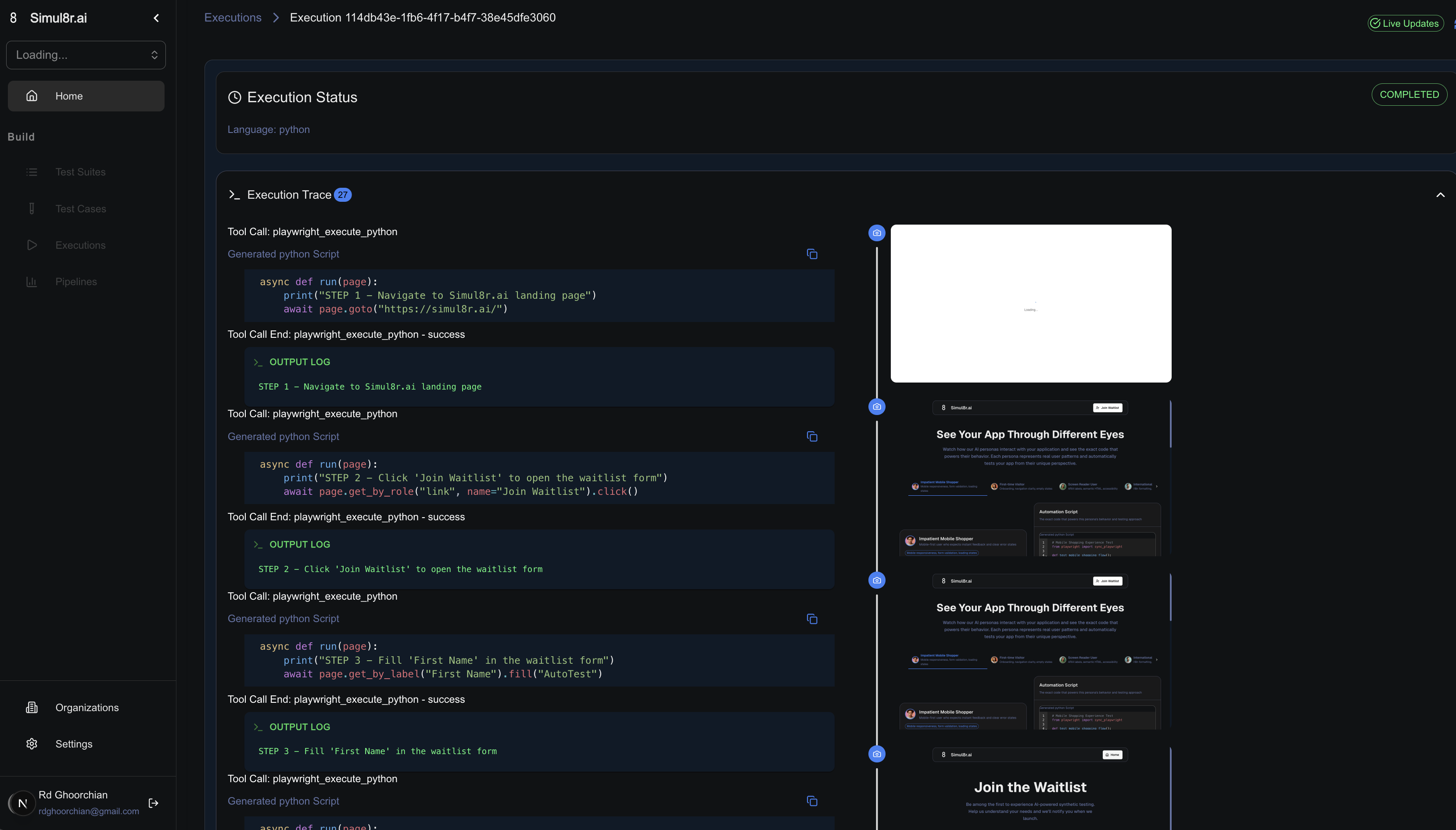
simul8r.ai transforms anyone into a testing expert through plain English. Users simply describe a user persona and link their GitHub repository, and our platform generates synthetic AI agents that interact with their UI like real users.
Key capabilities:
- Natural language test creation: "As a premium user, verify checkout flow with saved payment methods"
- Synthetic user simulation: AI agents that think and behave like actual users
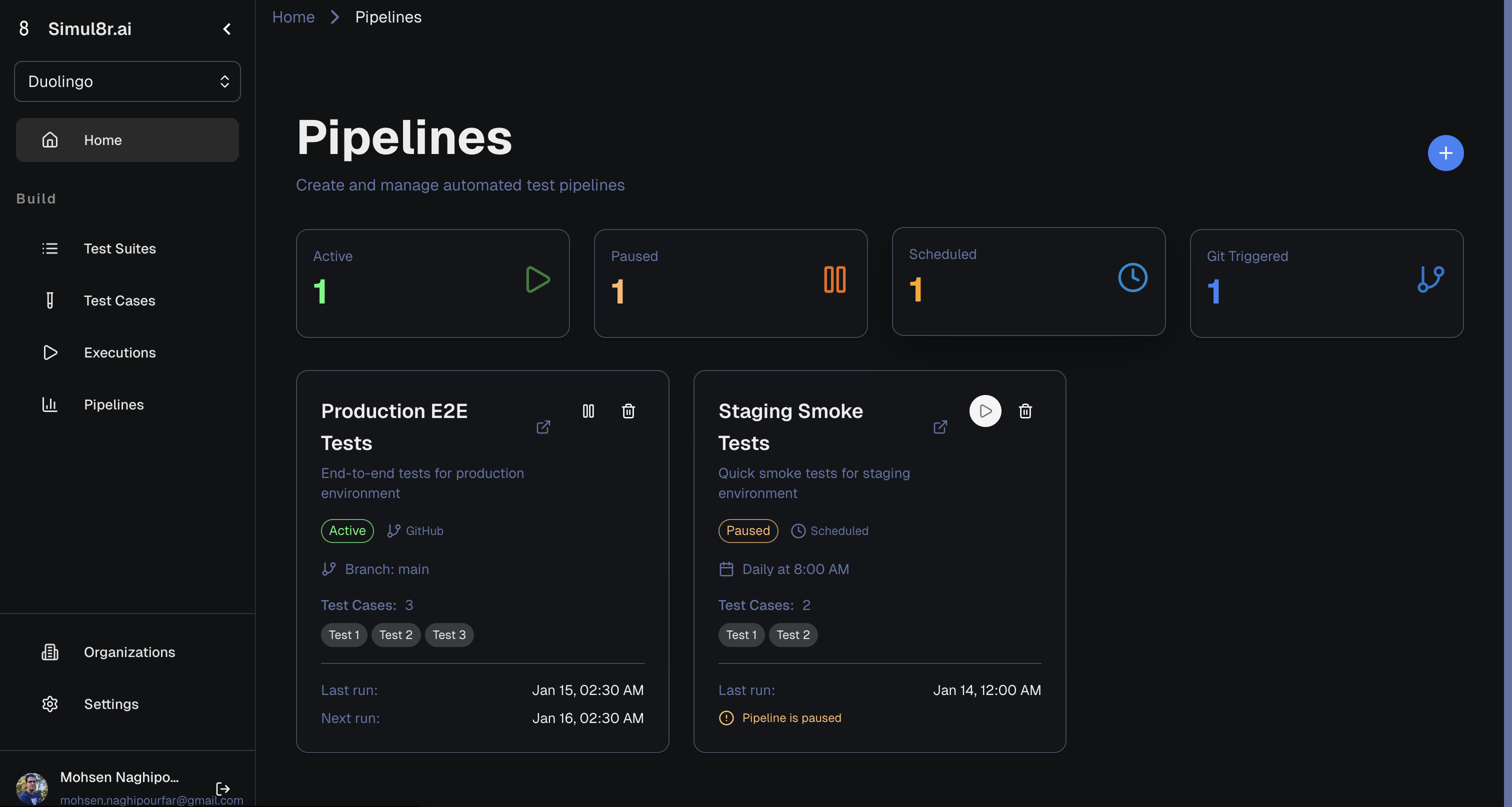
- Flexible testing frequency: From continuous monitoring to scheduled regression suites
- Cross-role accessibility: Product managers, partner service teams, and QA engineers can all create tests
- GitHub integration: Automatic triggering on code commits
How we built it
Our architecture combines Large Language Models (LLMs) with browser automation:
Technology Stack:
- Frontend: Nextjs-based dashboard for test creation and monitoring
- Backend: Python FastAPI microservices architecture
- AI Engine: Custom configurable Langgraph powered by OpenAI, Anthropic, XAI, GoogleGenAI
- Browser Automation: Headless Chrome with custom interaction protocols
- Integration: GitHub webhooks and REST APIs for CI/CD pipeline integration
Key Innovation: We developed synthetic user personas that maintain realistic session state, handle dynamic content loading, and adapt to different UI frameworks automatically.
Challenges we ran into
Technical Hurdles:
- Dynamic Content Recognition: Modern SPAs with lazy loading required sophisticated timing algorithms to determine when pages were truly interactive
- Cross-Browser Compatibility: Different rendering engines and JavaScript frameworks needed robust abstraction layers
- State Management: Maintaining realistic user sessions across complex application flows proved more challenging than anticipated
- LLM Context Optimization: We implemented a novel preprocessing algorithm to extract the most informative parts of the HTML body of the page that the agent is interacting with.
Organizational Barriers:
- Trust Building: Convincing teams that AI could reliably simulate human behavior required extensive validation and transparent reporting
- Integration Complexity: Corporate CI/CD pipelines are intricate; seamless integration without workflow disruption was critical
- Scaling Challenges: Handling multiple concurrent test executions while maintaining performance standards
Accomplishments that we're proud of
- Democratized Testing: Non-technical team members now create comprehensive test suites in plain English
- 10x Speed Improvement: Teams report testing cycles that previously took days now complete in hours
- Cross-Team Adoption: Product managers, partner service teams, and QA engineers all actively use the platform
- Zero Learning Curve: Users create their first working test within 5 minutes of onboarding
- Enterprise Integration: Successfully deployed in corporate environments with complex security requirements
What we learned
Testing is a Communication Problem, Not Just a Technical One: The biggest barrier wasn't building better testing tools—it was making testing accessible to everyone who understands user behavior.
AI Agents Need Personality: Generic automation fails. Our synthetic users needed realistic decision-making patterns, hesitation behaviors, and error-prone interactions to truly simulate humans.
Organizational Impact Exceeds Technical Innovation: While our NLP and browser automation were impressive, the real value came from transforming how teams collaborate around quality assurance.
Frequency Matters More Than Perfection: Teams preferred running imperfect tests continuously over perfect tests occasionally.
What's next for simul8r.ai
Advanced AI Capabilities:
- Visual Testing: AI agents that can identify UI inconsistencies and accessibility issues
- Performance Monitoring: Synthetic users that measure and report application performance metrics
- Multi-Platform Support: Expanding beyond web applications to mobile and desktop testing
Enterprise Features:
- Team Analytics: Insights into testing coverage, team productivity, and quality trends
- Advanced Integrations: Slack, Jira, and other workflow tool connections
- Compliance Reporting: Automated documentation for SOX, HIPAA, and other regulatory requirements
Market Expansion:
- Open Source Components: Contributing core testing utilities back to the community
- Partner Ecosystem: Integrations with major testing frameworks and CI/CD platforms
- Global Scaling: Multi-region deployment for international enterprise customers
Our vision: Every team member should be empowered to ensure quality, regardless of their technical background. simul8r.ai is just the beginning of democratizing software quality assurance.
We have a SECRET authentication page route. Ask us if you're curious :-)
Built With
- claude
- langchain
- langgraph
- nextjs
- openai
- python
- typescript

Log in or sign up for Devpost to join the conversation.