-
-
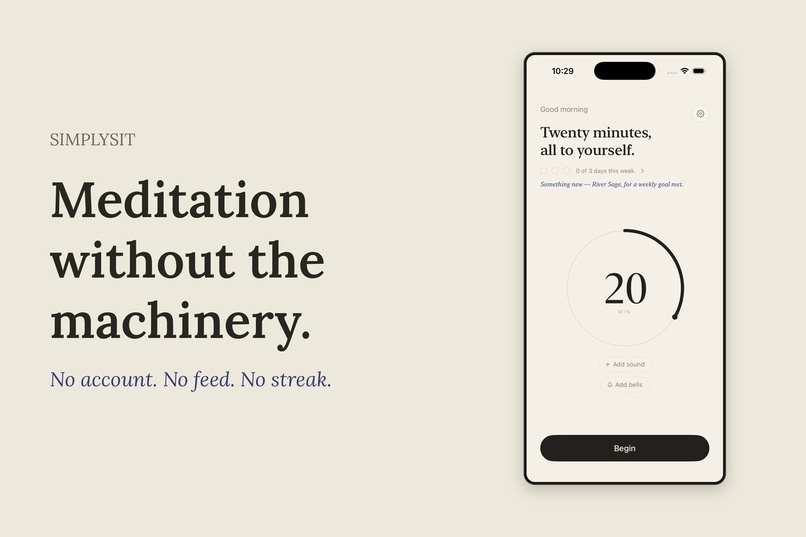
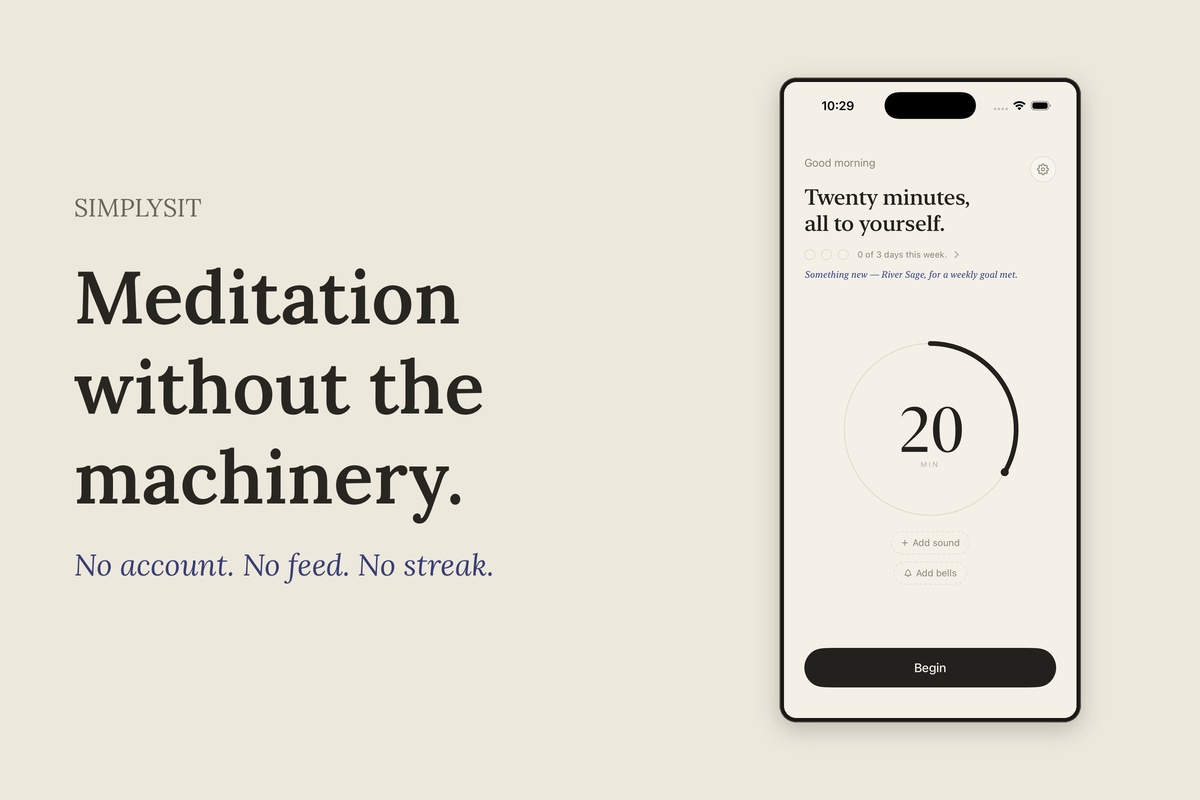
Meditation without the machinery.
-
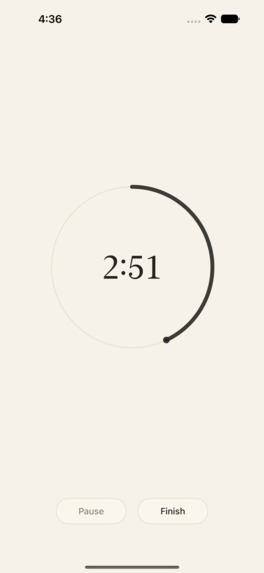
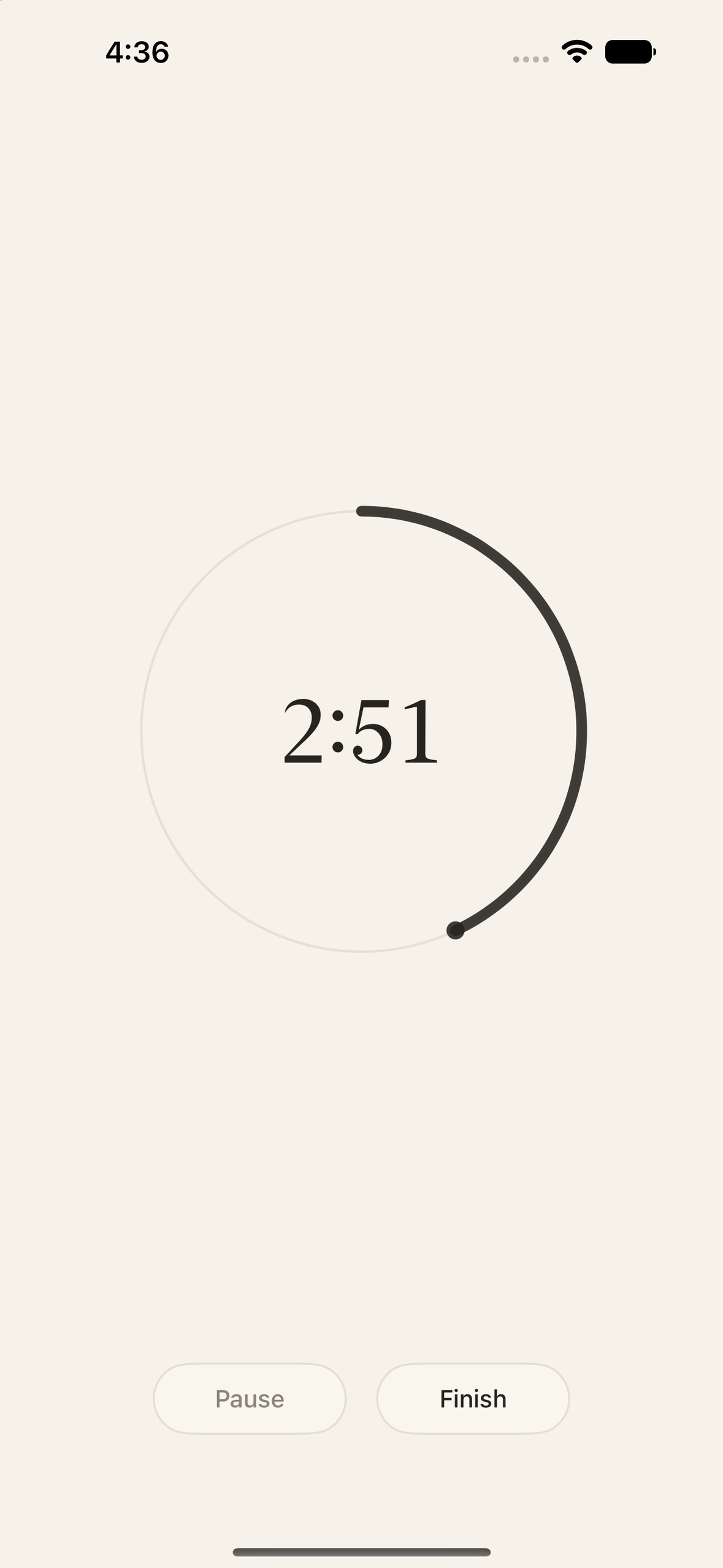
A real sit. One screen, one ring closing, nothing else.
-
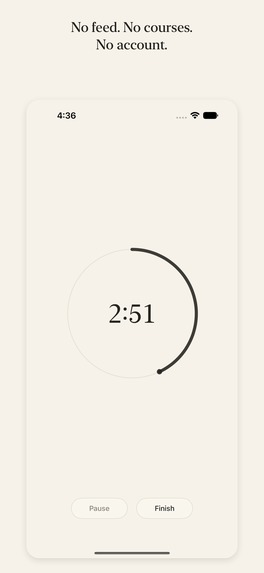
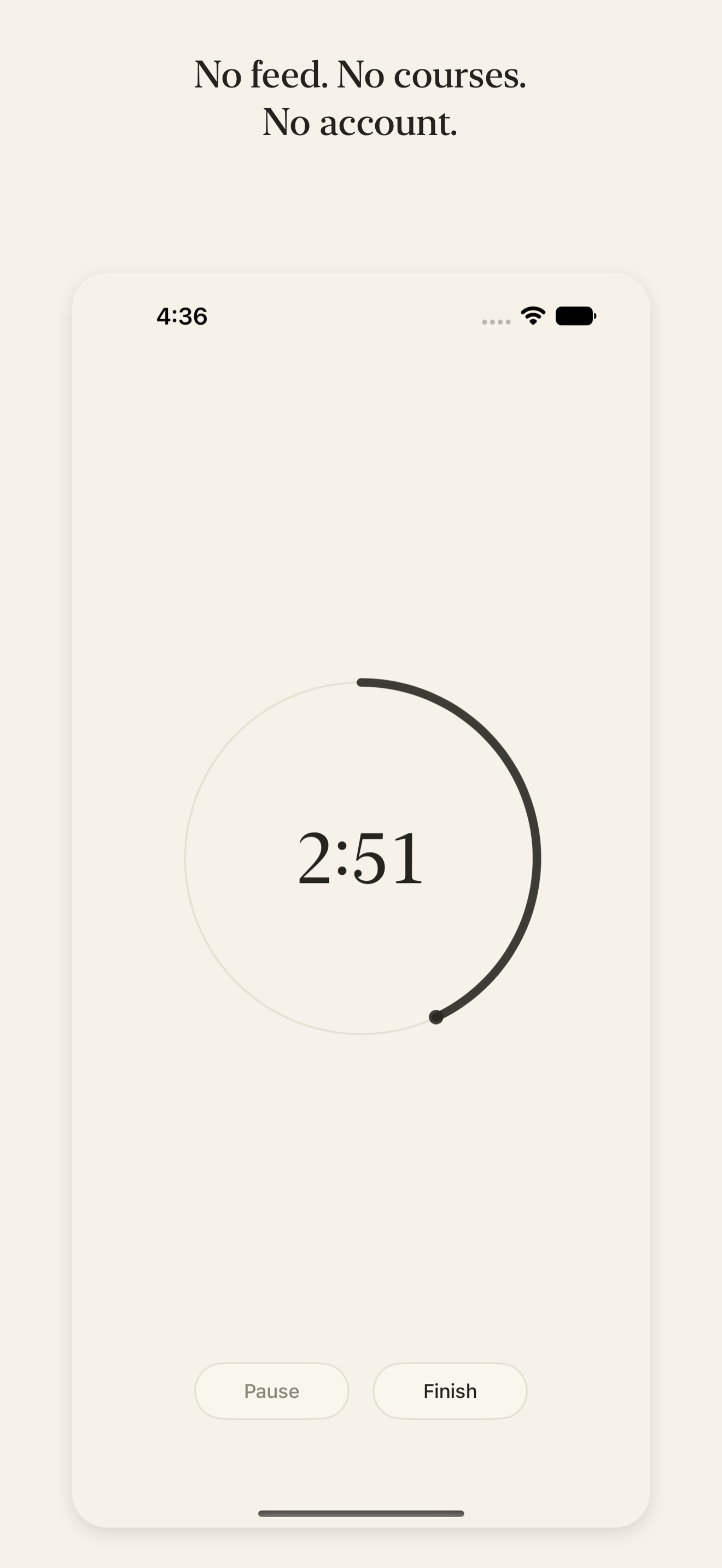
No feed. No courses. No account.
-
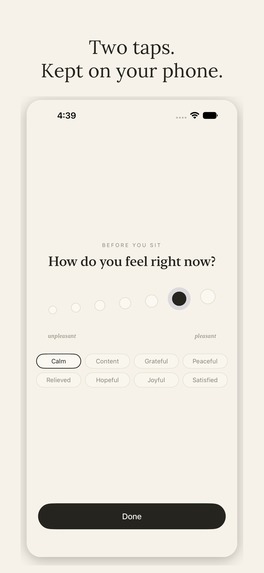
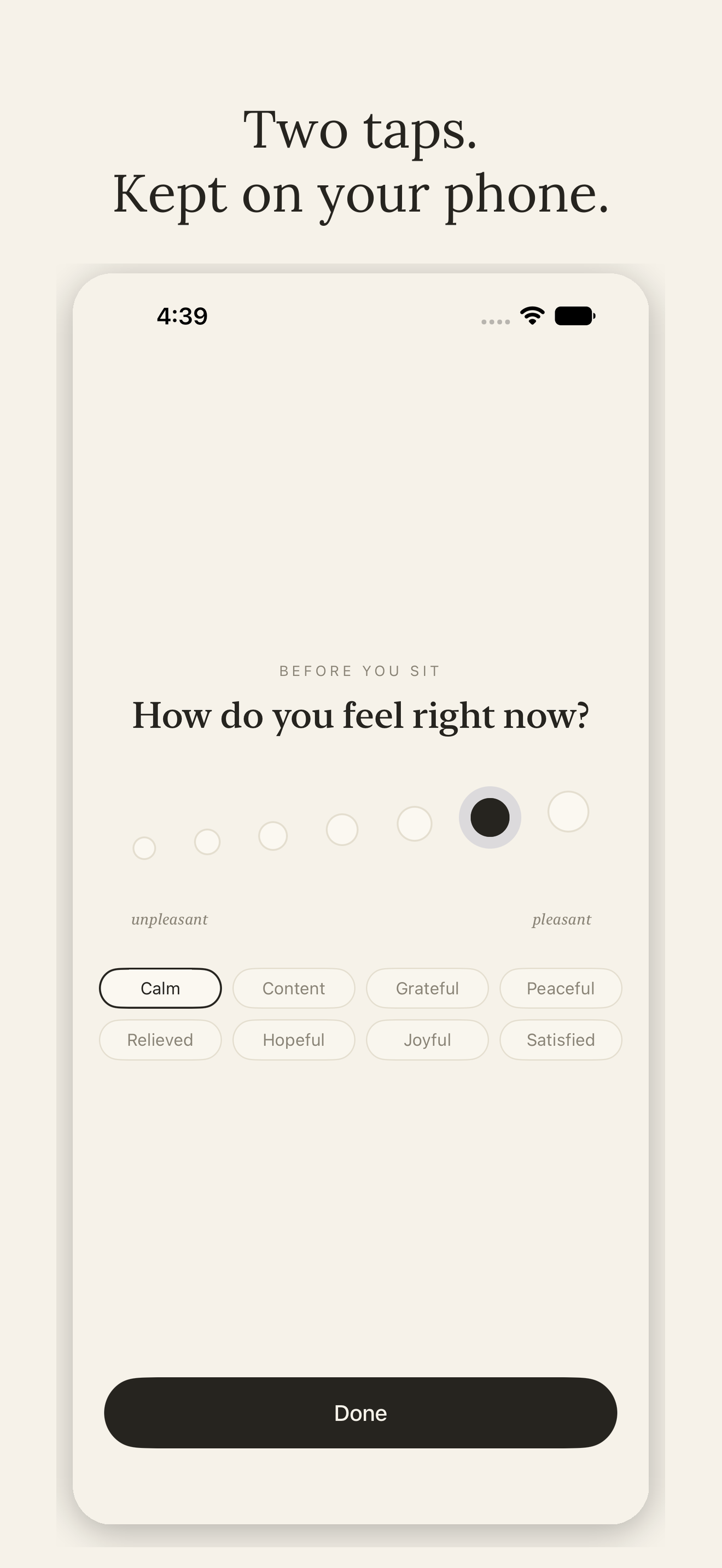
How a sit felt is optional, and stays on the phone.
-
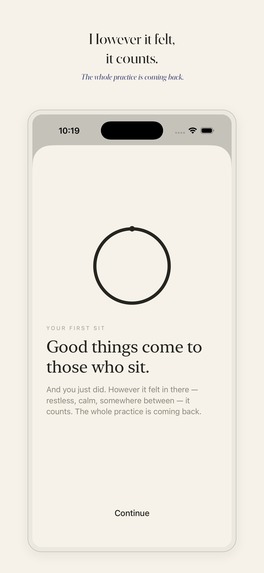
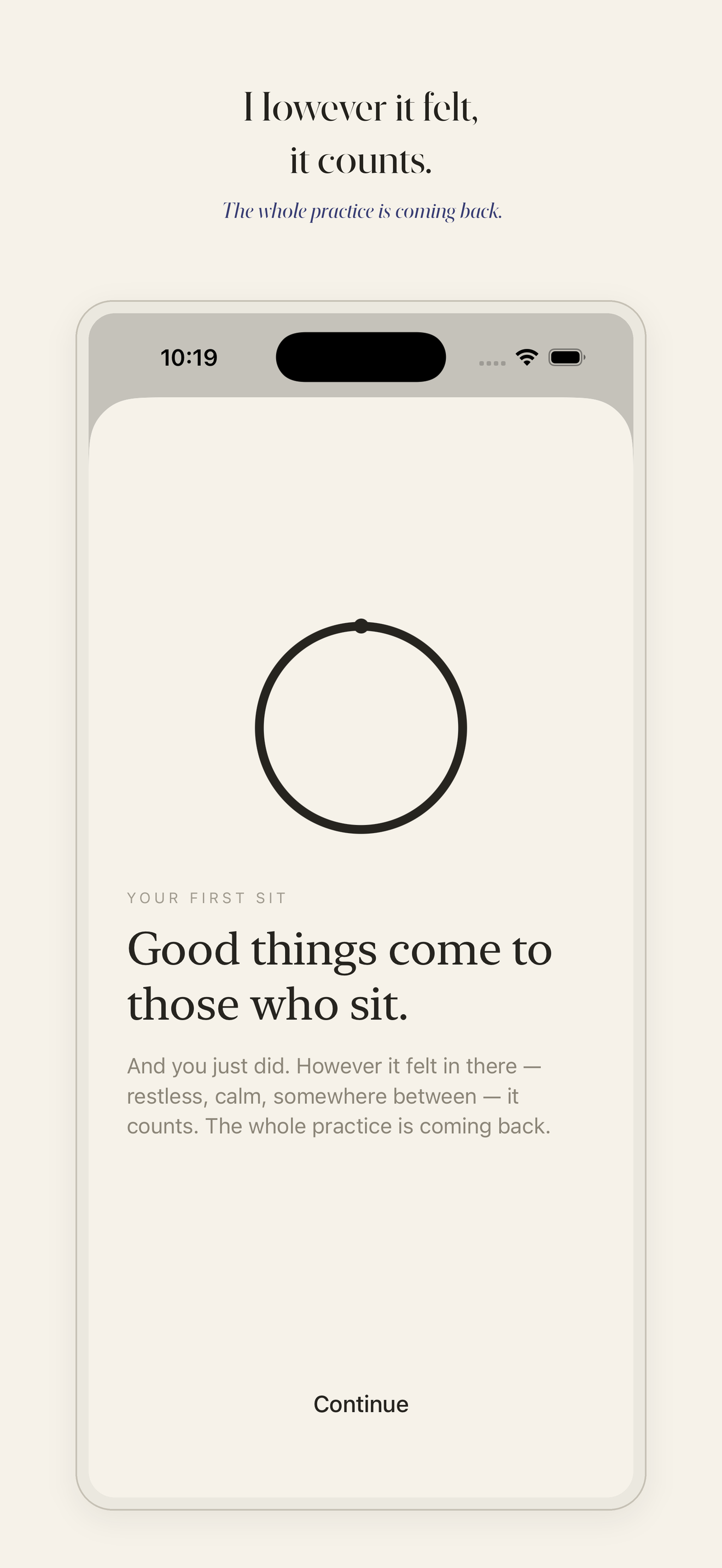
However it felt, it counts.
-
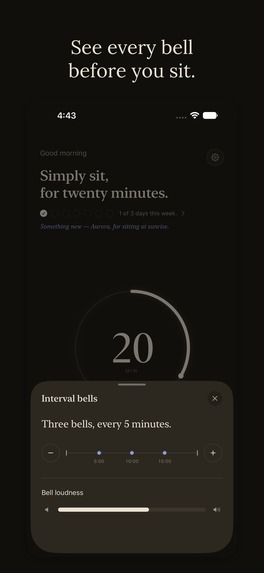
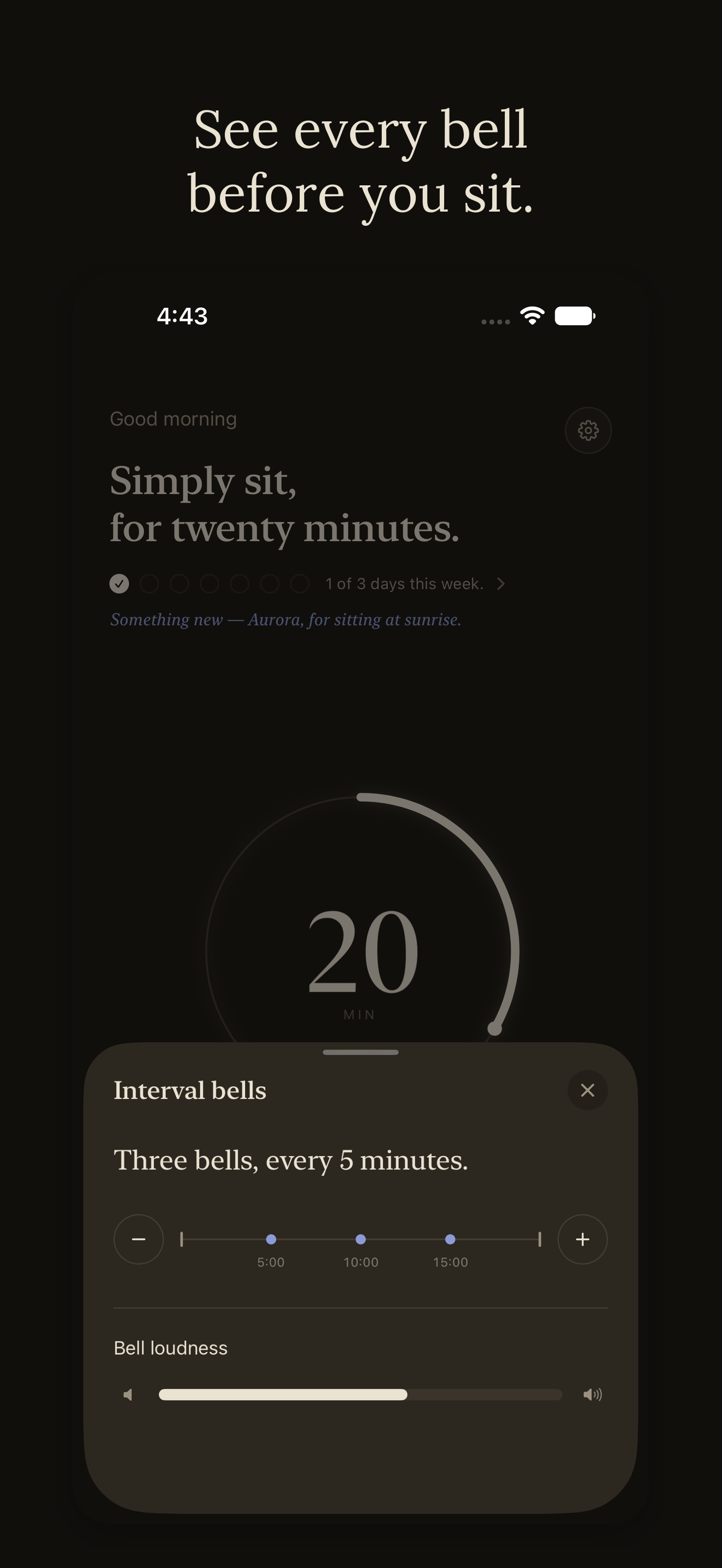
Place your interval bells anywhere in the sit.
-
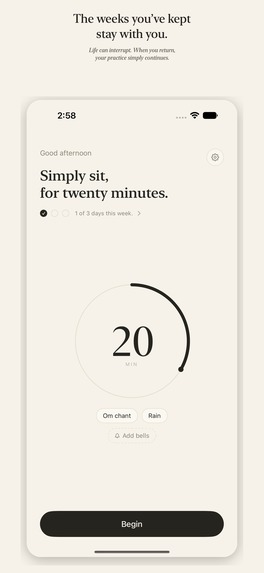
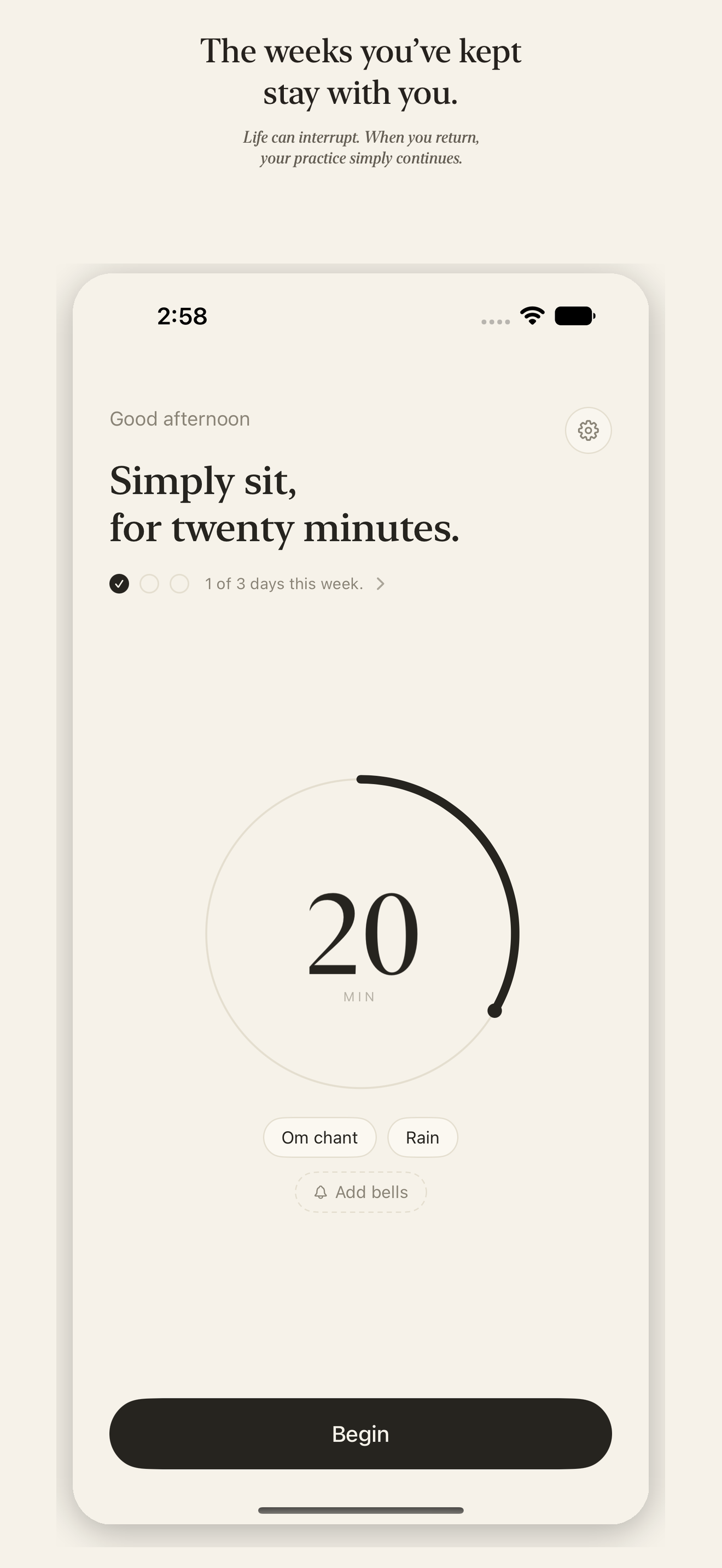
Open it and the only question is how long.
-
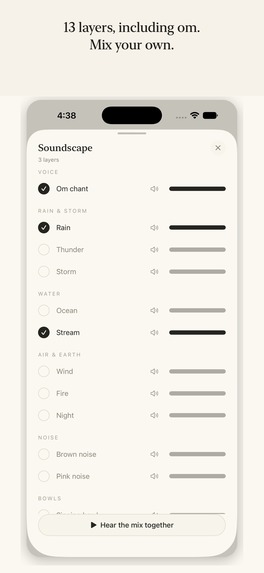
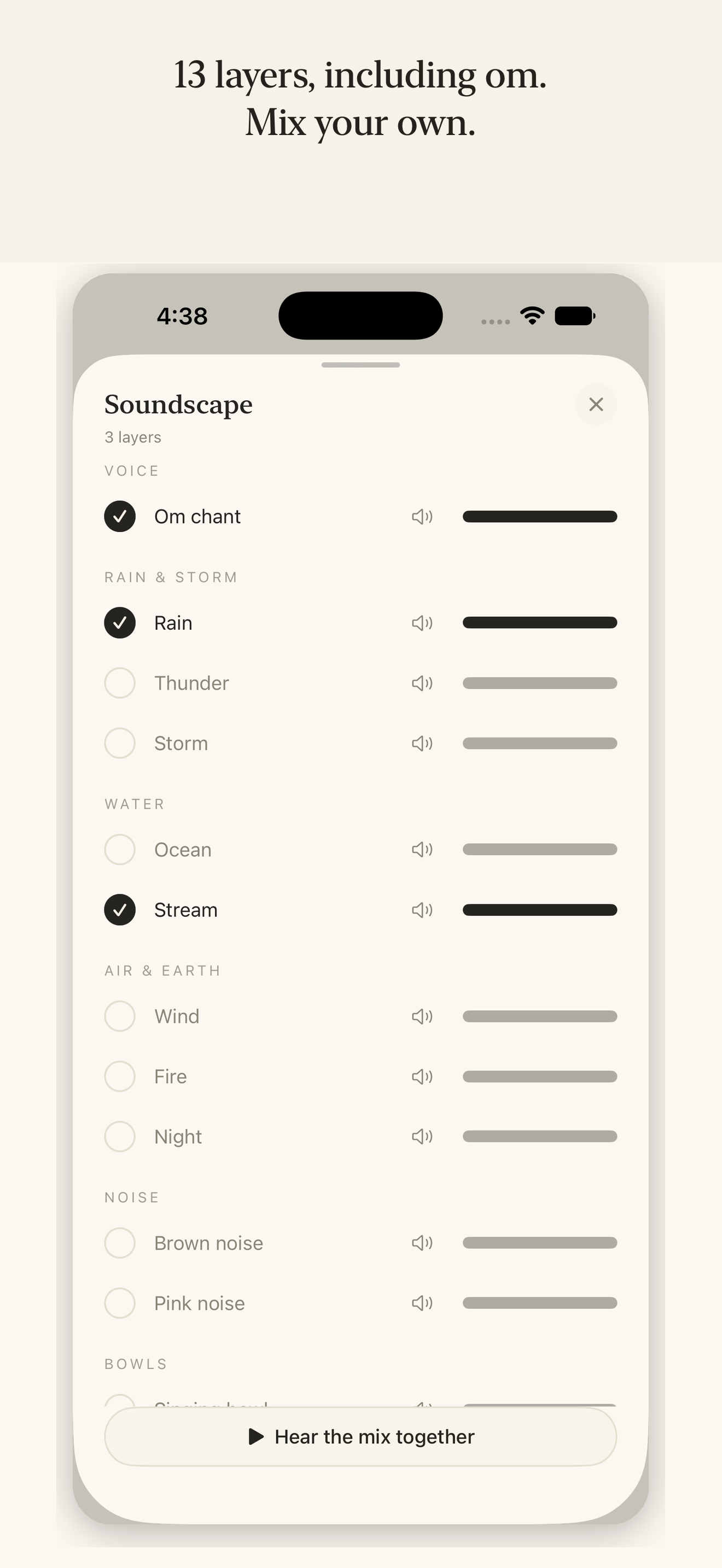
Thirteen sound layers, mixed live. No presets to unlock.
-
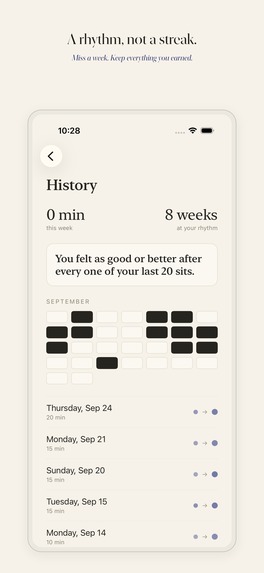
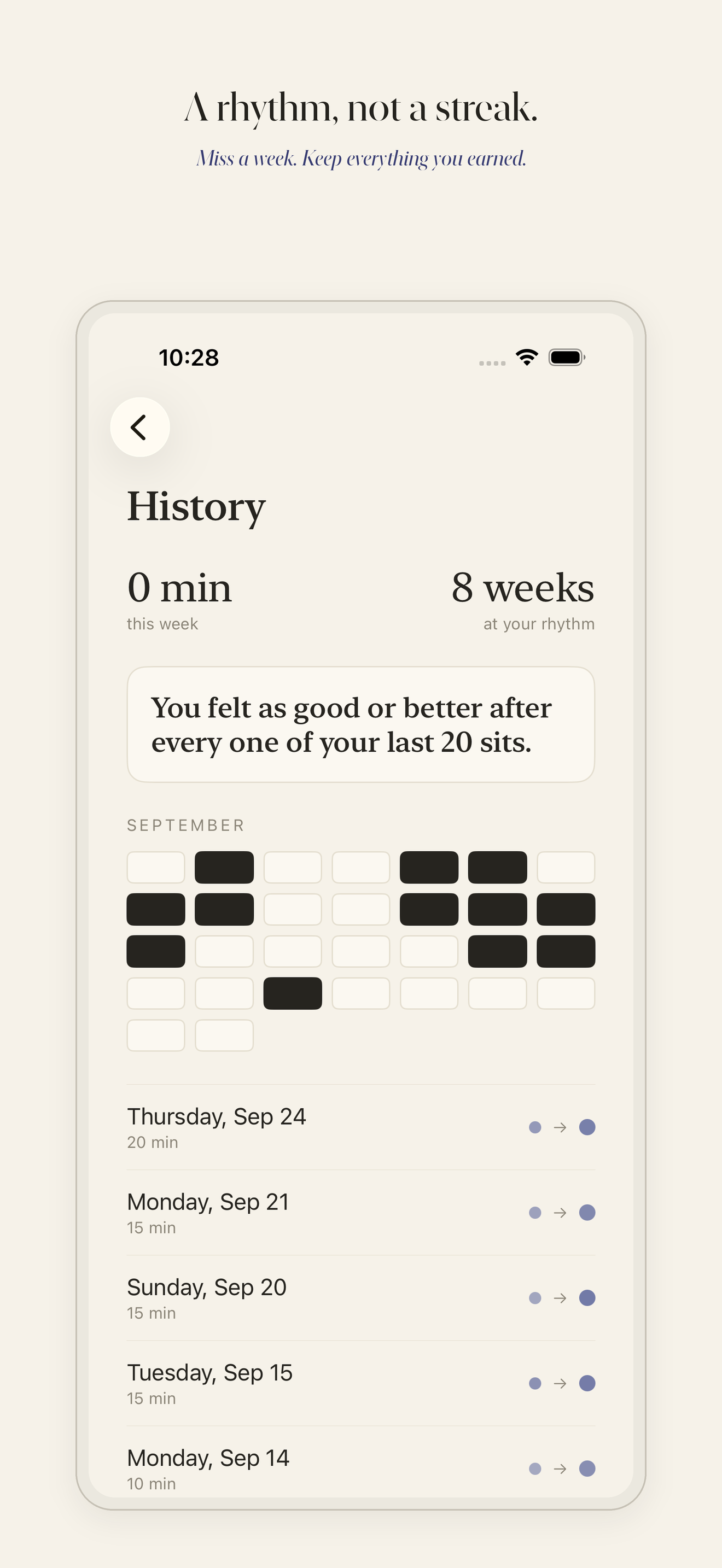
Rhythm Weeks only add up. Miss one and nothing is taken.
-
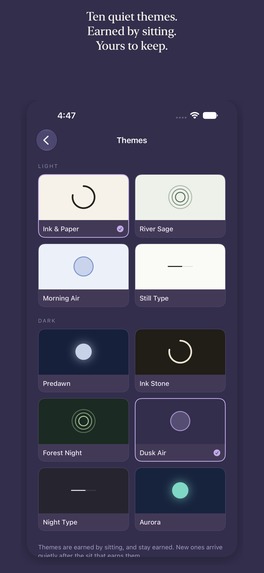
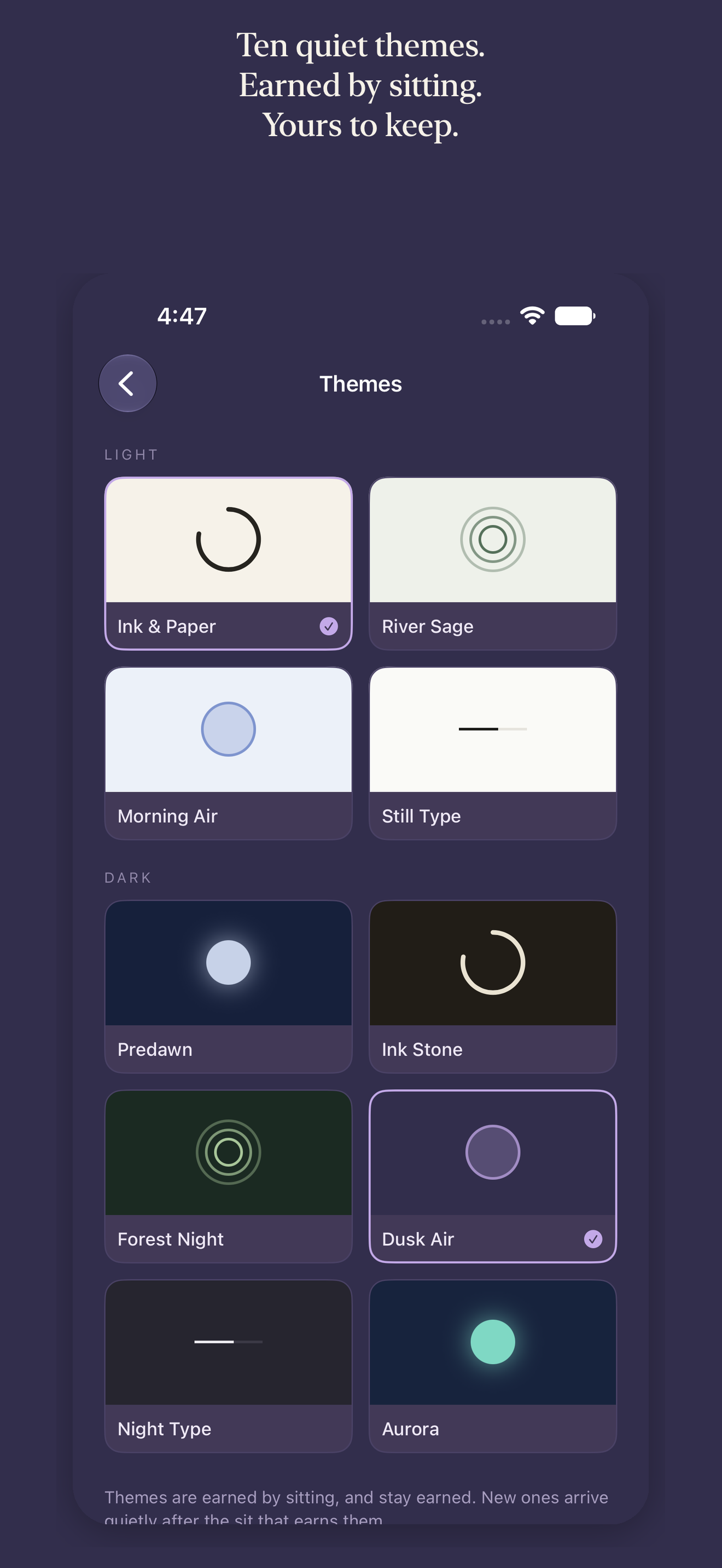
Ten themes, earned by sitting. The paywall unlocks none.
-
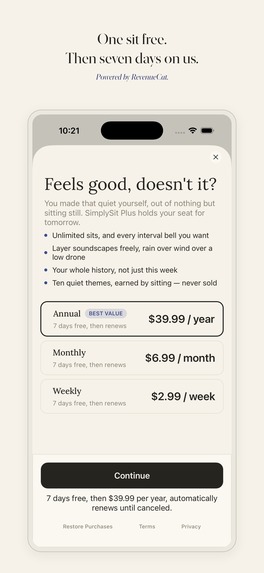
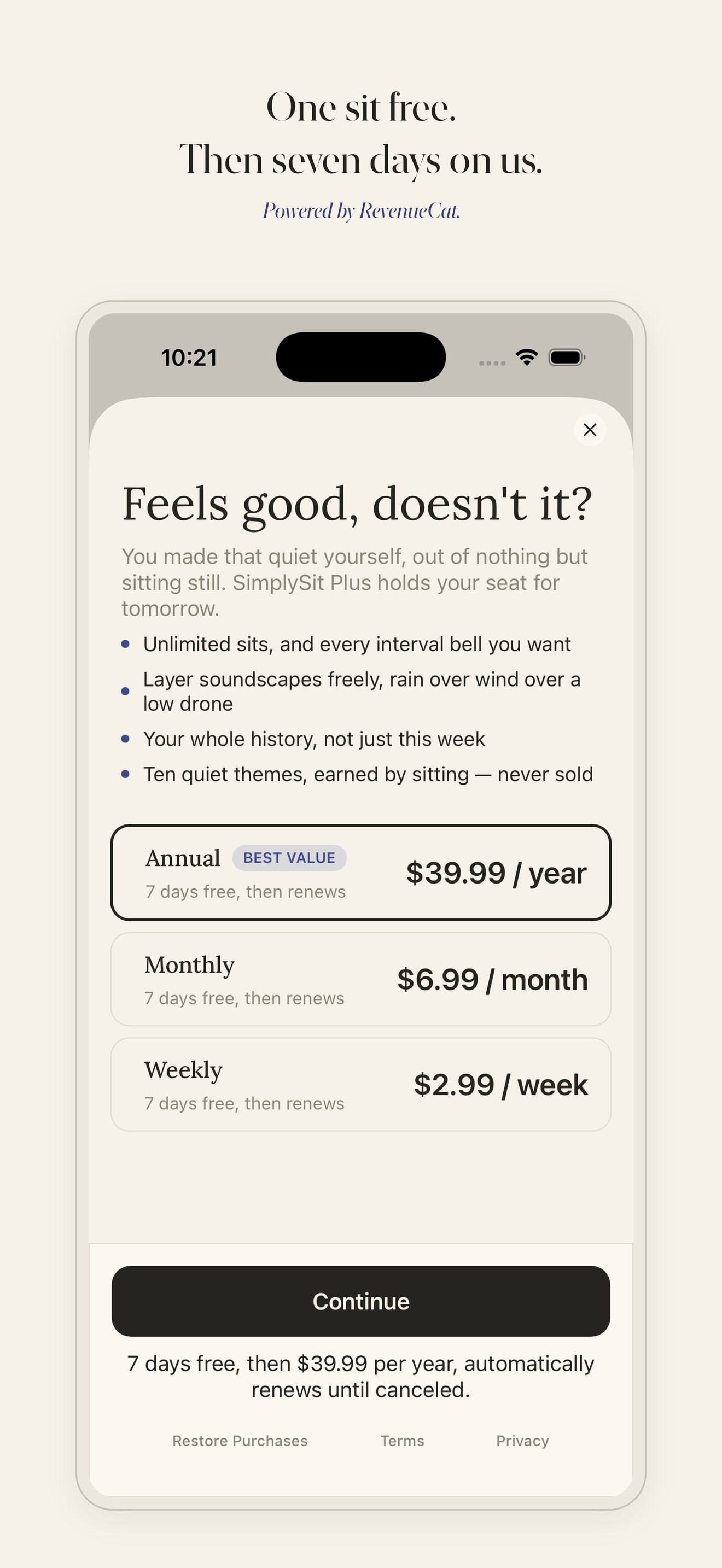
The first sit is free. The next meets a RevenueCat paywall: offering, 7-day trial, entitlement, restore.
-
1024x1024 app icon.
Inspiration
Meditation apps often ask for attention before they help you release it: create an account, choose a course, maintain a streak, browse a feed. I wanted the opposite—a timer that becomes quieter and more trustworthy the longer you use it.
SimplySit is built around one deliberately narrow promise: remove everything between the intention to meditate and the act of sitting.
What it does
Choose a duration, mix a personal soundscape from 13 layers—including rain, wind, bowls, noise, and an om chant—and place interval bells before beginning. During the sit, the interface recedes into a calm, legible timer designed to keep working when the phone locks and to handle ordinary interruptions safely.
Before and after a session, an optional feeling check-in creates a private record of what changed. Practice history stays on-device. There is no account, social feed, course catalog, advertising, or added analytics SDK.
SimplySit also replaces fragile daily streaks with Rhythm Weeks. A week counts when you meet your own practice intention, and completed weeks accumulate instead of disappearing after one missed day. Ten visual themes are earned through sitting and are never sold.
An honest business model
The first completed sit is free. After that, RevenueCat presents SimplySit Plus with weekly, monthly, and annual options, each currently offering a seven-day trial. RevenueCat powers the product catalog, paywall, purchase, entitlement, and restore flow.
That hard paywall is an intentional product experiment: can one focused, reliable session demonstrate enough value to support a small, private app without ads, tracking, or an attention economy?
How I built it
SimplySit is a native iOS app built with Swift 6, SwiftUI, SwiftData, AVFoundation, StoreKit, RevenueCat, and RevenueCatUI. The architecture keeps meditation data local and isolates commerce behind a small entitlement interface, so the timer and views do not directly depend on RevenueCat.
Audio, timer lifecycle, lock-screen behavior, interruptions, purchase restoration, and entitlement persistence are treated as product behavior—not implementation trivia—because uncertainty is especially damaging during meditation.
Challenges
The hardest challenge was restraint. Every plausible feature had to answer whether it helped someone begin, continue, or return to a sit. Accounts, social features, content feeds, and extra analytics would have expanded the product while weakening its central promise.
The second challenge was reliability across real iPhone behavior: background audio, the locked screen, calls, unplugged headphones, and purchase state all cross system boundaries. Those paths required device testing rather than trusting a simulator-only happy path.
The third challenge was monetization clarity. The paywall needed to be direct about price and trial terms while still feeling like part of the same quiet product.
What I learned
Simplicity is not the absence of design. It is the result of making—and defending—many small decisions about what the product will refuse to become.
I also learned that a humane habit model can reward return without manufacturing loss. Rhythm Weeks preserve evidence of past effort instead of using a broken streak as punishment.
What's next
The immediate goal is a careful first public release, production purchase verification, and feedback from people who complete one real sit. During Ship-a-Ton I am documenting the central question publicly: what must a meditation timer prove in its first session to earn trust?


Log in or sign up for Devpost to join the conversation.