Inspiration
Approximately 90% of adults in the United States struggle with health literacy, meaning they have difficulty understanding and using health information effectively. This can lead to worsened health outcomes, increased strain on the healthcare system, and additional, unneeded costs.
What it does
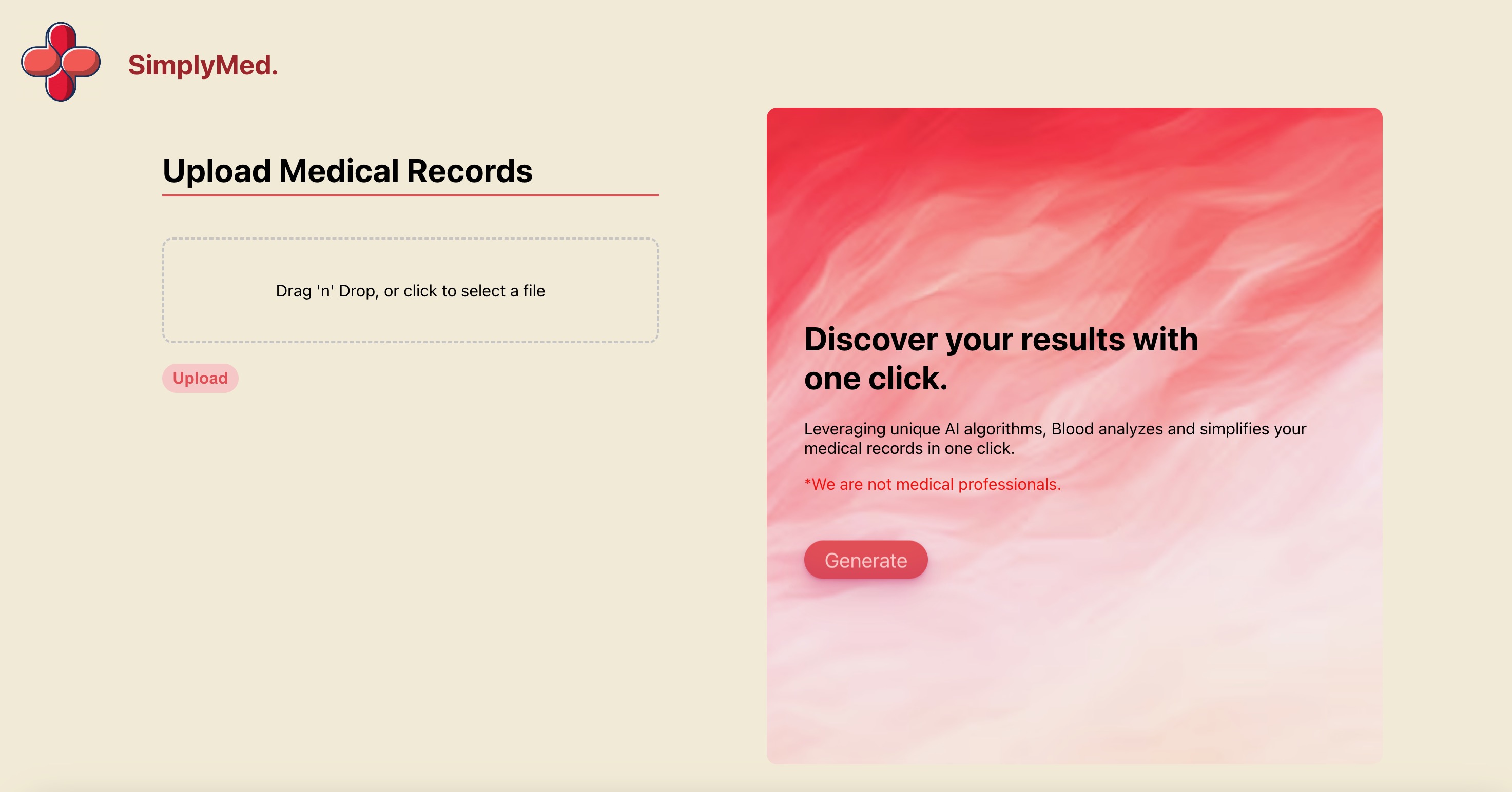
With our website, users can input a pdf file and it will inform the user of what each blood test measures, an analysis of their results, and possible lifestyle changes they could make if they had abnormal results.
How we built it
We generated the analysis of the blood test results using the Open AI API. Then using Flask, we connected our backend to our React.js front end. The first step was to enable out application to take in a pdf file and display the file so the user knows what file they uploaded. Once the user uploads the file, the user gets a message displaying if the file is uploaded. Once the file is uploaded, the user clicks on the 'generate' function which leads the user to the output page that presents the simplification of the blood test and possible lifestyle changes the user can benefit from.
Challenges we ran into
We ran into a couple of challenges regarding the backend. We had initially planned to use the You.com API to extract data from the pdf file and use the BioBert API to analyze the blood test results. However, we discovered that the You.com API cannot handle files and the BioBert API, as well as other medical APIs, were private. From there we had to pivot to use the Open AI API for analysis of the data. We also tried adding additional functionalities to increase accessibility, like the language translation and text-to-speech translation using Google Translate and Hume's APIs but we struggled to work with them in our application.
Accomplishments that we're proud of
We are proud of how we were able to quickly pivot and work with the resources we have. We worked cohesively to fix errors and help each other whenever we could, such as when we were trying to connect the frontend to the backend.
What we learned
As this was many of our first times using APIs and creating a backend to a website, we learned about using APIs and common errors that are involved with those. Additionally, we learned how to debug through errors in connecting the frontend and the backend. Finally, 2 of us were beginners in React.js so we developed our frontend skills while working on our website.
What's next for SimplyMed
In the future, we hope to use private medical APIs like BioBert for a more accurate analysis of the blood test results. In addition, we hope to add the multi-lingual functionality using the Google Translate API and potentially use Hume's API for the text-to-speech conversion to make it more accessible. Additionally, we are interested in creating a public forum so that users can discuss home-remedies that have worked amongst each other. Finally, we hope to save each user's blood tests to show trends in their health compared to their previous blood tests.

Log in or sign up for Devpost to join the conversation.