-
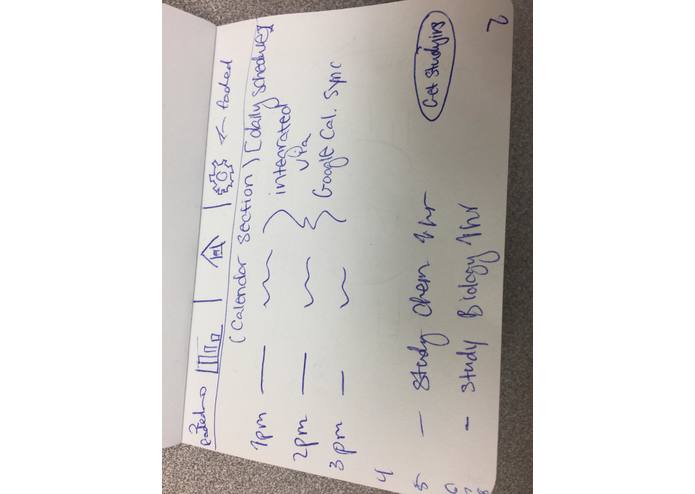
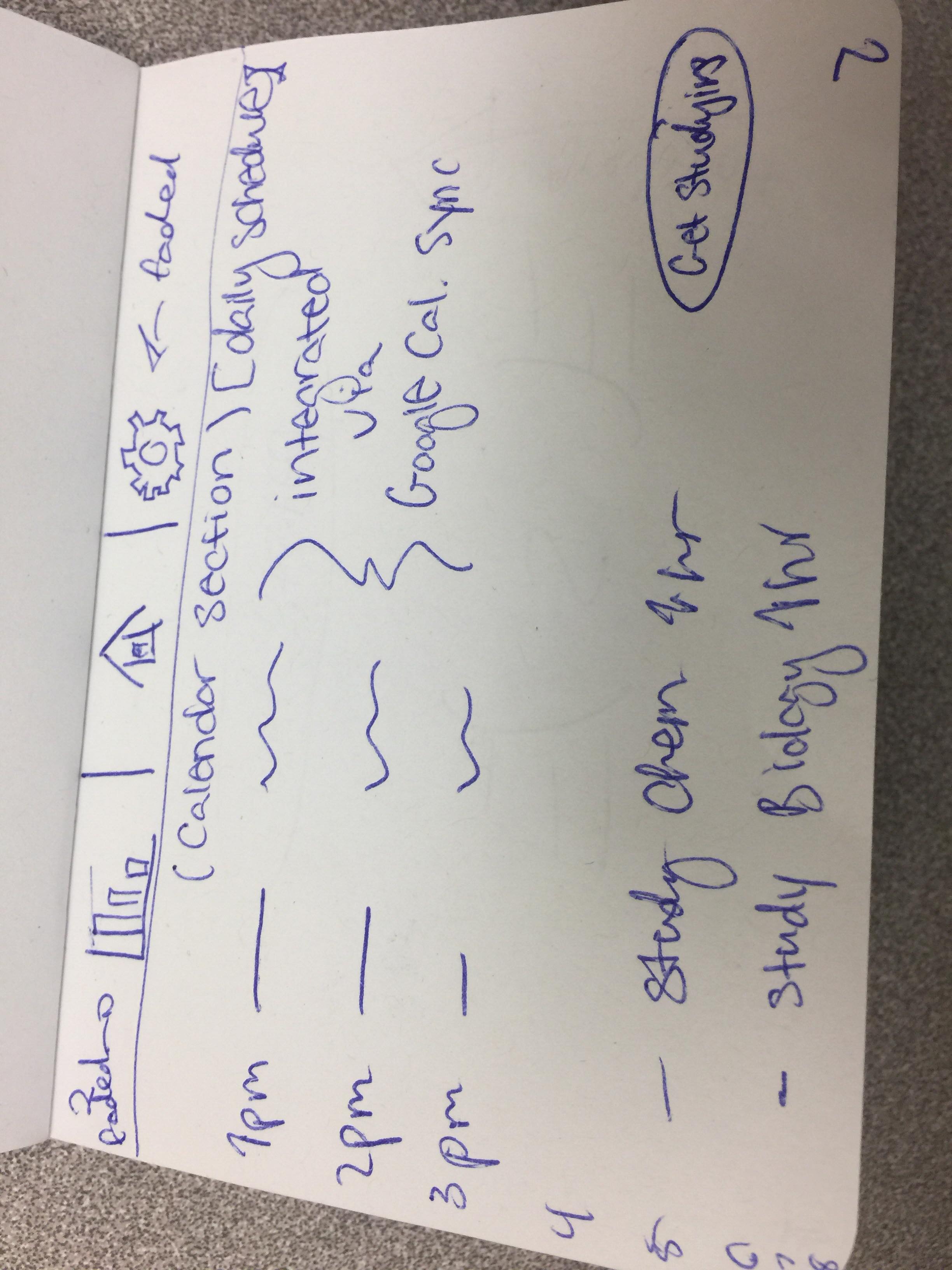
Sketch of the home page of SimpliciTime
-
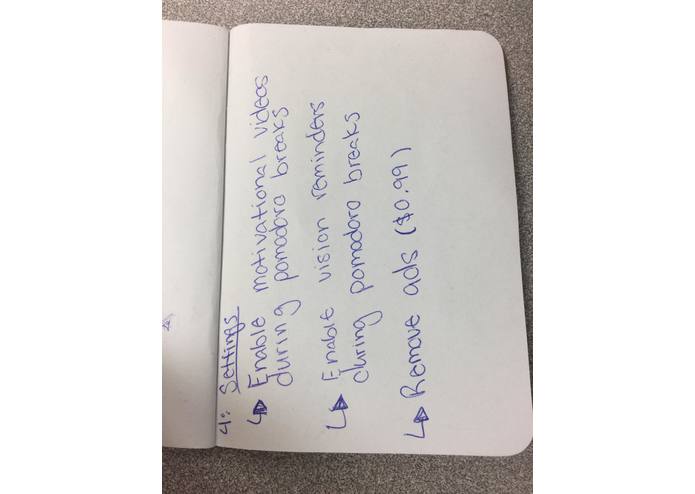
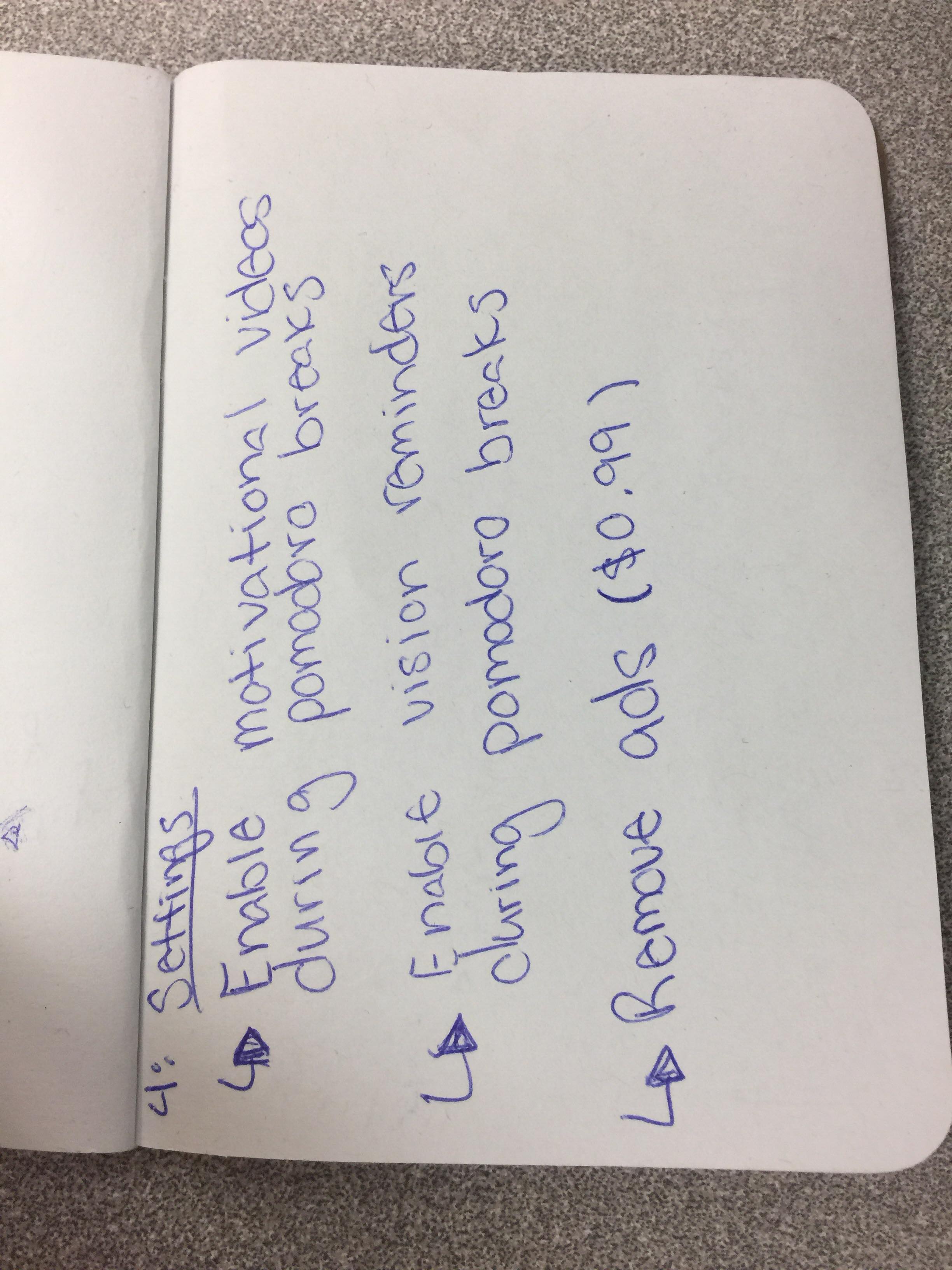
Sketch of the settings page of SimpliciTime
-
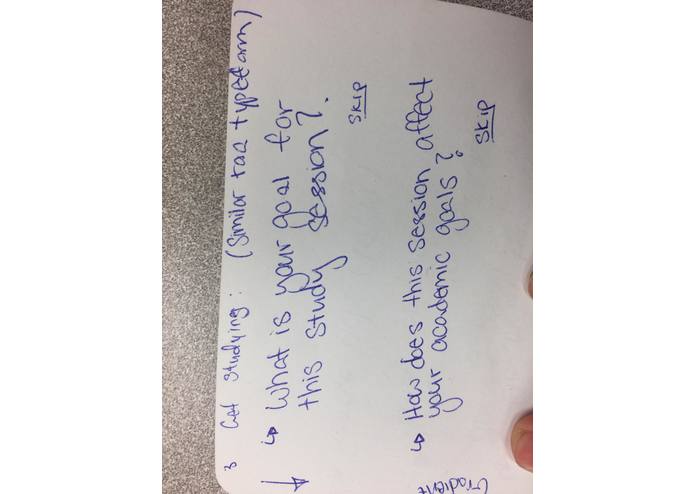
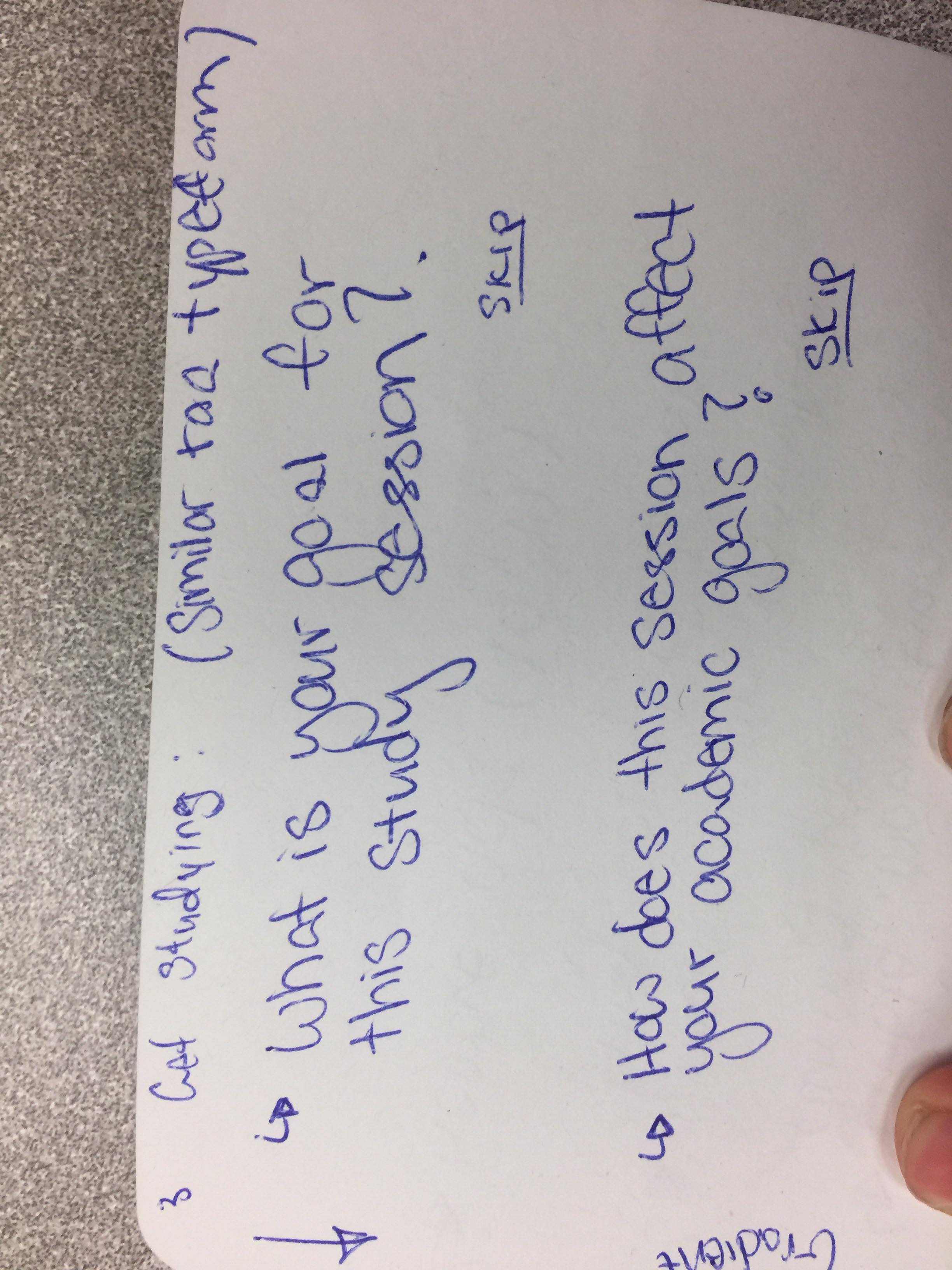
Sketch of the screen preceding the study session
-
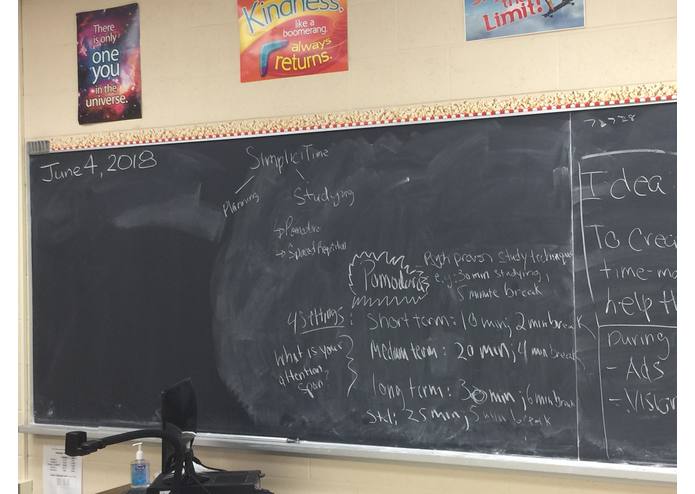
Preliminary planning
-
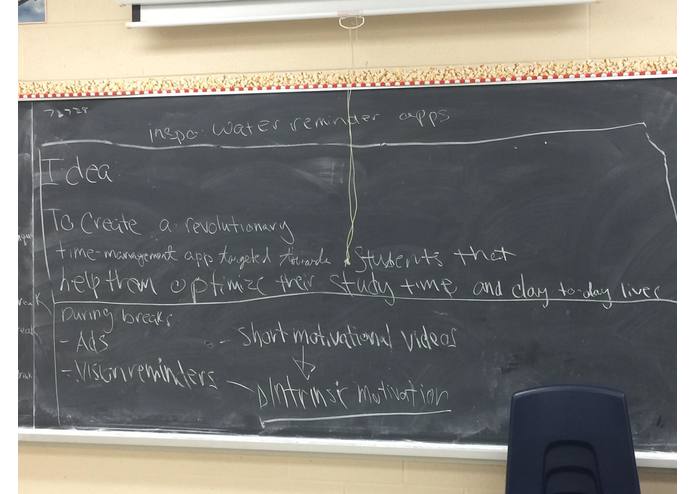
The vision
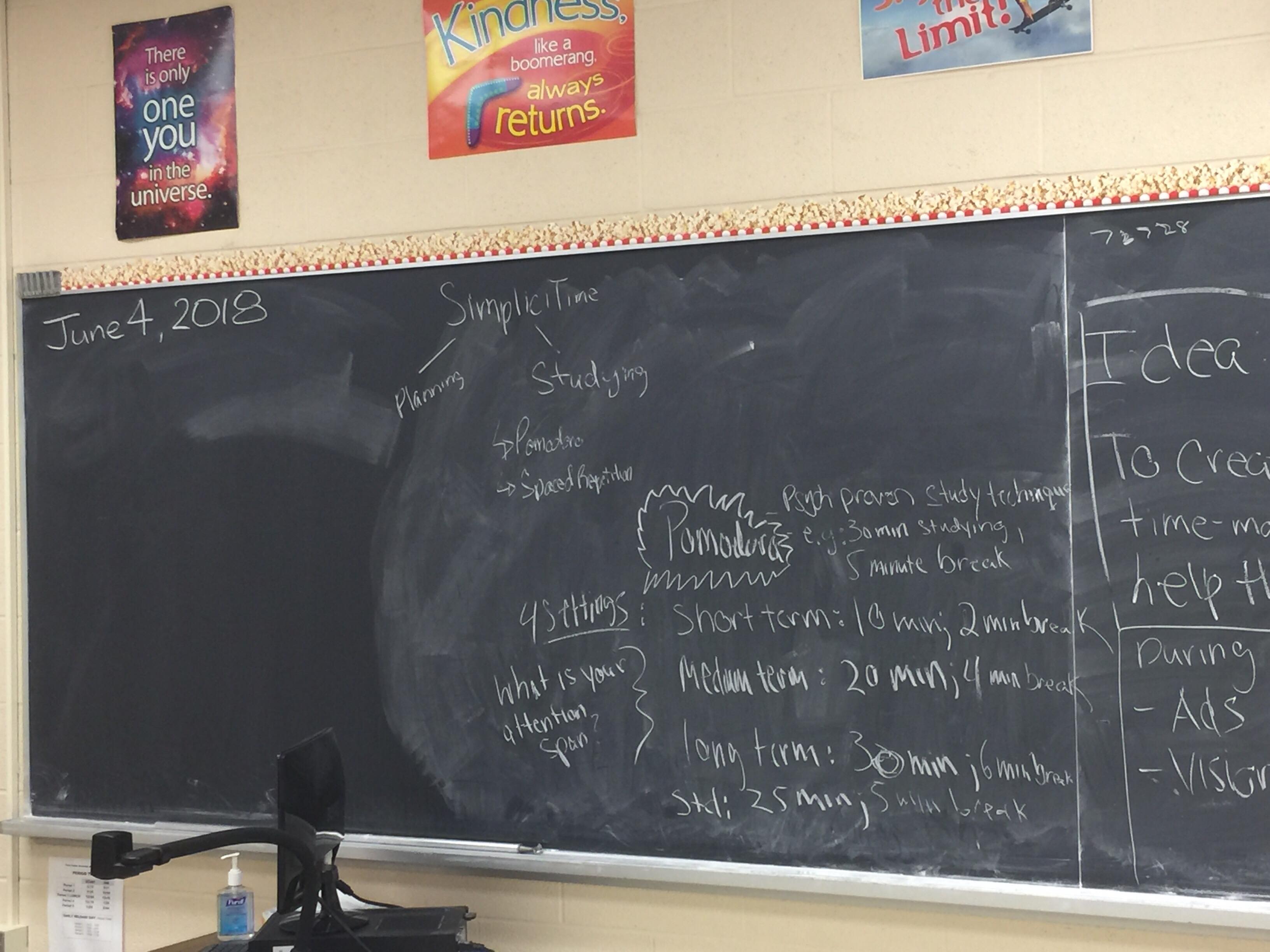
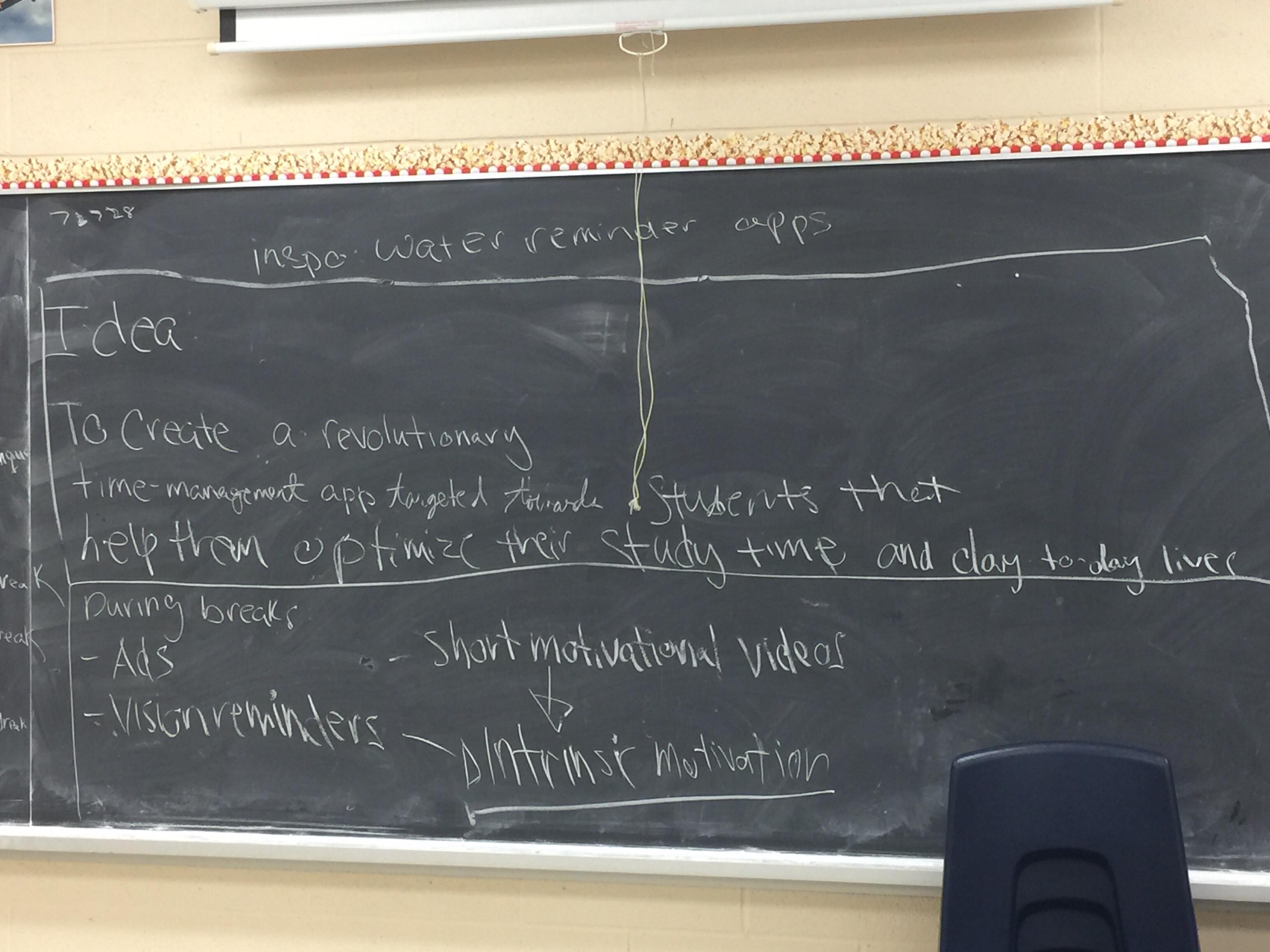
Inspiration
As graduating high school students, we wanted to address the problem of time-management with respect to studying. Throughout those countless hours of studying, it is not unknown for students to go through phases of academic burnout and general apathy to studying, which consequently leads to poorer academic performance. In addition, we were obsessed with the profound idea of implementing psychology-proven study techniques, such as the Pomodoro technique and spaced repetition into planning.
What it does
Syncs with Google calendar via the API to import an already planned schedule for the day. The app receives user input (e.g "study chemistry for an hour and study biology for an hour") within a specified time frame, for example, 5pm-9pm, and optimizes the time spent studying. As we noticed through our own late-night study sessions, it is most common that students prioritize courses differently. As such, the user is able to assign a level of priority to each study topic. In the event that a certain study topic is valued at a higher level of priority, and within a limited time frame, the app will break down the studying block (an hour of chemistry studying) coinciding with the Pomodoro technique. The standard approach to the Pomodoro technique is to have 25 minutes of studying and a 5 minute break with a larger break of usually 20 minutes every 5th break. However, to include additional functionality and variety, the user is asked a question for how confident they are in their attention span (low, medium, high) and a customized Pomodoro technique is applied. Alternatively, users can use the default 25/5 split or customize their own.
In addition, to truly attain an optimization for studying, intrinsic motivation is included in the studying sessions. At the beginning of each study session, the user is asked the questions "What is your goal for this study session", "How does this study session help you in attaining your life goal". During the break sessions of the Pomodoro technique, the user-entered responses are flashed on the screen to continuously motivate the user. Instead of the flashing reminder during the break sessions, the user can opt for short motivational videos found on Youtube (channel: Motivation2Study). Also, for sustainability purposes, specialized ads that relate to studying and mindfulness (Headspace, Lumosity) are shown during the breaks. f
How I built it
With the original vision being an Android app, our team attempted to employ the use of Android Studios for the first time. However, we later resorted to the use of JavaFX in order to develop a prototype that can be shown as a manifestation of our vision.
Challenges I ran into
Having been the first Hackathon we were involved with, we were not familiar with the intensive debugging required for a successful hack. Also, since we are essentially both beginners in coding, we had little knowledge to work off of when programming the app.
Accomplishments that I'm proud of
We love the sense of fostered innovation at hackathons. As such, we are proud that were able to create a detailed idea (and an awesome name) that when pitched to our fellow high school students was met with positive reactions.
What I learned
While hackathons serve as a hub for learning and innovation, it helps to learn how to program outside of the competition.
What's next for SimpliciTime
My partner and I will continue to hone our skills to one day bring SimpliciTime to the Google Play store.
Built With
- java-and-javafx

Log in or sign up for Devpost to join the conversation.