-
-
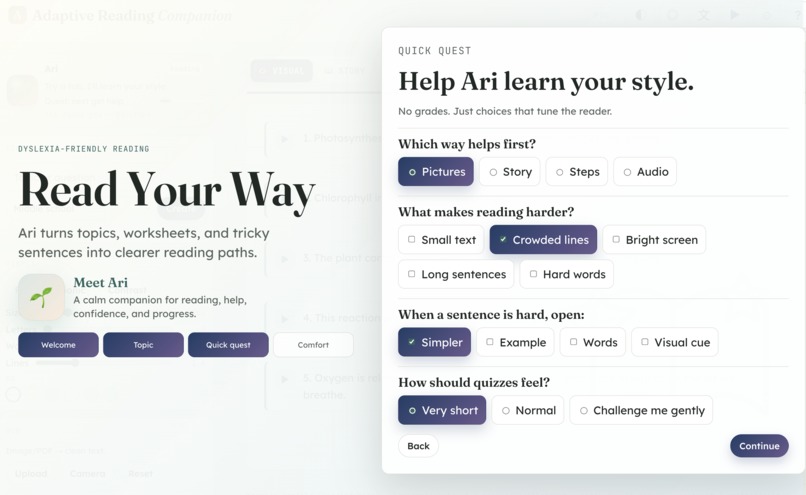
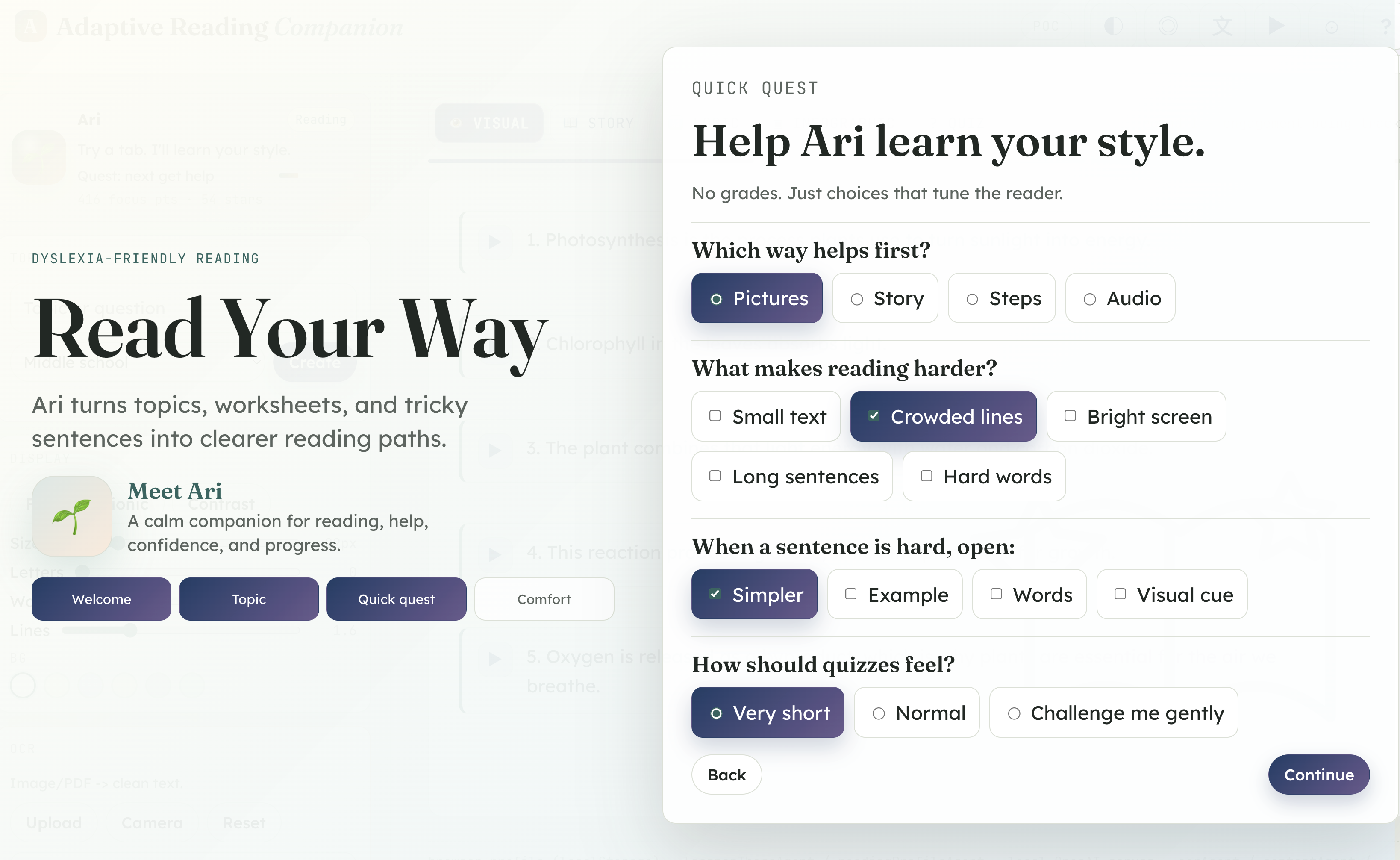
Personalized Onboarding Quest : Ari learns the student’s reading style, comfort needs, & quiz preferences before the reading experience.
-
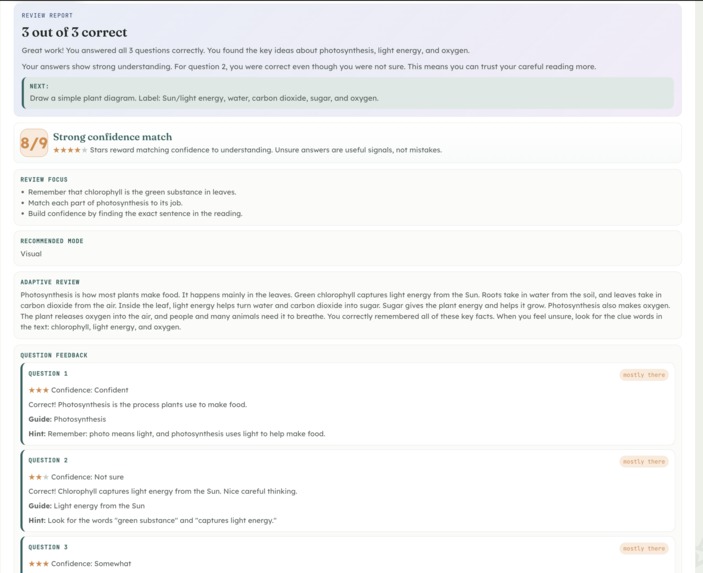
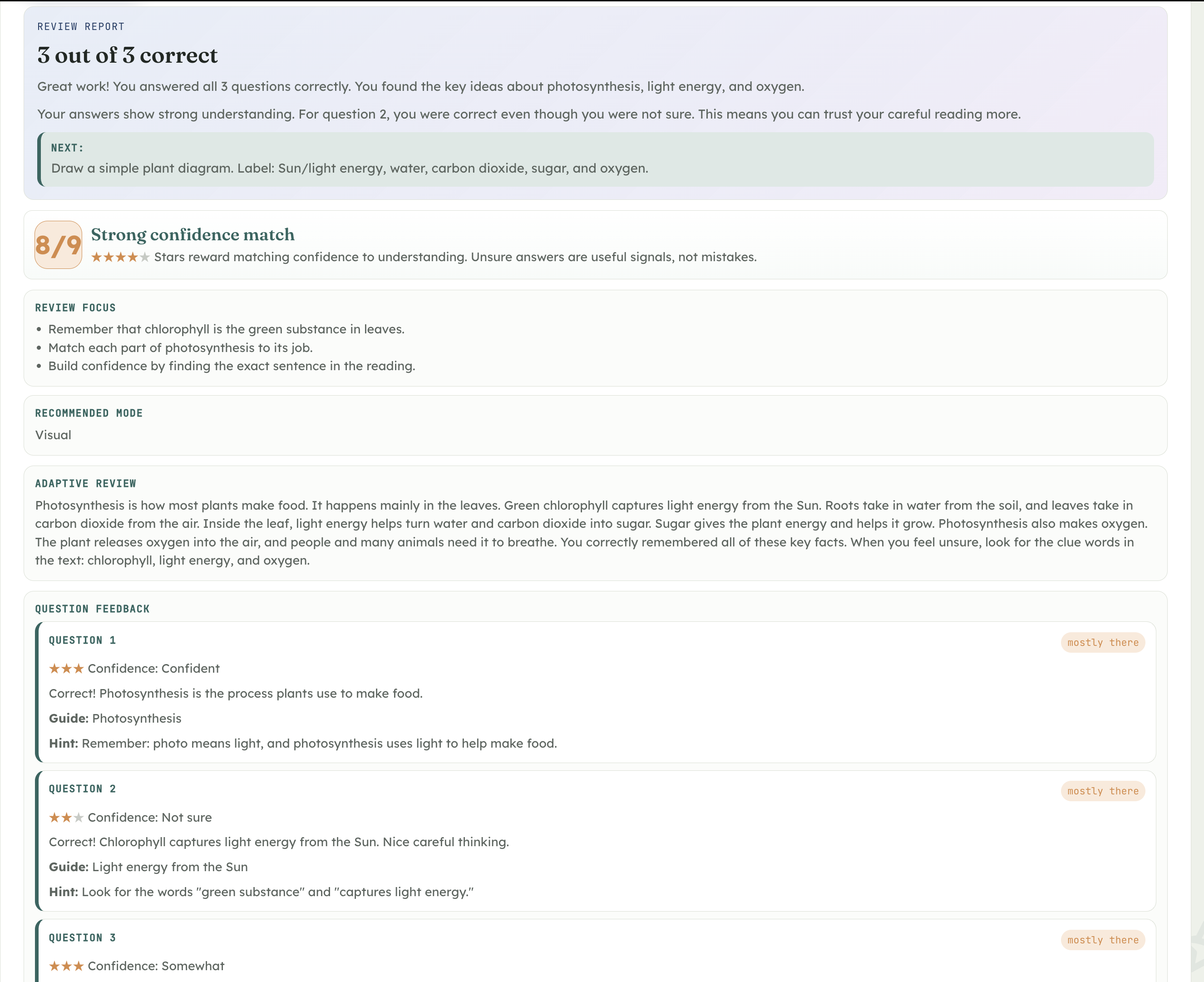
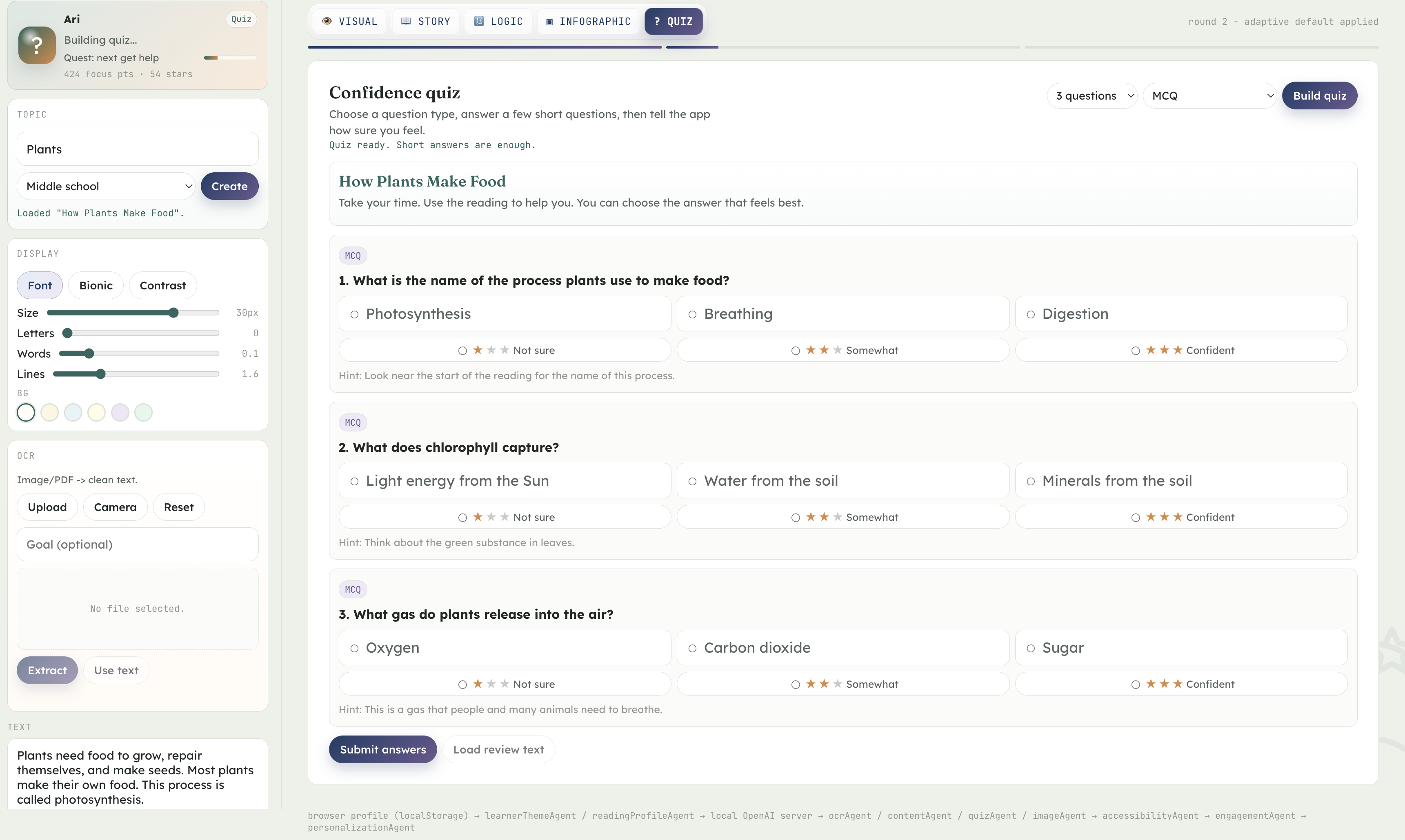
Confidence Review Report :Post quiz, it gives supportive feedback that compares answers with confidence levels and what to review next.
-
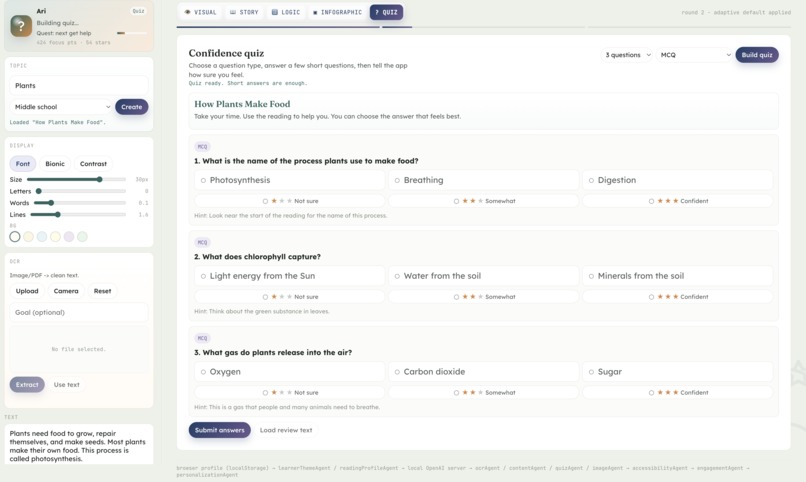
Adaptive Quiz Learners : answer short questions and rate how sure they feel, helping the app understand both comprehension & confidence.
-
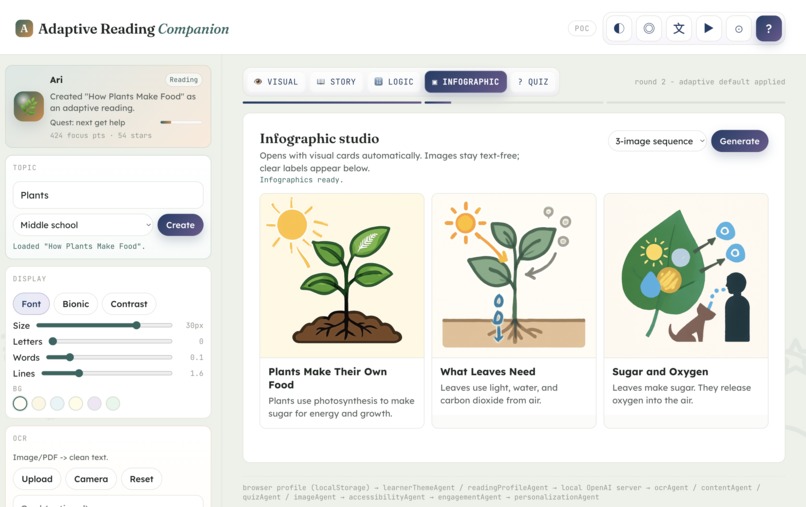
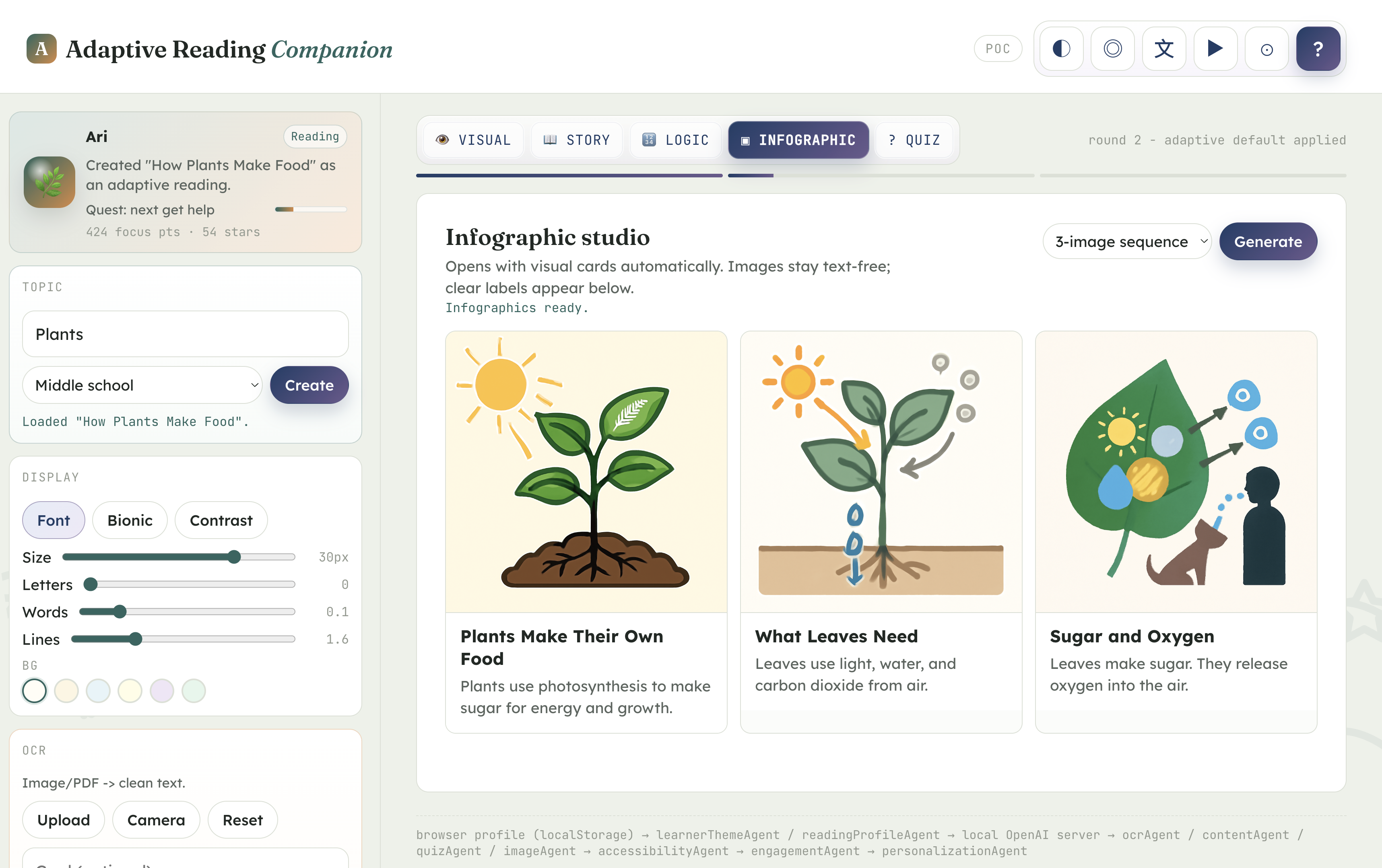
AI Infographic Studio : generates text-free visual cards that turn reading material into simple, accessible diagrams with clear captions.
-
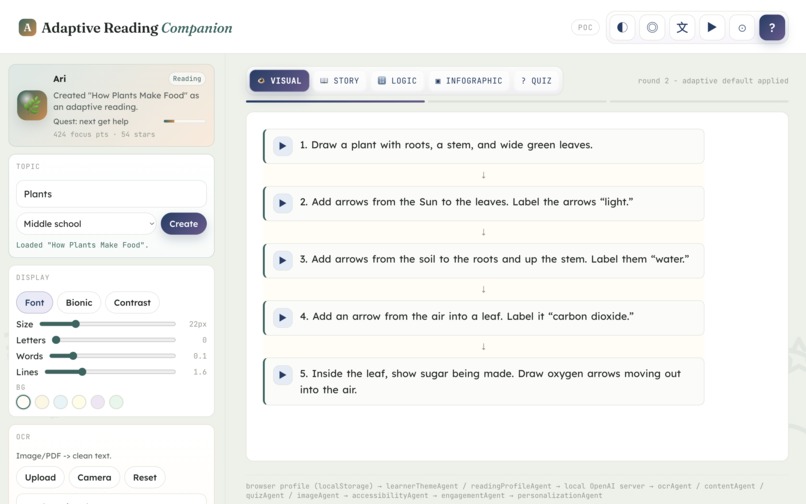
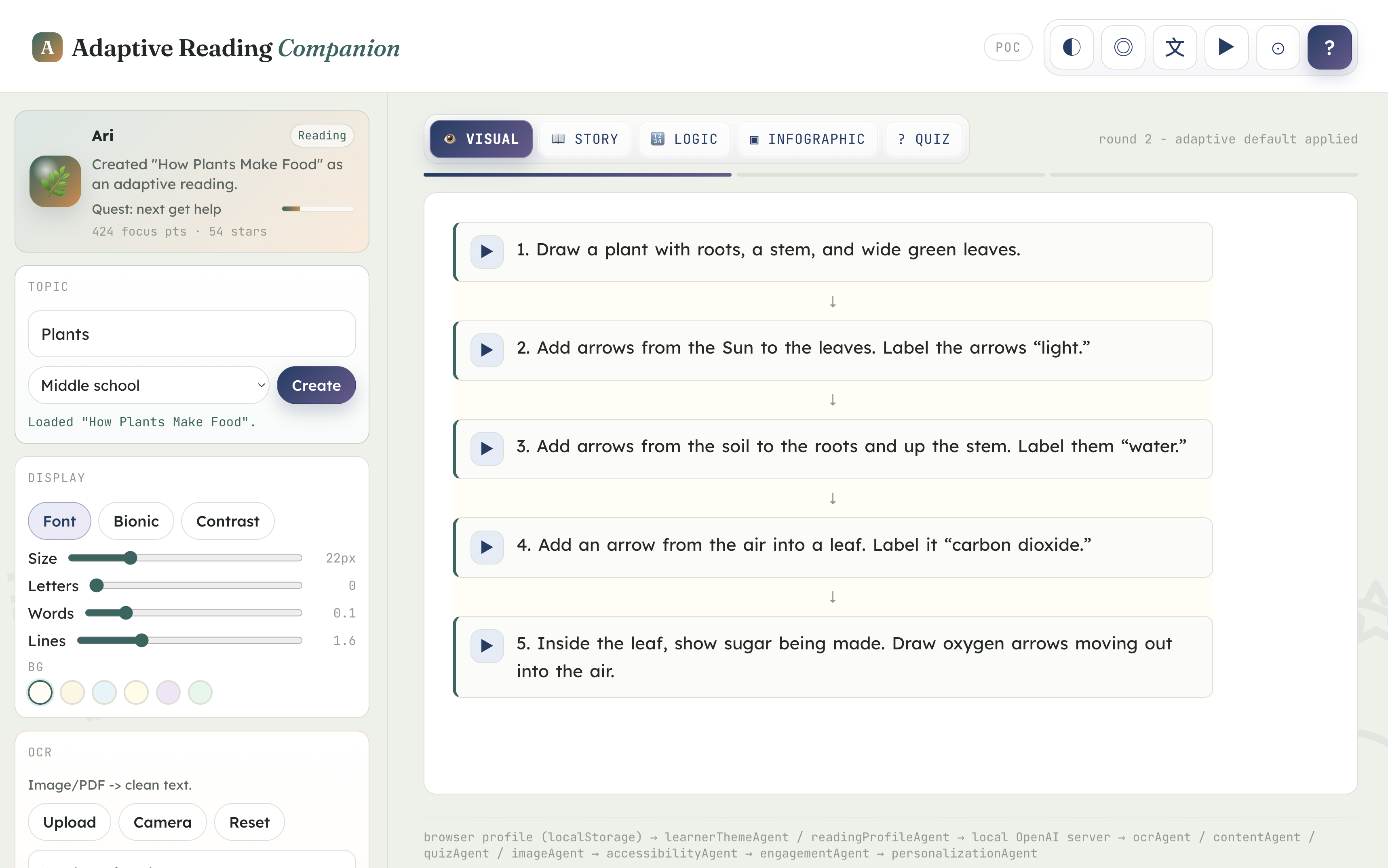
Visual Reading Mode : The same lesson becomes a step-by-step visual path, with readable actions and audio controls for each learning step.
-
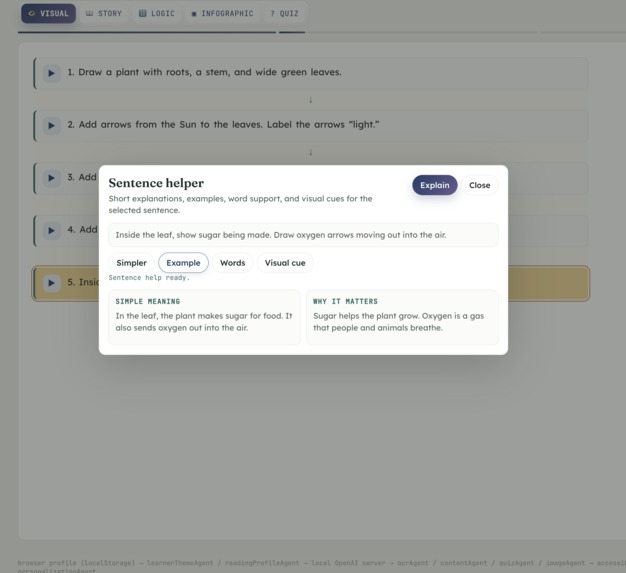
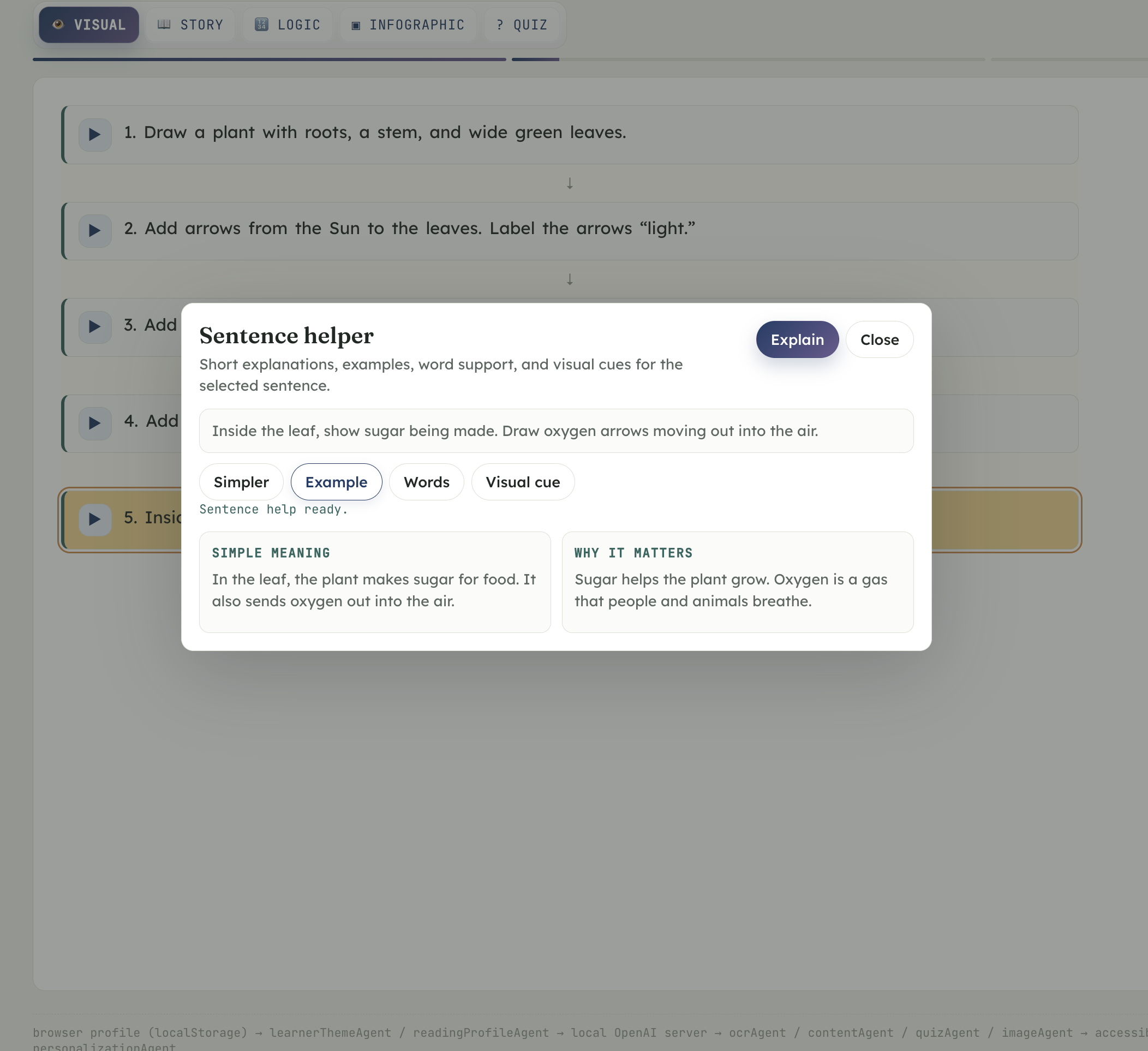
Sentence Helper : explains a selected sentence with a simpler meaning, examples, word support, & visual cues so learners can get help.
Inspiration
SimpLex is inspired by a simple belief: many learners do not struggle because they lack ability. They struggle because learning content is often dense, visually overwhelming, and delivered in only one way.
For dyslexic readers, long paragraphs, unfamiliar words, cluttered layouts, low contrast, and fast comprehension checks can create avoidable friction. SimpLex was built to make reading feel calmer, clearer, and more personal, so learners can feel capable, confident, and in control.
What It Does
SimpLex is an AI-powered adaptive reading companion that transforms complex content into personalized, accessible learning experiences for dyslexic and struggling readers.
It helps learners through:
- Topic-based reading generation that creates dyslexia-friendly content dynamically.
- Visual, Story, and Logic learning modes so learners can learn through the format that works best for them.
- Clickable sentence help that breaks down difficult sentences into simpler explanations.
- OCR support for worksheets, PDFs, and images.
- Infographic learning cards with readable HTML captions.
- Confidence-based quizzes that provide supportive review guidance.
- Multilingual support for both generated learning content and static app UI.
- Age-aware themes for elementary, middle school, high school, and adult learners.
- Ari, the AI learning companion, which understands learner behavior through browser-local signals such as confidence levels, reading patterns, review habits, and listening preferences.
- Adaptive recommendations that guide learners toward the most effective learning path, content format, pacing, and support strategies based on their individual needs.
Instead of forcing every learner through the same experience, SimpLex continuously learns how each user engages with content and uses AI to deliver more personalized, effective, and confidence-building reading support over time.
How We Built It
SimpLex is built as a lightweight web app using:
- HTML
- CSS
- JavaScript
- Python APIs
- Vercel serverless function-ready architecture
OpenAI powers the core intelligence behind:
- Reading content generation
- Sentence simplification
- OCR-based text extraction and cleanup
- Multilingual translation
- Infographic planning
- Quiz generation and answer evaluation
- Learner-friendly adaptive feedback
Codex was used as an engineering collaborator to design the product flow, build accessibility-focused features, refactor the UI, shape the frontend/backend architecture, add adaptive learner memory, and prepare the project for GitHub and Vercel deployment.
GPT-5.6 served as the generative engine for transforming content into clearer, gentler, and more personalized learning experiences.
Challenges We Ran Into
The biggest challenge was keeping SimpLex powerful without making it overwhelming. For dyslexic learners, too many AI features can quickly become visual and cognitive noise.
We focused on four key challenges:
- AI richness vs. simplicity: We had to make advanced AI features feel calm, guided, and easy to use.
- Readable infographics: Since text inside generated images can be unclear, SimpLex keeps important explanations in accessible HTML captions and uses visuals only to support understanding.
- Supportive quizzes: Instead of harsh grading or auto-filled answers, learners answer independently, share their confidence level, and receive feedback based on both correctness and self-belief.
- Ethical personalization: Ari adapts to real learner behavior without creating sensitive profiles. Ari uses only browser-local, aggregate signals such as low confidence, repeated listening, and review needs to guide future support while preserving privacy and avoiding labels.
Accomplishments That We’re Proud Of
We are proud that SimpLex does more than simplify text. It transforms the same learning material into multiple ways of understanding.
Key accomplishments include:
- Multiple learning paths: Learners can switch between visual explanations, story-based learning, logic-based breakdowns, vocabulary help, sentence support, and confidence quizzes.
- Accessibility-first experience: Adjustable spacing, reading width, font choice, focus mode, calm mode, multilingual support, and text-to-speech make the app feel built for real learners.
- Working adaptive prototype: SimpLex includes OpenAI-powered reading transformation, OCR-style upload support, quiz feedback, infographic generation, and privacy-aware personalization.
- Real engineering execution: We solved challenges around structured AI responses, local server integration, deployment readiness, and secure HTTPS handling on a managed network.
Most importantly, SimpLex is not just another AI text generator. It is an adaptive reading companion designed around how learners actually read, struggle, recover, and grow.
What We Learned
We learned that accessibility is not only about larger fonts or better contrast. For dyslexic readers, the complete experience matters.
The biggest takeaways were:
- Cognitive load matters: Layout, pacing, wording, feedback tone, visual structure, and interaction design all shape the reading experience.
- AI should behave like a companion: Generative AI works best here when it feels patient, supportive, and adaptive, not like a generic content generator.
- Personalization needs boundaries: Adaptive systems should support learners, not label them.
That is why SimpLex uses browser-local aggregate signals and avoids storing raw answers, uploaded source text, diagnoses, or permanent ability judgments.
What’s Next for SimpLex: Adaptive Reading Companion
Next, we want to evolve SimpLex from a strong prototype into a classroom-ready adaptive reading companion.
Planned enhancements include:
- Persistent learner profiles
- Saved accessibility preferences
- Long-term progress tracking
- Teacher and caregiver dashboards
- Reading assignments and review insights
- Deeper support for PDFs, textbooks, worksheets, and scanned notes
- Secure hosted accounts
- Saved lesson libraries
- Shareable reading sessions
- Expanded multilingual coverage
Our vision is simple: help every learner read in the way that works best for them.
Built With
- api
- codex
- css
- gpt-5.6
- gpt-image-1
- html
- javascript
- openai
- python

Log in or sign up for Devpost to join the conversation.