Inspiration
Simple Virtual Tour started from a simple idea: make creating professional 360° virtual tours easier, more accessible, and more flexible.
I wanted to build a solution that could work entirely through the web, without requiring complex desktop software, while still giving professionals enough control to create highly customized experiences.
Over time, what started as a relatively simple virtual tour project evolved into a complete platform, driven by real-world use cases, user feedback, and continuous development.
What it does
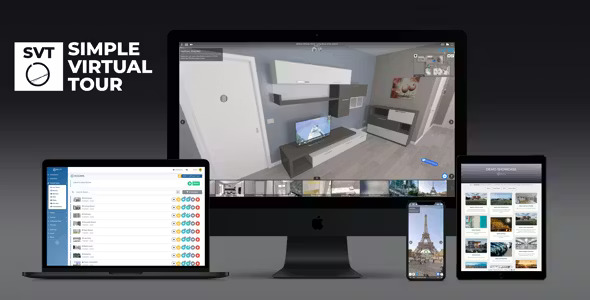
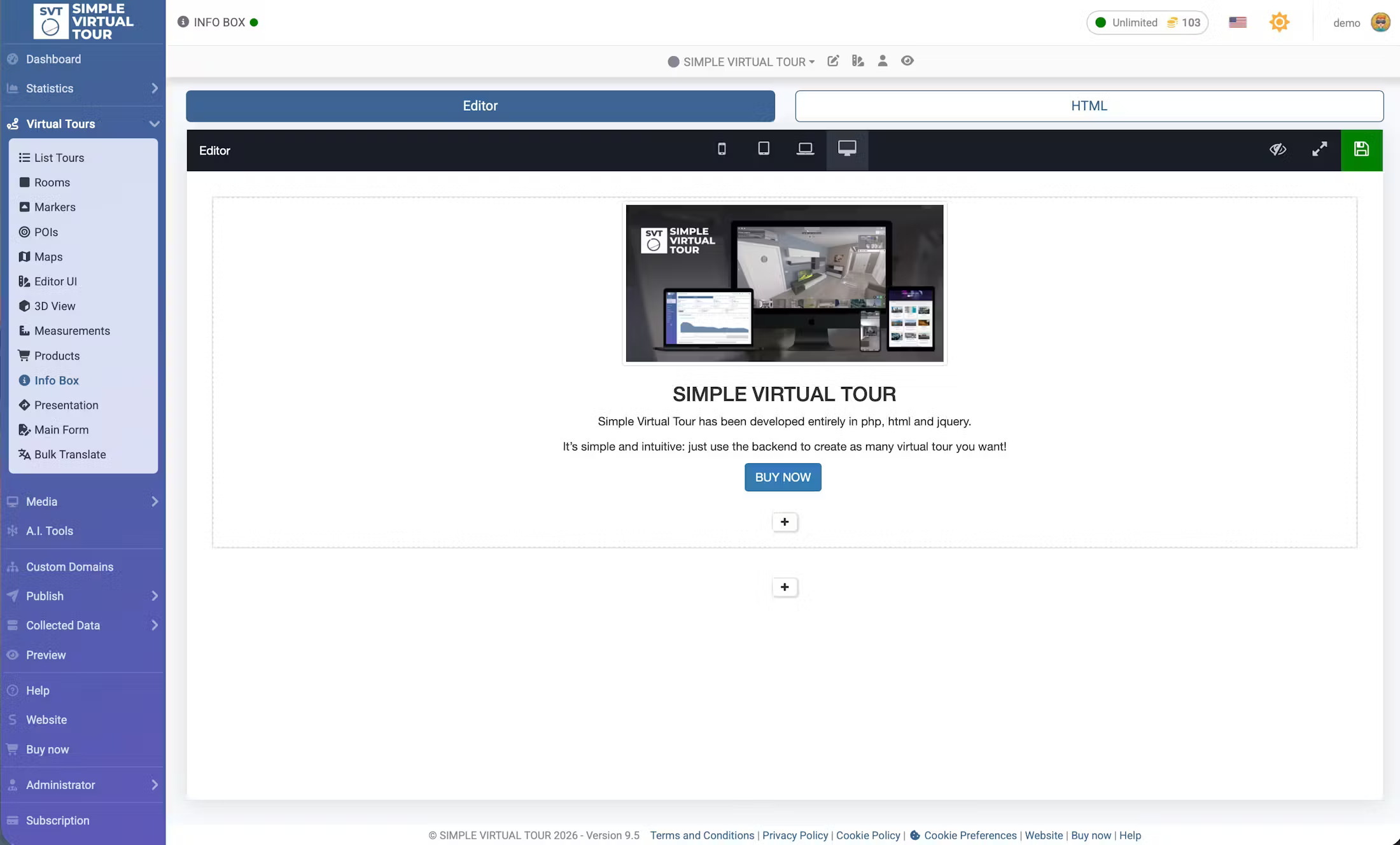
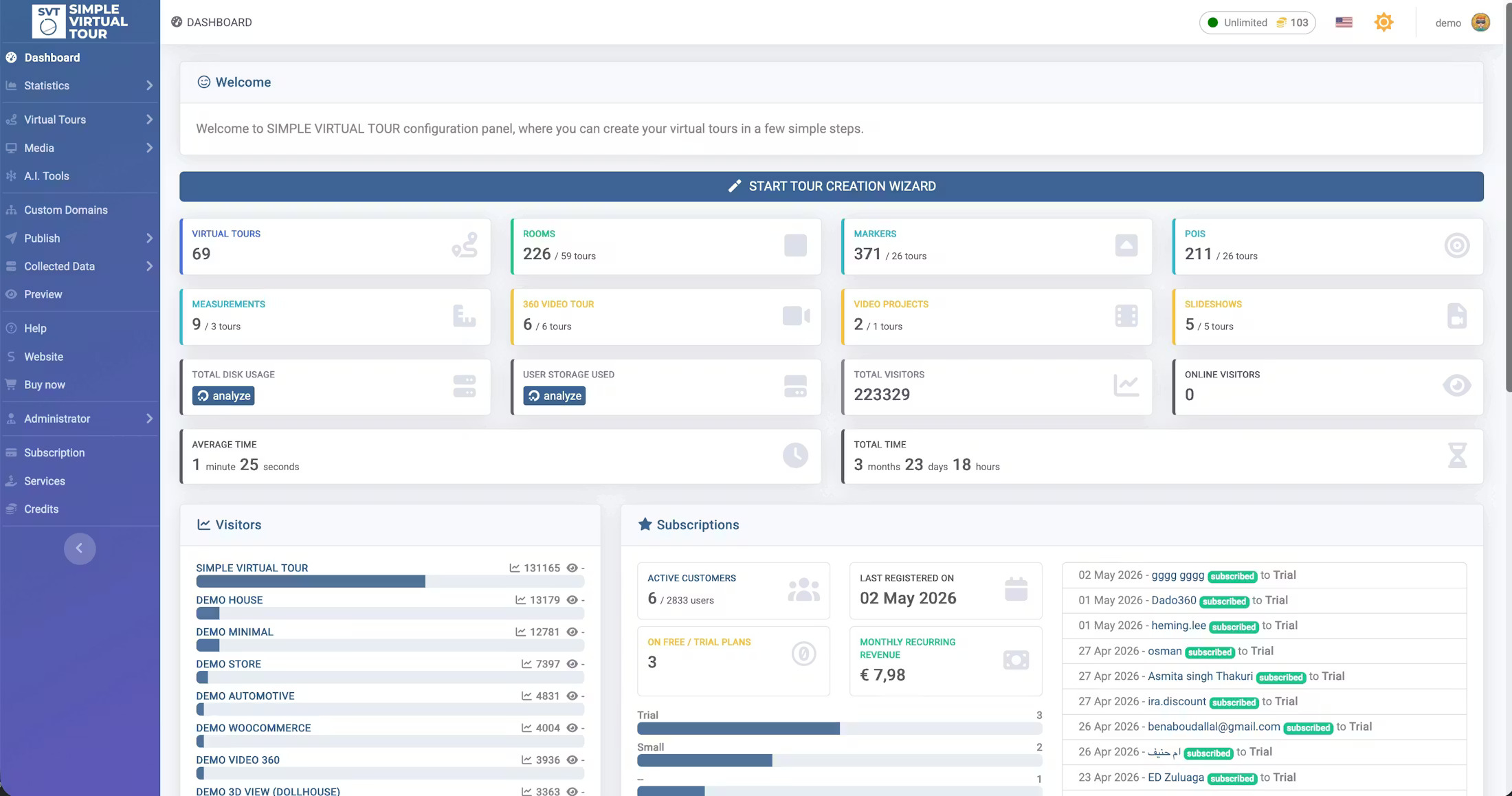
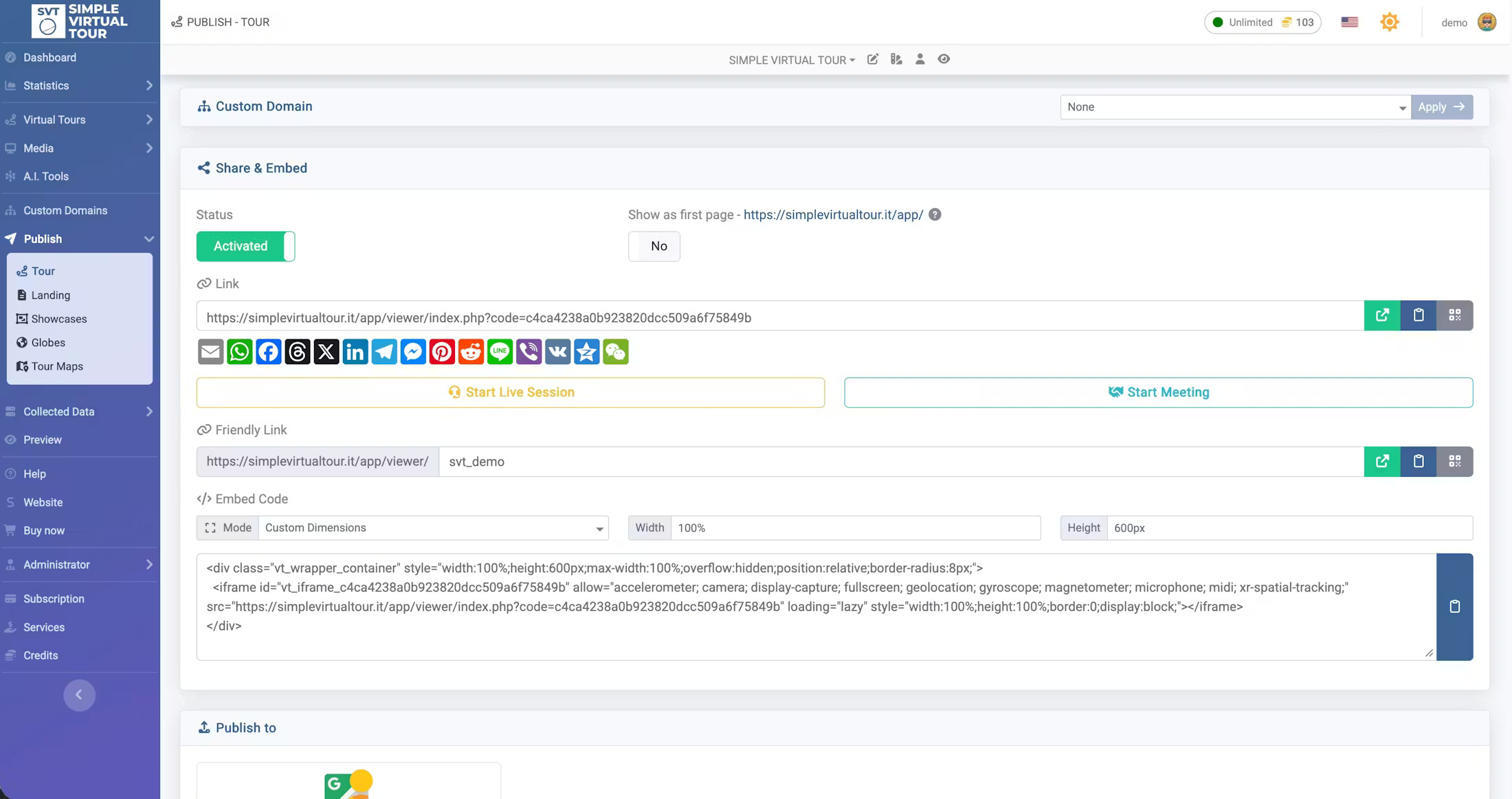
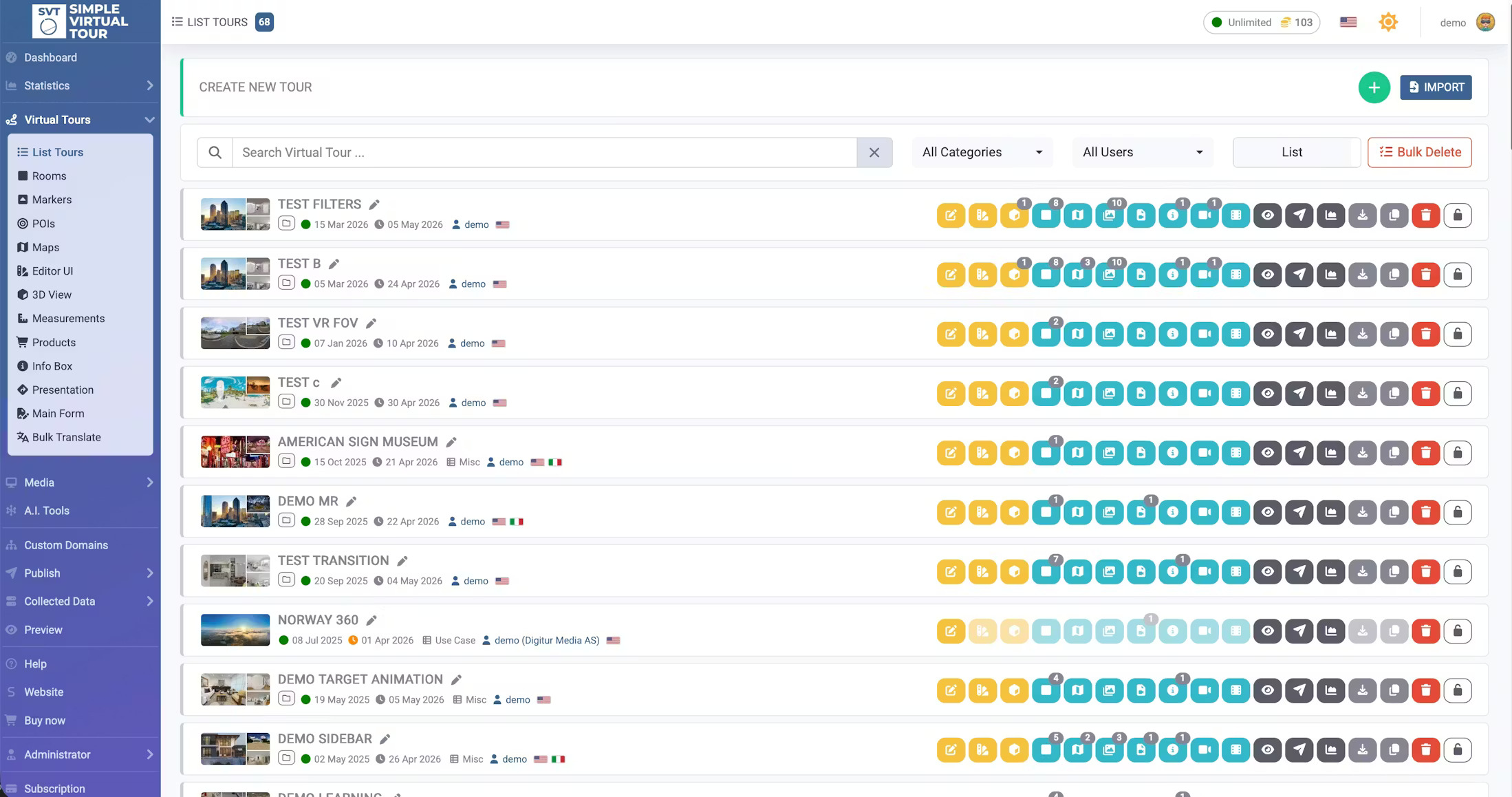
Simple Virtual Tour is a platform for creating, managing, and publishing interactive 360° virtual tours directly from a browser.
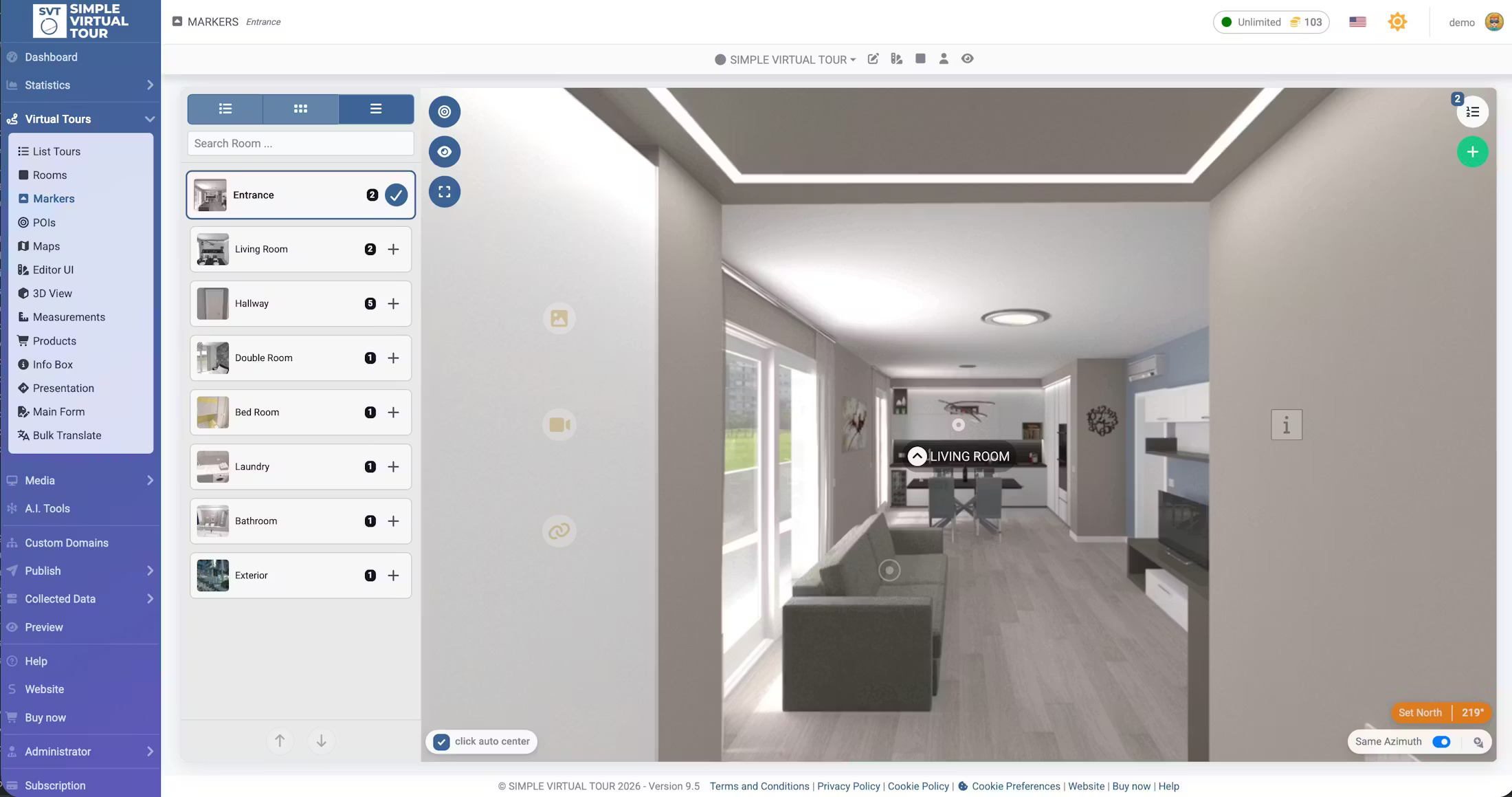
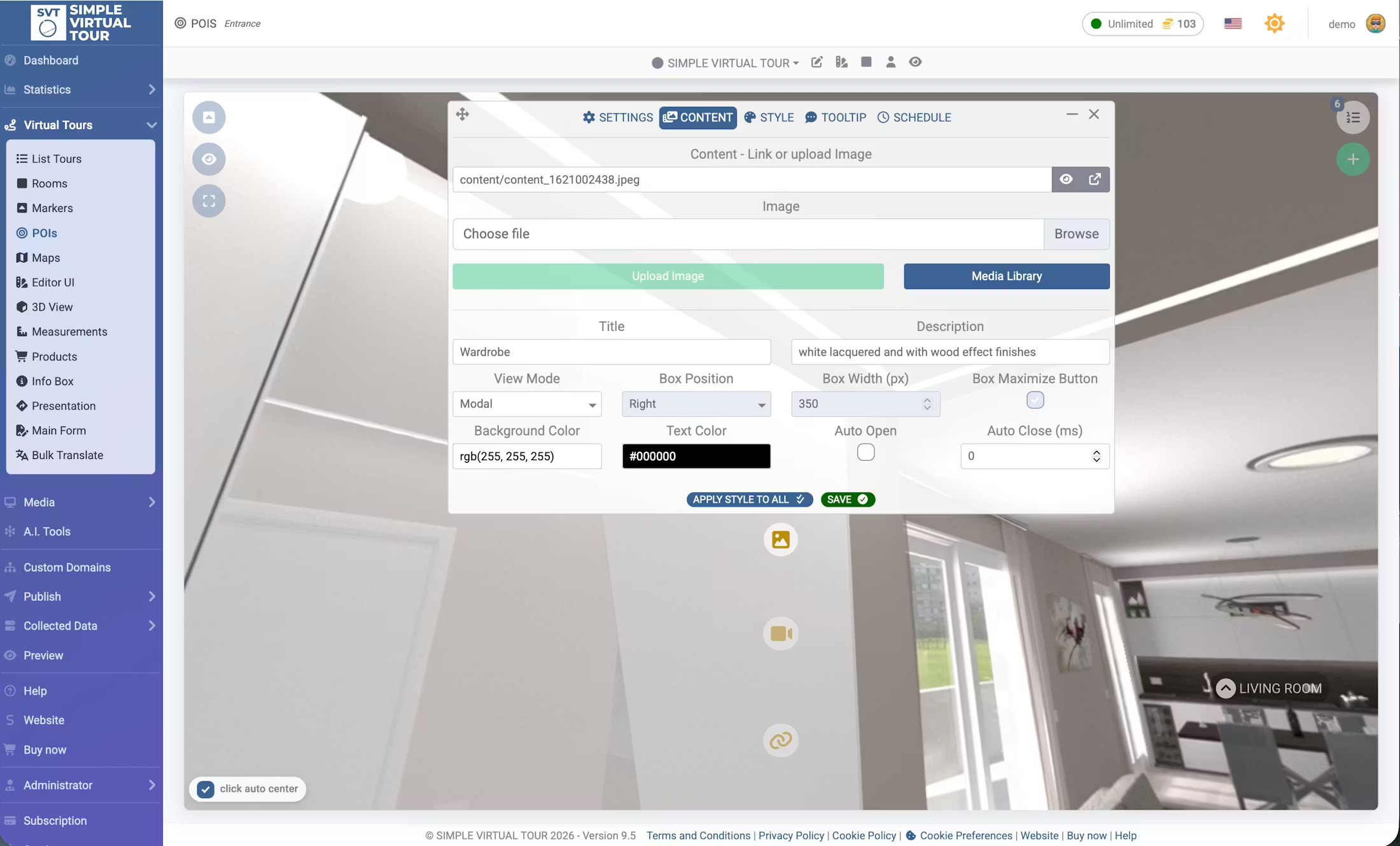
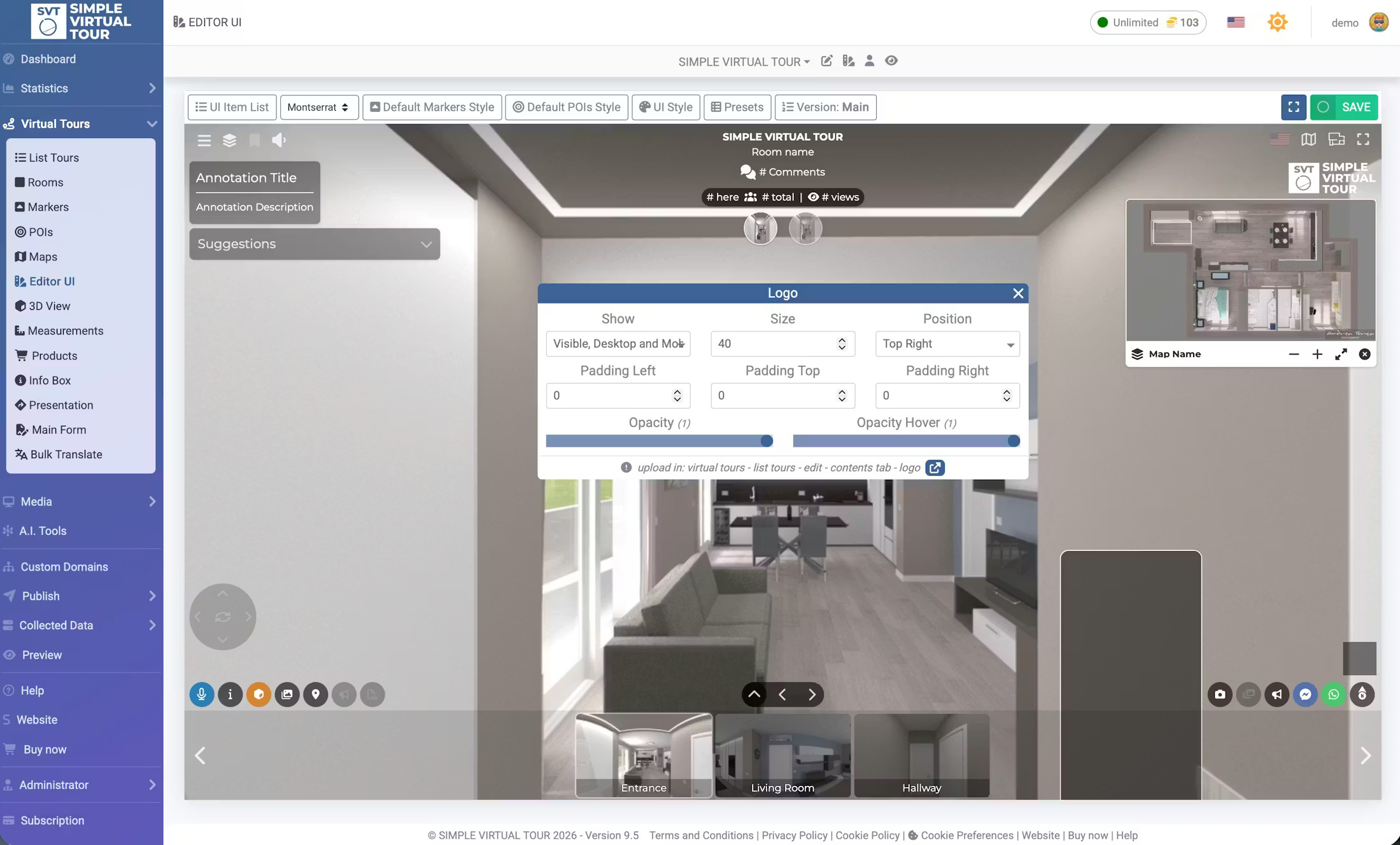
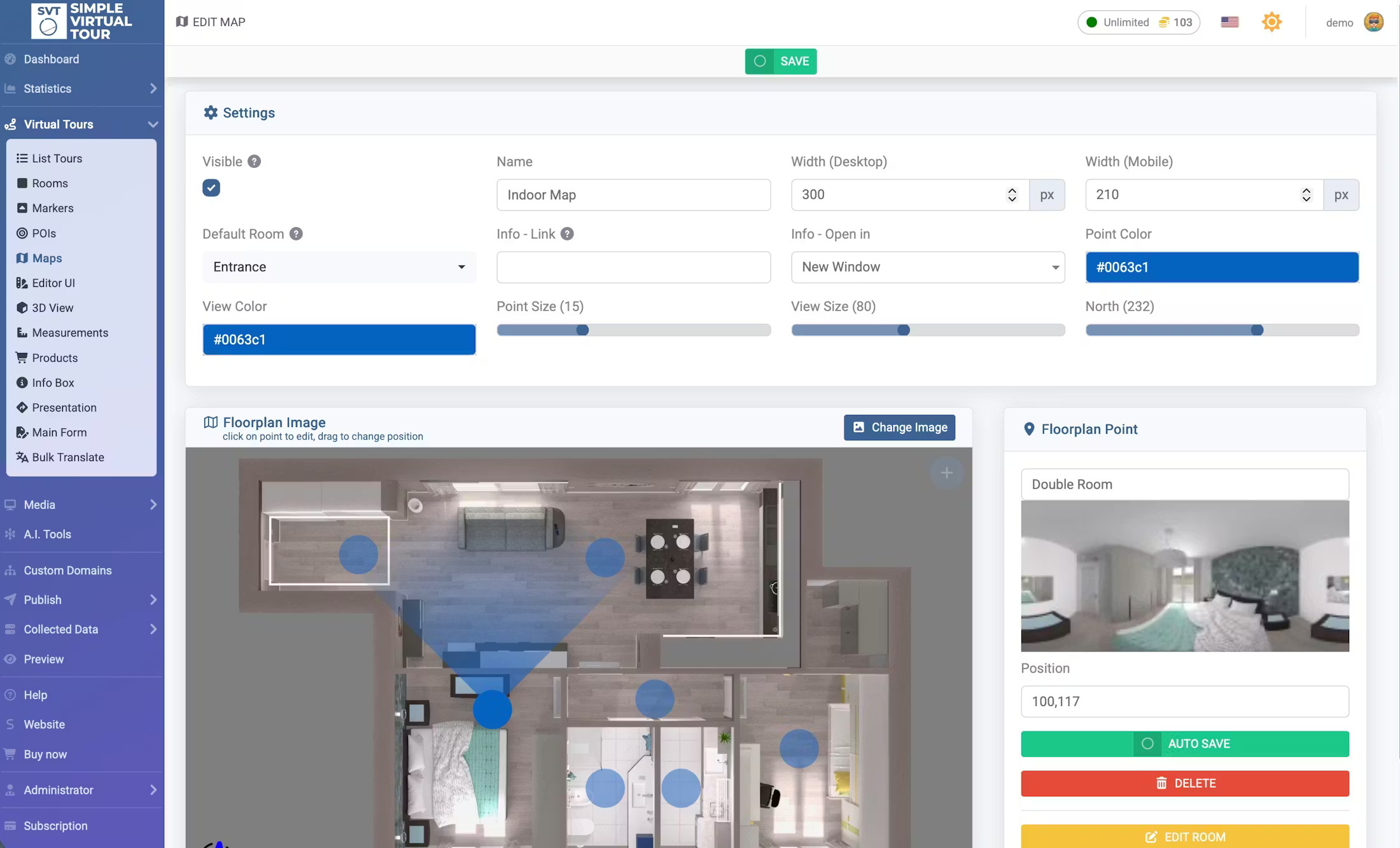
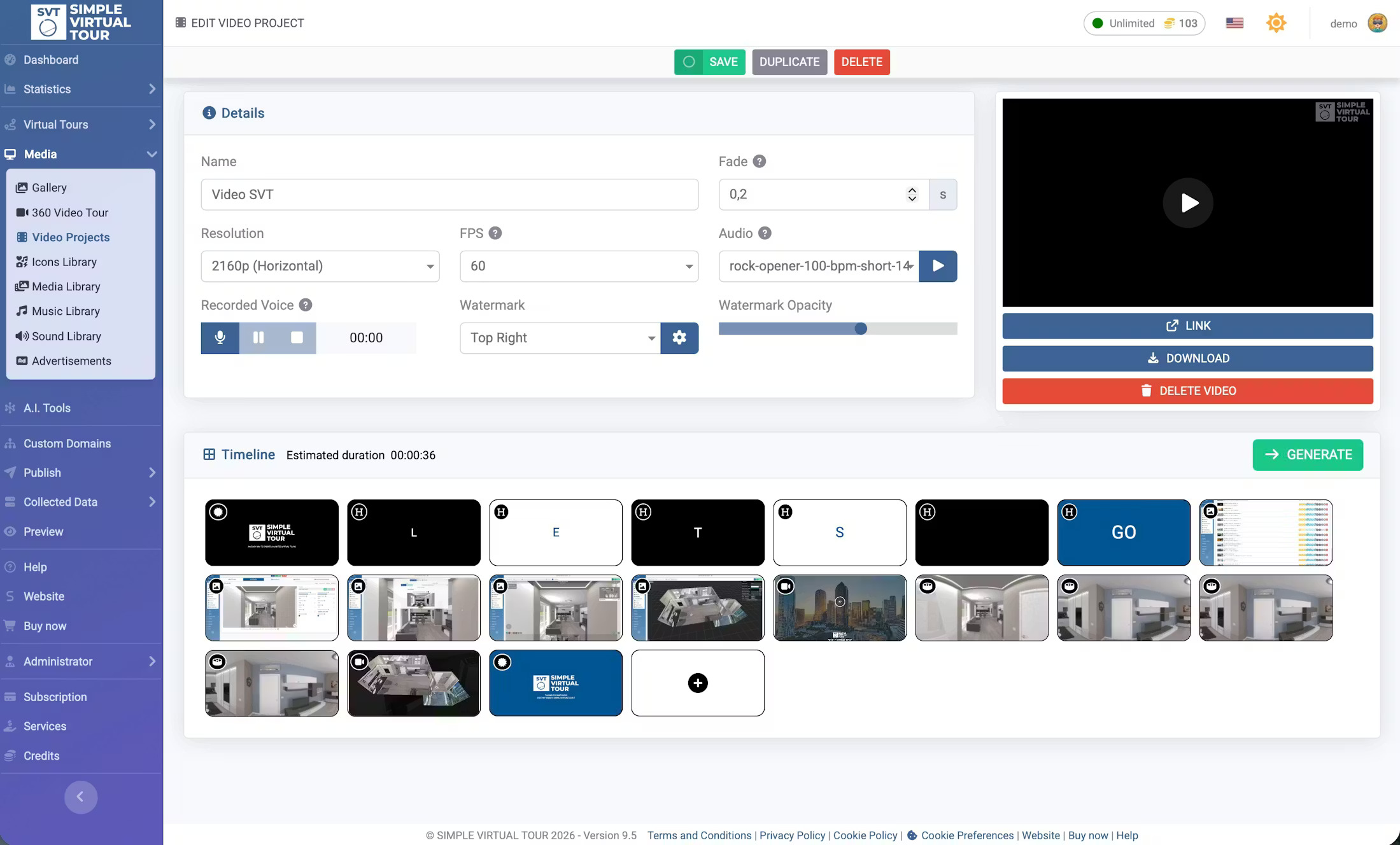
Users can upload panoramic images, connect scenes, add interactive hotspots, multimedia content, maps, floor plans, galleries, videos, audio, custom branding, and much more.
It also includes advanced features such as:
- Virtual Reality support
- AI-powered tools
- Automatic panorama linking
- Google Street View integration
- Live sessions
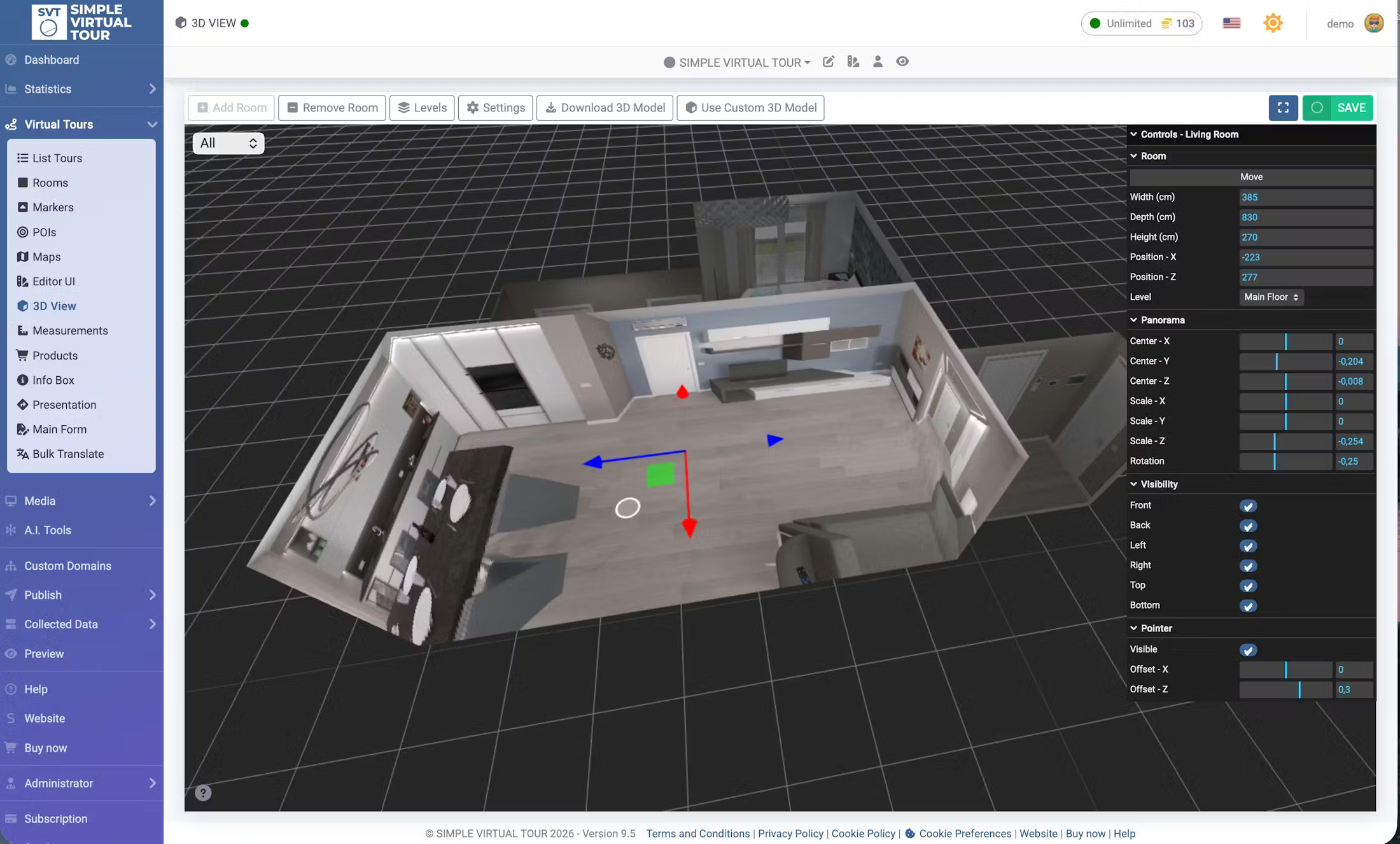
- Interactive maps and floor plans
- Multimedia hotspots and Points of Interest
- Custom branding and interfaces
- Custom domains
- Galleries, video, audio, and embedded content
- Extensive tour customization
The platform is available in two versions:
- Cloud — ready to use without installing or managing a server.
- Self-Hosted — installed on your own server, providing full control over hosting, data, branding, and infrastructure.
The goal is simple: provide everything needed to transform a collection of 360° panoramas into a complete interactive virtual experience.
How I built it
Simple Virtual Tour is primarily a web application, so both the creation interface and the final virtual tour run directly in the browser.
The backend is mainly built with PHP and MySQL, while the frontend uses technologies including:
- JavaScript
- HTML5
- CSS3
- WebGL
- Pannellum
- jQuery
- Bootstrap
As the project grew, I integrated additional technologies and external services for cloud storage, payments, subscriptions, artificial intelligence, Google Street View publishing, and real-time functionality.
The architecture has evolved significantly over the years. A major part of development has been finding ways to introduce new functionality while maintaining compatibility with existing tours and keeping the viewer fast and responsive.
Challenges I ran into
One of the biggest challenges has been balancing simplicity with an increasingly large feature set.
Virtual tours involve much more than displaying panoramic images. The application has to deal with:
- High-resolution 360° images
- Real-time WebGL rendering
- Desktop and mobile devices
- VR headsets
- Different browsers
- Multimedia content
- Cloud storage
- Different network conditions
- Different server configurations
Supporting a Self-Hosted version adds another significant challenge because the software needs to work across many different servers, hosting providers, PHP configurations, databases, and network environments.
Performance has also been an ongoing challenge. Loading high-resolution 360° images while keeping tours responsive requires continuous optimization of image processing, caching, asset delivery, database operations, and frontend rendering.
Accomplishments that I'm proud of
I'm particularly proud that Simple Virtual Tour grew from a small project into a complete platform used to create real virtual experiences around the world.
I'm also proud of maintaining both Cloud and Self-Hosted editions.
The Self-Hosted edition gives users something that is becoming increasingly uncommon: the ability to own and control the environment used to create and publish their virtual tours.
Another important accomplishment has been continuously expanding the platform without losing its original objective of making virtual tour creation approachable.
Features such as AI-assisted tools, automatic panorama linking, Google Street View publishing, VR support, live sessions, maps, floor plans, multimedia hotspots, and extensive customization are now available within the same platform.
Most importantly, Simple Virtual Tour has continued to evolve for years rather than remaining a one-time experiment.
What I learned
Building Simple Virtual Tour taught me that creating a product is very different from simply writing software.
Beyond development, I've had to work on:
- UI/UX
- Database architecture
- Server infrastructure
- Performance optimization
- Security
- Payments and subscriptions
- Cloud storage
- Localization
- SEO
- Documentation
- Customer support
- Product strategy
I've also learned how valuable real user feedback is.
Features that appear important during development are not always the ones users value most, while seemingly small improvements can significantly improve their everyday workflow.
Another important lesson has been learning how to continuously evolve a large existing application without breaking what already works.
The project continues to teach me something new almost every day.
What's next for Simple Virtual Tour
The next step is to continue making virtual tour creation faster, smarter, and more automated, while keeping creators in control.
AI will play an increasingly important role, especially in reducing repetitive tasks such as analyzing panoramas, identifying connections between scenes, editing visual content, and assisting during tour creation.
At the same time, I want to continue improving the core platform, particularly:
- Performance
- Mobile experience
- Customization
- Cloud infrastructure
- Self-Hosted capabilities
- AI-powered automation
- Virtual Reality experiences
The long-term goal remains the same as when the project started:
Make creating professional 360° virtual tours as simple, powerful, and flexible as possible.


Log in or sign up for Devpost to join the conversation.