
What it does
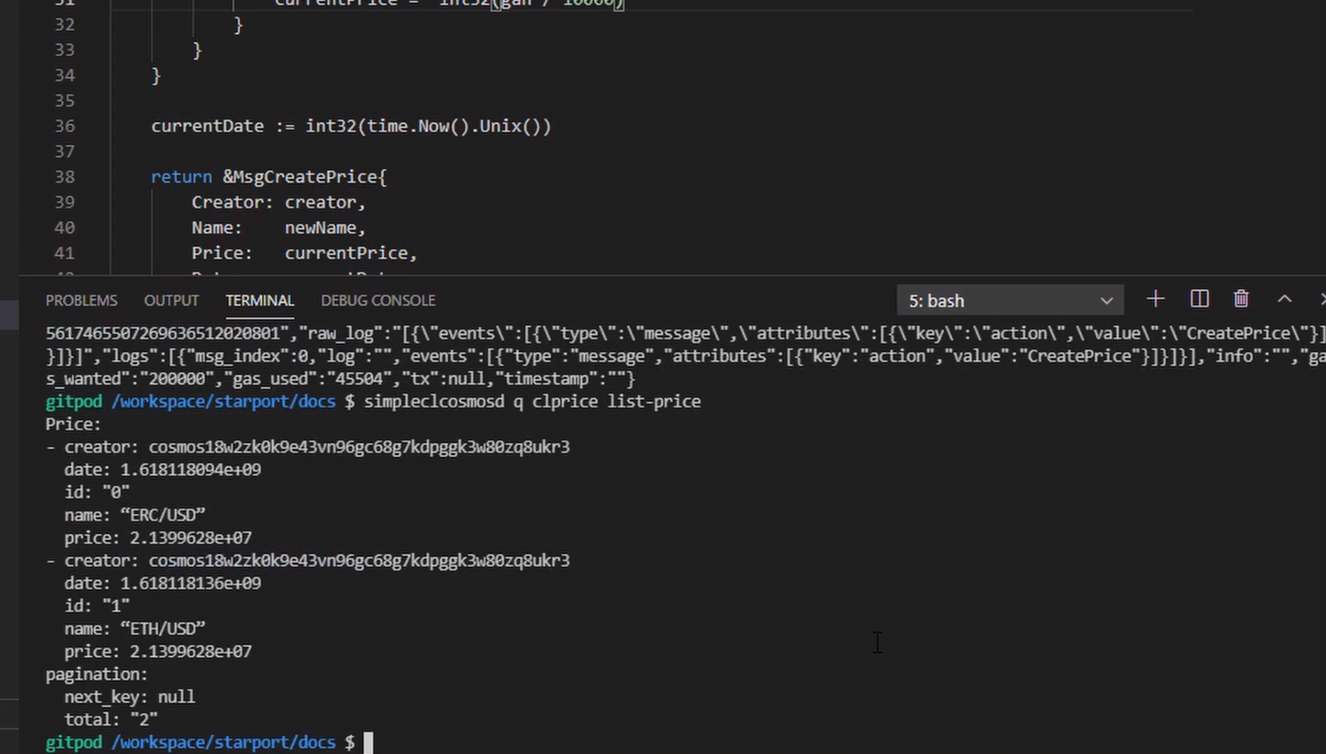
It hosts a cosmos module that connects the chainlink price feed to the blockchain that you add it to. It writes chainlink prices into the blockchain database, and can be expanded into IBC in the future.
How we built it
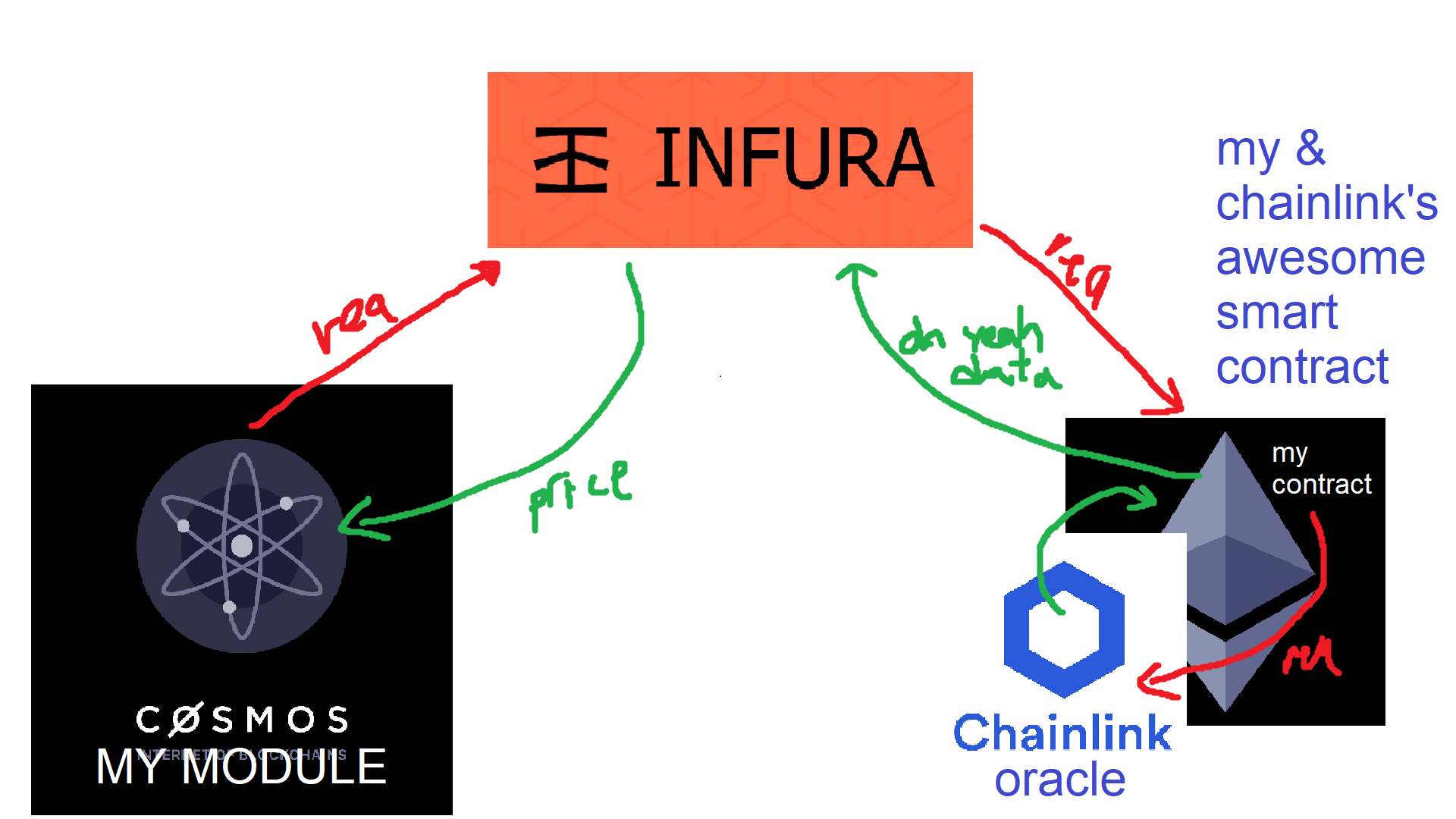
Though this chart looks awful, it's basically what happens. The cosmos module dials my infura project to communicate with my smart contract. The smart contract employs chainlink solidity code, and will send back chainlink code to the cosmos blockchain.
The module is based off of IBC, though the functionality for IBC was not finished because the simple CRUD already worked on its own.

Challenges we ran into
It was quite difficult trying to figure out the right angle of attack. I had never used cosmos before, so I didn't know what to do. Some things, like the 10 minute hello world IBC tutorial took 4 hours to complete, and I wasn't exactly sure at the time if it was what I needed to do. I looked at a lot of different things like cosmos's ethereum to cosmos bridge Gravity (perhaps previously called peggy), but at the end of the day, the current solution is the one that I came up with.
Accomplishments that we're proud of
I'm glad that I finished the project. While it may not be the best one out there, I did what I set out to do.
What we learned
I became familiar with GoLang, which I have never encountered before. While I'm not a fan of the language due to its weird syntax, I'm glad I dabbled with it enough to decide that I want to learn Rust instead. COSMOS was frustrating. Very frustrating. But I'm very glad that I did stuff with it. It has documentation that is better than what I've seen in the blockchain world, so I think that it has room to expand in the future. Plus, it was cool when I did get things to work. I look forward to a future COSMOS related hackathon if that ever happens again.


Log in or sign up for Devpost to join the conversation.