Inspiration
This project was a personal challenge for myself. I really enjoyed Digital Systems at UA, and I wanted to make a project without any coding. I felt it is a niche and a forgotten skill. I wanted to discover my abilities in digital design for myself.
What it does
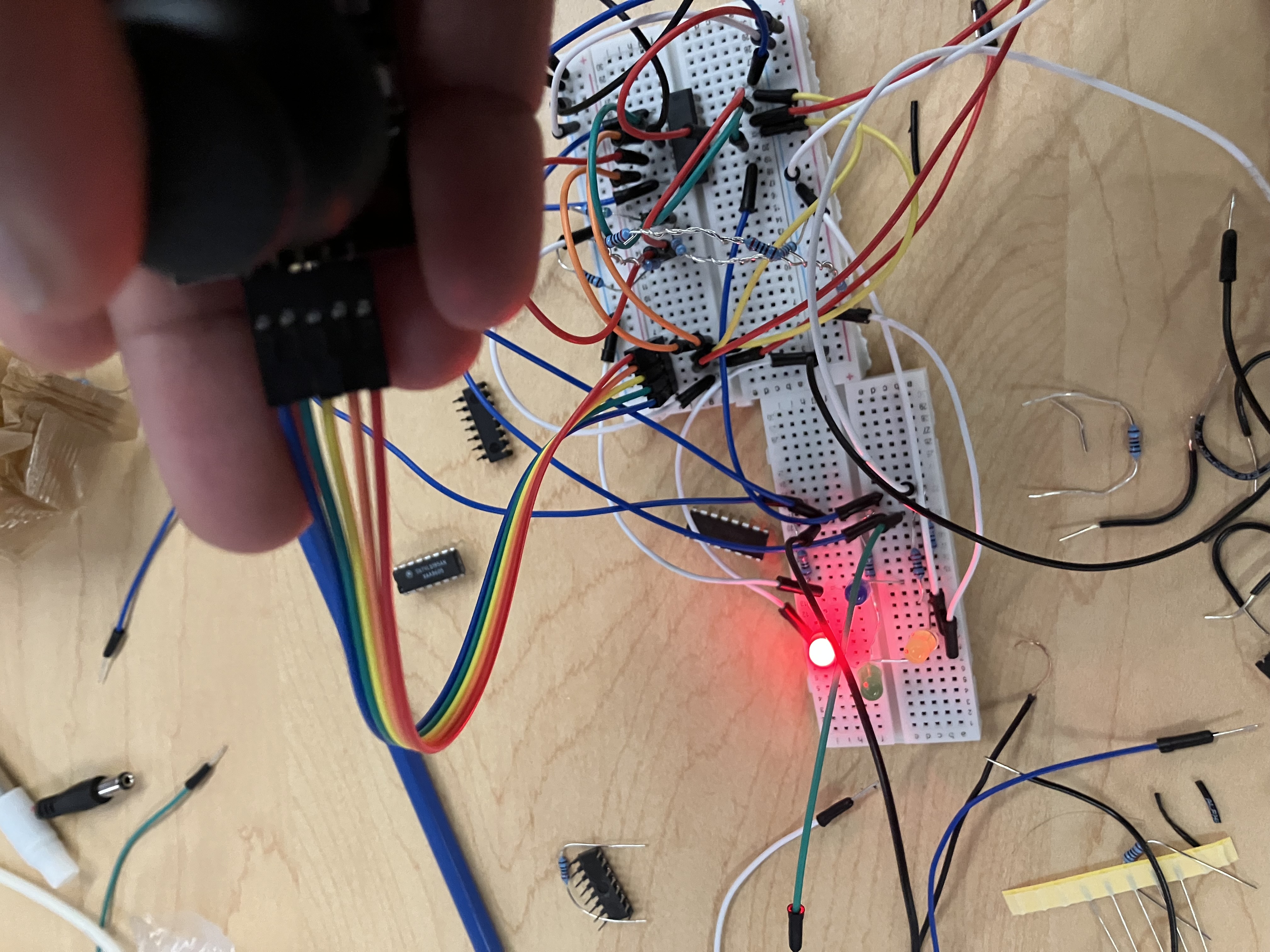
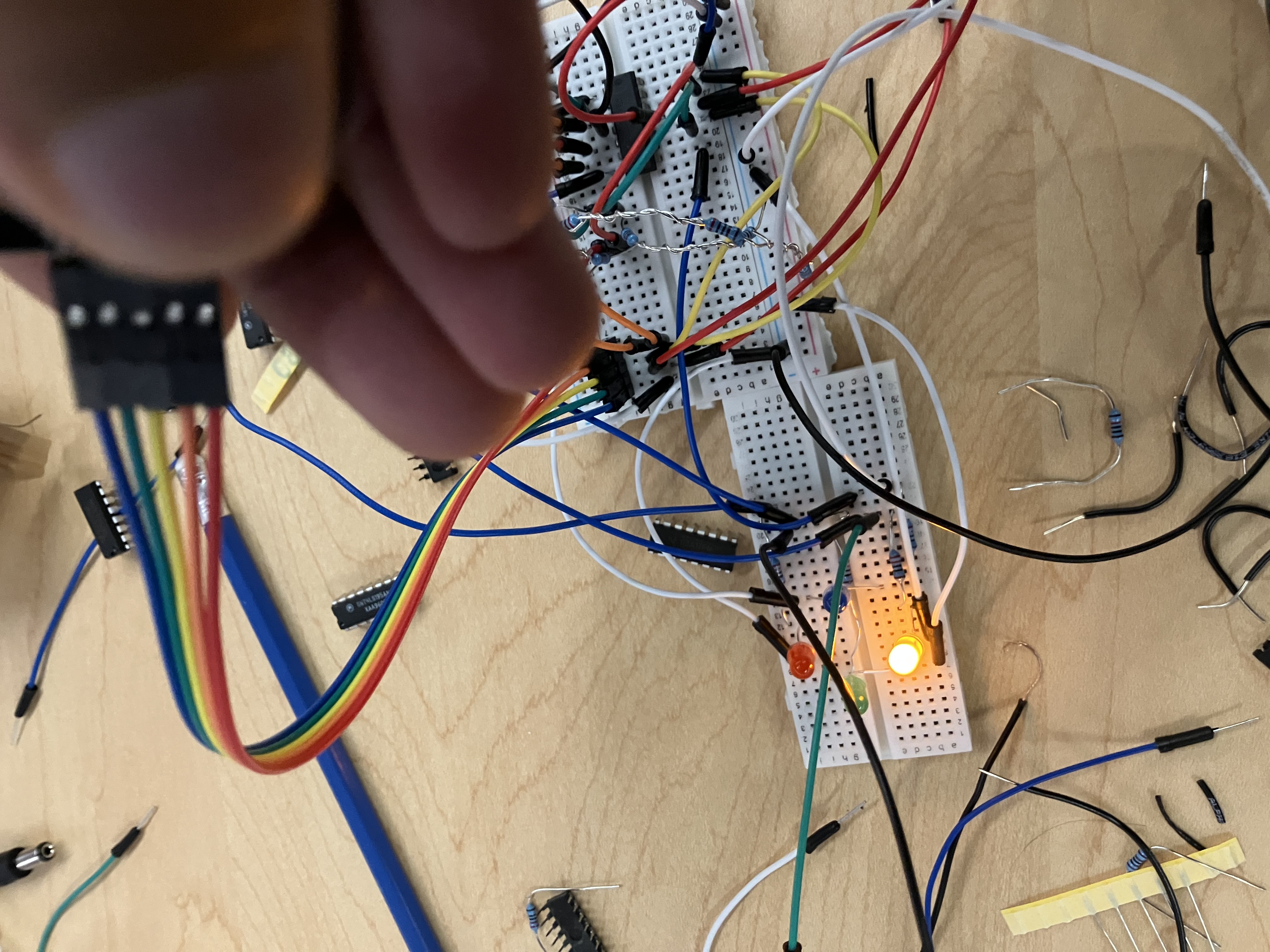
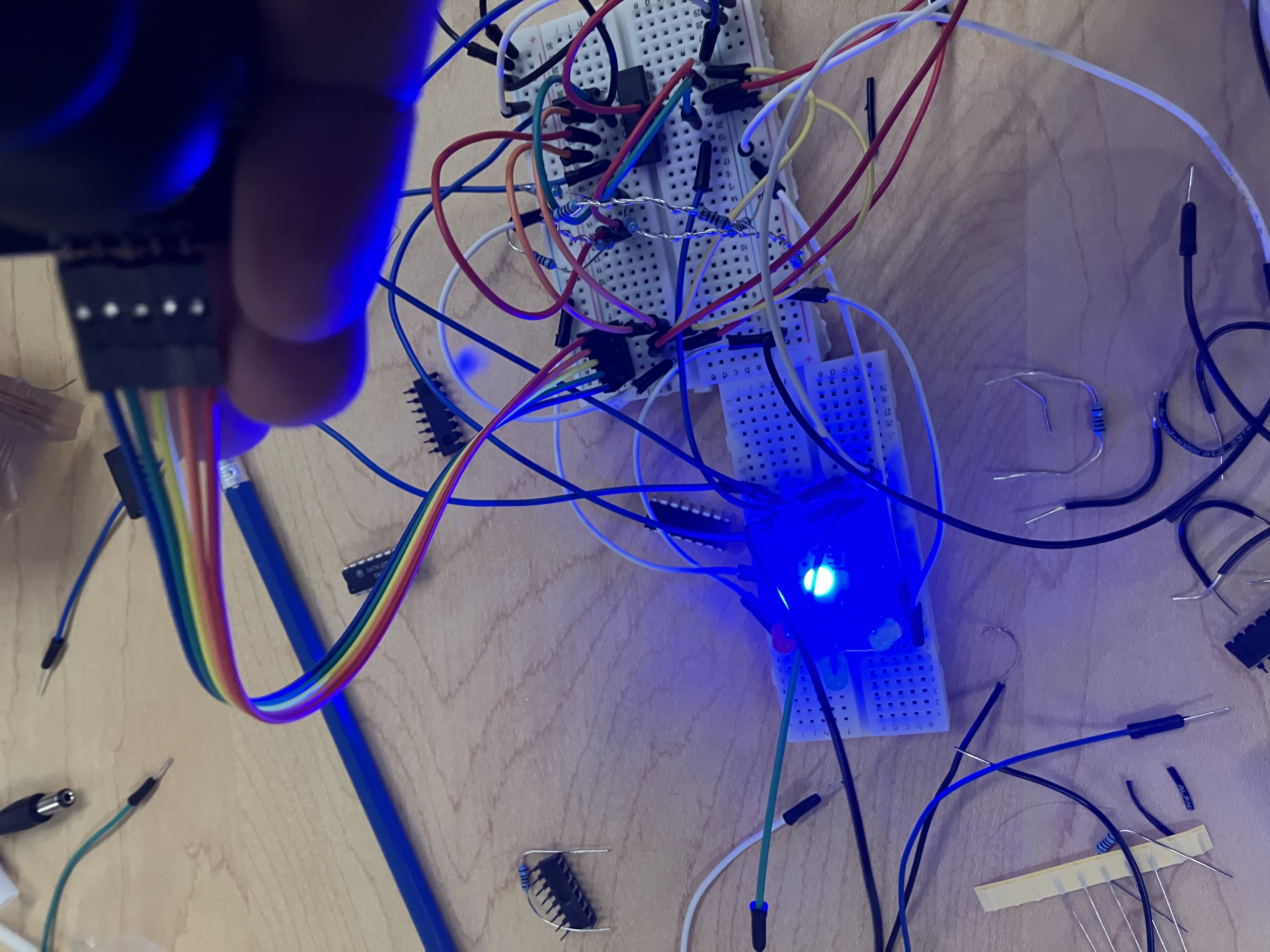
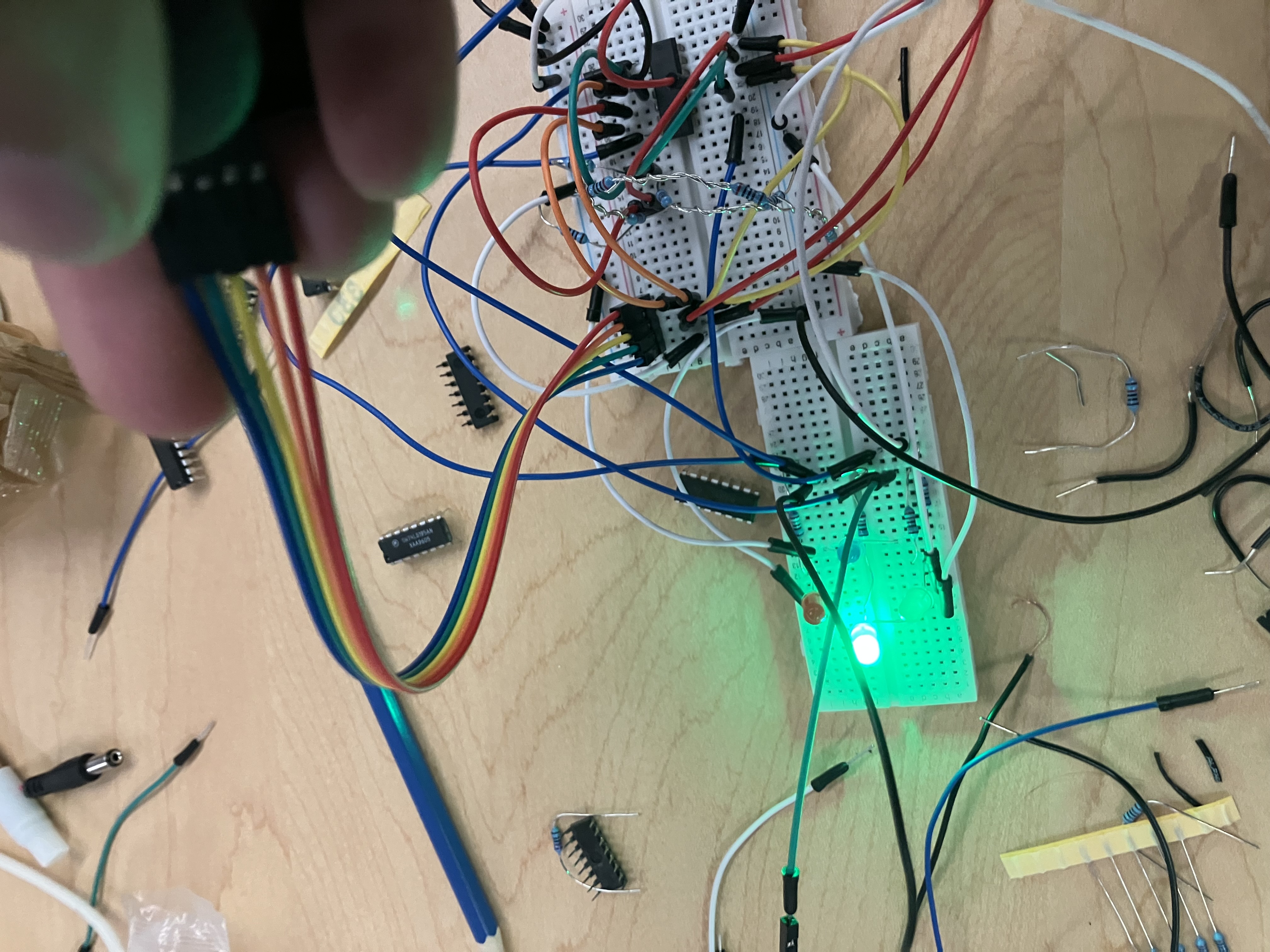
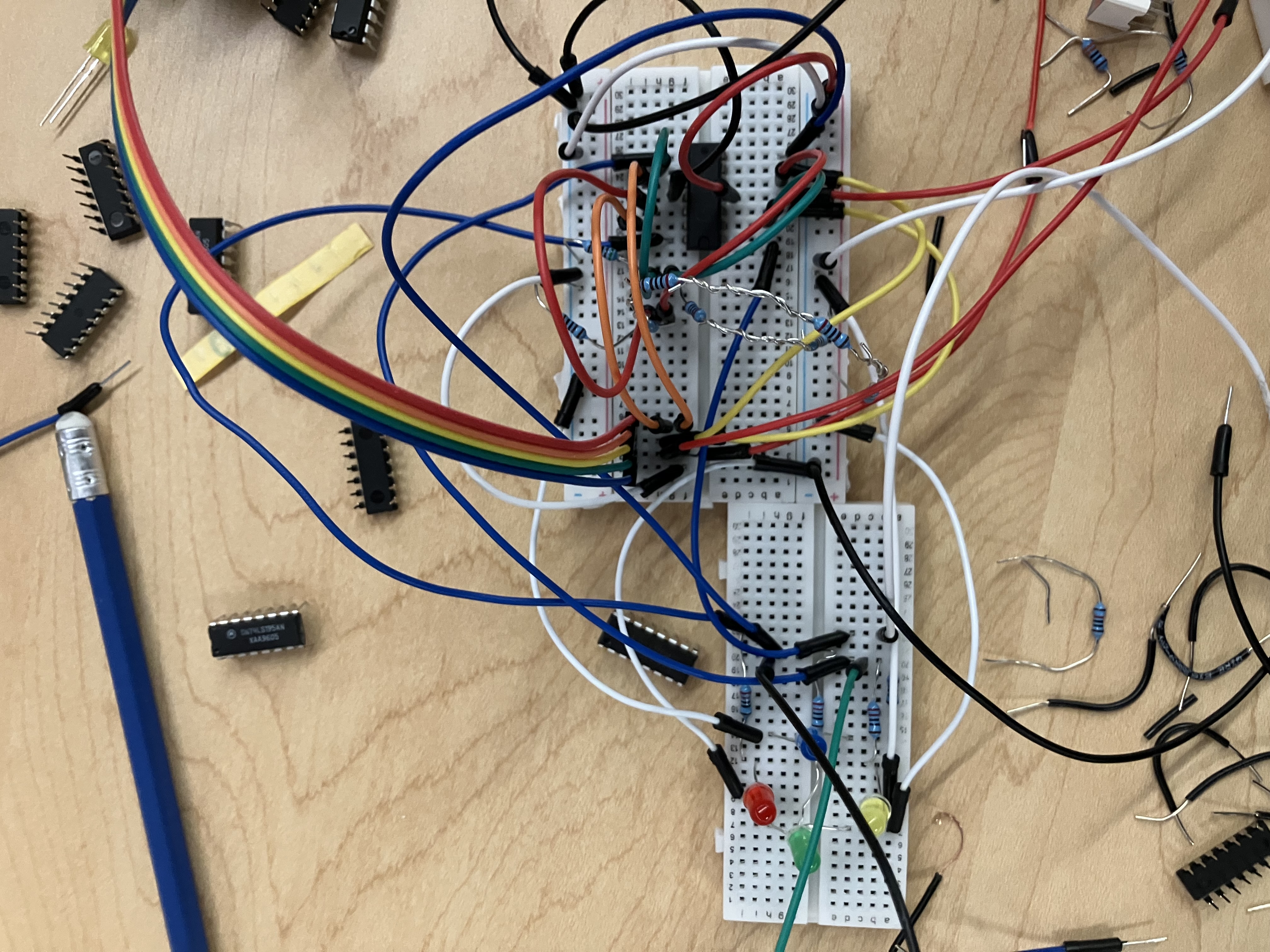
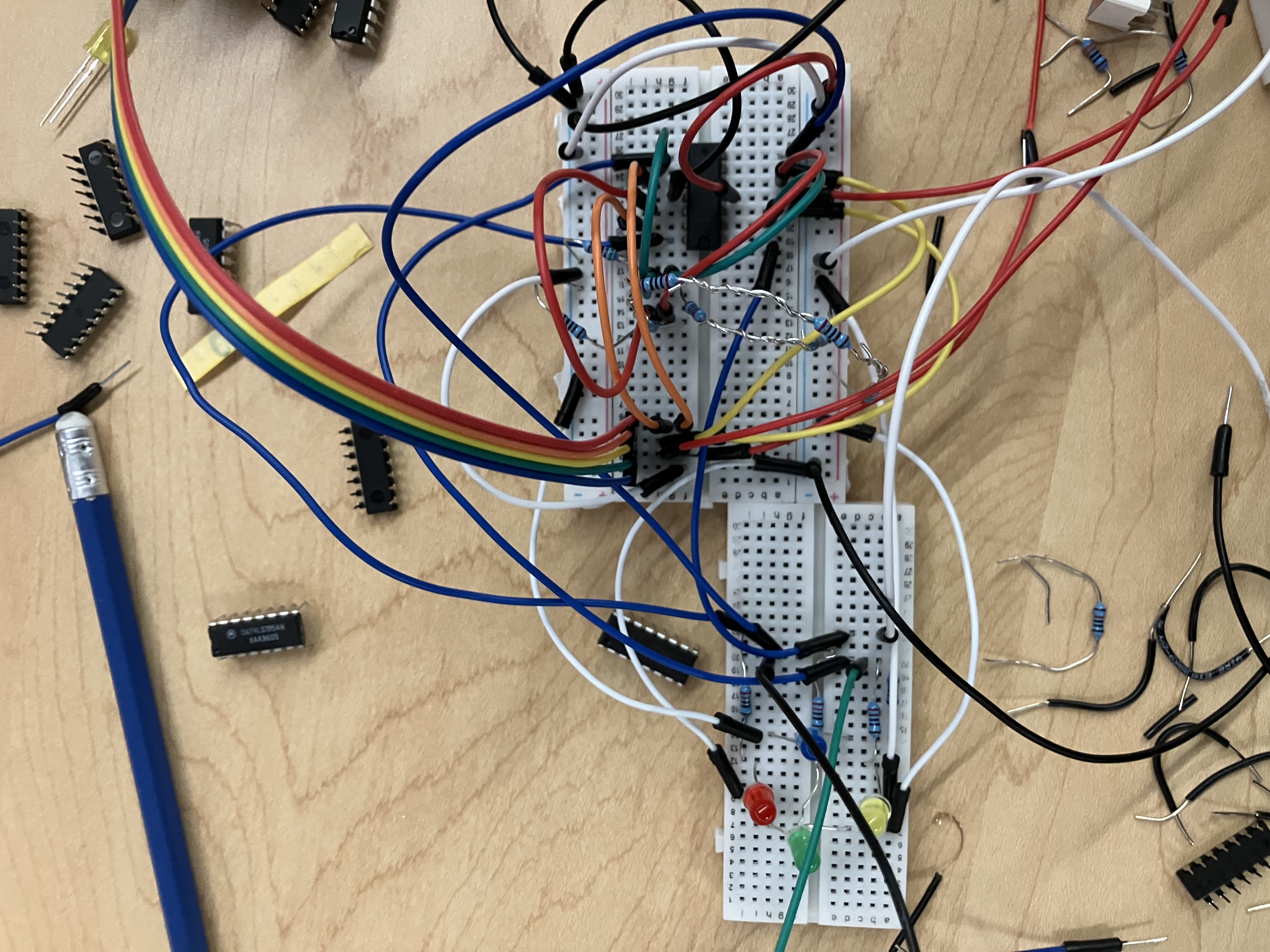
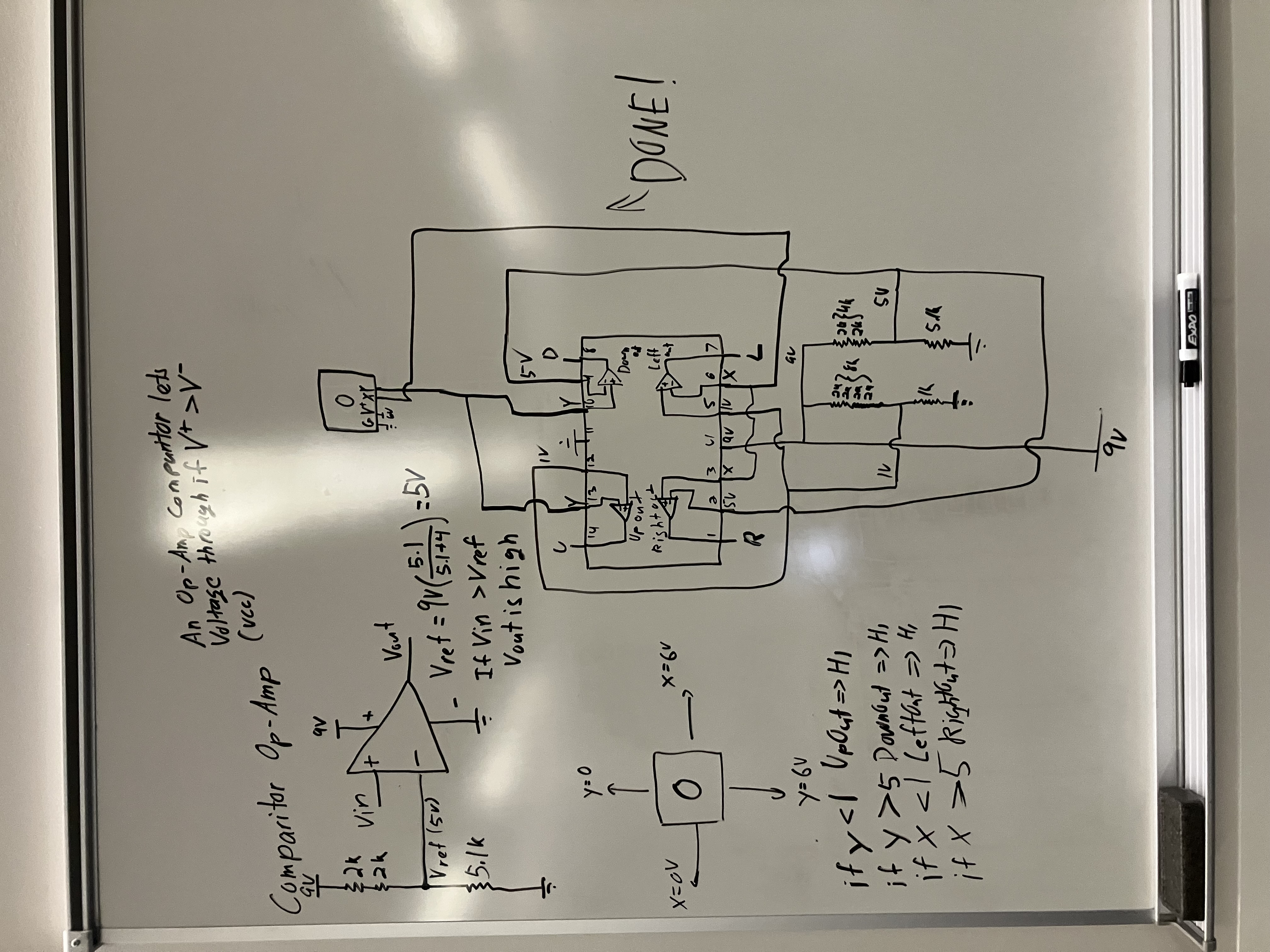
As of right now, the comparator functionality works well. The potentiometers inside the joystick control the voltages between 0 and 6 volts. Comparators using op-amps allow voltage to flow based on thresholds set by voltage dividers, essentially letting the joystick drive the directions of the 4-LED display I designed.
How we built it
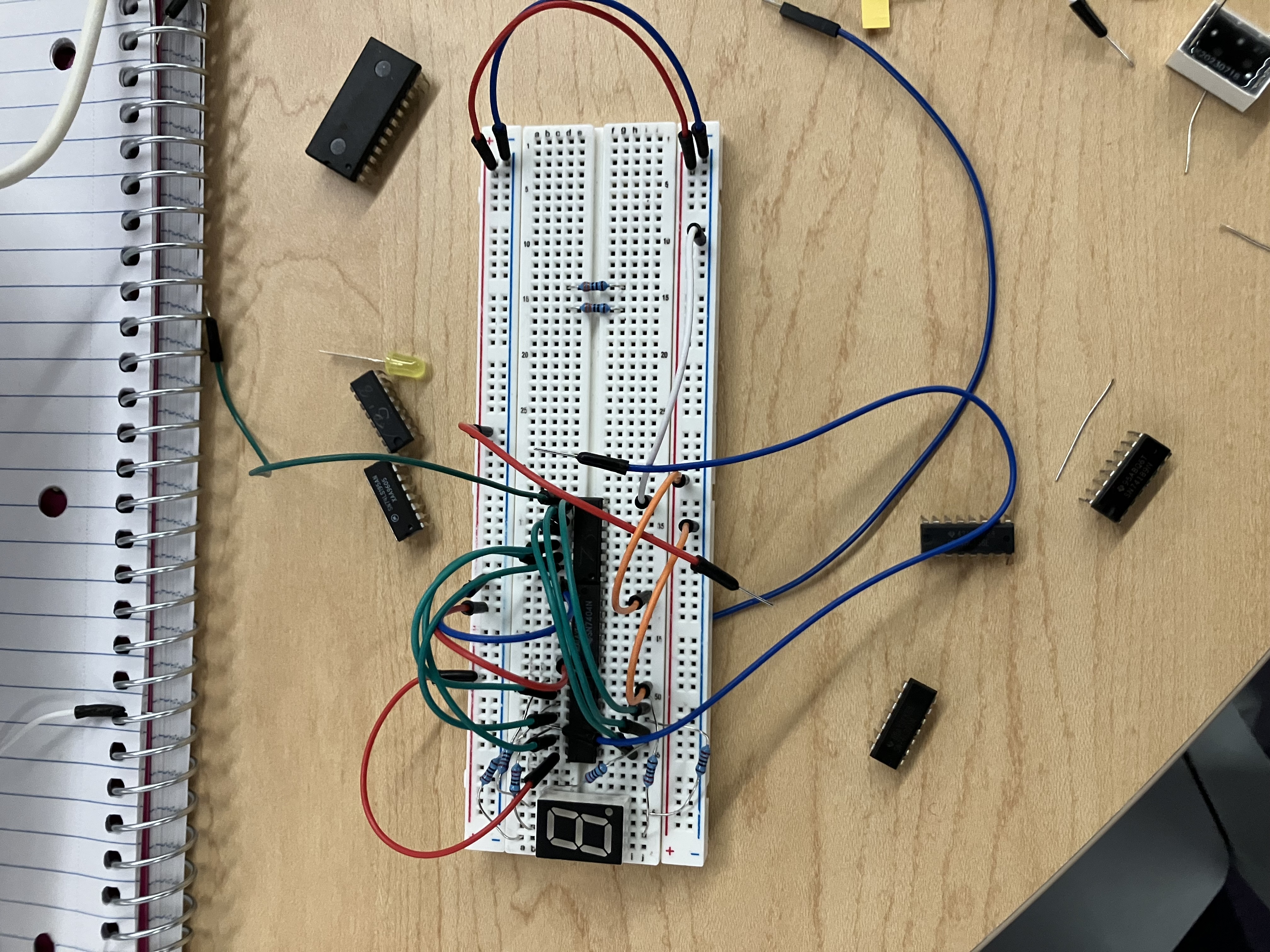
The biggest challenge in engineering is not building, but thinking. First, I had to visualize how my components work, look at the logic, and draw things out. To understand electricity, you have to think like electricity, trace paths, and see if logical connections are true or false. Once I understood the process and drew my work, I recreated the circuitry based on my drawing on a breadboard.
Challenges we ran into
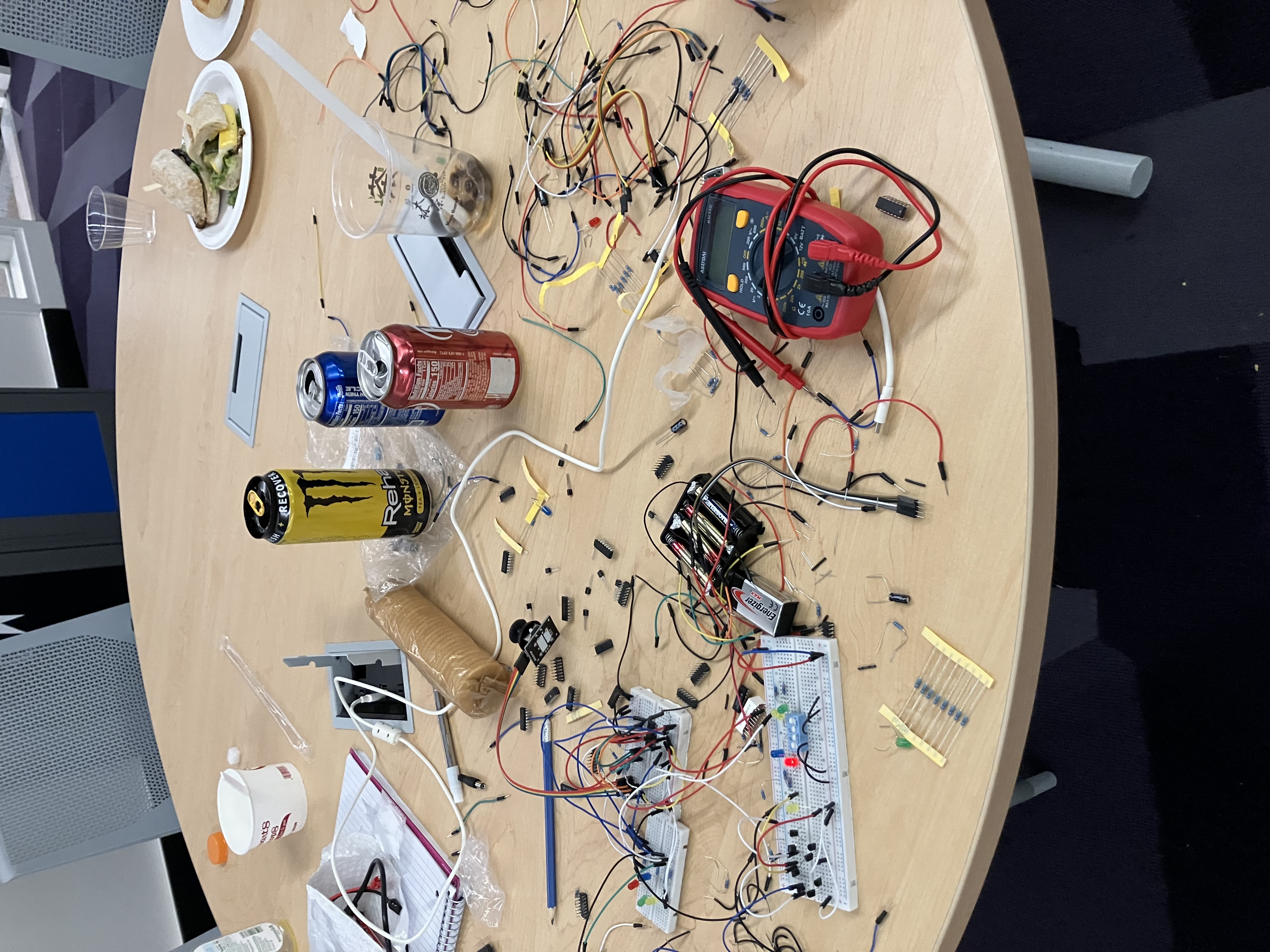
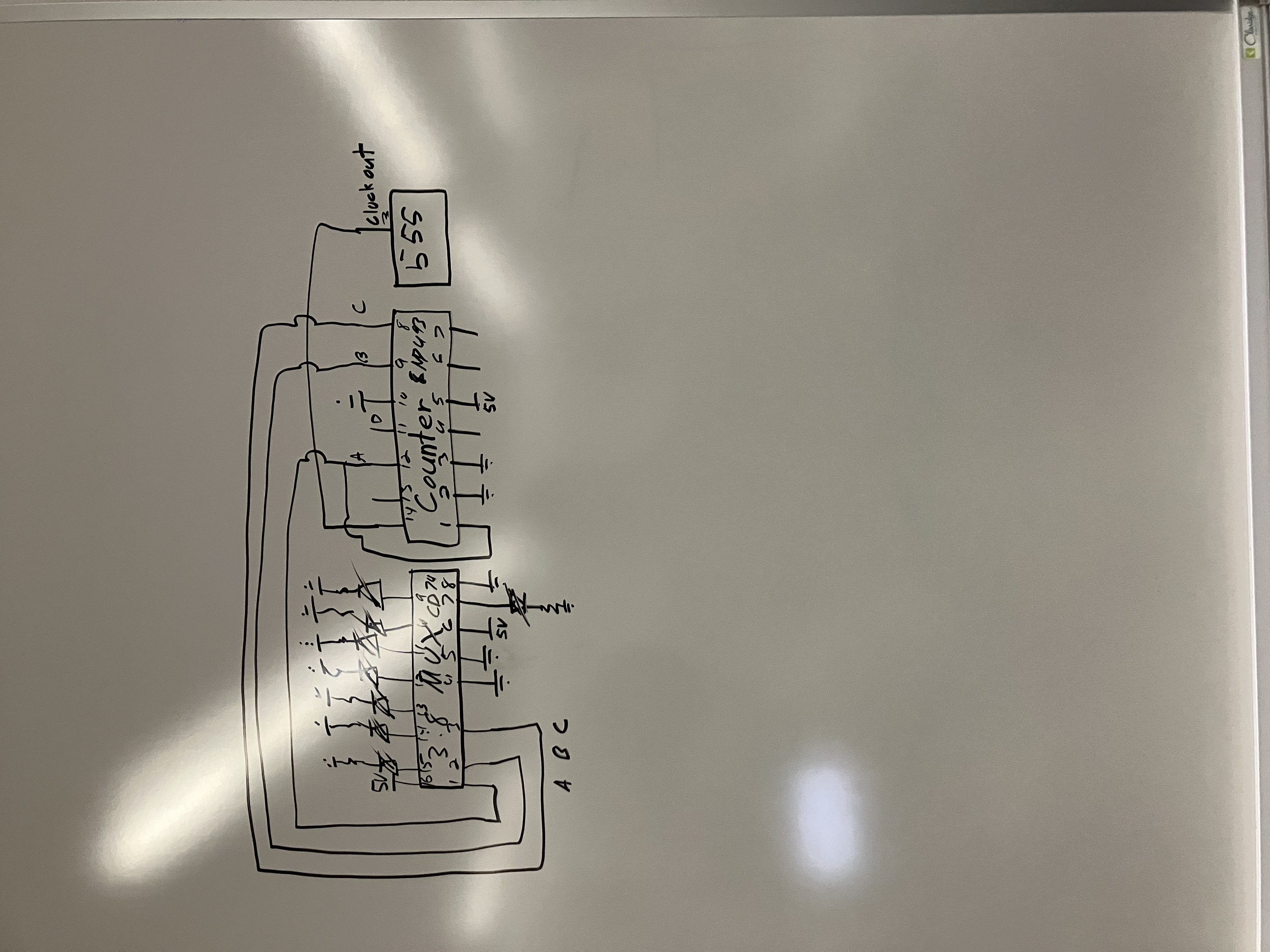
The challenges of this project were endless. From the start, I didn't have the right size batteries or a way to connect them. But with some tricks, such as twisting and using aluminum foil, I was able to make my voltage sources. My op-amp needed a separate higher voltage source too. I was limited by my components, so I also had to twist resistors together. I was using component chips I was nearly completely unfamiliar with. I had to really push my logical understanding. It felt like I never had the right chips. My AND gates were 4-input instead of 2-input, and somehow still weren’t working when I defaulted two pins to high. I tried making randomization twice, once using a counter and another time using a shift register. Both failed. After hours and hours of trying, any attempts at randomization were a failure, and I am unsure why, as I believe I did everything in my capability to do it right. Engineering is a complicated and messy process. As in coding, nothing will ever go right the first time around. However, unlike coding, there is no undo or backspace, and backtracking is a very tedious process. I was constantly checking voltages, yet it was to no avail. Electricity is hard to see and requires a lot of imagination and mental processing to visualize. In engineering, it is easy to look back and see what I could have done better. I can think of many things such as my approach, my order of steps, and parameters that may have given me more time and allowed me to accomplish more. However, as I was really building this from no help from anyone or any AI (other than understanding how components work, like Google but faster), I discovered my capability and am pleased with how much I have done.
Accomplishments that we're proud of
I am proud that I was able to make at least one stage of my design work. I am proud of my resilience, and I am proud of how much I learned. I became very familiar with using a multimeter and reading a dozen datasheets. I am proud of the fact that I chose a topic against the grain and that I created everything from my understanding without any human or artificial help. Finally, I am proud that I did not let challenges discourage me, but rather saw them as an opportunity to learn. My dad used to always say, "failure is the stepping stone to success."
What we learned
I learned how to use many of the components I attempted to use today. For example, shift registers, counters, op-amps, comparators, switches, and controlling voltages. These are things I was roughly familiar with in theory but had never combined into one project. I learned how to work under pressure and how to have love and integrity toward my work. I strongly believe that after today, my understanding of voltages and digital systems is much better.
What's next for Simon Says 1s and 0s
I am proud of my idea. I really want to one day transform this into a PCB or even a kit to teach people about digital components so they can learn as I learned about these systems. I want to revert to my original idea of having 8 directions instead of 4, but I was limited by my components and board space. Obviously, I hope to make my randomizer work, and also complete the part I did not finish, which is the logical decoder for the 8 way system and the "Simon."
Built With
- wires


Log in or sign up for Devpost to join the conversation.