-
-
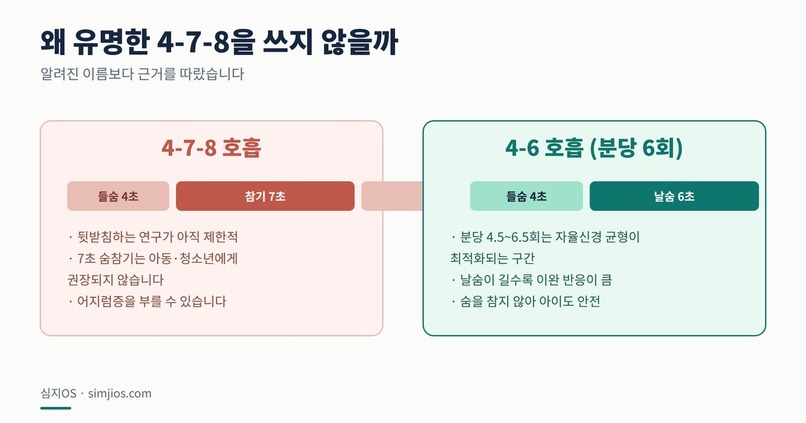
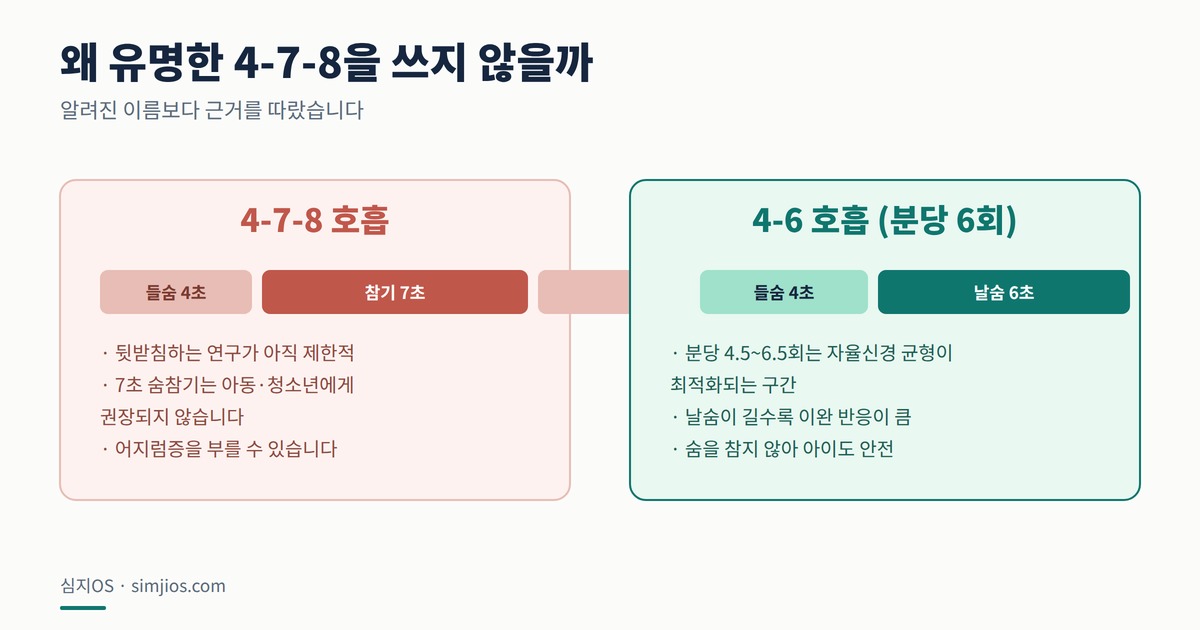
Why we rejected the popular 4-7-8 breathing: thin evidence, and 7-second holds are not advised for children. We followed evidence, not fame.
-
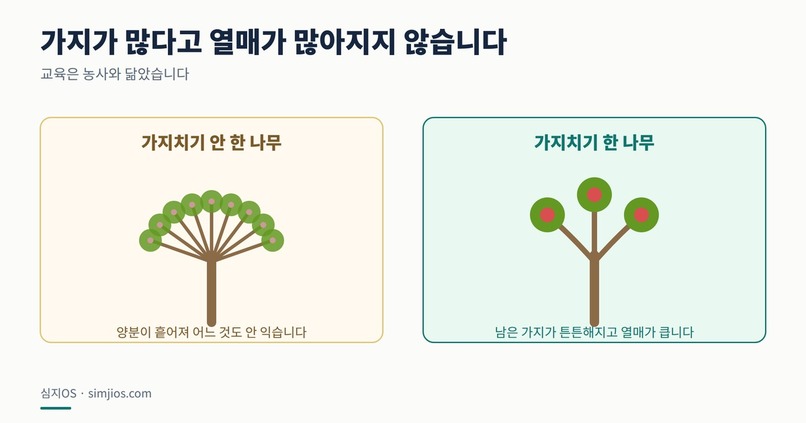
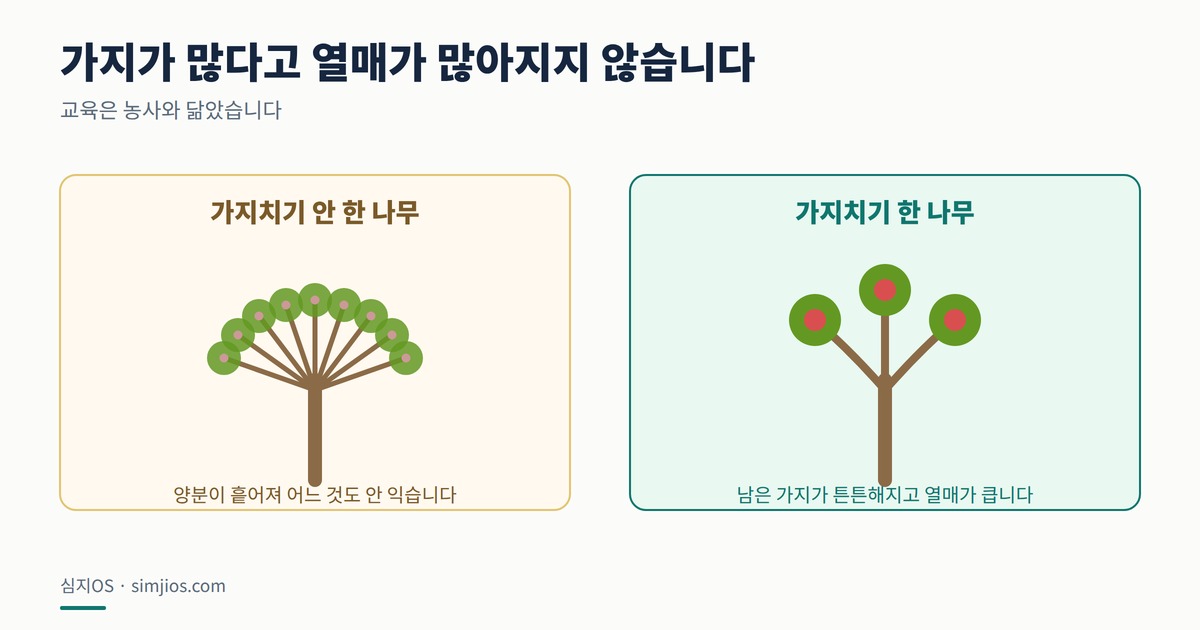
Education is like farming. More branches do not mean more fruit — nutrients scatter. Children need time to prune, not more input.
-
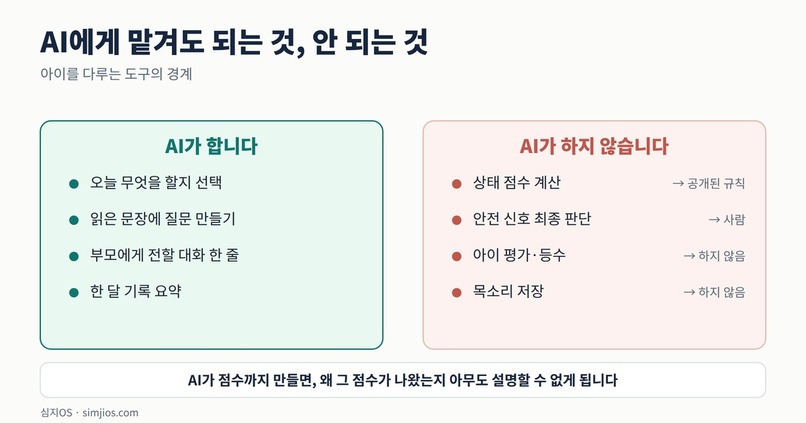
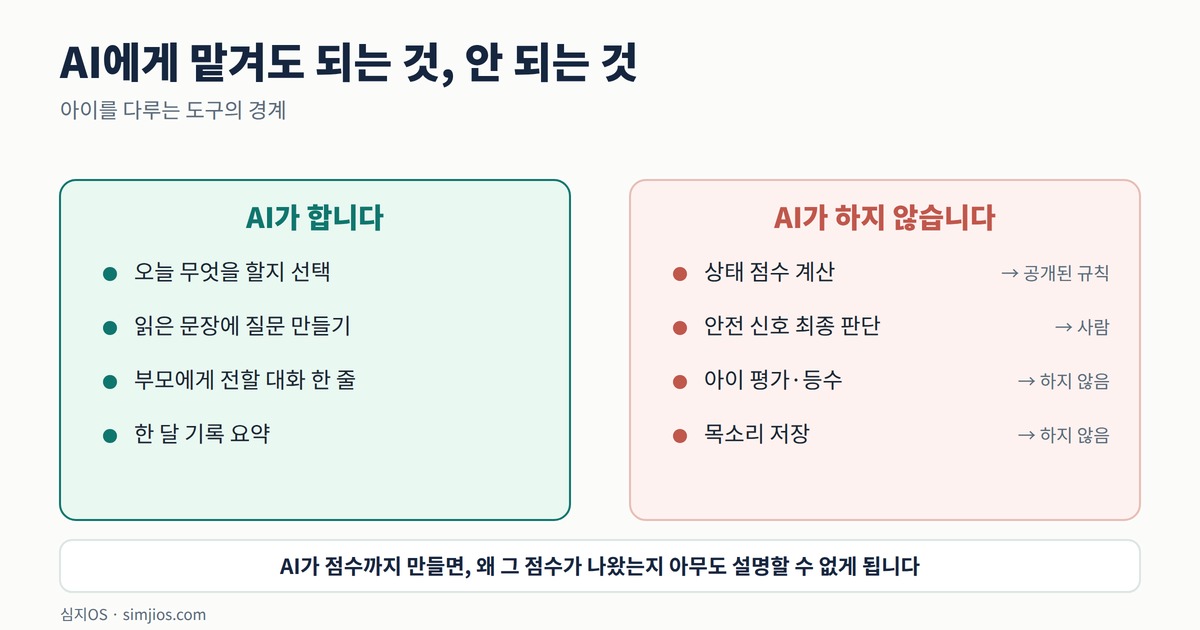
What Gemini does, and what it must not. AI picks the daily action; the state index follows a published rule. Safety calls stay with humans.
Inspiration
I run a small education company in Bundang, South Korea, and I spend a lot of time with children. One scene repeated itself for years.
A child reads a lot. The reading log is long. But ask "what was that book about?" and nothing comes back. Not because the child is careless — because there was never a moment to sort what came in. School, then academy, then video, then another book. Input never stops, so nothing settles.
Korean students' annual reading volume fell from 41 books in 2019 to 31.5 in 2025 — a 23% drop in six years — and roughly 30% of first-year high schoolers in Seoul now score at or below the basic literacy level. But adding more content does not fix this. Children are not short on input. They are short on the time to prune it.
The second scene was at the dinner table. "How was school?" "Fine." Parents are not indifferent; they simply have no thread to pull. Without knowing anything about the child's day, the only available question is a status check.
What it does
SIMJI OS is a five-minute daily loop that a child runs on a phone browser — no install. Four domains, drawn from a framework I call NoeSimJiDong — brain, heart, wisdom, action.
- Brain (腦) — State — the child reports focus and condition, then plays a five-tap reaction-time game. Not a test; a way to notice whether today's door is open.
- Heart (心) — three gratitudes and one line about how they feel. Typed or spoken.
- Wisdom (智) — Meaning — the child logs a book, author, and genre, then writes one line that stayed with them. Not a book report. Gemini reads that line and returns an open question — never a grade.
- Action (動) — one very small step: paced breathing, a stretch, ten squats, or one household chore. The app counts aloud so the phone can be put down.
Then the loop closes somewhere the child cannot see: Gemini turns the child's records into a single conversation opener that appears on the parent's screen.
We do not ask "how many books did you read?" We ask "what stayed with you?"
Where AI actually runs the business
Most education apps use AI to generate content. SIMJI OS uses Gemini to make the operational decisions a human staff member would otherwise make.
1. A daily orchestrator. Every day, for every child, Gemini selects one action from seven candidates — escalate a safety signal, open a parent conversation, send a re-engagement nudge, deliver a weekly summary. Critically, it logs what it rejected and why: "safety first — daily notification deferred," "quiet hours," "daily notification cap reached." Those rejection logs make the system auditable, which matters enormously when the subject is a child.
2. The school-home bridge. A teacher cannot message thirty families every evening about what each child noticed that day. Gemini can. It reads the child's record and produces one usable question for the parent — no teacher workload added.
3. Monthly growth reports. Gemini reads a month of records and returns three sentences: what happened, a budding strength visible in the pattern of genres and gratitudes, and one thing to try next month.
And a deliberate boundary: Gemini does not produce the state index. That number is computed by a published rule (self-report 50% + reaction time 40%). If AI produced the score, no one could explain why a child got it. Safety decisions likewise stay with humans — the app flags, people judge. Under Korea's AI Framework Act (effective January 2026), every AI-generated sentence in the app carries a visible label.
How we built it
I am not a developer. I built this entire product by directing AI — architecture, code, security hardening, legal compliance — through daily sessions. That is itself the thesis: one person can now operate a software business that used to require a team.
Stack: Node.js / Express on Render, Supabase for member data, Google Gemini for all AI operations, PortOne → KPN for regulated Korean payments. Monthly infrastructure cost is under USD 8.
- May 19 – June: started from zero. The first infrastructure invoice dates from June, which independently confirms the project began inside the competition window.
- July 10: public launch at simjios.com.
- July 23: payments went live after Korean PG certification.
Challenges we ran into
Regulatory approval took a month. Korean payment gateway certification is a real barrier, not a formality. A solo operator clearing it is not a given.
Children's data forced hard boundaries. Korea's AI Framework Act took effect in January 2026, requiring disclosure of generative AI use and visible labelling of AI-generated output. Personal data law required publishing every processor and cross-border transfer. E-commerce law required separate consent within 30 days before any subscription price increase. All of it had to be built in, not bolted on.
The temptation to let AI do everything. The hardest decision was what to withhold from Gemini. Letting it produce the state index would have been easier and more impressive — and would have made the number unexplainable.
Accomplishments that we're proud of
Revenue is small and I will not dress it up. What the 90 days actually proved is that a solo operator cleared a regulated payment pipeline, shipped a compliant children's product, and put AI in charge of daily operations.
A local child center director who tested it asked me to bring it to government. A proposal is now prepared for city and provincial education offices.
What we learned
Better programs alone do not close education gaps; without a structure to absorb them, the already-advantaged simply go further. A structure costs almost nothing and works the same everywhere. That is why it matters most where resources are thinnest.
We also learned that the strongest design decision was a refusal. Most learning apps notify a child when a streak breaks. The strong child improves; the child who missed a day never returns. SIMJI OS says the opposite — "coming back is what matters most."
What's next for SIMJI OS
Korea's Ministry of Education is expanding a daily school reading initiative from 1,000 schools toward every school by 2030, and is developing tools to assess reading interest and habits for use from 2028. SIMJI OS accumulates exactly that data — genre, author, volume, the sentence a child chose — in the home, where school cannot reach.
Grow to a few hundred households, then run a three-month pilot with one child center to produce evidence a public body can act on. Same product, no new features — just proof that a five-minute daily loop, run by AI, can hold in the homes that need it most.
Raising one child once took a village. The village is gone, and families now carry it alone. AI can be the bridge back — between school, home, and the child.
Fruit comes late. So the pruning has to start now.
Built With
- css
- express.js
- gemini
- google-gemini-api
- html
- javascript
- node.js
- pwa
- render
- supabase
- web-speech-api


Log in or sign up for Devpost to join the conversation.