-
-
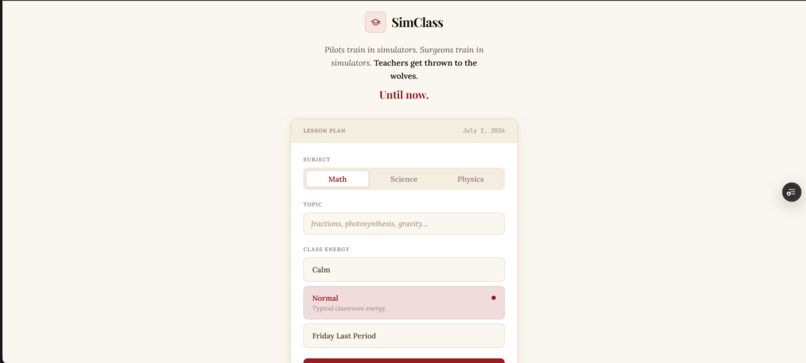
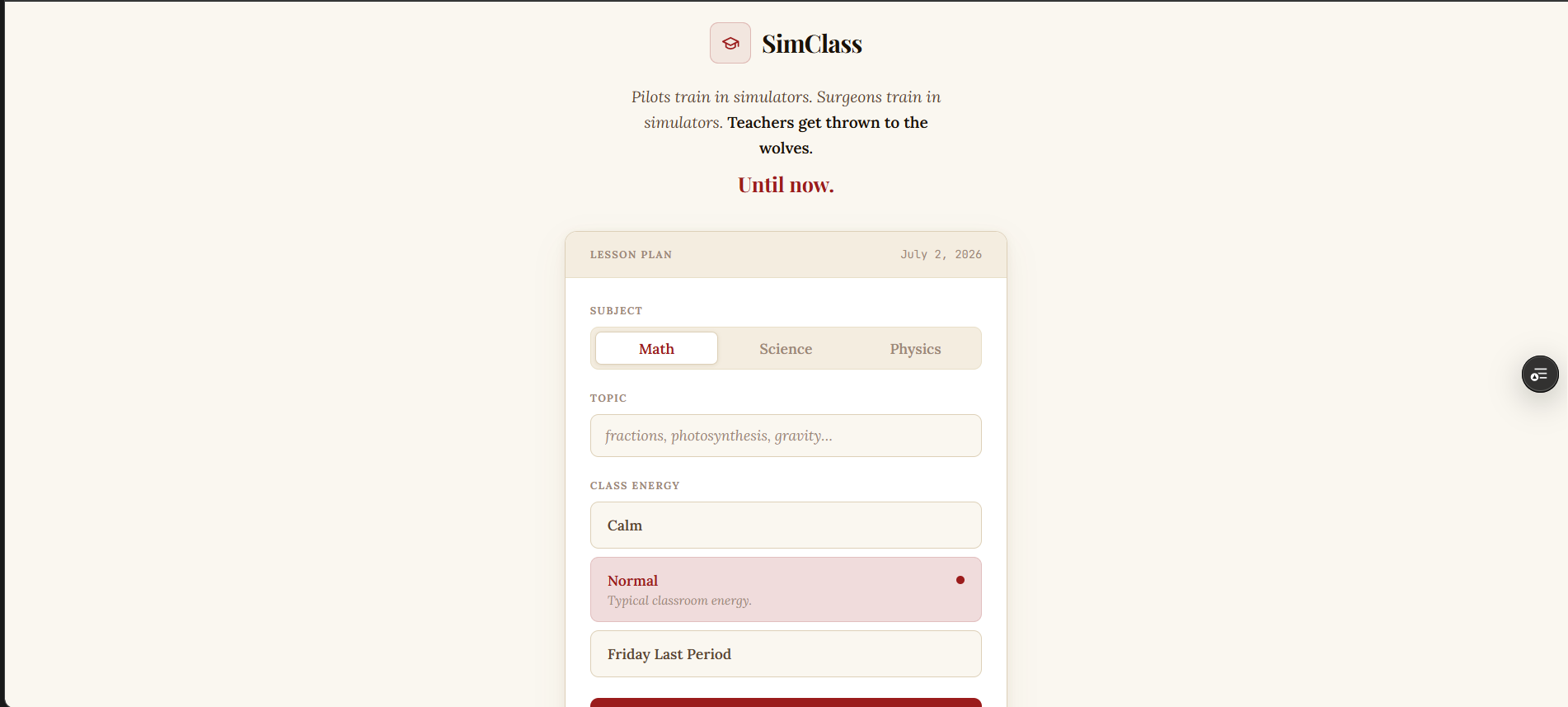
Pick a subject, topic, and class mood to start your lesson.
-
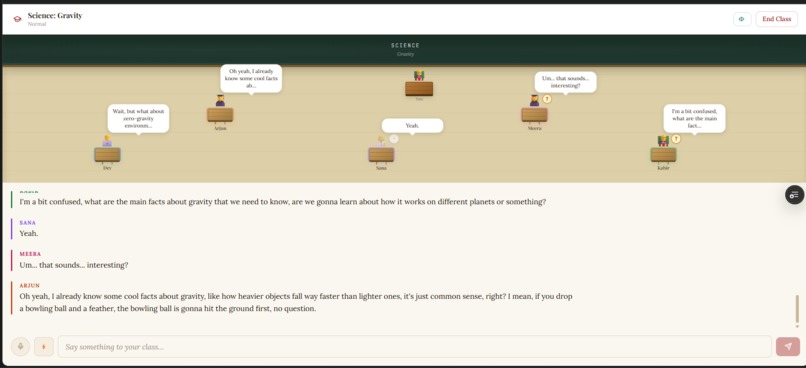
Teach 5 AI students with real personalities and live emotions.
-
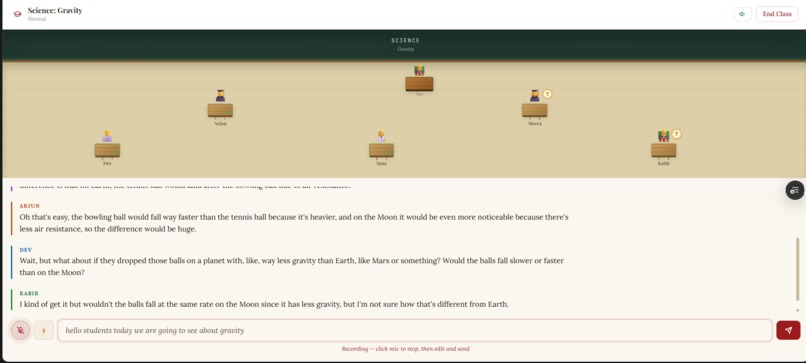
Voice mode speak your lesson aloud and hear students respond live.
-
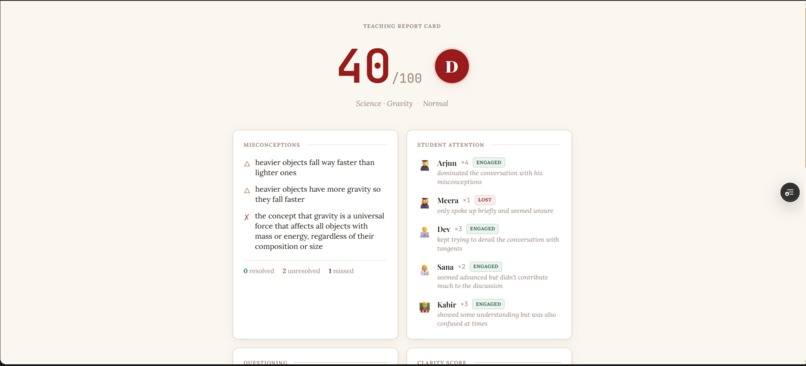
An AI coach grades your teaching like a real instructional mentor.
-
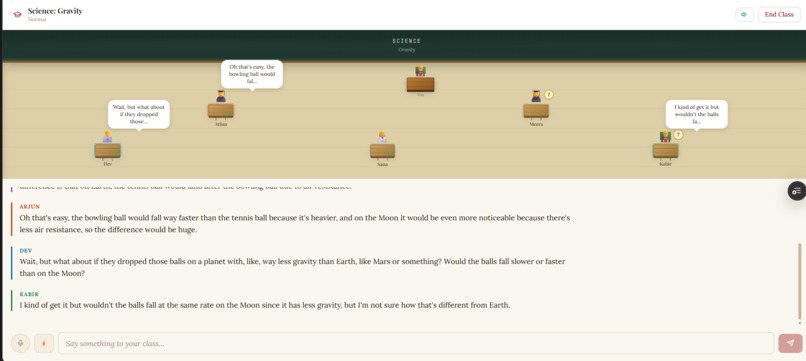
On the re-teach, the room comes alive students reason, question, and work toward understanding.
-
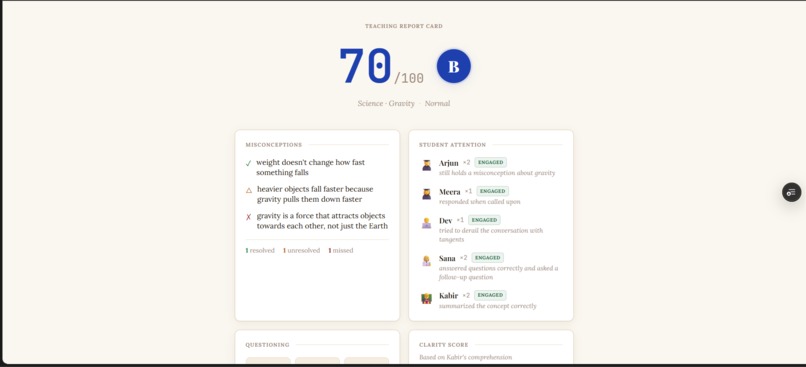
Re-teach with the feedback applied and watch your score climb.
Inspiration
Every high-stakes profession lets people practice safely before the real thing. Pilots log hundreds of hours in flight simulators before carrying passengers. Surgeons train on models and cadavers before they operate. Even customer-service reps role-play difficult calls before picking up the phone.
But new teachers? Their very first hours of practice happen on real, live children — thirty of them at once — with no dress rehearsal and no undo button. A first-year teacher learns classroom management, questioning technique, and how to spot confusion while being responsible for real kids' education. Teacher training is expensive, hard to scale, and in many regions barely exists at all.
We kept coming back to one question: what if teachers could get unlimited, realistic practice reps — and honest feedback — before a single real student ever paid the price for their learning curve? That's SimClass.
What it does
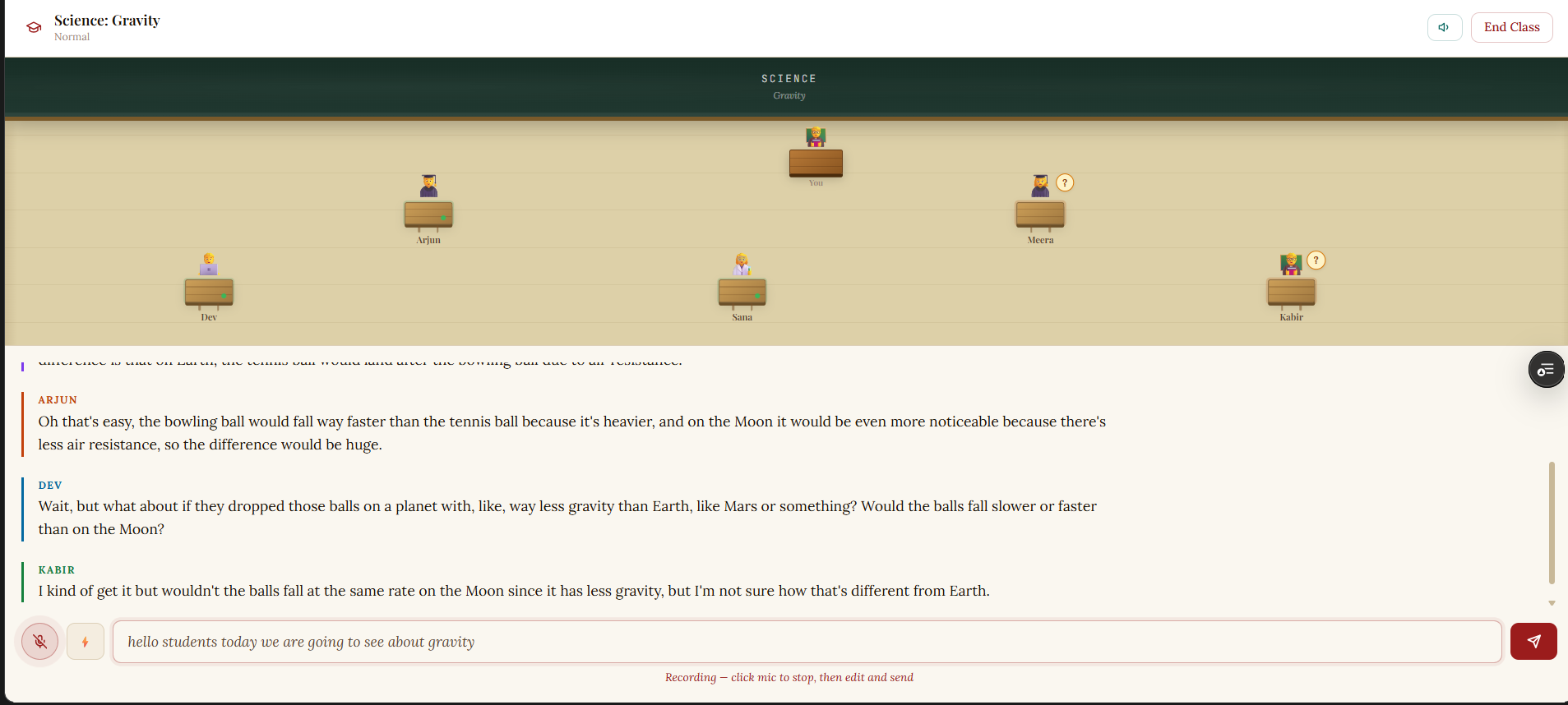
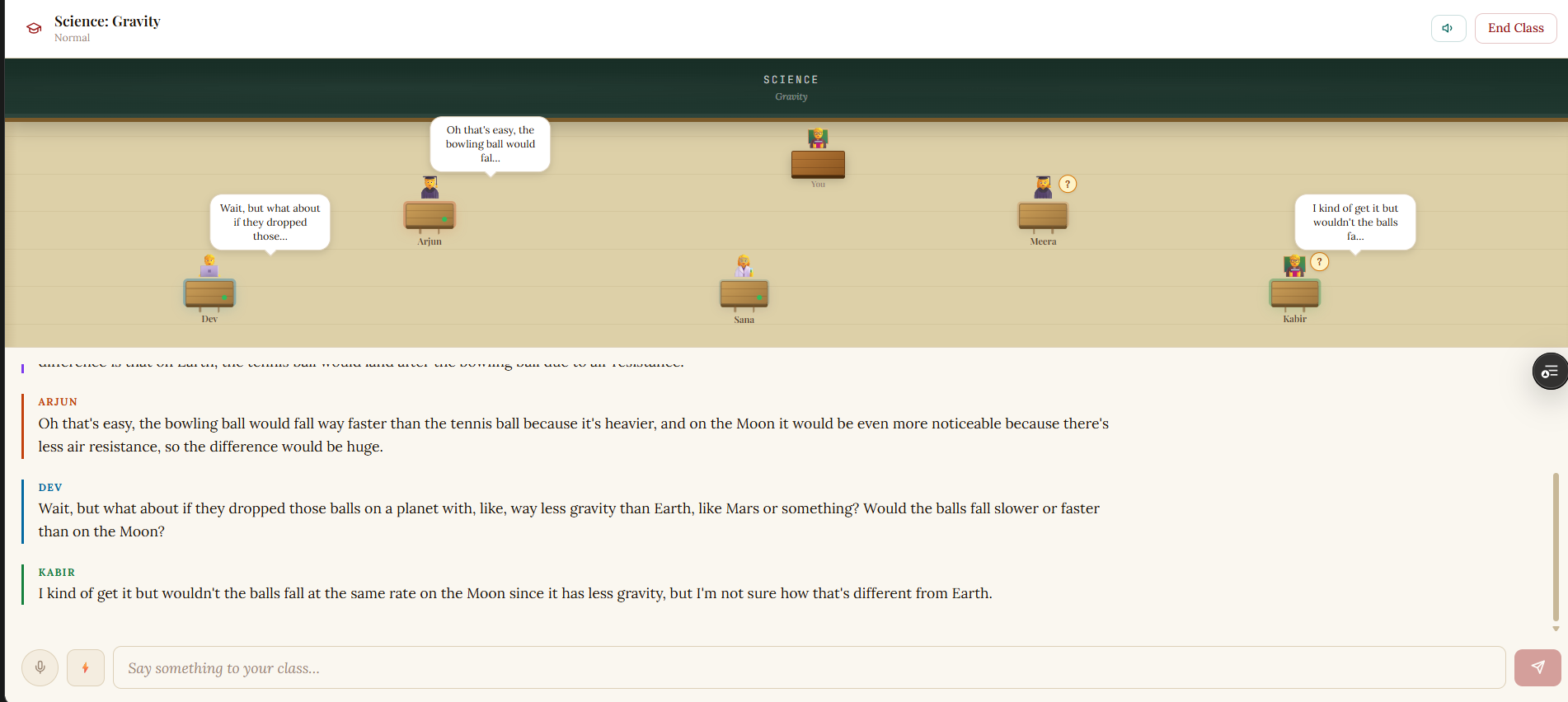
SimClass is a flight simulator for teachers. You pick a subject, a topic, and a class mood, then step into a classroom of five AI students — each with a distinct personality and a hidden misconception, just like real students:
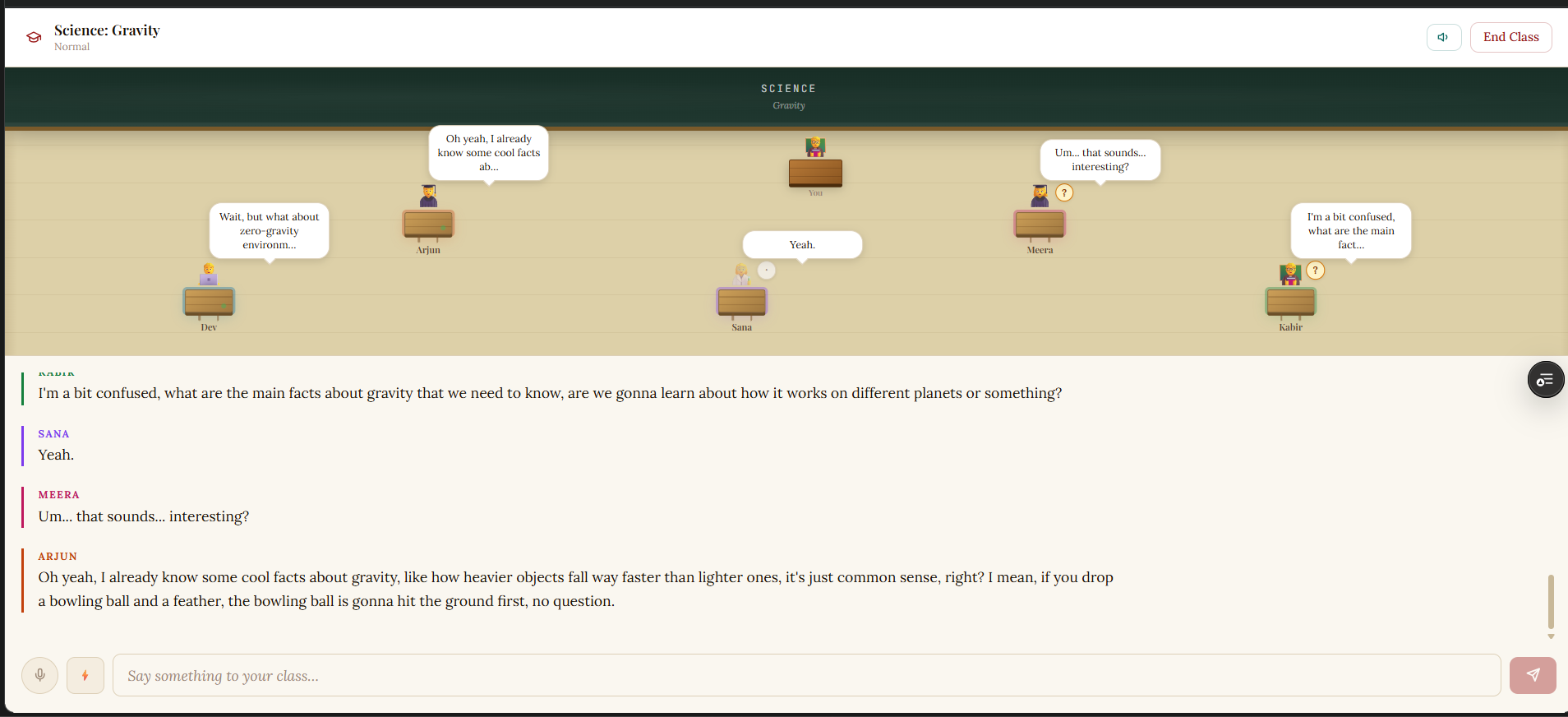
- Arjun — confident, but often confidently wrong. He holds the most common misconception about your topic and states it with total certainty.
- Meera — shy and genuinely lost. She won't volunteer anything; you have to notice her and gently bring her in by name.
- Dev — the curious chaos agent. He derails the lesson with "but what about…" tangents that test your classroom control.
- Sana — the high achiever. She gets it fast and disengages the moment you move too slowly.
- Kabir — the honest bellwether. He understands your lesson exactly as well as you actually explained it, which makes him the truest test of your clarity.
You teach by typing or by speaking out loud with voice mode — and you can hear the students respond aloud in distinct voices. They react in real time in a visual classroom scene, their faces and desks showing live emotional states: engaged, confused, bored, or hand-raised.
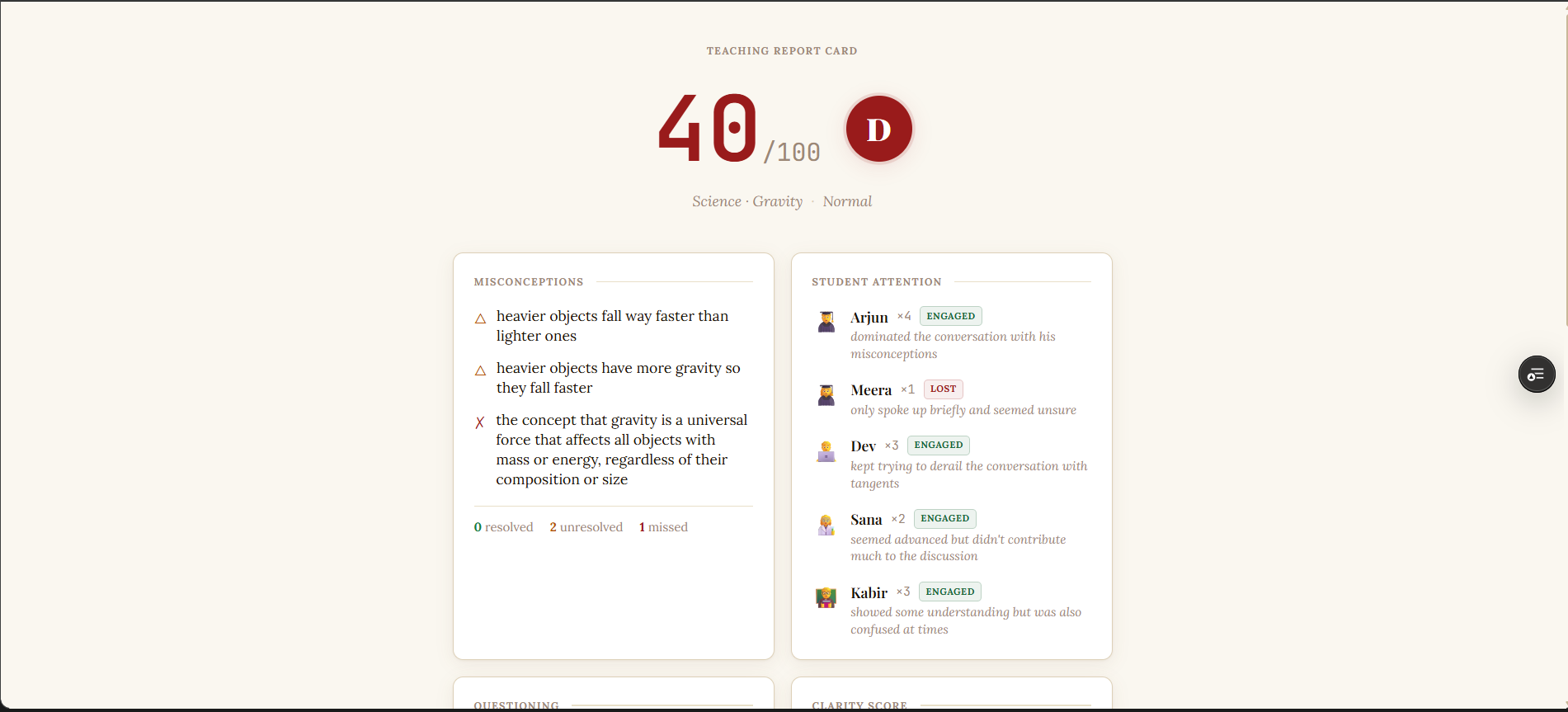
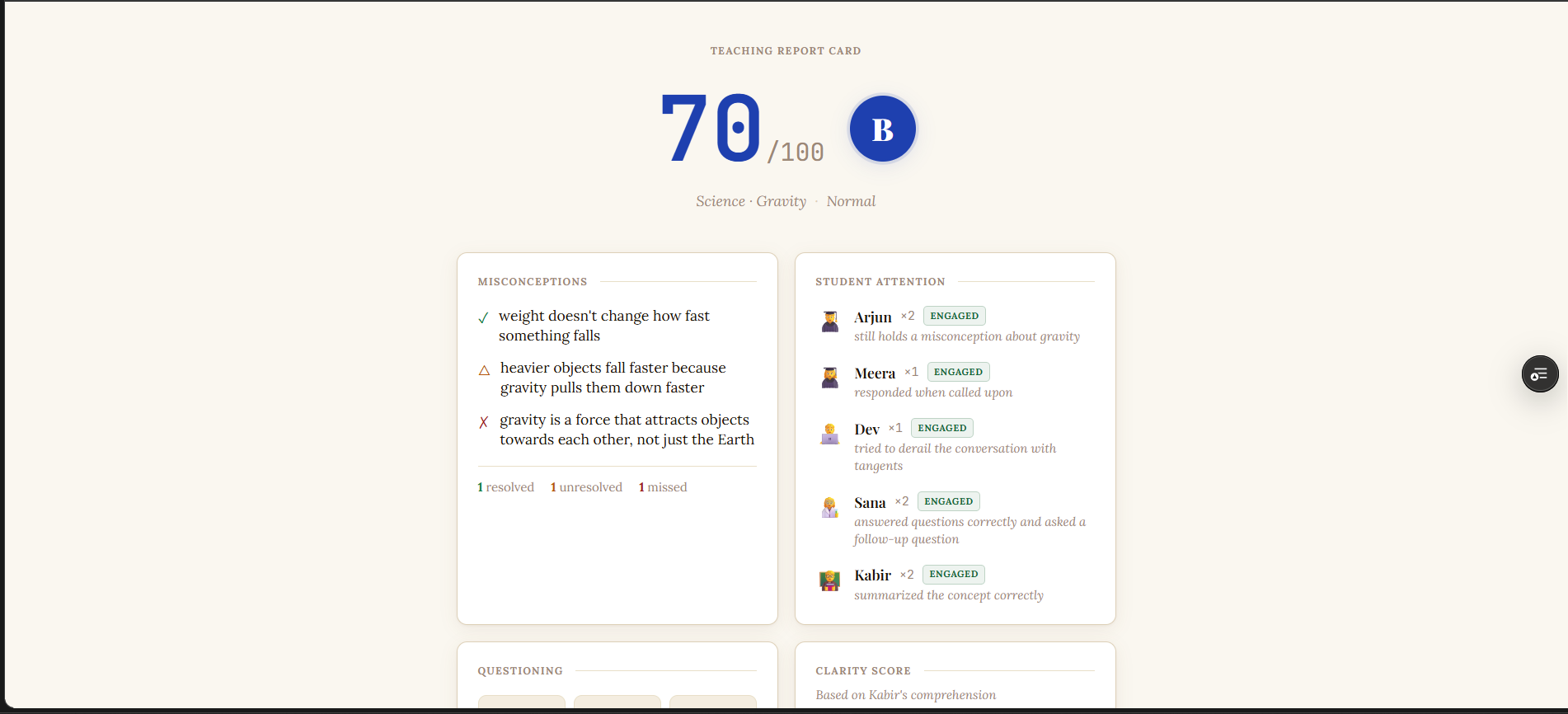
When you end the class, an AI instructional coach analyzes the entire session and hands you a Teaching Report Card:
- Misconceptions — which ones you triggered, which you resolved, and which you missed entirely
- Student attention — who you engaged, who you ignored, and who got left behind
- Questioning quality — open vs. closed questions, cold-calls, and wait time
- Clarity score — based heavily on whether Kabir actually understood
- A best moment, a growth moment, and one specific coaching tip to apply next time
Then you can re-teach the very same lesson, apply the feedback, and watch your score climb. That before-and-after loop is the heart of the product: practice, fail safely, get better.
How we built it
- Frontend: React + Vite + Tailwind, with Framer Motion driving a cohesive, intentional design system — a warm "graded paper" aesthetic with red-pen accents that fits the teaching theme.
- AI — the classroom: the Groq API running Llama 3.3 70B. We chose Groq deliberately: its near-instant inference is what makes five students respond fast enough to feel like a living, breathing room instead of a laggy chatbot. Each student is a separate API call with its own persona system prompt and a topic-specific hidden misconception, all reasoning over the shared class transcript. Responses are staggered slightly so the room feels natural.
- AI — the debrief: a single structured call that returns JSON grounded in real pedagogy — wait time, checking for understanding, cold-calling equity, and misconception-first teaching — and is required to quote specific moments from the transcript rather than give generic praise.
- Voice mode: the browser Web Speech API for both speech-to-text (the teacher speaking) and per-student text-to-speech, with a different voice profile per student so they sound like distinct people.
- Reliability: guards against partial or malformed LLM responses, graceful error states, rate-limit retries, and a responsive layout that falls back cleanly on smaller screens.
- Deployment: Vercel.
Challenges we ran into
The hardest problem was making five AI students feel like five different people instead of one model wearing five hats. Early versions had every student sounding the same. We solved it with hard-coded persona cards — fixed personality, speech style, hidden misconception, and volunteering rules — plus strict behavior constraints (for example, Meera stays silent unless addressed by name).
The second challenge was the debrief. Our first attempts read like generic AI encouragement — "great job engaging students!" — which is useless to a real teacher. We fixed it by grounding the analysis prompt in named pedagogical techniques and forcing it to cite actual quotes from the transcript, so the feedback is specific and actionable.
We also had to harden the app against the reality that LLMs sometimes return incomplete JSON — a partial response used to crash the report card, so we added defensive parsing and fallbacks throughout.
Accomplishments that we're proud of
A voice-driven, multi-agent classroom that genuinely feels alive — students that interrupt, get confused, have lightbulb moments, and get bored — paired with a debrief that gives feedback a real instructional coach would recognize. And we're proud that it doesn't feel like a hackathon project: it's a polished, cohesive product that looks like something a teacher-training program could actually ship.
What we learned
We learned how to orchestrate multiple concurrent AI personas, how to prompt-engineer for consistent character behavior over a long conversation, and how to design AI feedback that's specific rather than sycophantic. We also learned about the pedagogy itself — misconception-first teaching, wait time, cold-calling equity — and baked those principles into the product. And we learned a hard hackathon lesson: restraint wins. The product got stronger by doing one thing well, not by piling on features.
How it relates to education
SimClass targets education at its highest-leverage point: the teacher. Most ed-tech helps students directly, one learner at a time. But a well-trained teacher multiplies their impact across every student they will ever teach — improve one teacher, and you improve outcomes for hundreds of learners downstream. By giving teachers a safe, unlimited place to practice and get honest, pedagogy-grounded feedback, SimClass aims to make better teachers faster — without real students bearing the cost of the learning curve.
What's next for SimClass
- Voice-first full lessons, so an entire class can be taught hands-free
- Custom misconception libraries mapped to real curricula and grade levels
- A progress-over-time dashboard so teachers can track improvement across many sessions
- Pilots with real teacher-training programs and education departments
How to run it
Run locally:
git clone https://github.com/yaswanthme007/simclasscd simclassnpm install- Create a
.envfile in the root with:VITE_GROQ_API_KEY=your_key_here(get a free key at console.groq.com) npm run dev- Open the localhost URL shown in your terminal (use Chrome for voice mode)
Built With
- framer-motion
- groq
- javascript
- llama-3.3-70b
- react
- tailwindcss
- vite
- web-speech-api

Log in or sign up for Devpost to join the conversation.