Inspiration
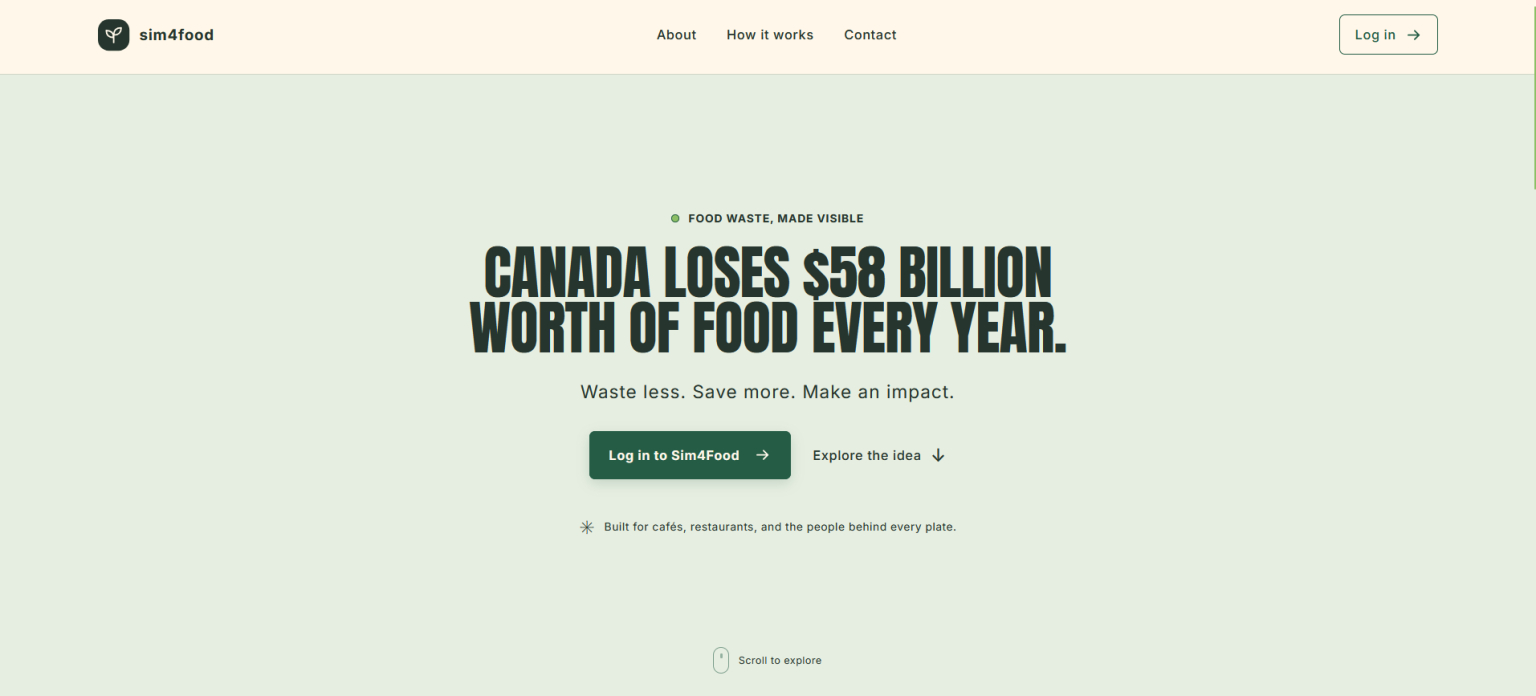
Food waste is a huge problem in Fredericton, New Brunswick. With restaurant owners having an 83% chance to shutdown within the first year, anything that could help them save on costs would allow for an advantage in today's cutthroat market.
What it does
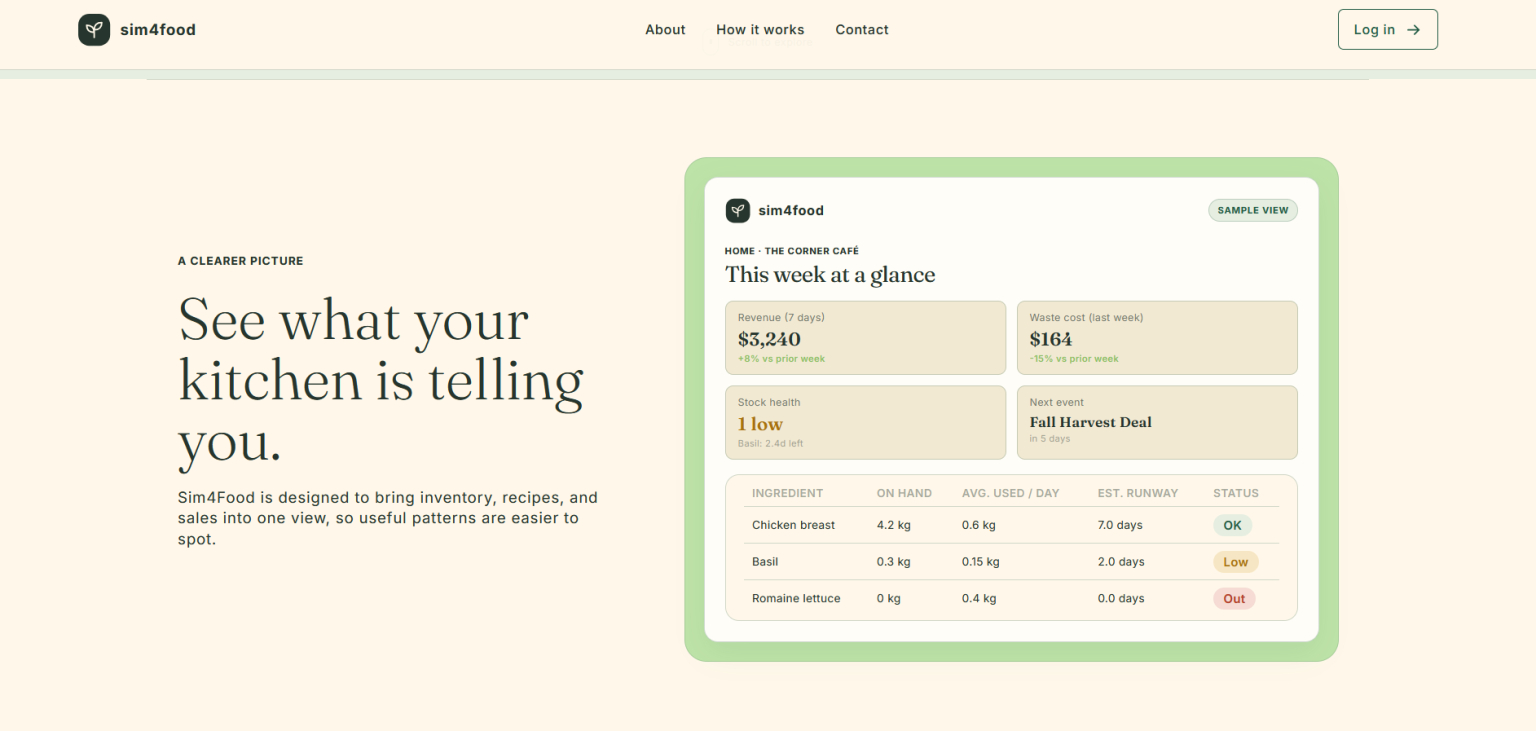
Our web application helps restaurant owners reduce food waste by forecasting how much of each ingredient they should purchase for the following week. The goal is to minimize food waste while also reducing the risk of ingredient shortages. The tool uses an XGBoost forecasting model to predict future ingredient demand and Monte Carlo simulations to explore different “what-if” scenarios. This allows restaurant owners to better plan their inventory and make more informed purchasing decisions.
How we built it
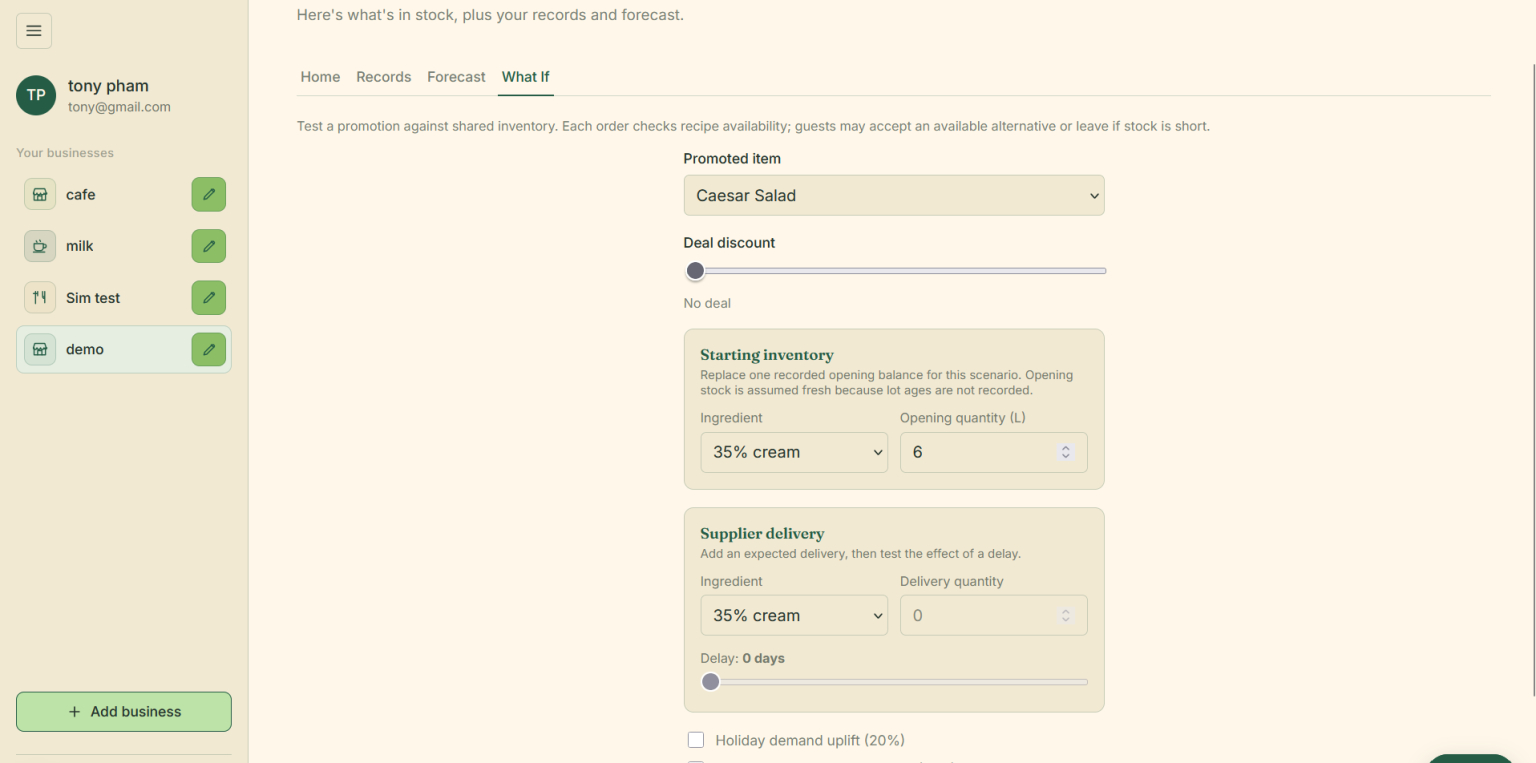
We built a web application that uses a restaurant’s POS and invoice history to generate weekly ingredient order recommendations. XGBoost forecasts demand, while Monte Carlo simulations test 300 possible scenarios involving deals, holidays, word-of-mouth, stockouts, and substitutions. A newsvendor model then converts the results into recommended order quantities while considering shelf life and pack sizes.
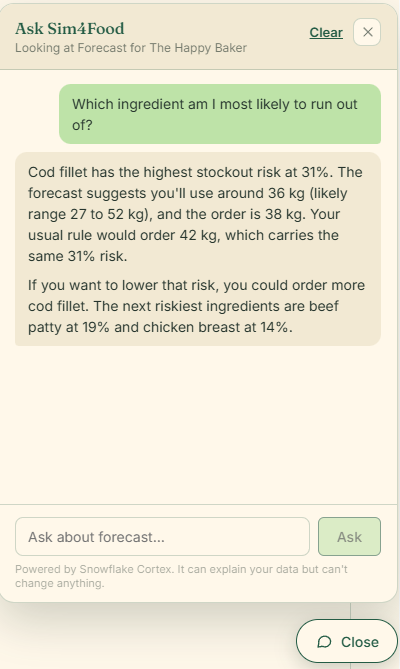
The platform also includes a Snowflake Cortex AI assistant for asking questions about forecasts, waste, and orders. It is built with Next.js, React, FastAPI, and PostgreSQL, with an interactive Canvas simulation that visualizes how demand and stockouts affect inventory.
Challenges we ran into
Building a full-stack application within 24 hours was one of our biggest challenges. Since this was our first time working together as a team, we also had to quickly understand each other’s strengths, divide tasks, and coordinate our work. We started brainstorming at the beginning of the event, so managing our time while developing the backend, frontend, models, and AI features was especially important.
Accomplishments that we're proud of
- Creating an operable project within 24 hours that would realistically be able to be used by the average business owner
- Being able to network with fellow programmers
- Learning new technology
What we learned
- Usage of XGBoost Modeling with Monte Carlo to create realistic simulations of people interacting in specified scenarios
- Operating efficiently under pressure while being provided a time limited space to work within
- The use of Snowflake to develop an AI chatbot that users would be able to interact with on a technical level
What's next for Sim4Food
We at Sim4Food have not ruled out the possibility of turning this project into a startup to help local Fredericton businesses. Many of the cafes and restaurants have been here for such a long time and we would like to help them remain open for years to come.
Built With
- claude-ai
- css
- fastapi
- javascript
- monte-carlo
- neon
- next.js
- python
- snowflake
- typescript
- xgboost


Log in or sign up for Devpost to join the conversation.